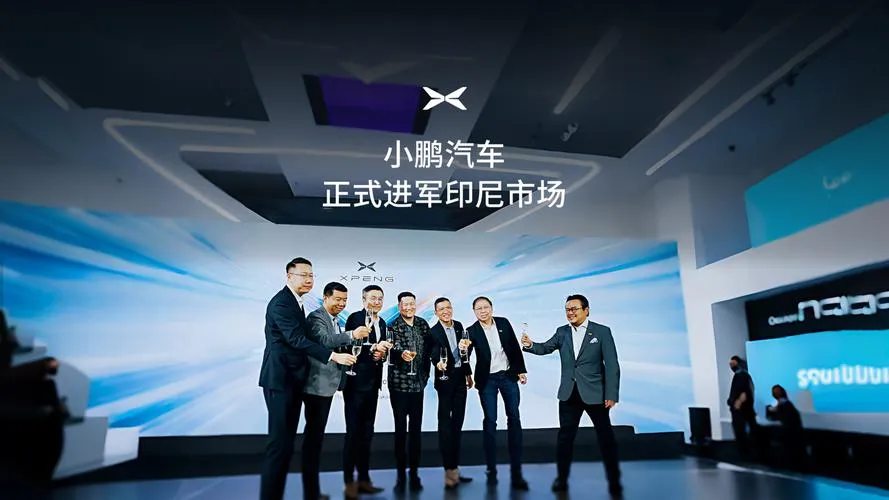
Recently, XPeng Motors announced its entry into the Indonesian market, with the right-hand drive versions of the XPeng G6 and XPeng X9 car models set to be the first to enter the market. "Entering the Indonesian market is an important step in XPeng Motors' layout in the ASEAN region. As the most populous country in Southeast Asia and the largest market for new vehicles with sales in the millions, the Indonesian market holds immense potential," stated XPeng Motors.
NEVs are the banner for Chinese automakers entering Southeast Asia.
In Thailand, 88 out of every 100 EVs sold come from China. According to incomplete statistics, Chinese automakers such as SAIC, GAC, BYD, Great Wall Motor, Wuling, and Neta Auto, as well as power battery enterprises and raw material enterprises like CATL, SVOLT Energy Technology, Gotion High-tech, and EVE, all have relevant investments and collaborations in Southeast Asia.
It is evident that Southeast Asia is emerging as a core strategic stronghold for Chinese auto brands to go global. As the regional automotive market accelerates its transition towards electrification, Chinese automakers are seizing the initiative in this new blue ocean with their keen insights and flexible strategies.
Some analysts believe that the enormous consumption potential of the automotive market is the key factor driving Chinese automakers' determination to enter the Southeast Asian market. Meanwhile, governments in ASEAN countries are providing substantial support to foreign automakers to drive local industrial development.
Thailand: The Main Battleground for Electrification Transition
Taking Thailand as an example, NEV sales surged to 76,000 units in 2023, a staggering 680% YoY increase. Chinese brands demonstrated absolute dominance: BYD secured the top spot with 30,650 units sold, capturing 40% of the pure electric vehicle (BEV) market; Neta Auto delivered 12,777 units, ranking second. Chinese brands accounted for three out of the top five positions, collectively monopolizing 80% of the market share, while traditional Japanese automakers held less than 1% of the BEV market share, indicating a complete restructuring of the market landscape.
Forming a Strategic Matrix through Multi-Country Collaboration
The Indonesian market has witnessed the sustained popularity of Wuling's AirEV micro electric vehicle, while Great Wall Motor's hybrid SUV and Seres Huawei Smart Selection models have also achieved a successful debut. Malaysia and Vietnam have successively introduced brands such as BYD and Great Wall Motor, with Chinese automakers constructing a product matrix that covers the entire region. Their competitive advantages lie in:
· Policy Responsiveness: Swiftly aligning with tax incentives and subsidy policies in various countries, such as Thailand's exemption of purchase tax for NEVs
· Market Coverage:From Wuling's affordable compact cars to BYD's high-end models, accurately covering the needs of various consumer segments
· Strategic Foresight:Establishing a complete product ecosystem chain when Japanese and Korean brands have yet to complete their electrification transition
Building an Industrial Moat with Billion-Dollar Investments
Chinese automakers' investments in Southeast Asia can be described as "heavy deployment":
· Thailand as a Strategic Hub:BYD and Great Wall Motor have each invested US$1.4 billion to establish factories, while Chery plans to commence production of 50,000 NEVs in 2025. All three companies have positioned Thailand as an export base radiating throughout ASEAN.
· Indonesia as a Manufacturing Center:SAIC-GM-Wuling's Jakarta factory produces tens of thousands of NEVs annually, with the AirEV becoming a local phenomenon.
Geopolitical Competition and Policy Game
It is noteworthy that the traditional advantages of Japanese automakers in Southeast Asia are rapidly eroding—80% of Thailand's EV market sales now belong to Chinese brands. In the Middle Eastern and South Asian markets, BYD has entered countries such as Israel and the UAE, with Chinese brands accounting for 64% of Israel's EV market in early 2024.
Strategic Opportunities and Market Choices Compared to the stringent market access requirements in European and US markets, Southeast Asia exhibits greater inclusiveness towards Chinese automakers. From policy dividends to market gaps, this region is becoming a critical springboard for the globalization of Chinese auto brands. With the improvement of charging infrastructure and the advancement of industry chain localization, Chinese automakers are expected to continuously expand their market share in Southeast Asia, transforming regional advantages into global competitiveness.
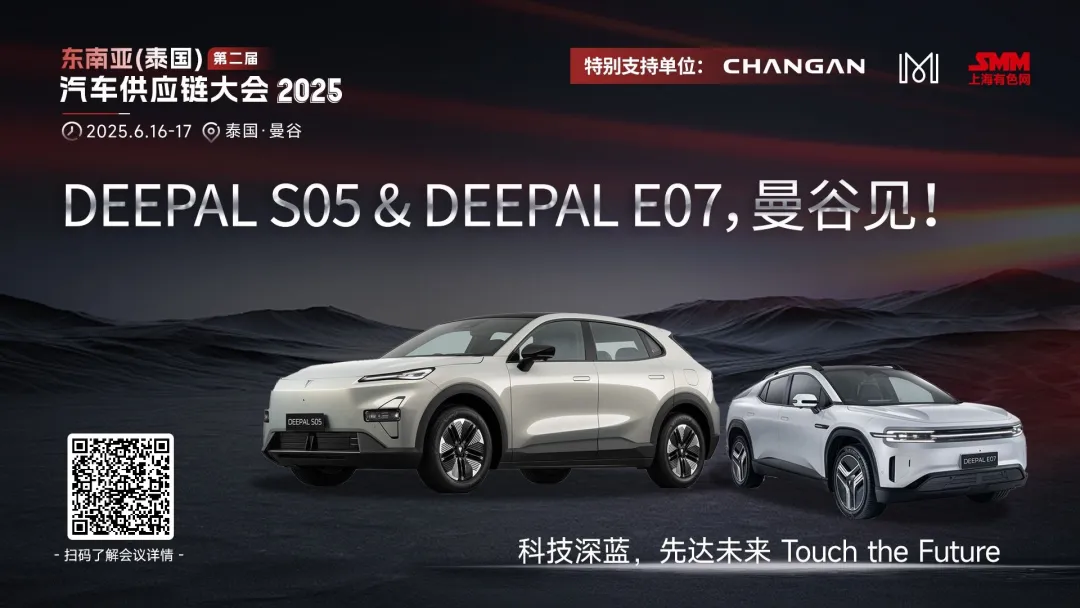
How did Chinese automakers and Southeast Asia choose each other? Perhaps, you can find the answer at the2025 SMM Southeast Asia (Thailand) Automotive Supply Chain Conferenceorganized by SMM in Bangkok, Thailand, from June 16th to 17th, 2025!
In addition, a dedicated automaker parts demand matching session will be held during the conference, where key leading automakers will issue parts procurement requests!
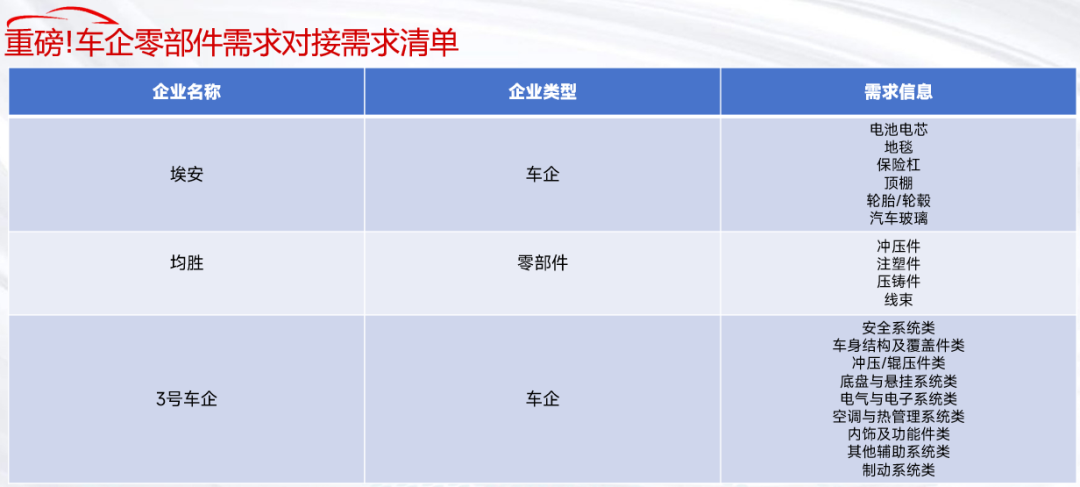
More procurement lists are being continuously updated...

Scan the QR code to view conference details
[Conference Promotion]
2025 SMM 2nd Southeast Asia Automotive Supply Chain Conference
[Date] June 16th-17th
[Location] Bangkok, Thailand