The local prices are expected to be released soon, stay tuned!
Got it
+86 021 5155-0306
Language:
SMM
Sign In
Base Metals
Aluminum
Copper
Lead
Nickel
Tin
Zinc
New Energy
Solar
Lithium
Cobalt
Lithium Battery Cathode Material
Anode Materials
Separator
Electrolyte
Lithium-ion Battery
Sodium-ion Battery
Used Lithium-ion Battery
Hydrogen Energy
Energy Storage
Minor Metals
Silicon
Magnesium
Titanium
Bismuth/Selenium/Tellurium
Tungsten
Antimony
Chromium
Manganese
Indium/Germanium/Gallium
Niobium/Tantalum
Other Minor Metals
Precious Metals
Rare Earth
Gold
Silver
Palladium
Platinum/Ruthenium
Rhodium
Iridium
Scrap Metals
Copper Scrap
Aluminum Scrap
Tin Scrap
Ferrous Metals
Iron Ore Index
Iron Ore Price
Coke
Coal
Pig Iron
Steel Billet
Finished Steel
International Steel
Others
Futures
SMM Index
MMi
【SMM Analysis】The operating rates of refined tin smelters in Yunnan and Jiangxi remained low, with raw material shortages continuing to impact the smelting sector.
Apr 25, 2025, at 4:25 pm
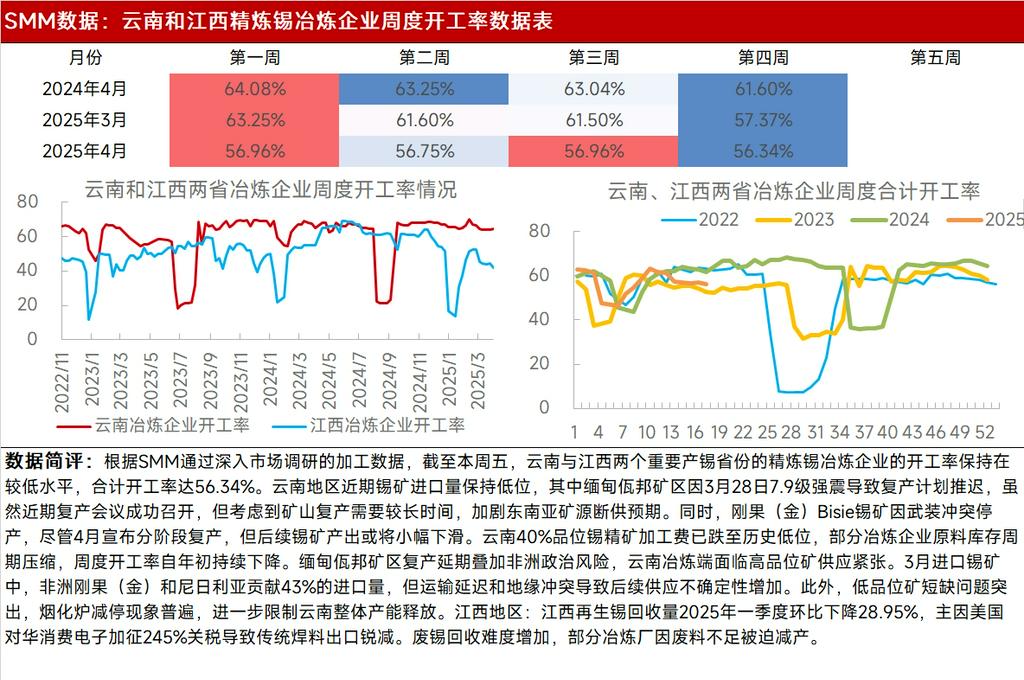
【SMM Analysis: Operating Rates of Refined Tin Smelters in Yunnan and Jiangxi Remain Low, Raw Material Shortages Continue to Impact Smelting Sector】: According to SMM's in-depth market survey data on processing, as of this Friday, the operating rates of refined tin smelters in Yunnan and Jiangxi, two major tin-producing provinces, remained at low levels, with a combined operating rate of 56.34%. Recent tin ore imports in Yunnan have stayed low, with the Wa State mining area in Myanmar delaying its production resumption plans due to a 7.9-magnitude earthquake on March 28. Although a recent resumption meeting was successfully held, considering the extended time required for mine resumption, expectations of supply disruptions from Southeast Asian sources have intensified. Meanwhile, the Bisie tin mine in the DRC halted production due to armed conflict, and despite announcing phased resumption in April, subsequent tin ore output may slightly decline. The processing fees for 40% grade tin concentrates in Yunnan have fallen to historical lows, compressing raw material inventory cycles for some smelters, and weekly operating rates have continued to decline since the beginning of the year. The delayed resumption in the Wa State mining area, coupled with political risks in Africa, has led to tight supply of high-grade ore for Yunnan's smelting sector. In March, the DRC and Nigeria contributed 43% of tin ore imports, but transportation delays and geopolitical conflicts have increased uncertainty in future supply. Additionally, the shortage of low-grade ore is prominent, with widespread reductions and shutdowns of fuming furnaces, further limiting the overall capacity release in Yunnan.