
SMM March 10 News:
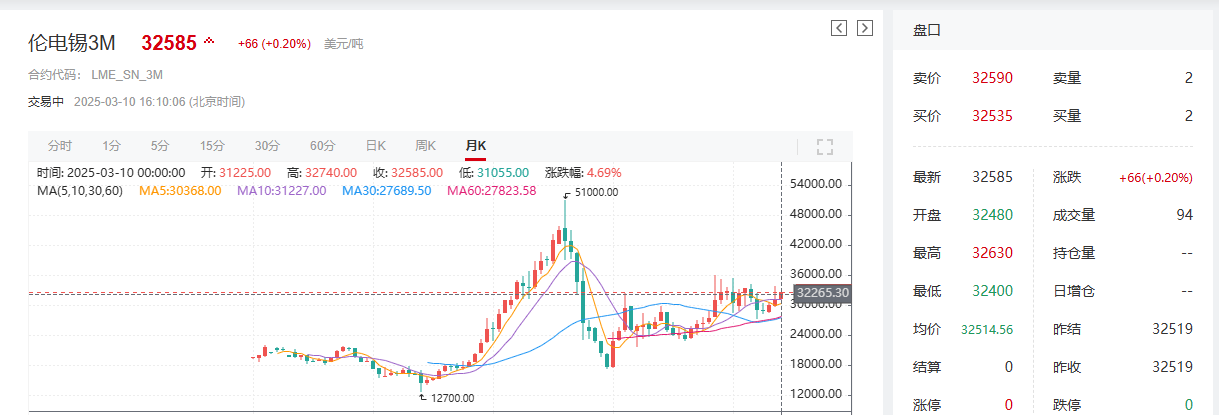
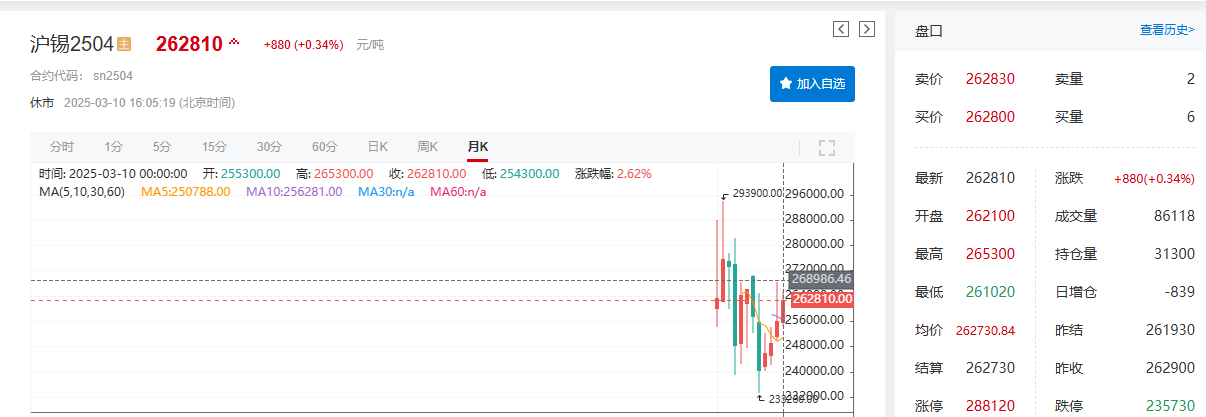
Although the expectation of Wa State's resumption of production at the end of February once suppressed tin prices, domestic favourable macro factors, tight supply expectations on the mining side, and anticipated growth in downstream demand such as semiconductors drove tin prices to continue their upward trend from the previous two months in February. LME tin rose by 4.01% in February, while SHFE tin closed with a 3.19% increase. Entering March, despite the volatility caused by the US tariff policy and strengthened expectations of Wa State's tin mine resumption, tin prices stabilized and rebounded, supported by the Two Sessions' positive impact, downstream restocking demand at lower prices, and a weaker US dollar index boosting metal prices. As of 16:09 on March 10, LME tin rose by 0.2% to $32,585/mt, with a monthly increase of 4.07% in March so far; SHFE tin rose by 0.34% to 262,810 yuan/mt, with a monthly increase of 2.99% in March so far.
》Click to View SMM Futures Data Dashboard
Spot Market
Tin Spot Price Center Continued to Rise, Up 2.81% in February
》Subscribe to View SMM Historical Metal Spot Prices
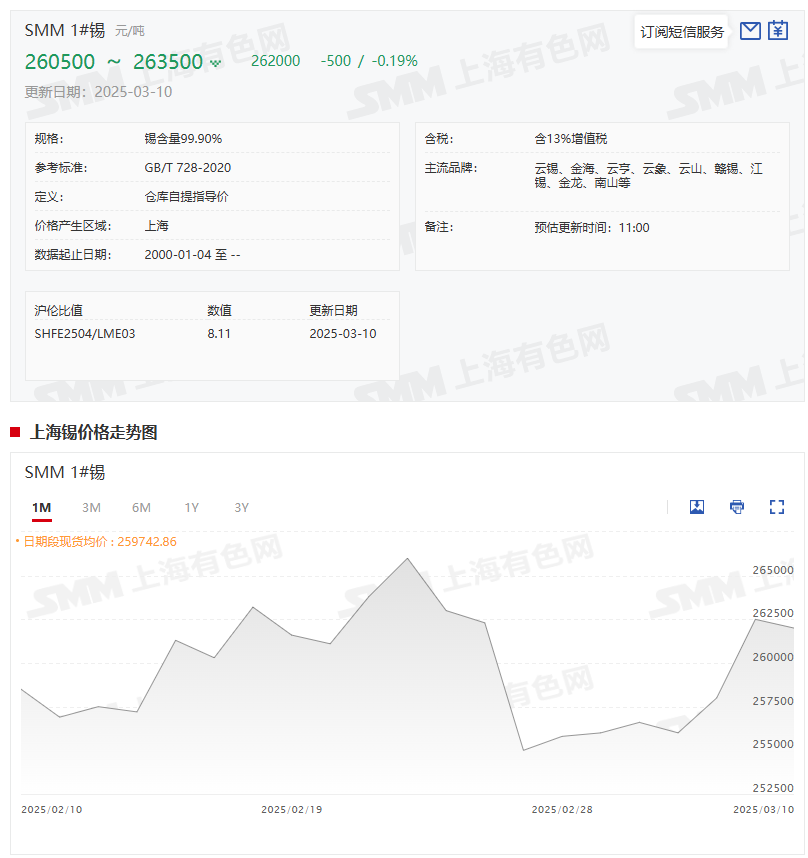
Regarding tin spot prices: According to SMM quotes, the average price of SMM #1 tin spot was 248,800 yuan/mt on January 27 and 255,800 yuan/mt on February 28, marking an increase of 7,000 yuan/mt over one month, with a February increase of 2.81%. Since March, tin spot prices have mostly risen with occasional declines. On March 10, the average price of SMM #1 tin spot was 262,000 yuan/mt, down 0.19% from the previous trading day.
Fundamentals
Refined Tin Production Fell MoM in February, March Production Expected to Rise MoM
》Click to View SMM Tin Industry Chain Database
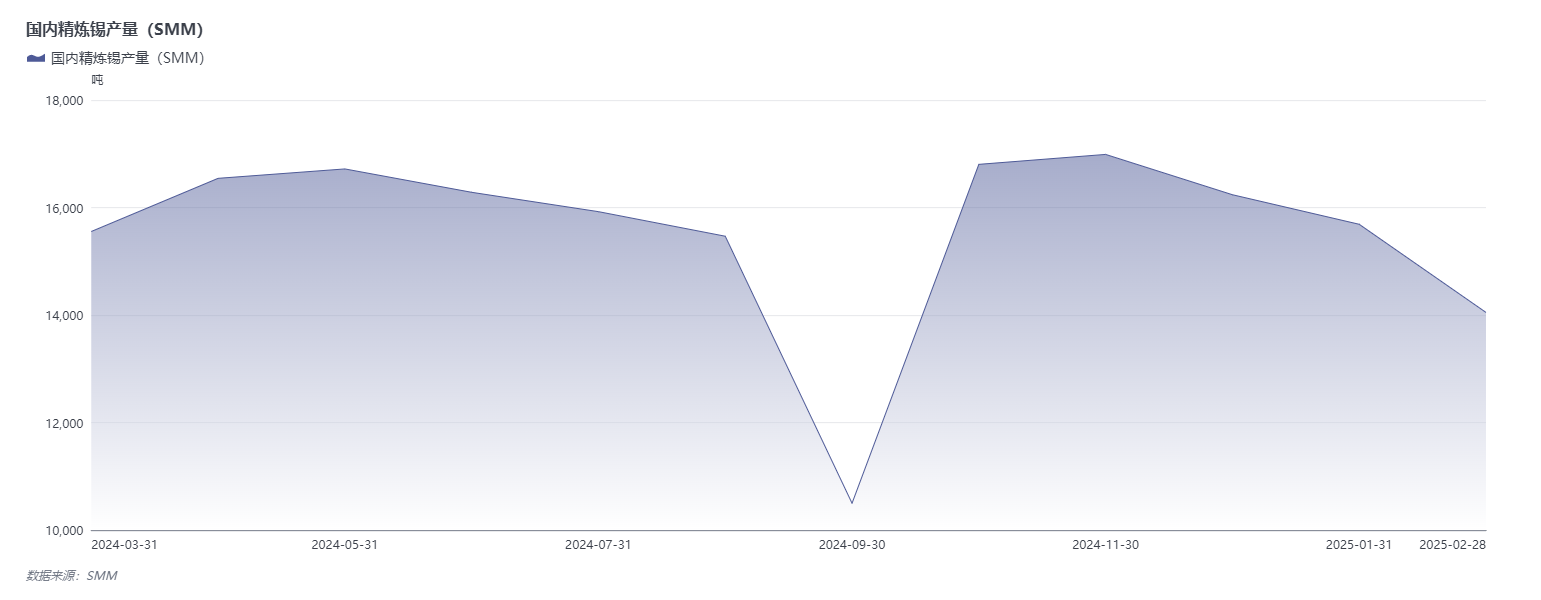
Regarding production: Based on market exchange and processing data from SMM, China's refined tin production in February 2025 decreased by 9.3% MoM but achieved a significant YoY increase of 10.02%. Affected by tightening tin ore and scrap supply and the Chinese New Year holiday, domestic tin ingot production continued to decline in February. This data reflects structural characteristics, highlighting three pressures and opportunities faced by the industry: First, the continuous tightening of the tin concentrate supply chain imposes rigid constraints on capacity; second, the traditional Chinese New Year holiday causes cyclical production adjustments; third, the industry demonstrates resilience in capacity despite raw material constraints. (1) Yunnan Region: As the core area for tin smelting in China, Yunnan's capacity utilization rate declined in February due to raw material pressure. Myanmar's tin ore imports have remained below the 30,000 mt warning line for six consecutive months. Smelters in this region face historically low tin concentrate TC, directly reducing overall production enthusiasm. (2) Jiangxi Region: Mainly affected by the characteristics of raw material structure. Seasonal stagnation in the winter scrap recycling system expanded the raw material gap. Although the operating rate rebounded after the Lantern Festival, the shortened raw material inventory cycle delayed capacity recovery significantly. (3) Other Regional Dynamics: Inner Mongolia maintained stable operations, benefiting from the unique advantage of captive mines; emerging production areas in Anhui and surrounding regions saw a sharp 28-percentage-point drop in capacity utilization due to delayed imported ore arrivals and increased scrap sorting costs, revealing insufficient risk resistance in peripheral regions. 》Click to View Details
Operating Rates in Yunnan and Jiangxi Continued to Rebound
According to SMM's in-depth market survey data, as of March 7, the operating rates of refined tin smelters in Yunnan and Jiangxi, two major tin-producing provinces, continued to rebound. Yunnan: Capacity remained high, but raw material bottlenecks became prominent. The weekly operating rate of refined tin smelters in Yunnan slightly increased WoW. Although most enterprises resumed work, the delayed resumption of production in Myanmar's Wa State mines resulted in no significant increase in tin ore imports from January to February, exacerbating structural raw material imbalances. Additionally, tin concentrate TC continued to face pressure, with the TC for 40% grade tin ore in Yunnan dropping to a historical low of 12,500 yuan/mt, close to the cost line for some enterprises, further limiting the potential for operating rate improvement. Jiangxi: The recycled tin system gradually recovered, but scrap supply constraints were evident. Its operating rate increased by nearly 20 percentage points from the Chinese New Year low but remained 10 percentage points lower than the Q4 2024 average. The raw material side was significantly affected by the Chinese New Year holiday, with a sharp reduction in recycled tin volume, making subsequent production recovery challenging.
SMM Tin Ingot Social Inventory in Three Regions Significantly Destocked
》Click to View SMM Metal Industry Chain Database
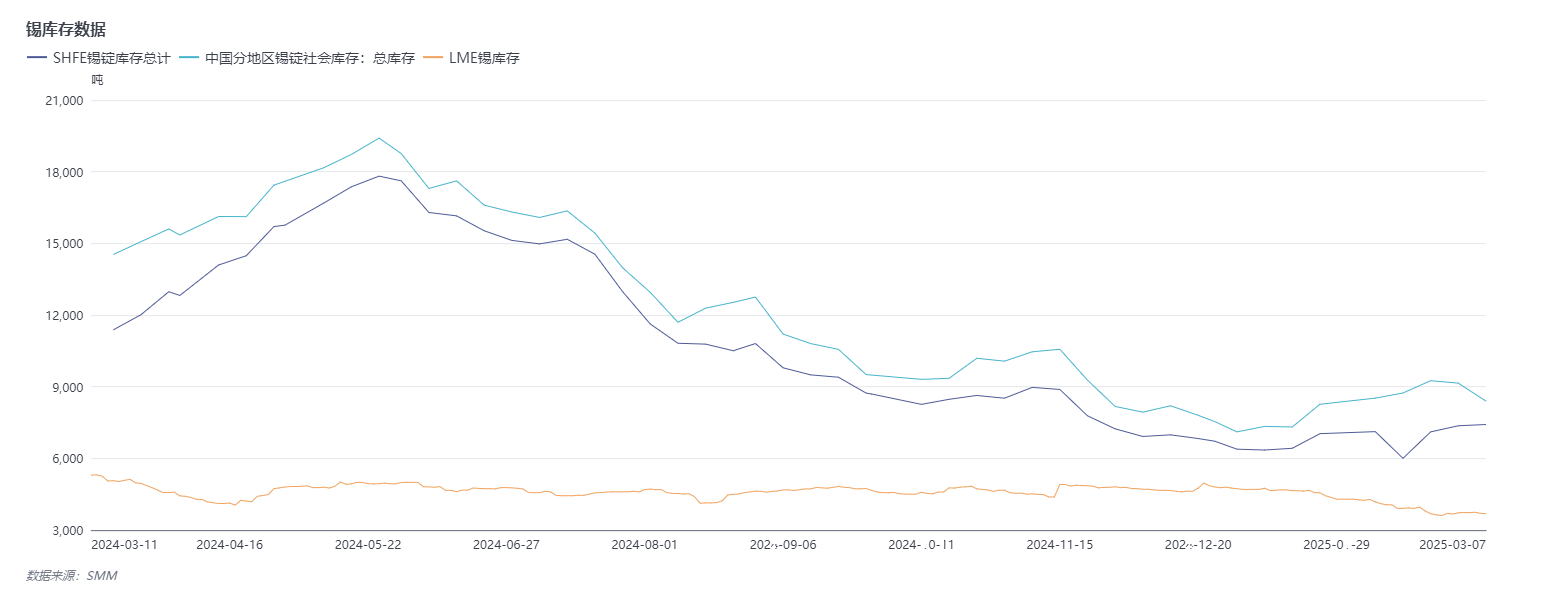
Domestic: According to SMM surveys, as of March 7, the total social inventory of SMM tin ingots in three regions was 8,399 mt, down 754 mt WoW.
SHFE Tin Inventory: As of the week of March 7, SHFE tin inventory continued to rise, with weekly inventory increasing to 7,421 mt.
LME Inventory: LME tin inventory was 4,440 mt on January 27 and 3,725 mt on February 28, showing a decline in February. This downward trend continued, with the latest LME tin inventory data on March 7 at 3,695 mt.
SMM Outlook
Macro Front: Domestic: National Development and Reform Commission (NDRC) Director Zheng Shanjie stated at the economic-themed press conference of the 14th National People's Congress that a special action plan to boost consumption will soon be released and implemented. Attention should be paid to the implementation of favourable policies such as the consumption-boosting action plan after the Two Sessions, as well as February's social financing and new RMB loan data. Overseas: A series of poor economic data recently released by the US has heightened concerns about slowing US economic growth. The US dollar index has fallen below 104, and its weakness has boosted metal prices. However, the volatility of US tariffs and concerns about global demand prospects have reduced market preference for risk assets. Fed Chairman Jerome Powell stated last Friday that the Trump administration's series of policies have increased economic uncertainty, but there is currently no urgency to adjust monetary policy. The focus ahead will be on US inflation and initial jobless claims data.
Fundamentals: Supply side: Given the significant uncertainty in Myanmar's Wa State tin ore imports and the increasingly severe raw material supply issues for smelters, refined tin production in March is expected to increase by about 15% MoM. Driving factors include the recovery of full production days after the Chinese New Year disruption and the resumption of recycled tin systems supplementing scrap raw materials. Demand side: With tin prices currently high, many enterprises are postponing large-scale restocking and focusing on just-in-time procurement.
In summary, on the macro front, domestic macro expectations remain positive, while overseas macro uncertainties have increased. With the frequent disturbances of US tariff policies on tin prices, attention should be paid to the implementation of tariffs related to tin consumption end-users. The weak US dollar has boosted tin and other metal prices, but weak US economic data limiting demand prospects will cap metal price increases. Additionally, caution is needed regarding the technical correction of the US dollar index after its continuous decline, which may pressure tin prices. On the fundamentals side, tin concentrate TC continues to face pressure, and the tight supply pattern of tin ore remains unchanged, providing support for tin prices from the supply side. After the Wa State Industrial Minerals Management Bureau issued a resumption process document, the market is concerned that increased tin ore supply in H2 may reverse the tight balance pattern, suppressing tin prices. Although actual resumption requires 2-3 months of preparation, the timing remains uncertain, and further clarity on Wa State's resumption policies and capacity release pace is needed. On the demand side, with tin prices high, market sentiment remains cautious. Attention should be paid to the impact of the traditional consumption peak season on tin consumption. In the short term, the tin market is expected to fluctuate upward, driven by domestic macro positives, while in the medium term, Wa State's resumption expectations may lead to bearish market sentiment.
Recommended Reading:


