As a key automotive manufacturing and consumer market in Southeast Asia, Thailand has actively promoted the development of its EV industry in recent years by formulating a series of industrial development plans, aiming to secure a position in the global EV transformation wave.
In 2021, the Thai government introduced the "30·30 Policy," targeting zero-emission vehicles (ZEVs) to account for 30% of the country's total automotive production by 2030.
By the end of 2024, the number of public EV charging stations in Thailand had grown to approximately 3,429, establishing a preliminary charging infrastructure network covering major regions nationwide, providing strong support for EV adoption.
Against this backdrop, the SMM 2nd Southeast Asia Automotive Supply Chain Conference, hosted by SMM, will be held in Bangkok from June 16 to 17, 2025. Industry leaders are invited to jointly explore these challenges and opportunities and collaborate to drive the prosperity and development of the Southeast Asian and global automotive industries.

Scan the QR code for conference details.
1. Why Thailand?
Policy Incentives and Market Potential
The Thai government has rolled out the "30·30 Policy" (30% ZEVs by 2030) and EV3.5 incentives (subsidies, tariff reductions, etc., from 2024 to 2027), offering tax benefits and subsidies to Chinese automakers, such as up to 100,000 baht (approx. 20,000 yuan) per EV. Thailand's NEV penetration rate is expected to reach 12% in 2025, surpassing the 10% tipping point and entering a phase of explosive growth, indicating vast market potential.
Supply Chain and Geographic Advantages
Thailand boasts Southeast Asia's most mature automotive supply chain, with over 700 parts suppliers and 500,000 employees, earning it the nickname "Detroit of Asia," enabling automakers to quickly establish factories and reduce costs.
Its strategic location connects ASEAN markets, and under the RCEP agreement, it provides tariff-free access to a region of 660 million people, including exports to Australia and the Middle East.
Opportunities Amid Japanese Dominance
Japanese brands have long held over 70% of Thailand's market share but lag in electrification, creating an opening for Chinese automakers. By 2024, Japanese brands' share had dropped to 78%, while Chinese brands rose from 5% to 11%.
2. Core Advantages of Chinese Automakers
EV Technology Leadership and Cost Advantages
Chinese NEVs outperform Japanese ICE vehicles in battery technology, smart features (e.g., discharge function), and driving range. Models like BYD Dolphin and GAC Aion are favored by Thai consumers for their affordability and functionality.
Rapid Localization Capabilities
Chinese automakers are accelerating local production in Thailand, such as BYD (annual capacity: 150,000 units), GAC Aion (50,000 units), and Great Wall (80,000 units), while committing to 40% local parts usage to meet Thailand's supply chain localization requirements.
They have introduced right-hand-drive models and adapted pickup trucks and MPVs for Southeast Asian preferences. Recent trends at Thai auto shows highlight Chinese brands launching pickup truck lineups tailored to the region.
Ecosystem Integration and Brand Synergy
Chinese automakers are not only setting up production but also building charging networks (e.g., GAC plans 200 supercharging stations in Thailand by 2027), battery service centers, and mobility services (e.g., partnerships with Grab), creating a full life-cycle service ecosystem.
Through acquisitions (e.g., MG, Volvo) or local dealer collaborations, they are rapidly establishing sales and after-sales channels to address brand recognition gaps.
3. Challenges and Pathways to Surpass
Countering Japanese Automakers' Response
Japanese brands are reinforcing their market position with financial tools (zero-down-payment loans, used-car value retention strategies) and leveraging political influence to pressure Chinese automakers to raise prices. Chinese players must enhance local financial services, such as flexible loan schemes with Thai banks.
Avoiding the "Price War Trap"
Thai consumers are price-sensitive, but excessive price cuts risk triggering used-car depreciation disputes (e.g., complaints over BYD ATTO 3 price reductions). Balancing market expansion and brand value is critical. Additionally, improving product image is essential. Japanese brands have dominated Thailand for decades through sustained marketing and cultural influence, associating their products with "high quality," "innovation," and "premium." Chinese brands must overcome this bias and build a positive brand image—a long-term endeavor. Avoiding the fate of Chinese motorcycles in Thailand requires prioritizing quality over low-price competition.
Long-Term Commitment and Cultural Integration
Japanese automakers have operated in Thailand for decades, with deep rural penetration. Chinese players must focus on local talent development and cultural adaptation, such as aligning workplace practices (e.g., Thailand's "jai yen yen" ethos contrasts with China's overtime and cut-throat competition).
The competition between Chinese and Japanese automakers in Southeast Asia reflects two development models: Japanese reliance on ICE-era supply chain inertia versus Chinese advantages in EV technology and policy synergy. Thai auto shows demonstrate Chinese strengths in product, price, and ecosystem, but surpassing Japanese brands requires breakthroughs in technical standards, brand value, and localization depth. Future success hinges on deeper localization, a complete production-to-service ecosystem, and balancing price competition with brand value to transition from "substitute" to "leader." Over the next five years, Southeast Asia may serve as a "testing ground" for Chinese automotive globalization, offering lessons for entering European and US markets.
Conference Agenda
DAY 1
08:00-08:50
Registration & Morning Tea
08:50-09:00
Opening Ceremony, Welcome Speech by SMM Leadership
09:00-09:20
Latest Policies in Southeast Asia's Automotive Industry
09:20-09:50
Brand Building and Differentiation Strategies in Southeast Asia
09:50-10:15
Tea Break
10:15-11:15
Panel Discussion: Construction and Optimization of Localized Supply Chains in Southeast Asia
Guest Speakers:
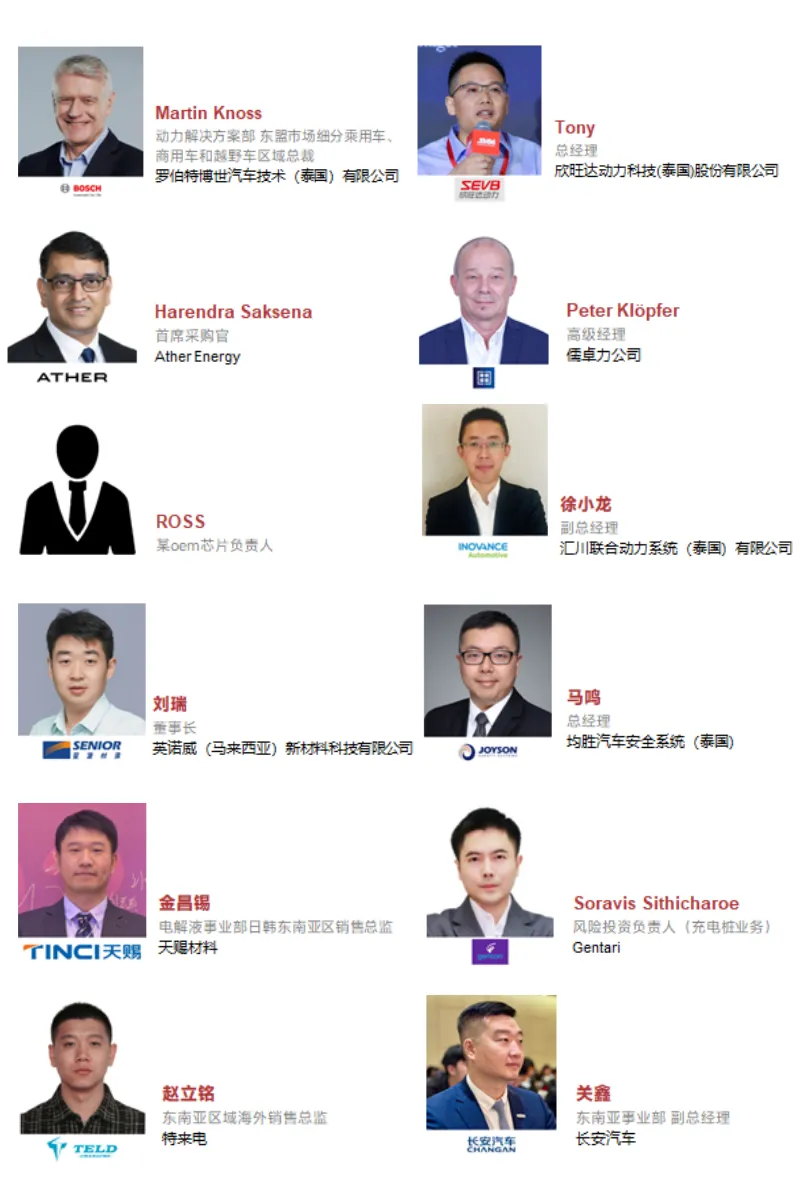
· Martin Knoss, Regional President, ASEAN Market Segment for Passenger Cars, Commercial Vehicles, and Off-Road Vehicles, Powertrain Solutions Division, Robert Bosch Automotive Technology (Thailand) Co., Ltd.
· Harendra Saksena, Chief Procurement Officer, Ather Energy
· Peter Klöpfer, Senior Manager, Rutronik
· Ming Ma, General Manager, Joyson Safety Systems (Thailand)
· Yoshinobu Egawa, China Region Head, SIIX
· Xin Guan, Deputy General Manager, Changan Automobile Southeast Asia Co., Ltd.
11:15-12:00
Panel Discussion: Southeast Asia Automotive Supply Chain—Imports (Services, Pricing, and Localization Feasibility)
Moderator:
Yanting Yi, VP, SMM Information & Technology Co., Ltd.
Invited Companies: Baosteel Thailand, Shougang Group, Lizhong Group, Delta Aluminum Co., Ltd., Anhui Xinbo
12:00-13:30
Lunch + Networking
13:30-14:15
Panel Discussion: Thailand's Electrification and Core Component Localization Progress
Guest Speakers:
· Xiaolong Xu, Deputy General Manager, Inovance United Power System (Thailand) Co., Ltd.
· Ross, OEM Chip Lead (Anonymous)
Invited Companies: Shanghai Edrive, SVOLT Energy Technology, Gotion High-tech, BOI, Thai Automotive Association
14:15-14:45
Silicon Steel for NEV Motors
Guest Speaker:
Hunan Hongwang New Material Technology Co., Ltd.
14:45-15:10
Tea Break
15:00-15:55
Panel Discussion: "Charging Pile Infrastructure: Unlocking the Last Mile of Southeast Asia's NEV Revolution"
Guest Speakers:
· Liming Zhao, Overseas Sales Director, Teld Southeast Asia
· Soravis Sithicharoe, Venture Capital Lead (Charging Pile Business), Gentari
15:55-16:25
TBD Session
Guest Speaker:
GFEX
16:25-17:10
Panel Discussion: Southeast Asia Investment Models: Pros and Cons of Joint Ventures vs. Wholly Owned Subsidiaries
Invited Companies: Thairung, CP Group, Toyota, Honda, SAIC MG, Foton, Chinese Wholly Owned Enterprises
17:10-17:40
TBD Session
19:00-21:00 Cocktail Dinner
DAY 2
09:00-09:30
TBD Session
09:30-10:20
Panel Discussion: Global Market Order Logic for Southeast Asia's Local Supply Chains
Invited Companies: ZF Asia Pacific, BMW Asia Pacific, Faurecia Asia Pacific, Mercedes-Benz Asia Pacific
10:20-10:45
Tea Break
10:45-11:35
Panel Discussion: Battery Materials Supply Chain—Cell Chemistry and Southeast Asia Synergy Potential
Guest Speakers:
· Tony, General Manager, Sunwoda EVB Technology (Thailand) Co., Ltd.
· Rui Liu, Chairman, Innovia (Malaysia) New Material Technology Co., Ltd.
· Changseok Kim, Sales Director, Japan & South Korea & Southeast Asia, Electrolyte Division, Tinci
Invited Companies: Anode/Cathode Material Suppliers, Battery Manufacturers
11:35-13:00
Lunch + Networking
13:30-17:30
Automaker-Parts Supplier Matchmaking Session
Scan the QR code for conference details.
Sneak Peek: Top Automakers' Parts Demand
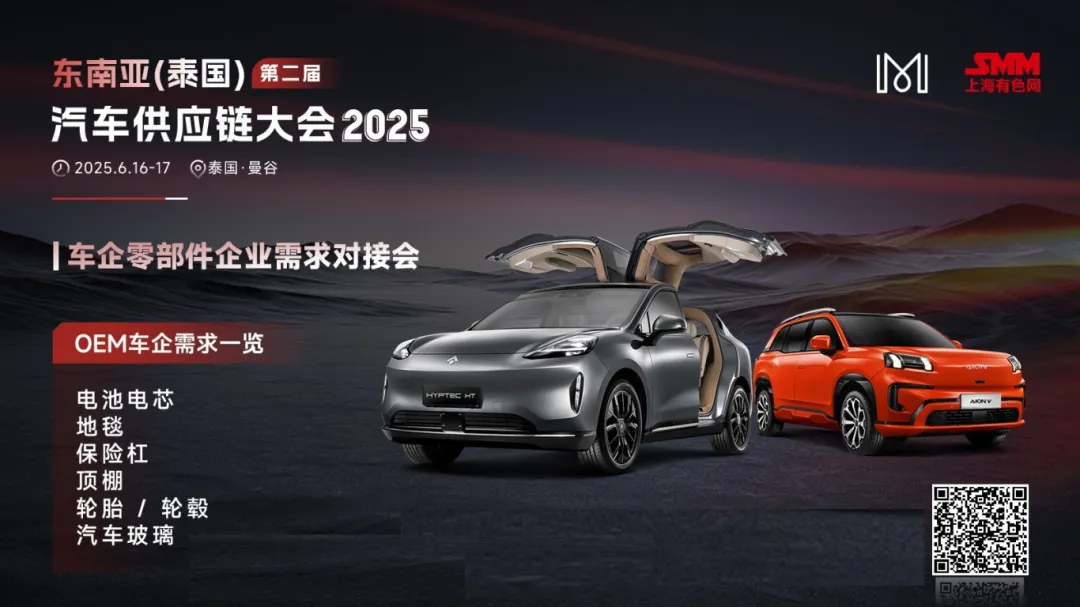
GAC Aion
Procurement Needs: Battery cells, carpets, bumpers, headliners, tires/wheel hubs, automotive glass
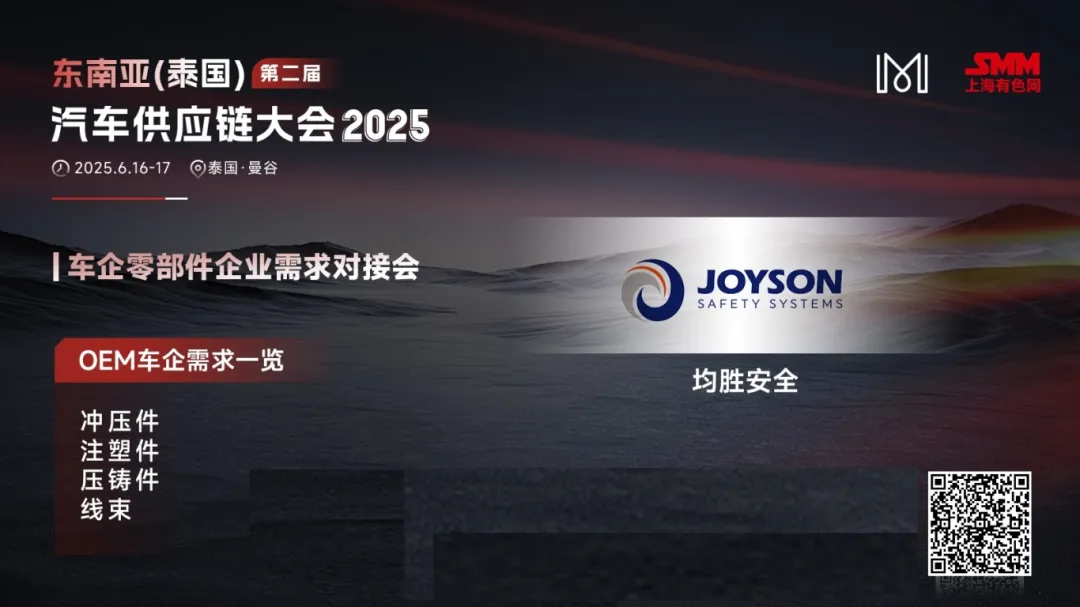
Joyson Safety
Procurement Needs: Stamping parts, injection-molded parts, die-cast parts, wiring harnesses
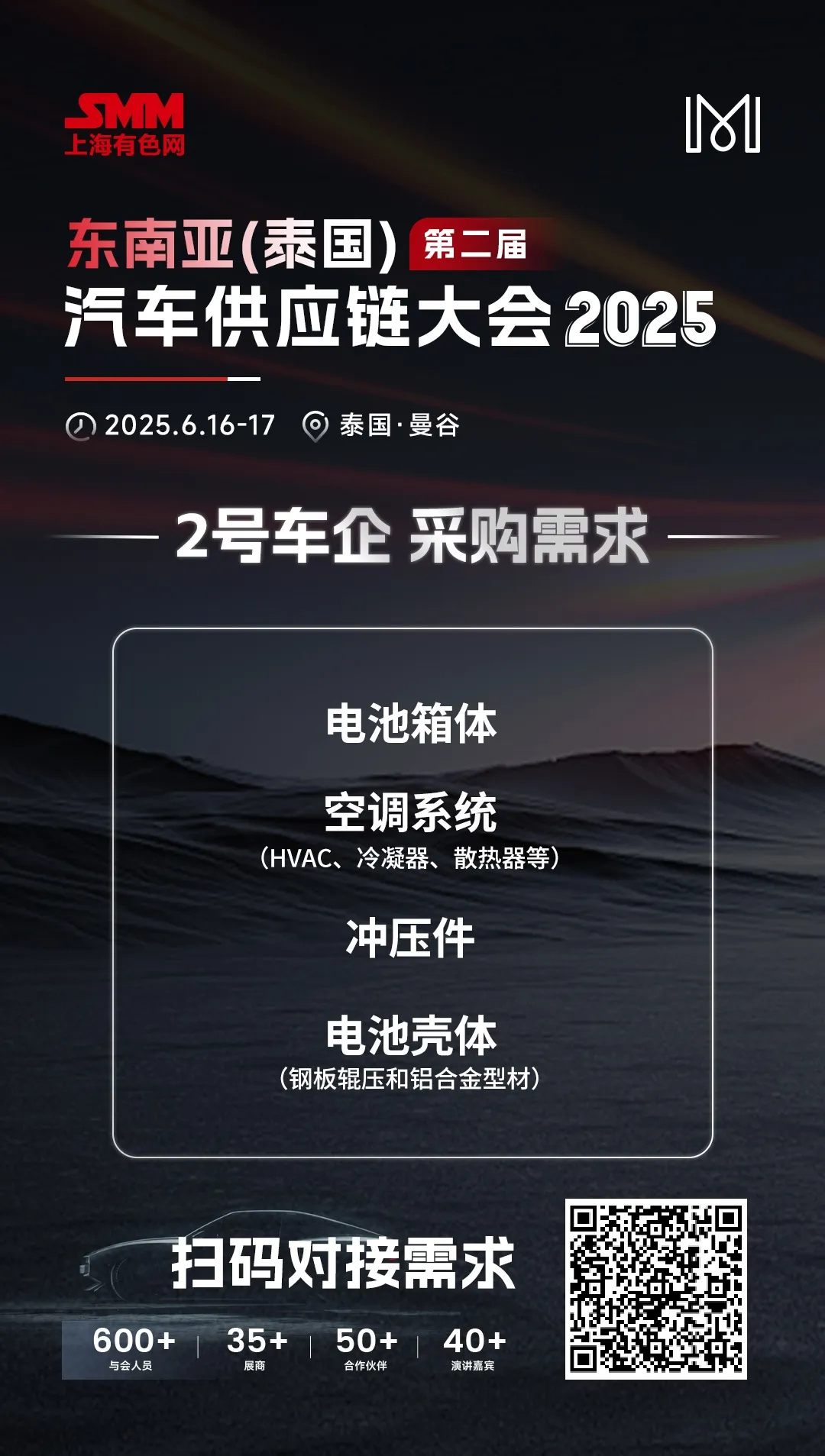
Automaker No. 2
Procurement Needs: Battery enclosures, HVAC systems (condensers, radiators, etc.), stamped/rolled battery casings (steel plate and aluminum profiles)
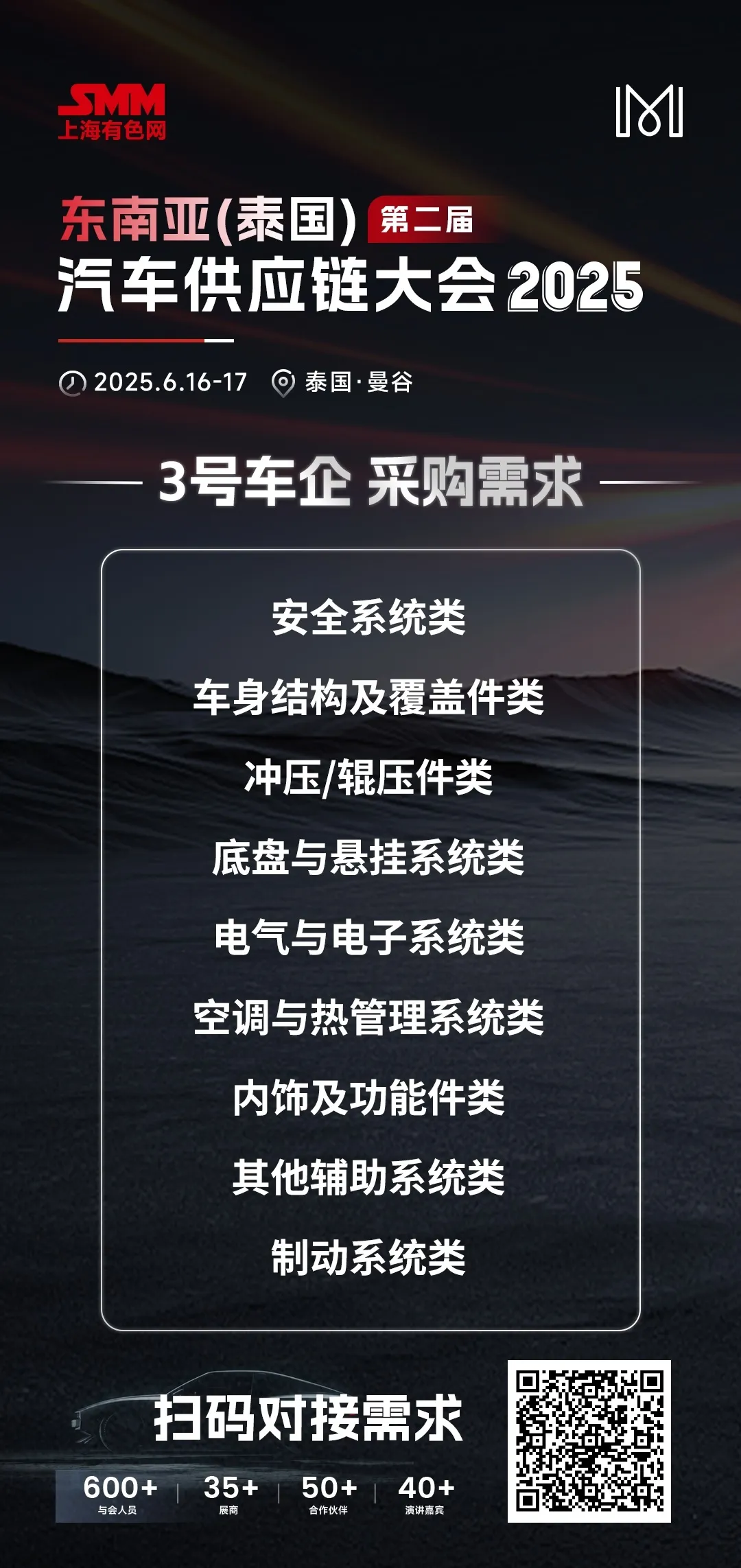
Automaker No. 3
Procurement Needs: Safety systems, body structures and panels, stamped/rolled parts, chassis and suspension systems, electrical and electronic systems, HVAC and thermal management systems, interior and functional parts, auxiliary systems, braking systems
Scan the QR code for conference details.
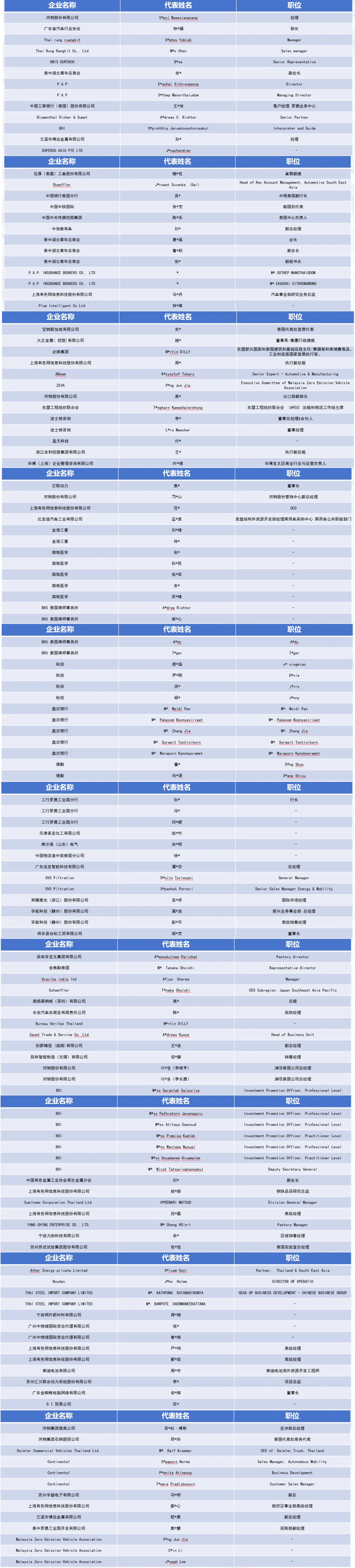
Speaker Lineup
Confirmed Guest Speakers
More to be announced...
Previous Guest Speakers
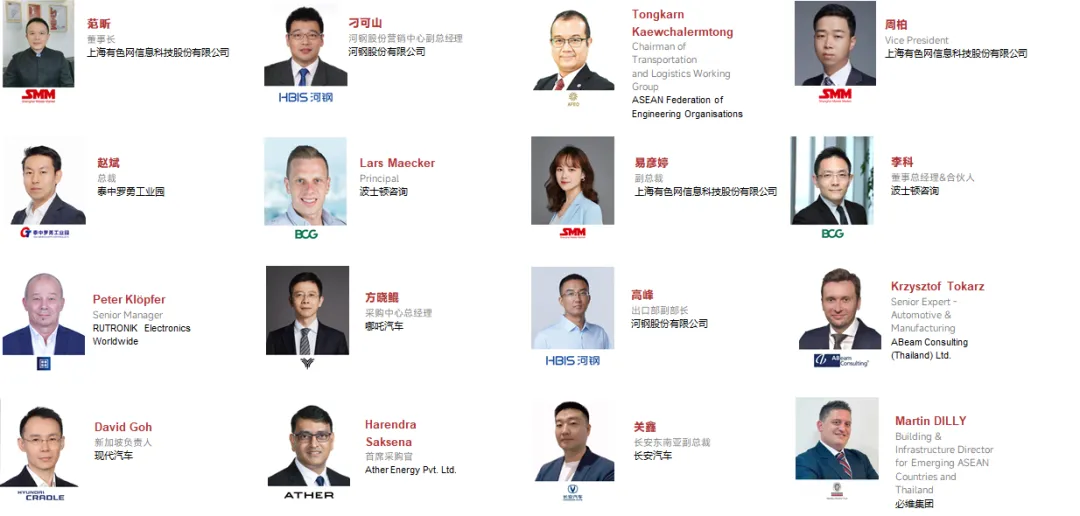
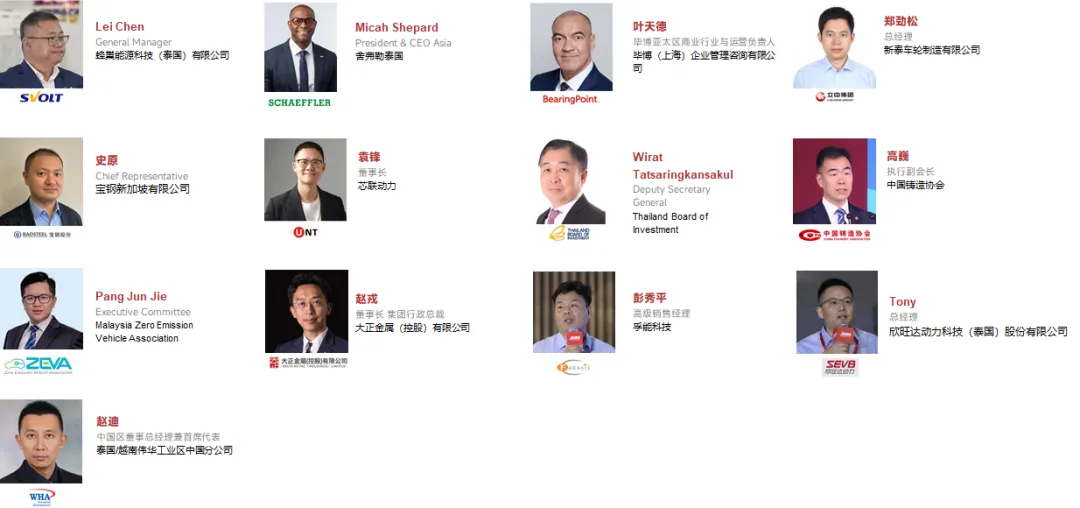
Scan the QR code to view conference details
Exhibitor Recommendation
Xinan Technology
Booth No. A07
Main Products:Aluminum alloy parts for turbochargers; aluminum alloy casings for gearboxes and reducers; hydrogen fuel cell motor casings; inverter casings
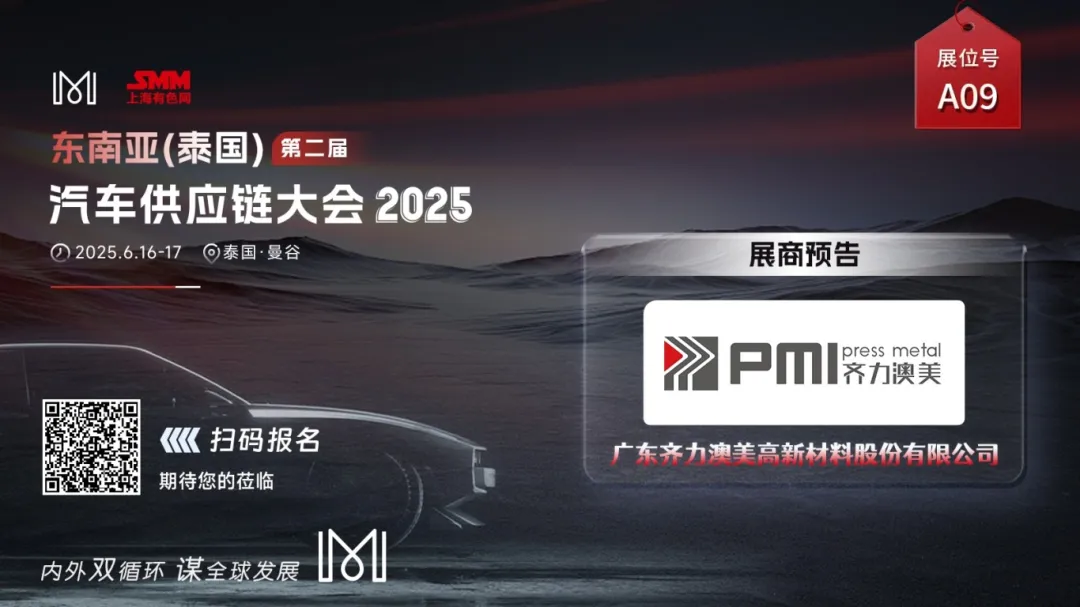
Press Metal International
Booth No. A09
Main Products:Production and processing of aluminum extrusion products for multiple industrial fields, including automotive lightweighting, energy systems, and 3C electronics
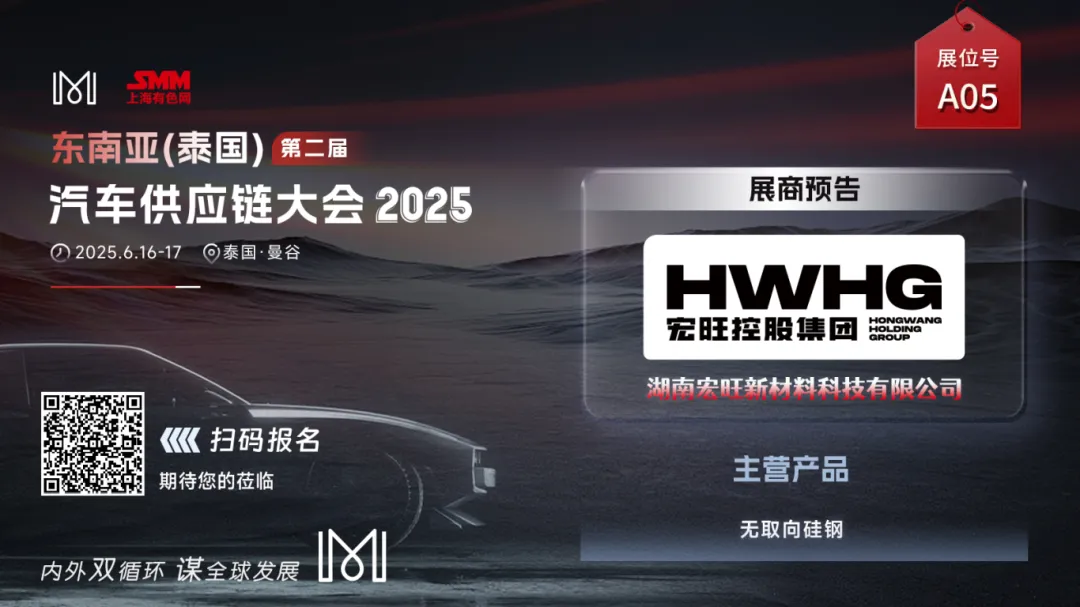
Hongwang
Booth No. A05
Main Products:Non-oriented silicon steel
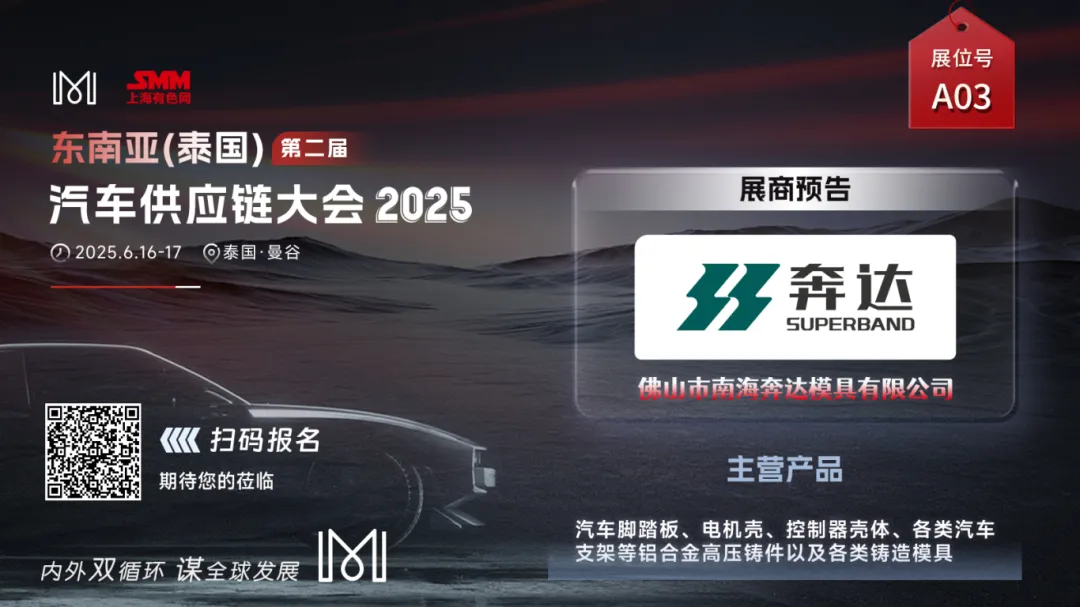
Benda
Booth No. A03
Main Products:Die-casting products, aluminum alloy casting molds
Scan the QR code to view conference details
Scan the QR code to view conference details
Conference Information
Special Supporter
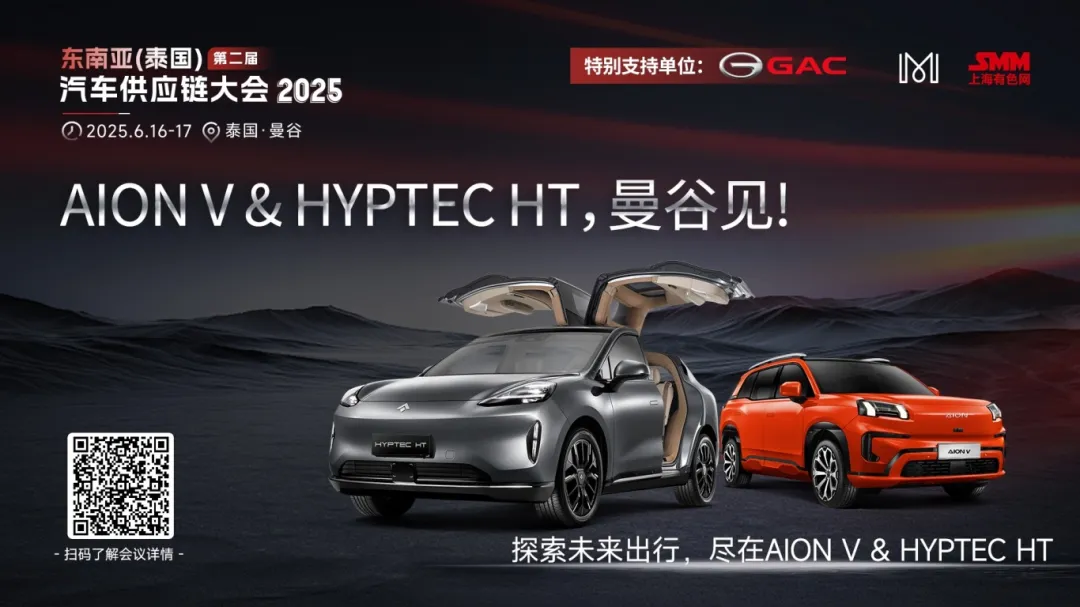
GAC Aion
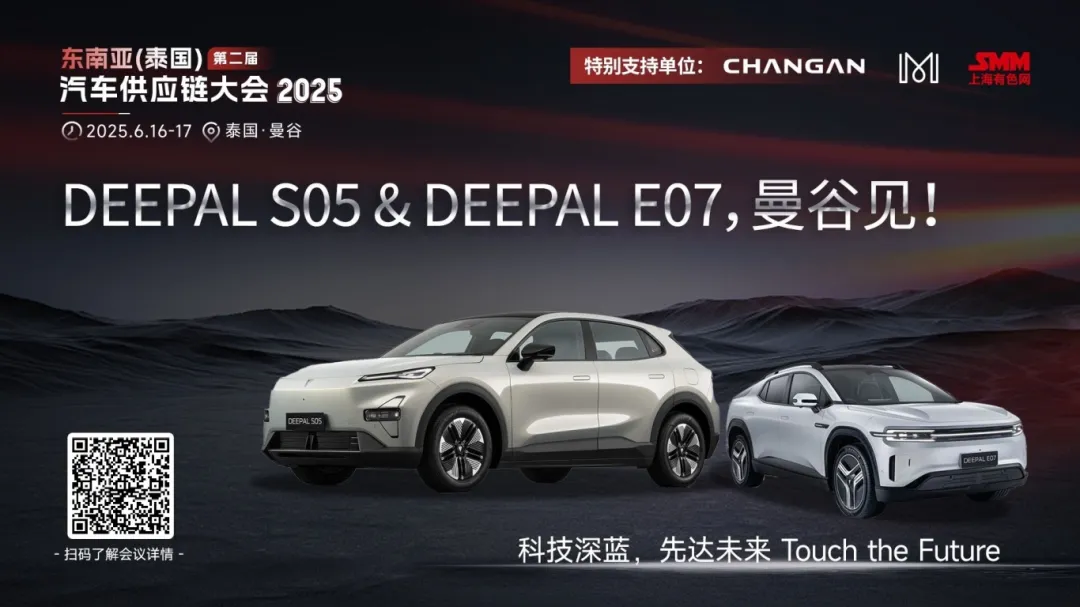
Changan Automobile
Conference Name: 2025 SMM 2nd Southeast Asia Automotive Supply Chain Conference
Conference Date: June 16-17
Conference Venue: Hyatt Regency Bangkok Suvarnabhumi, Bangkok, Thailand
Scan the QR code to view conference details


