

13685results found for '哪家平台可精准定位找人。运营最好的伙伴2026社工库最新数据在线查询网站✔️ckck.shop'
News
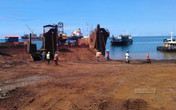 【SMM Analysis】Indonesian Nickel Initial Outlook in 2026: Navigating the RKAB Quota Crunch
Indonesia's 2026 nickel production might potentially face a severe supply crunch as the government’s 270 million tonne RKAB quota ceiling falls significantly short of the 343 million tonnes required by surging downstream projects. With major mines like Weda Bay facing drastic 71% cuts and administrative bottlenecks paralyzing sales, the market remains in a high-tension deficit, pinning its hopes on a potential July quota revision to stabilize the industry.
Feb 12, 2026 14:49- Surge in Prices of Key Metals Intensifies Cost Pressure on NEV Traction Motors and OEMs【SMM Analysis】
Metal materials are widely used in automotive components, and their price fluctuations significantly impact cost structures. According to SMM estimates, a typical NEV's cost breakdown is as follows: power battery (35%-40%), traction motor and motor controller (10%-20%), body/chassis/interior (30%), and other electronics (7%). This analysis focuses on the traction motor system, as SMM has extensively covered batteries elsewhere. Within the motor system (10%-20% of total vehicle cost), raw materials account for the largest share. Key metal inputs include rare earth-neodymium iron boron (NdFeB) magnets (30%-35%) , copper-enameled wires (15%) , and aluminum-structural components (20%) . The simultaneous surge in these metals from late 2025 to early 2026 has placed immense cost pressure on motor manufacturers and NEV OEMs . 1. Rare Earth Metals: Supply Squeeze and Demand Resilience Drive Prices Up Rare earth prices, particularly for praseodymium-neodymium (PrNd) metal, have risen sharply. As of February 9, 2026, PrNd prices reached 975,000–985,000 RMB/ton , a year-to-date increase of 33.1% . This acceleration stems from tight supply (limited upstream output, weak production activity, and reduced spot availability due to long-term contract deliveries) and robust demand (steady overseas orders for magnetic materials and growing expectations for NEVs and e-bikes in 2026). These factors collectively pushed prices upward . Motor manufacturers face greater challenges than magnetic material suppliers. They must absorb not only soaring rare earth costs but also high copper prices. Compounding this, motor makers struggle to pass cost increases downstream . NEV OEMs, grappling with fierce market competition, resist price adjustments. Consequently, motor producers are caught between expanding losses (if they continue production) and losing market share (if they halt operations). Their weak bargaining power, due to proximity to concentrated downstream customers, exacerbates the strain . 2. Copper: Structural Supply-Demand Imbalance and Financial Factors Copper prices rose sharply from 87,000 RMB/ton in late 2025 to 105,000 RMB/ton in early 2026 , a gain of over 20% , and have remained elevated. This rally was driven by: Supply-chain constraints : Production disruptions in major copper-producing countries (e.g., Chile, Peru), geopolitical tensions, and logistics bottlenecks limited short-term supply. Financial influences : Global liquidity conditions and inflation expectations attracted speculative capital, amplifying price volatility. Strong demand : Sustained optimism regarding data centers and cable demand further supported prices . The impact on motors is direct and significant. Copper, critical for stator and rotor windings, constitutes a substantial portion of motor raw material costs. The price surge adds hundreds of RMB to the cost per motor , translating to billions of RMB in additional annual expenses for large-scale OEMs. This pressure cascades through the supply chain, squeezing margins for material suppliers, motor makers, and vehicle manufacturers. While some industrial motor firms have raised prices, NEV OEMs have so far absorbed the costs, further straining their profitability . 3. Aluminum: Tight Fundamentals Amid Energy Transition Demand Aluminum prices climbed nearly 10% from December 2025 to January 2026, primarily due to structural supply-demand tightness . Demand is bolstered by global energy transition trends (e.g., NEV bodies, battery trays, and e-drive casings) and solar PV growth. On the supply side, aluminum production—highly energy-intensive—faces pressure from elevated global power prices, leading to unstable operational rates. Financial investors' focus on "green metals" has also contributed to price gains . Although aluminum's cost sensitivity is lower than copper's, it is widely used in motor housings, end covers, and cooling systems. Price increases directly raise motor manufacturing expenses, costing hundreds of millions of RMB for producers at million-unit annual scales and eroding margins for motor suppliers and OEMs . 4. Path Forward: Technology and Supply Chain Adaptation The concurrent rise in rare earth, copper, and aluminum prices has created unprecedented cost pressure. Motor and vehicle manufacturers urgently seek cost reductions, but technological solutions (e.g., flat-wire motors , material recycling ) require time. Short-term strategies include long-term supply contracts and futures hedging to manage risks. Long-term success will hinge on material innovation (e.g., reducing rare earth content, optimizing aluminum-for-copper substitution) and vertical supply chain integration to navigate resource constraints . SMM advises industry players to closely monitor policy shifts and alternative technologies, adapting procurement and production strategies dynamically
Feb 12, 2026 15:04 - Gearing Up for 2026! Magnesium Market Ends January on a Stable Note, Nearly 300,000 mt of Demand Growth Boosts New Industry Prosperity [SMM Domestic Analysis]
[Gearing Up for 2026! Magnesium Market Wraps Up a Stable January, Nearly 300,000 mt of Additional Demand to Boost Industry's New Prosperity] The magnesium market's performance for the year has now concluded. Price fluctuations in the magnesium market during 2025 may not have stood out among nonferrous metals, but it is precisely this past stability that is expected to foster the potential for nearly 300,000 mt of additional magnesium alloy demand growth in 2026. The magnesium metal market in 2026 is set to embark on a year of prosperity, marking a crucial step toward a thriving future. The industry is poised to write a new chapter of growth, which is highly anticipated across the sector. As we bid farewell to the old and welcome the new, on behalf of the SMM Magnesium Team, I would like to extend our sincerest gratitude to colleagues in the industry, magnesium enterprise partners, experts, and scholars who have long cared for and supported SMM. Wishing everyone a prosperous New Year, immediate success, abundant wealth, and lasting good fortune!
Feb 12, 2026 13:59 - The Automotive Industry Started the Year on a Stable Note, NEV Exports Grew Rapidly, and Trade-In Subsidies Emerged in Succession [SMM Special Report]
In mid-February 2026, the CAAM and the China Power Battery Industry Innovation Alliance successively released data related to the automotive and power battery markets for January 2026. According to analysis by the China Association of Automobile Manufacturers, in January 2026, the automotive industry overall operated steadily, the passenger vehicle market experienced some decline, the commercial vehicle market continued its positive trend, the new energy vehicle market operated smoothly, and auto exports maintained growth.......SMM compiled relevant data for the automotive market and power battery market in January 2026 for readers' reference. Automotive Sector CAAM: Auto Production and Sales Both Exceeded 2 Million Units in January 2026, Production Edged Up YoY In January, auto production and sales reached 2.45 million and 2.346 million units respectively, with production up 0.01% YoY , while sales fell 3.2% YoY, and dropped 25.7% and 28.3% MoM respectively. CAAM: China's NEV Production and Sales Reached 1.041 Million and 945,000 Units Respectively in January 2026, Up 2.5% and 0.1% YoY In January, NEV production and sales reached 1.041 million and 945,000 units respectively, increasing 2.5% and 0.1% YoY respectively , with NEV new car sales accounting for 40.3% of total new car sales. CAAM: Auto Exports Continued Growth in January, NEV Exports Saw Rapid Growth In January, auto exports reached 681,000 units, up 44.9% YoY , but down 9.5% MoM . NEV exports were 302,000 units, doubling YoY and rising 0.5% MoM ; traditional fuel vehicle exports were 380,000 units, up 18.8% YoY , but falling 16.1% MoM. Regarding the January auto market, CAAM stated that the automotive industry overall operated steadily, the passenger vehicle market saw some decline, the commercial vehicle market continued its positive trend, the NEV market operated smoothly, and auto exports maintained growth. The main factors contributing to the market decline were: first, the transition adjustment of the NEV purchase tax policy; second, many local car purchase subsidy policies were at the annual transition period; third, some consumer demand was released in advance during 2025. In the first month of 2026, the state intensively introduced a series of policies benefiting people and enterprises to support people's livelihoods and economic development. Among these, the "program of large-scale equipment upgrades and consumer goods trade-ins" policy transitioned smoothly and orderly, with various regions successively following up and releasing implementation rules; the "Work Plan for Accelerating the Cultivation of New Growth Points in Service Consumption" focused on key areas such as the automotive aftermarket service to stimulate market vitality. With the refinement and implementation of relevant policies, it is expected to help stabilize and rebound market demand, supporting the stable operation of the industry. According to CAAM, the 15th Five-Year Plan period is a critical window for China's automotive industry to transition towards high-quality development, requiring the industry to focus on improving quality and efficiency while maintaining stable market operations. In terms of power batteries, China's cumulative sales of power and ESS batteries in January reached 148.8 GWh, up 85.1% YoY In January, China's sales of power and ESS batteries totaled 148.8 GWh, down 25.4% MoM , but up 85.1% YoY . Among these, power battery sales were 102.7 GWh, accounting for 69.0% of total sales, down 28.6% MoM but up 63.2% YoY; ESS battery sales were 46.1 GWh, accounting for 31.0% of total sales, down 17.0% MoM but up 164.0% YoY. In January, China's combined exports of power and ESS batteries reached 24.1 GWh, down 26.0% MoM but up 38.3% YoY , accounting for 16.2% of that month's sales. Among these, power battery exports were 17.7 GWh, accounting for 73.3% of total exports, down 7.1% MoM but up 59.3% YoY; ESS battery exports were 6.4 GWh, accounting for 26.7% of total exports, down 52.6% MoM but up 1.4% YoY. In January, domestic power battery installations totaled 42.0 GWh, up 8.4% YoY In January, domestic power battery installations reached 42.0 GWh, down 57.2% MoM , but up 8.4% YoY . Among these, ternary battery installations were 9.4 GWh, accounting for 22.3% of total installations, down 48.6% MoM but up 9.6% YoY; LFP battery installations were 32.7 GWh, accounting for 77.7% of total installations, down 59.1% MoM but up 8.1% YoY. New automakers showed divergent YoY growth performances in January, with Leap Motor continuing to "lead the pack," while Xiaomi Auto delivered over 39,000 units in its first month According to statistics compiled by a CLS reporter on the January sales of 15 A/H-share listed automakers, nine companies achieved YoY growth, accounting for 60% of the total. The increase in NEV sales and expansion into overseas markets were key drivers of overall growth for these automakers. SAIC sold 327,000 units in January, up 23.94% YoY, returning to the top sales position. The NEV segment continued to gain momentum, with SAIC selling 85,000 NEVs in January 2026, up 39.7% YoY, placing its sales volume in the industry's leading tier. As for Geely, which ranked second, its January sales reached 270,200 units, up 1.29% YoY and 14.08% MoM, making it the only automaker to achieve positive growth both year-on-year and month-on-month. Geely stated, "2026 is a major product year for Geely Auto. The company will launch 1-2 new products each quarter, covering multiple new hybrid car models and a new generation of methanol-hydrogen energy models, aiming to hit the full-year sales target of 3.45 million units." On the export front, Geely has set its 2026 export sales target at 640,000 units, representing a YoY increase of over 50%. In the new energy vehicle market for January, based on the delivery figures released by major automakers, deliveries MoM from December 2025 saw varying degrees of decline across companies. Among them, Leap Motor continued to lead in 2026, ranking first among new automakers with deliveries of 32,059 units, up 27.37% YoY but down 46.94% MoM. To stabilize the market, Leap Motor accelerated its channel development, recently adding 85 new stores. As of January 5, the total number of stores nationwide reached 1,068, ensuring more users can conveniently experience Leap Motor’s products and services. On February 2, Leap Motor launched new car purchase benefits for February, including a New Year cash discount of 11,000 yuan, a New Year friends reward offering up to 10,000 energy points, and a New Year financial benefit with up to 5 years of zero interest. Li Auto regained momentum in January, ranking just behind Leap Motor with 27,668 units delivered, down 7.55% YoY and 37.47% MoM. As of January 31, 2026, Li Auto’s cumulative historical deliveries reached 1,567,883 units. On February 5, Li Xiang, Chairman of Li Auto, stated on social media that the new Li L9 will be launched in 2026, describing it as “not just a car, but a pioneering work of embodied AI robots.” Caixin reporters learned that Li Auto has established an AI company structure, including teams for computing power and data, base models, software, and hardware, to build capabilities for creating “silicon-based humans.” As of January 31, 2026, Li Auto had 547 retail centers nationwide, covering 159 cities, along with 547 after-sales service and authorized service centers, covering 221 cities. The company has put into use 3,966 Li Auto supercharging stations across the country, equipped with 21,945 charging piles. NIO’s January deliveries totaled 27,182 units, up 96.08% YoY but down 43.53% MoM. On the afternoon of February 1, the 60,000th new ES8 was delivered in Guangzhou, taking 134 days to achieve this milestone. On the same day, the NIO brand launched an ultra-low-interest car purchase plan for the new ET5, ET5T, ES6, and EC6, while the Ledao brand introduced a similar plan for the Ledao L60 and L90, featuring a 7-year term with a 0.49% annualized fee rate, zero financial service fee, and zero penalty for early repayment. The Firefly brand also rolled out a 7-year ultra-low-interest car purchase plan, with locked orders receiving a special Year of the Horse New Year surprise gift pack. XPeng Motors delivered 20,011 new vehicles in January, down 34.07% YoY and 46.65% MoM. During the same month, the XPeng X9 continued its strong sales performance, with 4,219 units delivered, up 413.9% YoY. By the end of January, its cumulative deliveries reached 51,897 units, making it the fastest model among domestic new automakers' MPVs to exceed 50,000 units in deliveries. Also in January, the 2026 XPeng X9 all-electric version opened for reservations. As the "world's longest-range 5C all-electric large seven-seater," the new model aligns fully in product strength with the popular super range-extended version. From now until the new car's launch, a 2,000 yuan deposit can be used to offset 7,000 yuan of the car purchase price. Additionally, for Xiaomi Auto, official Weibo data showed that January deliveries exceeded 39,000 units, even surpassing Leap Motor, which had been leading among new automakers. On the same day, Xiaomi also announced related car purchase benefits for the Xiaomi SU7 and Xiaomi SU7 Ultra. The entire Xiaomi YU7 series is eligible for a "7-year low-interest" offer! A new low-monthly-payment option is available, with a down payment starting at 99,900 yuan and monthly payments as low as under 2,000 yuan. For orders placed before 24:00 on February 28, a "3-year zero-interest" option is also available, with a down payment starting at 74,900 yuan and monthly payments from 4,961 yuan. At the same time, customers can enjoy up to 66,000 yuan in limited-time car purchase benefits. Regarding store expansion progress, Xiaomi Auto stated that it added 9 new stores in January, bringing the total to 484 stores across 139 cities nationwide. In February, it plans to add 6 more stores, expected to cover two new cities: Jiangmen and Zhoukou. As of January 31, there were already 270 service outlets nationwide, covering 159 cities. As for BYD, the leading power battery manufacturer, its January sales reached 210,051 units, with cumulative new energy vehicle sales exceeding 15.3 million. BYD exported a total of 100,482 new energy vehicles in January. Notably, there is new progress in BYD's solid-state battery development. According to a Cailianshe reporter from BYD's investor relations department, BYD is exploring multiple routes in the solid-state battery field, with sulfide solid-state batteries as a key technical direction, achieving breakthroughs in battery lifespan and fast charging. Small-scale production is expected by 2027. In the sodium-ion battery sector, BYD is already in the development phase of the third-generation product technology platform and has developed sodium-ion battery products capable of 10,000 cycles. The mass production period will be determined based on actual market and client demand. Cui Dongshu, Secretary General of the Passenger Car Association, commented that, given the vehicle purchase tax exemption policy has just ended, only some provinces and cities have currently launched vehicle replacement and renewal subsidy policies; coupled with the fact that mid-January last year was the peak sales period before the Chinese New Year, the relatively weak auto retail performance in January was reasonable due to the timing shift of the Chinese New Year holiday. He predicted that subsequently, as local replacement subsidy details are gradually refined, subsidy application channels become smooth, and coupled with the gradual release of potential car purchase demand before the Spring Festival, the auto retail market is expected to gradually recover and improve. National and Local Policies Promoting Auto Consumption Mentioned in Early 2026; Over 20 Regions Launch New Trade-in and Car Purchase Subsidy Policies Entering 2026, with the phase-out of national subsidies, multi-pronged policies to promote consumption are being intensively rolled out from the national to local levels. According to incomplete statistics, over 20 provinces, cities, and autonomous regions, including Beijing, Shanghai, Chongqing, Zhejiang, and Sichuan, have so far released details for activities such as automobile trade-ins, retirement and renewal, or car purchase subsidies. On December 31, 2025, the General Office of the Ministry of Commerce and seven other departments issued the "Detailed Implementation Rules for Automobile Trade-in Subsidies in 2026," which officially took effect on January 1, 2026. It mentioned that in 2026, a one-time subsidy will be provided to individual consumers who retire gasoline passenger cars registered before June 30, 2013, diesel or other fuel passenger cars registered before June 30, 2015, or new energy passenger cars registered before December 31, 2019, and purchase new energy passenger cars included in the Ministry of Industry and Information Technology's "Catalog of NEV Models Eligible for Vehicle Purchase Tax Reduction and Exemption" or fuel-powered passenger cars with a displacement of 2.0 liters or below. For retiring the aforementioned eligible old vehicles and purchasing a new energy passenger car, a subsidy equivalent to 12% of the new car's selling price (including tax, the same hereinafter) will be granted, with the subsidy amount (rounded up to the nearest whole yuan, the same hereinafter) capped at 20,000 yuan. For retiring the aforementioned eligible fuel-powered passenger car and purchasing a fuel-powered passenger car with a displacement of 2.0 liters or below, a subsidy equivalent to 10% of the new car's selling price will be granted, with the subsidy amount capped at 15,000 yuan. The Passenger Car Association analyzed that the key words for the 2026 trade-in policy are not "further increase" but "more sustainable, more balanced, and more manageable." Changing the subsidy amount to a percentage of the car price with an upper limit aims to use subsidies more balancedly, avoiding situations where subsidies are suspended later due to rapid depletion of funds early on. The algorithm adjustment will also have a certain impact on the automobile market structure: the stimulus for low-priced car models is significantly weakened, while models priced between 160,000 and 200,000 yuan can fully utilize the subsidy, which is more favorable for upgrade replacement purchases. Producers need to meet market demand with product strength and financial schemes, emphasizing "long-term value" such as driving range, intelligence, and refueling/charging experience, rather than being driven by one-time subsidies. The China Automobile Dealers Association also issued a statement indicating that the 2026 automotive trade-in policy would strengthen overall coordination and promote the efficient and direct allocation of subsidy funds. This aims to allow limited funds to benefit more consumers, particularly meeting the needs of essential demand groups. The scope of benefiting vehicle owners is expected to further expand, with support priorities more clearly focused on encouraging the retirement of old vehicles and the purchase of energy-efficient and new energy vehicles. Implementation will emphasize leveraging market mechanisms to make subsidies more aligned with actual needs. The application process is clear and convenient, with improved supervision and management mechanisms. Overall, the policy is expected to continuously stimulate consumer vitality, adding new momentum for the transformation, upgrading, and high-quality development of the automotive industry. Since the beginning of 2026, according to incomplete statistics, multiple provinces and cities including Shanghai, Beijing, Sichuan, and Shandong have successively released detailed rules for automotive trade-ins, continuously promoting local automotive consumption: [Shanghai 2026 Automotive Trade-In Policy Implemented, Maximum Subsidy of 20,000 Yuan] Shanghai's 2026 automotive trade-in policy has been implemented. The Shanghai Municipal Commission of Commerce and seven other departments jointly released the "Detailed Implementation Rules for Shanghai's 2026 Automotive Trade-In Subsidy Policy," officially launching subsidy activities for vehicle retirement renewal and replacement renewal. Individual consumers can receive a maximum subsidy of 20,000 yuan. The policy has been in effect since January 1, 2026, with applications accepted until January 10, 2027. [Hubei 2026 Automotive Trade-In Subsidy Rules Implemented, Maximum Subsidy of 20,000 Yuan] The Hubei Provincial Department of Commerce, together with the Provincial Development and Reform Commission, Department of Economy and Information Technology, and five other departments, officially issued the "Detailed Implementation Rules for Hubei's 2026 Automotive Trade-In Subsidy." It specifies that special subsidies will be provided to individual consumers purchasing new energy and small-displacement fuel passenger vehicles through two main methods: retirement renewal and replacement renewal, with a maximum subsidy amount of 20,000 yuan. The policy officially took effect on January 1, 2026. [Xi'an 2026 Automotive Trade-In Subsidy Rules Implemented, Up to 20,000 Yuan Subsidy for Retiring Old Vehicles for NEVs] Xi'an released the "Detailed Implementation Rules for Xi'an's 2026 Automotive Trade-In Subsidy," clarifying that special subsidies will be provided to individual consumers purchasing new vehicles through two models: retirement renewal and replacement renewal. The policy covers the entire year, with subsidy applications accepted until January 10, 2027, further reducing citizens' car purchase costs and aiding the upgrade of the automotive consumer market. [Beijing 2026 Automotive Trade-In Subsidy Launched on February 9, Maximum Subsidy of 20,000 Yuan] The 2026 Beijing automotive trade-in subsidy policy has been officially announced. On February 6, reporters learned that Beijing officially released the "Beijing 2026 Automobile Trade-in Subsidy Implementation Plan," which is expected to launch two types of subsidies: "retirement and renewal" and "replacement and renewal." The application system will open at 10:00 on February 9. Eligible car purchase consumers can receive a maximum subsidy of 20,000 yuan. Among them, "retirement and renewal" refers to retiring an old vehicle and purchasing a new one. Consumers who purchase passenger NEVs can receive a subsidy of 12% of the new car's selling price, with a maximum subsidy amount of 20,000 yuan; those purchasing fuel-powered passenger vehicles with a displacement of 2.0 liters or below can receive a subsidy of 10% of the new car's selling price, with a maximum subsidy amount of 15,000 yuan. [Sichuan: Supports Automobile Replacement and Renewal, Maximum Subsidy of 15,000 Yuan] The Sichuan Provincial Development and Reform Commission and Department of Finance issued a notice on printing and distributing the "Sichuan Province 2026 Policies and Measures for Implementing Large-Scale Equipment Renewal and Consumer Goods Trade-in." The notice mentioned supporting automobile replacement and renewal. In 2026, individual consumers who sell passenger vehicles registered under their name and purchase new energy passenger vehicles included in the Ministry of Industry and Information Technology's "Catalog of NEV Models Eligible for Vehicle Purchase Tax Reduction and Exemption," or fuel-powered passenger vehicles with a displacement of 2.0 liters or below, will receive a one-time subsidy. For trading in for a new energy passenger vehicle meeting the above conditions, a subsidy of 8% of the new car's selling price will be provided, with a maximum subsidy amount of 15,000 yuan; for trading in for a fuel-powered passenger vehicle meeting the above conditions, a subsidy of 6% of the new car's selling price will be provided, with a maximum subsidy amount of 13,000 yuan. Cui Yan, Deputy Director of Guolian Minsheng Research Institute and Chief Automobile Analyst, stated that as various regions successively launch 2026 trade-in subsidies, coupled with the gradual launch of new car models after the Chinese New Year and before auto shows, auto sales are expected to stabilize and rebound. Regarding January's auto market sales, she mentioned that overall end-use demand for automobiles in January was relatively mediocre, primarily due to local subsidies on the policy side not yet being officially launched, and on the supply side, fewer new models being introduced by automakers. "Currently, these two factors have improved. Since mid-to-late January, local governments have successively launched trade-in subsidies; supply side, after the Chinese New Year and before auto shows, automakers will gradually launch new cars or begin pre-launch warm-up activities for new models." It is expected that automobile demand after the Chinese New Year is likely to stabilize and rebound. According to CCTV News, in 2026, the Ministry of Commerce, together with various regions and relevant departments, will further promote consumer goods trade-in work, focusing on areas like automobiles to further optimize policy implementation and continuously release consumption potential. According to big data from the Ministry of Commerce, as of February 5, 2026, 335,000 applications had been submitted for automobile trade-in subsidies, driving new vehicle sales of 53.77 billion yuan. This has effectively promoted the development of the automotive market and resource recycling, facilitating industrial quality improvement, upgrading, and green transformation. In January, the average price of new vehicles participating in the trade-in program exceeded 160,000 yuan, significantly higher than the previous year. Nationwide, 659,000 end-of-life vehicles were recycled, up 50.2% YoY. On February 9, the Ministry of Commerce held a symposium with automakers to discuss matters related to automobile distribution and consumption. Representatives from relevant automotive industry associations, research institutions, and enterprises attended the meeting. Vice Minister Sheng Qiuping was present and engaged in exchanges. Sheng Qiuping pointed out that China's ultra-large market has a solid foundation, the automotive consumption chain is long with great potential, and the sequential implementation of policies provides stable support, making it highly promising to expand automobile consumption across the entire chain. In 2026, the Ministry of Commerce will work with relevant departments to simultaneously pursue policy support and reform innovation, integrate the efforts of existing measures and incremental policies, optimize the implementation of automobile trade-ins, carry out pilot reforms in automobile distribution and consumption, improve industry management systems, and take multiple measures to promote the expansion and quality enhancement of automobile consumption. On February 12, as the Chinese New Year approached, the General Office of the Ministry of Commerce issued the "Notice on Effectively Implementing the Trade-in Program for Consumer Goods During the 2026 Chinese New Year Holiday." It mentioned that all regions should strengthen funding guarantees for trade-in subsidies on consumer goods during the Spring Festival, leverage the advantages of different channels, ensure policy implementation, and better meet consumer demand. In line with Spring Festival customs and to enhance the festive atmosphere, consumers are encouraged to go out for shopping. During the 9-day Chinese New Year holiday in 2026 (February 15–23), consumers will be fully supported to apply for subsidies on home appliance trade-ins, as well as purchases of new digital and smart products through offline channels. Consumers who purchase new vehicles during the 9-day holiday can apply for automobile trade-in subsidies in accordance with policy requirements.
Feb 12, 2026 11:24 - The most-traded SHFE tin contract continued to fluctuate with low volume before the holiday, while AI sentiment recovery drove prices to hold up slightly stronger. [SMM Tin Midday Review]
[SMM Tin Midday Review: The Most-Traded SHFE Tin Contract Continues to Trade in a Narrow Range with Low Volume Before the Holiday, AI Sentiment Recovery Drives Prices to Hold Up Slightly Stronger]
Feb 12, 2026 11:59 - With few transactions in the market before the holiday, market participants gradually entered the holiday period. [SMM Yangshan Spot Copper]
February 12, 2026: Today, warrant prices were $26-42/mt, QP February, with the average price flat from the previous trading day; B/L prices were $28-46/mt, QP March, with the average price flat from the previous trading day; EQ copper (CIF B/L) was $13-21/mt, QP March, with the average price flat from the previous trading day. Quotations referred to cargoes arriving in mid-to-late February. The spot market remained sluggish during the day, with both inquiries and offers inactive. Warrant was heard closed at $35-45, with QP covering February-March; cargoes for late February delivery were heard traded at $30-35/mt, QP March. A small amount of pyrometallurgy B/L for late February arrival was offered at $35-45/mt, QP March; EQ B/L for late February arrival was offered at $15-25, while EQ B/L for mid-to-early February arrival was offered at $10-20/mt, QP March.
Feb 12, 2026 13:28
Announcements
SMM has reviewed and refined its 2025 energy storage data, adjusting monthly shipment volumes and renaming data points for clarity.
DataFeb 11, 2026 09:58- Price[SMM Announcement] on publishing Copper grade A cathode premium, cif Rotterdam on February 24, 2026
Shanghai Metals Market (SMM) officially launched the Copper grade A cathode premium, cif Rotterdam, USD/(tonne) on February 24th, 2026.
PriceFeb 11, 2026 10:00 SMM will update its Alumina Monthly Cost Model from January 2026, incorporating VAT into bauxite costs and discontinuing certain regional indicators.
DataFeb 3, 2026 15:55