

9results found for 'trend Forecast'
Sort by : |
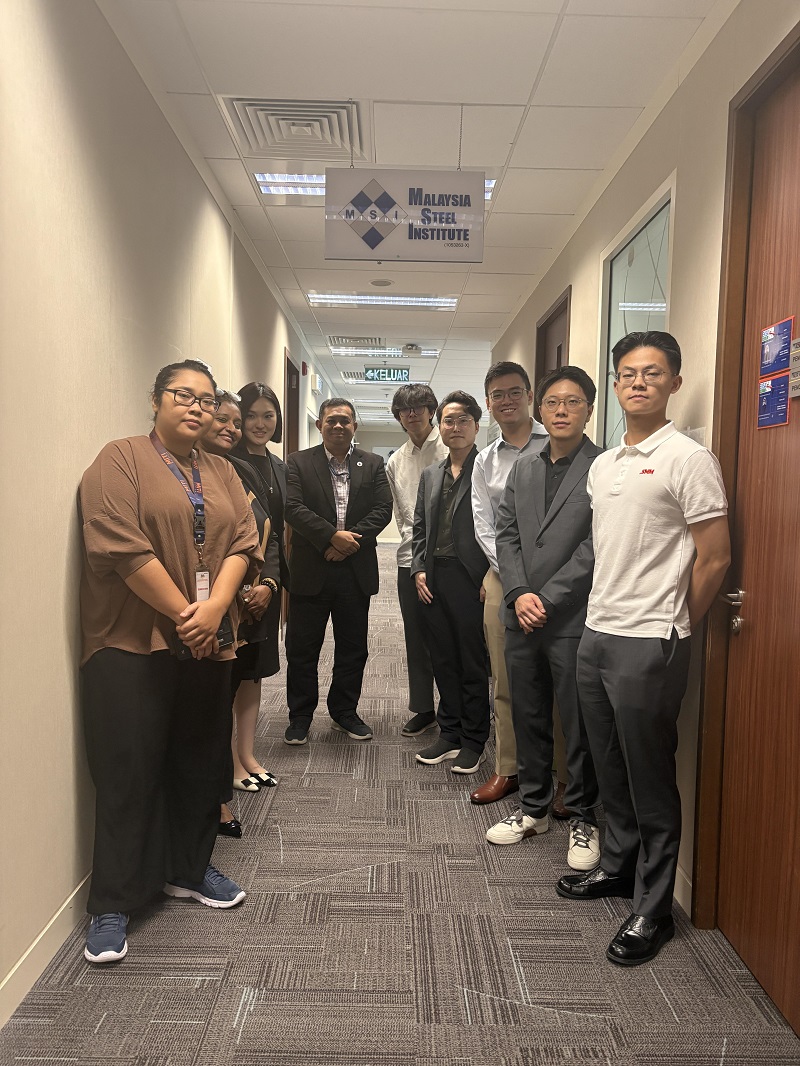 SMM Visits Malaysian Steel Institute (MSI) to Deepen Cooperation on the Southeast Asian Ferrous Metal Industry Chain
Kuala Lumpur, Aug 5 – At a time when the global ferrous metals sector is undergoing constant restructuring, ASEAN has emerged as a pivotal growth hub for the steel industry, fuelled by robust end-market demand, fast-expanding production capacity and shifting cross-border trade dynamics. Regional infrastructure upgrades, local capacity iteration, and trade policy adjustments are collectively driving ongoing changes in the supply-demand structure, pricing system, and supply chain of the ASEAN steel market. The industry urgently needs a specialized, international dialogue platform to address development pain points and unlock global business opportunities. Against this industry background, a delegation from Shanghai Metals Market (SMM) paid a special visit to the Malaysia Steel Institute (MSI) on August 4, and was warmly welcomed by MSI's team including CEO Ts. Dr. Nurl Muiz, Industry Relations and Liaison Shalini and Data Analyst Shamimi, etc. Both sides introduced their respective development overviews, and engaged in in-depth exchanges on cooperation directions, industry data services, exhibition synergy, and other topics, sorted out areas of cooperation alignment, seeking a long-term and mutually beneficial industry cooperation model. MSI presented its institutional positioning and core functions to SMM. As an industrial service organization under the jurisdiction of Malaysia's Ministry of International Trade and Industry (MITI), MSI serves as a key communication bridge between the Malaysian government and the steel industry. Built on a government-enterprise collaboration model, it has been deeply involved in the domestic steel industry for many years, responsible for public services such as industry standard setting, technology R&D, talent cultivation, and detection and testing, undertaking the function of coordinating the steady development of Malaysia's steel industry. Leveraging long-term industry surveys, MSI conducts in-depth market intelligence research on the Southeast Asian steel market, helping member enterprises enhance market competitiveness through data analysis services. The local government is actively advancing the green steel industry development agenda and increasing the green transformation of the steel sector, but enterprise awareness and industry supporting systems on the market side are lagging behind the policy promotion pace. In response, MSI hopes to connect with professional industry platforms to address the industry's development shortcomings, and hopes to rely on SMM's entire industry chain service capabilities to obtain targeted industry development solutions and implementation suggestions, thereby helping the local green steel industry and the entire ferrous metals industry chain achieve steady upgrades. MSI understands and affirms SMM's data service capabilities in the global steel industry, and intends to leverage SMM's industry chain data to improve regular monitoring of steel capacity, production, supply and demand, etc. in Southeast Asia. MSI has long maintained cooperation with multiple international industry organizations. This engagement with SMM aims to jointly enhance the research standards of Malaysia's steel industry and promote high-quality development of the industry. Exhibition-conference synergy is one of the key cooperation directions in this visit. In order to further penetrate the ASEAN metals market, deliver bilateral cooperation outcomes, and build a higher-standard cross-border industry exchange and cooperation bridge, SMM will host the 2026 SMM ASEAN Ferrous Metals Summit from November 26-27, 2026 in Kuala Lumpur, Malaysia. The summit focuses on the development trends of the entire ferrous metals industry chain in ASEAN, covering core categories such as steel, iron ore, and coke. It will delve deeply into key industry topics such as steel demand transformation driven by regional infrastructure upgrades, mineral resource development and utilization, cross-border trade and circulation, industrial green transformation, and market price trend forecasts. The summit will bring together mines, steel enterprises, traders, logistics institutions, financial platforms, and industry research experts globally, leveraging SMM's mature industrial data system and market analysis capabilities to provide authoritative market interpretations and efficient upstream-downstream matchmaking channels for participants. MSI expressed that it will provide promotional support for SMM's relevant industry summits, including official channel promotion, invitation of local quality enterprises, and industry resource matchmaking. Both sides reached a preliminary cooperation consensus in terms of exhibition collaboration, brand synergy, and resource sharing. The in-depth engagement with MSI and the cooperation consensus reached will also lay a solid foundation for the successful implementation of this summit, deepening regional industry penetration in the ASEAN region, and releasing regional industrial cooperation value. About the 2026 SMM ASEAN Ferrous Metals Summit This event is the premium platform in the ASEAN ferrous metals market that converge 400+ decision-makers from mines, mills, trading houses, processors, equipment and technology providers, and logistics operators at the same table — precisely when the regional order is being rewritten. Conference Highlights 1. ASEAN Steel Market Outlook An in-depth analysis of regional steel demand, with consumption expected to reach 87.9 million mt in 2026, driven primarily by Vietnam, Indonesia, and the Philippines. 2. China—ASEAN Trade and Supply Chain Restructuring Exploring shifting flows of HRC, billet, slab, and other steel products amid changing supply patterns, trade remedies, and regional market dynamics. 3. Capacity Expansion and Production Transition Examining ASEAN’s evolving steelmaking landscape, including BF-BOF capacity growth, EAF development, overseas investment, and new regional production hubs. 4. Trade Policies and Market Access Assessing anti-dumping measures, tariffs, RCEP-related opportunities, and regulatory changes reshaping steel trade across ASEAN. 5. High-Growth Demand and Product Opportunities Identifying opportunities from infrastructure, construction, automotive, and advanced steel applications, with a focus on Indonesia, Vietnam, and other emerging markets. 6. Executive Networking and Regional Cooperation Connecting leading producers, traders, buyers, investors, associations, policymakers, and industry experts across ASEAN, China, and global markets. Senior Speakers 2026 Scenes from Past Conferences Conference Agenda Contact: Horin Dong WhatsApp: +8618721310824 Email: horindong@smm.cn Scan the QR code for conference details and more discount information About SMM SMM has long been deeply engaged in global commodity industry services, continuously deepening cooperative ties with government and enterprise institutions and industry associations across various countries, and steadily expanding its global industrial service network. Leveraging a mature collaborative model with Indonesian government, enterprises, and associations, SMM has established a comprehensive closed-loop ecosystem for sharing overseas exhibition and conference information, continuously iterating and upgrading its industrial big data system to achieve efficient global market information exchange and joint resource building and sharing. SMM organizes 50+ professional events each year, including industry summits, industry forums, and field trips. Of these, 40 are deeply rooted in the Chinese market, nearly 10 are precisely positioned in core Southeast Asian markets, and a small number cover Europe and Africa. Overseas events have earned global industry recognition thanks to authoritative industry guest lineups, solid industry survey data, and precise supply-demand matchmaking services. SMM has organized a series of high-end summits in Indonesia in cooperation with local authorities such as the Ministry of Foreign Affairs and the Indonesia Nickel Miners Association (APNI), gathering 300+ industry elites, and were complemented by professional field trip activities along the overseas industry chain, comprehensively empowering regional industry exchanges and trade matchmaking.
Aug 5, 2026 17:04- SMM Motor Division Visits Ningbo Niulan Automation, Discussing Collaborative Innovation in Precision Intelligent Manufacturing and Motor Industry
SMM, July 28 – To deepen understanding of the high-end automation equipment manufacturing and technology trends in the motor industry chain, strengthen the foundation for industry surveys, and promote resource integration and collaborative innovation across the industry chain, on the afternoon of July 28, Fan Cui, head of the SMM Motor Business Unit, and her delegation visited Ningbo Niulan Automation Equipment Co., Ltd., where they held discussions with General Manager Li Chongcai and toured the production workshops to observe the operating conditions of full-line automation equipment. The visit was themed “ Focusing on Smart Equipment, Boosting Industry Collaboration .” During the discussion session, General Manager Li Chongcai elaborated on the company’s development layout, R&D system, and core product advantages. Deeply engaged in the field of motor-specific automation and smart equipment for years, the company’s product portfolio covers three major segments: standard standalone machines, non-standard full-line automated production lines, and complete smart detection equipment. This enables intelligent production covering the entire motor manufacturing process, from winding, paper insertion, magnet mounting, pressing, and bobbin assembly to finished-product performance testing and burn-in testing. After the discussion, accompanied by General Manager Li Chongcai, the SMM survey team visited the production, assembly, and equipment testing workshops, where they closely observed the assembly techniques, debugging processes, and finished-product testing conditions of various motor automation equipment. They gained detailed insights into the operating principles, process advantages, and mass-production stability of multi-station winding equipment, intelligent servo pressing equipment, and fully automatic motor lines, acquiring first-hand knowledge of the latest technology iterations and application capabilities in current motor automation equipment. Combining discussions and on-site workshop observations, this visit comprehensively enhanced SMM’s frontline understanding of the upstream motor automation and smart equipment sector, further enriching industry survey data and research bases, and laying a solid foundation for subsequent market analysis, trend forecasting, and precise upstream-downstream resource matching. About Ningbo Niulan Automation Equipment Co., Ltd. Founded in 2020, Ningbo Niulan Automation Equipment Co., Ltd. is located in Ningbo, Zhejiang Province. With technical expertise and specialization in motor manufacturing processes, the company continuously promotes advanced motor manufacturing processes and leads automation technology innovations. Its equipment is distributed across China and exported to countries including Russia, India, Iran, South Korea, and Turkey. The company’s existing plant area is 4,800 square meters. It is a manufacturing enterprise integrating R&D, production, sales, and services, with motor production automation equipment as its core business. The current team comprises 45 employees, including elite R&D engineers accounting for 40% (18 people), 5 software programming engineers, and 15 experienced debugging technical personnel. Excluding affiliated enterprises: Niute Precision Machinery currently has 12 employees, primarily providing processing and manufacturing of equipment parts for Niulan, equipped with CNC, slow wire, precision grinding machines, and other standard processing equipment, fully ensuring the efficient supply of equipment parts for Niulan. Choose Niulan equipment, create premium motors—efficient, reliable, reassuring. Company Contact: General Manager Li Chongcai Tel: 15356881507 SMM Contact: Director of Motor Division Fan Cui Tel: 13816522387 Email:
Jul 28, 2026 18:05 - Selenium Industry Development and Application [Minor Metal Conference]
On June 26, at the hosted by SMM Information & Technology Co., Ltd. (SMM) with title sponsorship from Guangxi Yusheng Germanium High-Tech Co., Ltd., Ou Haiguang, Chairman of Lianzhou Tuosheng New Energy Co., Ltd., Qingyuan, Guangdong, shared “The Development and Application of Selenium.” I. Global Selenium Market Overview The global selenium market exhibits a combination of steady overall growth and rapid structural upgrading. Global Selenium Market Characteristics The global selenium market presents the dual characteristic of “steady overall volume and structural upgrading.” Growth in traditional sectors is slowing, while high-value-added niche segments show strong potential. ► Overall Market: Moderate Growth It introduced the global selenium market size in 2025 and future compound annual growth rate, among other aspects. ► High-End Market: Rapid Expansion High-purity selenium used in electronics, semiconductors, and solid-state batteries is the core growth driver. The global high-purity selenium market reached $1.8 billion in 2023 and is expected to exceed $3.5 billion by 2030, with a strong CAGR of 10%. Selenium is a key material supporting the development of high-tech industries It is a fundamental material for developing new materials, new devices, and new consumer goods (pharmaceuticals, agriculture, food). Demand for selenium from military, new energy, and medical & health sectors is increasing daily. Ultra-high-purity rare and scattered metals have been designated as key national strategic emerging industries under the “Strategic Research on New Materials Powering the Nation by 2035” (2020). High-purity selenium was included by the National Development and Reform Commission (NDRC) in the “Catalogue for the Guidance of Key Products and Services in Strategic Emerging Industries” issued in Announcement No. 1 (2017). The EU identified selenium as a critical raw material for strategic low-carbon energy technologies (2020). Price Trend Review and Forecast First, it reviewed the selenium price trend in recent years. ► Future Trend Forecast, 2026-2027 The global economic slowdown is weighing on the profitability and operating rates of traditional selenium-consuming industries such as glass, ceramics, and pigments, causing prices of ordinary industrial-grade selenium products to continue falling under pressure. However, high-purity, customized high-end selenium products used in PV, electronics, and other sectors are seeing price support due to high technical barriers and scarce supply, with the market showing a clear divergence in price trends. ► Market Insight: Supply-Demand Pattern Driving Divergence As demand growth in traditional sectors such as PV glass slows, prices of basic products are heavily influenced by capacity. However, the technological barriers in high-value-added fields such as infrared, electronics, and solid-state batteries will support the price resilience of high-end selenium products, making them the core growth driver for future corporate profits. II. In-Depth Analysis of China’s Selenium Industry China is the global center for selenium production and supply, and its industry development trends have a decisive impact on the global market. Production and Supply: The World’s Core Producing Region China is the global center for selenium production and supply, accounting for nearly half of the world’s output, which continues to grow steadily. ► Production Scale and Growth: In 2025, China’s primary selenium production reached 2,030 mt (up 12% YoY), accounting for nearly half of the global total. The growth momentum came from the expansion of domestic copper smelters and their increased focus on the comprehensive recovery of rare and precious metals. ► Core Producing Region Distribution: Influenced by the layout of the copper smelting industry, China’s selenium is primarily produced in four provinces: Yunnan, Jiangxi, Anhui, and Hubei. The high degree of synergy between resources and the processing industry has formed a stable supply chain cluster. ► Industry Leader Landscape: Top-tier players such as Jiangxi Copper Corporation, Tongling Nonferrous Metals, Yunnan Copper, and China Daye Non-Ferrous Metals dominate production and are actively extending their reach into downstream deep processing, continuously refining their industry chain layout. ► Future Production Forecast: Production is expected to maintain an upward trend: it is projected to reach 2,165 mt in 2026 and further increase to 2,340 mt in 2027, continuously solidifying its core global supply position. Consumption Structure and Trends: Replacing Old Growth Drivers with New Ones ► Changes in China’s selenium consumption structure are a microcosm of global trends, with emerging applications rapidly on the rise. ● Metallurgy (32%): A traditional mainstay field, with relatively stable demand. ● Flat Glass (24%): Driven directly by the rapid development of the PV industry, maintaining solid growth. ● Agricultural and Livestock Health (21%): A beneficiary of the upgrade in health consumption, it has become an important growth point. ● Ceramics and Chemicals (13%): A traditional, low-end application affected by environmental protection policies and alternative technologies, with demand continuing to shrink. ★ Electronics, Infrared, and PV (8%): The fastest-growing segment and the core new momentum driving the industry’s long-term development. Trade Pattern: From Net Importer to Near-Balance China’s selenium trade pattern has undergone a historic transformation, gradually achieving self-sufficiency and control over its resource supply and demand. ► Historic Transformation: Reshaping the Supply-Demand Pattern In the past, as the world’s major selenium consumer, China was in a state of net imports for a long time. In recent years, thanks to the steady growth of domestic primary selenium smelting capacity and significant advances in recovery technologies for secondary resources like copper and selenium scrap, China’s reliance on selenium from outside China has dropped sharply, achieving a fundamental optimization of its trade structure. ► Key Milestone: 2025 Trade Data In 2025, China's selenium trade achieved a historic breakthrough: both imports and exports totaled 728 mt, remaining basically flat. This data marks China's successful shift away from a passive "resource-importing" model, achieving basic self-sufficiency in selenium supply and demonstrating strong risk resilience. ► Future Trend: Moving Toward Net Exporter Status Driven by both production growth and technological strengths, China is expected to continue expanding its selenium resource production scale and technology exports in the coming years. Leveraging its complete industry chain support and cost advantages, China is poised to gradually complete its transformation from a "net importer" to a "net exporter," further enhancing its discourse power in global selenium trade. ► Policy Support: Export Promotion, Brand Certification & Subsidies To support domestic superior resource products in international competition, the nation continues to implement industrial support policies. 1. High-purity selenium and selenium compound targets are included in the new materials export credit insurance support categories. 2. Key equipment imports for high-purity selenium compound synthesis and monocrystalline production are exempted from customs duties and import-stage VAT. This policy effectively strengthens the competitiveness of Chinese selenium products in the international market, providing strong policy support for the industry's "going global" strategy. III. High-Growth Track Analysis Amid broadly steady market growth, which sub-sectors are experiencing explosive expansion? This chapter focuses on three high-growth tracks: nano-selenium, high-purity selenium, and indium selenide. ► Track 1: Nano-Selenium Biomedicine and Healthy Agriculture — One of the fastest-growing sectors in the selenium industry Core Strengths: High bioavailability | Low toxicity It addresses the pain point of balancing effectiveness and safety in traditional selenium agents, offering dual value in nutrition and pharmaceuticals. Sharing also included market size forecasts, diverse application scenarios, and national policy support. ► Track 2: High-Purity Selenium (Semiconductors and PV) • Positioning as a critical basic material: High-purity selenium (purity ≥5N) is a strategic critical material underpinning the development of semiconductor chip manufacturing and PV solar cell industries, holding an irreplaceable position in the advanced manufacturing supply chain. Current Industry Status: Overall market demand is growing rapidly, but exhibits a significant "structural supply-demand mismatch," characterized by low-end overcapacity coexisting with a shortage of high-end products. • Market Demand and Structural Issues Demand Growth: China's total market demand is projected to maintain a 16.8% average annual compound growth rate from 2026 to 2030, indicating enormous potential. Polarization: Relatively surplus capacity in 5N low-end products; severe shortage of 6N and above high-end products, with import dependency reaching as high as 71%. • Technology Barriers and Localisation Substitution Opportunities Core Barriers: The preparation of 6N high-purity selenium involves complex processes, primarily relying on "zone melting" and "chemical vapor transport (CVT)" technologies, posing extremely high technical thresholds. Policy Driver: The National IC Fund has provided targeted capital injection to support breakthroughs, with a clear industrial goal of achieving over 60% localisation rate for high-end high-purity selenium by 2027. ► Track 3: Indium Selenide (Infrared Detection and Advanced Optoelectronics) • Material Overview Indium selenide (In₂Se₃) is a new-type layered semiconductor material with excellent optoelectronic properties. With its unique band structure, high carrier mobility, and good flexibility, it holds tremendous application potential in cutting-edge fields such as infrared detection, flexible optoelectronic devices, and new-type PV, making it a current hot topic in semiconductor material R&D. • Market Size Forecast Chinese market size in 2025: 382 million yuan; expected to reach 429 million yuan in 2026; up 12.3% YoY. • Competitive Landscape: Highly Concentrated Industry barriers are high, with a prominent head effect: the top three enterprises command approximately 68.3% market share. • Core Application Scenarios 01 Infrared focal plane detectors, widely used in security surveillance and industrial temperature measurement, represent the primary downstream demand. 02 Energy and new energy: Used as a buffer layer in CIGS (copper indium gallium selenide) thin-film solar cells, serving as an important raw material for the PV industry. 03 Flexible electronic devices: Leveraging advantages of layered structure, high-performance flexible displays and wearable device sensors can be developed. IV. Cutting-Edge Technologies and Future Trends Technological innovation is the fundamental driving force behind industrial development. Breakthroughs in Cutting-Edge Technologies: Antimony Selenide Sulfide Solar Cells Core Technical Advantages: The material combines excellent photoelectric conversion properties with outstanding chemical stability, featuring low production costs and strong process compatibility, thereby solving the trade-off between performance and stability in traditional PV materials. Industrial Application Prospects: Viewed as a highly promising next-generation PV technology direction, it not only broadens the selection of PV materials but also opens up a completely new path for high-value application of "selenium" resources in the new energy field. Industrial Development Trends 01. Technology-driven high value-addition | The core of industrial competition is shifting from resource acquisition to technological innovation, where technical barriers will become the fundamental foundation for enterprises to thrive. 2. Deep Localisation Substitution | Driven by national strategic support and market demand, the localisation process of key materials will continue to accelerate. 3. The "Materials-as-a-Service" Model Emerges | Upstream producers are no longer limited to mere product supply but are deeply integrated with downstream clients, providing customised solutions. 4. Green, Low-carbon, and Circular Economy | Stricter environmental protection policies are forcing industry upgrades, and green production processes and efficient resource recycling technologies will become increasingly important. 5. Strategic Recommendations Based on the above analysis, it provides some specific strategic recommendations for industry participants and investors. Whether enterprises or investors, in the current complex and volatile market environment, all need clear strategic guidance to seize opportunities and avoid risks. ► Recommendations for Enterprises 1. Focus on High-Growth Sectors: Decisively allocate resources toward high-value-added areas such as nano-selenium and 6N high-purity selenium, and avoid homogeneous competition with low profits. 2. Strengthen Technology R&D and Cooperation: Establish an independent R&D system to maintain core competitiveness, while actively engaging in industry-university-research cooperation with universities and research institutes. 3. Build Industry Chain Synergy: Extend toward upstream raw material sources to ensure stable supply, and expand toward downstream application ends to deeply integrate core clients, enhancing risk resistance capabilities. 4. Enhance Quality and Brand: Establish and strictly enforce a high-standard quality control system, cultivate a high-end, professional brand image, and compete with premium quality and pricing. ► Recommendations for Investors 1. Focus on Technologically Leading Enterprises: Prioritize investment in enterprises with independent intellectual property rights in core technologies to build competitive barriers. 2. Seek Enterprises with Strong Downstream Integration: Choose enterprises that have established long-term and stable cooperation with downstream key clients to ensure robust operational performance. 3. Allocate to Entire Industry Chain Enterprises: Focus on enterprises with a complete industry chain layout from mineral resources to end-use applications to enhance risk resistance capabilities. 4. Beware of Market Fluctuation Risks: Fully assess the impact of periodic selenium price fluctuations on enterprise costs and profits, and implement risk hedging. Furthermore, it also provides an introduction to Lianzhou Tuosheng New Energy Co., Ltd.
Jun 29, 2026 13:37 - March 11-12, OFweek 2026 (10th) Power Battery Industry Annual Conference Debuts in Hong Kong!
Powering the Core Journey! OFweek 2026 (10th Annual) Industry Annual Conference is set for a major upgrade and will make its debut at the AsiaWorld-Expo in Hong Kong (Main Forum, Hall 8) from March 11-12, 2026 . This annual conference will be held concurrently with TBSA 2026 (2026 Asia International and Exhibition), covering an exhibition area of over 22,000 square meters. It will attract more than 350 global exhibitors and over 20,000 international professional visitors. Over 150 industry leaders will gather to explore cutting-edge trends in the battery industry, connect global resources, and jointly create a new industrial landscape. Two major events will also be held concurrently: the Weike Cup·OFweek 2025 (8th Annual) Industry Awards Ceremony, and the launch event of the "Involution Ebbs, Innovation Gathers Strength: 2026 China Lithium Battery Industry Panorama Blue Book" (including the release of rankings), integrating exhibitions, high-end conferences, and industry awards. Global renowned enterprises such as Power, Lead Intelligent Equipment, Materials, BTR, Reasolid New Material, Bosch Rexroth, Jingshi, Zhongke Shenlan Huize, and WELION New Energy will gather at this grand event to share insights and jointly promote a new pattern of high-quality development across the industry chain. Three Special Sessions: Decoding Cutting-Edge Trends and Growth Opportunities As an annual barometer for the lithium battery industry, this conference, centered around the theme of "Technological Breakthroughs - Intelligent Manufacturing Upgrades - Market Outlook," will feature three special sessions on Technology and Applications, "Intelligent Manufacturing," and Solid-State Batteries . It will focus on pathways for technological implementation, delve into intelligent manufacturing and cost-reduction and efficiency-enhancement solutions, and provide insights into solid-state battery technology roadmaps to help secure a leading position in next-generation battery technologies. Two major launch events will be held concurrently: ▲ BTR New Product Launch Event : The anode leader unveils innovative products, showcasing groundbreaking technologies and achievements; ▲ Launch Event of the "2026 Lithium Battery Industry Panorama Blue Book" : Exclusive release of industry data, policy interpretations, and future trend forecasts, providing a comprehensive overview for industrial decision-making. A Top-Tier Lineup Assembled: Sneak Peek at the Agenda Contact Us Business Cooperation: Ms. Jiao Tel: 19168597392 Email: Market Cooperation/Media Cooperation: Ms. Yi Tel: 19925234597 Email: yiguandi@ofweek.com
Mar 2, 2026 11:19 ![[SMM Conference] Global Metal Elites Gather at SME 2025, Linking International Industry Networks and Decoding 2026 Metal Price Trends](https://imgqn.smm.cn/production/admin/votes/imagesqdYAT20251210120141.jpeg) [SMM Conference] Global Metal Elites Gather at SME 2025, Linking International Industry Networks and Decoding 2026 Metal Price Trends
[SMM Conference] Global Metal Elites Gather at SME 2025, Linking International Industry Networks and Decoding 2026 Metal Price TrendsOn November 26, the Shanghai Metals Expo (SME) 2025, organized by SMM Information & Technology Co., Ltd. and SMM Trading Center Co., Ltd., wrapped up successfully in Shanghai, China!
Dec 9, 2025 11:50- [SMM Analysis] SHFE Tin Expected to Rally Strongly After Holiday Opening: A Review of the Logic Behind LME Tin's Nearly 3% Surge During the National Day Holiday
[SMM Analysis: SHFE Tin Expected to Rally Strongly After Holiday, Reviewing the Logic Behind LME Tin's Nearly 3% Surge During National Day] During the 2025 National Day holiday (October 1 to October 8), global commodity markets performed strongly, with the metals sector overall showing an upward trend. In this wave of "metal frenzy," tin prices stood out particularly, becoming the focus of market attention. The London Metal Exchange (LME) tin price rose significantly during this period, with a cumulative increase of 2.71%, closing at $36,370/mt and once hitting a high of $37,600/mt. Similar to tin, other major nonferrous metals also generally rose, with LME copper, zinc, and aluminum rising by 3.38%, 4.25%, and 2.91%, respectively, while the precious metal gold broke through the historical psychological barrier of $4,000/ounce.
Oct 9, 2025 11:40 - Platinum-Palladium Industry Chain: Policy Environment and Market Prospects [SMM Science Popularization]
I. Policy Environment: Dual Impact of Regulation and Incentives 1.1 Environmental Protection Policy: A "Double-Edged Sword" for Demand Positive Drivers : China's National VI b and the EU's Euro 6d standards increased palladium usage in gasoline vehicles from 1.2g/unit to 1.5g/unit and platinum usage in diesel vehicles from 2.0g/unit to 2.5g/unit. Long-Term Suppression : Environmental policies accelerate electrification, with the EU banning internal combustion engine vehicles by 2035 and China's "dual credit" policy weakening long-term demand for traditional automotive catalysts. 1.2 New Energy Policy: Global Competition in the Hydrogen Sector China : The 2023 "Medium and Long-Term Plan for the Hydrogen Energy Industry" provides purchase subsidies for fuel cell vehicles (up to 300,000 yuan/unit), covering 16 provinces and cities in hydrogen demonstration clusters. EU : The "Hydrogen Strategy" targets 20GW of green hydrogen capacity by 2030, with platinum-based catalysts included in the critical materials list. US : If Republicans repeal the hydrogen tax credit ($3/kg) under the Inflation Reduction Act (IRA), US hydrogen projects may be delayed, reducing platinum demand by 1.5mt in 2025. 1.3 Futures Market Policy: A "Breakthrough" for Domestic Markets Innovation by GFEX : Sponge platinum/palladium was included in deliveries for the first time (accounting for 70% of domestic industrial demand), with a contract size of 1,000g/lot to match enterprise procurement scales. Market Impact : Post-launch, annual trading volume is expected to reach 500mt, with open interest at 20mt, enhancing domestic price influence. Enterprises can hedge raw material costs for 6-12 months, reducing price volatility risks. II. Market Outlook and Investment Opportunities 2.1 Price Trend Forecast, 2025-2026E Category 2025 Target Price 2026 Target Price Core Logic Platinum $1,250-1,350/oz $1,350-1,450/oz Supported by sustained shortages and rising hydrogen demand Palladium $1,050-1,150/oz $950-1,050/oz Pressured by surplus expectations but underpinned by supply fragility 2.2 Key Investment Opportunities 2.2.1 Recycling Sector: A "Must-Have" for Resource Autonomy Rationale : Domestic recycling self-sufficiency was only 15% (2023), with a target of 45% by 2027. Recycling volume is projected to grow from 10mt in 2023 to 70mt, with a 40% CAGR. Related Enterprises : Sino-Platinum Metals (China's only entire industry chain recycler) and Haotong Technology (high market share in automotive catalyst recycling). 2.2.2 Hydrogen Energy Catalysis: The "Golden Track" of Long-Term Growth Logical Support : The localisation rate of PEMFC catalysts increased from 10% (2023) to 30% (2025E), with platinum-based catalysts accounting for 30% of the total fuel cell cost. Enterprises achieving technological breakthroughs will enjoy premium pricing. Related Enterprises : Sino-Platinum Metals (mass production of fuel cell catalysts), Dongyue Group (proton exchange membrane solutions). 2.2.3 Midstream Processing: The "Beneficiary" Empowered by Futures Tools Logical Support : After the launch of platinum and palladium futures on the Guangzhou Futures Exchange, midstream processing enterprises can lock in profits through the "spot + futures" model, with qualified delivery enterprises gaining liquidity premiums. Related Enterprises : Sino-Platinum Metals (LPPM-certified delivery provider), Kaili New Materials (leading catalytic material processor). 2.2.4 Resource Deployment: The "Pioneer" of Overseas M&A Logical Support : Domestic enterprises are accelerating overseas resource deployment (e.g., Jinchuan Group's acquisition of shares in South African platinum mines), securing stable ore sources to mitigate supply risks. Related Enterprises : Jinchuan Group (overseas platinum-palladium reserves exceeding 50 mt), Yunnan Copper (stake in Zimbabwean platinum mines). III. Conclusions and Risk Warnings Key Conclusions Supply-Demand Pattern Divergence : Platinum faces "chronic shortages," while palladium transitions from "tight balance to weak surplus," leading to a "platinum-strong, palladium-weak" price divergence by 2025. Demand Structure Reshaping : Hydrogen energy drives platinum's long-term growth, automotive substitution dominates palladium's short-term demand, and industrial upgrades support structural opportunities for both. China's Emerging Opportunities : Recycling system development, futures market refinement, and hydrogen energy policy support position domestic enterprises to enhance their global industry chain influence.
Sep 10, 2025 09:13 - High-Grade NPI Prices Keep Rising Amid Peak Season, Slow Uptrend Forecast Next Week
[High-grade NPI Market Review] Supported by the traditional peak season, high-grade NPI prices continued to rise. However, it is worth noting that some downstream consumers still have low acceptance of high prices, while pre-existing low-priced inventories are being sold in the market. High-grade NPI prices are expected to maintain a slow upward trend next week.
Sep 7, 2025 15:45 - [SMM Hydrogen Energy Policy Update] Notice of the General Office of the People's Government of Henan Province on Printing and Distributing the Action Plan for Cultivating and Expanding Strategic Emerging Industries and Forward-Looking Layout of Future Indu
On Aug 21, the General Office of the People's Government of Henan Province issued the Notice on the Action Plan for Cultivating and Expanding Strategic Emerging Industries and Forward-looking Layout of Future Industries in Henan Province.
Aug 22, 2025 10:43
Loaded to the end