

329results found for 'aluminum production'
Sort by : |
- China Aluminum Inventory Pullback, Multiple Factors in Play as Aluminum Price Drifts Higher [SMM Aluminum Morning Meeting Notes]
[China's Aluminum Inventory Pullback, Multiple Factors in Play, Aluminum Prices Drift Higher] Overall, recently the macro front has improved, the US Fed's near-term hold on rate hikes has eased the marginal constraint on the non-ferrous metals sector, and China's proportion of liquid aluminum continues to rise while aluminum inventory destocking has resumed, together underpinning aluminum prices. However, the continuous rollout of long-term aluminum capacity outside China, weak traditional end-use demand in China during the off-season, and the recent easing of geopolitical tensions in the Middle East are putting some upward pressure on aluminum prices. It is expected that aluminum prices will maintain a trend of consolidating on a strong note.
Aug 6, 2026 09:05 - 【SMM Aluminum Flash News】Rio Tinto's Bell Bay Smelter Excluded from Australia's Green Aluminum Support Scheme
Rio Tinto-operated Bell Bay Aluminum has been excluded from Australia's AUD 2 billion Green Aluminum Production Credit scheme, increasing pressure on the smelter to secure a long-term power agreement before the end of the year. Bell Bay is Australia's only predominantly renewable-powered primary aluminum smelter, with an annual production capacity of 187,000 tonnes. The facility accounts for around 25% of Tasmania's electricity consumption and exports more than 90% of its aluminum production to Asian markets. Without competitive power pricing and government support, the smelter faces uncertainty over its operations beyond 2026.
Aug 3, 2026 16:51 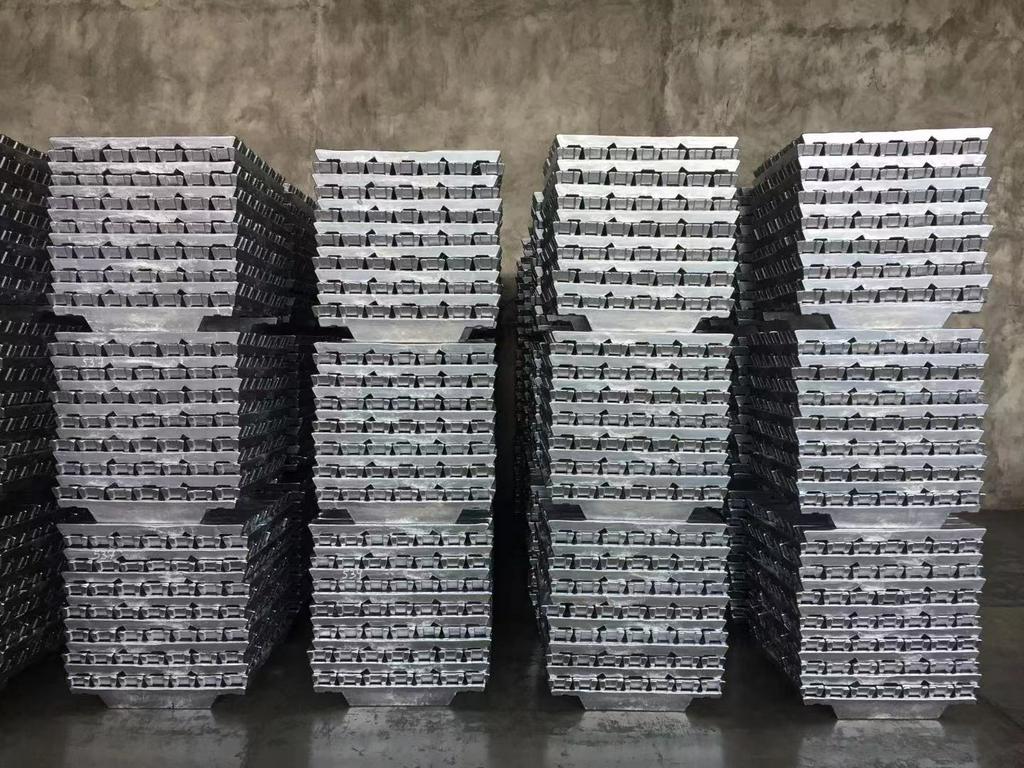 Warehouse Withdrawals Pull Back While Destocking Accelerates, the Logic of China’s Aluminum Ingot Destocking Changing?
As of July 30, China’s aluminum ingot inventory in major consumption areas stood at 953,000 mt. Cumulative destocking from the YTD high of 1.465 million mt in early May has reached 512,000 mt (-35%), with an additional accelerated destocking of 53,000 mt this week, breaking below the 1 million mt threshold as expected. However, the directional divergence between warehouse withdrawals and inventory has raised concerns...
Jul 31, 2026 23:53- Warehouse withdrawals pull back, but destocking accelerates — Is China's aluminum ingot destocking logic changing? [SMM Analysis]
As of July 30, China's major consumption regions reported aluminum ingot inventory of 953,000 mt, having cumulatively destocked 512,000 mt (-35%) from the year's high of 1.465 million mt in early May. Within the week, destocking accelerated further by 53,000 mt, as expected falling below the 1 million mt mark. However, the directional divergence between warehouse withdrawals and inventory drew attention: weekly warehouse withdrawals pulled back to 127,700 mt, losing the advantage of being at a high for the same period in the past four years. The core driving force of this destocking round has shifted from "demand and warehouse withdrawal boost" in June to "supply contraction + slowdown in shipment pace": the proportion of liquid aluminum rose to 78.3% in July, with casting ingot volume down 15.1% YoY; a sharp drop in arrivals in South China pushed Foshan's premium wider by 50 yuan/mt in a single week to 115 yuan/mt; SMM believes...
Jul 31, 2026 23:30 - Sichuan Fengyue's $50M Aluminum Master Alloy Project Breaks Ground in Guangyuan, Boosting Local Industry
Recently, the aluminum-based master alloy project with an annual output of 49,000 mt, invested by Sichuan Fengyue New Material Technology Co., Ltd., officially commenced construction in Yuanjiaba Aluminum Industrial Park, Guangyuan Economic and Technological Development Zone. The project has a total investment of 50 million yuan, covers an area of about 24 mu, and will install a 15 mt aluminum melting furnace, a 30 mt aluminum melting furnace, an MJMFX120T fully automatic rotary powder forming press, a 1t power frequency furnace, and other auxiliary equipment. The construction period is from July 2026 to December 2026, lasting 6 months. Upon completion, the project will further improve the aluminum industry chain in the park and support the high-quality development of the aluminum industry in Guangyuan. It was reported that on July 26, Vietnam's first domestically produced aluminum ingot products were officially launched at the Nhon Trach Industrial Park in Lam Dong Province, marking a historic breakthrough for the country’s aluminum smelting industry. This completes the entire industry chain layout encompassing bauxite mining, alumina processing, and aluminum production, laying a solid foundation for enhancing the country's industrial self-sufficiency and advancing the development of high-value-added manufacturing.
Jul 31, 2026 18:38 - July’s increase in aluminum’s proportion of liquid aluminum exceeded expectations, and August is expected to edge up [SMM Analysis]
SMM July 31 news: According to SMM statistics, China's aluminum production in July 2026 (31 days) increased 1.6% YoY and 3.5% MoM. Domestic demand was weak, and combined with a pullback in export orders for some downstream products, all industry chain segments were under pressure; however, driven by high processing fees for aluminum rod and billet, downstream procurement demand for liquid aluminum rose, pushing the proportion of liquid aluminum output in China higher. The proportion of liquid aluminum in the month rose 1.1 percentage points MoM to 78.3%, slightly exceeding expectations at the start of the month, with core growth coming from strong processing profits for some products, leading to higher-than-expected demand for liquid aluminum. Based on SMM's proportion of liquid aluminum calculations, China's aluminum casting ingot production in July fell 15.1% YoY and 1.4% MoM. Capacity changes: As of month-end July, SMM statistics showed China's existing aluminum capacity was approximately 46.29 million mt, flat MoM. Production forecast: Entering August 2026, the traditional off-season for downstream continues, and demand for most downstream products is expected to further weaken. However, some primary processed material orders are performing well, boosting downstream enterprises' willingness to purchase liquid aluminum directly. Overall, the proportion of liquid aluminum is expected to rise 0.2 percentage points to 78.5%. [Data source statement: All data except public information is processed by SMM based on public information, market communication, and SMM's internal database models, for reference only and not as investment advice.] Data source: SMM
Jul 31, 2026 16:54 - Global Aluminum Output Ex-China Down 6.7% YoY, Up 1.6% MoM in July 2026
According to SMM data, in July 2026, total aluminum production outside China fell 6.7% YoY, while daily average production outside China rebounded 1.6% MoM, mainly due to progress in production resumptions at aluminum plants in the Middle East and Iceland, as well as production ramp-ups and power-on commissioning at projects in Indonesia, Vietnam and other regions, which boosted output.
Jul 31, 2026 11:09 - Some Middle Eastern Aluminum Smelters Resume Production; Daily Aluminum Output Outside China Rises 1.6% MoM
SMM News, July 31: According to SMM data, total aluminum production outside China in July 2026 fell 6.7% YoY, mainly due to lower plant loads at Middle Eastern smelters. The daily average production outside China rebounded 1.6% MoM, mainly driven by advancing production resumptions in the Middle East and Iceland, as well as production ramp-ups and new capacity commissioning in Indonesia, Vietnam, and other regions. In July, there were many updates on operating aluminum capacity outside China, summarized as follows: On July 1, Hydro announced on its official website that the Slovalco smelter had reached an agreement with the Slovak government, allowing the resumption of 75,000 mt of aluminum capacity, with production expected to start in Q4 2026. On July 2, according to overseas media reports, Magnitude 7 Metals will restart the Line 1 pots at its aluminum smelter in Marston, Missouri, adding 75,000 mt/year of primary aluminum capacity by the end of 2026. On July 2, EGA announced progress in restoring production at its Al Taweelah plant. All anode removal from the pots was complete; pot cleaning was about 90% finished; and over 20% of the pots had been cleared of solidified aluminum. The first repaired pot was successfully restarted on May 26, and as of July 2, 89 pots (out of a total of 1,262) were in operation. On July 3, Vedanta Aluminum released its production report, showing that the Balco smelter recorded aluminum production of 168,000 mt in FY27 (Q2 2026), up 10% QoQ and 17% YoY, mainly driven by trial production from expanded capacity. On July 15, Rio Tinto released its Q2 performance report, noting that aluminum capacity at Kitimat, NZAS, and AP60 continued to rise. The last two potlines at the Arvida smelter were shut down as planned in June, and the Arvida AP60 is planned to reach full production by the end of this year. On July 16, Alcoa announced its Q2 results, with production reaching 636,000 mt, up 5% QoQ, mainly driven by the completion of the restart at the San Ciprián smelter in Spain, ongoing ramp-up at the Alumar smelter in Brazil, and completed restarts at the Lista smelter in Norway and the Portland smelter in Australia. Looking ahead to August 2026, production resumptions in the Middle East are expected to continue advancing; new projects that started production earlier in Indonesia and Vietnam are expected to keep ramping up production; and the expanded capacity at India's Balco is expected to sustain its production ramp-up. Although conflict in the Middle East erupted once again, market feedback indicated that it did not affect aluminum smelter production again. Overall, aluminum production outside China is expected to maintain its MoM growth trend in the short term. However, recent market rumors have emerged that construction progress of aluminum projects in the Middle East, Indonesia, and other areas is slower than expected. Going forward, close attention should be paid to announcements from relevant aluminum smelters in the Middle East, Indonesia, and India.
Jul 31, 2026 11:01 - Some aluminum plants in the Middle East announce production resumptions, overseas daily average aluminum production up 1.6% MoM [SMM Analysis]
SMM News, July 31: According to SMM statistics, total outside-China aluminum production in July 2026 fell 6.7% YoY, mainly due to a YoY decline in operating rates at Middle East aluminum smelters. Outside-China daily average production rebounded 1.6% MoM, mainly driven by ongoing production resumptions at smelters in the Middle East and Iceland, as well as output increases brought by project ramp-ups and power-on commissioning in Indonesia, Vietnam, and other locations. In July, there were many updates on operating aluminum capacity outside China. The details are as follows: On July 1, an announcement on Hydro’s official website showed that the Slovalco aluminum smelter had reached an agreement with the Slovak government, allowing it to resume production of 75,000 mt of aluminum capacity, with production expected to start in 2026 Q4. On July 2, according to overseas media reports, Magnitude 7 Metals will restart the No. 1 potline at its aluminum smelter in Marston, Missouri, adding 75,000 mt/year of primary aluminum capacity by the end of 2026. On July 2, EGA announced that its plant in Al Taweelah had made progress in restoring production: anode removal for all pots had been fully completed; pot cleaning was about 90% complete; and solidified aluminum blocks in over 20% of pots had been cleared. On May 26, the first repaired pot was successfully restarted; as of July 2, 89 pots were in operation (1,262 pots in total). On July 3, Vedanta Aluminium released a production report showing that in FY27 (2026 Q2), aluminum production at the Balco smelter reached 168,000 mt, up 10% QoQ and up 17% YoY, mainly benefiting from trial production output from expanded capacity. On July 15, Rio Tinto released its Q2 results report, noting continued capacity increases at Kitimat, NZAS, and AP60. The last two potlines at the Arvida aluminum smelter were closed as planned in June, and Arvida AP60 is expected to reach full production by year-end. On July 16, Alcoa released its Q2 results report. Its production reached 636,000 mt, up 5% QoQ, mainly benefiting from the completion of production resumptions at the San Ciprián smelter in Spain, ongoing production resumptions at the Alumar smelter in Brazil, and the completion of production resumptions at the Lista smelter in Norway and the Portland smelter in Australia. Looking ahead to August 2026, production resumptions in the Middle East are expected to continue; new projects previously commissioned in Indonesia and Vietnam are expected to continue ramping up production; and Balco’s expanded capacity in India is expected to continue ramping up. Although the Middle East conflict has flared up again, market feedback indicates it has not affected smelter production again. Overall, outside-China aluminum production is expected to maintain the MoM growth trend in the short term. However, recent market rumors suggest that construction progress for some aluminum projects in the Middle East and Indonesia has fallen short of expectations, and continued attention should be paid to subsequent announcements from relevant smelters in the Middle East, Indonesia, and India. [Data Source Statement: Except for public information, all other data are processed by SMM based on public information, market communication, and SMM’s internal database models, for reference only and not constituting decision-making advice.] Data source: SMM (Guo Mingxin 021-20707919)
Jul 31, 2026 10:59 - 【SMM Aluminum Flash News】Norsk Hydro Warns of Deepening Aluminum Supply Gap Amid Gulf Tensions
On Friday, July 24, Norsk Hydro, a major European aluminum producer, said that the global aluminum market supply gap would deepen if shipping restrictions in the Strait of Hormuz continued. In an interview, Hydro CEO Eivind Kallevik stated that shipping conditions in this key waterway have deteriorated since the resumption of hostilities between the US and Iran, hindering the import of raw materials and the export of metals from the Persian Gulf region. Kallevik said the conflict in Iran has forced smelters in the Middle East, which account for nearly one-tenth of global aluminum production, to seek alternative logistics routes, while producers in other regions are increasing output. However, he indicated that if the conflict prolongs, the market supply gap will exceed the company's current estimate of 900,000 tons. "The situation is clearly deteriorating rapidly, and the longer the situation in the Gulf region continues, the more naturally the global market supply tension will intensify," Kallevik said.
Jul 28, 2026 17:19