

461results found for 'visit'
Sort by : |
- Crude oil rose while metals broadly fell, with LME and SHFE tin, alumina, and LME lead dropping over 1%, and SHFE silver, platinum, and coke leading the decline [SMM Midday Review]
SMM July 13: Metals market: As of the midday break, the domestic base metals nearly all fell, with SHFE copper down 0.78%, SHFE aluminum down 0.37%, SHFE lead down 0.62%, SHFE zinc down 0.68%, SHFE tin down 1.51%, and SHFE nickel up 0.02%. Additionally, the most-traded cast aluminum futures contract fell 0.54%, the most-traded alumina contract fell 1.32%, the most-traded lithium carbonate contract rose 0.2%, the most-traded silicon metal contract rose 0.36%, and the most-traded polysilicon futures contract fell 0.17%. Ferrous metals mostly fell. Iron ore fell 0.6%, rebar fell 0.81%, hot-rolled coil fell 0.49%, and stainless steel edged up 0.07%. In coking coal and coke, the most-traded coking coal contract fell 1.47% and the most-traded coke contract fell 2.17%. In overseas base metals, as of 11:47, LME metals mostly fell, with LME copper down 0.81%, LME aluminum edged up 0.08%, LME lead down 1.11%, LME zinc down 0.75%, LME tin down 1.63%, and LME nickel down 0.51%. In precious metals, as of 11:47, COMEX gold fell 1.18% and COMEX silver fell 2.83%. In domestic precious metals, SHFE gold fell 1.47% and the most-traded SHFE silver contract fell 2.97%. Additionally, as of the midday break, the most-traded platinum futures contract fell 2.19% and the most-traded palladium futures contract fell 1.51%. As of the midday break, the most-traded container shipping futures (Europe route) contract rose 1.5% to 2,438 points. As of 11:47 on July 13, midday quotes for selected futures: Spot and fundamentals Copper: Today, for Guangdong #1 copper cathode spot against the front-month contract: high-quality copper was quoted at 80 yuan/mt, down 30 yuan/mt from the previous trading day; standard-quality copper was quoted at a discount of 10 yuan/mt, down 60 yuan/mt from the previous trading day; and SX-EW copper was quoted at a discount of 80 yuan/mt, down 70 yuan/mt from the previous trading day. The average price of Guangdong #1 copper cathode was 103,320 yuan/mt, down 710 yuan/mt from the previous trading day, and the average price of SX-EW copper was 103,215 yuan/mt, down 725 yuan/mt. Spot market: After the weekend, Guangdong inventory finally ended its seven consecutive declines… Macro front China: [Preview: The State Council Information Office will hold a press conference on the improvement of the natural resource asset management system on Tuesday, July 14, 2026, at 3:00 PM.] The State Council Information Office will hold a press conference at 3:00 PM on Tuesday, July 14, 2026, with Vice Minister of Natural Resources Zhang Wentong and Deputy Director of the National Forestry and Grassland Administration (National Park Administration) Zhang Liming briefing on the improvement of the natural resource asset management system and taking questions from the media. [PBOC Reverse Repo Operation Achieves Net Injection of 217 Billion Yuan on the Day] The PBOC conducted a 224 billion yuan 7-day reverse repo operation today. With 7 billion yuan in 7-day reverse repos maturing today, the day saw a net injection of 217 billion yuan. (Jin10 Data App) Regarding the US Dollar: As of 11:47, the US dollar index rose 0.18% to 101.14. The surge in oil prices reignited market concerns over inflation. The previous week, oil prices had already recorded their largest weekly gain since mid-May. Traders subsequently ramped up bets on further monetary policy tightening by the US Fed—the interest rate swap market is now pricing in a cumulative Fed rate hike of nearly 40 basis points by December, a significant increase from about 15 basis points in early June. (Wall Street CN) A Wall Street Journal survey of economists this month shows the impact of the conflict with Iran on the US economy is far smaller than economists previously feared. However, the bad news is that the conflict has made inflation, already well above the Fed’s 2% target, more entrenched and has deprived the Fed of room to cut interest rates. Compared with the April survey, conducted about a month after the conflict erupted, economists’ views have shifted markedly. Forecasters now expect the US economy to grow by 2.1% this year, measured by inflation-adjusted gross domestic product from Q4 2025 to Q4 2026, up from the 2% estimate in April. The average probability of a recession within the next 12 months expected by economists fell to 25% from 33% in April, the lowest level since early 2025. Yet, improved growth prospects have been accompanied by growing inflation concerns. Economists expect consumer price index inflation to be 3.4% over the 12 months ending in December, up from 3.2% in the April survey. Inflation worries have extended beyond the war-driven boost to energy costs. Economists predict the personal consumption expenditures price index excluding food and energy, a gauge closely watched by Fed officials, will rise 3.2% in 2026, higher than the 2.9% forecast in April. (Jin10 Data App) According to CME "FedWatch": The probability of the US Fed maintaining the current interest rate in July is 62.1%, and the probability of a cumulative 25-basis-point rate hike is 37.9%. The probability of the Fed maintaining the current rate through September is 26.4%, that of a cumulative 25-basis-point hike is 51.8%, and that of a cumulative 50-basis-point hike is 21.8%. (Jin10 Data App) Investors will focus on the semi-annual testimony of the new Fed Chairman, Kevin Warsh, before Congress on Tuesday and Wednesday for his latest views on inflation and interest rates, as well as updates on the progress of his plan to reform the Fed. Warsh is likely to be questioned by lawmakers about his extensive plan to reform the US Fed. The Fed previously announced the appointment list for the five working groups Warsh established to evaluate everything from communication methods to the size of the balance sheet. Ian Lyngen, head of US rates strategy at BMO Capital Markets, said investors will focus on Warsh’s testimony for more details and guidance on how the chair constructs the overall state of the US economy and Fed policy. The market is currently in a state of low volume and low confidence, at least until Tuesday’s inflation data and Warsh’s testimony are released. (Jinshi Data APP) On the data front: Today will see the release of China’s June M2 money supply YoY, China’s June year-to-date new yuan loans, and China’s June year-to-date incremental social financing, among other data. Also, attention should be paid to Fed Governor Bowman’s speech on “Modernizing Financial Regulation.” On the crude oil front: As of 11:47, oil prices on both sides are up, with WTI up 4.02% and Brent up 3.97%. Uncertainty over the situation in the Strait of Hormuz is directly driving oil prices higher. (Wall Street CN) Separately, Iraq's prime minister will visit Washington on Monday to deepen strategic ties with the US, with oil and gas agreements expected to be signed as part of a broader effort to boost economic, trade, and investment cooperation. Amid the ongoing US-Iran military escalation, Iraq has been seeking to balance its ties with neighboring Iran and the US. "The agreements to be signed will include multiple memoranda of understanding in the oil and gas sector, and Iraq is preparing to bring in a number of American companies to provide momentum for raising oil capacity," said Iraqi government spokesperson Hader Al-Abudi. The planned oil and gas agreements will also seek to open alternative export channels to reduce Iraq’s exposure should the Strait of Hormuz be disrupted, the Iraqi National News Agency quoted Al-Abudi as saying. Like other Gulf producers, Iraq suffered a drop in oil revenues during the US-Iran war due to the physical closure of this critical waterway. (Jinshi Data APP) Spot Market at a Glance: ► ► ► ► ► ► ► ► ► ► ► ► ►
Jul 13, 2026 14:11 - Tianli Equipment Invites You to the 2026 SMM Recycled Metal Industry Summit and Casting & Melting Technology Session
Zhejiang Tianli Equipment Technology Co., Ltd. is building a leading brand in environmental protection and solid waste recycling in China. What our clients need is what we have been striving and advancing for. Technology first, sincere cooperation, moving towards the future. Tianli Co., Ltd. welcomes your visit and field trip.
Jul 13, 2026 13:49 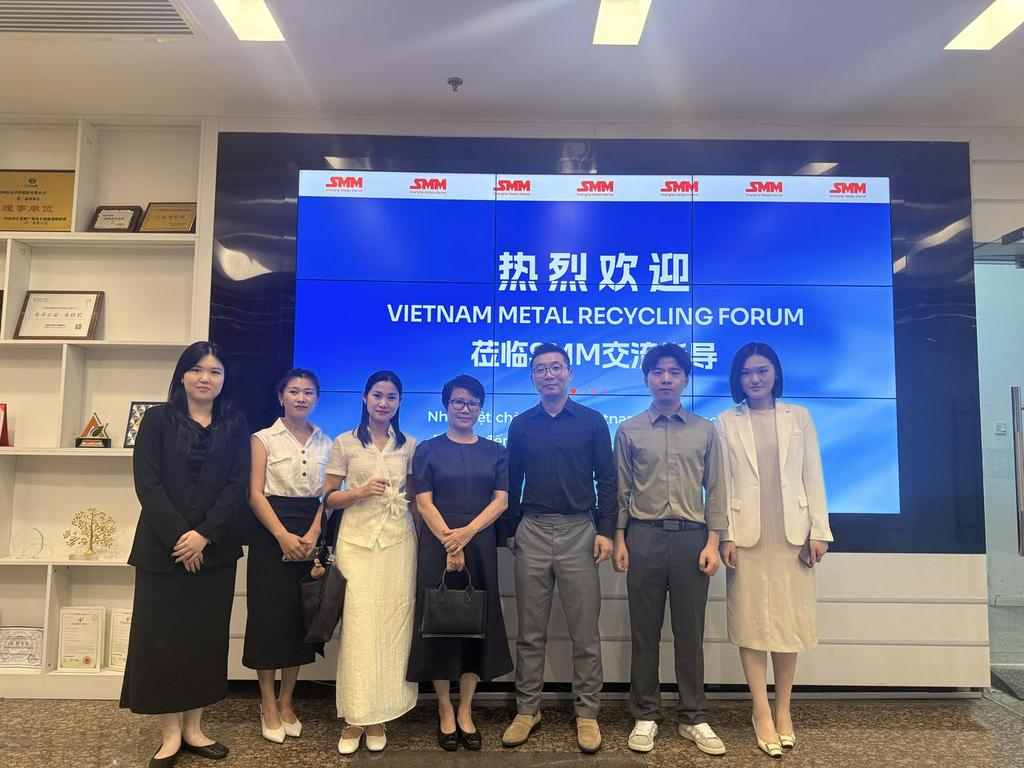 VMRF’s Return Visit to SMM: A Milestone for Vietnam’s Recycled Metals Industry Cooperation
On July 10, a delegation from the Vietnam Metal Recycling Forum (VMRF) — including Anh, Tran Thi Van, Phuong and Hoang Minh — visited the headquarters of Shanghai Metals Market (SMM) in Shanghai. SMM CEO Logan Lu welcomed the guests, alongside Horin Dong (Senior Overseas Marketing Manager), Cindy Zhang (Global Recycled Metals Project Manager), Date Song (Global BD Manager, Base Metals Conferences & Events Team), and Catherine Zhan (Overseas Marketing Manager). The two sides engaged in in-depth discussions covering Southeast Asia’s recycled metals industrial chain services, overseas market expansion, and joint industry summit cooperation. During the visit, SMM shared its latest global strategic layout. Against the backdrop of robust demand in Southeast Asia, Africa, and South Asia, SMM has set up new offices in Vietnam, South Korea, India and Zambia, forming a multi-regional overseas hub network. Through these local touchpoints, SMM will move closer to the upstream and downstream of local industry chains, providing more efficient one-stop market services to partners in Vietnam, ASEAN, and beyond for the recycled metals, aluminum, lead-acid battery, and ferrous metals sectors. In addition, SMM also introduced three major industry events it will hold in ASEAN in H2: 2026 SMM Global Lead-Acid Battery Supply Chain Industry Conference (Nov 19-20) in Ho Chi Minh City; SMM AICE 2026 Southeast Asia (Vietnam) Aluminium Conference (Nov 23-24) in Ho Chi Minh City; -SMM ASEAN Ferrous Metals Summit 2026 (Nov 26-27) in Malaysia Notably, in 2025, SMM Chairman Adam Fan led Catherine Zhan, SMM's Overseas Marketing Manager, on a trip to Vietnam to meet the VMRF team, where SMM introduced its comprehensive core businesses and service capabilities, including multi-commodity information, price data, industry surveys, and conferences and exhibitions, building a solid bridge for future cooperation. Now, a year later, this return visit by VMRF is of great significance to SMM and marks a further deepening of bilateral cooperation. Group Photo of VMRF at the 2025 SMM APAC Lead-Acid Battery Industry Conference in Vietnam Group Photo of the 2025 SMM Visit to VMRF VMRF was established to connect enterprises, recycling plants, traders, and partners within Vietnam's metal recycling industry. As a platform for sharing information, reports, market trends, and technology, VMRF is committed to helping its members achieve sustainable development and elevate industry standards. Since forging ties with VMRF at last year's offline event in Vietnam, SMM has placed great importance on the friendly cooperation with VMRF. In the future, SMM is looking forward to establishing a long-term, stable, and normalized deep collaboration mechanism with VMRF, continuously carrying out joint efforts in industry exchanges, market information sharing, and summit co-promotion. Leveraging SMM's multiple Southeast Asian industry conferences, both sides will strive to build a supply-demand matching platform and jointly support the standardized and international development of Vietnam's recycled metal industry chain.
Jul 13, 2026 11:21- Crude oil posted a weekly gain of over 4%, snapping a four-week losing streak, metals showed mixed performance, LME aluminum dropped over 2%, and gold and silver posted weekly declines. [Overnight Market]
SMM, July 13 – Metals Market: In overnight trading last Friday, base metals on both domestic and overseas markets showed mixed performance. LME aluminum led the declines with a 2.07% drop, while SHFE nickel led the gains with a 0.78% rise. The remaining metals all had changes within 1%. The main alumina contract fell 0.4%, and the main cast aluminum contract fell 0.78%. In overnight trading last Friday, ferrous metals fell except for stainless steel and iron ore. Stainless steel rose 0.03%, and iron ore rose 0.27%. Hot-rolled coil and rebar both edged down. For coking coal and coke, coking coal fell 1.03%, and coke fell 1.15%. In overnight trading last Friday, for precious metals, COMEX gold fell 0.29%, with a weekly edge up of 0.08%. COMEX silver fell 0.74%, with a weekly decline of 1.25%. Domestically, SHFE gold fell 0.56%, with a weekly decline of 0.83%, and SHFE silver fell 0.58%, with a weekly decline of 2.63%. HSBC lowered its average gold price forecasts for 2026 and 2027, citing expectations of a hawkish turn in Fed monetary policy and a stronger US dollar that continues to pressure gold prices. The bank cut its 2026 average price forecast from $4,864 per ounce to $4,560, and its 2027 forecast from $5,000 to $4,925. HSBC expects gold prices to fluctuate in a range of $3,800 to $4,700 for the rest of 2026, ending the year near $4,750. (Wall Street CN) As of 7:17 on July 11, last Friday’s overnight closing prices: Macro Front Domestically: [State Council Executive Meeting: Promote the Scaled Development of Emerging Pillar Industries Across the Entire Chain, Strengthen Basic Research and Key Software and Hardware Breakthroughs] According to CCTV, Li Qiang chaired a State Council executive meeting that studied work related to cultivating emerging pillar industries. The meeting pointed out the need to promote the scaled development of emerging pillar industries across the entire chain, strengthen basic research and breakthroughs in key software and hardware, and accelerate technological iteration and ecosystem improvement. It also highlighted the need to optimize regulatory models and guide localities to develop according to their own conditions and in differentiated ways. (Jinshi Data APP) [Ministry of Commerce, General Administration of Customs: Implement Temporary Export Ban Management on Helium] The Ministry of Commerce and the General Administration of Customs issued an announcement, stating that in accordance with relevant provisions of the Foreign Trade Law of the People’s Republic of China, they have decided to implement temporary export ban management on helium (Customs commodity code: 2804290010). This announcement takes effect from the date of issuance, and subsequent adjustments will be announced separately. (Jinshi Data APP) [National Electricity Load Hits a Record High of 1.518 Billion kW] Since the beginning of this year, the national economy has continued to develop towards new and better directions, with end-user electrification levels steadily rising. Combined with recent high temperatures in many parts of the country, electricity loads have rapidly climbed. On July 10, China’s nationwide electricity load hit a record high for the first time this year, peaking at 1.518 billion kW, an increase of 10 million kW from the historical extreme. Since the start of summer, the south China regional power grid and multiple provincial grids, including Guangdong, Guangxi, Hainan, Ningxia, Gansu, Fujian and Shaanxi, have set new record highs in electricity load more than 20 times cumulatively. The repeated record highs in electricity demand this year were driven primarily by three factors: First, steady growth in industrial electricity consumption. High-tech manufacturing and high-end equipment manufacturing are booming, and electricity use by emerging industries such as NEVs, energy storage and computing equipment continues to expand. Second, relatively rapid growth in service sector electricity consumption. Since the beginning of this year, the YoY growth rate of electricity consumption in the battery swapping and charging service industry and the internet data service industry has both exceeded 40%. Third, high temperatures have pushed up electricity loads. As residents’ living standards continue to improve, the proportion of air-conditioning cooling load in the national total is approaching 30%, and in some provinces it exceeds 40%. (National Development and Reform Commission (NDRC)) [National Energy Administration: The share of non-fossil energy consumption will increase by an average of about 1 percentage point per annum by 2028] The National Energy Administration issued the “Energy Sector Energy Conservation and Carbon Reduction Action Plan (2026–2028).” The plan proposes that, by 2028, the share of non-fossil energy consumption will increase by an average of about 1 percentage point per annum; the coal consumption rate of coal-fired power units will be reasonably controlled, and the proportion of coal-fired capacity achieving the current energy efficiency benchmark level will strive to increase by 15 percentage points; a number of zero-carbon and low-carbon coal mining areas and oil regions will be established; support will be given to establishing a number of zero-carbon industrial parks, with significant progress made in energy conservation and carbon reduction in key industries and continuously improved levels of green energy use. The plan proposes vigorously promoting energy saving and carbon reduction in thermal power. It will steadily and orderly shut down a batch of coal-fired power units of 300,000 kW class and below where conditions permit, while encouraging the construction of replacement units meeting next-generation coal power standards; promote the implementation of a number of supercritical/ultra-supercritical cross-generational upgrades and retrofits for 600,000 kW class coal-fired units. Support will be given to implementing zero-carbon and low-carbon fuel co-firing and carbon capture, utilization and storage (CCUS) retrofit construction for units where conditions allow, with carbon emission levels per kWh after retrofitting expected to be reduced by about 10%. It will implement a batch of coal power, gas power and new energy integration projects, supporting coal power and new energy in achieving integrated carbon reduction effects through methods such as coupled peak shaving and peak supply via thermal storage and energy storage, and integrated collection and transmission. (Jin10 Data App) US dollar side: Overnight last Friday, the US dollar index edged up 0.03% to 100.96, posting a weekly gain of 0.05%. The Fed’s semi-annual report showed that in 2026, US economic activity maintained robust expansion overall, primarily driven by high-tech investment and government spending. Factory output grew strongly due to AI-related data center investments, and production capacity continued to improve. However, the housing market stalled, and the external economy was weighed down by the Middle East conflict and tariffs, resulting in sluggish growth. The labour market was generally stable, with both wages and productivity increasing, but slowing immigration led to a decline in labour supply, while small businesses and households still faced relatively tight credit conditions. Inflation remained elevated and firmed further in spring, with asset prices above historical norms. The financial system was resilient overall, with ample bank reserves, and the private credit market continued to function normally despite some redemption pressures. Long-term inflation expectations remained well anchored near the 2% target, although the uncertainty brought by the Iran conflict was a primary risk. (Jin10 Data App) The report noted that the Fed’s preferred Personal Consumption Expenditures (PCE) price index remained about twice the 2% target as of this May. This was also the first monetary policy report released since the new Fed Chairman Warsh took office. Warsh will testify before the House and Senate committees on Tuesday and Wednesday this week respectively, undergoing routine mid-year review on monetary policy. (Wall Street CN) According to CME “Fed Watch”: The probability of the Fed keeping rates unchanged in July is 66.3%, and the probability of a cumulative 25 basis point rate hike is 33.7%. The probability of the Fed keeping rates unchanged through September is 31.0%, the probability of a cumulative 25 basis point rate hike is 51.1%, and the probability of a cumulative 50 basis point rate hike is 18.0%. (Jin10 Data App) Other currencies: According to a Reuters report, three sources familiar with the Bank of Japan’s thinking said the BOJ plans to keep interest rates unchanged in July but will maintain its policy guidance, committing to continue pushing ahead with the rate hike process. One source said, “With oil prices falling, downside risks to the economy have diminished somewhat. But the high cost of past imports will continue to exert upward pressure on prices.” Two other sources expressed similar views. They also stated that the BOJ may raise its FY2026 economic growth forecast in its July quarterly report and will continue to watch for inflation overshoot risks, as cost increases from a weak yen and strong AI demand partially offset the impact of falling oil prices. (Jin10 Data App) ING economists Marieke Blom and Amrita Naik Nimbalkar said in a report that if the eurozone savings rate falls to pre-pandemic levels, it could unlock goods and services demand worth approximately 1% of GDP. In Q1 of this year, household savings stood at 14.3% of disposable income, higher than the pre-pandemic five-year average of 12.5%. In the US, the savings rate in the last quarter of 2025 was 10.2%, a level which could add nearly 2% to eurozone GDP. Consumption is expected to remain weak as higher mortgage rates, slowing credit growth and precautionary savings weigh on spending. However, they said a shift from bank deposits to investments could lay the foundation for stronger spending and domestic demand in the coming years. (Jin10 Data App) On the macro front: This week, China will release data including June trade balance in US dollar terms, June trade balance, June YoY exports and imports, Q2 GDP YoY, June total retail sales YoY, June industrial added value above designated size YoY, June nationwide electricity consumption YoY, and June nationwide electricity consumption. The US will release data including June unadjusted CPI YoY, June seasonally adjusted CPI MoM, June seasonally adjusted core CPI MoM, June unadjusted core CPI YoY, June PPI YoY, June PPI MoM, July NY Empire State manufacturing index, initial jobless claims for the week ending July 11, June retail sales MoM, July Philadelphia Fed manufacturing index, June NFIB small business optimism index, ADP employment change weekly for the week ending June 27, July NAHB housing market index, May business inventories MoM, June pending home sales index MoM, June annualized housing starts total, June building permits total, June import price index MoM, June industrial output MoM, July preliminary one-year inflation expectations, and July preliminary University of Michigan consumer sentiment index. The Eurozone will release data including May industrial output MoM, May seasonally adjusted trade balance, May seasonally adjusted current account, June final CPI YoY, and June final CPI MoM. The UK will release data including May three-month GDP MoM, May manufacturing output MoM, May seasonally adjusted goods trade balance, and May industrial output MoM. Data such as Canada’s May wholesale sales MoM and the Bank of Canada’s interest rate decision as of July 15 will also be released. In addition, the State Council Information Office will hold a press conference on H1 2026 import and export situation; the National Bureau of Statistics (NBS) will release the monthly report on residential sales prices in 70 large and medium-sized cities; the State Council Information Office will hold a press conference on national economic performance; the National Energy Administration will release nationwide electricity consumption data around the 15th of each month. China’s refined oil products will see a new pricing adjustment window open. Fed Governor Waller will speak; Fed Chairman Warsh will testify before the House Financial Services Committee at the hearing on the “Fed’s Semi-Annual Monetary Policy Report”; 2027 FOMC voter and Chicago Fed President Goolsbee will participate in a fireside chat; FOMC permanent voter and New York Fed President Williams will speak; Fed Chairman Warsh will testify before the Senate Committee on Banking, Housing and Urban Affairs at the hearing on the “Fed’s Semi-Annual Monetary Policy Report.” On July 16, the Fed will release the Beige Book on economic conditions; 2028 FOMC voter and St. Louis Fed President Musalem will speak; 2026 FOMC voter and Dallas Fed President Logan will speak; Fed Vice Chairman Jefferson will speak on the economy and monetary policy. Bank of England Governor Bailey will speak; the Bank of Canada will release its interest rate decision and monetary policy report, and BoC Governor Macklem and Senior Deputy Governor Rogers will hold a monetary policy press conference. Crude oil side: Overnight last Friday, oil prices on both benchmarks fell, with WTI crude down 0.79% and Brent crude down 1.42%. On a weekly basis, WTI crude rose 4.11% and Brent crude rose 4.3%, together ending a prior four-week losing streak. Markets are still pinning hopes on when the Strait of Hormuz will reopen for navigation. Notably, after the US and Iran conflict escalated this week, the weekly oil price shed its four-week losing streak, gaining over 4% for the week. According to CCTV News, on Friday, July 10, local time, US President Trump posted on his social media platform “Truth Social,” stating that Iran wanted to continue “negotiations” with the US, and the US had agreed to continue negotiations. Trump also said the US had clearly informed Iran that the ceasefire was over. Subsequently, Xinhua News Agency, citing US media reports, said a new round of US and Iran negotiations may be held in Switzerland this week. However, according to Iran’s Fars News Agency, sources close to the Iranian negotiating team said the claim that Iran and the US would hold a new round of talks this week was untrue. According to CCTV, Iranian Foreign Ministry spokesperson Baghaei said on Friday that Iran has never sought to negotiate with the US but agreed to a visit by mediators to Iran. (Wall Street CN) CCTV reporters learned from the Iranian side that Iranian Foreign Minister Araghchi will lead a diplomatic delegation to visit Oman on the 11th. During the visit, the two sides plan to engage in dialogue and exchange views on bilateral relations and the regional situation, especially the current conditions in the Strait of Hormuz. (CCTV) Data released on the 10th by international market services firm Kpler showed that on July 9, the number of vessels transiting the Strait of Hormuz area fell to 22 from 30 the previous day, marking the second consecutive day of declining strait traffic volume. Kpler said this data includes both commercial and non-commercial vessels, with commercial vessel traffic slightly higher than non-commercial. “The renewed escalation of US-Iran military confrontation has weakened market confidence that diplomatic efforts can bring stability to the situation in the near term.” (Xinhua News Agency) Barclays: Risks to the forecasts of $96/bbl and $85/bbl for Brent crude oil prices in 2026 and 2027 respectively are fairly balanced. This week, OPEC will release its monthly crude oil market report (specific release time of the monthly report is pending, typically published around 18-21 Beijing time).
Jul 13, 2026 08:17 - Limited Short-Term Upside and Downside for Ferrous Metals [SMM Steel Industry Chain Weekly]
This week, finished steel rebounded slightly after consolidating at lows, while coking coal and coke showed overall satisfactory performance. At the start of the week, with no significant changes in fundamentals or news, ferrous metals continued to consolidate at lows; in the second half, market rumors emerged that BHP’s union announced a work stoppage action. Expectations of short-term supply tightness from the potential stoppage, combined with rising energy costs due to Middle East conflicts, drove a rebound in iron ore prices, which in turn lifted ferrous metals; online auctions for coking coal showed mixed results...
Jul 10, 2026 18:30 - [SMM Survey] Weekly Review of the Hydrogen Energy Electrolyzer Industry, Jul 3-9, 2026
Capacity side, the domestic alkaline electrolyzer market remained at 43.77 GW, while the PEM electrolyzer market held steady at 2.7 GW, according to incomplete statistics. Haozhen Hydrogen Energy’s brand-new 200 Nm³/h alkaline electrolysis hydrogen production system was officially shipped and delivered, reportedly to the project site of a well-known non-ferrous metal enterprise in China. Project-related developments: Guohua (Ningxia) New Energy Co., Ltd. : The evaluation results for the PC construction general contracting bid candidates of the Guohua Investment Guohua (Ningxia) New Energy Co., Ltd. Solar-Storage-Hybrid Off-Grid Hydrogen Production Key Technology Research and Demonstration Project (Integrated Engineering Hydrogen Production Section) were publicized, with two major chemical construction enterprises shortlisted. The first bid candidate was China Chemical Engineering Second Construction Corporation, with a corresponding bid price of 31.0690374 million yuan; the second bid candidate was China Chemical Engineering Ninth Construction Co., Ltd., with a bid price of 30.3988 million yuan. This demonstration project is located south of the Qingshuiying Hydrogen Production Plant in Ningdong Town, Ningxia, with planned land use of approximately 33 mu. It relies on the existing plant’s utility infrastructure to build a complete set of hybrid hydrogen production units, comprising six hydrogen production process trains: E, F, G, H, I, and J. Among them, Unit E is a 1000 Nm³/h hybrid pilot test facility, situated on the northeast side of the existing Qingshuiying Hydrogen Production Station; Units F, G, H, I, and J are five newly built large-scale hydrogen production systems, each with a rated hydrogen output of 1000 Nm³/h and a maximum long-term safe operating load of 120%, i.e., 1200 Nm³/h. Each new hybrid hydrogen production system adopts an ALK+PEM coupling route, equipped with an 800 Nm³/h alkaline electrolyzer, a 200 Nm³/h proton exchange membrane electrolyzer, and supporting gas-liquid separation equipment, paired with a 1000 Nm³/h integrated purification unit. The output hydrogen purity can reach 99.999%, suitable for PV storage Junrui Green Hydrogen Energy (Shangdu County) Co., Ltd. : The EPC general contracting bid candidates for the Shangdu County 30,000 mt/year hydrogen production project were officially publicized, with three major engineering consortiums shortlisted. The first bid candidate for this project was a consortium led by China Construction Fifth Engineering Bureau East China Construction Co., Ltd., joined by Wuxi Henghe Engineering Consulting Design Co., Ltd., Nuclear Industry (Tianjin) Engineering Survey Institute Co., Ltd., and Jiangsu Industrial Equipment Installation Group Co., Ltd.; the second bid candidate was a consortium led by Anhui Construction Engineering Group No.3 Construction Co., Ltd., joined by Shandong Honghua Construction and Installation Engineering Co., Ltd., Chongqing Chemical Engineering Design and Research Institute Co., Ltd., and Tianjin Huaxing Survey and Design Co., Ltd.; the third bid candidate was a consortium led by China Railway 16th Bureau Group Co., Ltd., joined by Jiangsu Qi’an Construction Group Co., Ltd., Aohua Engineering Technology Co., Ltd., and Hebei Zhongse Huaguan Geotechnical Engineering Co., Ltd. Inner Mongolia Mengqing Pipeline Network Co., Ltd.: The bid candidate announcement for the survey and design of the Inner Mongolia Mengqing Pipeline Network Co., Ltd. Shanghaimiao-Ningdong Green Hydrogen Pipeline Project was released. The top three candidate units for this tender were Sinopec Petroleum Engineering Design Co., Ltd. (10.05 million yuan), China Petroleum Natural Gas Pipeline Engineering Co., Ltd. (10.06 million yuan), and Sinopec Zhongyuan Petroleum Engineering Design Co., Ltd. (10.22 million yuan). This pipeline has a total length of 6.4 kilometers, divided into Inner Mongolia and Ningxia sections, with the Inner Mongolia section being 2.2 km and the Ningxia section being 4.2 km. It has a design pressure of 6.3 MPa and a pipe diameter of DN600, using L360MH steel pipes, with an annual pure hydrogen transmission capacity of 500,000 mt. It is accompanied by two newly built stations: the Shanghaimiao compressor station and the Ningdong terminal station. The project is a demonstration section at the end of the 427 km Dengkou–Shanghaimiao–Ningdong trunk green hydrogen pipeline, spanning Ordos Shanghaimiao Town and Ningxia Ningdong Town. Filing and approval were completed in both locations, and construction is planned to start on September 20, 2026. Ordos Vina Green Energy Logistics Co., Ltd. : The Ordos Vina Green Energy Logistics Co., Ltd. Vina Green Logistics and Hydrogen-Electricity Infrastructure Integrated Hydrogen Production and Refueling Project has been filed, which will further improve supporting infrastructure for local hydrogen logistics. The project is located in the Sanaoliang Industrial Park, Dalad Banner, Ordos City, with a total investment of 63.1638 million yuan. The main construction content includes one 6 mt hydrogen refueling station, one set of 6,000 Nm³/h physical process PSA hydrogen purification equipment, to build an integrated hydrogen production and refueling supporting system. The project construction period is planned from August 2026 to August 2027. Upon completion, it will effectively address the regional hydrogen refueling shortcomings, support the large-scale development of the local green logistics industry, and promote the application of hydrogen energy scenarios. China Energy Construction Bochuang Green Fuel (Shenyang) Co., Ltd. : The Shenyang City Wind and Solar Hydrogen Production Integrated with Biomass Green Alcohol and Oil Demonstration Project Phase I 100,000 mt green methanol EPC general contracting project has announced the candidate winners for the bid. The first candidate is the consortium led by East China Electric Power Design Institute, in combination with Hunan and Liaoning Electric Power Design Institutes, with a bid of approximately 1.7 billion yuan; the second and third candidates are Guangdong Electric Power Design Institute and Zhejiang Electric Power Design Institute, with bids of approximately 1.7239 billion yuan and 1.7883 billion yuan respectively. The project is located in Kangping County, Shenyang. The wind farm site is close to highways and national roads, and the biomass pretreatment plant and the methanol chemical plant are both located within the county. Phase I plans to build 100 MW wind power, 50 MW/100 MWh energy storage, an annual output of 100,000 mt of green methanol, and 360,000 mt of biomass pretreatment supporting facilities. Shaanxi Coal Group Yulin Chemical Co., Ltd. : Shuangliang Hydrogen Energy has won the order for four 3,000 Nm³/h alkaline electrolyzers from Shaanxi Coal Group Yulin Chemical. The order is for the hydrogen production unit supporting the second phase first stage of the Yulin Chemical 15 million mt/year coal grading conversion demonstration project. The supporting hydrogen production unit has a total hydrogen capacity of 12,000 Nm³/h and oxygen capacity of 6,000 Nm³/h, and the unit will serve coal-to-methanol, methanol-to-olefins, and downstream deep processing production. Ordos Vina Green Energy Logistics Co., Ltd.: The Ordos Vina Green Energy Integrated Hydrogen Production and Refueling Project has been filed. The project total investment is 63.1638 million yuan, using a self-owned fund plus bank loan model, with a construction period of one year, and is expected to be completed and put into use in August 2027. The project is located in the Sanaoliang Industrial Park, Dalad Banner, and is equipped with one 6 mt/day large hydrogen refueling station and one set of 6,000 Nm³/h PSA hydrogen purification unit, relying on by-product hydrogen resources from the park to build green logistics supporting facilities for hydrogen-powered heavy trucks. Hebei Hongmeng Hydrogen Energy Technology Co., Ltd.: The first Environmental Impact Assessment (EIA) public notice has been issued for the Off-Grid Hydrogen Production Hydrogen Low-Temperature Liquefaction Comprehensive Utilization Demonstration Project. The project is located in Zhangjiakou Kangbao County, in Zhangji Town and Danqinghe Township. The overall total investment is 10.4 billion yuan, with six wind power supply units totaling 1.2 GW installed capacity, of which the main part of the project for hydrogen production and liquefaction investment is 3.49 billion yuan. The project plans to adopt both alkaline and PEM electrolyzers, with a total hydrogen production capacity of 240,000 Nm³/h, an annual output of 140,000 mt of green hydrogen after reaching full production, and simultaneously supporting a 30 mt/day hydrogen liquefaction unit. Supporting infrastructure such as plant buildings, collection lines, and other complete supporting facilities will be constructed simultaneously, to build a wind-solar off-grid hydrogen production and low-temperature liquefaction integrated demonstration base. Policy Review 1. The Energy Bureau of Inner Mongolia Autonomous Region has issued a notice regarding the abolition of the Interim Measures for the Administration of Hydrogen Refueling Stations in Inner Mongolia Autonomous Region. In accordance with the requirements of the Notice of the General Office of the Inner Mongolia Autonomous Region People's Government on Conducting the Cleanup of Administrative Normative Documents (Nei Zheng Ban Zi [2025] No. 40) and related requirements, with the consent of the autonomous region people’s government, the Interim Measures for the Administration of Hydrogen Refueling Stations in Inner Mongolia Autonomous Region (Nei Neng You Qi Zi [2022] No. 1461), jointly issued by the autonomous region energy bureau and relevant departments, is hereby abolished. Matters related to hydrogen refueling stations shall be implemented in accordance with the Administrative Measures for the Safety of Renewable Energy Hydrogen Production Industry in Inner Mongolia Autonomous Region (Trial Implementation) and other relevant regulations. 2. The Yunnan Provincial Development and Reform Commission and the Yunnan Provincial Energy Bureau have issued a notice on the 2026 Green Electricity Hydrogen Production Integration Demonstration Project List. According to the project list, there are 8 green electricity hydrogen production integration demonstration projects in Yunnan Province in 2026, with a planned total green hydrogen production of 8,032 mt/year. They are: Yiliang County Green Electricity Hydrogen Production Integration Demonstration Project, Dushupu Service Area Photovoltaic Green Electricity Hydrogen Production Integration Demonstration Project, Songming Service Area Upward Photovoltaic Green Electricity Hydrogen Production Integration Demonstration Project, Qujing High-Tech Zone Huashan Wind-Solar Coupled Hydrogen Production Demonstration Project, Honghe Kaiyuan City Xiehua Green Electricity Hydrogen Production Integration Demonstration Project, Lufeng City Green Electricity Hydrogen Production (Ammonia) Blast Furnace Injection Ironmaking Integration Demonstration Project, Chuxiong High-Tech Zone Wind-Solar Integrated Green Ammonia Synthesis Project, and Shangri-La Green Electricity Hydrogen and Oxygen Production Integration Demonstration Project. Enterprise Updates Weichai Power Co., Ltd. : Weichai Power’s WP15 heavy-duty hydrogen internal combustion engine with direct injection has successfully passed the authoritative environmental protection emission certification test, becoming China’s and the world’s first heavy-duty hydrogen internal combustion engine to complete all core verifications under the China VI regulations. This marks a key breakthrough in the commercialization of zero-carbon heavy-duty equipment in China. The engine model has undergone rigorous testing under all operating conditions, with pollutant emissions significantly better than national standards and carbon dioxide emissions nearly eliminated. Relying on self-developed flexible in-cylinder direct injection core technology, the model achieves ultra-low nitrogen oxide emissions and, combined with a simple after-treatment system, is capable of meeting even higher future environmental protection regulation requirements, with outstanding environmental performance advantages. Baoding Gaoxin Environmental Technology Co., Ltd. : Thirty hydrogen fuel cell sanitation vehicles equipped with Weishi Energy hydrogen power systems were officially delivered to Baoding Gaoxin Environmental Technology Co., Ltd. They will be deployed for road sweeping, washing, watering, and dust reduction operations on major roads in the Baoding Hi-Tech Zone, promoting the green transformation, upgrading, and quality improvement of the local sanitation sector. The delivered vehicles include two main car models—hydrogen-powered water sprinklers and hydrogen-powered sweepers—jointly developed by Weishi Energy in cooperation with Dongfeng Special Vehicle and Changsha Infegreen Environmental. The vehicles are equipped with Weishi Energy’s in-house developed commercial vehicle fuel cell systems and hydrogen storage systems, offering the environmental advantages of zero emissions, no pollution, and low noise. Guoke Green Hydrogen (Dalian) Technology Co., Ltd.: A research team from the Counselor’s Office of Jiangxi Provincial Government visited Jinpu New District, Dalian City, Liaoning Province, to conduct a special survey on the “New Energy Future Industry – High-Quality Development Vision for Green Hydrogen (Ammonia).” Among the surveyed enterprises, Guoke Green Hydrogen (Dalian) Technology Co., Ltd., as one of the key enterprises, systematically presented its core technology R&D, equipment manufacturing, and industrial application status in green hydrogen, and engaged in in-depth exchanges with the survey team on the development of the green hydrogen industry. Guoneng Hydrogen Innovation Technology (Beijing) Co., Ltd. : Its “Sino-German Hydrogen Energy and Fuel Cell Vehicle Carbon Footprint and Sustainability Assessment Method and System Co-Construction Project” was selected as one of the first batch of typical cases of China-Europe energy cooperation at the 4th China-Europe Energy Technology Innovation Cooperation Forum. Beijing Hypert Hydrogen Energy Technology Co., Ltd.: The delivery ceremony for its H49 hydrogen-powered heavy truck was successfully held. The delivered Hypert H49 hydrogen-powered heavy trucks will officially join the Hengnuo Logistics fleet and serve the logistics transportation of finished beverages for Swire Coca-Cola. Huachuang Hydrogen Energy Technology (Guangdong) Co., Ltd. : Foshan’s first hydrogen-powered unmanned vehicle OEM launch conference was successfully held at the Guangdong Cheshijie Automotive Technology Industrial Park in Lecong, Shunde. Huachuang Hydrogen Energy Technology (Guangdong) Co., Ltd. participated as one of the leading enterprises. Chairman Dr. Yang Zhonggao delivered a speech on behalf of the company and completed the signing ceremony. At the event, the OEM’s construction plan, core technology tackling route, and industrialization plan were announced, and a hydrogen-powered unmanned vehicle departure ceremony was held simultaneously. Shaanxi Yanchang Petroleum Materials Group Xi'an Co., Ltd. : For its natural gas subsidiary, it plans to procure proton exchange membrane (PEM) water electrolysis hydrogen production equipment, with a plan to purchase one electrolyzer under a single section. Dongfang Electric (Chengdu) Hydrogen Energy Technology Co., Ltd. : Dongfang Hydrogen has successfully signed orders for two sets of 2,000 Nm³/h alkaline electrolyzers, achieving a breakthrough in market orders for large-scale water electrolysis hydrogen production equipment. It is understood that the signed alkaline hydrogen production equipment, equipped with Dongfang Hydrogen’s latest core technologies, will be deployed in a national energy sector hydrogen energy pilot project, supporting the construction of a high-purity hydrogen supply mother station with an annual output of 10,000 mt for fuel cells. After deployment, the equipment can effectively solve the difficulty of hydrogen supply for fuel cell vehicles and break through key bottlenecks in hydrogen energy application. Patent Applications 1. Shanghai Institute of Ceramics, Chinese Academy of Sciences (China) published patent CN2025110028, developing a ceramic-based anion exchange membrane with a laboratory test life of 80,000 hours. 2. Johnson Matthey (UK) submitted patent WO2025109876, disclosing a ternary Fe-Ni-Mo non-precious metal catalyst formulation with activity close to platinum-based materials. Technology Footprints/Technical Specifications 1. The team of Tong Lei, Liang Haiwei from USTC and Zhang Liang from Tsinghua University proposed a carbon mesopore depth engineering (CMDE) strategy. Leveraging hollow mesoporous carbon spheres to regulate ionomer penetration depth, they resolved the inherent conflict between kinetic activity and oxygen mass transport in low-platinum fuel cells, and developed a PtCo low-platinum catalyst with anti-poisoning, high mass transport, and excellent durability. They achieved US DOE power, activity, and durability targets at an ultra-low platinum loading of 0.1 mgPt cm⁻². 2. Professor Li Zhipeng’s team at Northwestern Polytechnical University innovatively constructed a three-dimensional multi-physics coupled model for tubular solid oxide fuel cells, systematically revealing the quantitative influence laws of temperature, electrode thickness, porosity, and oxygen domain geometric parameters on cell output performance. 3. The National Hydrogen Energy Power Quality Inspection and Testing Center of China Automotive Engineering Research Institute has built a 0–400 kW hydrogen-involved three-in-one vibration test platform with load and opened it for commercial use, filling the gap in domestic high-power multi-physics coupled hydrogen testing. 4. The high specific power cathode closed-cathode air-cooled fuel cell stack technology developed by the team of Academician Chen Zhongwei and Associate Researcher Zhang Meng at the National Key Laboratory of Energy Catalytic Conversion, Dalian Institute of Chemical Physics, has passed the scientific and technological achievement appraisal organized by the China Petroleum and Chemical Industry Federation. The technology effectively resolves the industry contradiction between water retention and oxygen mass transport in air-cooled fuel cells, solving technical challenges such as low-humidity performance decay, carbon corrosion, dry membrane flooding, and high-power thermal management. 5. Two group standards on water electrolysis hydrogen production have been officially released and implemented: the Safety Technical Specification for Water Electrolysis Hydrogen Production and the Method for Calculating Economic Operation Indicators for Water Electrolysis Hydrogen Production. 6. Petronor and H2SITE collaborate to advance membrane technology for hydrogen production, enhancing high-purity hydrogen and low-carbon efficiency in refining.
Jul 9, 2026 11:42 - Metals rose across the board, with LME tin surging nearly 4%, SHFE tin, LME lead, and COMEX gold leading the gains, while lithium carbonate fell over 2%. [SMM Midday Review]
SMM Jul. 6 News: Metals Market Update: As of the midday close, base metals on the domestic market all rose. SHFE copper edged up 0.26%, SHFE aluminum gained 0.84%. SHFE lead ticked higher. SHFE zinc added 0.97%. SHFE tin surged 2.9%. SHFE nickel inched up 0.12%. In addition, the most-traded foundry aluminum futures contract rose 0.48%, while the most-traded alumina contract dipped 0.15%. The most-traded lithium carbonate contract fell 2.19%. The most-traded silicon metal contract climbed 0.48%. The most-traded polysilicon futures contract gained 0.45%. Ferrous metals all advanced. Iron ore, HRC, and rebar each rose within 0.5%. Stainless steel added 0.89%. Coking coal and coke: the most-traded coking coal contract increased 0.82%, and the most-traded coke contract rose 1.06%. Overseas base metals: as of 11:45, LME metals all advanced. LME copper gained 0.74%, LME aluminum rose 0.71%, LME lead climbed 1.07%. LME zinc ticked up 0.1%, LME tin surged 3.94%. LME nickel added 0.61%. Precious metals: as of 11:45, COMEX gold advanced 1.27%, and COMEX silver jumped 2.24%. Domestic precious metals: SHFE gold rose 0.62%; the most-traded SHFE silver contract gained 0.5%. In addition, as of the midday close, the most-traded platinum futures contract fell 1.2%, while the most-traded palladium futures contract dropped 1.17%. As of the midday close, the most-traded container freight index (Europe) futures contract slid 2.56% to 2,592.5 points. As of 11:45 on Jul. 6, select futures midday quotes: Spot and Fundamentals Nickel: On Jul. 6, SMM #1 refined nickel price declined 750 yuan/mt from the previous trading day. For spot premiums, the average premium for Jinchuan #1 refined nickel stood at 2,300 yuan/mt, up 50 yuan/mt from the prior day DoD... Macro Front China: [PBOC Reverse Repo Operation Results in Net Injection of 49.5 Billion Yuan] The PBOC conducted 7 billion yuan in 7-day reverse repos and 1,000 billion yuan in outright reverse repos today. With 157.5 billion yuan in 7-day reverse repos and 800 billion yuan in outright reverse repos maturing, the day saw a net injection of 49.5 billion yuan. (Jinshi Data APP) [Guangzhou Baiyun International Airport’s Foreign Visitor Arrivals, Share Hit Record Highs] As of 0:00 on Jul. 6, Baiyun Port station of the Guangzhou General Station of Immigration Inspection reported over 4 million foreign entries and exits at Guangzhou Baiyun International Airport this year, up 34% YoY and accounting for over 41% of the airport’s total passenger flow. The growth rate topped the national average by 8 percentage points, with both volume and share reaching record highs. Overall, the port has handled over 10 million inbound and outbound passenger trips, up 19.6% YoY, crossing the 10 million mark 34 days earlier than in 2025. Inbound and outbound flights exceeded 63,000, up 14% YoY. (CCTV News) US dollar: As of 11:45, the US dollar index was up 0.09% at 100.95. According to the CME FedWatch Tool, the probability that the US Fed holds rates steady in July is 77%, while the probability of a cumulative 25bp hike is 23%. For September, the probability of no change is 41.9%, a cumulative 25bp hike 47.6%, and a cumulative 50bp hike 10.5%. Goncalves George, head of US macro strategy at Mitsubishi UFJ Securities Americas, said Warsh’s concise style gives the June meeting minutes greater weight than usual and offers a valuable lens into the differing stances among Fed officials. “The minutes will become more important because, so far, we don’t know what the Fed is thinking,” Goncalves George said. “It will be instructive to see how they debate and what they focus on.” He added that some investors have already questioned Warsh’s hands-off approach, and many would like to see greater transparency restored. Many market participants are not accustomed to the reduced flow of information, and there remains a considerable degree of skepticism over how long the Fed can maintain this. For now, we have to read between the lines. In a research note, Wan Michael, senior FX analyst at Mitsubishi UFJ Bank, said markets appear to be in a wait-and-see mode, looking for the next catalyst for the US dollar and US interest rates. Looking ahead, “global markets will seek direction from key data points such as the US ISM services data and Fed minutes later this week, and US CPI next week,” he said. In addition, the market is also closely watching whether Japanese authorities intervened in the currency market last week to curb yen weakness, so this uncertainty risk should not be underestimated as USD/JPY continues to hover near the 162 level. (Jin10 Data APP) Other currencies: As imports surge while export growth stalls, the boost from the mining boom to Australia’s trade appears to be fading, and the country may face its first annual trade deficit since 2016. This year, the goods trade surplus has narrowed sharply as the data center construction boom drives a surge in imports of fuel and equipment, while exports have stagnated. This trend appears set to continue, with the Australian government forecasting that export revenue from key commodities will grow only 3% in the current fiscal year compared with the previous one. The mining investment boom drove a surge in exports of iron ore, natural gas, and other commodities, fueling years of economic expansion and wealth accumulation. A return to deficits, however, could weigh on the Australian dollar and constrain the government’s fiscal space. Economist James McIntyre said, “Commodity price declines are expected to weigh on export revenues. As a result, the trade surpluses and occasional current account surpluses recorded over the past decade may give way to a pattern of deficits.” (Jin10 Data App) Data: Today, the seasonally adjusted unemployment rates for France and Switzerland in June, the eurozone July Sentix Investor Confidence Index, the eurozone May PPI monthly rate, the eurozone May retail sales monthly rate, the US June S&P Global Services PMI final, the US June ISM Non-Manufacturing PMI, and the US June Global Supply Chain Pressure Index, among other data, will be released. Additionally, speeches are expected from Fed Governor Waller, ECB Executive Board member Schnabel, ECB Governing Council member Wunsch, and Riksbank Deputy Governor Seim. Crude Oil: As of 11:45, oil prices on both exchanges fell, with WTI down 0.38% and Brent down 0.57%. Oil prices were weighed down by OPEC+’s latest decision to raise output. After an online meeting on Sunday, the group said it would increase output by about 188,000 barrels per day in August, marking the fifth consecutive monthly increase. However, analysts at ANZ Research said in a note, “Even if the Strait of Hormuz reopens, members may struggle to utilize this additional capacity due to ongoing risks to vessels.” The analysts noted, “During the weekend, multiple vessels were observed making abrupt course reversals while attempting to transit the Strait of Hormuz along the Oman route.” (Jin10 Data App) A statement showed that OPEC+ will raise oil production quotas by 188,000 barrels per day in August. The seven core members of OPEC+, which comprises OPEC and allies including Russia, have collectively raised production quotas by nearly 800,000 barrels per day from April to July. However, because the US-Israeli war on Iran has closed the Strait of Hormuz to oil tanker shipments for some of the most important OPEC+ members, including Saudi Arabia, Kuwait, and Iraq, previous increases have largely remained on paper. (Jin10 Data App) According to agency reports, the number of vessels transiting the channel along the Omani coast of the Strait of Hormuz dropped sharply on Sunday. A day earlier, multiple vessels sailing out of the strait along that channel abruptly executed sharp course reversals, underscoring Iran’s ongoing tightening of control over this strategic waterway. A product tanker that turned back on Saturday appears to be attempting passage again, having now passed the northernmost tip of Oman's Musandam Peninsula. Earlier, another product tanker transited the same route and openly broadcast its voyage intent, and is now broadcasting its position in the Gulf of Oman. Some vessels have opted for "dark transit" through the strait. A Suezmax crude tanker, which last broadcast its position in the Persian Gulf on Saturday, appeared in the Gulf of Oman on Sunday. Between Friday and Saturday, at least eight vessels suddenly turned around while transiting the Strait of Hormuz along the Omani lanes. Four of them then altered course northward, exiting the strait via the Iranian side. There is no official explanation for the sudden turnaround of these vessels. However, Iran has repeatedly stated that ships can only transit the Strait of Hormuz through Iranian-designated and -authorized lanes. According to Kpler data, on Saturday a total of 19 vessels transited the Strait of Hormuz in both directions, but only one openly indicated it would enter the strait along the Omani coastal lanes, compared to 13 on Friday. The above statistics cover only observable vessel movements. (Jin10 Data APP) Spot Market Overview: ► ► ► ► ► ► ► ► ► ►
Jul 6, 2026 14:07 - Prices outside China remained stable across the board this week, and India and Japan accelerated the construction of the rare earth industry chain this week [SMM Rare Earth Weekly Review]
This week, rare earth oxide and metal prices outside China remained largely stable amid sluggish trading, while price fluctuations in China had not yet been transmitted. Industrial developments were intensive: India’s Mecwin teamed up with Germany’s Fraunhofer to lay out the entire NdFeB industry chain; Sweden approved a 25-year lease for the North Kärr rare earth mine, and Namibia’s Kieshoehe project verified deep potential. Iluka obtained an Australian government loan to advance the Eneabba refinery, and ULVAC, driven by surging demand in Europe and the United States, planned to build a new melting furnace production line in Japan. U.S. and Australian enterprises achieved breakthroughs in high-purity rare earth refining and hard disk recycling technologies, while Canada and Japan actively promoted cooperation on the critical minerals supply chain.
Jul 3, 2026 15:30 - [SMM PV Flash] Full-Stack Solutions Linking the World, Risen Energy Empowers Markets Outside China with Professional Services
Recently, Risen Energy welcomed visiting delegations of clients from Belgium, Spain, and Myanmar. Company representatives engaged in in-depth discussions with clients from each country on deepening cooperation and advancing project implementation. These negotiations further consolidated the strategic cooperative relationship with the Belgian client, while also uncovering cooperation potential with the Spanish and Myanmar clients in the new energy sector, laying a solid foundation for expanding the company’s business in markets outside China.
Jul 3, 2026 13:08 - FTXT Energy debuted at the Kuala Lumpur International Auto Show, showcasing its 120kW fuel cell system for the Southeast Asian market.
The Kuala Lumpur International Motor Show (KLIMS 2026) was recently held at the Malaysia International Trade and Exhibition Centre (MITEC). Weishi Energy showcased its high-performance fuel cell system, presenting its self-developed core hydrogen products and technological achievements to the Malaysian and ASEAN markets. The 120kW fuel cell system exhibited this time is Weishi Energy’s flagship product designed for commercial and industrial applications. The system features high power output, high system efficiency, and independent control over core components. It is compatible with various vehicle types such as buses, logistics vehicles, heavy trucks, and sanitation vehicles, and can also be used for stationary applications like hydrogen power generation . In response to Southeast Asia’s high-temperature and high-humidity climate, Weishi Energy has carried out targeted adaptive optimizations on the system to enhance the stability and reliability of the equipment under all-weather, high-intensity operating conditions. These optimizations give it not only technical demonstration value, but also a practical foundation for deployment and application in the local market. KLIMS 2026 is an influential mobility exhibition in Malaysia and the ASEAN region. This edition attracted approximately 200,000 visitors, with participating brands including 16 mainstream automakers. During the show, Weishi Energy's booth drew attention from local visitors and received recognition from the Malaysian royal family and government, reflecting the potential value of hydrogen technology in the country’s green transportation and energy transition. Previously, Weishi Energy had accumulated operational experience in markets such as Europe and Brazil. In the future, the company will partner with its Malaysian subsidiary of Great Wall Motor, leveraging local channels and service networks to explore the application of hydrogen vehicles and hydrogen power generation systems in Kuala Lumpur and surrounding areas, with a focus on public transportation, port logistics, urban sanitation, and green power generation. As Malaysia accelerates its carbon neutrality efforts, hydrogen equipment and fuel cell systems are expected to become an important supplement to the low-carbon transition of transportation and energy. Weishi Energy’s appearance at KLIMS also signals that its overseas expansion is further extending into the Southeast Asian market.
Jul 2, 2026 16:43