

11results found for 'steel policy'
Sort by : |
- [India's SAIL Approves Bhilai Steel Plant Capacity Expansion to 10.2 MTPA]
Indian state-run steelmaker Steel Authority of India Limited (SAIL) has formally approved a $3.22 billion expansion project for its Bhilai Steel Plant to enhance crude steel production capacity from 6.8 million tonnes per annum to 10.2 million tonnes. The Engineering, Procurement and Construction Management (EPCM) agreement, signed with MECON, aims to complete the project within 42 months to support India's National Steel Policy target of reaching 300 million tonnes of domestic capacity by 2030. All major raw materials required for the expanded operations will be sourced from SAIL's captive mines alongside domestic and import markets.
Jul 27, 2026 11:24 - [SMM Analysis] Trade Barriers Reshape Southeast Asia’s Flat-Steel Flows: What It Means for Malaysia
Chinese-backed steel investment is increasingly shifting from direct exports toward local production across Southeast Asia. New and planned projects in Malaysia, Indonesia, Vietnam, Thailand and the Philippines could strengthen regional supply, but may also intensify competition if capacity growth continues to outpace demand.
Jul 24, 2026 11:33 - [SMM Stainless Steel Flash] ISSDA & GSSE Alliance Targets Stainless Steel Clean Energy Growth
India's stainless steel market is projected to reach approximately US$15.8 billion by 2030, growing at 9.1% annually, though domestic plants currently operate at only 60–65% of their 7.5 million-tonne capacity, with 25–28% of local demand supplied by imports — primarily from China. ISSDA President Rajamani Krishnamurti stated that stainless steel is indispensable for India's clean energy ambitions, including green hydrogen, ammonia handling, and ethanol production, positioning the country for potential leadership in specialized stainless steel manufacturing. To capture this opportunity, ISSDA has partnered with the Global Stainless Steel Expo (GSSE) to organize technical conferences and buyer-seller meets across infrastructure, mobility, and renewable energy sectors, while renewing calls for a National Stainless Steel Policy to secure domestic raw material supply.
Jul 22, 2026 10:05 - [SMM Stainless Steel Flash] EU Steel Policy: Big Industry Protected, SMEs Ignored, Quota Updates Still Delayed
A written parliamentary question posed to the European Commission asked: "What monetisable compensation does the Commission envisage for downstream producers whose embedded costs originate upstream, and who do not qualify for the decarbonisation fund?" Commissioner Hoekstra's July 14 response offered no direct answer, pointing instead to the Temporary Decarbonisation Fund — designed primarily for large EU ETS installations — with a vague note that it "may also decrease associated downstream costs," with no obligation, guarantee, or figure attached. Critics note that large integrated steelmakers benefit from multiple layers of protection including tariffs, quotas, free ETS allowances, and decarbonisation funding, while import-dependent SMEs and downstream processors face rising procurement costs, CBAM obligations, quota cuts exceeding 45%, and heavy administrative burdens — with no cumulative impact assessment ever published by the Commission. Meanwhile, steel import quota data remains poorly updated, with the Commission confirming it will update TRQs only once daily with no real-time data, and declining to recognize the "Total awaiting allocation" figure as legally binding.
Jul 15, 2026 17:11 - [SMM In-Depth Analysis] Supply-Demand Imbalance Hard to Reverse: Analysis of India's Incremental Effect Against the Backdrop of China's Output Reduction
I. Background of China's Demand Decline ◼ In 2026, the global iron ore market is facing a critical turning point. As the Chinese government continues to strengthen steel capacity regulation and accelerate the industry's green and low-carbon transition, compounded by global trade barriers constraining export opportunities, China's steel production is expected to continue its YoY decline. As the world's largest iron ore consumer (absorbing approximately 75% of seaborne iron ore volume), China's weakening demand coincides with the supply side being about to see massive volume releases—represented by the phased commissioning of the Simandou project with a designed annual capacity of 120 million mt. With supply and demand moving in opposite directions, global iron ore prices will face significant downward pressure. Data source: SMM ◼ Against this backdrop, market attention naturally turns to the world's second-largest crude steel producer— India . As an emerging market in steel consumption, India is driven by infrastructure and real estate as its core growth engines, with downstream steel consumption growing rapidly, strongly propelling the robust development of crude steel production, with an average annual growth rate of 10.5% . Although countries such as Vietnam, Indonesia, Turkey, Mexico, and the US also maintain relatively fast development in their steel industries, over the next five years, the highest compound annual growth rate among these countries is only 5%, forming a notable gap with India. Data source: SMM II. Analysis of India's Iron Ore Supply-Demand Structure 2.1 India's Iron Ore Production Continues to Grow, but Structural Differentiation Is Evident ◼ 2.1.1 India Is Rich in Iron Ore Resources, Ranking Third Globally ◼ From a resource perspective, India is relatively rich in iron ore resources. According to the latest 2024 Iron Ore Resource Annual Report released by India's Ministry of Mines, India's iron ore resource reserves total 35.29 billion mt. Magnetite accounts for 33%, and hematite accounts for 67%. The predominant hematite resources are mainly distributed across Odisha, Goa, Chhattisgarh, Jharkhand and Karnataka — these five states. Among them, Odisha in the east (production accounting for over half of the national total, grade 62%-65%) and Chhattisgarh (home to the large Bailadila mining area, with estimated total reserves of 3 billion mt and grade as high as 65%), as well as Karnataka in the south (primarily magnetite). Data source: SMM 2.1.2 India's Iron Ore Production Is Largely Concentrated in State-Owned Mines ◼ India's iron ore mining market combines state-owned and private enterprises. By company ownership, 36% of mines are controlled by state-owned enterprises, with the remaining 64% controlled by private enterprises. Representative state-owned mine enterprises include National Mineral Development Corporation (NMDC) , Steel Authority of India Limited (SAIL) , and Kudremukh Iron Ore Company (Kudremukh); representative private mine enterprises include Tata Steel Company, etc. ◼ In FY2025/26 (April 2025–March 2026), India's iron ore production is expected to reach 305–310 million mt, up approximately 7% YoY. Specifically: NMDC (state-owned producer) production reached 53.15 million mt, up 20.6% YoY; OMC production reached 40 million mt, up 11% YoY. Commercial mine production grew 15% to 190 million mt, while captive mine production declined 3% to 120 million mt. Production growth was primarily driven by commercial producers, and the supply structure is shifting, but growth is concentrated among a few large producers, meaning supply conditions are not balanced. Data source: WSA, SMM 2.1.3 India's New Iron Ore Project Capacity to Increase by 60 Million mt by 2030 ◼ Facing tight balance pressure from downstream steelmaking capacity expansion on supply and demand, industry leader NMDC is actively implementing a capacity expansion strategy. By accelerating mine development and technological upgrades, it is committed to enhancing supply-side flexibility and resilience to ensure continuous fulfillment of the widening rigid demand in the Chinese market. ◼ In addition to NMDC planning to increase capacity from 45 million mt to 67 million mt in FY2025/26, Tata Steel plans to invest 100 billion rupees (approximately $1.18 billion) over the next five years to expand mining capacity from 40 million mt to 55 million mt, and some private enterprises are also increasing iron ore capacity. Based on existing new iron ore capacity estimates, India's iron ore capacity is expected to increase by 60 million mt by 2030. Data source: SMM 2.1.4 Imbalanced Iron Ore Grade Structure — Both an Exporter and Importer ◼ According to the latest India resource report, although India has abundant iron ore reserves, the raw ore grade varies significantly. Currently, total explored reserves across India stand at 6.21 billion mt, of which high-grade iron ore accounts for 23%, medium-grade ore approximately 42%, and low-grade ore approximately 25%. Based on product classification of India's industry leaders, iron ore with grade above 60% accounts for 43% of production, while that below 60% accounts for approximately 57%, indicating that India's iron ore products are predominantly low-grade. However, India's major steel producers have high raw material requirements and prefer iron ore with grade above 60%. Therefore, iron ore below 60% grade is mainly exported to China, Japan, and other countries. The high-grade shortfall is mainly met through imports from Brazil, Oman, Australia, and other countries. Data sources: India Resources Report, WSA, SMM III. Key Constraints on India's Ability to Absorb China's Declining Iron Ore Demand 3.1 Vast Volume Gap Hard to Bridge, but Incremental Offset Can Provide a Floor ◼ In recent years, China's annual iron ore imports were approximately 1.2 billion mt, while India remains primarily an exporter, with annual exports of 23.56 million mt and imports of 12.31 million mt—its import scale being only 1% of China's. Even if India redirected all its export resources to meet its own demand, the absolute scale would still be two orders of magnitude smaller than China's demand decline. ◼ However, as China's iron ore demand declines and India's demand rises in the future, India's share in the global iron ore market will grow significantly. According to World Steel Association data, China accounted for 59% of global iron ore demand in 2025, while India accounted for only 10%; by 2030, China's share is expected to decline to 52%, while India's will rise to 15%, with particularly impressive growth momentum. The incremental demand from India will offset part of China's decline, providing a floor for iron ore prices. Data sources: WSA, SMM 3.2 Government Policies & Import Grade Restrictions Limiting Imports ◼ Based on India's iron ore import and export data, India's exports in 2025 declined 34% compared to 2024, while imports surged 129%. Despite the massive increase in imports and significant room for further growth driven by rising domestic demand, the Indian government has already introduced measures requiring priority fulfillment of domestic demand and reducing exports, which will to some extent suppress the growth potential of its iron ore imports. Meanwhile, the continued degradation of resource endowments at major global mines has intensified the structural shortage of high-grade ore, making the high-grade resources available for India's future imports relatively limited. Furthermore, as requirements for green steel production increase in and outside China, China's future demand for high-grade iron ore will also rise correspondingly, a trend that will further constrain India's iron ore import capacity. ◼ In the long run, if demand for high-grade ore continues to trigger structural tightness, the price spread between high-, medium-, and low-grade iron ore will continue to widen. Against this backdrop, India's own ore product mix may undergo significant adjustments, and its exports may continue to decline. Data sources: WSA, SMM 3.3 Green Steel Policies Driving Higher Electric Furnace Share, Iron Ore Demand Growth Under Pressure to Slow Down ◼ From a production process perspective, India's share of electric furnace steelmaking far exceeds China's, at approximately 30% in 2024. According to India's *National Steel Policy (2017)*, the country plans to raise its annual crude steel capacity to 300 million mt by FY2030 (ending March 31, 2031), with blast furnace-converter process capacity accounting for 60%-65% and electric furnace process capacity accounting for 35%-40%. As global carbon emission policies advance further, the share of green steel will increase significantly in the future, which aligns with the electric furnace capacity share target in India's National Steel Policy. Under this trend, the rising share of electric furnace steelmaking will, to some extent, curb the incremental demand for iron ore in India. Data sources: WSA, SMM IV. India's Iron Ore Demand Growth: Sufficient to Offset, Insufficient to Reverse ◼ According to the World Steel Association's forecast, global total iron ore demand is expected to maintain a modest growth trend from 2026 to 2030. China's iron ore demand is expected to decline by 8%, a reduction of approximately 113 million mt, while benefiting from continued expansion in steel production, India's total iron ore demand over the same period will grow by 55%, an increase of approximately 128 million mt. Meanwhile, based on estimates of global iron ore project capacity and commissioning pace, by 2030, approximately 300 million mt of new iron ore capacity is expected to be added globally on a cumulative basis. Overall, although India's demand growth is robust, it remains difficult to offset the large-scale supply increase on a global scale. However, the rise in India's demand can, to some extent, counteract the negative impact of declining demand from China, providing floor support for iron ore prices. ◼ In addition, as global carbon emission policies advance further, blast furnace capacity will gradually contract and crude steel production will trend downward, while the share of direct reduced iron (DRI) and electric furnace steelmaking is expected to continue rising. Against this backdrop, demand for high-grade iron ore will grow significantly in both China and India, which will further intensify the structural tightness in the high-grade ore market, thereby pushing up high-grade premiums. The price spread between high- and medium-grade iron ore is expected to widen notably in the future. Data source: SMM Data source disclaimer: Data other than publicly available information is derived by SMM based on public information, market communication, and SMM's internal database models, for reference only and does not constitute decision-making advice. Note: This article is an original article of this official account. For reprinting, whitelisting, cooperation, or other needs, please contact us. Without permission, it is prohibited to reprint, modify, use, sell, transfer, display, translate, compile, disseminate, or disclose the above content to third parties in any other form, or license third parties to use it. Otherwise, once discovered, SMM will pursue legal liability for infringement through legal means, including but not limited to demanding liability for breach of contract, return of unjust enrichment, and compensation for direct and indirect economic losses. Scan the QR code to get information for free
May 28, 2026 17:09 - [SMM Iron & Steel] India Targets 400 Million Tons Steel Capacity by 2035
According to the draft National Steel Policy 2025, India plans to aggressively expand its steel production capacity to 400 million tons by the 2035-36 fiscal year, requiring approximately $183.41 billion in capital investments. The policy heavily focuses on decarbonization and raw material independence, aiming to reduce reliance on imported coking coal to 80% from the current 90%. Furthermore, the government intends to lower average steel mill emissions to 2 tons of carbon dioxide per ton of rolled steel, promoting gas-based production and scrap utilization.
Apr 13, 2026 14:01 - [SMM Steel] India targets 25% emissions cut and capacity expansion under new policy
[SMM Steel] India is drafting the National Steel Policy 2025, aiming to reduce steel sector emissions by about 25% and expand crude steel capacity to 400 million mt by 2035-36. The plan targets lowering emissions to 2 tons of CO₂ per ton of finished steel, while reducing coal dependence and supporting long-term production growth.
Apr 9, 2026 19:12 - [SMM Hot Topic] Exports Soar to a New High, Can the "Good Start" in January Continue?
China's total steel exports in December increased by 13.24% MoM and 16.18% YoY. The reasons for such a significant increase were twofold. On one hand, following the announcement No. 79 dated December 9, 2025, by the Ministry of Commerce and the General Administration of Customs, which decided to adjust the "Catalog of Goods Subject to Export License Management (2025)" and implement export license management for certain steel products effective January 1, 2026, concerns about subsequent export uncertainties, particularly regarding the practice of forging or purchasing customs clearance documents from other import and export firms, intensified. This prompted a large number of traders to rush shipments collectively, aiming to get goods out before the year-end, leading to another surge in total volume. Furthermore, according to subsequent SMM tracking, cargo congestion occurred at multiple ports due to the rush to meet shipping schedules, and this issue has not yet been fully resolved. On the other hand, the concerted effort by most steel mills to meet annual export targets by year-end also played a key role. According to SMM production schedule data, exports of sheets & plates and long products from steel mills in December continued to grow compared to November. Simultaneously, based on SMM export order data, export orders from November to December increased by 15% compared to those from October to November, perfectly aligning with the MoM rise in total overseas exports.
Jan 14, 2026 16:19 - 【SMM Stainless Steel Market】French Parliament Votes to Nationalize ArcelorMittal's Local Operations Amid Steel Tariff Debate
【SMM Stainless Steel Market】In a significant move that could impact EU steel policy, the French National Assembly has voted to nationalize ArcelorMittal's operations in France. While not yet legally binding, the vote reflects deep dissatisfaction with the steel giant. The proposal accuses ArcelorMittal of delaying decarbonization investments, engaging in aggressive tax optimization to avoid corporate taxes, and prioritizing shareholder payouts ($12.5 billion distributed by the parent group in 5 years) over local commitments. This development comes as critics argue that the EU's push for new steel tariffs is heavily influenced by French lobbying and relies on potentially misleading data from steel producers like ArcelorMittal to justify protectionist measures.
Dec 8, 2025 18:28 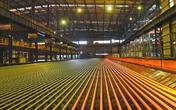 【SMM Analysis】India's Steel Industry Deep Dive: Strategic Shifts Amid Supply-Demand Imbalance and Global Implications
According to SMM assessment, the 300 million tonnes crude steel capacity target set by India's "National Steel Policy (2017)" is expected to be only about 80% achieved, resulting in actual capacity of approximately 240 million tonnes by 2030. Against this backdrop, if India's steel consumption maintains a 7% average annual growth rate, while crude steel production, constrained by the pace of capacity realization, achieves only about a 5% growth rate, and considering an 85% capacity utilization rate, India's supply-demand gap will continue to widen, with the net import volume projected to reach 25.5 million tonnes by 2030. This trend indicates that the pace of India's steel capacity expansion will consistently struggle to match the robust growth of its domestic demand. Even during the period of concentrated capacity commissioning, its vast domestic market will still need to rely on imports to bridge the supply gap. Simultaneously, in the high-end steel sector, due to gaps in technological accumulation and process levels, India's structural dependence on high-value-added steel will persist long-term, forming a "new normal" of "continuously expanding total gap and difficult-to-improve high-end dependence."
Nov 27, 2025 17:32