

18results found for 'starter'
Sort by : |
- Shenzhen Huana New Materials Co., Ltd. Made a Grand Appearance at the 2026 SMM Battery Technology Industry Conference
Driven by the dual forces of global energy structure transformation and the "dual carbon" goals, battery technology is evolving from a traditional electricity storage medium into a core engine reshaping transportation, consumer electronics, and even the energy internet. From fundamental breakthroughs in materials science to the industrialisation of cutting-edge technologies such as solid-state and sodium-ion batteries, the battery industry is in a period of explosive technological advancement with intense competition. This conference brings together the world's top scholars, industry chain leaders, and capital forces, aiming to break down barriers between "industry, academia, research, and application." We will delve into key topics including high energy density, ultimate safety, ultra-fast charging technology, and recycling, jointly charting a new blueprint for green, efficient, and sustainable energy. Shenzhen Huanaxincai Co., Ltd. will attend this grand event to discuss industry development trends with industry peers and jointly drive battery technology to new heights. form to sign up immediately, and together witness and participate in this extraordinary and far-reaching industry event, co-creating a brilliant new chapter! Shenzhen Huanaxincai Co., Ltd. was founded in November 2021 by a doctoral team of high-level overseas talents. It is a national high-tech enterprise specialising in the R&D, industrialisation, and end-use applications of sodium-ion battery cathode materials. The company has been recognised as a "Shenzhen Specialised, Refined, Distinctive, and Innovative Enterprise" and a "Shenzhen 20+8 Industrial Cluster Enterprise." It has applied for or been granted nearly 80 patents, obtained ISO9001, ISO14001, and other system certifications, and served as the lead or major co-drafter of four sodium-ion battery standards. The company has received multiple rounds of financing from publicly listed firms including Meilian New Material and Zijian Electronics, and has won numerous industry awards. Core Business The company specialises in the R&D, production, and sales of sodium-ion battery cathode materials. With years of deep industry expertise and over 100 core patents accumulated, it possesses strong technological capabilities. Currently, the enterprise has fully mastered both mainstream sodium-ion battery cathode material technology routes — layered oxide and polyanion. Its products maintain a leading position in overall market performance. The layered oxide cathode materials feature high energy density, high working voltage, and excellent C-rate performance, making them widely suitable for application fields such as power batteries. The polyanion NFPP cathode materials are characterised by high safety, ultra-long cycle life, and outstanding wide-temperature adaptability, with excellent cycling performance, making them particularly suitable for scenarios with stringent safety and service life requirements such as utility-scale energy storage, backup power supplies, and starter batteries. The polyanion NFS cathode materials feature high voltage and high capacity performance, and are widely applied in scenarios such as light vehicle power and others. Leveraging a mature technology system and rigorous quality control management, the company's products have achieved large-scale mass production and stable supply, successfully entering various application segments and establishing in-depth partnerships with multiple Fortune Global 500 enterprises and leading industry clients. We remain committed to technological innovation as our core driving force, continuously iterating product performance, and dedicated to providing global clients with high-grade, highly reliable sodium-ion battery cathode materials to facilitate the high-quality development of the new energy industry. Long press 2026 SMM Battery Technology Conference
Jun 30, 2026 11:09 - Zhejiang Xupai Power, HELLA (Nanjing) Ink Strategic Pact for Sodium-Ion Battery Collaboration
On April 13, Zhejiang Xupai Power and HELLA (Nanjing) Electronics signed a strategic cooperation agreement. The two parties will engage in in-depth cooperation in sodium-ion batteries, automotive electronics, and global market expansion, focusing on the R&D, adaptation, validation, and promotion of sodium-ion automotive starter batteries. Xupai Power specializes in the R&D and manufacturing of sodium-ion automotive starter batteries, with products featuring advantages such as excellent high- and low-temperature performance, safety and reliability, and resource friendliness. HELLA (Nanjing) is a subsidiary of Germany's HELLA Group, possessing world-leading automotive electronics and energy management technologies. The two parties will leverage their respective strengths in manufacturing, distribution channels, and technology to promote the deployment of sodium-ion starter batteries across multiple car models and facilitate the green upgrade of automotive starting systems.
Apr 21, 2026 16:49 - 2026 LABC Will Take Place in Vietnam during Nov 12-13: Secure Super Early Bird Discount & Connect with Global Players
Shanghai Metals Market (SMM) is thrilled to announce that our 2026 SMM Global Lead-Acid Battery Supply Chain Industry Conference is scheduled to take place in Ho Chi Minh City, Vietnam, during November 12-13, 2026!
Apr 17, 2026 14:27 - HiNa Battery Hosts 2026 Sodium-Ion Conference, Launches New Products and Extreme-Cold Test Data
The 2026 Global Sodium-Ion Battery Industry Ecosystem Conference hosted by HiNa Battery was held in Jiangxia District, Wuhan. At the conference, HiNa Battery launched sodium-ion battery products covering application scenarios such as starter batteries, energy storage, and electric heavy-duty trucks, and simultaneously disclosed extreme-cold test data for sodium-ion battery heavy-duty trucks.
Mar 31, 2026 13:19 ![[SMM Conference] PbZn Conference 2026 Gathers Global Leaders to Navigate Evolving Market Dynamics](https://imgqn.smm.cn/production/admin/votes/imagesbznIX20260330170246.jpeg) [SMM Conference] PbZn Conference 2026 Gathers Global Leaders to Navigate Evolving Market Dynamics
[SMM Conference] PbZn Conference 2026 Gathers Global Leaders to Navigate Evolving Market DynamicsOn March 27, the 2026 SMM (21st) Lead & Zinc Conference and Industry Expo, organized by SMM, wrapped up successfully at Howard Johnson Agile Plaza in Chengdu, Sichuan!
Mar 30, 2026 17:04- Low Lead Prices Drag Down Scrap Battery Purchase Prices, Halving Recyclers' Recycling Volume [SMM Scrap Battery & Secondary Crude Lead Weekly Review]
SMM News, March 27: Lead prices operated at low levels this week, and secondary lead smelters generally lowered their purchase prices for scrap batteries. Today’s average purchase prices were: waste e-bike battery at 9,775 yuan/mt, waste automotive lead-acid battery (white shell) at 9,875 yuan/mt, and waste automotive starter lead-acid battery (black shell) at 10,075 yuan/mt. Quotes in the recycling market diverged, with some traders raising prices to 9,450 yuan/mt to attract cargoes, squeezing profits, while others lowered prices to 9,250 yuan/mt, with recycling volume constrained. Affected by sluggish downstream consumption, relatively low retirements, weaker prices, and end-users holding back cargoes, recycling volume this week was half the normal level. After the Qingming Festival, the pace of smelter resumptions is expected to gradually accelerate, and demand for raw material procurement is likely to be released. In addition, with raw material inventories at some smelters still at low levels, this is expected to provide some support for scrap battery prices. Going forward, continued attention should be paid to lead price trends and developments in smelter production and maintenance. » Subscribe to View Historical SMM Metal Spot Prices
Mar 27, 2026 14:30 - Raw Material Cost Pressure Remained, and Domestic Secondary Crude Lead Supply Maintained a Tight Pattern [SMM Scrap Battery & Secondary Crude Lead Weekly Review]
SMM News, March 20: Lead prices weakened this week, and secondary lead smelters lowered scrap battery purchase prices due to profit pressure. Today, the average scrap battery purchase prices at smelters were: waste e-bike battery at 9,825 yuan/mt, waste automotive lead-acid battery (white shell) at 9,875 yuan/mt, and waste automotive starter lead-acid battery (black shell) at 10,125 yuan/mt. Recyclers also followed the decline, and after prices were cut, downstream collection outlets held back cargoes, with recycling volume decreasing WoW. Smelter inventory diverged, with low-inventory smelters holding only enough for one week of production, while high-inventory smelters made limited just-in-time procurement after small price cuts. According to the SMM survey, market expectations for lead prices were weak, and if prices continue to weaken next week, scrap battery prices are expected to be lowered again. This week, the mainstream self pick-up price at major ports for imported crude lead was at a discount of 50-0 yuan/mt against the SMM #1 lead average price, while some cargoes were at a premium of 50 yuan/mt. Domestic secondary crude lead cargoes were quoted firmly due to insufficient operating rates caused by cost pressure. As of this Friday, the mainstream tax-excluded ex-factory prices stood near 15,200 yuan/mt. Going into next week, imported lead is still expected to arrive at ports one after another, and downstream enterprises have been active in making inquiries. SMM expects domestic secondary crude lead supply to remain tight. » Subscribe to View Historical SMM Metal Spot Prices
Mar 20, 2026 17:05 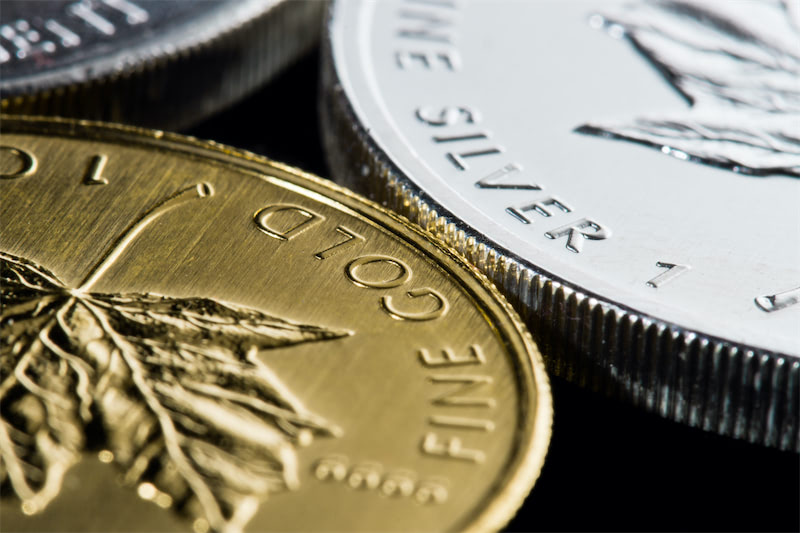 Silver Price Forecast: UBS Warns Rally May Be Overheating Above $100
The silver price in US Dollars has surged to fresh record highs, with XAG/USD trading around $109 per ounce, as momentum-driven buying and a weaker US dollar continue to propel the market higher.
Jan 29, 2026 10:50- Variscan Advances Novales–Udías Zinc Project, Drilling Resumes and Mine Re-Start Study Near Completion
Variscan Mines Limited provided an exploration, operations and market update for its 100%-owned Novales–Udías Project in northern Spain. Underground drilling has recommenced at the Udías Mine, with all drilling completed to date located outside the current Mineral Resource Estimate (MRE). Ongoing drilling will target new, untested zones along existing mine development to link with current MRE areas and extend toward the adjacent San José Mine, with results indicating mineralisation remains open and part of the same mineral system. The San José Mine Re-Start Study is now approximately 95% complete, with publication expected in the coming weeks. The study is based on a low-capex, pragmatic “starter operation” aimed at early cash flow generation, scalable production growth and funding ongoing exploration under Variscan’s Explorer–Producer strategy. Variscan also confirmed that completion of the earn-in to the Midlands and Waterford zinc projects in Ireland is expected shortly, following shareholder approval and completion of due diligence. On the market side, Variscan highlighted strong zinc prices, recently around US$3,300/t, supported by tight inventories and low treatment charges. With the Mine Re-Start Study nearing completion, the Company expects to begin zinc concentrate marketing discussions, working with appointed exclusive Marketing Manager Square Resources.
Jan 21, 2026 18:37 ![[SMM Analysis] Middle East Anti-Dumping Duties to Take Effect in January Next Year: What Impact Will They Have on Lead-Acid Battery Exports?](https://imgqn.smm.cn/production/admin/news/en/pic/OpILq20251230201711.jpeg?imageView2/1/w/176/h/135/q/100) [SMM Analysis] Middle East Anti-Dumping Duties to Take Effect in January Next Year: What Impact Will They Have on Lead-Acid Battery Exports?
[SMM Analysis] Middle East Anti-Dumping Duties to Take Effect in January Next Year: What Impact Will They Have on Lead-Acid Battery Exports?[SMM Analysis] Middle East Anti-Dumping Duties to Take Effect in January Next Year: What Impact Will They Have on Lead-Acid Battery Exports? SMM December 31: In late November 2025, according to the official website of the Gulf Cooperation Council (hereinafter referred to as "GCC") Technical Secretariat for Anti Injurious Practices in International Trade and Official Gazette Issue No. 53, the GCC Ministerial Committee composed of industry ministers formally approved the Standing Committee's recommendation to impose definitive anti-dumping duties on electric accumulators used for starting piston engines (HS code 85071000) originating in or exported from China and Malaysia.
Dec 31, 2025 09:08