

232results found for 'scrap battery'
Sort by : |
- August 18 Scrap Battery Market Trading Summary [SMM Daily Review]
SMM, August 18: Today, offers from smelters and the recycling side in the waste lead-acid battery market held steady. A few smelters raised their purchase offers slightly, but overall price adjustments were limited and the market remained basically stable. Smelter raw material arrivals showed no significant change for the time being but displayed notable regional divergence, with relatively better arrivals in regions with higher purchase prices. Limited by the current thin supply of scrap batteries in circulation, a recycler in North China reported a notable contraction in average daily purchases, from 20-30 mt/day previously to about 7-10 mt/day currently, and the arrival pace was unstable. After lead prices rebounded, the pullback was relatively limited. Downstream wait-and-see sentiment improved slightly from earlier, while rigid demand consumption remained stable but the overall improvement was still limited. Scrap battery prices are expected to move sideways in the short term. Attention will focus on smelters' price adjustment pace and the impact of supply releases from retail outlets on circulation volume.
Aug 18, 2026 14:17 - August 17 Scrap Battery Market Transaction Summary [SMM Daily Review]
SMM News, August 17: Today, quotations from smelters and the recycling side in the waste lead-acid battery market remained stable. Recyclers judged current prices to be steady. With the traditional peak season approaching, most participants were waiting for further confirmation of changes in demand and supply. The survey showed that recycling has generally become more difficult across regions recently. Recyclers in east China, north China, southwest China, and other areas all reported significant fluctuations in daily average recycling volume. Tight supply was more concentrated at the retail outlet level. Some outlets showed a strong willingness to hold goods and have not been actively selling for the time being. Recyclers’ shipments were mostly characterized by quick in-and-out, with no stockpiling and no holding back cargo, and small recyclers were particularly cautious; a few recyclers, based on peak-season expectations, temporarily slowed shipments and moderately accumulated inventory. In Henan, some smelters still had situations of holding back cargo, but this was mainly concentrated in hydropower batteries, as the sampling and water-draining process is time-consuming; for dry batteries, there was basically no issue of holding back cargo, and circulation was relatively smooth. Scrap battery prices are expected to remain stable in the short term, with a wait-and-see stance. Going forward, attention should be paid to the extent to which the peak season materializes, the release of supply from retail outlets, and changes in smelters’ procurement demand.
Aug 17, 2026 14:19 - Dual Pressure from Raw Materials and Losses, Secondary Crude Lead Market Trading Generally Weak [SMM Secondary Crude Lead Weekly Review]
SMM, August 14: Under the dual pressures of tight scrap battery raw material supply and smelting losses, domestic secondary crude lead smelters showed weak willingness to produce and sell. This Friday, mainstream tax-inclusive delivered secondary crude lead transactions were concentrated at 14,400-14,450 yuan/mt. New transactions for imported crude lead were sluggish, with scarce public quotes in the market, and only a small number of long-term contracts were executed at parity with the SMM #1 lead average price on an EXW port basis. Looking ahead to next week, domestic secondary crude lead supply is unlikely to see significant release, and downstream demand is expected to remain mediocre. Against the backdrop of lead prices in the doldrums, suppliers holding imported crude lead lacked sufficient profit margins, mostly chose to hold back from selling and await sales; although their quotes remained firm, the impact on the spot market was limited.
Aug 14, 2026 17:36 - Scrap Battery Turned to a Wait-and-See Stance After Gains, with Limited Downside Room for Prices Amid Tug-of-War Between Sellers and Buyers [SMM Scrap Battery Weekly Review]
SMM, August 14: At the start of this week, scrap battery prices were lifted by gains in SHFE lead. Some smelters raised EV battery purchase prices by 50-100 yuan/mt, and traders followed suit. In the middle and latter part of the week, SHFE lead retreated after a rapid rise, the nonferrous metals sector weakened, and market sentiment turned subdued, but scrap battery quotes remained stable. With scrap battery supply in the market tight and peak-season expectations building, recyclers became more reluctant to sell. Smelter inventory levels diverged; enterprises with low inventories showed stronger willingness to restock, but actual arrivals were moderate, and a tug-of-war emerged between pushing for lower prices and holding prices firm. Next week, scrap battery prices are expected to consolidate within a narrow range. With lead prices likely to remain weak, smelters will strictly control procurement costs, recyclers will be cautious in selling, and the tug-of-war may intensify further. There is limited downside room for prices. Watch SHFE lead, smelter restocking, and whether the battery peak season materializes.
Aug 14, 2026 16:28 - August 14 Scrap Battery Market Trading Summary [SMM Daily Review]
SMM, August 14: Scrap battery prices were temporarily stable today. SHFE lead futures weakened, but had not yet significantly pressured purchase quotes. Smelter quotes were largely stable, with only a few raised, and did not follow the futures market lower. Recycler quotes remained unchanged. Market wait-and-see sentiment rose, as some merchants, worried that buying high and selling low would lead to losses, chose to hold back from selling and wait for clearer market conditions. After lead prices turned lower, smelters faced greater loss pressure, and there is a possibility of lowering scrap battery purchase prices next week.
Aug 14, 2026 14:18 - SHFE Lead Daily Candlestick Closed Bearish at High Levels, Upside Momentum in Futures Slowed Down Somewhat [Lead Futures Briefing]
SMM, August 13: Intraday, the SHFE lead 2609 contract rose initially before pulling back. It opened at 15,975 yuan/mt in early trading, drifted higher during the session and at one point approached the 16,000 yuan/mt mark, then met resistance and pulled back. In the afternoon, despite some repeated fluctuations, it drifted lower near the close and eventually closed at 15,925 yuan/mt, up 20 yuan/mt from the previous trading day; its full-day trading range was 15,910-15,990 yuan/mt, with an intraday range of 80 yuan/mt. The daily candlestick closed negative but the price center edged slightly higher, selling pressure emerged at highs, and near-term upward momentum weakened somewhat. The SMM #1 lead average price rose 75 yuan/mt today; primary lead was offered at parity to a discount of 30-50 yuan/mt ex-works, and secondary refined lead was offered at discounts of 100-25 yuan/mt ex-works. Overall, the spot market struggled to catch up, downstream consumers mainly made just-in-time procurement, and transactions were weak; on the scrap battery side, some smelters continued to raise purchase prices, but traders had not yet followed the increase, quotations in many regions remained stable, suppliers held back from selling and stayed on the sidelines, and tight supply still provided some cost support for lead prices. In the short term, SHFE lead may continue to consolidate at highs; fear of high prices and the retreat after a rapid rise in futures may limit short-term gains. Key focus should be on tracking the actual improvement in downstream just-in-time procurement and the pace of smelters' price adjustments.
Aug 13, 2026 17:47 - August 13 Scrap Battery Market Trading Summary [SMM Daily Review]
SMM, August 13: Prices in the waste lead-acid battery market held steady today. Some smelters continued to raise purchase quotes, with the waste e-bike lead-acid battery purchase price raised by 20-100 yuan/mt, while adjustments for waste automotive lead-acid battery (white shell) and black shell varied. Recycling traders had already completed price adjustments following smelters over the previous two days. Today, recycling quotes in Hebei, Shandong, Sichuan, Fujian, and Northeast China, among other regions, remained unchanged, and the market as a whole showed relatively strong wait-and-see sentiment. Purchases on the recycling side were moderate; suppliers showed weak willingness to sell, and they mainly held back from selling and took a wait-and-see stance. A survey showed that although some smelters continued to raise purchase prices today, recycling traders had not yet followed the increase, mainly waiting to see whether smelters would adjust prices further, or waiting until prices gradually stabilized before making adjustments. Scrap battery prices are expected to remain stable with a wait-and-see sentiment in the short term. If some smelters continue to raise purchase quotes, e-bike battery prices still have some upside room; if smelters stabilize their pace of price adjustments, recycling-side quotes may hold at current levels.
Aug 13, 2026 13:41 - SHFE Lead Shot Up, Narrowed and Closed Flat, Spot Lead Trading Weak, Consolidation Awaits Demand Guidance [Lead Futures Review]
SMM August 12 News: Intraday, the SHFE lead 2609 contract rebounded from consolidation around 15,855 yuan/mt, touched a high of 15,925 yuan/mt, and closed at 15,905 yuan/mt, with the closing price flat compared to the previous trading day. Trading volume was 49,552 lots, and open interest decreased by 6,351 lots to 45,172 lots, as funds exited approaching delivery. The full-day candlestick closed as a doji after consecutive gains, with intraday prices shooting up then pulling back. After the rise, funds took profits and exited, the willingness to rush to buy at highs became cautious, and support strength at lows remains to be seen. Spot side, the SMM #1 lead average price rose by 25 yuan/mt. Secondary refined lead was at a discount of 100 yuan/mt to parity compared to the SMM #1 lead average price, downstream users resisted high prices, and actual transactions were thin. Scrap EV batteries followed with a rise of 50-100 yuan/mt. Hydropower batteries showed regional divergence, with quotes in south China rising and those in the north holding steady. Recycled material supply was generally tight, and traders held back from selling, supporting the cost side of secondary lead. In the short term, SHFE lead may continue to consolidate at highs. The upside was constrained by bulls taking profits, downstream caution at highs, and weak spot transactions. The downside was supported by tight scrap battery supply and suppliers holding prices firm. Key focus is on tracking actual improvements in downstream just-in-time procurement.
Aug 12, 2026 18:19 - August 12 Scrap Battery Market Transaction Summary [SMM Daily Review]
SMM March 17 News: Today, the waste lead-acid battery market was stable with supplementary gains. Some recycling traders raised their battery price quotes by 50–100 yuan/mt from the previous day, mainly a supplementary increase following smelters' price adjustments yesterday afternoon; smelters, having just completed price adjustments yesterday, kept their purchase price quotes largely flat from the previous day, with no consecutive price chasing seen for now. A survey showed that some recyclers believed prices still had upside room, with a low willingness to sell, mainly holding back from selling and staying on the sidelines. In the short term, scrap battery prices have been generally stable recently, and with smelters having just completed a round of adjustments, the momentum for widespread consecutive hikes is temporarily limited; however, if recyclers continue to hold back from selling and market supply remains tight, price quotes may still edge up in some areas. Scrap battery prices are expected to be mostly stable with localized strength on the following day, with focus on actual smelter arrivals, purchasing enthusiasm, and recyclers' shipment pace.
Aug 12, 2026 13:36 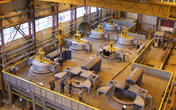 Lead Price Rebound Ignites Local Production Resumptions, Loss Shackles Still Suppress August Secondary Lead Supply
August production schedules were further under pressure, with the MoM impact on refined lead reaching -22,300 mt. Most enterprises had held a pessimistic view on the market outlook earlier, making maintenance and low-load operations the norm. Many smelters postponed their originally planned production resumptions for August to September.
Aug 12, 2026 10:18