

3213results found for 'recovery'
Sort by : |
- Ganzhou Kaiyuan Technology Co., Ltd. looks forward to meeting you at the 2026 SMM (16th) Tin Industry Chain Conference
"Tin" Guiding the Future: Industrial Transformation and Value Reshaping in the New Cycle Conference Background Currently, the global tin industry stands at a historic turning point. Traditional cyclical logic has been completely disrupted, and its strategic value has been fully highlighted. In 2026, the tin market presents an unprecedentedly complex pattern and profound changes: I. Deep Restructuring of the Supply-Demand Pattern and Unprecedented Elevation of Strategic Attributes The global static reserve-to-production ratio of tin resources is only 14 years, making its scarcity increasingly prominent. The supply side faces "triple pressures": recurring production resumptions in Myanmar, persistently tightening policies in Indonesia, and high geopolitical risks in the DRC, making resource constraints a new normal. Meanwhile, the demand structure has undergone a fundamental shift, with tin becoming a strategic resource connecting traditional manufacturing and the digital future. II. The Price System Breaks Historical Records, and the Industrial Ecosystem Faces Reshaping In early 2026, the SHFE tin price exceeded 470,000 yuan/mt, hitting a record high. This price breakthrough not only reflects a supply-demand imbalance but also signifies a revaluation of the tin industry. Traditional trading models, risk management systems, and supply chain collaboration methods are all in urgent need of innovative breakthroughs. III. Technology-Driven and Green Transformation Foster a New Symbiotic Ecosystem Digital and intelligent technologies are deeply empowering the tin industry chain. The global green transformation requires the tin industry to upgrade towards low-carbon and circular economy models, with recycled tin recovery and green smelting processes becoming inevitable paths. All links in the industry chain must shift from competition to collaboration, building an open, resilient, and innovative symbiotic system. Against this backdrop, the August 19-21, 2026, Changsha, Hunan 2026 SMM (16th) Tin Industry Chain Conference will bring together global industry elites for in-depth discussions. Ganzhou Kaiyuan Technology Co., Ltd. will attend this grand event, joining industry peers to discuss industry development trends and jointly propel the tin industry to new heights. Click the to register for the conference immediately, witness and participate in this extraordinarily significant and far-reaching industry event, and create a brilliant new chapter together! Founded in June 2005, Ganzhou Kaiyuan Technology Co., Ltd. is a modern environmental protection technology enterprise with significant core competitiveness and industry influence in China's non-ferrous metal comprehensive recycling and circular economy sector. The company is deeply engaged in the track of renewable non-ferrous metal resource utilization, focusing on achieving efficient, comprehensive recovery of tin based on tin-containing raw materials, while simultaneously recovering up to 15 valuable non-ferrous metal products, including lead, antimony, bismuth, zinc, copper, gold, and silver. It is one of the benchmark enterprises in China with the most complete range of recycled metal categories. With advanced technology and a professional team, the company is dedicated to transforming waste resources into valuable assets, contributing to sustainable resource utilization and environmental protection. The company currently has over 1,000 employees and strong comprehensive strength. It has been recognized as a key enterprise at provincial, municipal, and district levels and as a leading manufacturing enterprise in Jiangxi Province, with its industry position and comprehensive strength firmly ranking in the first tier of the regional industry. It was honored as a 10-billion-yuan industrial enterprise for 2021-2022 and has been listed among the Top 100 Private Enterprises in Jiangxi Province for many consecutive years. In 2022 and 2025, it also successfully entered the Top 500 Private Manufacturing Enterprises in China (ranked 430th and 499th), fully demonstrating the company’s strong operational capability and core competitiveness in the industry. Emphasizing both quality and environmental protection is the company’s core development principle. The enterprise strictly adheres to the highest industry standards in production and operation, and has successfully passed the dual authoritative certifications of ISO quality management system and ISO environmental management system. It has established a standardized, regulated, and refined production control and environmental management system, ensuring stable and excellent product quality while strictly upholding the bottom line of ecological and environmental protection, demonstrating its responsibility and commitment. To implement the green development concept of the central government and the provincial party committee and government, and actively responding to the call of the district party committee and government for “relocating from urban areas to suburbs and carrying out off-site technological transformation,” the company relocated to Longhua Industrial Park, Nankang District, Ganzhou City, Jiangxi Province in 2016. The new plant covers a total area of 540 mu (about 36 hectares), with a total project investment of 2.06 billion yuan. After upgrading and equipment renewal, it officially began production in May 2018, fully achieving intelligent production, standardized environmental protection, and scaled industrial upgrading, laying a solid hardware foundation for the company’s high-quality development. The company’s main products are refined tin ingots, with by-products including sodium tungstate, copper cathode, lead, bismuth, and other metals, as well as rare and precious metals such as gold, silver, palladium, platinum, rhodium, indium, germanium, and tellurium. For a long time, the company has adhered to the core strategy of parallel development of technological innovation and ecological advancement, continuously deepening core technologies for comprehensive utilization of tin-containing raw materials, increasing investment in tin smelting process R&D and environmental protection equipment, and continuously improving the industrial chain layout and extending the industry value chain, thereby promoting industrial quality improvement, efficiency enhancement, and green upgrading. Its business performance has grown steadily and robustly. From 2021 to 2025, the company’s main business revenue exceeded 10 billion yuan for five consecutive years, solidifying its status as a 10-billion-yuan industrial enterprise. Currently, the company’s annual capacity for refined tin exceeds 50,000 mt, with over 20,000 mt for other metals, accounting for one-fifth of national production and ranking among the top 2 nationwide. It is one of China’s important enterprises with the most varieties of comprehensively recovered precious metals. Contact Information Tel: 86-797-6581062 Address: Longhua Industrial Park, Nankang District, Ganzhou City, Jiangxi Province Long press the QR code to register now 2026 SMM (16th) Tin Industry Chain Conference
Aug 3, 2026 16:42 - SHFE aluminum opened lower but rebounded, though positions declined significantly; alumina continues to consolidate on a weak note [SMM Aluminum Briefing]
SMM, August 3: The SHFE aluminum 2608 contract opened at 23,400 yuan/mt today, reached a high of 23,665 yuan/mt, hit a low of 23,400 yuan/mt, and closed at 23,625 yuan/mt, down 10 yuan/mt or 0.04% from the previous trading day. Trading volume was 12,000 lots, open interest was 40,300 lots, and daily position change was -5,189 lots. The price stood above the MA5 (23505), MA10 (23357.50), MA20 (23228.50), and MA40 (23362.25), but still below the MA60 (23758.92). The short-term repairing pattern continued, but resistance remained overhead. In the MACD indicator, the DIFF (23.83) was above the DEA (-72.27), and the histogram recorded 192.20, with bullish momentum still releasing. Trading volume was low, and the daily position change of -5,189 lots indicated a significant capital outflow. The session’s low opening and subsequent recovery largely reflected position-squaring repair, and sustained upward momentum still needs to be observed. SMM comment: The indirect technical talks between the US and Iran made progress, with both sides discussing fund returns and strait security, and nuclear issue consultations are about to start. The geopolitical risk premium continued to shrink, disputes over the management of the Strait of Hormuz persisted, and the resumption of navigation through the strait remained uncertain. The US Fed’s hawkish pivot boosted the US dollar index, weighing on non-ferrous metals prices. Under macro headwinds, aluminum prices in China and overseas fell. In the short term, bearish factors dominate, and aluminum prices are expected to continue in the doldrums. The alumina 2609 contract opened at 2,627 yuan/mt today, reached a high of 2,648 yuan/mt, hit a low of 2,621 yuan/mt, and closed at 2,633 yuan/mt, down 2 yuan/mt or 0.08% from the previous trading day. Trading volume was 149,700 lots, open interest was 227,200 lots, and daily position change was -15,651 lots. The price remained below the MA5 (2653.60), MA10 (2682.50), MA20 (2690.55), MA40 (2764.93), and MA60 (2773.88). The moving averages maintained a bearish alignment, and the weak pattern of futures continued. In the MACD indicator, the DIFF (-35.37) was below the DEA (-31.96), and the histogram recorded -6.81, indicating persistent bearish momentum. Trading volume remained at a certain level, but the daily position change of -15,651 lots showed a significant capital outflow. Near-term futures are likely to continue consolidating on a weak note at low levels. SMM comment: According to SMM data, as of last Thursday, China’s total alumina inventory edged down WoW. Looking at the inventory structure, the raw material inventory at aluminum smelters continued to destock slightly, but due to recent large price fluctuations and market division over the outlook, restocking willingness was weak, with end-users mainly taking a wait-and-see approach. In-factory alumina inventory decreased, mainly due to phased maintenance at some northern enterprises, where production constraints led to prioritized consumption of in-factory inventory. This effect is expected to gradually fade after the maintenance ends next week. Port inventory continued building, with overseas port arrivals staying high, and imported resources supplemented spot supply, adding to market pressure. Overall, the oversupply pattern remained unchanged. Before Guinea’s bauxite quota policy is implemented, the market lacks a clear bullish driver. Next week’s inventory is expected to shift from weak destocking to a slight inventory buildup, supply and demand will remain loose, and alumina prices will continue to consolidate on a weak note. [The information provided is for reference only. This article does not constitute direct investment research advice. Clients should make decisions cautiously and not use this as a substitute for independent judgment. Any decision made by clients is not associated with SMM]
Aug 3, 2026 16:30 - SS Futures Pull Back, Stainless Steel Spot Trades Remain Weak [SMM Analysis]
[SMM Analysis] SS Futures Pull Back, Stainless Steel Spot Trades Remain Sluggish According to SMM on August 1, SS futures showed an overall decline and pullback trend. Dragged down by the pullback in SHFE nickel, SS fell in tandem. At the close, the most-traded SS contract settled at 14,470 yuan/mt. In the spot market, SS futures retreated notably. Although NPI prices have been holding up well recently, lending cost support to stainless steel spot prices which fluctuated only slightly, market inquiries and transactions weakened further, and some agents lowered prices to take orders. SS most-traded contract. At 10:15 a.m., SS2609 was at 14,525 yuan/mt, down 185 yuan/mt from the previous trading day. Spot premiums for 304/2B in Wuxi were in the 445-895 yuan/mt range. In the spot market, the average price of cold-rolled 201/2B coil in Wuxi held steady; for cold-rolled 304/2B coil with mill edge, the average price in Wuxi dropped 25 yuan/mt, and in Foshan dropped 25 yuan/mt; cold-rolled 316L/2B coil in Wuxi fell 100 yuan/mt; the quote for hot-rolled 316L/NO.1 coil in Wuxi was unchanged; cold-rolled 430/2B coil in both Wuxi and Foshan was flat. This week, macro sentiment turned bearish and dominated the metals market, leaving stainless steel futures under pressure and consolidating on a subdued note. The US Fed kept rates unchanged this week as expected, but its overall tone was hawkish, broadly weighing on commodity valuations, and the nonferrous metals sector weakened across the board. Dragged down by the transmission of macro headwinds, SS futures followed suit and consolidated on a subdued note, with the center of futures trading shifting lower and overall market sentiment turning cautious. ……
Aug 3, 2026 16:08 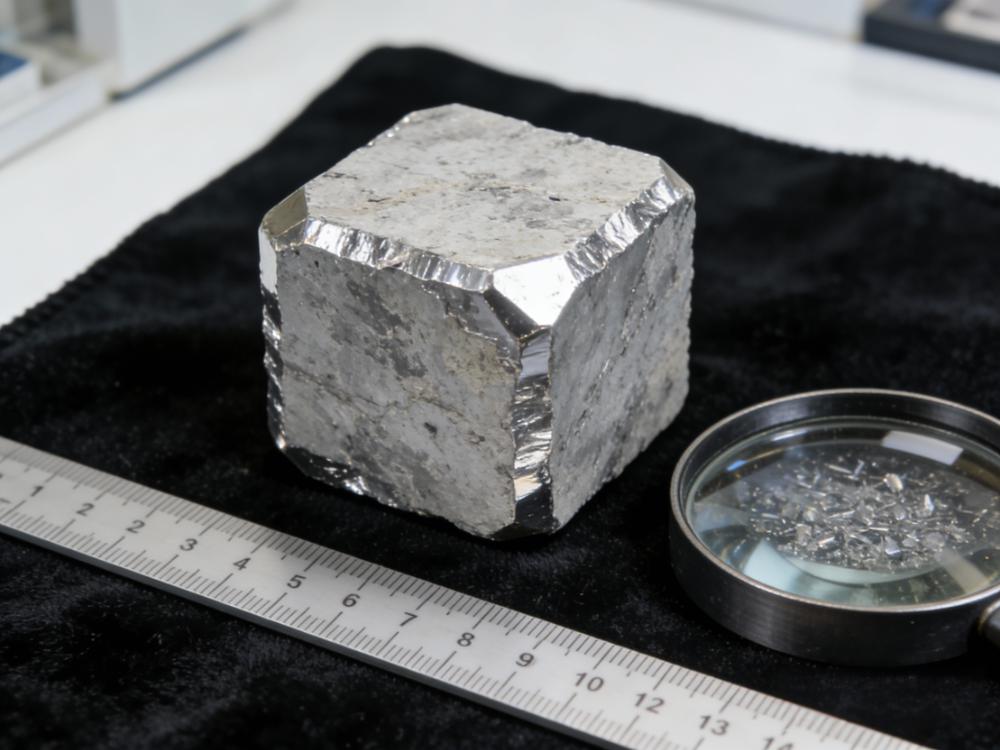 Secondary refined lead production continues to operate at low levels, August expectations below 150,000 mt?
In July, secondary refined lead production recorded 169,400 mt, down 12.75% MoM, marking the second-lowest level this year, with the extent of production cuts clearly exceeding earlier market expectations.
Aug 3, 2026 15:34- Humanoid Robot and High-Efficiency Motor Demand Expectations Catalyze, Motor Sector Strengthens, Jiangxi Special Electric Motor Hits Daily Limit [SMM Quick News]
SMM August 3 News: The broader market came under pressure and consolidated in early trading on August 3, while high-end manufacturing segments moved independently. As of around 14:08, the Electric Motor II sector was up 1.91%. Among individual stocks, Jiangxi Special Electric Motor hit the daily limit up, and Wolong Electric Group, Yifan Transmission, Keli Motor, MOONS', and Jiangsu Leili Motor were among the top gainers. The strength in motor sector futures was driven by multiple factors: First, Unitree Robotics is about to conduct its IPO subscription and Tesla raised its long-term capacity target for humanoid robots, heating up mass production expectations for joint servo motors. Second, the rare earth permanent magnet sector also rose, with higher upstream permanent magnet material prices boosting earnings expectations for high-performance motors. Third, the replacement policy for IE4/IE5 high-efficiency motors continues to be implemented, opening up room for the replacement of existing traditional industrial motors. Coupled with expectations of stockpiling by downstream automakers and equipment manufacturers in mid-to-late August, some market funds favored the motor sector, driving the overall sector higher. Market News [State Council Executive Meeting Approves Four Nuclear Power Projects Including Liaoning Zhuanghe Phase I] The State Council executive meeting decided to approve four nuclear power projects, including the Phase I project in Zhuanghe, Liaoning. The meeting emphasized that nuclear power units should be constructed and operated in accordance with the highest global safety standards, and that all-chain, all-field safety supervision must be strengthened to ensure the absolute safety of nuclear power. [China Approves 8 New Nuclear Power Units with Total Investment Exceeding 170 Billion Yuan] In 2026, the approval process for new nuclear power projects in China was opened. According to CCTV News on July 31, the State Council executive meeting held on that day decided to approve four nuclear power projects, including the Phase I project in Zhuanghe, Liaoning. It is reported that the new projects approved at the meeting include the Phase II project (Units 3 and 4) of Zhejiang Jinqimen Nuclear Power, the Phase III project (Units 5 and 6) of Guangdong Taipingling Nuclear Power, the Phase I project (Units 1 and 2) of Liaoning Zhuanghe Nuclear Power, and the Phase I project (Units 1 and 2) of Shandong Laiyang Nuclear Power, totaling 8 new units. Nuclear power projects have historically been a significant driver of effective investment expansion. It is estimated that the total investment in these new projects will exceed 170 billion yuan. (Jin10 Data) [State Administration for Market Regulation: During the 15th Five-Year Plan Period, Proactively Deploy High-Level Testing Platforms for Strategic Emerging Industries Including Integrated Circuits, New Energy, Biomedicine, and Humanoid Robots] The State Administration for Market Regulation held a press conference on the 21st to introduce the achievements of China's inspection and testing service industry during the 14th Five-Year Plan period. During the 15th Five-Year Plan period, the administration will implement an innovation pilot program for inspection and testing to promote industrial optimization and upgrading, along with a three-year action plan to improve the quality of national quality inspection centers. It will proactively deploy high-level testing platforms for strategic emerging industries such as integrated circuits, new energy, biomedicine, and humanoid robots, and promote innovation in service models through digital transformation. Strengthen deep collaboration with industry chain leaders and research institutes, jointly tackle a number of key core technologies, and promote the upgrading of inspection and testing from a single service to "industry chain synergy," shifting from being a "post-event quality gatekeeper" to a "full-process innovation enabler." Coordinate the capacity building for green and low-carbon, food safety, and high-risk industrial product testing, and build a solid quality defense line for industrial development and people's livelihood safety. [China's robot industry chain sees explosive orders; a robot company receives over 10,000 orders in a month] Currently, publicly listed firms are gradually releasing their semi-annual reports and earnings forecasts. In H1 this year, the robot sector reported widespread positive earnings. From core parts to complete machine integration, from motion control to AI computing hardware, the robot industry chain is shifting from "concept-driven catalysts" to a new phase of "order volume growth and profit realization." MIIT data shows that from January to May, the revenue of China's above-designated-size robot enterprises exceeded 90 billion yuan, up 26.9% YoY, with an average annual growth rate of over 20% over the past five years. A robot company just launched a new humanoid robot product at the end of last month and received over 10,000 orders in less than a month. Another company's head stated that their frameless motor is a core component for humanoid robot joint actuation, and in H1 this year, the company's orders on hand exceeded 1 million units, an increase of more than nine times compared to last year. (Jin10 Data) [General Administration of Customs: In H1, China's exports of lithium batteries, wind turbines, and other green energy-related products increased by 37.6% and 35.6% respectively] The State Council Information Office held a press conference today to introduce China's foreign trade performance since the beginning of this year. Currently, the global green and low-carbon transition is deepening, and the construction of new energy and rising consumer demand align well with China's green products. In H1, China's exports of lithium batteries, wind turbines, and other green energy-related products increased by 37.6% and 35.6% respectively; green mobility products such as EVs, electric railway locomotives, electric motorcycles, and bicycles grew by 68.7%, 45.1%, and 31.5% respectively. Tesla Optimus project lead Ashok Elluswamy announced on social media on July 30, 2026, that the long-term annual capacity target for Optimus had been revised to 10 million units. This figure is ten times the originally planned capacity of 1 million units, marking a comprehensive upgrade in Tesla's humanoid robot capacity planning. [Google DeepMind launches Gemini Robotics 2 robot AI model] Google DeepMind has launched the Gemini Robotics 2 model. According to the introduction, Gemini Robotics 2 enables robots to reason about every action, thereby unlocking a broad range of tasks. For example, it can enable a humanoid robot to walk, squat, stretch, and manipulate objects to clean a cluttered room. It can even collaborate with other robots to complete tasks faster. This deep intelligence can also run locally on devices while seamlessly adapting to entirely new robot bodies within just a few hours. Meanwhile, Google DeepMind also launched two other robotic AI models — Gemini Robotics ER 2 and On-Device 2. Gemini Robotics ER 2 is the most powerful embodied reasoning (ER) model, a vision-language model (VLM) that will enable robots to communicate with humans, understand the physical world, and plan multi-step tasks lasting several minutes. On-Device 2 is the most efficient vision-language-action model (VLA), optimized to run locally on robotic devices. The model can now quickly adapt to entirely new robot entities with just hours of data. [Dayang Motor: Plans to Repurchase Shares Worth 120 Million–160 Million Yuan] Dayang Motor announced that the company plans to repurchase shares worth 120 million to 160 million yuan for future employee stock ownership plans or equity incentive plans, with a repurchase price not exceeding 11.5 yuan per share. [Xiangtan Electric: Expected Significant YoY Growth in Revenue from Synchronous Condensers and Flywheel Energy Storage This Year] Xiangtan Electric stated on an interactive platform that the company has actively developed new products in recent years, advancing R&D in synchronous condensers, flywheel energy storage, marine power, aviation electrification, and high-speed motors , achieving notable results in market promotion of synchronous condensers and flywheel energy storage. Revenue from these products is expected to see significant YoY growth this year; marine power, aviation electrification, and high-speed motors have also made some progress in market promotion. [BYD Plans to Launch Humanoid Robot in August This Year] Recently, reports suggested that BYD's humanoid robot is about to be launched. On July 28, BYD responded that it plans to launch the humanoid robot at "Di Space" in August. (Jin10 Data) [Unitree Robotics' Wang Xingxing: The "ChatGPT Moment" for Embodied AI Could Arrive Within Two to Three Years] According to the World Internet Conference news, the 2026 World Internet Conference Digital Silk Road Development Forum, themed "Smart Convergence on the Silk Road, Digital Opening of a New Journey – Jointly Building a Community with a Shared Future in Cyberspace," held its opening ceremony in Xi'an, Shaanxi, on July 22. Wang Xingxing, founder and CEO of Unitree Robotics, attended the ceremony and delivered a speech. Over the past few years, humanoid robots have made rapid progress from walking to dancing, from kung fu combat to simple services. Wang Xingxing believes that the "ChatGPT moment" for embodied AI is expected to arrive within as soon as two to three years: by then, robots will be able to directly work and achieve many basic functions in most unfamiliar scenarios. Therefore, everyone should make various plans and arrangements in advance based on their actual situation, so as to seize new opportunities in the intelligent era. (Jinshi Data) [Unitree Robotics: Preliminary Inquiry Date Is August 5, Offline Subscription Date Is August 10] Unitree Robotics announced that the company is conducting its initial public offering and listing on the STAR Market. The offering will be conducted through a combination of strategic placement, offline issuance, and online issuance. The company plans to publicly issue 40,446,434 shares, accounting for 10% of the total share capital after the issuance, with the total share capital after issuance at 404,464,340 shares. The preliminary inquiry date is August 5, 2026, and the offline subscription date is August 10, 2026. The company has a special voting rights mechanism arrangement, under which the actual controller, Wang Xingxing, controls a total of 68.78% of the voting rights through a differentiated voting rights arrangement. [Unitree Robotics’ Chen Li: Core Technologies of Joint Motors Entirely Self-Developed, Upstream Only Relies on Copper Wire, Magnets and Other Raw Materials] From July 3 to 4, the 2026 Yabuli Forum Innovation Annual Conference was held in Shanghai. Chen Li, co-founder of Unitree Robotics, stated that the company has achieved independent R&D and production of core parts and has integrated the underlying technology architecture, possessing the capability to independently develop and produce a full range of products including quadruped robots, humanoid robots, robotic arms, pumps, dexterous hands, etc., covering diverse application scenarios. In response to the view that joint motors rely on external procurement, Chen Li said that the core technologies of Unitree’s joint motors are entirely independently developed, with the upstream only involving the supply of basic raw materials such as copper wire and magnets, achieving a completely independent and controllable supply chain. He stated that by independently developing the full set of core technologies, Unitree's products maintain industry-leading levels in cost-effectiveness, reliability, stability, and consistency. At the same time, the company continues to invest in the R&D of core technologies such as robot control, perception, navigation, and AI algorithms, and has cumulatively applied for multiple patents. (Jinshi Data) [Report: China’s Embodied AI Market Size Has an Average Annual Compound Growth Rate of 22% to 23%] The "China Embodied AI Industry Development Report (2026)" was released in Shanghai on July 2. The report states that China has become one of the fastest-growing embodied AI markets in the world. According to calculations by multiple research institutions, the market size of China’s embodied AI is expected to grow from approximately 213.3 billion yuan in 2018 to 1.09 trillion yuan in 2026, with an average annual compound growth rate of 22% to 23%. The report notes that China possesses the world’s only and most complete full-chain industrial support for embodied AI, spanning from core sensors, servo motors, and harmonic reducers to whole-machine assembly and algorithm adaptation, forming a highly clustered industrial ecosystem. The agglomeration effect of parts supply industries in the Yangtze River Delta and Pearl River Delta regions allows new prototype iteration speeds to significantly outpace those in Western countries, and China’s embodied AI sector enjoys particularly prominent cost advantages, with overall manufacturing costs 30% to 50% lower than outside China. [Musk Elon: Optimus robot production will progress extremely slowly in the early stages because all technologies are being developed from scratch] Tesla CEO Musk Elon posted a photo of himself at the Optimus humanoid robot production line at the Fremont factory in California, US, on social media, sparking discussions about Optimus’ mass production progress. Some users noted that Tesla has recently reduced public demonstrations of Optimus, possibly because mass production progress has already exceeded market expectations. In response, Musk replied: “No, Optimus production is going to be extremely slow at the beginning because everything is brand new. It’s not like building cars.” [Bernstein: Japanese automakers’ interest in humanoid robots rekindled] Analysts at Bernstein said in a report that interest from Japanese automakers in humanoid robots appears to be reemerging. They pointed out that Mitsubishi Motors has said it signed a memorandum of understanding with a Japanese startup to jointly develop and mass-produce humanoid robots. The analysts noted that Japanese automakers have a long history of involvement in robotics. By 2050, global humanoid robot shipments could reach 49 million units, and the market would expand to approximately $729 billion. Given the overlap in core technologies (including actuators, sensors, batteries, control units, and AI software), this makes humanoid robots an attractive sector where automakers and suppliers have already accumulated expertise through vehicle deployment. Motor Spot Price To learn more about tax-inclusive weekly prices for various models such as three-phase asynchronous motors, variable frequency motors, DC brushed motors, flat motors, gear motors, linear motors, coreless motors, and motor cores, please click to view(). Voices from All Sides A research report from Huaxin Securities pointed out: Domestically, Yushu’s inquiry and subscription dates have been confirmed; outside China, the Optimus mass production process is accelerating toward implementation, Tesla has clarified capacity targets and issued parts procurement guidance, and the first mass production line is about to come online. We are bullish on the humanoid robot sector ushering in a definitive market trend. It is recommended to prioritize positioning in certain targets within the Tesla chain, which benefit from capacity ramp-up and are expected to drive order growth; at the same time, pay attention to quality enterprises with core parts R&D capabilities and adapted to the mass production needs of humanoid robots, and seize the beta opportunities in the sector. CITIC Securities pointed out that Tesla combines leading AI large model technology with large-scale manufacturing capabilities, and the company is in the top tier of the global embodied AI industry chain. It firmly believes in the mass production and application prospects of Tesla's robots. Tesla's Optimus is about to enter the production phase, and the Cybercab is undergoing testing as planned. It is recommended to focus on core players in the industry chain. A research report from China Securities stated that in July, different rare earth varieties exhibited significant differences in performance. Pr-Nd oxide rose first and then declined, terbium oxide jumped and then pulled back, and dysprosium oxide remained generally stable. Supply side, tight raw material supply issues at scrap plants led to a notable decline in production. According to SMM, Pr-Nd oxide production was down 11% MoM in July, and there may be marginal improvement in August, but overall production remains suppressed. Downstream, the high-temperature holiday season led to reduced operations at motor factories, with demand pulling back. August remains in the off-season, but the September-October peak season is a traditional peak consumption period. Market expectations for the start of demand recovery remain strong. In mid-to-late August, downstream stockpiling is expected to restart, breaking the supply-demand weakness and driving prices to stabilize and move upward. Wanlian Securities pointed out that the humanoid robot industry is currently at the dawn of transitioning from technological breakthroughs to large-scale commercialization. Supply side, Tesla, Unitree Robotics, Agibot, and UBTECH are steadily advancing the mass production pace. Demand side, an aging population and climbing labor costs serve as long-term drivers. Simultaneously, with policy and capital forces jointly boosting, AI large models continuously infuse soul into robots. Humanoid robots are expected to form an emerging industry, gradually moving from B-end to C-end, with vast future market space. Yingda Fund recently released the Q2 2026 report of its fund. The Q2 report of the Yingda Flexible Allocation Fund managed by fund manager Liu Yubin shows that, looking ahead, the fund remains optimistic about opportunities in the humanoid robot industry chain, particularly the Tesla Optimus supply chain. It holds positions centered on core Tier 1 suppliers and key parts top-tier players, strengthening a performance and order-driven approach, and focusing on the mass production progress of global leaders and the pace of commercialization of the domestic supply chain. Liu Yubin judges that data is the core foundation for the iteration of general embodied AI. Subsequently, he will increase allocation to quality targets that combine self-developed data acquisition hardware barriers and build complete end-to-end data closed loops, while continuously improving the portfolio framework. (Jinshi Data APP) Want to know more about the fundamentals, technicals, and policy aspects of the motor industry? Please participate in
Aug 3, 2026 14:10 - Fundamental Support and Geopolitical Easing Signals Intertwine, the Most-Traded SHFE Tin Contract Continues to Consolidate at Highs [SMM Tin Midday Review]
[SMM Tin Midday Review: Fundamentals Support and Geopolitical Easing Signals Intertwine, the Most-Traded SHFE Tin Contract Continues to Consolidate at Highs]
Aug 3, 2026 12:37 - 【European Steel Recovery Supports Metallurgical Coal Market as ArcelorMittal Sees Stronger Q3 Demand】
ArcelorMittal, the world's second-largest steelmaker, reported second-quarter core EBITDA of US$2.06 billion, beating the market consensus of US$2.01 billion by approximately US$50 million (+2.5%). The company expects European steel shipments to remain stable or edge higher in the third quarter, defying the usual seasonal slowdown. Supported by tighter EU import measures and rising steel prices, ArcelorMittal has restarted three blast furnaces and said it has further production flexibility if demand continues to improve. European crude steel production also increased by around 11% from the first quarter. Firmer steel prices and blast furnace restarts indicate continued improvement in European steelmaking activity, providing near-term support for seaborne metallurgical coal and coke demand. While the current recovery is not yet sufficient to shift the global supply-demand balance, further production restarts across Europe could strengthen support for international metallurgical coal prices.
Aug 3, 2026 11:08 - Lohum Cleantech Raises ₹230 Crore to Expand Battery Recycling Business
Indian battery recycling company Lohum Cleantech has secured ₹230 crore in funding from Poonawalla Vision Fund-1 (PVF1) and several family offices. The investment will support the company's expansion in battery recycling, critical mineral recovery and advanced materials, driven by growing demand for sustainable battery materials amid the global clean energy transition. Lohum's business also covers cathode active materials (CAM) and other battery-related materials.
Aug 3, 2026 10:14 - [SMM Rare Earth Morning Briefing] Oxide Recovery Drives Up Metal Prices, High-Temperature Maintenance of Magnetic Materials Puts Demand Under Pressure, and Scrap Wait-and-See Sentiment Is Strong
[Oxide Price Recovery Drives Up Metals, Magnetic Material Maintenance Weighs on Demand, Strong Wait-and-See Sentiment in Scrap] Last week, as oxide prices recovered, metal suppliers slightly raised their quotations, but market inquiries remained limited. Downstream magnetic material enterprises showed limited acceptance of high-priced metals, creating a sluggish trading atmosphere with actual transactions in the doldrums. In the medium-heavy rare earth market, inquiries remained scarce, and prices for terbium metal and dysprosium-iron alloy showed no significant fluctuations, maintaining overall stability.
Aug 3, 2026 09:55 - PBOC Releases Easing Signals, Aluminum Price Upside Room Limited Amid Supply-Demand and Geopolitical Game [SMM Aluminum Morning Meeting Minutes]
[Central Bank Sends Easing Signals; Supply-Demand and Geopolitical Games Limit Aluminum Price Upside Room] Our comprehensive assessment shows that the macro front has improved recently, with the marginal constraints of interest rate hike expectations on the nonferrous metals sector continuing to ease. The proportion of liquid aluminum in China has kept rising. China’s central bank will implement accommodative monetary policies, step up counter-cyclical adjustments, and redouble efforts to expand domestic demand to steer the economy toward sustained, more favorable, and broader-based development. The persistent geopolitical risk premium in the Middle East has jointly underpinned aluminum prices, significantly boosting short-term market confidence. However, the ongoing commissioning of long-term aluminum capacity outside China, the recent softness in traditional end-use demand in China, combined with the repeated shifts in expectations for US Fed interest rate hikes and the uncertainties triggered by geopolitical turmoil in the Middle East, continue to exert certain pressure on the upside room for aluminum prices.
Aug 3, 2026 09:51