

571results found for 'rare earths'
Sort by : |
- [SMM Rare Earth Morning Briefing] Oxy-Oxide Stalemate Drags Down Ore Price Center, Metal Undergoes Slight Correction, and Wait-and-See Sentiment for Magnetic Material Scrap Persists.
[Stagnant Oxides Drag Down Ore Price Center, Metals See Slight Correction, Magnetic Material Scrap Wait-and-See Continues] Currently, the overall circulation frequency of rare earth ore remains poor, market trading is stagnant, and weak oxide prices have caused the center of actual transaction prices for rare earth ore to shift downward.
Aug 4, 2026 10:07 - [SMM Nickel Morning Brief] Strait of Hormuz Negotiations to Begin, the Most-Traded SHFE Nickel Contract Plunged in Early Trading
[8.4 Morning Briefing] Trump stated that an agreement has been reached regarding the Strait of Hormuz, and an agreement on denuclearization will also be reached, with negotiations scheduled to begin on Monday afternoon; Iranian Foreign Ministry spokesman Baghaei stated that the situation in the Strait of Hormuz will not return to the pre-conflict state, and the new shipping lane agreed with Oman will be determined through mutual consultations. The most-traded SHFE nickel 2609 contract plunged below 130,000 yuan in the morning session, closing at 129,520 yuan/mt at the end of the morning session, down 1.91%. As U.S.-Iran negotiations begin, the Strait of Hormuz is expected to resume navigation, sulfur cost support has weakened, and nickel prices have fallen sharply. In the short term, the most-traded SHFE nickel contract is expected to trade in the range of 128,000-135,000 yuan/mt.
Aug 4, 2026 09:53 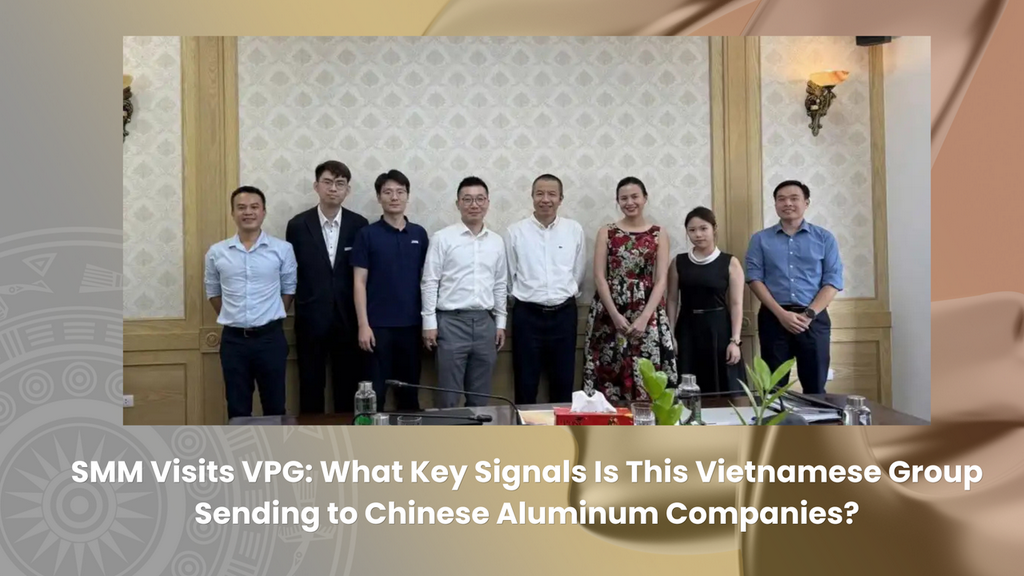 SMM Visits VPG: What Key Signals Is This Vietnamese Group Sending to Chinese Aluminum Companies?
On July 23, 2026, a delegation from Shanghai Metals Market Information Technology Co., Ltd. (SMM) visited VPG (Viet Phuong Group). The delegation included: Logan Lu, CEO of SMM Cason Lou, Director of Aluminum Processing, Marketing Department Lexi Chen, Key Account Manager for Overseas Information Sales Khai Yuen Chin, Senior Overseas Aluminum Analyst The two sides held in-depth discussions on bauxite resource development in Southeast Asia, alumina project development, regional logistics networks, and the development of a Vietnam-based aluminum pricing system. SMM noted that as the global aluminum value chain continues to restructure, China’s alumina market is expected to see sustained demand for overseas resources. Given resource availability and cost considerations, high-quality overseas alumina resources—particularly those from Vietnam and other Southeast Asian markets—are expected to gain greater market potential and competitive advantages. VPG shared updates on the progress of its current projects and said it is actively advancing mineral processing and alumina projects, with Southeast Asia and other international markets set to become key areas of future development. Since 2008, VPG has been engaged in bauxite exploration and development in Sekong Province, Laos, and is currently advancing an integrated industrial project covering bauxite mining, mineral processing, and alumina production. Both sides agreed that establishing an open, transparent, and regionally representative local aluminum pricing system would help improve information transparency and strengthen the international influence of Southeast Asia’s aluminum value chain. They also expressed expectations for deeper cooperation in market research, pricing services, and industry exchanges. What Signals Does SMM’s Visit to VPG Send to Chinese Companies? 01 Vietnam Is Becoming an Important Hub Connecting the Global Aluminum Value Chain In recent years, an increasing number of international companies have viewed Vietnam as an important gateway connecting Southeast Asian resources with global markets. Supported by its established port infrastructure, rapidly expanding manufacturing sector, and growing international trade network, Vietnam is not only benefiting from the relocation of global manufacturing capacity but is also emerging as an important regional hub for the aluminum value chain. For Chinese companies seeking opportunities in Southeast Asia, Vietnam is gradually evolving from an “investment destination” into a “supply chain partner.” 02 Vietnam’s Rapid Market Growth Is Creating New Export Opportunities With free trade agreements such as the EU-Vietnam Free Trade Agreement (EVFTA) taking effect, Vietnam has become a strategic sourcing hub for aluminum products used in the solar industry, including aluminum profiles and PV module frames, with export growth exceeding 20%. EVFTA tariff benefits for EU buyers, together with US Section 301 tariffs, have also encouraged some international buyers to shift sourcing toward Vietnam. Meanwhile, Vietnam aims for electric vehicles to account for 50% of urban vehicles by 2030. As electric vehicles use nearly 30% more aluminum than conventional vehicles, growing EV adoption could generate significant additional aluminum demand. This widening demand gap is expected to create substantial opportunities for aluminum suppliers and exporters. Against this backdrop, SMM AICE is expanding internationally by bringing its conference to Vietnam. The event aims to establish an authoritative platform connecting Chinese aluminum companies with Vietnam and the broader Southeast Asian market, promoting the transition of China-Vietnam aluminum cooperation from “resource complementarity” toward “full-value-chain cooperation and mutual growth.” 03 Future Competition Will Be About Information, Not Just Opportunities Vietnam’s market continues to develop rapidly. At the same time, market rules, policies, cost structures, and pricing mechanisms are constantly evolving. For Chinese companies, identifying projects alone is no longer enough. Timely access to local policies, industry development trends, supply chain changes, and market pricing information is becoming increasingly important. This is also why SMM continues to deepen its presence in the Vietnamese market. Recently, SMM AICE has been conducting intensive visits across Vietnam and the broader Southeast Asian industrial value chain, maintaining close communication with government authorities, industry associations, mining companies, alumina producers, aluminum processors, and other market participants. Through more transparent market intelligence and pricing systems, SMM aims to help global companies better understand market dynamics and reduce decision-making risks. To help more aluminum companies seize emerging opportunities and establish an early presence in the Vietnamese market, SMM AICE Vietnam is coming to Vietnam with a major industry gathering. VPG — Viet Phuong Group Founded in 1996, VPG (Viet Phuong Group) is a well-established diversified investment group in Vietnam, with businesses spanning mining, energy, infrastructure, finance, real estate, and other sectors. Mining is one of the group’s key strategic businesses, with projects involving mineral resources including bauxite, rare earths, and quartz sand. In the aluminum sector, VPG has been engaged in bauxite exploration and development in Sekong Province, Laos, since 2008. The group is currently advancing an integrated project covering bauxite mining, mineral processing, and alumina production. Leveraging Vietnam’s established port infrastructure and regional logistics network, VPG plans to export alumina products to China and other global markets through the Laos–Vietnam cross-border logistics corridor, further integrating into Southeast Asia’s aluminum supply chain. In recent years, the company has continued to advance project development, international cooperation, and market expansion, with the ambition of building a regional aluminum industry platform spanning resource development, alumina production, and international trade. Join the Conversation at SMM AICE 2026 Connect with aluminum producers, processors, traders, manufacturers, certification organisations, industry associations and decision-makers from across Southeast Asia and the global market. Explore aluminum pricing, primary aluminum supply, processing technologies, low-carbon development, CBAM compliance and new opportunities for regional cooperation. ? Ho Chi Minh City, Vietnam ? November 19–20, 2026 Register now: bit.ly/AICE26 and secure your Super Early Bird Pass and save up to USD 200. Register before August 31, 2026.
Aug 3, 2026 16:42- Malaysia Considers Resuming Unprocessed Rare Earth Exports with Conditions
[SMM Rare Earth Express] The Malaysian government stated that it is evaluating adjustments to its unprocessed rare earth export policy, proposing to allow the resumption of exports of some unprocessed rare earths under conditions such as accompanying investment and technology transfer, in order to balance resource development with industrial development. Deputy Minister Syed of Malaysia’s Ministry of Natural Resources and Environmental Sustainability said that the relevant policy is still under study, and no implementation timetable has been set. Malaysia has suspended the export of unprocessed rare earths since 2024 to promote investment in the domestic rare earth processing industry. Official data shows that Malaysia has about 16.1 million mt of inferred rare earth resources, with a potential value of approximately 970 billion ringgit.
Aug 3, 2026 15:26 - [SMM Rare Earth Morning Briefing] Oxide Recovery Drives Up Metal Prices, High-Temperature Maintenance of Magnetic Materials Puts Demand Under Pressure, and Scrap Wait-and-See Sentiment Is Strong
[Oxide Price Recovery Drives Up Metals, Magnetic Material Maintenance Weighs on Demand, Strong Wait-and-See Sentiment in Scrap] Last week, as oxide prices recovered, metal suppliers slightly raised their quotations, but market inquiries remained limited. Downstream magnetic material enterprises showed limited acceptance of high-priced metals, creating a sluggish trading atmosphere with actual transactions in the doldrums. In the medium-heavy rare earth market, inquiries remained scarce, and prices for terbium metal and dysprosium-iron alloy showed no significant fluctuations, maintaining overall stability.
Aug 3, 2026 09:55 - Semiconductor market bucks the trend! Minor metals sector up nearly 3%, with Yunnan Tin and Yunnan Germanium leading the gains [SMM Flash]
SMM, July 31 – Sentiment on A-share semiconductor industry chain futures recovered, and the improved industry chain prosperity transmitted upstream, driving a sharp rally in the strategic minor metal sector. As of the close on July 31, the minor metal sector had risen 2.96%. Among individual stocks, Yunnan Tin and Yunnan Germanium both surged over 8%, while Orient Tantalum, Zhongxi Nonferrous, Xiamen Tungsten, Haotong Technology, Western Metal Materials, Zhangyuan Tungsten, Huaxi Nonferrous, and Shenghe Resources led the gains. This round of minor metal strength was driven by the resonance of multiple industrial dynamics. On one hand, the semiconductor and AI computing track regained heat, with expectations for demand expansion in high-speed optical modules, AI servers, and other fields improving. Germanium and tantalum, as core raw materials for semiconductor optoelectronic devices and high-end tantalum capacitors, are seeing steadily strengthened demand support from downstream emerging industries. On the other hand, germanium and tantalum are strategic dispersed metals with concentrated global supply. Coupled with overseas geopolitical disruptions and expectations of supply tightening from domestic resource controls, while the ongoing localisation of related high-end semiconductor materials continued to advance, this further boosted market allocation sentiment and pushed the sector higher. News [Yunnan Germanium: Subsidiary Signs Major Indium Phosphide Wafer Supply Order Worth RMB 570–855 Million, H1 Net Profit Expected to Increase YoY] Yunnan Germanium announced on July 24 that its controlled subsidiary Yunnan Xinyao recently signed a supply agreement with a client for the sale of indium phosphide wafers (substrates). The total estimated contract value ranges from RMB 570.08 million to RMB 855.12 million (tax inclusive), accounting for 53.48% to 80.23% of the company’s audited revenue for 2025. The contract term runs from August 1, 2026, to December 31, 2027. Regarding the contract’s impact on the listed company, Yunnan Germanium stated that if the contract is fulfilled smoothly, it is expected to have a positive impact on the company’s operating results for the performance years. The specific amount and reporting periods affected will depend on the actual performance of the contract and will be based on the company’s audited revenue. [Orient Tantalum: Domestic Demand for High-Value-Added Products Such as Superalloys and Semiconductor Tantalum Targets Is Gradually Rising] Orient Tantalum stated during an institutional survey on July 23 that, with the continuous development of China’s high-tech and new infrastructure sectors, domestic demand for high-value-added products such as superalloys, semiconductor tantalum targets, and high-purity niobium materials is gradually rising. In recent years, the company has vigorously promoted technical transformation and capacity expansion projects, organized production rationally, and gradually released new capacity. Under the guidance of the strategy for autonomous and controllable industry chains, the localisation substitution process has evolved from breakthroughs in individual products to systematic solutions, laying a solid foundation for the growth of tantalum, niobium, and their alloy products. [Yunnan Tin: Expects H1 2026 Net Profit of 1.47–1.57 Billion Yuan, Up 38.43%–47.85% YoY] Yunnan Tin disclosed an earnings forecast on the evening of July 14, expecting attributable net profit in H1 2026 to be 1.47 billion to 1.57 billion yuan, up 38.43%–47.85% YoY; and recurring net profit is expected to be 1.88 billion to 1.98 billion yuan, up 44.23%–51.91% YoY. Spot Market Tin Overnight, some US chip stocks rebounded, and the Philadelphia Semiconductor Index surged, boosting the performance of tin, known as the “computing metal.” SHFE tin opened higher on July 31, lifting spot prices. In the tin spot market: On July 31, the average price of SMM 1# tin was 425,850 yuan/mt, up 1.51% from the previous trading day. As tin prices rose, spot market trading was sluggish. Fundamentals: (1) Supply: Tight ore and ingot supply, low inventory, amplifying elasticity. Myanmar’s rainy season extends through end-August, with mine flooding and logistics disruptions; Wa State’s June tin ore output was only 6,392 mt in physical content. China’s tin ore imports in July are expected to be basically flat MoM. The slow pace of production resumptions in Wa State has been priced in ahead of time, with no major shutdowns in the near term, but supply contraction expectations during the rainy season have yet to fully materialize. Indonesia’s tin ingot imports in July are expected to show some recovery MoM. (2) Demand: Improved solder operating rates, but acceptance of high prices needs to be tested. The operating rate at solder enterprises was 78.8% in June, up 4.6 percentage points from May; however, after the sharp spot price rally on July 30, downstream users were cautious and stayed on the sidelines, and whether high-priced spot cargoes can be absorbed still requires verification. Stockpiling for new Apple/Huawei models in late August is the next demand trigger point. Institutional Views A research report from Minmetals Securities points out: Germanium accounts for 60% of applications in optical communication and satellite PV fields, making it a metal for “AI computing power + space energy.” With its excellent refractive index tuning capability and radiation resistance, germanium has become a key material for AI data center optical interconnects and low-earth-orbit satellite PV systems. Looking at changes in demand structure, from 2020 to 2026, downstream germanium consumption grew from 160 mt to 240 mt, with optical communication’s share rising to 40% and satellite PV’s share to 20%, together accounting for 60% of total downstream demand. It expects that 90% of the demand growth in 2027 will come from two high-growth sectors: AI hardware and satellite PV. A research report from Caitong Securities shows: As AI computing power demand explodes, the market size of indium phosphide, used as a chip substrate material, will continue to expand. Indium resources are scarce and subject to policy restrictions, and product prices are entering an uptrend. High-purity red phosphorus is a very important semiconductor base material, with high purification technology barriers. Against the backdrop of accelerated AI application deployment driving related infrastructure construction, the indium phosphide substrate industry chain is expected to see dual opportunities from demand growth and domestic substitution. It is recommended to focus on enterprises with resource and technological advantages in the links of indium phosphide, indium, and high-purity red phosphorus. A research report from Datong Securities shows that minor metals have staged an independent rally, with tightened supply combined with strategic attributes leading to a value revaluation. The rare earth sector is preemptively pricing in new regulatory controls, with Myanmar ore imports disrupted, tight spot supply of Pr-Nd oxide driving prices sharply higher; tungsten and antimony ore grades are declining along with environmental protection-driven production restrictions, widening the supply gap, while PV and hard alloy demand remains firm during the off-season, and inventories are at low levels. AI computing power and communications sectors are boosting demand for gallium and germanium, and coupled with export control policies, concentrated stockpiling outside China is widening the price spread between Chinese and overseas markets. Scarce resources are resonating with financial attributes, and the sector continues to be favoured by capital. Recommended Reads:
Jul 31, 2026 20:20 - Kerala Allocates $11.5M for Rare Earth Mineral Corridor, Signals India's Strategic Mineral Push
[SMM Rare Earth Express] The government of Kerala, India, announced that it has allocated 1 billion rupees (about $11.5 million) in the 2026–2027 budget and plans to build a rare earth and critical mineral corridor centered on Kollam, to promote mineral processing and the development of the critical mineral industry, and enhance India’s critical mineral supply chain capacity. However, the project is still in the planning stage. The construction plan for a rare earth processing plant, industry partners, offtake agreements, and specific timetables have not yet been disclosed, nor has the participation of IREL (India) or international enterprises been confirmed. Industry insiders believe that the 1 billion rupees can only serve as initial startup capital, falling far short of the tens of billions of US dollars needed to build a complete industry chain covering rare earth separation, metal, and magnet manufacturing. Therefore, at this stage, it more represents a policy signal for India to strengthen its strategic layout for critical minerals rather than a mature industrial investment project.
Jul 31, 2026 16:58 - Algae Doubles Rare Earth Concentration, Offers Green Extraction Method
[SMM Rare Earth Flash] A research team from Southern Illinois University in the US has discovered that algae can increase the concentration of rare earth elements by more than double, offering a new approach beyond chemical processes for green rare earth extraction and potentially helping the US strengthen its critical minerals supply chain. The researchers added rare earth-containing rock powder and microalgae to a simulated river system, and the experimental results showed that the algae could absorb and concentrate rare earth elements, which were then recovered through a patented process. This technology is expected to reduce reliance on chemical agents such as sulphuric acid, and can be applied to the recovery of rare earths from secondary resources such as coal ash, mine tailings, and electronic waste. The team is currently testing more algae species and plans to apply for funding from the US National Science Foundation to further advance the research.
Jul 31, 2026 16:56 - REA Discovers Continuous Rare Earth Mineralization in Georgia, Expanding Foothills District Significantly
[SMM Rare Earths Flash] Rare Earths Americas (REA) announced that drilling at the Liberty Peak target in the Foothills rare earth district, Georgia, US, has intersected monazite-bearing placer mineralization with characteristics similar to the Shiloh project 50 km away, indicating the mineralized zone may be continuous rather than a single deposit. REA noted that previous drilling and surface sampling at the Shiloh project returned total rare earth oxide (TREO) grades of up to 44.5%, and the company believes the placer system may extend to Liberty Peak and multiple surrounding targets, expanding the Foothills rare earth mineralized area to 17.5 times that of the Shiloh target. Initial drilling at Liberty Peak intersected mineralization over 10 meters thick, with several holes yet to penetrate the orebody.
Jul 31, 2026 16:55 - [SMM Flash News] Trump Orders Restrictions on Critical Minerals Scrap Exports
U.S. President Donald Trump has signed an executive order authorizing restrictions on exports of critical minerals-bearing scrap, including electronic waste and used batteries, to strengthen domestic recycling and reduce reliance on foreign supply chains. The order directs the U.S. Department of Commerce to develop rules limiting exports of recoverable critical minerals, aiming to retain valuable materials such as lithium, tungsten and rare earths for domestic processing. The move forms part of the administration's broader strategy to bolster U.S. critical minerals security and support domestic recycling capacity.
Jul 31, 2026 13:50