

401results found for 'processing fees'
Sort by : |
- [SMM Analysis] The Lithium Battery Consumption Tax Is Here—Who Will Foot the Bill?
Starting September 1, lithium-ion batteries will officially bid farewell to more than a decade of consumer tax exemption. The Ministry of Finance, the General Administration of Customs, and the State Taxation Administration previously issued a joint announcement, clarifying that a consumption tax will be reinstated on products such as lithium-ion batteries at a rate of 2%, and will be further raised to 4% starting September 1, 2027; meanwhile, cutting-edge technology routes such as sodium-ion batteries, solid-state batteries, and fuel cells will continue to be exempt through the end of 2028. After the news was released, the market’s first reaction was cost pass-through: if batteries are taxed, will NEVs become more expensive? Battery prices are highly likely to rise, and most of the incremental cost will also flow into the vehicle manufacturing stage, but that does not mean NEVs will therefore see broad-based price increases. Cost Increases May Not Necessarily Be Passed Through to Vehicle Prices From the tax calculation rules, this consumption tax will be levied as a one-off at the battery production stage, and the announcement has already made arrangements to avoid double taxation: where externally purchased, tax-paid battery cells are used for continuous production of battery packs, a credit is allowed for the tax already paid based on the quantity drawn for use in the current period; where self-produced battery cells are used for continuous production of battery packs, no tax is levied at the transfer stage either. Therefore, regardless of whether battery cells are self-produced or purchased externally, and regardless of who completes the Pack, the tax burden is ultimately levied once based on the taxable price at the battery pack ex-factory stage. Per-vehicle estimates should be calculated directly on a battery pack basis, rather than on a battery cell basis. Based on this approach, a rough estimate is that, using the price of a 100Ah LFP battery cell as a reference, for a mainstream BEV model equipped with a 60kWh battery pack, the 2% tax burden corresponding to the battery cell portion alone is about 400–500 yuan, which can be viewed as the lower bound; calculated on a battery pack ex-factory basis, the actual per-vehicle increment is mainly in the range of several hundred yuan to around 1,000 yuan. After the tax rate rises to 4% in 2027, the corresponding amount will double. The conclusion is that, compared with fluctuations in raw material prices such as lithium and nickel in recent years, the per-vehicle cost increment brought by this tax is not particularly significant; compared with sales promotions offered by automakers that often amount to several thousand yuan or even tens of thousands of yuan, its magnitude is likewise limited. Therefore, the consumption tax will raise vehicle costs, but is not enough to, on its own, constitute a reason for broad-based NEV price increases. The Tax Burden Is Highly Likely to Be Passed Downstream and Remain at the Automaker Level Where the tax burden ultimately settles depends on the bargaining power of each party across the industry chain. Considering upstream material supply and demand, the concentration of the battery industry, and communications with automakers, this tax is highly unlikely to remain with battery enterprises over the long term, and will instead move downstream along the industry chain into vehicle costs. First, there is limited room to shift it upstream For LFP, while the industry’s nominal capacity is not low, high-quality capacity such as high compaction density remains relatively tight, top-tier players have full order books, and processing fees are in a rising phase . Hunan Yuneng previously announced that it would raise processing fees across its full range of LFP products, and stated that incremental capacity would be difficult to meet all order growth. Under this supply-demand relationship, it is difficult for battery enterprises to demand that cathode material producers cut prices in reverse and jointly bear the consumption tax. The situation for ternary cathode material is somewhat different, but the conclusion is similar. Overall capacity for ternary cathode is in surplus, processing fees have long remained at low levels, and enterprises’ profit headroom has already been largely exhausted . Even if battery producers have some procurement bargaining power, upstream players lack sufficient profit buffers to fully absorb the 2% tax burden. Therefore, the cathode material side can at most share a small portion, and is unlikely to be the main segment under pressure. If the tax burden cannot move upstream, the next question is whether battery enterprises can pass it downstream. Previously, the market often cited “power battery overcapacity” as a reason to believe battery producers lack bargaining power versus automakers. But this judgment overlooks the highly concentrated structure of the power battery market. At present, the combined share of the Top 5 enterprises in China’s power battery installations has reached about 80% , indicating strong bargaining power. Although some second- and third-tier battery producers have weaker bargaining power and may ultimately bear most or even all of the tax burden, their corresponding market share is limited and cannot represent where the tax burden will settle for most industry installations. For external suppliers such as CATL, technical certification, car model fit, supply stability, and switching costs together constitute bargaining power; for vertically integrated enterprises such as BYD, when the battery segment transfers taxable batteries to the vehicle segment, the tax liability is triggered, and the consumption tax will be directly reflected as the group’s internal vehicle manufacturing cost. Based on information from enterprises, all parties are still negotiating the specific sharing ratio, but the direction of battery enterprises’ request to pass the burden downstream has already become relatively clear. Therefore, a more accurate conclusion is not that “all battery producers can pass the tax burden on,” but rather that the allocation of the tax burden will diverge significantly: top-tier players have the ability to pass most of the cost through to automakers, while second- and third-tier producers may be forced to bear a higher proportion themselves. Given that power battery installations are highly concentrated among top-tier players, on an industry-wide weighted basis, it is more likely that most of the tax burden will ultimately enter vehicle costs. Another often overlooked factor is exports. Under the current consumption tax regime, exported taxable consumer goods are exempt from consumption tax, and the scope of this announcement is also limited to domestic production and sales, toll processing, and imports; power batteries exported directly are not included in the tax base. For battery enterprises, the effective tax burden should therefore be assessed based on the domestic sales portion: taking CATL as an example, its overseas revenue share in 2025 had already exceeded 30%, and this part of the business is unaffected. The higher the export share, the lighter the effective tax burden and the thicker the profit buffer. This further reinforces the judgment that tax burden allocation will diverge—top-tier players not only hold bargaining power in the Chinese market, but their export mix is also diluting the tax base; those truly facing the full 2% tax base are precisely the second- and third-tier producers that rely mainly on domestic sales. Given the Current Competitive Landscape, Vehicle Prices Are Unlikely to Rise As mentioned earlier, the incremental tax burden for a mainstream BEV model is still only several hundred yuan to around 1,000 yuan. Compared with sales promotions that automakers often provide in the range of several thousand yuan or even tens of thousands of yuan, this magnitude is not enough to change pricing on its own. More importantly, the current NEV market has a dense set of substitute car models, and consumers are highly price-sensitive; if any automaker is the first to publicly raise prices, it may pay the price in sales and market share . Recently, automakers in China have still been offering end-user concessions of several thousand to tens of thousands of yuan through cash subsidies, trade-in benefits, and financing programs. Therefore, this cost is more likely to be absorbed by automakers through compressing per-vehicle margins, annual cost reductions, renegotiating prices for other parts, and adjusting marketing expenses. The eventual outcome may be: battery quotations rise, and vehicle costs also increase, but neither the official guidance price nor the end-user transaction price shows a broad-based increase directly triggered by the consumption tax. SMM New Energy Industry Research Lithium Battery End-User Analyst Fu Linqi 18122430020
Aug 17, 2026 18:24 - Macro Support Combined With Inventory Destocking, Aluminum Prices Drift Higher [SMM Aluminum Morning Meeting Minutes]
[Macro Support Combined With Inventory Destocking: Aluminum Prices Consolidate on a Strong Note] Overall, aluminum prices are expected to consolidate on a strong note in the short term, but upside room will be somewhat capped by expectations of production resumptions.
Aug 17, 2026 09:11 - China’s August Refined Copper Output Forecast to Fall Again as Feedstock Shortage Deepens
China’s refined copper output is expected to decline year on year for a second consecutive month in August as persistent shortages of copper concentrate and other smelter feedstocks continue to weigh on operating rates. State-backed research house Antaike forecasts August refined copper production at around 1.05 million tonnes among surveyed producers representing 81.97% of China’s total smelting capacity, down 2.83% year on year. July output from the same group is estimated at a similar 1.05 million tonnes, representing a 3.18% annual decline and falling short of an earlier forecast of 1.07 million tonnes. The expected contraction reflects increasingly tight availability of raw materials. Copper concentrate supply has remained under pressure for an extended period, prompting smelters to lower capacity utilisation as competition for feedstock intensifies. The strain is also visible in treatment charges. Processing fees for imported copper concentrate have remained negative for 19 consecutive months, while charges fell to a record low of around minus $175.7/t on August 7, compared with minus $38.4/t during the same period a year earlier. The deepening negative charges highlight the severity of competition among smelters for available concentrate. At the same time, tighter domestic tax-invoice regulations have constrained the supply of VAT-compliant recycled copper, reducing another important source of smelter feedstock and adding further pressure to refined output. The expected second consecutive annual decline in refined production suggests that prolonged concentrate tightness is increasingly translating into constraints on finished copper supply. With China accounting for a dominant share of global smelting capacity, continued feedstock shortages could further tighten refined copper availability and increase the market’s sensitivity to additional disruptions in concentrate supply.
Aug 17, 2026 05:21 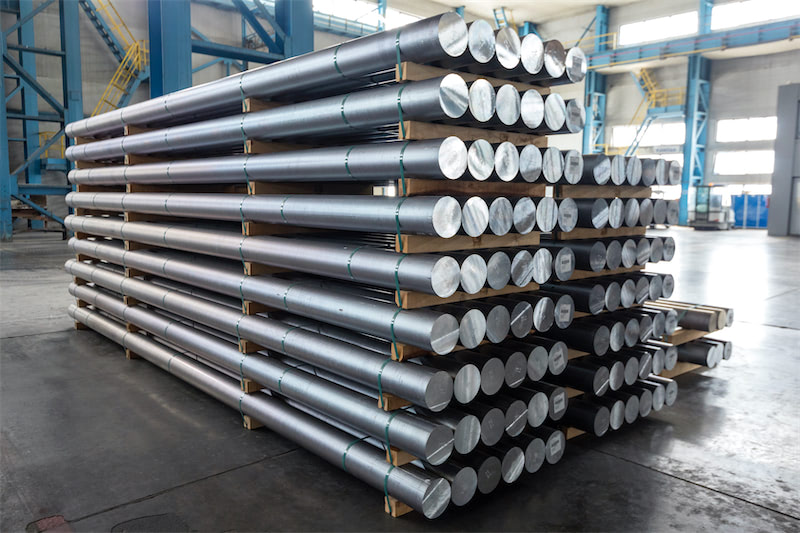 China Aluminum Billet Supply: July Extended the Inertia-Driven Uptrend; Expectations of a Retreat from Highs in August
SMM Aluminum Billet Market: In July, the operating rate of aluminum billet rose 1.1 percentage points MoM to 58.3%, up sharply by 5.2 percentage points YoY. Benefiting from the strong performance of aluminum billet processing fees in Q2...
Aug 15, 2026 19:09- Magnesium Ingot Weekly Price Rose, Upstream Support Strong, Downstream Follow-up Insufficient, Upside Room Limited [SMM Magnesium Weekly Data]
[Weekly Magnesium Ingot Prices Rise on Strong Upstream Support; Insufficient Downstream Follow-Through Limits Upside Room] This week, mainstream quotations for magnesium ingot in major producing areas were 15,900-16,000 yuan/mt, up 100 yuan/mt WoW, with FOB prices at $2,250-2,350/mt. This round of magnesium ingot price gains was driven by three factors: supply-side maintenance-related production cuts, cost push from coal and ferrosilicon, and concentrated delivery and restocking by traders. However, after the price increase, downstream fear of high prices emerged and transactions returned to mediocre levels; foreign trade remained weak, constrained by exchange rate fluctuations and the uncertain recovery of summer break orders. Upstream dolomite prices were stable, with sufficient supply from multiple channels; downstream magnesium powder and magnesium alloy prices followed the increase, but demand follow-through was insufficient. Magnesium alloy processing fees remained under pressure due to ample inventory, the impact of non-standard supply sources, high-temperature maintenance at die-casting enterprises, plastic substitution in two-wheelers, and other factors. In the short term, cost support is pitted against weak demand, and magnesium prices continue to move sideways.
Aug 14, 2026 18:01 - Antimony Price Center Continues to Rise [SMM Antimony Market Spot Weekly Review]
According to SMM data, the antimony market showed a stable-then-rise trend this week, with the price center continuing to move higher. The average price of #1 antimony ingot stabilized at 92,000 yuan/mt from Monday to Wednesday (Aug 10-12), was raised by 1,500 yuan/mt to 93,500 yuan/mt on Thursday (Aug 13), and remained unchanged on Friday. 99.8% antimony trioxide (domestic) largely moved in tandem, with its average price stabilizing at 82,000 yuan/mt from Monday to Wednesday, edging up by 500 yuan/mt to 82,500 yuan/mt on Thursday (Aug 13), and unchanged on Friday. The increase in antimony trioxide was noticeably smaller than that in antimony ingot, reflecting that downstream demand from flame retardants and other end uses improved but remained mild. In terms of pace, prices in the antimony products market mainly climbed steadily during this week's trading days; smelters generally held prices firm and held back from selling under loss-making pressure, and the market showed clear directional momentum. The mid-week rise was mainly driven by warming expectations of continued buyer stockpiling, but market participants widely reported that downstream rigid-demand restocking slowed noticeably and speculative interest also cooled, with overall market sentiment shifting to mildly bullish. Date #1 Antimony Ingot Lowest Price #1 Antimony Ingot Highest Price #1 Antimony Ingot Average Price Antimony Trioxide Lowest Price Antimony Trioxide Highest Price Antimony Trioxide Average Price Change 2026-08-10 (Mon) 91,000 93,000 92,000 81,000 83,000 82,000 Antimony +2,000 / oxide +1,000 2026-08-11 (Tue) 91,000 93,000 92,000 81,000 83,000 82,000 Unchanged 2026-08-12 (Wed) 91,000 93,000 92,000 81,000 83,000 82,000 Unchanged 2026-08-13 (Thu) 92,000 95,000 93,500 81,500 83,500 82,500 Antimony +1,500 / oxide +500 2026-08-14 (Fri) 92,000 95,000 93,500 81,500 83,500 82,500 Unchanged Weekly Average 90,500 92,900 91,700 78,750 81,400 80,075 Weekly +1.6% / +0.6% According to SMM estimates, China's antimony ingot production in July 2026, including antimony ingot, converted crude antimony, and antimony cathode, jumped about 30% MoM, showing a sharp increase. Customs data show that antimony ore imports from outside China in April, May, and June all exceeded 10,000 mt, and large ore imports inevitably translated into higher antimony ingot production. In H1 2026, cumulative antimony ore imports reached 59,347.5 mt in physical content, already exceeding total imports for full-year 2025. June antimony ores and concentrates imports were 10,688.6 mt, down 2.7% MoM from 10,980.1 mt in May, but still above the 10,000 mt mark. However, the previously market-worried "Spain variable" source is not sustainable. Combined with limited domestic mining output growth, the tight raw material pattern remained unchanged. Notably, a planned #1 antimony ingot smelting project with annual capacity of 10,000 mt in Xiaoerkule, Xinjiang may affect the future supply landscape. From a cost perspective, mining costs of some large producers' self-owned antimony ore plus smelting processing fees are now relatively close to spot prices, and smelters' willingness to hold prices firm and hold back from selling is highly consistent, which is also the core reason prices could sustain their uptrend this week. June antimony trioxide export volume was 474.3 mt, up 145.6% MoM from about 193 mt in May, with Russia as the top destination. Export channels showed a diversification trend, but total volumes remained low. Over the same period, unwrought antimony exports were zero, indicating antimony ingot exports were still restricted. The import structure shifted markedly, with Spain's share rising; export channels became more diversified, but total volumes remained low. Looking at Thai trade data, Thailand's antimony ingot imports in June were 1,405 mt, up 173.1% MoM and a half-year peak, sourced mainly from Vietnam, Myanmar, and Hong Kong; exports were 689 mt, up 132.1% MoM, mainly destined for Belgium, South Korea, and Japan. Thailand's industry chain pattern of processing antimony ingots into value-added exports to developed economies is clear, with export unit prices generally above import costs and a notable processing value-added effect. Data Indicator Latest Month Previous Month MoM Change Antimony ores imports (mt) 10,688.6 (Jun) 10,980.1 (May) -2.7% H1 cumulative antimony ore imports (mt in physical content) 59,347.5 - Exceeds full-year 2025 Antimony trioxide exports (mt) 474.3 (Jun) 193.2 (May) +145.6% Unwrought antimony exports 0 (Jun) 0 (May) Remained zero Antimony ingot production Jul +30% MoM Jun +30% Export controls continue. Since July 1, export controls on strategic minerals have been upgraded to "whole-supply-chain networked supervision"; compliant export channels have narrowed, which will further tighten domestic available supply. Although antimony trioxide exports rose sharply MoM, total volumes remained low compared with normal monthly exports of several thousand mt, and the industry chain's export willingness improved but the overall stance remained cautious. On end-use demand, as the traditional off-season draws to a close, operating rates across downstream sectors are expected to rebound steadily; for example, operating rates in the flame retardant and alloy sectors are expected to increase with the arrival of the September-October peak season. After earlier capacity contraction, the PV glass industry also has production resumption expectations, but demand for sodium pyroantimonate still needs to be observed and verified. Bromine prices rose to 36,500 yuan/mt on tightening supply and consolidated at highs, providing cost support for antimony prices. However, after restocking for rigid demand in the previous period, end-users now hold some raw material inventory and are not highly motivated to continue restocking in the near term. From this week's antimony trioxide transactions, downstream acceptance of high-priced antimony trioxide supply remained cautious, and there was some resistance in passing this through to the upstream smelting segment. This was also an important reason why this week's antimony price rise was measured and lacked momentum for a one-sided sharp rally. For example, sodium pyroantimonate production in July fell 20% MoM, and two consecutive months of decline showed that the peak demand season had not arrived. From this week's trend, the pace of price increases reflected the market's core contradiction: a game between smelters' willingness to hold prices firm and downstream acceptance of high prices. Looking ahead to next week, the core logic supporting antimony prices remains solid: smelters generally face loss-making pressure from inverted prices of externally purchased raw materials and finished products, and their willingness to hold prices firm and hold back from selling is highly consistent; meanwhile, the approaching September-October peak season is further strengthening downstream expectations of future restocking. Next week, antimony prices are expected to hold up well. Given that current gains are relatively mild and upward momentum still needs to accumulate, the probability of a sustained one-sided sharp rally is low. Attention should be paid to downstream actual acceptance of cargoes after price increases. In the medium and long term, over the next month, the antimony market is expected to continue its firm pattern as peak-season demand materializes. Late Q3 to early Q4 is the traditional peak consumption season for antimony products; the flame retardant industry entering its production peak will boost consumption of antimony trioxide and antimony ingot, and the PV glass industry has production resumption expectations. On the supply side, China's antimony ore is constrained by resources and can hardly see significant volume growth; export controls continue to deepen, and the price center is expected to rise gradually. Key Points to Watch: - Downstream actual acceptance of antimony ingot prices after increases and the sustainability of transaction volume expansion - Changes in Antimony Oxide Capacity Outside China and China's Export Recovery Progress - Actual Verification of "September-October Peak Season" Demand - Subsequent Changes in Antimony Ore Imports - Progress on the 10,000 mt Antimony Ingot Smelting Project in Xiaoerkule, Xinjiang - Bromine Price Trend and Cost Support - Enforcement of Strategic Mineral Export Control Policies
Aug 14, 2026 14:56 - Concerns Over Tightening Liquidity Eased Marginally; Aluminum Prices Remained Under Pressure at High Levels in the Short Term [SMM Aluminum Morning Meeting Minutes]
[Liquidity Tightening Concerns Ease Marginally; Aluminum Prices Under Pressure at High Levels in the Short Term] Overall assessment: On the macro front, the US July PPI and core PPI both declined YoY, coming in below expectations and the previous readings, further easing inflationary pressure. Market expectations for a US Fed interest rate hike in September have been lowered, and concerns over liquidity tightening have eased marginally. On the fundamentals side, aluminum ingot inventory has continued to decline, but a slowdown is expected in the second half of the month. The pace of production resumptions at Middle Eastern aluminum smelters has accelerated versus the market’s prior expectations, and the previously traded premium for tight supply is facing pressure to retrace. Although macro conditions recovering and continued destocking in the first half of August supported stronger aluminum prices, as market sentiment has shifted, aluminum prices are expected to be under pressure at high levels in the short term, and upside room will be constrained to some extent by expectations for production resumptions.
Aug 14, 2026 09:36 - Magnesium Prices Rise Due to Supply Cuts, Cost Hikes; Demand Weakness Limits Further Gains
【SMM Weekly Magnesium Review】This week, the mainstream offer of magnesium ingots in major production regions stands at RMB 15,900-16,000/ton, up RMB 100/ton week on week, with FOB offer at USD 2,250-2,350/ton. This round of magnesium ingot rally is driven by three factors: supply-side maintenance-led production cuts, rising costs of coal and ferrosilicon, and concentrated order fulfillment and restocking by traders. However, after the price hike, downstream players have developed reluctance to chase high prices, leading to dull transactions; the foreign trade sector remains weak, constrained by exchange rate fluctuations and unclear recovery of orders amid the summer break. The price of upstream dolomite stays stable with sufficient supply from multiple channels; downstream magnesium powder and magnesium alloy follow the price hike but lack sufficient demand support. For magnesium alloy, processing fees remain under continuous pressure due to ample inventory, impact of non-standard supplies, high-temperature maintenance of die-casting enterprises, and plastic substitution in two-wheeled vehicles. In the short term, amid the game between cost support and sluggish demand, magnesium price will continue to fluctuate in a narrow range.
Aug 14, 2026 09:20 - [SMM Analysis] Cost-Driven Surge, Off-Season Demand Under Pressure: Structural Analysis of the Platinum Group Compound Market
I. Overall Market Review During the week, China’s platinum group compounds market showed notable structural divergence and a “retreat after rapid rise” pattern. The market was driven mainly by fluctuations in overseas market prices and overseas policy events. Platinum and palladium compounds experienced a period of sharp gains before pulling back under pressure; rhodium-based products rose steadily; iridium and ruthenium-based products remained independent and stable. The core contradiction in the current market is the mismatch between a sharp increase on the cost side and persistently weak demand. Upstream NYMEX platinum and palladium prices jumped sharply, directly pushing up domestic raw material costs for chloroplatinic acid and palladium chloride to fresh highs for the period. However, downstream sectors such as automotive catalysts, pharmaceuticals, and petrochemicals were in the high-temperature maintenance off-season, with insufficient end-user operating rates and sluggish spot trades. Downstream enterprises mostly adopted a strategy of restocking only as needed and lacked sustained buying support, causing platinum and palladium products that had surged earlier to generally pull back under pressure, while industry processing fees moved lower overall. Iridium, ruthenium, and rhodium-based products were less affected by spillover and merely moved sideways with mild gains. II. Price Trends by Product 1. Chloroplatinic Acid: Wild Swings, Correction from Highs The price trend showed three stages: “stable—surge—pullback.” In the early stage, trading was sluggish due to the off-season, and prices were steady; in the middle stage, driven by soaring overseas platinum prices and a confluence of bullish sentiment related to tariffs and geopolitics, prices jumped quickly to new highs for the range; in the later stage, high prices dampened downstream purchase willingness and there was no incremental capital, causing market momentum to fade, and prices consolidated at highs on a subdued note. 2. Palladium Chloride: Leading Gains, Under Pressure at Highs Its trend was highly correlated with chloroplatinic acid, but its gains were more notable. Driven by a surge in international palladium prices, production costs rose sharply, and prices broke strongly through key levels to set recent highs. However, also constrained by weak downstream demand in the off-season, prices lacked sustained support after the rapid rise and eventually ended with high-level consolidation and a slight correction. 3. Rhodium Trichloride: Steady Strengthening, Mild Uptrend The market was independent of the sharp fluctuations in platinum and palladium and was generally firm. Supported by a slight rise in upstream raw material costs, enterprises tentatively raised their quotes. Although constrained by off-season demand, the upward pace was mild and orderly, with no extreme fluctuations, showing a healthy pattern of steady gains. 4. Chloroiridic Acid and Ruthenium Trichloride: Independent Trends, Stable Operation The two products were largely unaffected by the surge in sentiment around platinum and palladium. Chloroiridic acid moved independently in a mild, slow uptrend with minimal fluctuations; ruthenium trichloride remained in low-level sideways movement, ending the period with only a small gain. Both had independent supply-demand patterns, with no trend-like sharp rises or falls throughout the period, and were the most stable. III. Core Operating Logic 1. Costs and Sentiment Dominated Prices The core driver of the surge in platinum and palladium compounds was cost transmission from soaring overseas raw material prices, coupled with events such as overseas tariff and geopolitical expectations, which heated up speculative sentiment and amplified short-term fluctuations. In contrast, iridium, ruthenium, and rhodium products were relatively independent due to weak linkages. 2. Off-Season Demand Capped Gains Concentrated maintenance by downstream end-users caused rigid demand to contract sharply, creating a mismatched pattern of “high prices and weak demand.” Enterprises generally implemented light inventory strategies, with no concentrated stockpiling, directly causing platinum and palladium products lacking fundamental support to quickly come under pressure. 3. Profit Margins Squeezed from Both Sides Sharp rises in upstream raw material costs and weak downstream demand squeezed corporate profits from both directions. To stimulate transactions and relieve inventory pressure, producers and traders generally lowered processing fees; pricing concessions to facilitate transactions became the industry norm. IV. Market Outlook In the short term, China’s platinum group compounds market will continue to show a pattern of cost-led prices, constrained demand, and structural divergence: First, chloroplatinic acid, palladium chloride and other products will continue to consolidate at highs on a subdued note. Going forward, prices will remain highly dependent on overseas market trends; however, before downstream demand in the off-season recovers, high prices will lack sustained support and momentum for a one-sided advance will be insufficient. Prices are expected to be mainly range-bound with slight corrections. Second, niche products such as rhodium trichloride, chloroiridic acid and ruthenium trichloride are subject to limited external disruption and, with mild support from raw material costs, prices are steady with a modest upward bias. However, they are also constrained by off-season demand, so a strong trend-driven rally is unlikely in the short term; overall, they are expected to be dominated by narrow fluctuations and a mild, slow uptrend.
Aug 13, 2026 20:51 - Stable Operating Rate Pattern for PV Frames Unlikely to Change in the Short Term; Production Resumptions at Aluminum Plants Outside China Accelerate, Market Sentiment Shifts [SMM Analysis]
SMM News, August 13: PV Aluminum Extrusion: This week, the operating rate of surveyed PV aluminum frame enterprises remained stable. Some leading PV frame enterprises reported that their current orders were ample and sufficient to keep production running at high levels until month-end. Downstream, PV module enterprises did not change their procurement strategies because of the recent drift higher in aluminum prices and continued to purchase as needed. According to SMM, frame enterprises had no plans to adjust processing fees in the short term. At the current stage, supply-side and demand-side fundamentals in the industry were relatively balanced, so the operating rate of PV aluminum frame enterprises would continue to run at a steady pace. Raw Material Prices: During the period (August 10-13, 2026), the weekly average SMM A00 aluminum ingot price was 24,145 yuan/mt, up 2.0% from the previous weekly average price. Overall, macro front, the YoY growth rates of US July CPI and core CPI slowed to 3.4% and 2.5%, respectively, both in line with market expectations. The mild pullback in inflation eased concerns about further aggressive rate hikes by the US Fed, weakened the short-term momentum for US Treasury yields to shoot up, and eased macro liquidity pressure. Combined with lingering differences over the Middle East situation, these factors provided staged support for aluminum prices. Fundamentals side, aluminum ingot inventory continued to destock, but destocking was expected to slow down in the second half of the month. Supply side outside China, the UAE's EGA disclosed progress on the resumption of production at the AlTaweelah aluminum smelter. Currently, 18% of the plant's 1,262 electrolysis cells have been restarted, and the pace of the production resumption was faster than the market had previously expected. The previously traded supply tightness premium faced give-back pressure. Although macro recovery and continued destocking supported higher aluminum prices in the first half of August, due to a shift in market sentiment, aluminum prices are expected to be under pressure at high levels in the short term, and upside room will be suppressed to some extent by production resumption expectations. Next week, the most-traded SHFE aluminum contract is expected to trade in the range of 23,600-24,450 yuan/mt; LME aluminum is expected to trade in the range of $3,180-3,330/mt. Going forward, close attention should be paid to the progress of production resumptions in the Middle East and developments in new project commissioning plans.
Aug 13, 2026 19:00