

89results found for 'operation rate'
Sort by : |
- 【SMM Aluminum Flash News】Dongxing Aluminum's aluminum coil production reached 160,100 tons in the first quarter.
On March 27, Dongxing Aluminum achieved its production targets for key products such as electrolytic aluminum, aluminum coils, and aluminum rods in the first quarter. Among them, the output of electrolytic aluminum was 425,800 tons, aluminum coils were 160,100 tons, and aluminum rods were 30,200 tons. The electrolytic cell operation rate reached a maximum of 99.9%, and the on-site conversion rate of molten aluminum reached 95.7%.
Mar 30, 2026 17:24 - As contract rollover approaches, Shanghai spot copper remains on par with parity, with caution advised against a renewed widening of the price spread between futures contracts [SMM Weekly Review of Shanghai Spot Copper]
》Check SMM metal quotes, data, and market analysis 》Subscribe to view historical price trends of SMM metal spot cargo >During the week, the supply of imported copper continued to replenish, with various sources of goods circulating in the Shanghai spot market. However, the mainstream supply was tight due to trade circulation needs, leading to a significant price spread between different brands of spot copper transactions during the week. Nevertheless, both inventory and futures warrants continued to show destocking. The downstream sector's ability to purchase at low premiums was moderate, which could also be verified by the recent operation rates of copper semis. Looking ahead to next week, as the contract rollover of SHFE copper 2506 approaches, there is still a gap between the current open interest and the existing warrants. Moreover, with a BACK price spread between futures contracts of only 100 yuan/mt and smelters having export intentions, the deliverable supply that can be organized in the market next week will be limited. Be cautious of the risk of the price spread between futures contracts widening again. 》Check SMM metal industry chain database
Jun 6, 2025 14:19 - Polysilicon Rebounds from Low, Surges Over 6% During Trading! What Are the Reasons? What Supports the Market? [[SMM Flash News]]
SMM reported on May 9: On May 8, after hitting a historic low of RMB 34,375/mt in the futures market, the main polysilicon futures contract staged a strong rebound, closing up 2.43% on the day. On May 9, it continued to open higher, surging over 6% during the session, showing strong performance in the morning. Regarding the reasons behind the strong rebound in the main polysilicon futures contract, SMM understands that it may be mainly related to the limited delivery brands held by several of the five major delivery enterprises in the market (mostly concentrated in a few thousand tons). As the delivery period approaches, the limited spot quantity has made it impossible for bears to deliver sufficient goods for settlement as required by the contracts. Moreover, with the continuous weakening of polysilicon futures prices in the previous trading sessions, futures prices once fell below spot prices. According to SMM's spot quotes, the recent transaction prices of N-type polysilicon in the spot market were mostly around RMB 37,000/mt. However, in contrast to the futures price on May 8, the main polysilicon futures price fell to a low of RMB 34,375/mt, creating a significant price spread with the previous spot price. Some downstream enterprises in the market even began to calculate the feasibility of purchasing from the futures market. However, considering the lack of significant fundamental support, after this round of capital market games, the main polysilicon futures contract's gains narrowed as it approached midday. By the midday close, the main polysilicon futures contract closed at RMB 37,310/mt, up 4.25%. In terms of spot prices, according to SMM's spot quotes, as of May 9, the N-type polysilicon price index was reported at RMB 37.05/kg, down RMB 5.95/kg from RMB 43/kg on March 27, representing a decline of 13.84%. 》Click to view SMM's spot quotes for PV products From a fundamental perspective, SMM understands that the sentiment in the downstream polysilicon market is currently slightly pessimistic, mainly due to the impact of the previous price declines across the entire PV industry chain and the market's anticipation of potential demand weakness following the "531" installation rush. Meanwhile, the continuous decline in wafer and solar cell prices has also exerted significant downward pressure on polysilicon prices in the spot market. At the same time, polysilicon enterprises have recently faced some inventory pressure, and the raw material inventory held by crystal pulling plants is also relatively abundant. This inventory pressure has been a major factor contributing to the weak performance of the polysilicon spot market in late Q1 and early Q2. However, SMM predicts that polysilicon may experience some destocking expectations in May, primarily because according to SMM data statistics, global polysilicon production in May is expected to be around 99,000 mt (including 94,500 mt of domestic production), representing a decrease of about 2% MoM from April. Although downstream wafer production has also declined MoM, overall global wafer production is expected to be around 57-58GW, with wafer demand for polysilicon at about 110,000 mt. Subsequently, with the improvement of the supply-demand relationship in the polysilicon market, inventory pressure may be alleviated to a certain extent. 》Click to view the SMM database Looking ahead to the spot market outlook, according to SMM, some top-tier enterprises are gradually increasing their willingness to stand firm on quotes based on cost rationality. There are also plans to reconvene relevant industry conferences in the near future. Additionally, there are instances of delayed resumption of production and commissioning of some capacities, which may have a certain positive impact on the subsequent market. It is recommended to continue monitoring the operation status of the main capacities and the price trend of downstream silicon wafers in the future. 》Click to view details Institutional Commentary Guangzhou Futures stated that, on the one hand, downstream silicon wafer prices fell significantly during the week, and purchases of polysilicon were made cautiously, mainly for just-in-time procurement. Actual market transactions were sluggish, and there was a risk of further accumulation of factory inventory in the future. Coupled with the upcoming rainy season, the cost center may shift downward, and there are expectations of a marginal weakening of the fundamentals. On the other hand, as the first delivery of the 2506 contract approaches, the current number of registered warrants is relatively low, and there are concerns about insufficient warrants for the first delivery. In summary, with bullish and bearish factors intertwined in the market and the tug-of-war between longs and shorts, short-term fluctuations in the futures market may intensify. However, in the medium and long term, there are strong expectations of a weakening of the fundamentals, and it is expected that the rebound pressure on far-month contracts will remain significant. Strategically, cautious funds are advised to wait and see for the time being, while aggressive funds may attempt to establish short positions in the PS2507 contract at high levels, with a reference range of (35,000, 38,000). Everbright Futures stated that before the holiday, traders cleared inventory and drove down prices, and downstream stockpiling willingness was lower than in previous years. After the holiday, the pressure of a slowdown in downstream demand persists. In the short term, silicon metal is struggling to break away from the bottoming-out trend due to negative feedback from the downstream. Polysilicon production has a high degree of adjustability, and insufficient warrants add bargaining chips to the game. In the short term, significant declines are limited, and sideways movement is the main trend. Attention should be paid to the dynamics of production restrictions by enterprises and whether new mandatory assessment policies for large-scale infrastructure or PV installations are introduced, which are expected to trigger a new round of oversold rebounds. Xinhu Futures stated that the spot price of polysilicon is in the doldrums, market demand is weak, and orders have tightened. Downstream purchases are made on a need-to-buy basis, and market transactions are stagnant. The industry's operation rate is running at a low level, and there are expectations of a downward adjustment in production schedules within the month. Recently, there have been rumors of industry self-discipline meetings related to standing firm on quotes, and it is still necessary to monitor changes in production schedules after the meetings. Silicon wafer enterprises are offering discounts in exchange for volume, and low-price transactions are increasing. Downstream demand continues to slump, and production schedules are currently stable. Overall, although the fundamentals of polysilicon are weakening, polysilicon enterprises are controlling production and refusing low-price orders. The main warrant volume is relatively small, and the ratio of virtual to actual warrants is high, leading to intense bargaining over the 06 contract. It is recommended to anchor the cost range of delivery brands for operations, and short positions can focus on far-month contracts. It is still necessary to monitor the generation of warrants and the actual sales situation of futures-to-spot traders, and calendar spreads can still be held. Xinhu Futures stated that, based on the supply-demand balance table, it is inferred that overall demand is expected to shrink in May. Production schedules for both silicon wafers and modules are expected to decline, while polysilicon enterprises are also taking production cuts, making it difficult for polysilicon production to increase. Combining the overall supply and demand situation, the polysilicon industry is still in a state of slight destocking.However, the current inventory pressure remains significant. From the perspective of purchasing pace, downstream crystal pulling enterprises have a strong tendency to bargain down purchasing prices, with some only purchasing small quantities based on immediate needs. This has led to another round of inventory buildup at the polysilicon enterprises' end. The market still expects a decline in subsequent prices, resulting in a game between upstream and downstream players. Overall, the fundamental support is insufficient, and spot prices remain under pressure. Currently, some polycrystalline enterprises are reluctant to sign orders at low prices. Attention should be paid to subsequent adjustments in production schedules. After the recent sharp decline in the futures market, comparing the low transaction prices of spot cargo of delivery brand, futures are still in a contango structure. Today, the futures market experienced violent fluctuations, with prices showing signs of rebound and recovery. As the delivery month approaches, the current volume of warrants remains low, and there is still cancellation and outflow today, while open interest continues to increase. The market may further trade on the delivery logic, and attention should be paid to the risk of a short squeeze.
May 31, 2025 13:21 - The downward trend in PV production scheduling intensifies, with small-scale installation rush expected overseas [SMM Weekly Review]
[SMM Weekly Review: Production Schedule Decline in PV Sector Intensifies, Small-Scale Installation Rush Expected Overseas] This week, the price index of N-type polysilicon was 35.01 yuan/kg, N-type recharging polysilicon was priced at 35-38 yuan/kg, and N-type mixed polysilicon was priced at 31-36 yuan/kg. Overall, polysilicon prices remained largely stable. This week, polysilicon transactions were relatively limited compared to WoW, with sufficient inventory in the downstream and weak purchasing enthusiasm. The production schedule of polysilicon in June is expected to increase slightly, involving production increases/resumptions at 2 sites and production cuts/shutdowns at 3 sites. The polysilicon operation rate is weaker than previously expected, with overall resumption of work during the rainy season being cautious.
May 29, 2025 11:58 - Official announcement! LPR reduced by 10 basis points in May, mortgage interest rates further lowered, and a new round of deposit interest rate cuts also began on the same day
Today, the People's Bank of China (PBOC) authorized the National Interbank Funding Center to announce the Loan Prime Rate (LPR) for May 2025: the 1-year LPR is 3.0%, and the LPR for loans with a maturity of over 5 years is 3.5%. Both rates decreased by 10 basis points MoM. Industry insiders told a reporter from Caixin that the LPR cut will further stabilize and reduce financing costs for the real economy, stimulate credit demand, and promote corporate investment. Meanwhile, the decrease in the LPR for loans with a maturity of over 5 years will help reduce the interest burden on mortgage borrowers and boost consumption. LPR decreased by 10 basis points following the policy rate cut The market had already anticipated the LPR cut in May. Previously, at the State Council Information Office press conference held on May 7, PBOC Governor Pan Gongsheng, when introducing a package of monetary policy measures, stated that the policy rate would be cut by 0.1 percentage point, i.e., the 7-day reverse repo operation rate in the open market would be lowered from the current 1.5% to 1.4%, which is expected to drive the LPR down by approximately 0.1 percentage point in tandem. At that time, market analysts told a reporter from Caixin that it was expected that the policy rate cut would guide the Loan Prime Rate (LPR) and deposit rates to decrease in tandem, which would help maintain the stability of commercial banks' net interest margins. Meanwhile, through interest rate transmission, it would effectively reduce the comprehensive financing costs for the real economy and consolidate the economic fundamentals. Wang Yifeng, chief financial analyst at Everbright Securities, also stated that considering the 10 basis point cut in the Open Market Operations (OMO) rate in May, it was estimated that the corresponding LPR would decrease by 10 basis points in tandem. Wang Qing, chief macro analyst at China Lianhe Credit Rating, also said that a 0.1 percentage point cut in the policy rate (the PBOC's 7-day reverse repo rate) would guide the May LPR quote to follow suit and decrease, thereby reducing various types of loan interest rates. In addition, starting from May 8, the interest rate on individual housing provident fund loans was cut by 0.25 percentage point. At that time, Wang Qing stated that driven by the 0.25 percentage point cut in the interest rate on individual housing provident fund loans, commercial personal housing loan interest rates would see a more significant decrease in the following period. With the LPR cut for loans with a maturity of over 5 years in May, mortgage interest rates will also decline. Industry insiders stated that the decrease in the LPR for loans with a maturity of over 5 years will help reduce the interest burden on mortgage borrowers and boost consumption. According to calculations, for a commercial loan of 1 million yuan with a 30-year term and equal principal and interest repayment, a 10 basis point cut in the LPR will reduce the monthly mortgage payment by 56 yuan, resulting in a total reduction of 20,200 yuan over 30 years. Monitoring data from Rong 360 Digital Technology Research Institute on mortgage interest rates in 45 key cities across China showed that in April 2025, the average interest rate for first-home loans nationwide was 3.10%, unchanged MoM and down 52 basis points YoY; the average interest rate for second-home loans was 3.21%, unchanged MoM and down 98 basis points YoY. Among the 45 key cities under monitoring, 12 cities had mainstream interest rates for first-home mortgages ranging from 2.99% to 3.00% (inclusive), with Guangzhou and Foshan offering the lowest rates at 2.99%. Thirty cities had mainstream interest rates ranging from 3.00% to 3.20% (inclusive), and three cities had mainstream interest rates ranging from 3.20% to 3.60% (inclusive). Bank liability costs correspondingly decreased, initiating a new round of deposit interest rate cuts. Jiang Changzheng, the Audit Partner-in-Charge for Financial Services in North China at EY Greater China, recently stated in an interview with Caijing that, based on the situation in Q1 2025, banks' net interest margins (NIMs) generally continued to narrow. Among the 42 A-share listed banks, 25 disclosed their NIMs in their Q1 reports, with 20 experiencing a decline compared to 2024, four showing an increase, and one remaining unchanged. "On May 7, the People's Bank of China (PBOC) announced RRR cuts, as well as cuts in policy interest rates and interest rates for structural monetary policy tools. The market generally expects that the LPR will be adjusted accordingly, and deposit interest rates will also be adjusted," Jiang said. "Considering the 10 basis point (bp) cut in the Open Market Operations (OMO) interest rate in May, it is estimated that the corresponding LPR will be cut by 10 bps synchronously. However, there will still be pressure on banks' NIMs, necessitating further strengthening of liability cost management to help banks stabilize their NIMs," Wang Yifeng had previously stated, emphasizing the need to closely monitor whether the listed deposit interest rates of state-owned and joint-stock banks will follow the LPR cuts. On the day when the new LPR was announced, several banks, including Industrial and Commercial Bank of China (ICBC), China Construction Bank (CCB), and China Merchants Bank (CMB), announced cuts in their listed deposit interest rates, with the maximum reduction being 25 bps. Wen Bin, the Chief Economist at China Minsheng Bank, stated that the PBOC's Q1 monetary policy report, released earlier, proposed to "further improve the interest rate regulation framework, continuously strengthen the implementation and supervision of interest rate policies, reduce banks' liability costs, and promote a decline in the overall social financing costs." Compared to the previous report, this directly emphasized the reduction of banks' liability costs, indicating that the subsequent constraints of the self-regulatory mechanism will continue to be strengthened, and banks will also initiate a new round of deposit interest rate cuts. This is consistent with the PBOC's mention on May 7 of guiding a reduction in deposit interest rates through the interest rate self-regulatory mechanism. Wen Bin further stated that, following a 10 bp policy interest rate cut and a synchronized LPR reduction, the corresponding reduction in banks' liability costs is necessary not only to strengthen interest rate coordination, stabilize NIMs, and promote the achievement of the "quadruple balance" goal of monetary policy, but also to create space for further reducing the overall financing costs of enterprises.
May 20, 2025 09:21 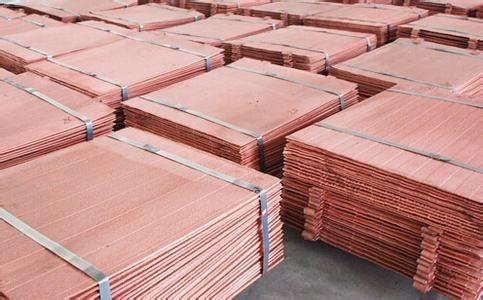 Outlook for Shanghai copper spot premiums
May 15 marked the last trading day for the SHFE copper 2505 contract, with the spot market generally starting to quote prices against the SHFE copper 2506 contract. As the price spread between futures contracts mainly fluctuated within a BACK range of 420-450 yuan/mt on the last trading day, spot prices against the SHFE copper 2506 contract were at a premium of 400-450 yuan/mt. As the delivery of the SHFE copper 2505 contract approached, the open interest corresponding to the delivery volume was originally significantly different from the existing delivery warrants. On May 14, amid favourable macro front and fundamental support, SHFE copper surged above 79,500 yuan/mt, only to see selling pressure increase on the futures market, erasing the gains.
May 19, 2025 13:56- Yunnan Copper Science & Technology Development Co., Ltd. Achieves "Double Growth" in Revenue and Net Profit in Q1
On April 25, Yunnan Copper released its Q1 report, delivering an impressive performance with revenue of 37.754 billion yuan and net profit attributable to shareholders of 560 million yuan, marking a high-quality development "good start." The company's revenue and net profit increased by 19.71% YoY and 23.97% YoY respectively, with multiple core indicators leading the industry, demonstrating strong anti-cyclical capabilities and market competitiveness. As the only listed copper industry platform under Chalco Group and China Copper, Yunnan Copper leverages the synergistic advantages of its three major smelting bases in the southwest, southeast, and north, achieving efficient resource allocation and precise cost control. In Q1, the relocation and upgrade project of Southwest Copper entered the final sprint stage, with the electrolysis production system fully operational for load testing, becoming a benchmark project for green and low-carbon transformation in the industry; Diqing Nonferrous put the world's first 800 m³ flotation machine (HIF-800) into use, significantly improving copper recovery rates; Yuxi Mining made breakthroughs in optimizing the ventilation system of the western orebody, providing safety assurance for deep mining; Southeast Copper set a new record in the operation rate of its acid-making system; Chifeng Yuntong and Kunming Metallurgical Research Institute jointly overcame the technology for extracting molybdenum from copper smelting dust, pushing the comprehensive utilization rate of resources to a new level; Dianzhong Nonferrous successfully conducted load testing on the electrolysis line at its secondary copper resource recycling base, marking the full completion of the "urban mine" circular economy industry chain.
May 19, 2025 13:53 - How to View the LME Backwardation/Contango in the Future Market After SHFE Copper Contract Rollover Delivery Under High BACK? [SMM Analysis]
[SMM Analysis] May 15 was the last trading day for the SHFE copper 2505 contract, and the spot market basically started quoting prices against the SHFE copper 2506 contract. As the price spread between futures contracts mainly fluctuated within BACK 420-450 yuan/mt on the last trading day, spot prices against the SHFE copper 2506 contract were at a premium of 400-450 yuan/mt. As the delivery of the SHFE copper 2505 contract approached, the open interest corresponding to the delivery volume was originally vastly different from the existing delivery warrants. On May 14, amid favourable macro front, the fundamentals of SHFE copper also provided support, with prices surging above 79,500 yuan/mt during this period. Subsequently, selling orders increased in the futures / futures market, erasing the gains.
May 16, 2025 17:33 - [SMM Steel Morning Meeting Summary] Supply pressure eases, coupled with moderate demand resilience; HRC prices still have a slight upward potential
[SMM Steel Morning Meeting Summary] In the spot market, most daily quotes remained stable, with overall transaction performance being moderate. SMM released the weekly supply and demand data for HRC. This week, maintenance work at some steel mills in east China, north China, and parts of south China was relatively concentrated. Coupled with the MoM decline in the daily average production schedule of domestic steel mills' HRC in May, HRC production saw a significant MoM pullback. This week, SMM's statistics showed that the social inventory of HRC in 86 warehouses (large sample) nationwide was 3.3304 million mt, down 106,100 mt MoM, a 3.09% MoM decrease and an 18.45% YoY decrease compared to the new calendar year. This week, the nationwide social inventory declined. By region, the central China market began to experience a slight inventory buildup, while the east China market saw a relatively larger decline, with inventories in other regions decreasing slightly. In the short term, with the easing of supply pressure and moderate demand resilience, inventory continues to decline and remains at a relatively low level compared to the same period in previous years. The fundamental imbalance in the HRC market is not apparent, providing support for the price floor. Considering that the reduction in tariffs has boosted market sentiment to a certain extent, it is expected that HRC prices will still have a slight upward space in the short term.
May 16, 2025 07:30 - What Performance Did the Enamelled Wire Industry Show with the Release of Favorable Tariff Adjustments?
Since early April, the developments in China-US tariff policies have continued to attract industry attention. Against this backdrop, the impact on enamelled wire industry orders has become a focal point within the industry. As the traditional off-season for the enamelled wire industry approaches in late May, the market is paying closer attention to consumption expectations for May. The release of the joint China-US statement on May 12 undoubtedly introduced new variables to the market. Will the order landscape in the enamelled wire industry undergo new transformations as a result? Focusing on these market hot topics and industry concerns, the SMM Copper Team conducted an inquiry into the order status of some enamelled wire enterprises. The specifics are as follows:
May 15, 2025 17:45