

16results found for 'newcre'
Sort by : |
- C50 Market Sentiment Index Survey: New Social Financing in May May Increase YoY, with M2 YoY Growth Rate Expected to Continue Rebounding
The latest "C50 Direction Index" survey by Cailian Press shows that the market consensus forecast for new RMB loans in May stands at 600 billion yuan, down 35 billion yuan YoY from 95 billion yuan in the same period last year. The median forecast for new aggregate financing in May is 2.32 trillion yuan, up 26 billion yuan YoY. Market participants expect M2 growth may pick up in May amid improved liquidity and low base effects. On prices, the market anticipates CPI to remain relatively stable in May while PPI deflation may widen further. The median forecasts for CPI and PPI YoY growth rates are -0.2% and -3.3% respectively. The "C50 Direction Index Survey", initiated by Cailian Press and completed with participation from various research institutions, comprehensively reflects market expectations on macroeconomic trends, monetary policy sentiment and financial data. Nearly 20 institutions participated in this round. Market consensus forecasts median new RMB loans in May at 600 billion yuan In April, new RMB loans totaled 280 billion yuan, down approximately 450 billion yuan YoY. Household loans decreased by 521.6 billion yuan while corporate loans rose by 610 billion yuan, mainly driven by bill financing. For May, the median forecast for new RMB loans is 600 billion yuan, down 35 billion yuan YoY, with projections ranging from 430 billion to 1.25 trillion yuan. Market analysts attribute weak credit expansion in May primarily to constrained corporate loan demand, with future trends heavily dependent on fiscal policy intensity. Corporate loan growth YoY was mainly supported by increased bill financing, reflecting still weak effective loan demand and subdued financing appetite among real-economy enterprises. Data shows bill rates in May first declined then rebounded, maintaining April's sideways trend. Binbin Sun, chief economist at Caitong Securities, noted: "The phased implementation of comprehensive financial support policies announced by the PBOC on May 7, coupled with slightly rising bill rates in late May, both indicate weaker bank demand for bill-based credit expansion. Credit is expected to strengthen MoM but remain weaker YoY." Additionally, weak medium and long-term corporate loans in May were significantly affected by local government debt restructuring. Wenlang Zhang, chief macro analyst at CICC, stated: "New credit in May may remain relatively weak, with our forecast showing a YoY decline. An important factor remains potential reductions in credit stock due to government bond swaps." "Affected by local governments' efforts to resolve debt, some outstanding loans in the hidden debt of urban investment platforms have been replaced or repaid early. New loans are calculated as the difference between newly issued loans and loans repaid in the current period. Therefore, the scale of new loans in the month will be affected to a certain extent," said Liao Bo, the co-chief macro analyst at Zheshang Securities. In the first five months of this year, special refinancing bonds issued by various provinces for debt replacement totaled 160 million yuan, causing technical disruptions to credit. New aggregate financing in May may increase YoY, and the YoY growth rate of M2 may continue to rebound. In April, new aggregate financing reached 1.16 trillion yuan, with the YoY increase expanding to 1.2 trillion yuan, mainly driven by government bonds. According to this survey, the median forecast for the scale of new aggregate financing in May by market institutions is 2.32 trillion yuan, an increase of 260 billion yuan compared to 2.06 trillion yuan in the same period of 2024. The forecast range of participating institutions is from 2 trillion yuan to 2.74 trillion yuan. Overall, government bonds are expected to remain the main contributor to aggregate financing in May. High-frequency data shows that the net financing scale of government bonds in May was approximately 1.46 trillion yuan, still achieving a YoY increase of nearly 268.8 billion yuan compared to the high base in the same period last year. In addition, the industry expects that with the gradual allocation and use of fiscal funds, it may positively drive M1. Lu Zhengwei, the chief economist at Industrial Bank, said that under the influence of "deposit outflow" in May 2024, the growth rate of M1 significantly pulled back. Given the low base and the continuous advancement of debt resolution policies, the growth rate of M1 in May 2025 is expected to rise significantly. Regarding M2, on May 7, the People's Bank of China announced comprehensive RRR cuts and interest rate cuts. The RRR cuts are expected to supplement liquidity by around 1 trillion yuan, significantly easing the liquidity situation in May. The DR007 benchmark rate in May fell by 14 basis points compared to April. Lu Zhengwei expects that with the improvement in market liquidity and the impact of a low base, M2 in May may rise. In Liao Bo's view, the rebound in the growth rate of M2 in May is mainly related to the rectification of manual interest rate adjustments for deposits in April 2024, hence the impact of a low base. In addition, the shift of deposits to wealth management products may continue. In Q1 2025, the People's Bank of China promoted a moderate rebound in government bond yields through measures such as suspending government bond purchases and withdrawing liquidity, which led to a decline in the net value of some wealth management products. This resulted in some funds flowing back from wealth management products to deposit accounts, also supporting the rise in M2. The YoY growth rate of CPI in May is expected to remain under pressure, while the YoY decline of PPI may continue to widen. In April, CPI decreased by 0.1% YoY, with the growth rate remaining negative for three consecutive months. The core CPI, excluding food and energy prices, maintained a YoY growth rate of 0.5%. From a YoY perspective, market institutions forecast the median CPI in May to be -0.2%, with a forecast range of -0.4% to -0.1%. Notably, nearly 60% of market institutions expect the YoY growth rate of CPI in May to remain flat compared to the previous month. Industry insiders believe that due to abundant seasonal supply, food prices have declined mildly overall, keeping the YoY growth rate of CPI at a low level in May. Data shows that the Shouguang Vegetable Price Index in China fell by 16.3% YoY in May, further widening from the 14.2% YoY decline in April. "Regarding pork, from the supply side, the secondary fattening pigs that were replenished earlier are being marketed in succession, and the replenishment of secondary fattening pigs will continue on a rolling basis, keeping supply strong. Meanwhile, holiday demand is weaker than in previous years, driving the average pork price in 22 provinces down by 0.6% MoM in May. In other aspects, we expect non-food consumer goods driven by the trade-in policy to maintain a volume discount trend, while service prices may recover mildly," said Zhang Wenlang. Looking ahead, Sun Binbin expects vegetable prices to receive some short-term support due to continuous rainfall in many parts of south China, while pork prices are expected to remain in the doldrums due to the pressure from rising marketings. He projects YoY CPI to be -0.2% and -0.4% in June and July, respectively. In terms of PPI, the YoY decline in PPI widened by 0.2 percentage points to 2.7% in April. The median forecast for YoY PPI in May among participating institutions is -3.3%, with a forecast range of -3.5% to -3.0%. Regarding the potential further widening of the YoY decline in PPI in May, Wen Bin, chief economist at China Minsheng Bank, analyzed that from an international perspective, the positive developments in Sino-US negotiations have boosted risk appetite, leading to a slight rebound in commodity prices except for gold. However, commodity prices subsequently pulled back due to renewed tariff threats. Data shows that the monthly average of the CRB Index in May rose by 0.1% MoM, while the monthly average of metal prices fell by 1.6% MoM, the monthly average of industrial raw material prices rose by 0.1% MoM, and the monthly average of Brent crude oil prices fell by 3.7% MoM. Domestically, the monthly average of the Nanhua Industrial Products Index fell by 2.1% MoM in May, marking the third consecutive month of decline. Among them, the decline in domestically priced steel prices dragged down the metal index by 0.4% MoM; the decline in oil and coal prices drove down the energy and chemical index by 3.3% MoM; the monthly average of the Ministry of Commerce's weekly-published producer goods price index fell by 1.7% MoM, the largest MoM decline since September last year. In May, among the sub-indices of the manufacturing PMI, the index for the purchase prices of major raw materials fell by 0.1 percentage points to 46.9%, and the ex-factory price index fell by 0.1 percentage points to 44.7%. In Liao Bo's view, the changes in PPI are mainly influenced by the imported impact of the downward fluctuation in international crude oil prices on China, as well as the accelerated technological progress in some domestic industries and intense market competition pressure. "We believe that there is still uncertainty in the trend of international commodity prices. However, as domestic policies such as large-scale equipment upgrades and trade-in policies for consumer goods gradually take effect, they will provide some support for prices in certain industries. High-frequency data shows that it will be difficult for the MoM growth rate to return to the positive range," said Liao Bo.
Jun 6, 2025 13:37 - C50 Leading Indicator Survey: Social financing growth rate expected to rebound significantly in April, while CPI YoY growth rate may decline
The latest results of Cailian Press's "C50 Wind Vane Index" indicate that the market expects a significant rebound in the growth rate of total social financing (TSF) in April, with new loans potentially increasing less YoY. Among them, the median forecast of market institutions for new RMB loans in April is 0.34 trillion yuan, while the median forecast for new TSF in April is 1.33 trillion yuan, up 1.5 trillion yuan YoY. Given the low base YoY, over 60% of institutions expect the TSF growth rate to exceed 8.8% at the end of April. In terms of prices, the market expects the CPI growth rate in April to decline, with the PPI decline potentially continuing to widen. From a YoY perspective, the median forecast of market institutions for the CPI YoY growth rate in April is -0.2%, and for the PPI YoY growth rate in April is -2.8%. The "C50 Wind Vane Index Survey" is initiated by Cailian Press and completed by various research institutions in the market. The results comprehensively reflect the expectations of market institutions regarding macroeconomic trends, monetary policy perceptions, and financial data. Nearly 20 institutions participated in this survey. The median forecast for new RMB loans in April is 0.34 trillion yuan, potentially increasing less YoY. In March, new RMB loans amounted to 3.64 trillion yuan, up 550 billion yuan YoY. In this survey, the median forecast of market institutions for new RMB loans in April is 0.34 trillion yuan, down 390 billion yuan from 0.73 trillion yuan YoY, with institutions' forecast range being from 0.13 trillion yuan to 1.2 trillion yuan. Data shows that the return on assets (ROA) of industrial enterprises in March was 4.1%, pulling back 0.1 percentage point from February. Multiple market institutions expect that credit growth in April will still be constrained by corporate credit demand YoY. Bian Quanshui, Chief Macro Analyst at Western Securities, told a Cailian Press reporter, "Since the end of last year, loan growth has slowed down to some extent due to local governments issuing special refinancing bonds to repay loans. If the impact of special bond replacement is excluded, the YoY growth rate of the outstanding RMB loan balance exceeds 8% on a comparable basis. Looking ahead, local government bond replacement may continue to suppress loans." Liao Bo, Co-Chief Macro Analyst at Zheshang Securities, also stated that due to local government debt resolution, some outstanding loans in the hidden debt of certain urban investment platforms have been replaced or prepaid, while new loans are the difference between newly issued loans and loans repaid in the current period. Therefore, the scale of new loans in the month will be somewhat affected. In April, a total of 243.4 billion yuan in special refinancing bonds for debt replacement were issued by various provinces. Technical disruptions to credit still exist. It is expected that the YoY increase in corporate loans will mainly come from an increase in bill financing, with effective loan demand remaining weak and endogenous financing willingness of real enterprises not strong. From the household sector perspective, the pullback in the transaction area of commercial housing in April also dragged down medium and long-term household loans. High-frequency data shows that the transaction area of commercial housing in 30 major cities declined by 13.3% YoY. Lu Zhengwei, Chief Economist at Industrial Bank, stated, "The negative YoY change in the transaction area of commercial housing in 30 cities is the main drag on the overall real estate transaction area, indicating weak household credit performance." In the view of Zhang Wenlang, Chief Macro Analyst at the Research Department of China International Capital Corporation (CICC), due to the relatively concentrated credit extension in Q1, some financing demands may have been brought forward. Considering that April is traditionally a low credit month, he expects new credit in April to increase less YoY. The growth rate of total social financing (TSF) in April is expected to rebound significantly, with the median forecast for new TSF at 1.33 trillion yuan. In March, new TSF reached 5.9 trillion yuan, an increase of 1.1 trillion yuan YoY, with government bonds and RMB loans being the main contributors. The current survey indicates that the median forecast for new TSF in April among market institutions is 1.33 trillion yuan, an increase of 1.5 trillion yuan compared to the -198.7 billion yuan in April 2024, with forecasts ranging from 0.9 trillion to 1.6 trillion yuan. Given the low YoY base, over 60% of institutions expect the TSF growth rate to exceed 8.8% by the end of April. Regarding the significant YoY increase in TSF in April, Liao Bo analyzed that the increase mainly came from government bonds, unaccepted bankers' acceptances, and corporate bonds. High-frequency data shows that the net financing scale of government bonds in April was approximately 900 billion yuan, an increase of nearly 1 trillion yuan YoY. The net financing scale of corporate bonds in April was approximately 272.4 billion yuan, an increase of nearly 100 billion yuan YoY. Looking ahead to the whole year, Liao Zhiming, Chief Fixed-Income Analyst at Huayuan Securities, expects new loans to increase slightly YoY, net financing of government bonds to expand significantly YoY, and TSF to increase YoY. The TSF growth rate may rebound first and then pull back, with the year-end TSF growth rate expected to be around 8.3%. Regarding the M1 growth rate, Liao Zhiming stated, "Since Q4 2024, the M1 growth rate under both the old and new definitions has rebounded significantly, reflecting gradual improvement in economic activity." He expects the M1 growth rate under the new definition to be 2.1% in April, rebounding MoM, while the M2 growth rate in April will be 7.4%, rising slightly. The YoY growth rate of CPI in April may decline, while the YoY decline of PPI may continue to widen. In March, CPI declined by 0.1% YoY, with the decline narrowing by 0.6 percentage points compared to February, marking the second consecutive month of decline. The core CPI, excluding food and energy prices, turned from a 0.1% YoY decline to a 0.5% YoY increase, with the growth rate rising by 0.6 percentage points. From a YoY perspective, market institutions forecast the median CPI in April to be -0.2%, with forecasts ranging from -0.3% to 0.1%.It is worth noting that over 80% of market institutions expect the CPI in April to remain negative. Regarding the pressure on the CPI in April, Cai Hanpian from the National School of Development at Peking University told a reporter from Cailian Press, "Currently, the growth rate of food prices has risen slightly. However, due to the impact of Trump's high tariffs, some goods have shifted from exports to domestic sales, increasing the supply of non-food consumer goods. At the same time, export enterprises are facing short-term pressure, affecting employment and income expectations in this sector, thereby pulling down the YoY growth rate of the CPI." Looking ahead, Sun Binbin, Chief Economist and Business Director of the Caitong Securities Research Institute, predicts that due to an increase in the number of pigs ready for slaughter, the short-term increase in supply will suppress the rise in pork prices, while fresh vegetable prices will continue to decline seasonally. The YoY CPI for May-June is expected to be -0.3% and -0.2%, respectively. In terms of PPI, in March, the PPI fell by 2.5% YoY, with the decline widening by 0.3 percentage points. The median forecast for the YoY PPI in April among participating institutions is -2.8%, with a forecast range of -3.0% to -2.3%. Among them, nearly 60% of market institutions' forecasts fall at -2.8%. Industry analysts suggest that the wider YoY decline in PPI in April may be mainly due to tariff impacts. The Chief Economics Team of China Minsheng Bank pointed out in a research report that under the influence of the US's unexpected tariff policies, market panic has spread, and commodity prices have come under pressure, leading to a decline. The average CRB commodity price index in April fell by 3.3% MoM from the previous month, which will drive down prices in related domestic industries. Domestically, from an industry perspective, price declines in most upstream raw material industries have widened, including petroleum, coking coal, non-ferrous metals, and ferrous metals. Prices of mid- and downstream chemical products remain generally weak. Among them, the average monthly closing price of rebar futures fell by 3.3% MoM, and the average monthly closing price of glass futures fell by 2.9% MoM. In the sub-indices of the April manufacturing PMI, the index for the purchase prices of major raw materials pulled back by 2.8 percentage points to 47.0%, while the ex-factory price index pulled back by 3.1 percentage points to 44.8%. The decline in purchase prices was slightly less than that in ex-factory prices, reflecting greater downward pressure on mid- and downstream prices. In Liao Bo's view, changes in PPI are mainly influenced by the imported impact of downward fluctuations in international crude oil prices on China, as well as accelerated technological progress in some domestic industries and intense market competition pressure. However, with the gradual implementation and effectiveness of domestic policies such as large-scale equipment upgrades and trade-in policies for consumer goods, they will provide certain support for prices in some industries.
May 8, 2025 13:35 - Sichuan Tianfu New Creation Group Launches Alumina Project in Indonesia
Sichuan Tianfu New Creation Group recently announced the development of an alumina project in Central Kalimantan Province, Indonesia, through its newly established subsidiary, PT Progressive Indonesia Alumina (PIA). PIA was registered as a special purpose vehicle (SPV), with the project site located in Sampit Town, Central Kalimantan Province. The first phase of the project will involve the construction of a smelter-grade alumina plant with an annual production capacity of 1 million mt, along with supporting logistics, energy, and plant infrastructure networks, with a total investment expected to exceed $540 million. The project is planned to cover a vertically integrated industry chain from bauxite mining to refined production, supporting Indonesia's national goal of reducing its reliance on bauxite ore exports. Sichuan Tianfu New Creation Group, founded in 2003, operates in the fields of metallurgy, oil and gas drilling, and lithium battery materials, with annual revenue of nearly $1 billion and over 2,000 employees worldwide. This alumina project marks its first foray into the deep processing of mineral resources in Indonesia.
Apr 13, 2025 23:43 - Zijin Mining: Net Profit Up 52% YoY in 2024, Resource Reserves and Production of Key Minerals Such as Copper and Gold Hit Record Highs Again
Zijin Mining Group: 2024 Net Profit Up 52% YoY, Resource Reserves, Production, and Operating Metrics of Key Minerals Such as Copper and Gold Hit Record Highs. Amid the soaring prices of gold and copper, Zijin Mining Group Co., Ltd. released its 2024 annual performance report on the evening of March 21. The resource reserves, production, and operating metrics of key minerals such as copper and gold reached new historical highs, with a net profit attributable to the parent company of 32.1 billion yuan, up 52% YoY. Zijin Mining plans to implement a 2024 annual cash dividend of 7.44 billion yuan, combined with the already completed semi-annual cash dividend of 2.66 billion yuan.
Mar 27, 2025 13:45 - Soaring Prices Spur Global Gold Industry Asset Mergers and Acquisitions
【Price Surge Spurs Global Gold Industry Asset M&A Rise】 According to Mining.com, data from S&P Global shows that in 2024, gold once again became the largest mineral in global mining industry mergers and acquisitions, accounting for 70% of total M&A cases and value. S&P tracking data revealed that in 2024, there were 43 gold M&A cases globally, compared to 19 for base metals. The gold M&A value reached $19.31 billion, nearly three times that of base metals at $7.23 billion.
Mar 25, 2025 15:59 - Southern California aluminium extrusion business gets a lifeline: TAB Bank provides $27.8 million credit facility
TAB Bank, a technology-driven, online bank serving small businesses, recently announced a $27.8 million credit facility for a southern California aluminium extrusion manufacturer as part of its commitment to providing business support during challenging times.
Aug 16, 2024 10:07 - Evergrande New Energy Auto's two units face bankruptcy, reorganisation ordered by court
The local court has ordered two units of China Evergrande New Energy Auto to enter bankruptcy and reorganisation proceedings.
Aug 8, 2024 09:36 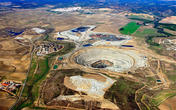 Copper Shortage Is Irreparable Even after Biggest Mergers and Acquisitions, Here’s Why
Earlier this year, Rio Tinto executives and Mongolian officials announced the commissioning of the Oyu Tolgoi underground copper mine, Mining.com reported, citing Bloomberg News.
May 24, 2023 15:40 Antofagasta to Start First Round Of Negotiations On Mid-Year Long-Term Contract TCs This Week, Spot Copper Concentrate TCs Remained In Upward Track
As of last Friday May 19, the SMM Imported Copper Concentrate Index (Weekly) stood at $88.13/mt, $1.25/mt higher than May 12. During the week, most market participants participated in the LME Asia Week, and the spot market transactions were limited. Some smelters purchased 10,000 mt of copper concentrate from Los Bronces mine for loading in July at over $88/mt. Traded TCs of clean seaborne ore scheduled for loading in June-August between mines and smelters stood at $85/mt. Offers were ample. Counteroffers were $91-92/mt. The market is still awaiting guidance from the results of Antofagasta's mid-year long-term contract negotiations with some Chinese smelters this week. The price coefficient of Cu 20% domestic ore stood at 88.5-89.5%.
May 23, 2023 15:24 Barrick Gold, the World's Second Largest Gold Miner, Is Also Betting on Copper in Addition to Gold
Mark Bristow, chief executive of Barrick Gold, the world's second-largest gold miner, told the media that the company is looking for acquisition targets because it predicts a rebound in two key commodities.
May 16, 2023 17:58