

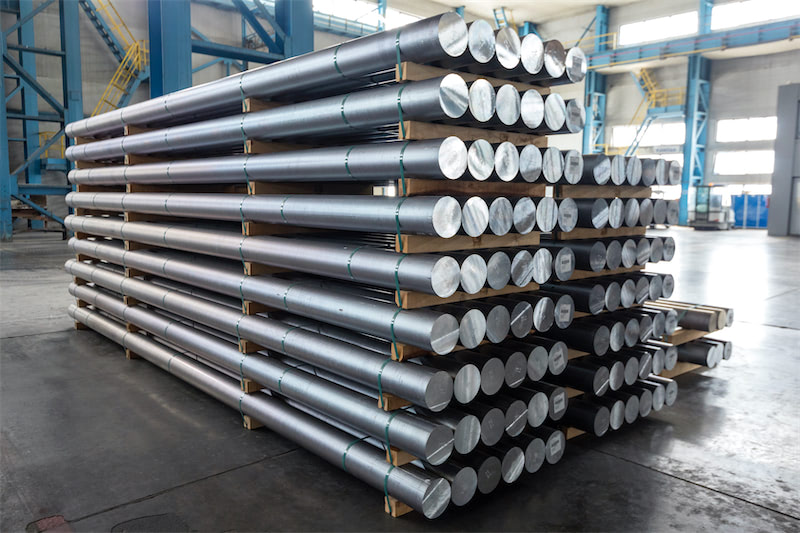
 Glimmer of Hope amid Weak Supply and Demand: Review of China's Aluminum Billets Market in H1 2026 and Outlook for H2
[SMM Analysis: Glimmer of Hope amid Weak Supply and Demand: Review of China's Aluminum Billets Market in H1 2026 and Outlook for H2] In H1 2026, China’s aluminum billets market, squeezed by wild swings in aluminum prices and a slow recovery in end-use demand, underwent a turbulent journey from deep pressure to staged repair...
Jul 10, 2026 23:11- DRC's KCC Sealed and Production Halted by Tax Authorities!
According to local media in the DRC on July 10, the country’s General Directorate of Taxes (DGI) sealed off some offices and facilities of Kamoto Copper Company (KCC) in Kolwezi, Lualaba Province, on July 9. The DGI stated that KCC is involved in a tax arrears situation of nearly $3 billion. The sealing action led to the evacuation of some personnel, and copper and cobalt production at the affected sites was temporarily suspended. The exact scope of the sealing, its duration, and the actual impact on the mine and smelting systems remain to be further confirmed. As SMM has learned, KCC’s copper cathode production over the past two years has been around 190,000 mt each year. If the sealing measures persist and materially affect production or product deliveries, it is expected to cause periodic disruptions to copper and cobalt supply from the DRC. Going forward, close attention should be paid to the resumption of KCC’s operations and the progress of the tax dispute resolution.
Jul 10, 2026 20:03 - DRC's KCC Sealed and Production Halted by Tax Authorities!
On July 10, local media in the DRC reported that the country's Directorate General of Taxes (DGI) on July 9 sealed the offices and some facilities of Kamoto Copper Company (KCC) in Kolwezi, Lualaba Province. DGI stated that KCC was involved in unpaid taxes amounting to nearly $3 billion. The sealing action led to the evacuation of some personnel and temporarily disrupted copper and cobalt production at the relevant sites; the scope and duration of the sealing, as well as its actual impact on the mine and smelting system, remain to be further confirmed. Local media, citing sources close to the case, reported that tax authorities and relevant companies under Glencore had been in negotiations over this dispute for nearly 12 months prior. DGI allegedly questioned that the relevant enterprises had understated transfer prices in export transactions of ore products and shifted part of the value to overseas affiliated entities; Glencore denied the tax authority's assessment, calling the claims "completely unfounded." Therefore, the approximately $3 billion remains the amount sought by the DRC tax authorities and has not been finally determined by the judiciary. Public information shows that KCC is a major copper-cobalt project controlled by Glencore, with main products including copper cathode and cobalt hydroxide. According to SMM, KCC's copper cathode production has averaged around 190,000 mt per year in the past two years. If the sealing measures persist and materially affect production or product shipments, it is expected to cause periodic disruptions to the DRC's copper and cobalt supply. Subsequent attention should focus on the recovery of KCC's operations and progress in resolving the tax dispute.
Jul 10, 2026 19:51 - Index-Linked Pricing Transforms Copper Concentrate Market: H1 2026 Review and H2 Outlook
The most significant change in the imported copper concentrate market in the first half of 2026 emerged during the mid-year term-contract negotiations. According to SMM, Antofagasta, a leading Chilean mining company, and several major Chinese smelters finalized the pricing mechanism for their mid-year copper concentrate term contracts on July 1. Rather than continuing with the traditional fixed-TC approach, the parties adopted an index-linked pricing mechanism.Chinese smelters had already agreed with Antofagasta on historically low term-contract treatment and refining charges of US$0 per dry metric tonne and US¢0 per pound in 2025. The further introduction of index-based pricing in the 2026 mid-year negotiations indicates that the pricing framework for imported copper concentrate term contracts is undergoing a structural transformation, against a backdrop of persistently and deeply negative spot TCs and steadily strengthening pricing power on the mine side. At a more fundamental level, the change in term-contract pricing reflects the persistent mismatch between mine-supply growth and the expansion of smelting demand. SMM estimates that global sulfide copper concentrate supply will increase by approximately 250,000 tonnes of contained copper in 2026 compared with 2025, representing growth of around 1.3%. By contrast, newly commissioned and expanded primary smelting capacity in China is expected to generate approximately 800,000 tonnes of additional concentrate demand on a contained-copper basis.The increase in mine supply is therefore significantly smaller than the expansion in smelter demand. Meanwhile, factors including the slower-than-expected restart of Grasberg, the continued absence of a full restart at Cobre Panamá, declining ore grades at mature Chilean mines, and the lingering effects of seismic activity at Kamoa-Kakula kept the imported copper concentrate spot market extremely tight throughout the first half of the year.SMM estimates that the global sulfide copper concentrate market will record a supply deficit of approximately 610,000 tonnes of contained copper in 2026. The shortage may not begin to ease until around 2029, when production from a number of new mine projects is expected to come on stream. At the same time, elevated sulfur and sulfuric acid prices have provided an important floor under copper smelter profitability and increased smelters’ ability to absorb deeply negative TCs, at least temporarily. On July 3, the SMM China Copper Smelter Sulfuric Acid Index stood at RMB 1,789 per tonne, up RMB 886 per tonne from RMB 903 per tonne on January 9. The rise in sulfuric acid prices since the beginning of 2026 has become an important earnings driver for Chinese copper smelters and has helped sustain high refined-copper output. Under the combined influence of the mine-smelter supply-demand mismatch and strong by-product margins, spot TCs for imported copper concentrate continued to fall during the first half of 2026. The monthly SMM Imported Copper Concentrate Index averaged negative US$121.44 per dry metric tonne in June, down US$18.31 per dry metric tonne from negative US$103.13 per dry metric tonne in May. On a weekly basis, the SMM Imported Copper Concentrate Index was reported at negative US$113.83 per dry metric tonne in early June and subsequently declined continuously to negative US$124.45 per dry metric tonne on June 26. On July 3, the weekly index fell further to negative US$128.25 per dry metric tonne, down US$3.80 per dry metric tonne from the previous assessment. The successive declines through the negative US$100 and negative US$120 per dry metric tonne thresholds demonstrate that the shortage of tradable spot concentrate continued to intensify. I. Supply: New Supply Falls Short of Expectations as Mine-Side Disruptions Continue to Constrain Tradable Availability Although several global copper projects were scheduled to deliver incremental concentrate supply in the first half of 2026, actual production growth came on stream significantly more slowly than the market had previously expected.The central issue on the supply side was not any single mine incident. Rather, disruptions at major mines, declining grades at mature operations, slower-than-expected ramp-ups at new projects, and changes in trade flows collectively reduced the volume of concentrate available for purchase in China’s spot market. Regarding Cobre Panamá, the Panamanian government approved First Quantum Minerals in April to remove, process and export stockpiled ore that had been mined before the operation was suspended. According to SMM, however, the current progress at Cobre Panamá mainly concerns the treatment of existing stockpiles and does not represent a full restart of mining operations.The mine remains subject to complex disputes involving mining rights, taxation, environmental requirements, local communities and political considerations. Consequently, even if a portion of the stockpiled material enters the market during the second half of 2026, its contribution to improving the global copper concentrate balance is expected to remain limited.Related analysis is available in the SMM article, “Cobre Panamá Copper Mine: From a World-Class Mine to a Shutdown Impasse—SGS Audit Signals the Possibility of a Restart”: https://hq.smm.cn/copper/content/103965399 Grasberg remains one of the largest variables affecting global copper concentrate supply in 2026. At the beginning of the year, Freeport-McMoRan forecast approximately 3.4 billion pounds of copper sales for 2026, based on the assumption that the Grasberg Block Cave would restart and ramp up in stages from the second quarter.Because the restart underperformed expectations, Freeport subsequently lowered its 2026 copper sales guidance to approximately 3.1 billion pounds in its first-quarter report. For the imported copper concentrate market, the significance of Grasberg extends beyond the mine’s headline production figures. Other important factors include the proportion of concentrate absorbed by Indonesia’s domestic smelting sector, PTFI’s smelter inventory arrangements, and the actual quantity of material available for shipment to China’s spot market. Should the recovery at Grasberg continue to fall short of expectations in the second half of the year, the shortage of clean spot concentrate is unlikely to ease materially. In Africa, the effects of seismic activity at Kamoa-Kakula remain ongoing. Ivanhoe Mines previously issued 2026 copper production guidance of 380,000–420,000 tonnes for Kamoa-Kakula, followed by 500,000–540,000 tonnes in 2027. The company also stated that dewatering and rehabilitation work at the Kakula mine was continuing.Compared with the previous medium- to long-term target of annualized production exceeding 550,000 tonnes, however, the pace of production growth in 2026 has slowed significantly. Kamoa-Kakula had been expected to be one of the most important sources of global copper concentrate supply growth in recent years. The slowdown in its production ramp-up has therefore further reduced the potential for mine-supply growth to support a recovery in TCs. In Chile, declining grades at mature mines, transitions toward deeper underground mining, and operational accidents continued to constrain supply flexibility. The effects of the 2025 cave-in at El Teniente extended into 2026. Codelco previously stated that the accident had resulted in the loss of tens of thousands of tonnes of copper production in 2025 and would continue to affect the subsequent recovery schedule.The incident illustrates the structural challenges facing Chile’s large and mature mining operations in areas such as deep-level mining, ground-pressure management, and the timely delivery of replacement and mine-life-extension projects. In addition to El Teniente, several other major Chilean mines continued to face declining grades, throughput fluctuations and maintenance-related disruptions, limiting the recovery potential of Chilean clean-concentrate supply. Peru’s supply performance was comparatively more resilient than Chile’s, although incremental production remained highly concentrated among a limited number of operations. Major mines such as Antamina and Las Bambas benefited during certain periods from higher ore grades, improved recoveries and operational normalization, supporting Peru’s overall copper production.From the perspective of the imported spot market, however, Peruvian supply remains exposed to community disruptions, transportation-corridor interruptions, mine-grade transitions and unstable shipment schedules. Moreover, because much of the incremental production is concentrated among a small number of large mines, it is insufficient to fully offset supply losses associated with Grasberg, Cobre Panamá and mature Chilean mines. In Mongolia, the ramp-up of the Oyu Tolgoi underground mine represents one of the relatively few clearly identifiable sources of incremental global mine supply in 2026. Rio Tinto disclosed that its copper production increased by 11% year on year in 2025, primarily due to the strong ramp-up at Oyu Tolgoi.Nevertheless, while additional output from Oyu Tolgoi is contributing to global supply growth, the incremental volume from this single project remains insufficient to reverse the overall tightness in the copper concentrate spot market, given the larger increase in Chinese smelting demand and recurring disruptions at other major mines. According to SMM estimates, disruptions at major global copper mines and incremental production falling short of expectations will have a combined impact of approximately 480,000 tonnes of contained copper in 2026. Uncertainty surrounding the realization of mine supply therefore remains the primary factor driving imported copper concentrate TCs lower. From a trade-flow perspective, China’s copper concentrate imports from Chile and Peru both declined to varying degrees during the first half of 2026. According to customs data, China imported 3.7640 million tonnes of copper concentrate from Chile during January–May 2026, down 228,000 tonnes, or 5.71%, year on year.Imports from Peru totaled 3.1002 million tonnes during the same period, representing a year-on-year decrease of 147,900 tonnes, or 4.55%. Lower arrivals from the principal South American origins intensified competition among Chinese smelters for alternative feedstocks, blended concentrates, land-transported concentrates and off-specification materials. China’s total imports of copper ores and concentrates amounted to 12.2758 million tonnes during January–May 2026, down 1.01% year on year. The modest decline partly reflected the relatively high comparison base in the corresponding period of 2025. Other contributing factors included strong consumption of copper anode and blister copper in the first quarter, temporary adjustments to some smelters’ raw-material mix, and changes in the arrival schedule of term-contract cargoes.The decline in headline import volumes should therefore not be interpreted simply as evidence of materially weaker concentrate demand from domestic smelters, nor does it have a direct one-to-one relationship with spot TC movements.For the spot market, the more important variables are the marginal volume available outside term contracts, the share of mainstream clean concentrate in the available supply pool, and smelters’ periodic inventory-replenishment requirements. During the first half of 2026, new smelting capacity, continued demand for off-contract inventory replenishment, and frequent mine disruptions kept the spot market tight even though the decline in apparent import volumes was limited. Spot TCs consequently remained under sustained downward pressure. II. Demand: China’s Smelting Expansion Continues While Production Cuts Remain Fragmented On the demand side, Chinese copper smelters remain the principal source of incremental global copper concentrate consumption. Although deeply negative TCs continued to compress core smelting margins during the first half of 2026, and some smelters temporarily reduced operating rates because of maintenance, feedstock constraints and processing-margin losses, the continued commissioning of new and expanded primary smelting capacity kept concentrate demand relatively inelastic. According to SMM statistics, new and expanded primary smelting capacity in China in 2026 is expected to correspond to approximately 800,000 tonnes of contained copper.Newly commissioned capacity typically requires substantial initial feedstock inventories. Even when spot TCs are deeply negative, new production lines must continue purchasing concentrate to ensure operational stability, complete equipment commissioning and ramp-up, and maintain market share. As a result, the practical effectiveness of production cuts by smelters as a mechanism for restoring TCs has been significantly weakened. The Chinese smelting sector in the first half of 2026 was characterized by the coexistence of maintenance-related disruptions and demand generated by capacity expansion. On the one hand, several smelters scheduled maintenance during the second quarter, temporarily reducing concentrate consumption. On the other hand, ramp-ups at newly commissioned facilities, term-contract obligations, low inventory safety margins and strong sulfuric acid earnings prevented smelters from implementing coordinated production cuts.Particularly in an environment where imported concentrate inventories remained structurally tight, some smelters continued to make essential market inquiries to secure production continuity, even when they reduced the frequency of their spot purchases. III. Smelting Economics: Strong Sulfuric Acid Margins Increase Tolerance for Negative TCs, but Volatility Risks Are Rising The earnings structure of copper smelters changed materially during the first half of 2026. Traditionally, smelter profitability has primarily been derived from TC/RC income and credits from gold, silver and other by-products. With spot TCs for imported copper concentrate moving deeply into negative territory, however, processing-fee income fell sharply and sulfuric acid margins became significantly more important. Overall copper smelting margins were weaker in the early part of the first half and improved later in the period. Declining TCs imposed substantial pressure on profitability, but elevated sulfuric acid prices, strong precious-metal prices and improved returns from certain other by-products provided a partial offset.Approximately 3.5–4.0 tonnes of sulfuric acid are produced as a by-product for every tonne of refined copper output. When sulfuric acid prices are high, acid earnings can substantially offset the impact of negative TCs and rising smelting costs. Nevertheless, according to SMM estimates, spot-based smelting margins at Chinese copper smelters have now approached break-even, and smelters have become noticeably less willing to purchase spot cargoes at increasingly unfavorable TCs. The rise in sulfuric acid prices has mainly been driven by two factors. First, geopolitical disruptions in the Middle East, tight sulfur supply and higher import costs raised the cost base of sulfuric acid production. Second, demand from phosphate fertilizers, chemicals, hydrometallurgical operations and battery-material producers provided broad-based downstream support.The sharp rise in sulfuric acid prices has reshaped the economics of copper smelting in China, with acid earnings accounting for a substantially larger proportion of smelters’ non-TC/RC income. This was also an important reason why Chinese smelters did not implement large-scale voluntary production cuts during the first half of 2026 despite the continued decline in TCs. The support provided by sulfuric acid margins is not without risk, however. Should geopolitical disruptions ease in the second half of the year, sulfur supply recover, or restrictions on Chinese sulfuric acid exports result in more material being redirected to the domestic market, sulfuric acid prices could retreat from their elevated levels.If acid margins narrow while copper concentrate TCs remain deeply negative, pressure on smelter profitability will become more visible again. Some higher-cost smelters may respond by extending maintenance periods, reducing utilization rates or cutting spot concentrate purchases. Sulfuric acid prices will therefore be one of the key variables determining whether TCs can stabilize during the second half of the year. IV. Spot Market: Frequent Mine Tenders and the Emergence of Index-Minus Pricing Trading activity in the imported copper concentrate spot market was uneven during the first half of 2026, but mine tenders and trader offers remained important channels for price discovery. As spot TCs continued to decline, outright fixed-price transactions repeatedly established new market lows, while index-minus pricing gradually became the dominant quotation format. Since the second quarter, trader offers have increasingly been expressed as an average of the SMM and Fastmarkets indices minus an additional differential. This pricing method indicates that, in an environment of continuously declining spot TCs, concentrate sellers increasingly prefer index-linked formulas that preserve their exposure to further downward movements in TCs. Smelters’ purchasing behavior remained conflicted. On the one hand, deeply negative TCs continued to compress smelting margins, limiting smelters’ willingness to accept expensive spot concentrate carrying extremely unfavorable processing terms. Some companies therefore reduced the frequency of their active inquiries.On the other hand, ramp-ups at new smelting facilities, insufficient inventory safety margins and uncertainty surrounding term-contract arrivals meant that some smelters still needed to replenish stocks to meet essential production requirements. Consequently, the market did not experience a collective withdrawal of buyers sufficient to drive a meaningful recovery in TCs. Instead, continuously lower mine-tender settlements pushed the spot index further into deeply negative territory. V. H2 Outlook: Limited Marginal Supply Recovery and Persistently Deeply Negative TCs Looking ahead to the second half of 2026, the imported copper concentrate spot market will continue to be driven by the interaction between the actual realization of mine-supply recovery and the resilience of Chinese smelting demand.On the supply side, the treatment of Cobre Panamá stockpiles, progress in the Grasberg restart, incremental production from Oyu Tolgoi, and shipment stability at major Peruvian mines may provide some marginal improvement. Based on current developments, however, Cobre Panamá has not achieved a full restart, the Grasberg recovery schedule has already been revised downward, production growth at Kamoa-Kakula has slowed, and mature Chilean mines remain exposed to declining grades and safety-related disruptions. The conditions required for a substantial easing of the global copper concentrate market are therefore not yet in place. On the demand side, new and expanded Chinese primary smelting capacity will continue to support structurally strong concentrate consumption. Although some smelters may temporarily reduce production because of losses, maintenance or feedstock constraints, the ramp-up of newly commissioned projects, the fulfillment of term contracts, sulfuric acid margins and regional refined-copper price differentials will continue to weaken the impact of production cuts on TCs.Should the effect of maintenance outages gradually diminish during the third quarter while newly commissioned capacity continues to ramp up, China’s demand for imported copper concentrate is likely to remain elevated on a sequential basis. Sulfuric acid prices will remain a key variable for smelting profitability in the second half of the year. Should sulfuric acid prices remain elevated or rise further, smelters will continue to demonstrate a relatively strong capacity to absorb negative TCs, limiting the potential for a recovery in spot TCs. Conversely, should sulfuric acid prices retreat from their highs, pressure on smelter profitability will increase again. Some smelters may respond by extending maintenance, cutting operating rates or reducing spot purchases, potentially allowing TCs to stabilize or recover modestly for a period. In the spot market, mine-tender results will remain an important leading indicator for TC movements in the second half of the year. As term-contract pricing becomes increasingly index-linked and more spot transactions adopt index-minus formulas, the SMM Imported Copper Concentrate Index is expected to play an even stronger role as the principal pricing anchor for market transactions. Should mine-tender settlements remain deeply negative, spot TCs may fall further. Conversely, if incremental volumes from the Grasberg recovery, Cobre Panamá stockpile processing and Oyu Tolgoi materialize at the same time, while maintenance activity among smelters increases, TCs may stage a temporary recovery. Overall, some marginal improvement in imported copper concentrate supply is possible during the second half of 2026. Nevertheless, given the continued commissioning of new Chinese smelting capacity, the shortage of tradable concentrate, and the support that strong sulfuric acid margins provide to smelter operating rates, a sustained and substantial recovery in spot TCs appears unlikely. Spot TCs for imported copper concentrate are therefore expected to remain volatile within deeply negative territory during the second half of the year. Any temporary recovery will depend largely on the actual realization of mine restarts, the extent to which smelters implement maintenance and production cuts, and changes in sulfuric acid profitability.
Jul 10, 2026 19:11 ![[SMM Analysis] H1 2026 Silver Price Surge and Fall: Spot Market Squeeze and Fed Policy Shifts Drive Extreme Volatility](https://imgqn.smm.cn/production/admin/votes/imagesSbYYY20240307134125.png) [SMM Analysis] H1 2026 Silver Price Surge and Fall: Spot Market Squeeze and Fed Policy Shifts Drive Extreme Volatility
[SMM Analysis] H1 2026 Silver Price Surge and Fall: Spot Market Squeeze and Fed Policy Shifts Drive Extreme VolatilityH1 2026 silver saw a sharp spike to 30,900 yuan/kg in January, then plunged 55% to 13,816 yuan/kg by June, driven by squeezed spot liquidity and Fed policy reversal from easing to hawkish. Supply grew steadily; PV silver demand fell 21% YoY. H2 outlook: wait for inflation signals and Fed pivot, silver likely remains under pressure.
Jul 10, 2026 19:10- 2026 H1 Silver Market Review and Outlook: After an Extreme Spike, a Trend Decline, Market Awaits Macro Turning Point [SMM Analysis]
In H1 2026, silver experienced an extreme market trend marked by a sharp-peaked inverted-V and stepwise decline, driven by the interplay of two main themes: a spot silver squeeze anomaly and a shift in US Fed monetary policy. After hitting an all-time high of 30,900 yuan/kg in January, silver prices pulled back trend-wise to 13,816 yuan/kg in June, as interest rate cut expectations reversed and hawkish signals strengthened, representing a 55% pullback from the peak. On the supply side, silver ingot production rose 6.9% YoY, and imports surged before returning to normal. On the demand side, PV silver demand fell 21% YoY, with industrial demand taking over from investment as the main driver. In H2, attention will focus on the inflation turning point and marginal changes in the US Fed's policy; silver prices are expected to consolidate on a subdued note.
Jul 10, 2026 18:56 - [SMM Analysis] 2026 Chrome Ore Market Review: Supply-Demand Dynamics Reversed, Soaring Inventories Weigh on Prices
News Release, July 10, 2026: Chrome ore prices saw distinct phased volatility in the first half of 2026, rallying throughout Q1 before sliding downward on a gradual downtrend in Q2.
Jul 10, 2026 18:50 - Black Butte Copper Mine Reserves Increase, But Investment Return Remains Low: Sandfire Resources America
Sandfire Resources America An economic study report for the Black Butte copper mine in Montana shows that the mine's reserves have increased compared with the 2025 report, but the investment return remains low. Sandfire announced on Thursday that the updated pre-feasibility study incorporates the Lowry deposit into the mining plan, confirming indicated copper ore reserves of 14.3 million mt grading 2.6% copper, containing 370,000 mt of copper metal. The Black Butte copper mine is located about 90 km east of Helena, the capital of Montana, US.
Jul 10, 2026 18:49 - [SMM Analysis] Separator Market 2026 Semi-Annual Review: Supply-Demand Pattern Tightens Marginally, Price Center Gradually Moves Up
Production-wise, China's cumulative production of lithium battery separators from January to June was approximately 17.416 billion m², of which wet-process separators accounted for 15.005 billion m², or 86.16%, and dry-process separators accounted for 2.411 billion m², or 13.84%.
Jul 10, 2026 18:49 - 2026 Chrome Ore Market Semi-Annual Review: Supply-Demand Pattern Reversal, Inventory Surge and Prices Under Pressure [SMM Analysis]
July 10, 2026 – Chrome ore prices exhibited distinct stage-wise fluctuations in H1 2026, with a continuous rise in Q1 and grinding lower in Q2.
Jul 10, 2026 18:47