

88results found for 'macro headwinds'
Sort by : |
- Platinum and Palladium Market Price Review and Expectations Brief Comment (July 16, 2026) [SMM Platinum and Palladium Weekly Review]
Platinum and palladium prices drifted higher this week and ended the week higher, driven by expectations of US Fed policy, the US-Iran geopolitical situation, and US CPI data. Looking ahead, inflationary headwinds have eased somewhat, but policy and geopolitical uncertainties remain. In the spot market, traders were active in purchasing due to opportunities in the price spread between futures contracts, while downstream consumption remained weak, and premiums were relatively stable.
Jul 16, 2026 16:54 ![[SMM Analysis] Spot Market Squeeze & Fed Policy Shifts Fuel Extreme Volatility in H1 Silver Price; What to Watch in H2?](https://imgqn.smm.cn/production/admin/votes/imagesSbYYY20240307134125.png) [SMM Analysis] Spot Market Squeeze & Fed Policy Shifts Fuel Extreme Volatility in H1 Silver Price; What to Watch in H2?
[SMM Analysis] Spot Market Squeeze & Fed Policy Shifts Fuel Extreme Volatility in H1 Silver Price; What to Watch in H2?H1 2026 silver saw a sharp spike to 30,900 yuan/kg in January, then plunged 55% to 13,816 yuan/kg by June, driven by squeezed spot liquidity and Fed policy reversal from easing to hawkish. Supply grew steadily; PV silver demand fell 21% YoY. H2 outlook: wait for inflation signals and Fed pivot, silver likely remains under pressure.
Jul 10, 2026 19:10- 2026 H1 Silver Market Review and Outlook: After an Extreme Spike, a Trend Decline, Market Awaits Macro Turning Point [SMM Analysis]
In H1 2026, silver experienced an extreme market trend marked by a sharp-peaked inverted-V and stepwise decline, driven by the interplay of two main themes: a spot silver squeeze anomaly and a shift in US Fed monetary policy. After hitting an all-time high of 30,900 yuan/kg in January, silver prices pulled back trend-wise to 13,816 yuan/kg in June, as interest rate cut expectations reversed and hawkish signals strengthened, representing a 55% pullback from the peak. On the supply side, silver ingot production rose 6.9% YoY, and imports surged before returning to normal. On the demand side, PV silver demand fell 21% YoY, with industrial demand taking over from investment as the main driver. In H2, attention will focus on the inflation turning point and marginal changes in the US Fed's policy; silver prices are expected to consolidate on a subdued note.
Jul 10, 2026 18:56 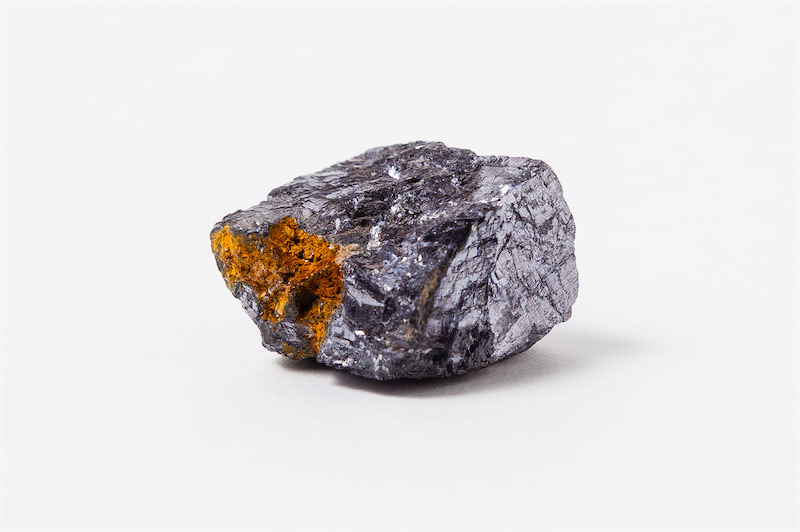 Prices, Losses and Operating Rates Scraping the Floor: 2026 Secondary Refined Lead Review and Outlook
SMM expects secondary lead prices to remain in the doldrums in H2. High scrap battery costs provide rigid bottom support for lead prices, but triple negative factors—macro rate hike expectations, high LME inventories, and the downstream consumption off-season—continue to cap the upside room……
Jul 10, 2026 18:49- Platinum and Palladium Market Price Review and Expectations Brief Review (July 9, 2026) [SMM Platinum and Palladium Weekly Review]
[Platinum & Palladium Price Review and Forecast] This week (July 3 – July 9), platinum and palladium prices retreated after rapid rise with the price center moving lower, ending the week lower overall. On July 3, driven by the much weaker-than-expected US June non-farm payrolls data, market expectations for rate hikes cooled rapidly, and platinum and palladium surged sharply in a single day, with the most-traded platinum contract rising 3.27% to hit the week's high. However, market sentiment gradually faded. Additionally, the renewed US-Iran conflict flared up again, as US forces struck Iranian military targets for several consecutive days, and the first meeting minutes after Warsh took office were released, showing that the AI investment frenzy would significantly influence interest rate decisions. The minutes were broadly interpreted as hawkish. Futures prices for platinum and palladium fell continuously starting Monday, extended losses on Tuesday, recovered slightly on Wednesday before weakening again on Thursday, overall forming a retreat-after-rapid-rise pattern of "one day of gains and four days of declines," with the weekly price center clearly shifting lower. The most-traded platinum futures contract on GFEX reached a high of 415.85 yuan/g, dipped to a low of 392 yuan/g, and closed at 400.45 yuan/g on July 9; palladium weakened in tandem, with the most-traded contract hitting a high of 309.7 yuan/g, a low of 290.3 yuan/g, and closing at 295.25 yuan/g on July 9, falling more than platinum. On the spot side, mainstream spot premiums for platinum and palladium remained around parity with GFEX futures. Spot premiums for palladium were slightly higher than those for platinum, but overall consumption stayed weak, downstream enterprises held strong wait-and-see sentiment, and actual transactions leaned towards the lower end of quotes, mostly around a discount of 1 yuan/g to parity with the most-traded GFEX contract. Overall, spot premiums for platinum and palladium were relatively stable and did not show significant fluctuations alongside futures. Looking ahead, macro headwinds returned this week. Combined with a lack of strong short-term fundamental support, elevated US bond yields and the US dollar index will continue to limit upside room for platinum and palladium, and they are expected to continue witnessing wild swings and consolidation. For spot premiums, market premiums are likely to edge up in the near term as the August contract delivery approaches. [Platinum & Palladium Weekly Data Review] In overseas exchange inventories, platinum extended its one-sided destocking trend, with inventories falling to about 420,000 ounces by end-June, a decline of over 40% from the high at the start of the year. Palladium inventories saw a slight destocking, with current inventories still at a high for the past year. In terms of imports, platinum imports edged up in May, with the overall level similar to that of the same period last year, while palladium imports pulled back slightly, but the overall level remained significantly higher than from 2023 to 2025. [Platinum Group Compounds] Chloroplatinic acid prices declined continuously this week from 166 yuan/g on Monday to close at 164.5 yuan/g on Friday, losing 1.5 yuan/g for the week, a decline of about 0.90%. Palladium chloride prices were also under pressure. It opened at 190 yuan/g on Monday and closed at 186.5 yuan/g on Friday, down 3.5 yuan/g for the week, a decline of about 1.84%. This week, downstream players made just-in-time procurement but no large-scale shipments, and trading was relatively stable.
Jul 9, 2026 17:23 - SHFE Aluminum Consolidates at Highs, Short-Term Correction Continues; Alumina Adds Positions and Rebounds, but Weak Trend Remains Unchanged [SMM Aluminum Briefing]
SMM, July 9: Today, the SHFE aluminum 2608 contract opened at 23,075 yuan/mt, reached a high of 23,095 yuan/mt, dipped to a low of 22,850 yuan/mt, and finally settled at 23,060 yuan/mt, down 10 yuan/mt or 0.04% from the previous trading day. Trading volume was 165,200 lots and open interest was 227,700 lots, with a daily position drop of 4,248 lots. The price remained above the MA5 (22,960) and MA10 (22,822) but below the MA20 (23,332.75), MA40 (23,895.50), and MA60 (24,234.17). The short-term repair continued, but medium and long-term moving average pressure persisted on the upside. On the MACD indicator, the DIFF (-377.42) was above the DEA (-403.42), and a bar value of 52 was recorded. Short-term bearish momentum continued to narrow. Trading volume rose compared to the previous day, but the daily position drop of 4,248 lots showed continued capital outflow, suggesting insufficient upward momentum in the futures. SMM Commentary: Indirect technical talks between the US and Iran made progress as discussions focused on fund repatriation and strait security, and consultations on the nuclear issue are about to start. The geopolitical risk premium continued to converge, while disputes over the management of the Strait of Hormuz persist, leaving the strait's resumption of navigation still uncertain. A hawkish shift by the US Fed boosted the US dollar index, weighing on base metals prices. Aluminum prices in and outside China fell amid macro headwinds. In the short term, bearish factors dominated and aluminum prices are expected to continue in the doldrums. Today, the alumina 2609 contract opened at 2,704 yuan/mt, reached a high of 2,728 yuan/mt, dipped to a low of 2,698 yuan/mt, and finally settled at 2,720 yuan/mt, up 11 yuan/mt or 0.41%. Trading volume was 187,400 lots and open interest was 349,400 lots, with a daily position increase of 3,177 lots. The price reclaimed the MA5 (2,715.20) but stayed below the MA10 (2,750.60), MA20 (2,820.55), MA40 (2,808.73), and MA60 (2,813.25). It rebounded slightly in the short term, but the overall weak pattern has not yet reversed. On the MACD indicator, the DIFF (-34.63) was below the DEA (-19.66), and a bar value of -29.94 was recorded. Bearish momentum persisted but narrowed at the margin. Trading volume edged up from the previous day, and the daily position increase of 3,177 lots showed some capital inflows. However, the rebound was limited, and nearby moving average resistance warrants close attention in the short term. SMM Commentary: According to SMM statistics, as of this Thursday, China's total alumina inventory edged up WoW. By inventory structure, raw material inventory at aluminum smelters continued to destock slightly. However, restocking willingness was weak amid sharp recent price swings and market divergence over the outlook, and end-users mostly stayed on the sidelines. In-factory inventory at alumina refineries declined, mainly because some northern enterprises carried out periodic maintenance, prioritizing the drawdown of in-factory inventory under production constraints. This impact is expected to gradually fade after maintenance ends next week. Port inventory continued to build up, as high port arrivals from outside China supplemented spot supply with imported resources and increased market pressure. Overall, the oversupply pattern remained unchanged. Before the implementation of Guinea's bauxite quota policy, the market lacked clear bullish drivers. Next week, inventory is expected to shift from mild destocking to slight inventory buildup, supply-demand conditions will stay loose, and alumina prices will continue to consolidate on a weak note. [The information provided is for reference only. This article does not constitute direct advice for investment research or decision-making. Clients should make decisions prudently and not use it as a substitute for independent judgment. Any decisions made by clients are not related to Shanghai Metals Market.]
Jul 9, 2026 15:30 - SHFE Aluminum Rises Amid Position Reductions, Short-Term Recovery; Alumina Rebound Limited [SMM Aluminum Briefing]
SMM July 8: Today, the SHFE aluminum 2608 contract opened at 22,940 yuan/mt, rose to a high of 23,140 yuan/mt, dipped to a low of 22,940 yuan/mt, and settled at 23,075 yuan/mt, up 155 yuan/mt or 0.68% from the previous trading day. Trading volume was 148,400 lots, and open interest was 232,000 lots, with a daily change of -14,047 lots. The price stood above the 5-day MA (22,828) and 10-day MA (22,802.50), but remained below the 20-day MA (23,378.75), 40-day MA (23,943.13), and 60-day MA (24,261.75). The short-term recovery continued, but the medium and long-term weak trend has not been reversed. On the MACD indicator, DIFF (-408.99) was slightly above DEA (-409.92), and the histogram recorded 1.86, indicating that bearish momentum clearly narrowed. Trading volume remained low, and the daily change in open interest of -14,047 lots showed continued capital outflow. Today's rise was still mainly driven by short-covering. SMM Comment: The indirect technical talks between the US and Iran made progress, with discussions around fund returns and strait security, and nuclear consultations are about to start. The geopolitical risk premium continued to converge. Although disputes over the management of the Strait of Hormuz persisted, the resumption of strait navigation still faced uncertainties. The US Fed's hawkish shift boosted the US dollar index, and base metal prices were pressured. Under macro headwinds, aluminum prices in and outside China fell. In the short term, bearish factors dominate, and aluminum prices are expected to remain in the doldrums. Today, the alumina 2609 contract opened at 2,701 yuan/mt, rose to a high of 2,725 yuan/mt, dipped to a low of 2,692 yuan/mt, and settled at 2,716 yuan/mt, up 10 yuan/mt or 0.37% from the previous trading day. Trading volume was 174,800 lots, and open interest was 346,300 lots, with a daily change of -6,243 lots. The price remained below the 5-day MA (2,718), 10-day MA (2,760.80), 20-day MA (2,829.25), 40-day MA (2,810.70), and 60-day MA (2,814.22). All moving averages maintained a bearish alignment, and the weak futures pattern has not been repaired yet. On the MACD indicator, DIFF (-33.35) was below DEA (-15.92), and the histogram recorded -34.86, indicating that bearish momentum still existed. Trading volume pulled back slightly, and the daily change in open interest of -6,243 lots showed some capital outflow. Today's rebound was more of a short-covering repair at low levels, with sustained upward momentum remaining insufficient. SMM Comment: According to SMM statistics, as of last Thursday, total alumina inventory in China edged down WoW. By inventory structure, aluminum smelter raw material inventory continued to destock slightly, but due to large price fluctuations recently and market divergence on the outlook, restocking willingness was weak, and end-users mainly stood on the sidelines. In-factory alumina inventory fell, mainly affected by some enterprises in the north conducting scheduled maintenance, where production constraints led to priority consumption of in-factory inventory. It is expected that after maintenance ends next week, this impact will gradually fade. Port inventory continued to accumulate, with ex-China port arrivals remaining high. Imported resources supplemented spot supply and increased market pressure. Overall, the oversupply pattern has not changed. Before Guinea's bauxite quota policy is implemented, the market lacks a clear bullish catalyst. It is expected that next week, inventory will shift from weak destocking to slight buildup, supply-demand will remain loose, and alumina prices will continue to consolidate on a weak note. [The information provided is for reference only. This article does not constitute direct investment research advice. Clients should make decisions prudently and not use this as a substitute for independent judgment. Any decisions made by clients have no connection with SMM.]
Jul 8, 2026 17:10 - SHFE Aluminum Rebounds on Position Reduction, Extending Recovery; Alumina Falls on Position Increase, Weakness Unchanged [SMM Aluminum Futures Brief]
SMM Jul 6: The SHFE aluminum 2608 contract opened at 22,850 yuan/mt, reached a high of 23,080 yuan/mt, dipped to a low of 22,785 yuan/mt, and closed at 22,940 yuan/mt, up 105 yuan/mt or 0.46% from the previous trading day. Trading volume was 146,200 lots and open interest was 246,000 lots, with a daily decline of 7,151 lots. Price settled above the MA5 (22,687) and MA10 (22,840.50), but remained below the MA20 (23,433.75), MA40 (23,982.50), and MA60 (24,287.67). Short-term momentum improved, but the medium- and long-term bearish pattern has not yet reversed. On the MACD, DIFF (-444.86) was below DEA (-410.16), and the histogram recorded -69.41, indicating persisting bearish momentum but narrowing significantly from earlier. Trading volume of 146,200 lots declined further from the previous session, and the daily open interest decline of 7,151 lots signals continued capital outflows. Today's uptick was more a reflection of technical recovery driven by short-covering. SMM Commentary: The indirect technical talks between the US and Iran made progress, with both sides discussing fund repatriation and strait security, and consultations on the nuclear issue are about to begin. The geopolitical risk premium continued to shrink, while disputes over the management of the Strait of Hormuz persisted, leaving uncertainty over the strait’s resumption of navigation. The US Fed’s hawkish pivot boosted the US dollar index, putting pressure on non‑ferrous metals prices. Amid macro headwinds, aluminum prices fell in and outside China, with bearish factors dominating in the short term. Aluminum prices are expected to be in the doldrums going forward. The alumina 2609 contract opened at 2,727 yuan/mt, hit a high of 2,727 yuan/mt, dipped to a low of 2,694 yuan/mt, and closed at 2,701 yuan/mt, down 16 yuan/mt or 0.59% from the previous trading day. Trading volume was 184,200 lots and open interest was 352,500 lots, with a daily increase of 18,337 lots. Prices remained below the MA5 (2,732), MA10 (2,776.60), MA20 (2,835.35), MA40 (2,812.43), and MA60 (2,815.27), with the moving averages in bearish alignment and the market continuing to show weakness. On the MACD, DIFF (-30.82) was below DEA (-11.56), and the histogram recorded -38.51, signaling continued bearish momentum. Trading volume of 184,200 lots pulled back slightly from the previous session, but the daily increase in open interest of 18,337 lots indicates additional capital entering at lower levels, with bears remaining aggressive. SMM Commentary: According to SMM data, as of last Thursday, total domestic alumina inventory had edged down from the previous week. By inventory structure, raw material inventories at aluminum smelters continued to destock slightly, but given the recent sharp price fluctuations and divergent market outlooks, restocking appetite was weak, with end‑users largely on the sidelines. Alumina in-factory inventory decreased, mainly due to phased maintenance at some northern refineries, where production constraints led to priority use of in-factory stocks; this impact is expected to fade gradually after maintenance concludes next week. Port inventories continued to build, with ex‑China port arrivals staying high and import cargoes supplementing spot supply, adding pressure to the market. Overall, the oversupply picture remains unchanged, and before Guinea’s bauxite export quota policy is implemented, the market lacks clear bullish drivers. Next week, inventories are likely to shift from weak destocking to a slight buildup, with supply-demand staying ample and alumina prices expected to continue to be in the doldrums. [The information provided is for reference only. This article does not constitute direct investment, research, or decision‑making advice. Clients should make decisions prudently, and not substitute this for independent judgment. Any decision made by clients is unrelated to Shanghai Metals Market.]
Jul 7, 2026 16:31 - [SMM Analysis] 2026H1 Lithium Ore Overview and H2 Outlook
Core View The main theme of lithium ore prices in H1 2026 was a sharp rally followed by a correction, rather than a one-way upward shift in the price center. The SMM spodumene concentrate index price (SC6, CIF China) started the year at around USD 2,000/t in January, briefly fell to USD 1,875/t in early February, then followed lithium carbonate prices higher and reached the year-to-date high of USD 2,780–2,840/t in mid-May, before retreating to the USD 2,385–2,480/t range in June. This trajectory almost fully mirrored lithium carbonate prices. Lithium carbonate spot prices started the year at around RMB 130,000/t, rose above RMB 200,000/t in May, and then pulled back to RMB 160,000–180,000/t in June. Lithium ore did not experience an independent rally throughout the period. It was pulled upward by lithium carbonate pricing via the futures market and then corrected as lithium carbonate prices peaked. Therefore, the starting point for understanding lithium ore prices in H1 is not resource-side supply and demand, but lithium carbonate pricing and market sentiment. One common misinterpretation needs to be corrected first: the strength in lithium ore prices in H1 was not the result of “tight effective supply pushing the price center higher.” The real drivers were the resonance of front-loaded demand, supply disruption expectations, and futures-driven sentiment. Front-loaded demand was triggered by export tax rebate adjustments; supply disruption expectations came from the repeated delays in Jianxiawo’s restart and Zimbabwe’s lithium concentrate export ban. When warehouse receipts accumulated and macro headwinds were released in May, and when Jianxiawo’s restart expectation materialized in June, prices corrected accordingly. After that, prices rebounded again as demand expectations improved. 1. Lithium Ore Followed Lithium Carbonate, While Spodumene-Based Conversion Margins Stayed Negative Throughout H1 The clearest evidence of the lithium ore pricing mechanism in H1 was not how much ore prices rose, but the fact that spot conversion margins for producing lithium carbonate from externally procured spodumene concentrate were negative for most of the period. The ore-salt margin inversion was structural and persistent in H1, rather than a short-lived squeeze on processing margins. The cause of this inversion directly points to the reversal of the pricing mechanism. Ore prices are no longer determined by a cost-plus model from the upstream side, which then determines lithium salt prices. Instead, lithium carbonate has become the pricing anchor, and ore prices are reverse-priced through the futures market. In early January, when lithium carbonate prices rallied on front-loaded demand and sentiment, ore prices were pushed higher at the same time. However, downstream lithium salt demand could not fully absorb the higher cost, and processing margins were squeezed into negative territory. In April, under the reality of ore-salt inversion and limited hedging opportunities, lithium salt producers relying on externally procured ore saw their ability to accept high-priced ore weaken significantly. For overseas miners, this means their realized selling prices are increasingly anchored by the profitability of China’s refining sector. This is not a narrative assumption, but a mechanism that can be verified month by month through spot margin data. The financialization of pricing was also visible in market transactions. When prices fell at the end of May, lithium salt producers became more active in pricing ore purchases. In June, the basis for new cargoes strengthened. Pricing based on futures quotation plus premium or discount has become the mainstream transaction model. Lithium salt producers tend to use pricing windows during price corrections to lock in ore supply. Whoever holds the pricing right controls the settlement timing, and in H1’s highly volatile two-way lithium carbonate market, this directly led to margin differentiation among different lithium salt producers. 2. The Three Drivers of the Rally and the Triggers of the Correction Front-loaded demand — export tax rebate adjustment. In January 2026, the Ministry of Finance and the State Taxation Administration clarified that the VAT export rebate rate for lithium battery products would be reduced from 9% to 6% from April 1, and fully removed from January 1, 2027. This policy directly stimulated downstream players to concentrate export shipments and inventory preparation before April, significantly front-loading demand into H1, especially supporting demand for energy storage and ternary-related materials. This was the most important demand-side catalyst in H1 and the one most easily overlooked by the “weak recovery” narrative. Supply disruption expectations — Jianxiawo and Zimbabwe. After Jianxiawo’s mining permit expired and production was halted in August 2025, its restart timeline was repeatedly pushed back in H1, continuously providing room for both bullish and bearish speculation in the market. Now that Jianxiawo’s restart has been confirmed, the largest bearish factor has been priced in, and the market’s focus has shifted back to whether demand can outperform expectations. In Zimbabwe, the lithium concentrate export ban at the beginning of the year disrupted shipment expectations. Positive progress was reported in late March, and by mid-May, Chinese-funded mining companies in Zimbabwe had completed export procedures and restarted shipments, easing the previous short-term tightness in African cargo arrivals. SMM expects the first batch of cargoes to arrive in China in mid-to-late July. Correction triggers — warehouse receipts, macro factors, and the materialization of restart expectations. After lithium carbonate prices rose above RMB 200,000/t in May, exchange warehouse receipts continued to accumulate and hit new highs, while concerns over off-balance-sheet inventory increased. Together with macro pressure from expectations of further Fed rate hikes, prices peaked and corrected in late May. On June 17, the approval of Jianxiawo’s land use application materialized, and clearer restart expectations further weighed on both ore and salt prices. By late June, according to SMM monthly production schedules, July demand showed resilience despite the seasonal lull, with both power and energy storage cell production schedules increasing month on month. Monthly lithium carbonate consumption remained at a high level, which restored some market confidence and pushed lithium prices higher again. 3. Supply-Side Reality: Imports Weakened Month on Month, but Cumulative Imports Still Increased; Australia Remained Dominant From January to May, spodumene imports showed a combination of weaker month-on-month momentum and continued year-on-year cumulative growth. On a monthly basis, imports reached 758,000 physical tonnes in April, down 9.5% month on month, and 680,800 tonnes in May, down 10.2% month on month. However, total spodumene imports in January–May reached around 3.66 million tonnes, up approximately 25% year on year. By origin, Australia remained the dominant source. China imported around 1.585 million tonnes from Australia in January–May, although May imports from Australia were around 330,000 tonnes, down approximately 15.2% year on year. The share of African supply continued to rise. On the shipment side, lithium concentrate shipments from Port Hedland to China showed clear quarter-end volume acceleration, with March shipments reaching around 122,000 tonnes, up 64.3% month on month. The marginal changes in overseas mines were concentrated in restarts and offtake agreements. Core Lithium restarted its Finniss project on May 20 and plans to ship the first batch of concentrate in Q4. Mineral Resources also restarted Bald Hill, with first spodumene output expected in July. These restart volumes are limited and will not change the short-term supply structure, but they reinforce the expectation of new supply materializing in H2 2026 and H1 2027. On the domestic side, SMM’s domestic sample mines produced 160,690 tonnes LCE in January–June. The restart of Jiangxi lepidolite mines was constrained by permitting procedures, environmental protection, profitability, and other factors, and did not fully ramp up in H1. 4. Migration of Long-Term Pricing Mechanisms: Floor Price Plus Pricing Optionality Has Become the Norm The long-term spodumene offtake agreements signed intensively in H1 provide direct contractual evidence of the financialization of ore pricing. In February, Pilbara Minerals signed a two-year offtake agreement with Tianhua New Energy, setting a floor price of USD 1,000/t, with no price ceiling, together with a USD 100 million interest-free prepayment. In the same period, Pilbara also signed a long-term agreement with Canmax. Yahua Group signed an offtake agreement with Brazil’s MGLIT, also with a minimum price of USD 1,000/t on a 6% basis. Liontown and Tianhua agreed on supply for 2027–2028, priced against a spodumene index. The common feature is a structure of USD 1,000/t floor price plus index or pricing optionality, with downside protection but no upside cap. The pricing benchmark is migrating from fixed website-based long-term pricing toward index-based and futures-linked pricing. This confirms that ore pricing is shifting from traditional long-term contracts to a more financialized structure of “floor price + pricing optionality + premium/discount.” This provides a contractual basis for assessing pricing transmission lags and distortions, and is also a key point for overseas investors to understand how China’s pricing system is penetrating upstream resources. 5. H2 Outlook H1 2026 provides a very clear methodological lesson for H2: lithium ore prices will not move independently from lithium carbonate. The core pricing variables for ore are not the nominal size of global lithium resources, but the dynamic matching among lithium carbonate futures, spot conversion margins for lithium salt producers using externally procured ore, domestic mine restart progress, African cargo arrival schedules, lithium salt producers’ feedstock inventories, and downstream material production schedules. In H1, lithium salt conversion margins remained negative for an extended period, yet ore prices did not fall quickly. Instead, they rose together with lithium carbonate prices under the influence of downstream restocking and supply disruption expectations. This shows that the H1 rally was not an independent strengthening of upstream fundamentals, but a synchronized industry-chain movement driven by front-loaded demand, delayed supply realization, and amplified futures sentiment. For H2 lithium ore analysis, the first step is to distinguish between “no shortage in total resources” and “short-term tightness in effective ore supply.” From a global resource perspective, Australia, Africa, Brazil, South American brines, and Chinese domestic mines all have incremental supply expectations, so there is no absolute shortage of resources. However, from the perspective of Chinese lithium salt production, what truly affects lithium carbonate supply is ore that can be purchased in time, arrive steadily, meet grade requirements, have controllable impurities, and match existing processing lines. If ore is locked in long-term contracts, still in transit, concentrated in trader inventories, or if high prices reduce lithium salt producers’ willingness to purchase, its contribution to short-term lithium salt supply will be weakened. Therefore, H2 analysis should not simply focus on mine output. It should track port inventories, traders’ saleable inventories, in-plant inventories at lithium salt producers using externally procured ore, vessel schedules, and long-term contract lock-up structures. On the domestic supply side, Jianxiawo is the core variable driving H2 market expectations, but its impact should not be simplified as “restart equals immediate supply.” After the mine was suspended, the market treated it as the key anchor for marginal domestic lepidolite supply. The real question in H2 is not the single event of whether it restarts, but whether the restarted volume becomes freely tradable ore. If the output is mainly consumed within CATL’s integrated system, the impact on the spot ore market and externally procured ore salt producers will be limited. Only if the output enters the spot market will it directly pressure ore prices and conversion margins. At the same time, the suspension and restart timeline of other Jiangxi lepidolite mines also needs to be incorporated into the framework. Previous public reports indicated that some mines in Yichun may first exhaust their annual mining quota during the license renewal process and then enter a production halt for license renewal. If these mines continue to be affected by permitting, environmental protection, safety, or profitability factors in H2, the supply elasticity of domestic lepidolite will be weaker than nominal capacity suggests. Conversely, if Jianxiawo and other Yichun mines move forward with restarts or license renewals in Q3–Q4, the marginal contribution of domestic ore to lithium carbonate supply will increase significantly and put pressure on high ore prices. In other words, domestic ore supply in H2 should not be treated as a single variable. It is jointly determined by Jianxiawo, other Yichun mines, and the operating rates of Jiangxi lepidolite-based lithium salt producers. For overseas ore, African supply remains one of the largest sources of H2 supply elasticity. In H1, the disruptions in Africa were more about policy, shipment, and arrival timing rather than the disappearance of resources. If shipments from Zimbabwe and other regions recover and previously delayed cargoes arrive in China in a concentrated manner, feedstock availability for lithium salt producers will improve and the bargaining power of ore sellers will weaken. However, if policy disruption, logistics cycles, grade volatility, or financing pressure cause arrivals to remain inconsistent, lithium salt producers using externally procured ore may still be unable to raise operating rates quickly even if margin repair expectations improve. Australian supply is relatively stable, but a large portion is locked under long-term contracts, limiting its marginal adjustment impact on the spot market. Brazilian and other emerging resources are more important for medium- and long-term expectations, while their short-term impact on Chinese lithium salt production depends on arrival timing and quality stability. Demand is the key factor determining downside support for ore prices. In H2, power batteries and energy storage will enter the traditional peak season, and the expansion and ramp-up of cell and material producers will continue to lift lithium salt consumption. In particular, lithium iron phosphate output, supported by energy storage and commercial vehicle demand, is expected to remain high and provide sustained demand for lithium carbonate. Although ternary materials are growing more slowly than LFP, they may still see periodic restocking driven by certain overseas and high-end power battery demand. If material producers’ expansion is realized smoothly, lithium salt producers will need to maintain high operating rates to meet long-term contract deliveries and spot orders, which will in turn support rigid ore procurement demand. Conversely, if terminal orders fail to absorb the expansion of materials, material producers may enter a destocking cycle, and lithium salt producers’ ore procurement will quickly weaken, causing ore prices to come under pressure earlier. Therefore, H2 lithium ore prices can be divided into four scenarios. Base case: margins gradually rebalance, and ore prices fluctuate at high levels before edging lower. Jianxiawo’s restart expectation materializes, but actual mining and beneficiation ramp-up is gradual. African cargo arrivals recover but do not form a concentrated shock. Power battery and energy storage production schedules remain high, while material producers’ expansion is gradually realized. In this scenario, lithium carbonate prices remain volatile at high levels, the margin inversion of externally procured ore salt producers slowly improves, and lithium ore prices follow lithium carbonate lower but do not collapse. The profits that were excessively concentrated in upstream resources and futures expectations in H1 begin to gradually flow back toward midstream refining. Correction scenario: supply materializes in a concentrated manner, and profits quickly flow back to midstream refining. If Jianxiawo ramps up faster than expected and part of its output enters the spot market; if other Yichun mines progress faster than expected in license renewals; if African ore arrives in China in a concentrated way; and if lithium carbonate warehouse receipts and futures market pressure intensify, ore prices will face stronger downside pressure. The transmission chain would be: lithium carbonate futures turn bearish → lithium salt producers become more cautious in procurement → rigid demand for externally procured ore slows → traders release saleable inventories → ore prices correct quickly. In this scenario, profits do not disappear; they shift quickly from upstream resources back to midstream refining, and overseas miners’ realized prices also come under pressure. The key is not the nominal restart volume of Jianxiawo, but whether the restarted ore is internally consumed or enters the spot market, and whether downstream material inventories can absorb the additional lithium salt supply. Support scenario: effective ore supply remains tight, and profits stay upstream. If Jianxiawo’s actual output is later than market expectations, if license renewals or environmental factors continue to suppress the supply elasticity of other Yichun mines, if African arrivals remain inconsistent, and if peak-season energy storage and power battery production schedules continue to exceed expectations, lithium salt producers using externally procured ore will still face the situation of “orders and capacity available, but feedstock either expensive or unstable.” In this case, negative conversion margins will force some marginal lithium salt producers to reduce operating rates. The contraction of effective lithium carbonate supply will support lithium salt prices; and once salt prices stabilize, ore prices will also gain support. The persistent margin inversion in H1 has already shown that losses are not simply bearish. They act as an automatic stabilizer for the industry chain: they force some marginal refining capacity to shut down, reduce lithium salt supply, and thereby support prices in reverse. Upside scenario: effective ore shortage transmits into lithium salt supply contraction, driving ore prices higher again. If H2 sees the combination of stronger-than-expected demand, weaker-than-expected domestic ore realization, and inconsistent overseas arrivals, lithium ore prices could still rise further. Specifically, if energy storage demand remains highly robust and power batteries enter the traditional peak season with further upward revisions to cell and material production schedules, especially as new LFP capacity continues to ramp up, monthly lithium carbonate consumption will continue to rise. At the same time, if Jianxiawo’s restart is slower than expected, or if output after the restart is mainly consumed within the integrated system with limited spot supply, and if other Jiangxi lepidolite mines are temporarily halted due to license renewal, environmental protection, safety, or profitability factors, domestic ore supply elasticity will fall short of nominal expectations. If African ore arrivals are also inconsistent due to shipment schedules, policy disruptions, grade volatility, or financing issues, lithium salt producers using externally procured ore will face difficulties replenishing feedstock. Under this scenario, ore is no longer merely a variable reverse-priced by lithium carbonate. It begins to constrain lithium salt supply in reverse. The transmission chain would be: downstream material and cell production schedules are revised upward → lithium carbonate spot destocking accelerates → lithium salt producers increase operating rates to fulfill orders → demand for processable ore rises → domestic ore and overseas arrivals fail to ramp up simultaneously → feedstock inventories at externally procured ore salt producers decline → some marginal producers cut output because they cannot secure suitable ore or because margins remain deeply negative → effective lithium carbonate supply contracts → lithium carbonate spot and futures prices strengthen again → lithium ore prices follow lithium carbonate upward. In this case, ore price increases are not driven by independent upstream strength. They are re-priced upward by lithium carbonate after insufficient effective ore supply starts to restrict lithium salt output. In this upside scenario, spot conversion margins for externally procured ore may remain negative or even widen further. On the surface, negative margins should pressure ore prices. But under the combination of strong demand, strong lithium salt prices, and tight ore supply, negative margins can instead become a price-supporting mechanism. On one hand, they force some high-cost externally procured ore producers to suspend operations, reducing lithium carbonate supply. On the other hand, producers with long-term delivery obligations, customer orders, or futures hedging needs still have to keep buying ore, further consuming saleable ore supply. The end result is that industry-chain profits remain concentrated upstream, lithium salt producers’ margin recovery is delayed, and the ore price center may move further upward. Overall, the core issue for the H2 lithium ore market is not whether there is too much or too little ore, but whether ore can be converted into lithium carbonate supply in time. The correct analytical framework should cover six variables: the strength of power battery and energy storage production schedules, inventory cycles at material and cell producers, lithium carbonate spot and futures pricing, the depth of margin inversion for lithium salt producers using externally procured ore, the actual restart and distribution path of Jianxiawo and other Yichun mines, and changes in African arrivals and traders’ saleable inventories. Lithium ore is not the starting point of the industry-chain cycle. It is the result of reverse pricing by lithium carbonate supply-demand fundamentals, refining margins, and the futures market. Only when ore starts to restrict lithium salt producers’ operating rates, or when new ore supply begins to materially increase lithium carbonate supply, will lithium ore shift from a price-following variable to a supply-demand-leading variable. SMM New Energy Analyst: Lesley Yang yangle@smm.cn +61 0451581533
Jul 7, 2026 11:09 - Macro headwinds weigh on aluminum prices, alumina supply-demand easing pattern continues [SMM Aluminum Futures Brief]
SMM July 6: The SHFE aluminum 2608 contract opened at 22,685 yuan/mt, rose to a high of 22,970 yuan/mt, dipped to a low of 22,685 yuan/mt, and settled at 22,885 yuan/mt, up 225 yuan/mt or 0.99% from the previous trading day. Trading volume was 168,800 lots, open interest stood at 253,200 lots, with a daily open interest change of -9,839 lots. The price reclaimed the MA5 (22,612) but remained below the MA10 (22,895), MA20 (23,463), MA40 (23,967.75) and MA60 (24,254.42). The moving average system remains in a bearish arrangement, and the short-term rebound has not yet reversed the weak pattern. In the MACD indicator, DIFF (-449.81) is below DEA (-383.17), and the histogram recorded -133.27, showing bearish momentum still exists but is narrowing marginally. Trading volume of 168,800 lots declined by 65,400 lots from the previous trading day, and the daily open interest change of -9,839 lots points to continued capital outflow. Today’s rise largely reflects a technical repair driven by bears covering positions. SMM Commentary: US-Iran indirect technical talks have made progress, with discussions around fund returns and strait security, and nuclear consultations are about to start. The geopolitical risk premium continues to converge, while the Strait of Hormuz management dispute persists and the resumption of navigation through the strait remains uncertain. The US Fed’s hawkish pivot boosted the US dollar index, pressuring nonferrous metals prices. Under macro headwinds, aluminum prices in and outside China fell. In the short term, bearish factors dominate, and aluminum prices are expected to remain in the doldrums. The alumina 2609 contract opened at 2,716 yuan/mt, rose to a high of 2,730 yuan/mt, dipped to a low of 2,705 yuan/mt, and settled at 2,720 yuan/mt, down 2 yuan/mt or 0.07%. Trading volume was 193,200 lots, open interest stood at 334,200 lots, with a daily open interest change of 11,220 lots. Prices are still below the MA5 (2,748.20), MA10 (2,790.80), MA20 (2,839.30), MA40 (2,815.55) and MA60 (2,799.83). The moving average system maintains a bearish divergence, and the downward trend has not yet been repaired. In the MACD indicator, DIFF (-23.67) is below DEA (-3.94), and the histogram widened to -39.47, with bearish momentum continuing to be released. Trading volume of 193,200 lots decreased by 68,000 lots from the previous trading day, but the daily open interest change of 11,220 lots indicates capital still entered the futures market at low levels, and short-term bearish initiative remains strong. SMM Commentary: According to SMM statistics, as of last Thursday, China’s total alumina inventory edged down WoW. Looking at the inventory structure, raw material inventory at aluminum smelters continued to destock slightly, but due to large recent price fluctuations and divergent market views on the outlook, restocking willingness was weak and end-users mainly adopted a wait-and-see stance. In-factory inventory at alumina refineries decreased, mainly affected by some enterprises in the north undergoing periodic maintenance; under production constraints, they prioritized consuming in-factory inventory. After the maintenance ends next week, this impact is expected to gradually fade. Port inventories continued to accumulate, with port arrivals from outside China staying high, as imported resources supplemented spot supply and added market pressure. Overall, the oversupply pattern remains unchanged. Before Guinea’s bauxite quota policy is implemented, the market lacks clear bullish drivers. Next week, inventory is expected to shift from weak destocking to a slight inventory buildup, supply-demand conditions will stay loose, and alumina prices will remain in the doldrums. [The information provided is for reference only. This article does not constitute direct investment research and decision-making advice. Clients should make prudent decisions and should not use this as a substitute for independent judgment. Any decisions made by clients are unrelated to SMM.]
Jul 6, 2026 17:52