

12results found for 'lithium ion'
Sort by : |
- In-depth Analysis of the Technical Landscape and Industrialisation Progress of Anode Pre-lithiation [SMM Analysis]
[SMM Analysis: In-Depth Analysis of Anode Prelithiation Technology Panorama and Industrialisation Progress] Anode prelithiation is a key technology that pre-supplements active lithium into silicon-based anodes to compensate for the irreversible capacity loss during the initial charge-discharge cycle, aiming to overcome the industrialisation bottleneck of low initial coulombic efficiency and poor cycling stability of silicon-based anodes.
Jul 15, 2026 14:36 - [SMM Flash] Brazil’s Bandeira Lithium Project Initiates Long-Lead Equipment Procurement
On June 11, Lithium Ionic announced that it has placed the first long-lead equipment order for its Bandeira lithium project, located in the Lithium Valley region of Minas Gerais, Brazil. The order covers a 138/13.8 kV main power transformer for the project’s internal substation. The equipment will be supplied by Brazilian manufacturer Blutrafos. According to the company, the transformer is a critical-path item that must be secured in advance of construction. The order marks the formal commencement of long-lead equipment procurement and indicates that the Bandeira project is gradually progressing from the engineering phase toward construction readiness. Lithium Ionic stated that overall engineering progress at Bandeira has reached approximately 65%. To support detailed engineering and construction planning, the company has completed 1,352 metres of geotechnical drilling across the project area. The capital expenditure estimate is also being updated based on the latest engineering work, while additional long-lead equipment packages are expected to move forward through tendering and procurement. The Bandeira project is 100% owned by Lithium Ionic and is located in Minas Gerais, one of Brazil’s key lithium-producing regions.
Jun 12, 2026 09:47 - [SMM New Energy] Qinghai Salt Lake Institute of Chinese Academy of Sciences: Major Breakthrough in Lithium Extraction and Separation Technology from Salt Lakes
The Qinghai Salt Lake Institute of the Chinese Academy of Sciences recently achieved a major breakthrough in lithium extraction and separation technology from salt lakes. By independently designing and synthesizing a new-type lithium-specific extractant, the institute successfully overcame the technical bottleneck of efficiently separating lithium, sodium, and potassium ions from lithium precipitation mother liquor. Furthermore, it systematically resolved the technical challenges of traditional extraction systems in terms of environmental protection, safety, and cost control. This advancement can increase the overall lithium ion recovery rate in lithium carbonate production by 15% to 20%, reduce costs by 30%, and lower water and energy consumption by more than 30% compared to industry standards.
Jan 12, 2026 10:57 - Toyota Opens Its First North American Lithium Ion Battery Plant
Toyota has officially opened its first North American lithium-ion battery plant in Liberty, North Carolina, with a total investment of $13.9 billion. Initially announced in 2021, the facility is designed to have an annual capacity of 30 GWh, enough to power about 300,000 electric vehicles. Currently, the plant focuses on producing batteries for hybrid vehicles and began supplying Toyota’s Kentucky assembly plant in June, providing batteries for models such as the Camry and RAV4. Three of the planned 14 production lines are already operating. The plant will later produce plug-in hybrid and full EV batteries, including for a new three-row electric SUV expected around 2026–2027. Toyota continues to follow its multi-pathway electrification strategy, arguing that widespread hybrid adoption can deliver greater emission reductions. The company refers to its “1-6-90 rule”, meaning the materials for one BEV battery could produce six PHEV or 90 hybrid batteries. Unlike many U.S. plants that only make battery cells, Toyota’s Liberty facility integrates the entire production process—from cell manufacturing to module assembly and materials processing, explaining its higher investment cost compared to similar-capacity plants.
Nov 12, 2025 18:00  Chinese Scientists Make Solid-State Lithium Battery Breakthrough, Opening Door to Mass Production
(Yicai) Oct. 9 -- A research team led by Huang Xuejie, a professor at the Chinese Academy of Sciences' Institute of Physics, is developing the world's first technology to achieve "zero external pressure sulfide electrolyte all-solid-state lithium battery," which offers a solution for such batteries' interface challenges that hinder their mass production.
Oct 13, 2025 13:36 Golden Feather Achieves Dual Breakthroughs with All-Solid-State Battery
Golden Feather delivered the "Infinity" all-solid-state battery. The "Shanhai" series passed extreme tests such as gunshot impacts with no safety concerns, supports 12-minute fast charging, and will enter mass production in Q4 this year. The delivery value of the "Infinity" quasi-solid-state battery exceeded 10 million.
Sep 29, 2025 12:00- [SMM Analysis] Anode-Free Batteries, the Next Revolution for EVs?
The battery capacity increased by approximately 25%, and the driving range increased by nearly 150 kilometers. In September 2025, the Japanese electronics giant Panasonic announced that it is expected to develop anode-free battery technology within approximately the next two years. As a major battery supplier for Tesla, this move by Panasonic has attracted widespread attention in the industry.
Sep 28, 2025 15:23 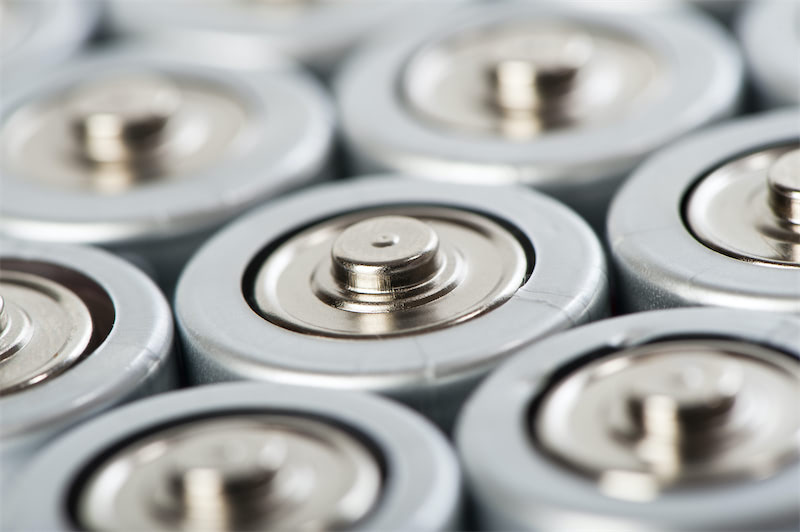 Lithium Supplement Additives Enhance Performance! Solid-State Batteries Require More Such Additives
Enterprises continue to ramp up their lithium supplement additives business for batteries.
Sep 23, 2025 13:54- 【SMM Analysis】Oil Giant's Disruptive Innovation: ExxonMobil's Synthetic Graphite Anode Solves EV Charging Challenges
ExxonMobil's competitive edge lies in its use of synthetic graphite. This lab-engineered carbon material is produced from petroleum byproducts or other feedstocks rather than being mined. Compared with natural graphite, synthetic graphite offers higher purity and consistency. Its production is less labor-intensive, scalable through ExxonMobil’s refineries, and more environmentally friendly due to lower land use and emissions. This material outperforms mined alternatives in conductivity and stability, directly enhancing battery efficiency and reliability. Following its acquisition of Superior Graphite’s assets in September 2025, ExxonMobil aims to expand domestic production capacity in the U.S., reduce reliance on imports, and support local EV manufacturing.
Sep 19, 2025 18:01 - Last Week (9.15-9.19) Overseas Lithium News [SMM New Energy Overseas Weekly News]
[EMP Metals Obtains Construction and Operation Permit for Aurora Project Demonstration Plant] EMP Metals Corp. is pleased to announce that it has obtained construction and operation permits from the Saskatchewan Ministry of Energy and Resources and the Rural Municipality of Tecumseh No. 65, respectively, to build a lithium refining demonstration plant named "Project Aurora" within the province. The demonstration plant will be located on the same well pad as the company's existing horizontal well 4B-23 and vertical test well 4A-23, in the Viewfield area of southeastern Saskatchewan. The planning and construction progress for the plant infrastructure are on schedule, site leveling has commenced, and plant construction is planned to begin in early September. As previously disclosed, Project Aurora is a collaboration between EMP Metals and Saltworks Technologies Inc., aiming to apply innovation, reduce costs, and manage risks associated with lithium brine extraction and refining technology. This direct wellhead-connected demonstration unit will process and purify raw lithium brine into a concentrated lithium chloride solution (CLC), which will then be transported to Saltworks' existing converter plant in Richmond, British Columbia, for the continuous production of lithium chemical products. About EMP Metals EMP is a Canadian lithium exploration and development company focused on developing large-scale resources utilizing Direct Lithium Extraction (DLE) technology. The company currently holds over 205,000 net acres (approximately 83,000 hectares) of subsurface mineral rights and strategic well bores in southern Saskatchewan. Source: Junior of mining [Lithium Ionic Enhances Projected Returns for Brazilian Project] Lithium Ionic Corp. stated that the final feasibility study for its Bandeira project in eastern Brazil indicates higher project returns, lower capital costs, and a longer mine life compared to previous calculations. Benefiting from increased reserves and optimized mine design, the Bandeira project's after-tax net present value (NPV) is now $1.45 billion, up from the $1.31 billion estimated in May 2024. The project's internal rate of return (IRR) improved from 40% to 61%, and the payback period shortened from 3.4 years to 2.2 years. Lithium Ionic released these figures in a statement on Wednesday. This news of improved economics comes just about four months after Lithium Ionic last increased the project's resource estimate by approximately one-third. The Bandeira project is located in Minas Gerais state, approximately 1,000 km north of Rio de Janeiro. According to a presentation published on the company's website, production at the project is expected to commence in H2 next year. Lithium Ionic's share price rose 3.8% to C$0.82 on the Toronto Stock Exchange on Wednesday morning, giving the company a market capitalization of approximately $130 million. Over the past year, the stock traded between C$0.5 and C$1.15. Cost advantages Capital expenditure, including contingencies, is now $191 million, a 28% reduction from the previous $266 million. Operating costs are $378 per mt of spodumene concentrates, which the company stated would place the Bandeira project in the first quartile of global lithium production costs (i.e., the lowest 25% cost range). The projected operating life of the Bandeira project is 18.5 years, up from 14 years in the previous study. The company indicated that the average annual production of spodumene concentrates over the project's life cycle is expected to be 177,000 mt. As of May 6, Bandeira's total measured and indicated resources amounted to 27.27 million mt at a grade of 1.34% Li₂O, equivalent to 901,100 mt of LCE, higher than the 696,500 mt in last year's study. The project's inferred resources also increased slightly by 1.9% to 18.55 million mt at a grade of 1.34% Li₂O, equivalent to 615,400 mt of LCE. The mining rights area for the Bandeira project is approximately 1.6 square kilometers, representing only about 1% of Lithium Ionic's total area of 141.8 square kilometers in Brazil's "Lithium Valley." The region also includes the company's other project, Salinas, located about 120 kilometers north of Bandeira. Source: mining.com [EnergyX Acquires Daytona Lithium, Expands Arkansas Resource Footprint] Pantera Lithium announced on Tuesday that shareholders voted overwhelmingly in favor of the sale of its subsidiary Daytona Lithium to Energy Exploration Technologies (EnergyX). Daytona Lithium indirectly holds mining rights in southwestern Arkansas; EnergyX is advancing its Lonestar Lithium project in the local Smackover Formation, with its demonstration plant nearing completion. Earlier this summer, EnergyX acquired an additional 35,000 acres in the Smackover Formation for $26 million, bringing its total land holdings in the belt to 47,500 acres. This lithium-bearing brine formation stretches from Florida to Texas. In an email, EnergyX stated that the acquisition "strengthens the company's mineral resource base and accelerates the securing of the US lithium supply chain through its direct lithium extraction and refining technology portfolio." The privately held company has raised over $110 million to date, with investors including international industrial players such as General Motors, Italy's Eni, and South Korea's POSCO. Previously, EnergyX secured 90,000 acres of lithium mining concessions in Chile in 2023 and purchased a 40,000-square-foot production site in Austin, Texas, in 2024. Source: mining.com [Savannah Resources Increases Barroso Lithium Mine Reserves by 40%] Savannah Resources has raised the reserve estimate for its Barroso lithium project in northern Portugal by 40% after completing supplementary exploration, further consolidating the mine's position as Europe's largest spodumene deposit. The London-listed firm's latest announced reserves exceed 39 million mt, up from the previous estimate of 28 million mt. Following the news, Savannah's stock rose 2.4% during intraday trading, bringing its market capitalization to £104 million (approximately $141.5 million). Savannah stated in an announcement: "This not only establishes Barroso as a key source of raw materials for Europe's EV battery industry chain, but will also generate substantial long-term value for the local community." The company plans to build four open-pit mines at Barroso, with combined annual production of lithium concentrates sufficient to meet the battery demand for approximately 500,000 EVs. Subject to permitting and financing, production is expected to commence in 2027. Once operational, the project is designed to process 1.5 million mt of ore annually over a mine life of around 14 years; this calculation is based on a resource of 20.5 million mt at a grade of 1.05% lithium oxide. Local and Environmental Opposition Despite its strategic importance, the Barroso project faces strong opposition from local communities and environmental protection groups. The area has been designated by UNESCO as a "Globally Important Agricultural Heritage System" since 2018, with public concerns that mining could harm land use, water sources, and biodiversity. Savannah indicated that it is striving to complete the final feasibility study and environmental permitting process by the end of 2024. The company also denied media reports claiming that "a United Nations committee accused the Portuguese government of violating international law during the project approval process." Source: mining.com
Sep 19, 2025 09:04