

338results found for 'interpretation'
Sort by : |
- [SMM Nickel Intermediates Daily Review] August 6 MHP nickel prices rose, high-grade nickel matte nickel prices fell.
As of now, the FOB price of Indonesian MHP nickel stands at $15,337/mt Ni, and the FOB price of Indonesian MHP cobalt stands at $49,106/mt Co. The MHP payables (against the SMM battery-grade nickel sulphate index) stand at 83-84, and the MHP cobalt payables (against SMM refined cobalt (Rotterdam warehouse)) stand at 91. The FOB price of Indonesian high-grade nickel matte stands at $15,765/mt Ni.
Aug 6, 2026 13:17 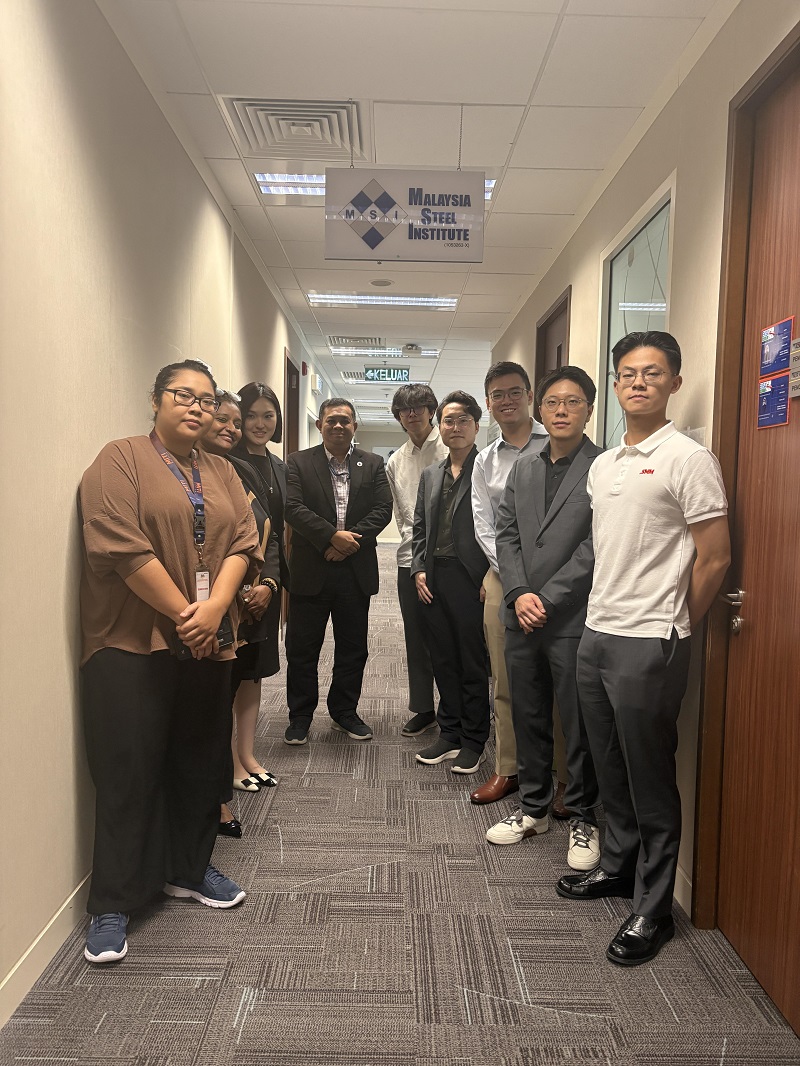 SMM Visits Malaysian Steel Institute (MSI) to Deepen Cooperation on the Southeast Asian Ferrous Metal Industry Chain
Kuala Lumpur, Aug 5 – At a time when the global ferrous metals sector is undergoing constant restructuring, ASEAN has emerged as a pivotal growth hub for the steel industry, fuelled by robust end-market demand, fast-expanding production capacity and shifting cross-border trade dynamics. Regional infrastructure upgrades, local capacity iteration, and trade policy adjustments are collectively driving ongoing changes in the supply-demand structure, pricing system, and supply chain of the ASEAN steel market. The industry urgently needs a specialized, international dialogue platform to address development pain points and unlock global business opportunities. Against this industry background, a delegation from Shanghai Metals Market (SMM) paid a special visit to the Malaysia Steel Institute (MSI) on August 4, and was warmly welcomed by MSI's team including CEO Ts. Dr. Nurl Muiz, Industry Relations and Liaison Shalini and Data Analyst Shamimi, etc. Both sides introduced their respective development overviews, and engaged in in-depth exchanges on cooperation directions, industry data services, exhibition synergy, and other topics, sorted out areas of cooperation alignment, seeking a long-term and mutually beneficial industry cooperation model. MSI presented its institutional positioning and core functions to SMM. As an industrial service organization under the jurisdiction of Malaysia's Ministry of International Trade and Industry (MITI), MSI serves as a key communication bridge between the Malaysian government and the steel industry. Built on a government-enterprise collaboration model, it has been deeply involved in the domestic steel industry for many years, responsible for public services such as industry standard setting, technology R&D, talent cultivation, and detection and testing, undertaking the function of coordinating the steady development of Malaysia's steel industry. Leveraging long-term industry surveys, MSI conducts in-depth market intelligence research on the Southeast Asian steel market, helping member enterprises enhance market competitiveness through data analysis services. The local government is actively advancing the green steel industry development agenda and increasing the green transformation of the steel sector, but enterprise awareness and industry supporting systems on the market side are lagging behind the policy promotion pace. In response, MSI hopes to connect with professional industry platforms to address the industry's development shortcomings, and hopes to rely on SMM's entire industry chain service capabilities to obtain targeted industry development solutions and implementation suggestions, thereby helping the local green steel industry and the entire ferrous metals industry chain achieve steady upgrades. MSI understands and affirms SMM's data service capabilities in the global steel industry, and intends to leverage SMM's industry chain data to improve regular monitoring of steel capacity, production, supply and demand, etc. in Southeast Asia. MSI has long maintained cooperation with multiple international industry organizations. This engagement with SMM aims to jointly enhance the research standards of Malaysia's steel industry and promote high-quality development of the industry. Exhibition-conference synergy is one of the key cooperation directions in this visit. In order to further penetrate the ASEAN metals market, deliver bilateral cooperation outcomes, and build a higher-standard cross-border industry exchange and cooperation bridge, SMM will host the 2026 SMM ASEAN Ferrous Metals Summit from November 26-27, 2026 in Kuala Lumpur, Malaysia. The summit focuses on the development trends of the entire ferrous metals industry chain in ASEAN, covering core categories such as steel, iron ore, and coke. It will delve deeply into key industry topics such as steel demand transformation driven by regional infrastructure upgrades, mineral resource development and utilization, cross-border trade and circulation, industrial green transformation, and market price trend forecasts. The summit will bring together mines, steel enterprises, traders, logistics institutions, financial platforms, and industry research experts globally, leveraging SMM's mature industrial data system and market analysis capabilities to provide authoritative market interpretations and efficient upstream-downstream matchmaking channels for participants. MSI expressed that it will provide promotional support for SMM's relevant industry summits, including official channel promotion, invitation of local quality enterprises, and industry resource matchmaking. Both sides reached a preliminary cooperation consensus in terms of exhibition collaboration, brand synergy, and resource sharing. The in-depth engagement with MSI and the cooperation consensus reached will also lay a solid foundation for the successful implementation of this summit, deepening regional industry penetration in the ASEAN region, and releasing regional industrial cooperation value. About the 2026 SMM ASEAN Ferrous Metals Summit This event is the premium platform in the ASEAN ferrous metals market that converge 400+ decision-makers from mines, mills, trading houses, processors, equipment and technology providers, and logistics operators at the same table — precisely when the regional order is being rewritten. Conference Highlights 1. ASEAN Steel Market Outlook An in-depth analysis of regional steel demand, with consumption expected to reach 87.9 million mt in 2026, driven primarily by Vietnam, Indonesia, and the Philippines. 2. China—ASEAN Trade and Supply Chain Restructuring Exploring shifting flows of HRC, billet, slab, and other steel products amid changing supply patterns, trade remedies, and regional market dynamics. 3. Capacity Expansion and Production Transition Examining ASEAN’s evolving steelmaking landscape, including BF-BOF capacity growth, EAF development, overseas investment, and new regional production hubs. 4. Trade Policies and Market Access Assessing anti-dumping measures, tariffs, RCEP-related opportunities, and regulatory changes reshaping steel trade across ASEAN. 5. High-Growth Demand and Product Opportunities Identifying opportunities from infrastructure, construction, automotive, and advanced steel applications, with a focus on Indonesia, Vietnam, and other emerging markets. 6. Executive Networking and Regional Cooperation Connecting leading producers, traders, buyers, investors, associations, policymakers, and industry experts across ASEAN, China, and global markets. Senior Speakers 2026 Scenes from Past Conferences Conference Agenda Contact: Horin Dong WhatsApp: +8618721310824 Email: horindong@smm.cn Scan the QR code for conference details and more discount information About SMM SMM has long been deeply engaged in global commodity industry services, continuously deepening cooperative ties with government and enterprise institutions and industry associations across various countries, and steadily expanding its global industrial service network. Leveraging a mature collaborative model with Indonesian government, enterprises, and associations, SMM has established a comprehensive closed-loop ecosystem for sharing overseas exhibition and conference information, continuously iterating and upgrading its industrial big data system to achieve efficient global market information exchange and joint resource building and sharing. SMM organizes 50+ professional events each year, including industry summits, industry forums, and field trips. Of these, 40 are deeply rooted in the Chinese market, nearly 10 are precisely positioned in core Southeast Asian markets, and a small number cover Europe and Africa. Overseas events have earned global industry recognition thanks to authoritative industry guest lineups, solid industry survey data, and precise supply-demand matchmaking services. SMM has organized a series of high-end summits in Indonesia in cooperation with local authorities such as the Ministry of Foreign Affairs and the Indonesia Nickel Miners Association (APNI), gathering 300+ industry elites, and were complemented by professional field trip activities along the overseas industry chain, comprehensively empowering regional industry exchanges and trade matchmaking.
Aug 5, 2026 17:04- [SMM Nickel Sulphate Daily Review] August 5: Sluggish Spot Order Market With Nickel Sulphate Prices Slightly Down
On August 5, the SMM average price of battery-grade nickel sulphate slightly decreased.
Aug 5, 2026 11:38 - Central Banks Buy Record Amount of Gold – in the Very Quarter Prices Fell
August 4, 2026 The world's central banks acquired a net 288.9 tonnes of gold in the second quarter of 2026 – the highest figure ever recorded for a second quarter. What makes this remarkable is the timing: the buying took place during a quarter in which the gold price fell by around 16 per cent. Anyone reading the World Gold Council's figures closely, however, will find a second and considerably more awkward story. The "Gold Demand Trends" report published by the World Gold Council (WGC) on 30 July delivers what may be the most important message of the summer for precious metals investors. While private investors exited gold ETFs during the second quarter and jewellery demand buckled under high prices, official institutions bought with rare conviction. At a net 288.9 tonnes, purchases were roughly 62 per cent above the year-earlier figure of 177.9 tonnes. The contrast with price action could hardly be sharper. The second quarter was gold's weakest since 2013; from the record high of USD 5,598 set in January, the metal has since given up considerable ground and currently trades at around USD 4,050. Central banks evidently did not read that weakness as a warning signal, but as an opportunity. Poland and China Lead the Buyers' List The single largest buyer was the National Bank of Poland with 51 tonnes. Warsaw is thereby continuing a course that brings the country close to its self-imposed target of 700 tonnes of gold reserves. In second place comes the People's Bank of China with 33 tonnes – its largest quarterly addition since late 2023, and a signal that Beijing is accelerating its diversification strategy again after a quieter phase. Behind these two sits a broad field of smaller buyers: Uzbekistan with 16 tonnes, Kazakhstan with 15 tonnes, and the central banks of Jordan and the Czech Republic with around 6 tonnes each. This breadth matters more for interpretation than the headline figure does. A record quarter carried by a single large buyer would be fragile. When demand is spread across numerous institutions from different regions and with different motivations, that points to a structural trend rather than a one-off effect. Russia Stands on the Other Side Not every central bank was buying. The Bank of Russia was the quarter's largest seller at 22 tonnes. The reason is understood to be pressure on the federal budget – here gold simply serves as a liquidity reserve to be drawn upon to plug deficits. Türkiye was also on the selling side once again, though at just 4 tonnes it was markedly more restrained than in the first quarter. These sales are central to any sound interpretation. They show that a portion of official gold movements has nothing to do with strategic conviction and everything to do with fiscal constraints. Anyone reading central bank purchases as a blanket vote of confidence in gold is making it too easy for themselves – and the same applies to anyone reading central bank sales as a blanket loss of faith. The Awkward Part: A Revision That Changes the Half-Year Picture This is where matters become interesting for attentive investors. Alongside the record second-quarter figure, Metals Focus – the World Gold Council's data provider – has sharply revised its estimate for the first quarter downwards: from an original 244 tonnes to just 57 tonnes. That is no cosmetic adjustment but a revision of more than three quarters, and it changes the overall picture considerably. Taken together, central bank demand for the first half of 2026 amounts to roughly 345 tonnes – the weakest half-year figure since 2022. Viewed soberly, then, the record quarter was primarily a catch-up movement following an exceptionally weak start to the year. For assessment purposes this means both statements are true at the same time. The second quarter was a record. The first half-year was weak. Anyone citing only one of the two figures is telling an incomplete story – and in the coverage of recent days, usually only the first has been on offer. What the Statistics Do Not Show A further point deserves attention: a substantial share of central bank purchases is never officially reported. Since 2022 the WGC has consistently identified a high proportion of unreported buying – the gap between estimated total demand and the purchases institutions actually disclose. The reported data underlying the report were, moreover, only captured up to 24 July; later disclosures may lead to further revisions. Investors should draw the right conclusion from this. Central bank demand is real and it is significant – but the published quarterly figures are estimates carrying a considerable margin of error, not exact measurements. An investment decision built on a single quarterly number rests on shifting ground. The Outlook Remains Constructive For all these caveats, the structural direction is unambiguous. The WGC's own survey of reserve managers shows that a large majority of the institutions polled expect global gold reserves to rise over the coming twelve months. Around three quarters also anticipate that their dollar holdings will decline over the next five years. This is where the real substance of the story lies. Central banks do not operate in quarters but in decades. Their gold purchases are not a timing signal for short-term price movements – anyone who bought in April on the basis of central bank demand is sitting on losses today. They are, however, an indicator of how institutional actors assess the long-term role of the US dollar and the case for hedging against geopolitical risk. For the 2026 full year, the World Gold Council expects another strong year of official demand, albeit below the 2025 level. Supply should grow only modestly: high prices and healthy producer margins support mine output, but operational constraints and long project lead times limit the pace. What the gold market did in the first half of 2026 was, above all, to change its buyer. Investors taking a long-term view in this phase will find remarkably patient company in the world's central banks. Source: https://goldinvest.de/en/central-banks-buy-record-amount-of-gold-in-the-very-quarter-prices-fell
Aug 5, 2026 10:03 - In July, SMM assessed China's refined bismuth production will rise by about 13.5% MoM [SMM data]
According to SMM estimates, China's refined bismuth production in July 2026 will significantly increase by approximately 13.5% MoM compared to June's national refined bismuth output. Market participants believe this increase is within a reasonable range, which also indirectly reflects the reasons behind the recent period of weaker market prices. Note: Since October 2022, SMM has been publishing its assessed national refined bismuth production. Thanks to SMM's high coverage rate of the bismuth industry, SMM's survey includes a total of 24 refined bismuth producers distributed across 8 provinces nationwide, with total sample capacity exceeding 50,000 mt and total capacity coverage rate above 99%. This report is an original work and/or compilation by SMM Information & Technology Co., Ltd. (hereinafter referred to as "SMM"). SMM legally owns the copyright and is protected by the Copyright Law of the People's Republic of China and other applicable laws, regulations, and international treaties. Without written permission, no part of this report may be reproduced, modified, sold, transferred, displayed, translated, compiled, disseminated, or otherwise disclosed to third parties, nor may third parties be licensed to use it. Otherwise, upon discovery, SMM will pursue legal action for infringement, including but not limited to claiming contractual breach liability, returning unjust enrichment, and compensating for direct and indirect economic losses. The contents of this report, including but not limited to information, articles, data, charts, images, audio, video, logos, advertisements, trademarks, trade names, domain names, layout designs, and any or all information, are protected by the Copyright Law of the People's Republic of China, the Trademark Law of the People's Republic of China, the Anti-Unfair Competition Law of the People's Republic of China, and other laws, regulations, and applicable international treaties regarding copyright, trademark rights, domain name rights, commercial data property rights, and other rights, and are owned or held by SMM and its related rights holders. Without written permission, no institution or individual may reproduce, modify, use, sell, transfer, display, translate, compile, disseminate, or otherwise disclose the above contents to third parties, nor may they license third parties to use them. Otherwise, upon discovery, SMM will pursue legal action for infringement, including but not limited to claiming contractual breach liability, returning unjust enrichment, and compensating for direct and indirect economic losses. *All data in this report are based on publicly available market information (including but not limited to industry news, seminars, exhibitions, corporate financial reports, broker reports, National Bureau of Statistics (NBS) data, customs import and export data, various data published by various associations and institutions, etc.), and relying on SMM's internal database models, are comprehensively processed internally by the SMM research team, providing reasonable inferences. The information provided in the report is for reference only, and risks are borne by the user. This report does not constitute direct investment research advice. Clients should make prudent decisions and should not substitute this for independent judgment. Any decisions made by clients are unrelated to SMM. Furthermore, any losses and liabilities arising from unauthorized or illegal use of the views in this report are unrelated to SMM. SMM reserves the right to modify and the final interpretation of the terms of this statement.
Aug 4, 2026 11:00 - China's SMM-assessed antimony ingot production rose approximately 30% MoM in July 2026 [SMM data]
Based on SMM estimates, China's antimony ingot production (including antimony ingot, crude antimony converted, antimony cathode, etc.) in July 2026 was up about 30% MoM, showing a sharp increase. Regarding the sharp increase in July, some market participants considered it a normal phenomenon, as customs data showed that antimony ore imports from outside China each exceeded 10,000 mt in April, May, and June, and the large volume of ore imports would inevitably translate into higher antimony ingot production. Note: Since May 2022, SMM has published its assessed national antimony ingot production (including antimony ingot, crude antimony converted, antimony cathode, etc.). Thanks to SMM's high coverage of the antimony industry, the survey covers a total of 33 antimony ingot producers across 8 provinces, with total sample capacity exceeding 20,000 mt and a total capacity coverage rate of over 99%. This report is an original work and/or compilation created by SMM Information & Technology Co., Ltd. (hereinafter referred to as "SMM"), and SMM legally owns the copyright, protected by the Copyright Law of the People's Republic of China and other applicable laws, regulations, and international treaties. Without written permission, no reproduction, modification, sale, transfer, display, translation, compilation, dissemination, or disclosure of the above content to any third party in any form, or licensing any third party to use it, is allowed. Once discovered, SMM will pursue legal liability for infringement, including but not limited to claims for breach of contract, restitution of unjust enrichment, and compensation for direct and indirect economic losses. The content contained in this report, including but not limited to any or all information such as news, articles, data, charts, pictures, images, sounds, videos, logos, advertisements, trademarks, trade names, domain names, layout designs, etc., is protected by the Copyright Law of the People's Republic of China, the Trademark Law of the People's Republic of China, the Anti-Unfair Competition Law of the People's Republic of China, and other applicable laws, regulations, and international treaties concerning copyright, trademark rights, domain name rights, commercial data information property rights, and other rights, and is owned or held by SMM and its relevant right holders. Without written permission, no institution or individual may reproduce, modify, use, sell, transfer, display, translate, compile, disseminate, or otherwise disclose the above content to any third party, or license any third party to use it. Once discovered, SMM will pursue legal liability for infringement, including but not limited to claims for breach of contract, restitution of unjust enrichment, and compensation for direct and indirect economic losses. *All data in this report are based on publicly available market information (including but not limited to industry news, seminars, exhibitions, corporate financial reports, broker reports, National Bureau of Statistics (NBS) data, customs import and export data, data published by various associations and institutions, etc.), processed internally by the SMM research team using SMM’s internal database models, and reasonable inferences are drawn. The information provided in this report is for reference only and at your own risk. This report does not constitute direct investment research or decision-making advice. Clients should make decisions prudently and not substitute this for their own independent judgment. Any decision made by the client is not related to SMM. Furthermore, any losses or liabilities arising from unauthorized or illegal use of the views in this report are not related to SMM. SMM reserves the right to amend and the final interpretation of the terms of this statement.
Aug 4, 2026 10:54 - [SMM Nickel Sulphate Daily Review] August 3: Downstream procurement sentiment was weak, nickel sulphate prices edged lower
On July 31, the SMM battery-grade nickel sulphate average price edged down slightly.
Aug 3, 2026 13:27 - US-Iran Negotiations Kick Off, Silver Prices Drift Higher [SMM Daily Commentary]
[SMM Daily Review: US-Iran Negotiations Kick Off, Silver Drifts Higher] SMM, August 3 – US-Iran negotiations kicked off, with risk-off sentiment intertwined with plummeting crude oil and a weakening US dollar. The market interpreted this as a net bullish factor, and silver prices rebounded. Spot trading was sluggish early this month, with both supply and demand remaining weak. Attention turns to guidance from US economic data.
Aug 3, 2026 11:18 - Shandong Humon Smelting Co., Ltd. held a public tender for 3 mt of high-purity tellurium head and tail materials on the 3rd [SMM Report]
SMM, August 3 – According to SMM, Shandong Humon Smelting Co., Ltd. started a public tender today for its high-purity tellurium head and tail materials. Specifically, according to official information, the quantity is 3 mt, with a tellurium content of 99.99%. Other elements are subject to the supplier’s assay results; see the attachment for details. Packaging is in iron drums. The buyer shall pick up the goods on an EXW basis, and the freight shall be borne by the buyer. The buyer must pick up the goods before August 20, 2026. The delivery location is Shandong Humon Smelting Co., Ltd. (No. 11 Jinzheng Street, Shuidao Town, Muping District, Yantai City, Shandong Province). Sales contact: Wang Peng, Tel: 17616212861 The company did not announce a starting bid price; instead, the contract will be awarded to the highest bidder. Buyers shall submit their bids based on their own circumstances. If a buyer’s bid does not reach the seller’s reserve price, the seller has the right to refuse the sale, and all interpretation rights are reserved by the seller. To ensure the timeliness of quotations, the inquiry form, a copy of the bidding party’s business license, and invoicing information (with official seal) should be sent back to 17616212861@163.com before 11:30 a.m. on August 4, 2026, and promptly contact Humon personnel for collection.
Aug 3, 2026 09:42 - [SMM Analysis] Indonesia's Rare Earth Element Detection Disrupts Nickel Product Exports, and Subsequent Regulatory Details Become the Market's Focus
Background: Pangkalpinang Case Triggers Tighter Regulation of Rare Earth Elements in Indonesia’s Mineral Exports Recently, the detection issues surrounding Indonesia’s rare earth elements, or Logam Tanah Jarang (LTJ) , primarily stemmed from stricter government oversight of related mineral product exports following the Pangkalpinang case. The initial case involved an anomalous export of approximately 390 mt of materials containing rare earth elements and implicated PT Putraprima Mineral Mandiri, PT Sucofindo, and the Pangkalpinang Customs Office. It raised a broader regulatory question: when a mineral product contains rare earth or radioactive elements as associated elements, should the product continue to be treated under its primary export commodity classification or be subject to rare earth-related export restrictions. This issue quickly rippled through Indonesia’s broader mineral export chain. High-grade NPI, NPI, MHP, alumina, and tin-related products are not themselves exported as rare earth products, but they may contain trace amounts of associated rare earth elements or radioactive elements. Consequently, with regulatory parameters not yet fully clarified, surveyors and customs tended to be cautious, causing a slowdown in LS report issuance and customs clearance for some shipments. For the nickel industry, the incident quickly became a market focal point, as exports of high-grade NPI, NPI, and MHP were all affected by additional testing requirements. Market feedback indicated that some cargoes experienced short-term port detentions or shipment disruptions, and the impact was not confined to a single enterprise. Some traders also reported that related cargoes faced shipment difficulties during the period of disruption. Why Rare Earth Elements Matter: Indonesia Strengthens Value Controls Over Critical Minerals Before Export Rare earth elements have drawn attention due to their extensive application in high-value-added fields such as EVs, permanent magnet materials, electronic products, new energy, and national defense-related materials. For Indonesia, this issue is not only about export customs clearance but also about resource value control. The Indonesian government is placing increasing emphasis on identifying, regulating, and protecting the value of critical mineral resources before they leave the country. The problem is that rare earth elements often do not exist as standalone products but appear as associated or trace elements in other minerals. If all products containing small amounts of rare earth elements were treated as restricted rare earth exports, normal mineral exports could be disrupted; yet if rare earth content is not identified or regulated at all, Indonesia could lose control over the value of strategic minerals. The commonly recognized 17 rare earth elements include: lanthanum, cerium, praseodymium, neodymium, promethium, samarium, europium, gadolinium, terbium, dysprosium, holmium, erbium, thulium, ytterbium, lutetium, yttrium, and scandium . In recent market discussions, the testing scope mainly involved these 17 rare earth elements, while radioactive elements such as thorium and uranium also became items of inspection concern. Rare earth elements are often not produced as independent products but exist in other minerals in the form of associated elements . This also creates a regulatory gray area. If every export shipment containing trace rare earth elements were treated as rare earth exports, many normal mineral shipments could face delays. But if associated rare earth content is not tested at all, Indonesia risks the loss of strategic mineral value. Therefore, the market’s focus is not merely on whether nickel product exports are disrupted; the larger question is whether Indonesia is entering a new regulatory phase requiring more detailed chemical composition verification for mineral exports. What Happened in the Market: LS Report Delays and Additional Testing Disrupted Mineral Shipments According to SMM’s market understanding, the recent testing requirements temporarily affected the export of some processed mineral products from Indonesia. For nickel products, the impact was mainly reflected in three aspects. Delays in LS report issuance. LS reports are critical documents in the export process, and delays in their issuance directly affect customs clearance and cargo release. According to SMM’s understanding as of July 24, relevant authorities also noted that laboratory testing preparations remained relatively limited, and due to differing interpretations of how to handle rare earth elements during export verification, 102 LS survey reports were still pending. Short-term port detentions for some cargoes. Market feedback indicated that shipments of some NPI and MHP cargoes were affected, and some traders also mentioned that QMB-related cargoes faced shipment difficulties during the disruption. Export enterprises required to organize additional testing. The government required testing of 17 rare earth elements and radioactive elements in certain products, and some enterprises were still awaiting testing results or further clarity from surveyors and customs. Thus, this incident is not a direct export ban on nickel products but a short-term administrative and testing bottleneck arising from unclear regulatory parameters for associated rare earth and radioactive elements. Impact on the Nickel Market: NPI and Other Nickel Product Exports Mainly Affected by Shipment Pace Disruptions For the high-grade NPI and NPI market, the short-term impact was mainly on shipment pace rather than production. Some port cargoes experienced delays due to affected LS reports and customs clearance processes. According to SMM’s latest understanding, LS survey reports were being released in batches, and some high-grade NPI cargoes at ports had begun to be released progressively. As the current disruption primarily occurred in export documentation and customs clearance, the direct impact on NPI production was limited. If LS report issuance and customs clearance continue to normalize, the impact on the overall NPI market is expected to be limited. At this stage, the issue appears more as a short-term export process disruption rather than a confirmed structural restriction on NPI exports. For the MHP market, some cargoes were also affected by the rare earth-related testing requirements. According to market feedback, some MHP shipments faced short-term inability to ship smoothly during the disruption. Similar to NPI, the core issues centered on LS report issuance, testing requirements, and customs clearance, rather than direct restrictions on MHP production. The latest Indonesian government coordination outcome clarified that export procedures should refer to the primary mineral product and its derivative attributes, rather than automatically treating associated rare earth elements or radioactive elements in the product as grounds for export restrictions. Therefore, for MHP, the key lies in whether the product can continue to be classified and exported based on its primary product attributes. Market Feedback and Industry Concerns: Unclear Technical Standards Create Uncertainty for Export Enterprises Market feedback indicated that rare earth-related testing requirements had already caused real disruptions to Indonesia’s mineral product export chain. According to Arif Perdanakusumah, Chairman of FINI (Indonesian Nickel Smelting Association), at least 120 bulk commodity vessels were unable to sail or depart due to the need to test for rare earth content. He noted that this situation caused losses not only for enterprises but also for the government, primarily because there were still no clear regulations providing technical guidance on rare earth content thresholds. Industry associations generally understood that this policy was part of the government’s effort to improve mineral governance, but they also stressed that technical implementation still needed re-examination, particularly given that rare earth elements in many mineral products exist only as associated or trace elements rather than primary products. This distinction is especially important for commodities such as nickel, bauxite, tin, and copper, as enterprises' permits and processing designs are primarily centered on the main minerals, and rare earth elements may merely be naturally occurring by-products or associated elements. The bauxite industry also raised similar concerns. Ronald Sulistyanto, Chairman of ABI (Indonesian Bauxite Association), stated that the rare earth issue should be addressed based on its technical nature and handled by the Ministry of Energy and Mineral Resources, as the ministry possesses the relevant mining and mineral expertise. He emphasized that the key question is whether rare earth elements are primary products or merely associated elements. If they are primary products, relevant export restrictions could apply; but if they are only associated elements, more detailed technical clarification is needed rather than causing widespread export disruptions. Sari Esayanti, Executive Director of IMA (Indonesian Mining Association), also pointed out that most mining enterprises still center on the primary commodities covered by their permits and existing processing designs. In multiple commodities such as tin, bauxite, nickel, and copper, rare earth elements are typically just associated elements. She also stated that most mining enterprises currently lack adequate facilities or technology to identify, separate, or economically utilize rare earth elements. Thus, new interpretations regarding rare earth element declarations or export obligations have created uncertainty for enterprises. From an industry perspective, the most urgent need currently is technical certainty. Enterprises require clearer parameters, testing methods, and declaration mechanisms so that all exporters, surveyors, and customs authorities can adopt uniform standards. Without consistent technical guidance, even if the current bottleneck gradually eases, similar shipment delays could still recur. Latest Government Developments and Resolution Direction: Primary Product Attributes Become the Core Clarification Point The most important development came from the Indonesian government’s coordination letter dated July 31, 2026. According to the document, the Coordinating Ministry for Economic Affairs convened a coordination meeting on July 30 to discuss export obstacles related to the presence of rare earth elements and/or radioactive elements in mineral products and their derivatives. Key points from the government coordination included: Exports of mineral products and their derivatives should still be conducted in accordance with existing trade regulations, including Minister of Trade Regulation No. 23/2023 on Export Policies and Arrangements and Minister of Trade Regulation No. 22/2023 on Prohibited Export Goods, with reference to subsequent amendments. Relevant regulations should be understood as applying to primary mineral products and their derivatives, rather than automatically applying to associated elements within these products. This is the most critical clarification for high-grade NPI, NPI, MHP, alumina, and other processed mineral products. If radioactive elements are present in the product, as long as they fall under naturally occurring radioactive material, i.e., NORM (Naturally Occurring Radioactive Material), exports can still proceed. This helps mitigate the risk of trace radioactive elements automatically causing export obstructions. Export enterprises, surveyors, and customs authorities should refer to the export attributes of the primary mineral product and its derivatives when handling exports. This provides a basis for the gradual resumption of LS report issuance and customs clearance. The Indonesian Attorney General’s Office will concurrently issue a legal opinion, to support the clarification of relevant regulatory interpretations. The government plans to accelerate the revision of relevant regulations, including Minister of Trade Regulation No. 23/2023, Minister of Trade Regulation No. 22/2023, and Minister of Energy and Mineral Resources Regulation No. 25/2018. Relevant discussions are expected to commence on August 3, 2026, targeting completion of revisions within approximately one week. SMM View: Short-Term Export Disruption, but Medium and Long-Term Signal of Tighter Mineral Oversight Released SMM believes that this rare earth testing incident is a short-term disruption but also an important policy signal. In the short term, as LS reports are progressively issued and customs enforcement parameters become clearer, the impact on NPI and MHP exports is expected to gradually ease. If cargo clearance continues to normalize, the impact on the overall nickel market supply-demand pattern is expected to be limited. However, the incident also demonstrates that Indonesia is strengthening its oversight of critical mineral element content, export documentation, and resource value protection. Even if this round of disruption is resolved relatively quickly, export enterprises may still face stricter testing requirements, clearer declaration obligations, and tighter coordinated supervision among agencies such as surveyors, customs, ESDM, and the Ministry of Trade in the future. Subsequent market focus should include: whether all previously delayed LS reports can be fully released. whether future cargoes will need to undergo complete testing for rare earth elements and radioactive elements. whether the government will clarify specific thresholds for rare earth elements, thorium, uranium, and NORM classification. whether the revised regulations can clearly distinguish between primary export products and associated trace elements. whether high-grade NPI, NPI, MHP, alumina, and tin-related products will face different enforcement standards. Overall, this incident should not be interpreted as Indonesia directly banning NPI or MHP exports, but rather as a process of regulatory clarification under the backdrop of strengthened oversight of rare earth and radioactive elements. If the subsequent implementation details are clarified quickly, the market impact will largely remain at the short-term level; if rules remain unclear, similar shipment delays and administrative friction could still recur.
Aug 3, 2026 00:09