

5results found for 'industry overview'
Sort by : |
- "Midea Addresses European Sales Surge and Analyzes Upstream-Downstream 'Temperature Gap' Amid Industry Shifts"
"The heatwave has significantly driven sales growth, especially the PortaSplit air conditioner, which has sold out in some sales channels."
Jun 29, 2026 16:17 - 【SMM Analysis】LMO Industry Overview: From Original Power Batteries to Core Materials for Low-Speed Lithium Batteries
In 1983, Goodenough and Thackeray developed lithium manganate (LiMn₂O₄, LMO) on the basis of the lithium cobalt oxide system. With a unique spinel structure and three-dimensional lithium-ion diffusion channels, LMO delivers excellent rate capability, along with simple production procedures and high safety performance. Its core advantage lies in abundant manganese resources and extremely low costs, which are far superior to cobalt-based precious materials, making LMO a key material for the cost reduction of lithium-ion batteries. After four decades of industrial iteration, LMO has been phased out of high-end passenger vehicle power batteries by ternary materials. However, relying on outstanding cost performance, it has firmly occupied segmented markets such as electric two-wheelers, power tools and low-speed electrical equipment. The industry currently presents a structural divergence, with tight supply of high-end modified LMO products and intense homogenized competition among low-end products. 1. Technical Origin: Distinct Performance Advantages and Incurable High-Temperature Defects LMO has a theoretical specific capacity of 148mAh/g and a practical mass-production capacity of around 120mAh/g, with a working voltage of approximately 4.0V. Japanese enterprises took the lead in commercializing LMO in the 1990s. Early manufacturers including Sanyo and Panasonic widely applied LMO to power tools and household devices that prioritize safety. In 2010, the Nissan Leaf adopted a modified LMO cathode system, becoming one of the early large-scale mass-produced pure electric vehicles. It entered the entry-level new energy vehicle market with its cobalt-free, high-safety and low-cost characteristics. Nevertheless, LMO has inherent technical bottlenecks, primarily weak high-temperature cycling stability. When the ambient temperature exceeds 55℃, manganese dissolution and disproportionation reactions easily occur, leading to rapid capacity decay. The dissolved manganese ions also damage the solid electrolyte interphase (SEI) film on the negative electrode, continuously impairing battery service life. The industry has adopted modification methods such as element doping and surface coating to optimize performance, which can only alleviate capacity attenuation rather than completely solve the problem. With the rapid popularization of high-energy-density ternary materials, LMO has gradually withdrawn from the mainstream passenger vehicle power battery track, and shifted to low-speed lithium batteries and consumer electronics fields that prioritize cost and safety over extreme energy density. 2. 2026 Market Status: Cost-Driven Pricing and Sustained Structural Differentiation Currently, LMO prices are highly correlated with lithium carbonate quotations, which account for 60% to 70% of the total production cost of LMO. Fluctuations in lithium carbonate prices directly drive synchronous adjustments in the LMO market. The overall operating rate of the industry remains stable, while internal differentiation is prominent. High-end modified LMO products with long-cycle and high-voltage performance enjoy stable demand and tight supply. By contrast, ordinary low-end LMO products face severe homogenization and fierce market competition, squeezing profit margins of small and medium-sized manufacturers, most of whom maintain slim profits or break-even operations. The demand structure is clear and stable. Electric two-wheelers serve as the largest downstream application scenario, accounting for over 60% of total demand and forming the fundamental support of the LMO industry. Demand for power tools remains rigid and steady. Benefiting from high safety and low cost, LMO demand in small and medium-sized energy storage sectors is expanding steadily, becoming a major growth driver for the industry. Overall downstream demand maintains stable operation without significant fluctuations. 3. Market Outlook: Consolidate Segmented Market Foundation and Expand Manganese-Based Material Layout In the short term, LMO prices will continue to fluctuate in line with lithium carbonate trends and downstream restocking rhythms. High-end modified products are expected to maintain structural premiums due to high production and technical barriers. In the medium term, the industry pattern will continue to optimize. Leading enterprises will dominate the market relying on advantages in technology, production capacity and cost, while backward low-end capacity will be gradually eliminated, further increasing industrial concentration. In the long run, conventional LMO is unlikely to re-enter the high-end passenger vehicle power battery track, but its rigid demand in four core segmented fields including electric two-wheelers, low-speed vehicles, power tools and small-to-medium energy storage will remain solid. Meanwhile, the manganese-based industry keeps iterating. Manganese elements continue to penetrate the mainstream new energy market through lithium manganese iron phosphate and ternary materials. The overall importance of manganese-based materials in the lithium battery industrial chain continues to rise.
May 28, 2026 17:25 - Iran's Aluminum Industry Overview
SMM February 28 News: On February 28, the conflict between Iran and Israel escalated, with an attack on the Iranian capital, Tehran, drawing market attention. The following is an overview of the aluminum industry information in the Iran region: Bauxite & Alumina: There is only one alumina refinery in the Iran region, which also has associated bauxite mining operations. Annual alumina production and bauxite output are approximately 250,000 mt and 650,000 mt, respectively. Its alumina production cannot meet the domestic demand for electrolytic aluminum production, and it relies on alumina imports year-round. India is the main source, with Iran's alumina imports from India accounting for 40-80% of its total imports. Aluminum: Iran has four aluminum smelters, all currently in operation, with a national average operating rate above 90% and an annual output exceeding 600,000 mt. Its production exceeds domestic consumption, leading to some exports, mainly to Türkiye, China, and other countries. Net exports account for 30-50% of production. Overall, if the local aluminum industry production in Iran collapses due to the geopolitical conflict, overseas aluminum supply is expected to tighten, while the alumina surplus is expected to worsen further. However, there is a considerable spatial distance between Iran's aluminum industry plants and the attacked city of Tehran. The closest is the Arak aluminum plant, nearly 300 km away. Nevertheless, subsequent attention must be paid to whether the geopolitical conflict escalates, affecting other regions, such as near the Strait of Hormuz, or whether it will impact Iran's electricity supply or alumina import supply, consequently affecting electrolytic aluminum production.
Feb 28, 2026 18:01 ![[SMM Analysis] 2025 EV Battery and NEV Market Review & 2026 Outlook: Industry Sustains Boom While Navigating Intensified Structural Competition](https://imgqn.smm.cn/production/admin/votes/imagesbvSry20230927093717.jpeg) [SMM Analysis] 2025 EV Battery and NEV Market Review & 2026 Outlook: Industry Sustains Boom While Navigating Intensified Structural Competition
[SMM Analysis] 2025 EV Battery and NEV Market Review & 2026 Outlook: Industry Sustains Boom While Navigating Intensified Structural CompetitionThe demand center is shifting upward, structural differentiation is deepening, and the logic of global competition is being reconfigured.
Dec 26, 2025 14:29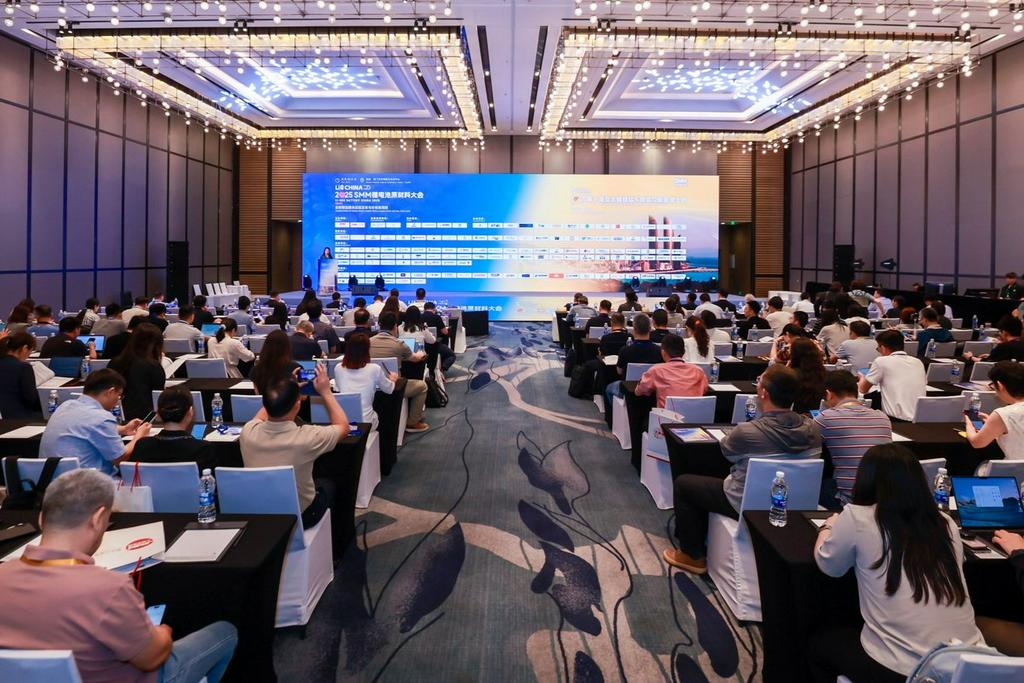 Key Takeaways from APAC (10th) Ni-Cr-Mn Stainless Steel & New Energy Conference 2025
On October 21, the APAC (10th) Ni-Cr-Mn Stainless Steel & New Energy Conference 2025, hosted by SMM Information & Technology Co., Ltd. (SMM), successfully concluded in Xiamen, Fujian!
Oct 24, 2025 14:32
Loaded to the end