

7816results found for 'industry'
Sort by : |
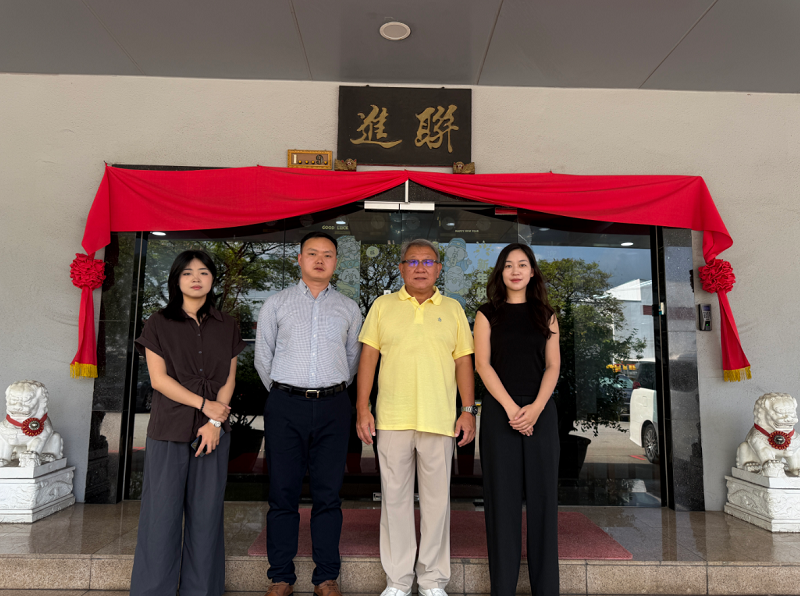 SMM Visits Progress Galvaniser to Discuss Hot-Dip Galvanizing Industry Development and Green Upgrade
Recently, an SMM delegation, including Jianhua Ye, Big‑Data Director, and Daisy Dai, Senior Overseas Sales Manager of Lead‑Zinc Division, paid an on‑site visit to Progress Galvaniser for industry‑focused exchanges, and was warmly welcomed by Lim Chin Keong, Council Member of the Singapore Chinese Chamber of Commerce & Industry, Managing Director of Progress Galvanizing Pte Ltd. The two sides held in‑depth discussions on core topics including technological upgrades for the hot‑dip galvanising sector, green and low‑carbon production, supply‑demand landscape of overseas markets, coordinated development of industrial chains, cutting‑edge industry insights and corporate development experience. Company Profile Established in 1986, Progress Galvaniser boasts more than three decades of dedicated presence within the hot‑dip galvanising industry. It caters to metal anti‑corrosion requirements for sectors spanning construction, marine engineering and offshore equipment. Upholding a customer‑centric mindset, the company thoroughly explores market demands and prioritises long‑term value delivery for its clients. It also actively undertakes social responsibilities and supports local community development, with sustained long‑term, large‑scale growth strategies formulated in alignment with industry trends and its inherent core strengths. To further consolidate its technological edge, optimise production workflows and bolster overall competitiveness, Progress Galvaniser invested in a factory in 2026 which uses the best technology in the world. Built by the Austrian company, Koerner and the German crane experts, Scheffer, the hot-dip galvanizing plant utilizes state-of-the-art technology, and is the first of its kind in South East Asia. Equipped with state-of-the-art hardware and sophisticated technological systems, the company has fully optimized its production and operational workflows. It has greatly improved working conditions for frontline employees, solidified workplace safety safeguards, and lowered production energy consumption and pollutant emissions. Committed to delivering premium zinc coating products featuring exceptional stability and superior corrosion resistance to global clients, the company is steadily building a modern galvanizing production framework that is safe, efficient and eco-friendly. Backed by a sound management system and robust comprehensive capabilities, Progress Galvaniser has attained a full suite of authoritative qualifications, including ISO 9001 Quality Management System, ISO 45001:2018 Occupational Health and Safety Management System, ISO 50001:2018 Energy Management System, and bizSAFE STAR certification. These accreditations fully validate the company's proven expertise in product quality assurance, safe production operation, energy conservation management and standardized compliance practices. Always embracing a forward-looking development mindset, the company closely keeps pace with global hot-dip galvanizing industry dynamics, including technological innovations, evolving environmental regulations and shifting market demands. It proactively iterates and refines its production standards, management mechanisms and service protocols, sustaining strong market competitiveness amid continuous industrial upgrading and evolution. This visit has deepened SMM's understanding of Progress Galvaniser’s technological strengths. Going forward, SMM will further expand its engagement with Chinese and overseas lead & zinc industry chains by conducting field trips, industry research and technical exchanges. SMM will actively connect high‑quality industry chain participants at home and abroad to share industry data, jointly pursue technological innovation and unlock new market opportunities. SMM aims to support the sector in overcoming development bottlenecks and accelerating green transition, so as to foster coordinated, win‑win, high‑quality and sustainable development across the global lead‑zinc and hot‑dip galvanising industrial chain.
Aug 19, 2026 17:45- [SMM News] India's Steel Consumption Nearly Doubles in a Decade to 152 Million mt
[India] According to Pondrik Sandeep, Secretary of India's Ministry of Steel, India's steel consumption rose from 77 million mt in fiscal 2014-15 to 152 million mt in fiscal 2024-25. Speaking at the India AI Impact Summit 2026 in New Delhi, Pondrik said India's crude steel capacity is expected to reach 300 million mt in fiscal 2030-31 and further increase to 400 million mt in fiscal 2035-36. The summit also brought together steel producers, iron ore miners, and AI technology providers to discuss AI applications in the steel industry chain and potential cooperation opportunities.
Aug 19, 2026 17:34 - India gold market update: Recovery taking shape
19 August, 2026 Highlights International and domestic gold prices 1 gained ground in August, partially reversing June’s sharp correction after a period of stability in July Jewellery demand reportedly strengthened: consumers responded to lower and more stable prices, while retailers and manufacturers replenished inventories ahead of the festive season Investment demand remained steady; gold ETFs continue to attract inflows, bar and coin demand held up, albeit softer than the heightened levels seen earlier in the year Activity in the futures market picked up in July, lifting trading volumes and turnover Gold imports rebounded in July, signalling firmer demand conditions. Looking ahead Demand conditions are improving, raising expectations of a stronger festive season. While elevated prices may continue to influence jewellery purchases, investment demand remains supportive. Correction gives way to recovery Following a sharp price correction in June, gold prices stabilised during July before recovering in early August, reaching their highest levels in over two months. International gold price (LBMA Gold PM) rose 9% in the first two weeks of August to US$4,391/oz, while domestic prices gained nearly 7% to INR151,744/10g. 2 The appreciation of the INR against the US dollar partially offset the rise in the international price, limiting gains in domestic prices. Shifting monetary policy expectations, a weaker US dollar, and renewed inflows into gold ETFs supported gold prices, contributing to the recent recovery in the gold market. Chart 1: Gold regains ground Month-end LBMA Gold Price PM and MCX spot gold price changes and movement* *As of 14 August, 2026. Source: Bloomberg, World Gold Council Domestic gold prices remain below import parity, 3 indicating local supply availability. Market feedback suggests that the exchange of old gold for new jewellery has increased market supply and kept prices at a discount to the landed cost. While discounts narrowed meaningfully, from around US$100/oz in mid-May and early June, to about US$45/oz in mid-August, they remained above July’s average US$34/oz. Chart 2: Improving market balance trims discounts NCDEX gold premium/discount relative to the official domestic price* *As of 14 August 2026. Source: NCDEX, World Gold Council Buyers return Jewellery demand has reportedly strengthened, as consumers viewed recent price action as a buying opportunity. Industry feedback suggests that deferred purchases returned to the market, resulting in higher footfall and a recovery in demand beyond essential wedding-related purchases. Manufacturers have reportedly begun receiving higher order flows, and inventory replenishment by jewellers has picked up ahead of the festive season, suggesting growing confidence in seasonal demand. Old gold exchange remains elevated and continues to play an important role in facilitating purchases. Physical investment demand, while moderating from earlier highs, remained supportive during the period of price correction. Lower prices continued to attract investors seeking strategic exposure to gold, while the recent rebound appears to have revived interest. Continued inflows into gold ETFs Indian gold ETFs continued to attract investor interest in July, albeit at a slower pace than in June. As per data from the Association of Mutual Funds of India (AMFI), net inflows totalled INR15.6bn (US$163mn) during the month, 55% lower m/m, while holdings increased by 1t to 120t, in line with our initial estimate . Total assets under management (AUM) rose 2% m/m to INR1,733bn(US$18.1bn). And positive flows are continuing; the first two weeks of August saw an estimated net inflow of INR11.79bn(US$124mn). Investor participation also grew; a further 57k new folios (accounts) were added during July, taking the total number of accounts to 12.53mn. Chart 3: Steady ETF demand Gold ETF flows in INRbn, and total holdings in tonnes* *As of end July 2026. Source: AMFI, ICRA Analytics, CMIE, World Gold Council Futures activity picks up Following a softer April-June period, gold futures trading picked up in July, indicating greater trader participation and hedging activity as gold prices stabilised and began to recover. Average daily trading volumes on the Multi Commodity Exchange of India (MCX India) rose to 14.9t, up from an average 13.5t over the previous three months, while average daily turnover increased 9% m/m to INR214bn(US$2.2bn). Despite the improvement, activity remained below the earlier elevated levels: average daily trading volumes were 59% lower than January’s peak and 8% below July 2025 levels. Turnover, however, was 35% higher y/y, reflecting the impact of higher gold prices on traded value. Chart 4: Futures trading edges higher Gold futures trading on MCX; volume and turnover Source: MCX India, World Gold Council Imports rebound Gold imports rebounded in July after two consecutive months of weakness, suggesting an improvement in demand and inventory replenishment by manufacturers and retailers ahead of the festive season. Import value rose to US$4.16bn, more than double June’s US$1.97bn, while import volumes are estimated to have increased to 40-45t, up from 20t in June. While recycled gold – primarily from the exchange of old gold jewellery for new – continues to supplement supply, the recovery in imports points to stronger physical demand compared with recent months. Despite the increase, gold's share of total merchandise imports remained relatively modest at 5%, compared with the average 11% during January-March. Chart 5: Imports rise Monthly gold imports in tonnes and US$bn* *Includes World Gold Council estimates. Source: Ministry of Commerce and Industry, CMIE, World Gold Council Footnotes 1 LBMA Gold Price PM and MCX spot gold price as of 14 August 2026. 2 LBMA Gold Price PM and MCX spot gold price as of 14 August 2026. 3 Import parity or landed price is the international gold price (LBMA Gold Price AM) adjusted for import tax. Source: https://www.gold.org/goldhub/gold-focus/2026/08/india-gold-market-update-recovery-taking-shape
Aug 19, 2026 17:06 - Hydro Energi and Varberg Energi Sign 18-Month Hybrid Power Agreement for Stable Renewable Supply
[SMM Aluminum Express News] Hydro Energi and Sweden’s Varberg Energi have signed an 18-month pilot hybrid power purchase agreement combining wind and solar generation with energy storage to provide a more stable renewable electricity supply for industrial use. The agreement covers a total of 10 GWh of electricity in Sweden’s SE3 price area, with deliveries having started in July 2026. The pilot is designed to test whether different renewable generation sources and energy storage can be combined to reduce the variability associated with intermittent wind and solar power. Hydro said the arrangement will serve as a proof of concept, with the potential for similar hybrid supply structures to be used more broadly to provide industry with long-term, competitive and sustainable electricity. The companies will also exchange operational knowledge on how generation and storage technologies can be optimised for industrial demand.
Aug 19, 2026 16:57 - [SMM Chromium Flash] South Africa's Chrome Industry Balances Ore Export Growth Against Costly Ferrochrome Processing
South Africa's chromium sector remains split between two very different trajectories. Chrome ore exports stayed structurally strong in June at 2.404 million tonnes, up nearly 39% year-on-year, with China absorbing more than two-thirds of that volume, and PGM producers including Sibanye-Stillwater, Northam Platinum, Eastplats and Southern Palladium's Bengwenyama project all adding further ore supply through chromite by-product growth. Ferrochrome, by contrast, is recovering only slowly despite real intervention — NERSA's 62c/kWh tariff, the Lion Smelter's phased restart, and the withdrawal of Section 189 retrenchments. Merafe's full H1 results, released 11 August, showed production still down 75% year-on-year, with sales held up mainly by drawing down existing inventory and by firmer prices, not by smelters running at anything close to pre-crisis capacity. That gap is being reinforced from multiple directions at once. The 13 August tailings dam failure at Samancor's Dikwena Chrome mine served as a reminder that even the ore-export side of the business, for all its trade-data strength, is not without operational risk. Further afield, the international market's expectations are evolving too: Kazakhstan's Kazchrome secured a registered Environmental Product Declaration for its ferrochrome in March, following Finland's Outokumpu, which set the industry precedent in 2023, pointing to a growing role for verified carbon credentials in how ferrochrome buyers assess supply options. With tariff relief and smelter restarts having done enough to arrest ferrochrome's decline but not yet enough to restore meaningful production growth, South Africa's chrome industry enters the second half of 2026 still leaning on ore exports and drawn-down inventory to carry its earnings, even as the broader market it sells into continues to evolve.
Aug 19, 2026 16:29 - [SMM Precious Metals]
The latest market assessment from Heraeuss, a global precious metals and materials company, indicates that South African PGM mine supply saw a significant recovery in H1 2026, but the current growth more reflects a normalization after the severe weather disruptions in 2025 rather than the industry entering a new cycle of sustained production growth. Heraeus expects global platinum mine production in 2026 to remain roughly flat at 5.2 million ounces.
Aug 19, 2026 16:16 - [SMM Stainless Steel Daily Review] SS futures weakened, and spot stainless steel trading was mediocre, awaiting peak season verification.
[SMM Stainless Steel Daily Review] SS Futures Weaken, Spot Stainless Steel Transactions Mediocre, Awaiting Peak Season Validation SMM, August 19 – SS futures maintained a subdued consolidation trend. Dragged lower by the broad decline in nonferrous metals, SS prices pulled back in tandem. As of the close, the most-traded SS contract settled at 14,260 yuan/mt. In the spot market, although SS futures pulled back somewhat, the overall decline was relatively small. Stainless steel traders mostly held their offers steady, with only occasional small discounts. Overall transactions remained sluggish, showing no signs of recovery ahead of the “September-October peak season.” The Most-Traded SS Futures Contract. At 10:15 a.m., SS2610 was at 14,260 yuan/mt, up 25 yuan/mt from the previous trading day. Spot premiums for 304/2B in Wuxi were in the 410-610 yuan/mt range. In the spot market, the average price of Wuxi cold-rolled 201/2B coil was steady; for cold-rolled 304/2B coil with mill edge, Wuxi average price was flat, Foshan average price was flat; the price of Wuxi cold-rolled 316L/2B coil fell by 100 yuan/mt; for hot-rolled 316L/NO.1 coil, Wuxi quotation was flat; cold-rolled 430/2B coil in both Wuxi and Foshan was flat. This week, stainless steel futures were continuously disturbed by macro sentiment, maintaining an overall weak pullback trend. During the week, news on Indonesia’s RKAB nickel ore approval repeatedly disrupted industry expectations. Coupled with the hawkish tone of the US Fed’s policy stance and the unresolved US-Iran geopolitical conflict, macro uncertainty stayed high. Multiple bearish factors dragged SS futures down continuously throughout the week, with bearish sentiment dominating the market and futures movement...
Aug 19, 2026 15:34 - [SMM Nickel Sulphate Daily Review] August 19 Spot Order Market Trading Was Sluggish, Nickel Sulphate Prices Declined
On August 19, the SMM battery-grade nickel sulphate average price dipped slightly.
Aug 19, 2026 15:11 - Shanghai Yangshan Port completes 8,000 mt green methanol bunkering, setting a new global single-operation record.
Recently, Shanghai Yangshan Port held a green methanol bunkering event. Shanghai Electric, together with Shanghai International Port Group and French CMA CGM Group, completed a batch bunkering of 8,000 mt of green methanol, setting a new world record for the largest single green methanol bunkering volume and marking the project's further progress into the stage of continuous stable production and large-scale delivery. The green methanol used in this bunkering was supplied by Shanghai Electric's Taonan Green Methanol Project. The new breakthrough in bunkering volume reflects that China's green fuel industry is enhancing its coordination capabilities across production, transportation, storage, and port application, and provides practical support for the shipping industry in expanding the use of low-carbon fuels. In June this year, Shanghai, Jilin, and Liaoning jointly launched a green fuel transport corridor, creating a complete logistics chain from production in Taonan, Jilin, through transshipment and storage at Dalian Port in Liaoning, to bunkering at Shanghai Port. The successful bunkering of 8,000 mt of green methanol this time marks the first large-scale validation of the corridor since it became operational. Currently, Shanghai is accelerating the construction of an international shipping green fuel bunkering center, certification center, and trading center. This batch bunkering serves as both a staged demonstration of the construction achievements and a new opportunity to further deepen cooperation between the green fuel supply chain and industry chain. As the main production site for green methanol, Shanghai Electric's Taonan Project relies on the abundant wind energy and biomass resources in Jilin. It employs a complete set of process systems and core equipment independently developed by Shanghai Electric, including pure-oxygen pressurized fluidized bed biomass gasification technology, to build the world's first large-scale plant coupling green electricity with biomass to produce green methanol. Currently, the project has entered the stage of continuous stable production and batch delivery, and can continuously supply green methanol products based on the actual needs of vessels at the Shanghai International Shipping Center. The project's stable supply further verifies the full-chain operational capability of green methanol from the production end, through the transportation end, to the port bunkering end. Looking ahead, Shanghai Electric will continue to strengthen industrial collaboration with partners such as the National Green Development Fund, and promote technological innovation and project construction across the entire chain of green fuel production, storage, transportation, and application. Meanwhile, the company will work with relevant parties to accelerate the construction of the green hydrogen coupled with biomass integrated green methanol-oil project in Taonan, enhancing the large-scale supply capability of green fuels for the shipping and aviation sectors. This event was jointly completed by Shanghai Electric, Shanghai International Port Group, and CMA CGM Group. Representatives from relevant government departments, industry associations, scientific research institutions, financial institutions, and industry chain cooperation partners witnessed the bunkering activity. According to the plan, the second phase of Shanghai Electric's Jilin Taonan green hydrogen coupled with biomass integrated green methanol-oil project will officially start construction on August 20 and is expected to be fully completed and put into operation in 2028. After commissioning, the project will have an annual capacity of 200 kt of green methanol and 10 kt of sustainable aviation fuel, providing more fuel security for the green and low-carbon transition of the shipping and aviation sectors.
Aug 19, 2026 14:56 - Ningxia Coal Industry Achieves New Progress in Green Hydrogen Utilization, Low-Carbon Transition Path for Coal Chemical Industry Accelerates
Recently, China Energy Group Ningxia Coal Industry achieved phased results in the large-scale utilization of green hydrogen and the low-carbon integration with coal chemical production, providing fresh practical reference for the green transformation of the traditional coal chemical industry. As of August 14, 2026, Ningxia Coal Industry had utilized a cumulative 21.3864 million standard m³ of green hydrogen and produced 10,800 mt of green ammonia, equivalent to reducing carbon dioxide emissions by 36,500 mt. These results indicate that China's first industrial demonstration project for coupling a high proportion of green hydrogen with coal-based synthetic ammonia production has achieved phased success. The project introduced green hydrogen produced from renewable energy into the coal chemical production process. Through deep integration of green hydrogen with traditional processes, it explores a technical pathway for the synergistic development of renewable energy and the modern coal chemical industry. The achievement of the project's phased goals also provides real-world application scenarios for solving the challenge of large-scale green hydrogen utilization. Green hydrogen is produced using electricity from renewable energy, resulting in low carbon emissions during production, and serves as a crucial link between the new energy and traditional, energy-intensive industries. Using green hydrogen in ammonia production can not only reduce the demand for hydrogen from fossil fuels but also help lower carbon emissions across the entire life cycle of coal chemical products. In recent years, Ningxia Coal Industry, aligning with the national 'dual carbon' goals, has continuously refined its green development layout, making energy conservation, carbon reduction, and low-carbon transformation a key focus for the enterprise's high-quality development. By promoting upgrades to traditional coal chemical facilities, expanding application scenarios for green hydrogen, and strengthening coal chemical integration, the enterprise has gradually formed an industrial pathway for the synergistic development of green hydrogen, green ammonia, and the coal chemical industry. The green ammonia production exceeding 10,000 mt this time signifies that the application of green hydrogen in large-scale coal chemical scenarios has further moved from demonstration validation towards scaled-up practice. The construction, operation, and utilization experience accumulated from the project can serve as a reference for other coal chemical enterprises in adopting green hydrogen substitution, optimizing their energy mix, and reducing production emissions. As the capacity for hydrogen production from renewable energy continues to increase, the integration of green hydrogen with the coal chemical and synthetic ammonia industries is expected to expand further. The phased results achieved by Ningxia Coal Industry provide a practical sample for exploring green, low-carbon transformation models for energy-intensive industries, and they also open new pathways for the local conversion and utilization of regional new energy resources.
Aug 19, 2026 14:51