

21results found for 'global central banks'
Sort by : |
- Why central banks keep buying gold despite falling prices
5 June 2026 08:30 (UTC+04:00) The global gold market is currently navigating a fascinating paradox that challenges conventional financial logic. For several months, the precious metal has experienced a downward price trajectory, sparking intense debate among analysts and market observers about its near-term direction. At first glance, a prolonged decline might suggest a waning interest in the asset or a fundamental shift away from its historic role in global finance. However, scratching beneath the surface of this downward trend reveals an entirely different underlying dynamic. The temporary softening of gold prices is not a sign of terminal weakness; rather, it represents a structural consolidation that, under the right conditions, is laying the groundwork for a substantial and potentially rapid upward reversal. To understand why a reversal is highly probable, one must look at the unprecedented level of institutional support currently stabilizing the market. As revealed in recent reports by the World Gold Council, sovereign banking institutions around the world are aggressively utilizing this period of depressed prices to expand their physical reserves. Specifically, global central banks net purchased 17 tons of gold in April 2026, registering the highest monthly purchasing pace since December 2024. When major institutional buyers like the central banks of Poland, China, and the Czech Republic consistently step into the market during price dips, they establish what technical analysts refer to as a hard price floor. This institutional baseline aligns with a broader multi-year trend, as central banks in Eastern Europe and Asia have demonstrated sustained dynamics over the last three years, purchasing a steady average of 12 and 11 tons of the precious metal per month, respectively. This massive, coordinated buying power absorbs excess supply and prevents a broader market collapse. In essence, these institutions are treating the current multi-month decline as a premium commercial window, accumulating significant volume at a discount. This steady institutional accumulation ensures that the structural demand for the metal remains exceptionally tight, meaning that any sudden shift in broader investor sentiment could quickly trigger a supply squeeze, driving prices sharply upward. Beyond the physical supply-and-demand mechanics, the future trajectory of gold is intimately tied to the evolving monetary policy of global financial hubs, particularly the United States Federal Reserve. The primary catalyst behind the recent months of downward pressure has been the resilience of global interest rates and the accompanying strength of major fiat currencies. Because gold is a non-yielding asset—meaning it does not pay a monthly dividend or fixed interest—high-yielding government bonds naturally become more attractive to short-term investors when interest rates remain elevated. However, this macroeconomic pressure is cyclical, not permanent. As global inflationary pressures eventually cool or as economic growth indicators begin to signal a broader slowdown, central banks will inevitably face mounting pressure to pivot toward rate cuts. The moment the monetary tide turns and borrowing costs begin to decrease, the opportunity cost of holding physical assets falls away. This shift historically causes a rapid capital reallocation, as institutional funds migrate out of cooling fixed-income securities and back into hard assets, driving a powerful upward rally. Simultaneously, the global landscape is defined by an accumulation of systemic vulnerabilities and geopolitical friction points that cannot be ignored. From complex supply chain vulnerabilities to shifting energy corridors and regional trade disputes, the modern global economy is operating under a cloud of persistent uncertainty. In periods of structural calm, investors frequently favor riskier, high-yielding equity markets, causing defensive assets to drift downward. Yet, history demonstrates that this calm can be deceptive. A sudden escalation in regional conflicts, an unexpected corporate debt default, or a sharp contraction in global manufacturing figures can instantly shift market psychology from optimism to extreme risk aversion. When these systemic shocks occur, the broader investing public quickly remembers the unique risk-mitigation properties of physical metals, leading to a surge in safe-haven buying that can reverse months of price declines in a matter of days. From a technical and psychological standpoint, a multi-month decline is also a healthy and necessary phase within a long-term cyclical market. No financial asset moves upward in a straight line indefinitely. After reaching historic peaks in previous cycles, a period of profit-taking and price correction is standard market behavior. This cooling-off period flushes out speculative, short-term leverage and transfers ownership into the hands of disciplined, long-term investors who are less likely to sell during bouts of volatility. Major international investment banking firms continue to maintain a highly constructive long-term outlook on the metal precisely because they recognize this healthy structural resetting. The longer the price consolidates within this current lower range, the more energy it gathers for its next directional move. Crucially, if the current buying process persists—whereby global central banks maintain their recent momentum of adding 17 tons of gold monthly, echoing the strongest purchasing pace since December 2024, alongside Eastern European and Asian central banks sustaining their three-year average of 12 and 11 tons per month—this relentless institutional drain on global supply makes a decisive upward price breakout highly probable rather than just speculative. Therefore, if the current downward trend continues to persist, it should not be viewed as a sign of permanent decay but rather as a coiled spring, building the fundamental momentum necessary to launch a powerful and sustained upward breakout once the macroeconomic catalysts align. Source: https://www.azernews.az/analysis/259317.html
Jun 8, 2026 11:34 - Macro and Geopolitical Factors Resonated During Labour Day Holiday, LME Outperforms SHFE for Aluminum [SMM Analysis]
In the short term, the core pattern of LME outperforms SHFE is unlikely to reverse. Strength in the overseas market will support SHFE aluminum's post-holiday catch-up potential, but high domestic inventory and weak demand will cap overall gains. Going forward, key focus will be on the pace of China aluminum ingot destocking and the strength of rigid demand release from downstream production resumptions.
May 5, 2026 20:57 - Summary of Key News During the Labour Day Holiday and Preview of Important Data and Major Events This Week [SMM Special Report]
Editor's Note: During the Labour Day holiday when the Chinese market was closed, global macro developments, commodity markets, and ex-China policy dynamics continued to evolve, with multiple external factors potentially impacting post-holiday market performance. To help market participants accurately grasp market trends and conduct rational market analysis, SMM has systematically compiled key macro developments and major industry news during the holiday, along with a summary of this week's critical data and event periods, for industry reference. Internationally, geopolitical developments, energy landscape, ex-China monetary policy, and trade policy all saw significant changes. Geopolitical tensions resurfaced, intermittently disrupting global energy markets and briefly driving international oil prices into a rapid short-term rise. Major global central bank policies continued to diverge. The US Fed released its latest policy signal — New York Fed President Williams publicly stated on Monday that if inflation continues to pull back toward the 2% policy target, the US Fed will cut interest rates at an appropriate time. Meanwhile, the Reserve Bank of Australia announced its third consecutive rate hike on Tuesday, raising the cash rate from 4.1% to 4.35%, officially reversing its previous accommodative monetary policy cycle, further widening the divergence in global liquidity landscape. On the energy export front, according to Bloomberg on May 4, US crude oil exports continued to climb over the past nine weeks, with cumulative exports exceeding 250 million barrels, surpassing Saudi Arabia to reclaim the position of the world's largest crude oil exporter. Global trade and foreign exchange markets also saw notable shifts. In trade, according to CCTV News, on May 1 local time, US President Trump stated that due to the EU's failure to fulfill a previously agreed trade deal, the US would impose additional tariffs on automobiles and trucks imported from the EU next week, raising the rate to 25% — subsequent changes in the global trade landscape warrant continued attention. In the foreign exchange market, Japan intervened in the currency market three times between April 30 and May 4. A relevant official from Japan's Ministry of Finance simultaneously interpreted related IMF rules, explicitly classifying the three-day intervention operations as a single operation, with a clear intent to stabilize the yen exchange rate. On industrial policy, Indonesia introduced resource export control measures, planning to levy export taxes and windfall taxes on coal and nickel products, which may impact global energy and non-ferrous metal supply chains, pricing systems, and related commodity markets. This week, major economic data in and outside China will be released in quick succession. Highly watched data including China's foreign exchange reserves, gold reserves data, China's import and export data (TBD), and US April non-farm payrolls data will be published sequentially. Meanwhile, SMM will comprehensively review price movements across metal categories during the holiday, and combining the latest variables in and outside China, is expected to publish post-holiday market trend outlooks to provide professional reference for industry trading, production, and strategic planning. Stay tuned. ※Holiday Macro News ►Domestic [Baiyun Airport Port Sees Record-High Canton Fair Foreign Arrivals Exceeding 540,000] On the last day of the Labour Day holiday, coinciding with the closing of the 139th Canton Fair, reporters learned from the Baiyun Border Inspection Station that since the opening of this Canton Fair, as of 0:00 on May 5, Baiyun Airport port handled over 1.14 million inbound and outbound passengers, up 14.5% YoY. Foreign business travelers became the core driver of port passenger flow growth, with inbound and outbound foreigners exceeding 540,000, up 20.8% YoY, setting a new historical record for port passenger flow during the same Canton Fair period. (CCTV News) [National Railways Carried Over 100 Million Passengers Cumulatively During Labour Day Holiday] According to China State Railway Group Co., Ltd., national railways carried 20.383 million passengers on May 4. Since the launch of Labour Day holiday transport on April 29, national railways have cumulatively carried 117 million passengers, with transport operations safe, stable, and orderly. On May 5, return passenger flows continue to rise, with national railways expected to carry 23 million passengers and 2,225 additional passenger trains planned. (CCTV News) [China Bulk Commodity Price Index at 132.1 Points in April, Up 20.2% YoY] The China Federation of Logistics and Purchasing released the April China Bulk Commodity Price Index on May 5. The index stood at 132.1 points in April, up 1.7% MoM and up 20.2% YoY. Among the 50 bulk commodities under key monitoring by the federation, 38 saw MoM price increases in April. Among them, paraxylene, methanol, and polypropylene led the gains, up 22.4%, 14.5%, and 11.8% MoM respectively. ►Overseas [US Illegal Tariff Refunds Delayed by One Day, Earliest Distribution Starting May 12] US Customs and Border Protection (CBP) stated that the first batch of electronic refunds for tariffs ruled illegal by the US Supreme Court is expected to begin distribution no earlier than May 12. The US Court of International Trade had previously expected refunds to start on May 11, but this has been delayed by one day for undisclosed reasons. (CCTV News) [Senior Iranian Commander: Iran Is Controlling the Strait of Hormuz, US Cannot Reverse the Current Situation] Senior commander of Iran's Islamic Revolutionary Guard Corps Yadollah Javani confirmed in an interview on May 4 that Iran is controlling the Strait of Hormuz, that any passing vessel must obtain Iranian permission to ensure safe passage, and that hostile forces' ships attempting forced transit will be dealt with resolutely. Yadollah Javani dismissed US President Trump's claim of "clearing" the strait's shipping lanes for humanitarian reasons as a lie, stating that Iran would prevail if the confrontation escalated. He said the US could never restore the situation to before February 28, nor reverse the current state of affairs. (CCTV News) [Trump refuses to confirm whether US-Iran ceasefire agreement remains in effect] On May 4, US President Trump refused to clarify whether the ceasefire agreement between the US and Iran remained in effect during an interview. When asked whether the ceasefire had ended and whether military strikes could resume, Trump said: "I can't tell you that. If I answered, you'd say this guy isn't smart enough to be president." Earlier that day, Trump warned in an interview that if Iran attempted to attack US ships in the Strait of Hormuz or the Persian Gulf, they "will be totally destroyed." However, he subsequently stated that from a military standpoint, the conflict with Iran was "essentially over." (CCTV) [Qatar condemns attack on UAE oil tanker in Strait of Hormuz] Qatar's Ministry of Foreign Affairs issued a statement on the 4th, strongly condemning a drone attack on an oil tanker operated by Abu Dhabi National Oil Company of the UAE while passing through the Strait of Hormuz, calling it a serious violation of international law and the principle of freedom of navigation. The statement said Qatar firmly opposes using the Strait of Hormuz as a pressure tool, called for the unconditional reopening of the strait, and emphasized that freedom of navigation through this vital waterway is an established principle that cannot be compromised. The statement noted that the continued closure of the strait would jeopardize the vital interests of countries in the region. Qatar's Ministry of Foreign Affairs reaffirmed its support for all measures taken by the UAE to protect its assets. (Xinhua) [US Fed "No. 3" speaks: Interest rate cuts will eventually come if inflation pulls back, but timing has been forced to delay] New York Fed President Williams publicly stated on Monday that as long as inflation pulls back toward the US Fed's 2% target as expected, the US Fed will eventually need to cut interest rates . However, due to inflation running higher than expectations this year, the timing of interest rate cuts has been forced to delay, though the overall policy direction has not fundamentally changed. Williams told reporters after delivering a speech in New York on Monday: "As inflation moves lower, we will eventually need to cut interest rates at some point to match fundamentals. Inflation has been higher than previously expected this year, and in my view, this only delays the timing of rate cuts and does not change the overall policy logic." Last week, the US Fed decided to keep the benchmark interest rate unchanged, but internal policy disagreements became prominent, with three officials opposing the easing bias implied in the meeting statement, preferring more neutral language to release signals that rates could move either up or down going forward. Regarding the controversial wording, Williams was clear in his stance: he fully endorsed the current statement's language, believing that based on day-to-day economic data, there was no sufficient reason to support a rate hike in the short term. [IMF Chief Warns: Prolonged Middle East Conflict Could Trigger More Severe Inflation and Growth Shocks] The head of the International Monetary Fund (IMF) warned that inflation has begun to intensify, and if the Middle East war continues into 2027 with oil prices rising to around $125 per barrel, the global economy could face a "worse scenario." IMF Managing Director Georgieva stated that the continuation of the war means the organization's previous assumption of only a mild slowdown in global economic growth and only a slight edge up in prices no longer holds. Therefore, the "adverse scenario" set by the IMF has effectively begun to materialize. Speaking at a conference hosted by the Milken Institute, Georgieva noted that long-term inflation expectations remain anchored for now and financial conditions have not yet tightened, but this could change if the war persists. [RBA Raises Rates by 25 Basis Points as Expected — Entering Wait-and-See Mode After "Triple Hike"?] The Reserve Bank of Australia (RBA) announced its third consecutive rate hike on Tuesday, raising the cash rate from 4.1% to 4.35%, completely reversing last year's monetary easing cycle. The move underscored the central bank's determination to suppress stubborn inflation, making it an outlier among major global central banks — decisively embarking on a new tightening cycle while the US-Iran conflict fueled uncertainty and many central banks chose to stand pat. The RBA's nine-member policy committee approved the rate hike with a vote of 8 in favor and 1 against . RBA Governor Michele Bullock will hold a press conference at 1:30 PM Beijing time to explain the policy decision. The committee emphasized in its statement: "After three rate hikes, monetary policy now has sufficient room to respond to changing conditions , and the committee will focus on its dual mandate of price stability and full employment, taking all necessary measures to achieve its objectives." [Japan Intervened to Boost Yen on "3 Consecutive Days" During Holiday, Claims It "Counts as 1" Under IMF Rule of "Maximum 3 Interventions Within 6 Months"] Japan intervened in the foreign exchange market on three consecutive days during Golden Week, but Japanese officials promptly cited IMF rules stating that the three actions "count as one" — a statement reflecting the government's careful calculation of intervention frequency. A Ministry of Finance official told reporters on May 5 that under relevant IMF regulations, foreign exchange market interventions over three consecutive business days are considered a "single action."The official made the above remarks while accompanying Finance Minister Satsuki Katayama at an international conference held in Samarkand, Uzbekistan. By this calculation, the three interventions on April 30, May 2 (Friday), and May 4 (Monday) were counted as one combined action. The official added that even when Japan was on public holiday, interventions could still be counted as long as global markets were open; May 4 was therefore recognized as the last of three consecutive business days starting from April 30. This round of intervention began on April 30, triggered when USD/JPY broke above 160.72. According to Bloomberg's analysis, authorities deployed approximately $34.5 billion that day to support the yen, and the exchange rate rebounded to around 155. However, the effectiveness of the subsequent two interventions diminished notably—the yen briefly strengthened after each intervention before pulling back again. The two subsequent interventions reportedly cost a combined approximately $20 billion. In total, the three interventions in this round are estimated to have exceeded $54 billion in scale. ※Industry News and Corporate Developments [Indonesia Plans to Impose Export and Windfall Taxes on Coal and Nickel to Ease Subsidy Pressure] Indonesia plans to impose export taxes and windfall taxes on coal and nickel as one of the measures to offset the growing subsidy costs in the national budget. Indonesia's Finance Minister Purbaya Yudhi Sadewa stated that the proposed measures are still under discussion with the Ministry of Energy and Mineral Resources. "Discussions with the Energy Ministry are ongoing, but what is clear is that the related revenue will be sufficient to help bridge the subsidy gap." Purbaya noted that coal and nickel exports had not previously been subject to export taxes, creating regulatory loopholes that could foster under-invoicing and smuggling, while also limiting customs authorities' ability to inspect goods before shipment. The implementation of export taxes is expected to grant the Directorate General of Customs and Excise (DJBC) greater authority to conduct inspections before goods are exported, thereby helping to close tax loopholes and prevent fiscal leakage. (Wallstreetcn) [250 Million Barrels of Crude Oil Shipped Outside China, US Inventory Falls for Four Consecutive Weeks—How Long Can the World's "Last Supplier" Hold Out?] Over the past nine weeks, a large number of tankers sailed intensively toward the US, loading up along the coast of Alaska and the Gulf of Mexico before heading to destinations such as Japan, Thailand, and even Australia. During this period, the US cumulatively exported over 250 million barrels of crude oil outside China, once again surpassing Saudi Arabia to become the world's largest crude oil exporter. Against the backdrop of the Strait of Hormuz nearing shutdown and Middle Eastern supply disruptions, the US has effectively assumed the role of a critical global energy source. However, this rapid surge in export volume also exposed potential risks. US domestic inventory has been declining notably, with total crude oil and refined product reserves falling for four consecutive weeks and dropping below historical averages, while the production side also faced pressure to maintain output. (Jin Shi Data) [Trump: US Is Taking "Hundreds of Millions of Barrels of Oil" from Venezuela] On May 4, US President Trump spoke at a small business summit on the topic of energy cooperation with Venezuela. Trump stated that the US currently has a "good relationship" with Venezuela and said related actions were "going well." He noted that major energy enterprises had begun entering Venezuela to develop resources. On energy cooperation, Trump said the US was obtaining "hundreds of millions of barrels of oil" from Venezuela and shipping them to US regions including Houston for refining, describing the bilateral relationship as "almost like a partnership." He also emphasized that US oil and natural gas production had reached record highs. (Wallstreetcn) [Trump: Will Impose 25% Tariff on EU Cars and Trucks Exported to the US Next Week] According to CCTV News, on May 1 local time, US President Trump stated that because the EU had not fulfilled the trade agreement already reached between the two sides, the US would impose additional tariffs on cars and trucks imported from the EU next week, raising the rate to 25%. Trump said that if relevant enterprises set up factories and produced in the US, they could be exempt from tariffs. [Hainan LNG Phase II Project Achieved Major Milestone, Expected to Be Fully Completed by 2027] According to PipeChina, a major oil and gas infrastructure project in China — the Hainan LNG Phase II Project — completed the 821-mt dome air-raising operation for Tank No. 3, marking a major milestone for the project. The Hainan LNG receiving terminal Phase I project has construction completed and commissioned 2 LNG storage tanks of 160,000 m³ each, while the Phase II project is constructing 3 new prestressed concrete full-containment LNG storage tanks of 220,000 m³ each. Currently, the overall progress of the Phase II project is approaching 50%, and it is expected to be fully completed by 2027. Once completed, it will add 400 million m³ of gas storage capacity, doubling the peak shaving capacity, and significantly enhancing emergency peak shaving and secure supply capabilities for the entire Hainan Island and the South China coastal region. (CCTV News) [Dongyang Guangming: Subsidiary Signs Computing Power Service Procurement Framework Contract with Estimated Total Value of 16 Billion to 19 Billion Yuan] Dongyang Guangming announced that its subsidiary Dongguan Dongyang Guang Cloud Computing Technology Co., Ltd. signed a Computing Power Service Procurement Framework Contract with a certain Enterprise A, with an estimated total contract value ranging from 16 billion yuan to 19 billion yuan (tax inclusive). The contract term is 60 months after order acceptance, with service fees paid monthly. This cooperation aims to deepen the company's presence in AI computing power and high performance server supporting services, but faces multiple uncertainties including policy and regulatory risks, performance capability, and funding, with uncertain impact on the company's future performance. ※Weekly Macro Preview May 6 Data to be released include China's April RatingDog Services PMI, France's March industrial output MoM, France's April Services PMI final, Germany's April Services PMI final, Eurozone April Services PMI final, UK April Services PMI final, Eurozone March PPI MoM, US April ADP employment, and US April Global Supply Chain Pressure Index. Also notable: 2028 FOMC voter and St. Louis Fed President Musalem will speak on the economic outlook and monetary policy. May 7 Data to be released include France's March trade balance, Switzerland's April seasonally adjusted unemployment rate, Eurozone March retail sales MoM, US April Challenger enterprise layoffs, US initial jobless claims for the week ending May 2, US March construction spending MoM, US April New York Fed 1-year inflation expectations, and China's April foreign exchange reserves. Also notable: 2027 FOMC voter and Chicago Fed President Goolsbee will participate in a panel discussion at a conference. May 8 Data to be released include Germany's March seasonally adjusted industrial output MoM, Germany's March seasonally adjusted trade balance, UK April Halifax seasonally adjusted house price index MoM, Switzerland's April consumer confidence index, Canada's April employment, US April unemployment rate, US April seasonally adjusted nonfarm payrolls, US April average hourly earnings YoY, US April average hourly earnings MoM, US May 1-year inflation expectations preliminary, US May University of Michigan consumer sentiment index preliminary, and US March wholesale sales MoM. Also notable: 2026 FOMC voter and Cleveland Fed President Hammack will speak; FOMC permanent voter and New York Fed President Williams will speak; China's refined oil products will enter a new price adjustment window. May 9 Data to be released include China's April trade balance in US dollar terms (TBD) and China's April trade balance (TBD). Also notable: Chicago Fed President Goolsbee and San Francisco Fed President Daly will participate in a panel discussion at the Hoover Institution's 2026 Monetary Policy Conference.
May 5, 2026 16:18 - LME Lead Retreated from Highs Overnight, the Most-Traded SHFE Lead 2606 Contract Was Under Pressure [SMM Lead Morning Meeting Summary]
Futures: Overnight, LME lead opened at $1,953/mt. During the Asian session, LME lead fluctuated upward, touching a high of $1,963/mt. Entering the European session, LME lead moved sideways within $1,955.5-1,961.5/mt, then shifted to fluctuate downward, eventually closing at a low of $1,945/mt, down 0.33%. Overnight, the most-traded SHFE lead 2606 contract opened lower with a gap at 16,710 yuan/mt. Prices briefly dipped before rebounding slightly in the early session, but encountered resistance above. Subsequently, the overall trend shifted to fluctuate downward, probing a low of 16,645 yuan/mt near the session end, eventually closing at 16,650 yuan/mt, down 95 yuan/mt or 0.57%. Open interest stood at 63,800 lots, down 1,254 lots from the previous trading day. Macro front: The US Fed kept interest rates unchanged as expected, and Powell will remain as governor. Warsh's Fed Chairman nomination passed a Senate committee vote. Trump: now is a good time to cut interest rates; Powell stays at the Fed because no one else wants him. Trump: believes the Russia-Ukraine and Iran conflicts will end at roughly the same time; negotiations with Iran are being conducted by phone, very conveniently. Iran stated that if the US continues to seize ships, it will respond with "unprecedented military action." Putin proposed a "Victory Day" temporary ceasefire with Ukraine and put forward suggestions on Iran's nuclear program; Trump suggested a temporary ceasefire in Ukraine. World Gold Council: global central banks increased gold holdings at the fastest pace in over a year in Q1. Liu Haoling was appointed as CSRC vice chairman. China discovered 13 new 100-million-mt oil fields and 26 new 100-billion-m³ gas fields. Spot fundamentals: Yesterday, SHFE lead maintained narrow-range fluctuations. Ahead of the holiday, suppliers actively made shipments, but warrant quotations in Jiangsu, Zhejiang, Shanghai remained scarce, with cargoes self-picked up from production site of primary lead smelters as the main source. Some quotations were lowered from the previous day, with mainstream production areas quoted at premiums of -20~+30 yuan/mt against SMM #1 lead average price on an ex-factory basis, while a few regions maintained quotations at premiums of +100 yuan/mt. Secondary lead side, regional tight supply persisted. Secondary lead smelters in North China, Southwest China and other regions made shipments following the market. Secondary refined lead was quoted at premiums of -50~+50 yuan/mt against SMM #1 lead average price on an ex-factory basis. Downstream enterprises successively went on holiday, procurement demand weakened notably, inquiries were also scarce, and spot market transactions were sluggish. Inventory: As of April 29, LME lead inventory decreased by 500 mt to 268,700 mt. As of April 27, SMM lead ingot social inventory saw slight destocking. Lead price forecast for today: Consumption side, as the Labour Day holiday approached, battery factories' periodic restocking largely concluded last week. Downstream just-in-time procurement follow-through was weak, and overall demand remained subdued. Supply side, constrained by tight raw material inventory, some secondary lead smelters adopted production cuts or halted operations, and spot cargo availability in the market continued to tighten; meanwhile, lead ingot destocking outside China continued, and China's primary lead social inventory also pulled back slightly. Currently, the lead market presents a weak supply-demand pattern, and lead prices are highly likely to maintain fluctuating trend in the short term.
Apr 30, 2026 09:00 - Weak Macro Sentiment, LME Zinc Posted Three Consecutive Declines [SMM Morning Meeting Minutes]
[SMM Morning Meeting Minutes: Poor Macro Sentiment, LME Zinc Posted Three Consecutive Losses] Overnight LME zinc posted three consecutive losses, with the daily candlestick center shifting downward and the 40-day average line providing support below. Overnight the US Fed kept interest rates unchanged, the US dollar index strengthened, and market concerns over economic growth intensified. Non-ferrous metals were in the doldrums, LME zinc......
Apr 30, 2026 08:52 - Global Central Bank Gold Buying Cooled, with Net Purchases of 19 mt in February Below the Annual Average
World Gold Council data showed that from 2022 to 2024, global central banks bought more than 1,000 mt of gold annually on average, about twice the average of the previous decade. Even in 2025, when gold prices repeatedly hit record highs, global central bank gold purchases still reached 863 mt, accounting for 17.3% of global gold demand that year. However, some central banks recently reduced their holdings, and the gold-buying pattern weakened at the margin. The World Gold Council’s monthly report released on April 2 showed that central banks worldwide made net purchases of 19 mt of gold in February, below the 2025 monthly average of 26 mt, but rebounding from net purchases of 5 mt in
Apr 7, 2026 09:21 - Gold bulls say broader rally is intact despite investors' dash for cash
LONDON, March 3 (Reuters) - Gold's appeal as it draws support from the widening conflict in the Middle East is expected to remain intact even if some investors have favoured the dollar as their preferred safe haven, traders and analysts said.
Mar 5, 2026 09:46 - Geopolitical Risks Provided Strong Support, Platinum Rose Over 19% This Week [SMM Weekly Review]
On February 26, local time in the US, the third round of indirect negotiations between the US and Iran took place in Geneva, Switzerland, mediated by Oman. The talks went through two stages with a break of several hours in between, and a new round of negotiations is expected to take place next week. On February 27, Beijing time, the Ministry of Foreign Affairs advised Chinese citizens in Iran to evacuate as soon as possible. The external security risks facing Iran have significantly increased, with multiple countries issuing advisories for their citizens to leave. Given the current security situation in Iran, the Ministry of Foreign Affairs and the Chinese Embassy and Consulates in Iran reminded Chinese citizens not to travel to Iran and advised those already there to strengthen safety precautions and evacuate as soon as possible. The Chinese Embassies and Consulates in Iran and its neighboring countries will provide necessary assistance for the evacuation of Chinese citizens via commercial flights or land routes. On February 27, platinum and palladium showed a significant rise, with platinum's weekly gain reaching 19.29%, making it a standout in the precious metals futures sector. Market uncertainties brought about by US tariffs and geopolitical risks continue to support the performance of precious metals. Fundamentals side, tight supply provided fundamental support for platinum. Coupled with many market participants' bullish outlook, some suppliers held prices firm, providing sentiment support for the rise in platinum and palladium. As of around 3:58 PM on February 27, the main platinum contract rose 5.34% to 623.75 yuan/gram, with a weekly gain of 19.29%; the main palladium contract rose 2.77% to 464.85 yuan/gram, with a weekly gain of 10.86%. The A-share market responded in kind, with the precious metals sector closing up 3.55% on February 27. On February 27, spot platinum was quoted at 606~610 yuan/gram, with an average price of 608 yuan/gram, up 3.67% from the previous trading day. The post-holiday rise in platinum, besides being supported by macro factors and safe-haven demand, also benefited from tight supply, positive market expectations, and some suppliers holding prices firm. Due to some suppliers' optimistic outlook, they were unwilling to sell at low prices, making it difficult to find low-priced goods in the market. However, the supply-demand relationship has not changed significantly since before the holiday. The post-holiday rise was more driven by optimistic sentiment, with downstream players adopting a wait-and-see attitude. It is expected that platinum prices will continue to fluctuate in the short term. Future developments will need to focus on changes in the demand side. Throughout February 2026, platinum and palladium prices experienced a roller-coaster ride amid macroeconomic shocks and geopolitical risks. For the whole month, macro sentiment dominated the pace of fluctuations, with supply-side events reinforcing support, and the structural feature of "strong platinum, weak palladium" continued. At present, geopolitical and macro situations strongly support precious metals: the tense Middle East situation directly boosted safe-haven demand; the downward revision of US GDP coupled with stubborn inflation highlighted gold's value preservation function; the legal battle over tariff policies weakened the US dollar's credibility, and expectations for US Fed interest rate cuts, along with global central banks' gold buying spree, collectively provided a solid bottom for precious metal prices. Fundamentals side, the expansion elasticity of platinum and palladium supply is relatively weak. Since platinum's demand structure is less dependent on traditional fuel vehicle consumption compared to palladium, the supply-demand pattern for platinum is tighter, and it is expected to have strong upward momentum, while palladium is likely to follow platinum in a weaker trend. Risk Warning: US Economic Resilience Exceeds Expectations, US Tariff Adjustments on Platinum and Palladium Exceed Expectations, Geopolitical Risks in Major Production Areas, etc.
Feb 28, 2026 14:39 - A gold and silver reset, not a reversal
Gold and silver have recovered part of their recent losses following one of the sharpest corrections seen in precious metals in over a decade
Feb 6, 2026 09:27 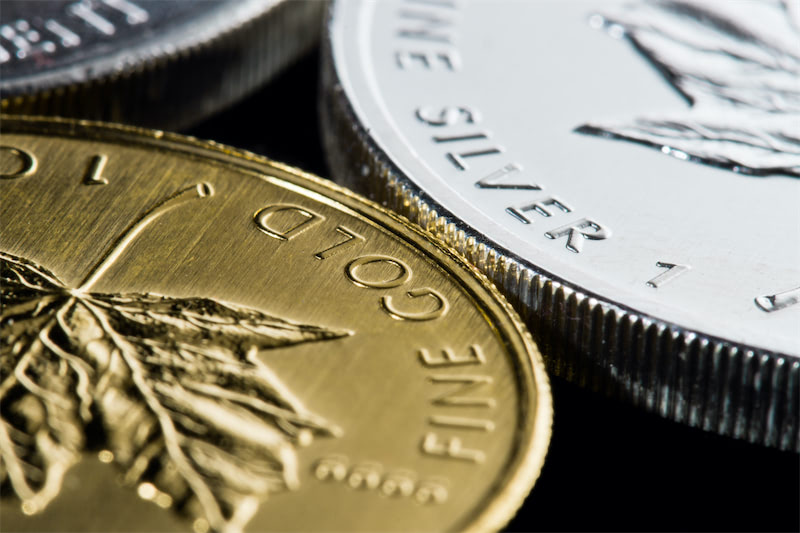 The Perfect Storm Behind Silver’s Rise
Silver's performance over the past year has been nothing short of spectacular.
Jan 16, 2026 09:50