

12results found for 'future prospects'
Sort by : |
- 2026 Chrome Ore Market Semi-Annual Review: Supply-Demand Pattern Reversal, Inventory Surge and Prices Under Pressure [SMM Analysis]
July 10, 2026 – Chrome ore prices exhibited distinct stage-wise fluctuations in H1 2026, with a continuous rise in Q1 and grinding lower in Q2.
Jul 10, 2026 18:47 - Resources, Cost, and Performance: Assessment of the Future Market Landscape for Zinc Alloys and Brass
[ Resources, Cost, and Performance: Assessment of the Future Market Landscape for Zinc Alloys and Brass] Against the backdrop of supply chain security, the in-depth advancement of the dual-carbon strategy, and industrialization in China, zinc alloys and brass, as industrial metals, are both used in end-user industrial metal manufacturing. Mutual substitution between the two has been increasing......
Apr 14, 2026 18:49 - Analysis of Rare Earth Resources in Central Asia and Mongolia: Asia's Strategic Reserve [SMM Analysis]
Kazakhstan, Kyrgyzstan, and Mongolia, with their abundant reserves of rare earth resources, are emerging as key players in the diversification of the global rare earth supply chain. In this article, we will examine the development of the rare earth industry in these three countries.
Dec 21, 2025 17:27 - This Week (11.17-11.21) Overseas Lithium Highlights [SMM New Energy Overseas Weekly Highlights]
[IGO Sees Uncertain Future for Western Australia's Kwinana Lithium Refinery] IGO Limited expressed a lack of confidence in the future prospects of its Kwinana lithium refinery located in Western Australia. The Kwinana plant, situated south of Perth, is jointly owned by IGO and its joint venture partner. In January this year, the joint venture announced the suspension of construction for the plant's second production line, as the first line continued to struggle to reach its designed capacity. IGO's Chief Executive Officer, Ivan Vella, addressed the challenges faced by the plant at the company's annual general meeting held in Perth. He stated that the company is continuing negotiations with its joint venture partner regarding the plant's future, acknowledging differing views between the parties, but also emphasized the importance of the partnership. Regarding the second production line, Vella said, "We see no path forward, hence the decision was made on the second line." He confirmed that discussions concerning the first line are still ongoing. The company reported a significant impairment on its Kwinana investment in its full-year results. Official operational data for the September quarter was provided: the plant operated at 46% of its nameplate capacity, producing 2,775 mt of lithium hydroxide. Production increased by 31% compared to the previous period. Meanwhile, processing costs decreased by 18% to A$14,177 per mt. Despite these improvements, the operation recorded an EBITDA loss of A$19.6 million. In contrast, IGO highlighted the strong performance of its stake in the Greenbushes lithium mine. In the 12 months ended June 30, Greenbushes produced 1.48 million mt of spodumene concentrates. The operation generated significant cash flow and maintained highly competitive low unit costs. A new chemical-grade plant at Greenbushes remains scheduled for commissioning before the end of the year, which is expected to add a further 500,000 mt of capacity annually. Source: [Rebounding Lithium Prices Boost SQM's Profitability and Demand Outlook] Chilean lithium producer SQM reported on Wednesday that lithium demand this year could grow by 25% compared to 2024. The company posted its highest battery metal prices in two years and attributed this growth to developments in the EV and ESS sectors. Rising prices drove SQM's Q3 net profit to $178.4 million, up 36% YoY from $131.4 million. Revenue also increased by 8.9% YoY to $1.17 billion ($1.08 billion). SQM stated that market demand during the July-September period was stronger than expectations. CEO Ricardo Ramos expressed cautious optimism during the earnings call. "Despite the market remaining highly volatile, we are cautiously optimistic," he stated, expecting this trend to continue into Q4. "The fundamental demand remains strong, not only from EVs but also from energy storage systems." Meanwhile, SQM announced a significant narrowing of its investment outlook for 2025-2027. The company revised its capital expenditure estimate down to $2.7 billion from the previous range of $3.1 billion to $3.8 billion. The company confirmed that some investment decisions have been delayed but reaffirmed its existing production and sales targets. According to the company, the revised capital expenditure will be averaged over the coming years, with approximately one-quarter allocated to maintenance. Looking ahead, Pablo Hernandez, Vice President of Strategy and Development for SQM's Chilean lithium business, forecast that lithium demand will exceed 1.5 million mt this year and is expected to reach 1.7 million mt by 2026. Discussing the outlook for the coming year, Hernandez noted: "We are still evaluating demand growth expectations and maintain a relatively conservative view." SQM also confirmed that its planned collaboration with state mining company Codelco to increase lithium production at the Atacama Salt Flat is expected to be finalised by the end of this year. The company stated that only approval from Chile's Comptroller General is currently pending. Regarding the timetable for this collaboration, Ramos said: "We will complete it this year, that is certain." Source: [Sigma Lithium's Strong Q3 Results and Rumored EV Collaboration Spark 33.2% Stock Surge – What's Next for the Share Price?] Over the past week, Sigma Lithium Corporation released its Q3 2025 financial report, with key highlights including sales increasing to $28.55 million and a significantly narrowed net loss compared to the previous year. Continued market speculation about a potential collaboration with a leading EV manufacturer, coupled with a positive global lithium demand outlook, further boosted investor optimism regarding Sigma Lithium's growth trajectory and sustainable development capabilities. Sigma Lithium Investment Thesis Recap Investing in Sigma Lithium requires belief that global lithium demand, particularly from the EV sector, will continue to surge, and recognition that the company can capitalize on this opportunity through its ESG reputation and growth plans. The latest quarterly report shows sales growth and a narrowed net loss, but the short-term most critical catalyst – finalising an EV collaboration – remains unconfirmed; simultaneously, the company still faces lithium price volatility risks, with recent news not bringing substantial change. In recent announcements, Sigma Lithium's ongoing operational upgrade plan has garnered significant attention, aiming to reduce plant gate costs by 20%. This initiative directly impacts short-term profitability, helping the company withstand price fluctuations, while efficient production remains a key catalyst for ensuring profit margins in a rapidly changing market. However, investors should note that even with these operational improvements, the downside risk of short-term lithium price declines remains an important influencing factor, potentially leading to... Sigma Lithium's performance expectations indicate that by 2028, revenue is expected to reach $600.1 million, with a net profit of $57.4 million. Achieving this goal requires maintaining an annual revenue growth rate of 64.6% and improving the current net profit level of -$47.7 million by $105.1 million. Source: [Canada Discovers Six New High-Grade Lithium-Enriched Zones] Six new lithium-bearing rock zones have been discovered in the Jackpot mine area in Northern Ontario, Canada, marking an important step in understanding the scale of the region's lithium resource potential. These target zones are concentrated near an existing open-pit minable body, suggesting that future development could potentially share infrastructure and logistics resources, reducing costs. Located approximately 87 miles northeast of Thunder Bay, the discovery site boasts favorable geological conditions and a mature transportation network, making it one of Canada's most accessible lithium ore exploration sites. This discovery adds a new growth area for battery raw material exploration in Canada, further solidifying the country's important role in supplying critical minerals for the EV and renewable energy ESS sectors. Progress in Canadian Lithium Resource Mapping The newly discovered lithium-bearing zones are located within the Georgia Lake Rare Elements mineral property, an area widely distributed with pegmatite—a very coarse-grained granite that can host lithium minerals, often occurring as dikes and swarms. The property covers a forested ridge area with good road access and ample power supply nearby. This exploration work was led by the Canadian geological engineering firm P&E Mining Consultants Inc., which is also responsible for preparing the project's mineral resource estimate. Their team focuses on mineral resource modeling and project evaluation, with related results incorporated into provincial archives. According to Canadian mineral disclosure rules, the project's initial mineral resource estimate shows indicated resources of approximately 3.4 million short tons (1 short ton ≈ 0.907 mt) grading 0.85% Li₂O, and inferred resources of approximately 5.8 million short tons grading 0.91% Li₂O. Geologists have classified the "Jackpot" mining area within the mature rare-element mineral belt already mapped by researchers in Ontario. The Georgia Lake mineral belt has a history of spodumene discoveries in several sub-regions, providing a solid foundation for exploration. Core Criteria for Resource Estimation The cut-off grade for open-pit mining at the Jackpot property is set at 0.30% lithium oxide. Conversion from Lithium-Bearing Ore to Lithium Concentrates The lithium mineral at the Jackpot property is spodumene, a lithium aluminum silicate mineral and the primary source of battery-grade lithium chemicals from hard rock, occurring as pale green crystals in pegmatite. Laboratory tests indicate the ore can be upgraded to produce lithium concentrates with a 6% lithium oxide grade; the recovery rate used in the company's technical page resource cut-off grade assumption is 81.5%. Heavy liquid separation and related processes are common techniques in early-stage testing. In the laboratory, heavy liquid separation uses high-density liquids to separate minerals based on density differences, allowing for a quick assessment of the feasibility of simple gravity separation processes. Industry guidelines for hard-rock lithium ore processing note that initial heavy liquid separation test results typically guide subsequent heavy medium separation tests. In industrial-scale production, enterprises often employ heavy medium separation—where crushed ore is placed in a high-density slurry for sink-float separation—followed by flotation to purify the product. This combined process increases lithium recovery while maintaining low iron content. Current Significance of the Discovery The battery sector is the largest consumer of lithium; the U.S. Geological Survey (USGS) 2025 summary report estimated that approximately 87% of global lithium production is used in battery manufacturing. Canada is focusing on shortening the supply chain between mines, processing plants, and battery factories. The Jackpot property's proximity to highways and a deep-water port can reduce transportation time and enhance future sales flexibility. The property covers a total area of approximately 72.6 square miles, providing ample space for extensional exploration beyond the two currently modeled open pits. Six newly identified surface target areas are located near roads, facilitating follow-up exploration work. Source: [Sigma Lithium's Strong Q3 Results and EV Collaboration Rumors Drive a 33.2% Stock Surge – What's Next for the Share Price?] Over the past week, Sigma Lithium Corporation released its Q3 2025 financial report, with key highlights including sales increasing to $28.55 million and a significantly narrowed net loss compared to the previous year. Market speculation about the company's potential collaboration with a leading EV manufacturer, combined with a positive global lithium demand outlook, has further boosted investor optimism regarding Sigma Lithium's growth trajectory and sustainable development capabilities. Review of Sigma Lithium's Investment Thesis Investing in Sigma Lithium requires belief that global lithium demand (particularly from the EV sector) will continue to surge, and confidence that the company can capitalize on this opportunity through its environmental, social, and governance (ESG) reputation and growth plans. The latest quarterly report showed sales growth and a narrowed net loss, but the most critical short-term catalyst—finalising an EV partnership—remains unconfirmed; meanwhile, the company still faces lithium price volatility risks, and recent news has not brought substantial changes. Among recent announcements, Sigma Lithium's ongoing operational upgrade plan, which aims to reduce plant gate costs by 20%, has drawn significant attention. This initiative directly impacts short-term profitability, helping the company withstand price fluctuations, while efficient production remains a key catalyst for protecting profit margins in a rapidly changing market. However, investors should note that even with these operational improvements, short-term lithium price downside risk remains a significant factor, potentially leading to... Sigma Lithium's performance expectations indicate that revenue could reach $600.1 million by 2028, with a net profit of $57.4 million. Achieving this target requires maintaining an annual revenue growth rate of 64.6% and improving the net profit by $105.1 million from the current level of -$47.7 million. Source:
Nov 21, 2025 09:23 - Lithium Carbonate Market Weekly Review: Strong Demand Support Drives Continued Lithium Price Rise [SMM Weekly Review]
This week, lithium carbonate prices continued their upward trend. Price-wise, the average price of battery-grade lithium carbonate gradually climbed from 76,550 yuan/mt at the beginning of the week to 80,000 yuan/mt, while the average price of industrial-grade lithium carbonate also rose from 74,300 yuan/mt to 77,800 yuan/mt, with a relatively significant cumulative increase. The trading range for the most-traded lithium carbonate futures contract shifted upward to 82,200-85,000 yuan/mt, reflecting market optimism about future prospects. Supply side, production remained high, with operating rates for both spodumene and salt lake processes staying above 60%, and total production in October is expected to hit a new high. Demand side performed even more strongly, with simultaneous growth in the NEV and ESS sectors continuously boosting material demand, leading to a continued rise in operating rates at downstream material plants. Although lithium chemical plants showed reluctance to sell amid rising prices, resulting in mediocre actual market transactions, upstream inventory dropped to low levels due to increased long-term contract volumes and trader stockpiling, presenting a clear destocking pattern in the market. Overall, the market currently shows a dual increase in both supply and demand, but demand growth is more prominent, driving consecutive price rises. In the short term, supported by low inventory and strong demand, lithium carbonate prices are expected to hold up well.
Oct 30, 2025 17:14 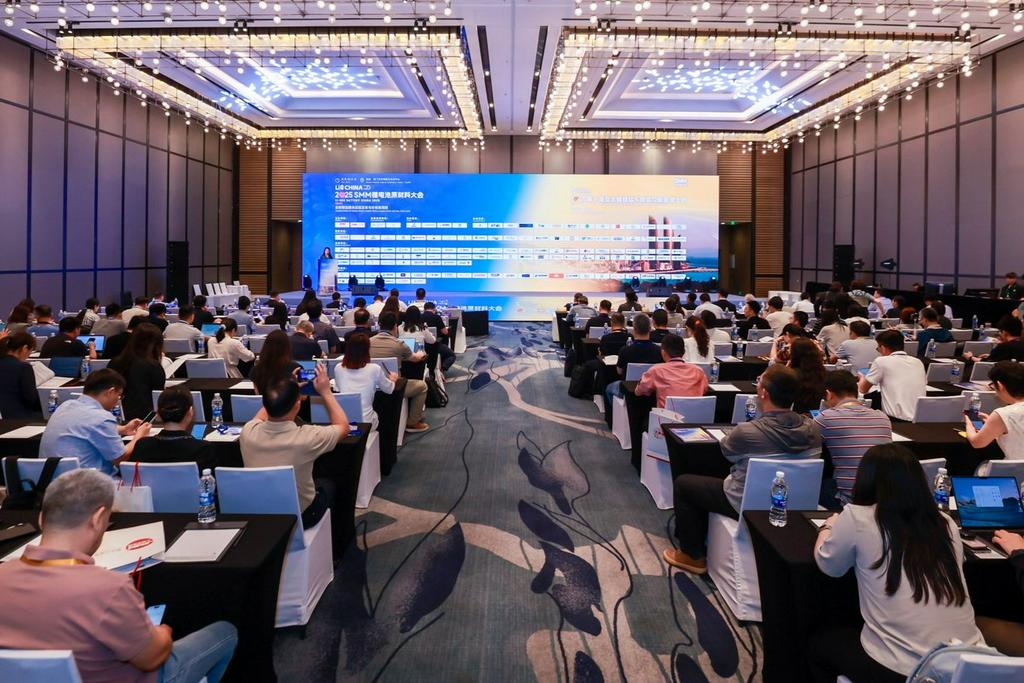 Key Takeaways from APAC (10th) Ni-Cr-Mn Stainless Steel & New Energy Conference 2025
On October 21, the APAC (10th) Ni-Cr-Mn Stainless Steel & New Energy Conference 2025, hosted by SMM Information & Technology Co., Ltd. (SMM), successfully concluded in Xiamen, Fujian!
Oct 24, 2025 14:32- [SMM Analysis] DRC Export Ban Extension + Official Quota Release Impact on MHP Market
Policy Content Description On the evening of September 21, 2025, the DRC announced an extension of the export ban, originally set to expire on September 21, to October 15, and introduced a quota policy effective from October 16. The quotas and their allocation conditions will be specified in a separate decision, which will outline new export regulations, including control and supervision fees, an advance payment system for national dues, and a new export procedure system. The total volume set by this decision is as follows: a. From October 16, 2025, to December 31, 2025: The maximum quantity of cobalt exports from the DRC to external markets is 18,125 mt in metal content, with 3,625 mt allowed in October 2025, 7,250 mt in November 2025, and 7,250 mt in December 2025. b. From January 1, 2026, to December 31, 2026: A maximum of 96,600 mt in metal content will be approved for export from the DRC to external markets. This maximum includes 87,000 mt in metal content as the "basic quota" and 9,600 mt as the "strategic quota." The basic quota is set at 7,250 mt in metal content per month. The allocation of export quotas will be notified to each company as early as possible, with each company's quota calculated proportionally based on historical export volumes, except for EGC and the Lubumbashi Society (STL). The strategic quota will be allocated to ARECOMS and reserved for projects of national strategic importance. In 2026, this strategic quota will be capped at 9,600 mt in metal content, and ARECOMS will have sole discretion over its allocation. Any unused basic quota will be automatically reallocated to ARECOMS' strategic quota. In the event of a severe imbalance in the cobalt market, the above quota volumes will be adjusted quarterly. c. From January 1, 2027, to December 31, 2027: The export quota for 2027 will be the same as that for 2026. However, ARECOMS reserves the right to adjust these volumes based on the evolution of the cobalt market from now until the end of 2026 and future prospects for processing cobalt hydroxide into higher value-added products. An SMM survey found that this announcement has boosted sentiment for MHP procurement, though it has not yet led to an increase in the MHP cobalt payable indicator. The DRC's extended ban and quota policy introduce new variables to the global cobalt industry chain, with the supply-demand imbalance expected to cause certain structural gaps, leading to further cobalt price increases in Q4 and potential upside for the MHP cobalt payable indicator. 1. Ban Impact Period: Full-year imports of intermediate products are estimated at 90,000-100,000 mt in metal content. Domestic recycled cobalt is projected at 15,000 mt in metal content, and MHP imports at 50,000 mt in metal content for 2025. China's cobalt market is expected to undergo destocking of 10,000-20,000 mt in metal content this year. The market transaction price of the cobalt MB discount coefficient in MHP rose from around 55% at the beginning of the year to the current 73-75%. By year-end, due to the 2-3 month shipping cycle, cobalt intermediate products from the DRC cannot enter the domestic market, and enterprises will further destock. Cobalt prices still have room to rise, which will drive the MHP cobalt payable indicator higher. 2. Quota System: In 2026 and 2027, even assuming cobalt downstream demand is suppressed and remains around 180,000 mt in metal content due to high, and assuming MHP and recycling production increases due to high economic viability, with MHP imports of 70,000-80,000 mt in metal content and domestic recycling production of 20,000 mt in metal content, there will still be a demand for nearly 100,000 mt in metal content of cobalt intermediate products domestically. Considering the DRC uses its entire strategic quota and slightly exceeds it to 100,000 mt in metal content, with 80% of that volume exported to China, there will still be a gap of about 20,000 mt in metal content in China's cobalt resources. The MHP cobalt payable indicator is expected to fluctuate at highs. SMM will continue to track subsequent market changes.
Sep 22, 2025 16:22 - The Trilogy of "100 Questions on Solid-State Batteries: Decoding the Next Generation Battery Revolution" Part One: The Fundamental Logic]
Start from the root of solid-state batteries to build a systematic understanding of them. First, clarify their definition, advantages, and fundamental differences from liquid batteries to lay the foundation. Then delve into their technical core, analyzing key challenges such as ion conduction, the principles of increasing energy density, and interfacial impedance. Finally, focus on the material systems, detailing the characteristics and trade-offs of the three major electrolyte routes—oxide, sulphide, and polymer—as well as the evolution directions of cathode and anode materials. These three articles aim to unveil the "technical black box" of solid-state batteries, showcasing their revolutionary physicochemical foundations.
Sep 19, 2025 14:11 - 【SMM Aluminium Flash News】Miteng (Sichuan) Aluminum Project is expected to be completed and put into production in December
After three months of preparation, construction officially began on a 20,000-ton annual aluminum profile manufacturing project in the Yuanjiaba Shipan Industrial Park. Invested by Miteng (Sichuan) Aluminum Co., Ltd. and constructed by Sichuan Guokai Yongsheng Construction Engineering Co., Ltd., the project, with an annual output of 20,000 tons, will commence. Construction will begin in July 2025, with completion and commissioning expected in December. Upon completion, the project is expected to generate an annual output value exceeding 450 million yuan and create over 60 jobs for the local area, playing a positive role in promoting regional economic development and employment. Its future prospects are highly anticipated.
Sep 3, 2025 16:15 - [SMM Chromium Daily Review] Steel Bidding Rise Boosts Market Confidence, Strong Sentiment for Price Hikes Leads to Many Quotation Increases
[SMMSMM Chromium Daily Review: Steel Mill Tender Price Increase Boosts Market Confidence, Strong Sentiment for Higher Prices Leads to Quotation Adjustments] On August 25, 2025, the ex-factory price of high-carbon ferrochrome in Inner Mongolia was 8,000-8,200 yuan/mt (50% metal content), up 75 yuan/mt (50% metal content) MoM from the previous trading day...
Aug 25, 2025 17:19