

1833results found for 'destocking'
Sort by : |
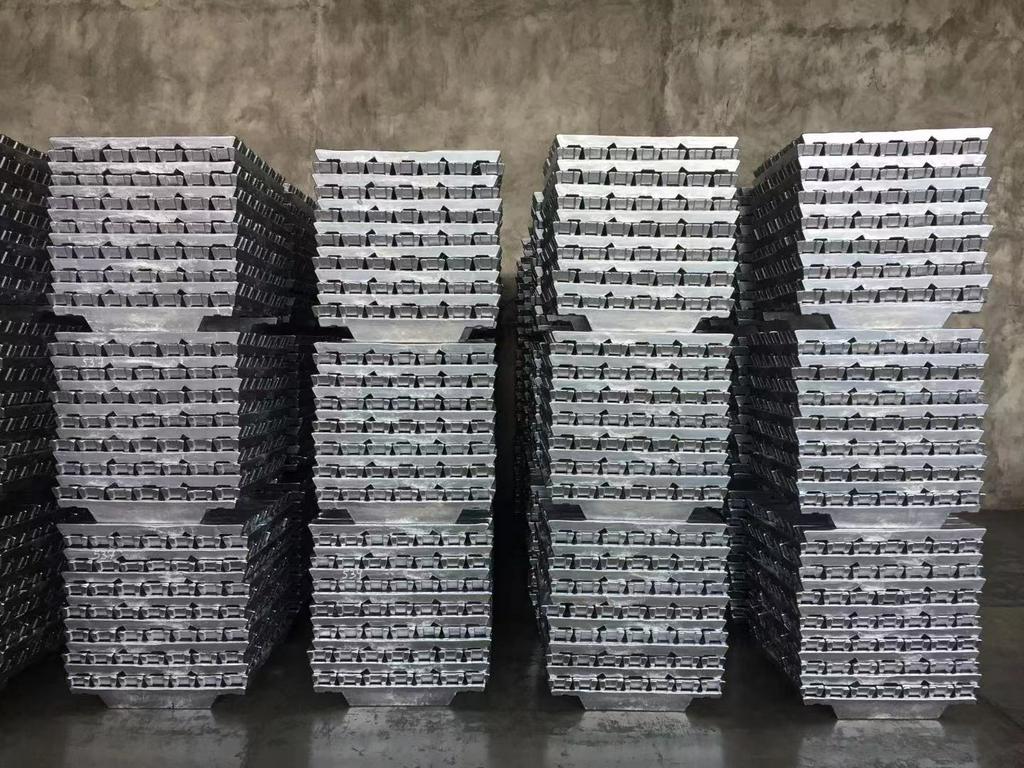 Warehouse Withdrawals Pull Back While Destocking Accelerates, the Logic of China’s Aluminum Ingot Destocking Changing?
As of July 30, China’s aluminum ingot inventory in major consumption areas stood at 953,000 mt. Cumulative destocking from the YTD high of 1.465 million mt in early May has reached 512,000 mt (-35%), with an additional accelerated destocking of 53,000 mt this week, breaking below the 1 million mt threshold as expected. However, the directional divergence between warehouse withdrawals and inventory has raised concerns...
Jul 31, 2026 23:53- Warehouse withdrawals pull back, but destocking accelerates — Is China's aluminum ingot destocking logic changing? [SMM Analysis]
As of July 30, China's major consumption regions reported aluminum ingot inventory of 953,000 mt, having cumulatively destocked 512,000 mt (-35%) from the year's high of 1.465 million mt in early May. Within the week, destocking accelerated further by 53,000 mt, as expected falling below the 1 million mt mark. However, the directional divergence between warehouse withdrawals and inventory drew attention: weekly warehouse withdrawals pulled back to 127,700 mt, losing the advantage of being at a high for the same period in the past four years. The core driving force of this destocking round has shifted from "demand and warehouse withdrawal boost" in June to "supply contraction + slowdown in shipment pace": the proportion of liquid aluminum rose to 78.3% in July, with casting ingot volume down 15.1% YoY; a sharp drop in arrivals in South China pushed Foshan's premium wider by 50 yuan/mt in a single week to 115 yuan/mt; SMM believes...
Jul 31, 2026 23:30 - 【SMM Analysis】Off-Season Strain: Si-Mn Stocks Pile Up, Output Cuts to Stay
Since entering Q2 2026, the silicon manganese alloy market has remained under sustained pressure. Prices of upstream raw materials—including manganese ore and coke—have stayed elevated, while downstream steel consumption remains sluggish amid strong price-suppression efforts from mills. The industry is caught in a dual squeeze of “high costs and weak demand,” with losses spreading rapidly from isolated cases to a widespread trend.
Jul 31, 2026 21:07 - LFP Industry Faces Supply Bottlenecks as Demand Surges, Cathode and Iron Phosphate Capacities Strained
Since July, demand across the LFP industry chain has continued to rise, but the supply-side response has lagged. The most notable feature of the current market is that supply tightness is rapidly transmitting from downstream to upstream, creating a cascading inversion of "battery cell production schedule > LFP cathode production schedule > iron phosphate production schedule."
Jul 31, 2026 19:11 - Market wait-and-see sentiment remains strong, spot price continues to grind lower [SMM SiMn Weekly Review]
As of this Friday, SiMn 6517 (cash) was 5,650-5,700 yuan/mt in north China, flat WoW; in south China, SiMn 6517 (cash) was 5,700-5,750 yuan/mt, unchanged WoW from last Friday; south China SiMn 6014 (cash) was 5,350-5,400 yuan/mt, flat WoW. Recently, SiMn futures moved sideways in a weak trend, market sentiment was heavily cautious, prices fell, and futures prices were basically in sync with spot prices.
Jul 31, 2026 18:55 - [SMM Analysis] LFP Material Demand Continued to Rise in July, with Supply-Demand Imbalance Emerging in the Industry Chain
[SMM Analysis] The demand along the LFP industry chain continues to rise, but the response from the supply side is significantly lagging. The most notable feature of the current market is that supply tightness is rapidly transmitting from the bottom up, forming a cascading inversion of "battery cell production schedule > LFP cathode production schedule > iron phosphate production schedule," with the slow release of LFP capacity and the iron phosphate industry segment having become the most prominent bottleneck in the entire chain.
Jul 31, 2026 18:47 - Cobalt Product Price Center Continues to Move Lower, Market Trading Sluggish; Market Stabilization and Recovery in Mid-to-Late August? [Weekly Observation]
SMM reported on July 31: Spot quotes for cobalt-related products continued to decline this week. The spot market demand remained sluggish. Before any concentrated restocking by downstream enterprises, cobalt salt prices showed an overall slow downward trend... SMM compiled the price changes of cobalt-related products this week, as follows: : According to SMM spot quotes, the center of refined cobalt spot quotes continued to shift downward this week. Although it rose by 1,500 yuan/mt on the last trading day, as of July 31, refined cobalt spot quotes were at 338,000-355,000 yuan/mt, with an average of 346,500 yuan/mt, down 3,500 yuan/mt or 1% from 350,000 yuan/mt on July 24. From the supply-demand side, on the supply end, mainstream smelters lowered ex-factory quotes to 355,000 yuan/mt, while other small and medium smelters basically suspended external quotes due to increased loss pressures. After continued destocking in the trade sector, available-for-sale inventories dropped to relatively low levels. Some enterprises, based on bullish expectations for the future, began to slow down their shipment pace, and a few quoting enterprises maintained the spot-futures price spread at a premium of 1,000-10,000 yuan/mt. On the demand side, downstream enterprises were still in the summer break period, with generally weak purchase willingness, only maintaining small-scale rigid restocking. Overall, July-August is the traditional consumption off-season for refined cobalt, with limited demand support. In the short term, prices may continue to be in the doldrums. Cobalt Salt (and ): : According to SMM spot quotes, cobalt sulphate spot quotes continued to fall this week. As of July 31, spot quotes dropped to 81,000-82,000 yuan/mt, with an average of 81,500 yuan/mt, down 1,500 yuan/mt or 1.81% from 83,000 yuan/mt on July 24. SMM learned that the divergence between upstream and downstream for cobalt sulphate further intensified this week, with limited actual trading. On the supply side, primary smelters using intermediate products and MHP, supported by costs, still held firm quotes above 80,000 yuan/mt. Recyclers, leveraging raw material cost advantages, concentrated their quotes in the 76,000-78,000 yuan/mt range, with a few aggressive sellers able to go below 75,000 yuan/mt. The demand side remained sluggish, with downstream enterprises showing insufficient purchase willingness and leaning toward non-standard or old cargo sources to lower procurement costs. Recently, there were transactions of substandard goods and old cargo below 73,000 yuan/mt. Adjusted for quality, the actual price difference from new products was limited. However, in a weak demand environment, this price level was used by downstream as a bargaining benchmark, forcing some recyclers to passively follow suit. Moreover, after the sustained drop in refined cobalt, the cost of producing cobalt sulphate through re-dissolution fell to 72,000-73,000 yuan/mt, further strengthening downstream pressure for lower prices. In the short term, the cobalt salt market shows a slow downward trend. A stabilization and recovery will have to wait for the release of concentrated downstream restocking demand, which is expected to occur no earlier than mid-to-late August . : According to SMM spot quotes, cobalt chloride spot quotes continued to fall this week. After dropping 3,000 yuan/mt on the last trading day, spot quotes fell to 95,000-98,000 yuan/mt, with an average of 96,500 yuan/mt, a decline of 3.02% from 99,500 yuan/mt on July 24. In the spot market, SMM learned that the cobalt chloride market remained sluggish this week, with trading at minimal levels. On the supply side, from a real-time cost perspective, the cost of recycled materials and the re-smelting path for refined cobalt were already significantly lower than current market and actual trading prices. The key factor affecting enterprise pricing was that upstream smelters generally held large-scale inventories, mostly high-cost, and faced with a continuously falling market, it was difficult to lower average costs through low-price procurement. Therefore, high-cost inventory provided some support to quotes, which remained relatively firm. However, at the same time, some enterprises had already begun to gradually lower quotes to promote shipments, trying to spread out earlier losses by accelerating turnover. Yet, downstream absorption capacity was extremely limited, and even price reductions could not lead to volume trading. On the demand side, Co3O4 enterprises themselves had high inventory levels, with no signs of demand growth, and current purchase willingness was very low. Overall, in the short term, cobalt chloride prices still have downside room. : According to SMM spot quotes, Co3O4 spot quotes also showed a downward trend this week. As of July 31, spot quotes fell to 300,000-320,000 yuan/mt, with an average of 310,000 yuan/mt, down 10,000 yuan/mt or 3.13% from 320,000 yuan/mt on July 24. In the spot market, SMM learned that the Co3O4 market was also quiet this week, with low trading volumes. On the supply side, with high inventory levels, enterprises faced the dilemma of thin profits under current raw material cost accounting and the risk of inventory buildup, so they generally kept production at lower levels. Although there were occasional rumors of ultra-low-priced cargo, based on communications with various parties, the existence of some ultra-low-price deals was not denied, but they were not enough to represent the mainstream market. On the demand side, cathode plants had some inquiries, but actual purchases were limited. Current raw material inventories were sufficient to support production, with no urgent restocking needs. Overall, Co3O4 prices also have the potential to further decline in the short term. On the news front, in corporate developments, Chengtun Mining released its H1 2026 report, mentioning that the company achieved revenue of 19.264 billion yuan in H1, up 39.56% YoY; net profit attributable to shareholders of the publicly listed firm was 1.804 billion yuan, up 71.37% YoY. Chengtun Mining stated that during the reporting period, its energy metal business achieved revenue of 14.543 billion yuan, with a gross margin of 27.03%, basically consistent with the previous year. In H1 2026, copper production was 133,200 mt in metal content, cobalt production 3,700 mt in metal content, and nickel production 21,200 mt in metal content. Copper-cobalt segment: ① During the reporting period, the company's DRC copper-cobalt segment achieved stable output, with copper production reaching 132,200 mt in metal content, of which Xiongdi Mining achieved 74,400 mt in metal content. The company addressed the power shortage issue through a multi-type energy combination, building a modern energy system integrating specialization, intensification, and integration, boosting both operational efficiency and scale. ② Dali Sanxin actively advanced mine construction, aiming for trial production in Q4. Currently, land and other related procedures have been completed, well engineering is basically finished, and surface civil engineering construction is being actively promoted. ③ In April 2026, the company disclosed the planned acquisition of a 50% stake in Nkoyi Leopard Mining and Investment Limited, to indirectly obtain a 30% interest in a large specific copper-cobalt mining right. The deal was completed in July 2026, and cooperation on the mine is proceeding normally. During the reporting period, the company actively sought sustainable resource guarantees through exploration in potential areas and pursuing extensive copper resource M&A and cooperation. Furthermore, CNGR also released its H1 2026 performance forecast, expecting net profit attributable to shareholders of the publicly listed firm in H1 2026 to be in the range of 1.25-1.35 billion yuan, up 70.58%-84.23% YoY. Regarding the reasons for the performance change, CNGR stated that during the reporting period, the company seized the high-development opportunities in the global new energy industry and, leveraging its leading position in the battery materials field, achieved total sales of core products such as nickel-based, cobalt-based, phosphorus-based, and sodium-based materials exceeding 250,000 mt. By segment, ternary cathode precursor sales grew over 50% YoY in H1, with stable overall gross margin, further solidifying its industry-leading position; phosphorus-based material sales grew over 25% YoY, with profitability elasticity significantly released, successfully turning losses into profits; and sodium-ion battery precursor material sales maintained a high growth trend, continuing its industry leadership. Additionally, the company's upstream resource layout yielded notable results, with investment income from laterite nickel ore steadily increasing; the Indonesian pyrometallurgy nickel smelting project, with its cost advantages, effectively hedged local policy changes and maintained excellent profitability. Overall, the company's "resource + smelting + materials" entire industry chain integration advantage continued to deepen, with all business segments working synergistically to build a safety margin and anti-cyclical resilience for its operations.
Jul 31, 2026 18:41 - Policy Expectations Fell Through, Compounded by Deepening Negative Feedback, Next Week May Continue to Consolidate at Lows [SMM Steel Industry Chain Weekly Report]
This week, ferrous metals drifted lower overall, with iron ore and rebar leading the decline and hitting new stage lows. The core driver of the downturn was a confluence of multiple bearish factors: First, the Politburo meeting ended, and the outcome fell short of market expectations, causing sentiment support to collapse. Second, cost support collapsed in a stepwise manner. The second round of coke price cuts was quickly implemented, and the market widely expects a third round to come. Combined with hot metal output falling to a trough, global iron ore shipments staying high, and port inventories being ample, the decline in raw material prices allowed the negative feedback loop to transmit smoothly. Finally, end-use demand was seasonally sluggish, with high temperatures and rainfall dampening construction. Total inventories of ferrous metals continued to accumulate, spot transactions were sluggish, and the supply-demand imbalance persisted......
Jul 31, 2026 18:30 - HRC Prices Weaken, Supply Up, Demand Down; Sideways Movement Expected Next Week
HRC prices weakened from the previous week, and overall transactions declined WoW. Supply side, the impact from rolling line maintenance decreased WoW, lifting overall HRC production. Demand side, apparent demand dropped WoW. Inventory side, total HRC inventory rose by 77,500 mt WoW, while mill inventory fell by 6,200 mt WoW. Social inventory, SMM statistics of 86 warehouses nationwide (large sample) showed HRC social inventory at 4.4773 million mt, up 83,700 mt WoW (+1.90% WoW) and up 40.27 mt YoY on a calendar basis. By region, except the northeast that saw slight destocking, all other markets experienced inventory buildup, with east China showing relatively large fluctuations. Cost side, the second round of coke price cuts was implemented, weakening cost support. Looking ahead, SMM expects hot metal production to bottom out and rebound, and with the US-Iran conflict pushing up ocean freight rates, iron ore prices may see a slight rebound. Meanwhile, a third round of coke price cuts still lingers, leaving overall cost support moderate. From a fundamental perspective, the HRC supply-demand imbalance continues to build, and combined with the PBoC Politburo meeting expectations falling short, there is no clear upward price catalyst. However, given that prices are already at relatively low levels, downside room is limited. HRC prices are expected to move sideways at the bottom next week, with the most-traded HRC contract trading in the 3,200-3,390 range.
Jul 31, 2026 17:36 - [SMM Analysis] SS futures consolidation and supply rebound, coupled with off-season weak demand, result in a slight stainless steel inventory buildup.
[SMM Analysis] SS Futures Consolidation and Supply Recovery Amid Weak Off-Season Demand Lead to Slight Stainless Steel Inventory Buildup SMM July 30 news: This week, stainless steel social inventory continued to build up, edging slightly higher as the supply-demand surplus during the off-season remained evident. Total inventory in the two core markets of Wuxi and Foshan edged up from 929,900 mt on July 23, 2026, to 930,600 mt on July 30, up 0.08% WoW, maintaining a mild accumulation trend with the overall buildup relatively manageable. This week, the market was in the traditional consumption off-season, while high temperatures constrained downstream processing and construction activities, keeping terminal rigid demand persistently weak. During the week, SS futures fell first and then rose amid macro influences, consolidating in a range. The repeated fluctuations in futures deepened the wait-and-see sentiment in the spot market, with downstream users only purchasing on a rigid demand basis and no concentrated restocking taking place. Transactions remained mediocre and inventory digestion was slow. Marginal supply-side easing was the main reason for the inventory buildup, as steel mills that had previously undergone maintenance gradually resumed production, and industry operating rates steadily recovered. August production is expected to increase, with incremental supply being released. Weak off-season demand struggled to absorb the additional supply, exacerbating the supply-demand mismatch and driving a slight accumulation in social inventory. Overall, the off-season combined with high temperatures led to weak terminal rigid demand and sluggish transactions, which were the core factors behind the inventory buildup. Meanwhile, steel mill production resumptions and recovering supply further compounded the supply-demand surplus. Futures consolidation only briefly affected market sentiment, unable to trigger sustained restocking or reverse the off-season inventory buildup trend. Currently, off-season fundamentals dominated the market, with tepid demand recovery and steadily increasing supply leaving inventory under pressure…
Jul 31, 2026 16:48