

126results found for 'aluminum semis'
Sort by : |
![2026 China Aluminum Extrusion Industry H1 Review and Outlook [SMM analysis]](https://imgqn.smm.cn/usercenter/wsCPG20251217171653.jpg) 2026 China Aluminum Extrusion Industry H1 Review and Outlook [SMM analysis]
2026 China Aluminum Extrusion Industry H1 Review and Outlook [SMM analysis]In H1 2026, China’s aluminum extrusion industry ran under three clear traits: feeble domestic demand recovery, overseas demand sliding first then bouncing back, and a sharp split between booming and sluggish product segments.
Jul 17, 2026 18:01- Downstream off-season demand is weak, while geopolitical conflicts support consolidation in aluminum prices. [SMM Aluminum Morning Briefing]
[Downstream Off-Season Demand Remains Weak, Geopolitical Conflicts Support Aluminum Price Consolidation] Overall assessments indicate that the situation in the Middle East remains volatile, market concerns over interest rate hikes persist, and supply continues to recover. However, the destocking pattern is hard to reverse in the short term. Amid the tug-of-war between longs and shorts, aluminum prices are expected to consolidate and adjust in the near term. Going forward, close attention should be paid to the progress of production resumptions in the Middle East and the trend of geopolitical conflicts, LME aluminum ingot inventory changes, as well as China's downstream processing orders and aluminum semis exports data.
Jul 17, 2026 09:35 - Macro and Fundamentals Intertwined with Bullish and Bearish Forces, Short-term Aluminum Prices Expected to Mainly Consolidate and Adjust [SMM Aluminum Weekly Review]
[SMM Aluminum Weekly: Macro and Fundamentals Intertwined, Short-term Aluminum Prices Expected to Consolidate and Adjust ]
Jul 16, 2026 20:00 - PV Frame Operating Rate Consolidates on a Strong Note; Aluminum Prices Expected to Mainly Consolidate and Adjust in the Short Term [SMM Analysis]
SMM, July 16: PV Aluminum Extrusion: This week, the operating rate of the surveyed industry sample of PV frame enterprises held up well. Leading extrusion manufacturers continued to run at full capacity, supported by ample long-term orders on hand, with the core driver being the advancement of centralized PV projects toward year-end. In H2, the production schedule situation for downstream leading module enterprises is expected to be better than H1, but monthly incremental growth in PV frame demand will steady MoM, limiting the extent of demand improvement. SMM also learned that PV frame processing fees remained stable recently without notable changes. On balance, the operating rate of PV frame enterprises will likely maintain a consolidating-to-firm pattern in the near term. Raw Material Prices: During the period (July 13-July 16, 2026), the SMM A00 weekly average price was 23,155 yuan/mt, up 0.9% from the prior week. Overall, recurring Middle East tensions, lingering rate hike concerns, and continued supply recovery clashed with a destocking trend that is hard to reverse in the short term. Amid this tug-of-war between longs and shorts, aluminum prices are expected to consolidate in the near term. The most-traded SHFE aluminum contract is expected to trade in a range of 22,500-23,500 yuan/mt next week, while LME aluminum is expected to trade at $3,050-$3,250/mt. Looking ahead, close attention should be paid to Middle East production resumption progress and geopolitical conflict trajectory, LME aluminum ingot inventory changes, and China’s downstream processing orders and aluminum semis export data.
Jul 16, 2026 19:01 - General Administration of Customs: H1 copper semis imports down 5.3%, rare earth imports down 6.1%, aluminum semis exports up 16.3%
The State Council Information Office held a press conference today (14th) to present China's foreign trade performance since the start of this year. It was introduced that in H1, China's foreign trade achieved double-digit growth and maintained a good momentum. With the rapid development of artificial intelligence, imports and exports of related products showed strong momentum. In H1, imports and exports of computing hardware such as electronic components and computer parts totaled 5.13 trillion yuan, up 56.6%. Smart products like AI glasses, AI translators, and mechanical exoskeletons have been quickly iterating, with various innovative products constantly emerging. According to customs statistics, in H1 of this year, China's total goods trade imports and exports reached 25.47 trillion yuan, up 16.9% YoY. Specifically, exports were 14.73 trillion yuan, up 13.4% YoY, maintaining growth for 11 consecutive quarters; imports were 10.74 trillion yuan, up 22.1% YoY, outpacing exports by 8.7 percentage points. In June, imports and exports totaled 4.78 trillion yuan, up 24.2% YoY, maintaining growth for 17 consecutive months. Export side, the product structure further improved. In H1, China's exports of mechanical and electrical products reached 9.36 trillion yuan, up 20.1%, accounting for 63.5% of total exports, up 3.5 percentage points compared to the same period last year. Exports of high-tech products reached 3.26 trillion yuan, up 39%. Import side, in H1, China's import growth outpaced exports by 8.7 percentage points, promoting balanced development of imports and exports. Within this, imports rose for energy and other bulk commodities (3.4%), mechanical and electrical products (28%), and agricultural products (8.6%). Trading partner side, China's diversified markets continued to consolidate. In H1, China's imports and exports to Belt and Road partner countries totaled 12.97 trillion yuan, up 14.8%, accounting for 50.9% of total foreign trade. Imports and exports to neighboring countries reached 9.44 trillion yuan, up 20.6%. Trade with Latin America, Africa, and the EU expanded by 16.2%, 19.6%, and 10.2%, respectively. Business entity side, all types of business entities in China maintained good growth momentum. Imports and exports by private enterprises reached 14.53 trillion yuan, up 17%, accounting for 57% of total foreign trade. Imports and exports by foreign-invested enterprises and state-owned enterprises grew by 17.1% and 16.8%, respectively. Wang Jun, Deputy Commissioner of the General Administration of Customs, introduced at the press conference held by the State Council Information Office: Overall, China's foreign trade achieved remarkable results in H1. Meanwhile, the current external environment remains complex and volatile. The World Bank believes that the global economy is facing pressures from rising energy prices, intensifying inflationary pressure, and expectations of monetary policy tightening, leading to a weakening growth outlook. IMF forecast data shows that world economic growth is expected to slow from 3.5% last year to 3% this year, and the growth rate of goods and services trade volume is also expected to slow from 5% last year to 3.5% this year. In H2, China’s foreign trade will face some pressure, but with strong innovation momentum, robust market vitality, and a high level of openness, the fundamentals of foreign trade will remain solid, and the positive momentum in foreign trade development is expected to continue. Based on data released by the General Administration of Customs, SMM compiled the import and export situation of selected products in the metals industry, as follows: Exports: Rare earth exports in June 2026 5,104.8 mt, down 34.1% YoY vs June 2025 . Cumulative exports from January to June 2026 30,482.8 mt, down 6.4% YoY vs January to June 2025. Steel exports in June 2026 10.32 million mt, up 6.6% YoY vs June 2025 . Cumulative exports from January to June 2026 5,487.4 mt, YoY down 5.6 % vs January to June 2025. Unwrought aluminum and aluminum semis exports in June 2026 711,000 mt, up 45.4% YoY vs June 2025 . Cumulative exports from January to June 2026 3.396 million mt, up 16.3% YoY vs January to June 2025. Imports: Iron ore and concentrates imports in June 2026 112.689 million mt, up 6.4% YoY vs June 2025 . Cumulative imports from January to June 2026 628.868 million mt, up 6.3% YoY vs January to June 2025. Copper ore and concentrates imports in June 2026 2.335 10kt, down 0.6% YoY vs June 2025 . Cumulative imports from January to June 2026 14.609 10kt, down 0.9% YoY vs January to June 2025 . Coal and lignite imports in June 2026 42.779 10kt, up 29.5% YoY vs June 2025 . Cumulative imports from January to June 2026 225.4 million mt, up 1.7% YoY vs January to June 2025 . In June 2026, rare earth imports reached 6,261.5 mt, down 25.3% YoY from June 2025 . In January-June 2026, cumulative imports totaled 53,886.6 mt, down 6.1% YoY from January-June 2025. In June 2026, steel imports reached 441,000 mt, down 6.2% YoY from June 2025. In January-June 2026, cumulative imports totaled 2.696 million mt, down 11.3% YoY from January-June 2025. In June 2026, imports of unwrought copper and copper semis reached 478,000 mt, up 3% YoY from June 2025 . In January-June 2026, cumulative imports totaled 2.491 million mt, down 5.3 % YoY from January-June 2025.
Jul 16, 2026 18:37 - Geopolitical Conflicts Combined with Rate Hike Slowdown, Aluminum Prices Stay Strong and Rise, yet Upside Resistance Remains [SMM Aluminum Morning Meeting Summary]
[Geopolitical Conflicts Combined with Rate Hike Slowdown: Aluminum Prices Consolidate on a Strong Note, Encountering Upside Resistance] In a comprehensive assessment, aluminum prices will maintain a pattern of consolidating on a strong note while encountering resistance in the short term.
Jul 16, 2026 09:13 - General Administration of Customs: China's cumulative imports of copper ores and concentrates down 0.9% YoY, January-June
According to the latest data released by the General Administration of Customs on July 14, China's imports of copper ore and concentrates in June were 2.3348 million mt, with cumulative imports for January-June reaching 14.6092 million mt, down 0.9% YoY; imports of unwrought copper and copper semis in June were 478,300 mt, with cumulative January-June imports at 2.491 million mt, down 5.3% YoY. On the export side, China's exports of unwrought aluminum and aluminum semis in June were 710,900 mt, with cumulative exports for January-June at 3.3964 million mt, up 16.3% YoY. Detailed data are as follows (unit: 100 million yuan): Item Unit June Jan-Jun Cumulative Jan-Jun 2025 Cumulative Cumulative YoY Change % Volume Value Volume Value Volume Value Volume Value Import Copper Ore and Concentrates 10kt 233.48 583.22 1460.92 3671.25 1473.51 2778.43 -0.90 32.10 Unwrought Copper and Copper Semis 10kt 47.83 457.33 249.10 2299.07 262.93 1842.99 -5.30 24.70 Export Unwrought Aluminum and Aluminum Semis 10kt 71.09 201.81 339.64 935.41 292.08 728.95 16.30 28.30 Note: "Flash" data are preliminary monthly summary statistics from customs and are subject to the official monthly data after correcting errors in the original statistical raw data. (Wenhua Comprehensive)
Jul 14, 2026 11:23 - 2026 China Aluminum Extrusion Industry Semi-Annual Summary and Outlook [SMM Analysis]
SMM, July 12: In the first half of 2026, China's aluminum extrusion industry presented an extreme pattern of structural divergence. Traditional construction extrusion demand remained persistently weak, dragging down the industry’s overall operating load, while industrial extrusion maintained high prosperity, underpinned by new energy, power, and heat dissipation sectors, serving as the core pillar of the industry. Meanwhile, linked volatility in aluminum prices intensified both in and outside China, with the price spread repeatedly narrowing. The export market experienced a "deep V-shaped recovery" trajectory, and the overall industry performance was characterized by "weak recovery in domestic demand, initial suppression followed by recovery in overseas demand, and a stark contrast between strong and weak structural segments." 1. Extrusion Operating Rates: Construction Extrusion Continued to Drag, Industrial Extrusion Resilience Supported the Industry After the 2026 Chinese New Year, the industry entered its traditional peak season for resuming work. In March, extrusion enterprises concentrated on production resumptions and downstream clients engaged in concentrated restocking, pushing the industry's composite operating rate to its H1 peak of 50.6%. Entering Q2, genuine downstream demand follow-through was insufficient, raw material prices fluctuated at high levels, and the industry was further impacted by the rainy season in south China and environmental protection inspections in some regions. As a result, the industry operating rate continued to pull back mildly, falling to 47.6% in June, with the overall operating level weaker than the average for the same period over the past three years. Construction extrusion was the core weak spot dragging down the industry’s overall operations. In H1, data on commercial housing transactions and new construction starts in China remained persistently weak; developers' financial positions showed no significant improvement, and payment returns from project sites were slow. Orders for housing construction-related doors, windows, and curtain wall extrusions continued to shrink. From January to May, domestic aluminum prices generally consolidated at highs, and downstream end-users exhibited strong resistance to high-priced raw materials. Traders and processing plants generally maintained low inventory levels, moving goods in and out quickly, with low willingness to initiate restocking. Although the industry actively expanded non-residential construction demand from industrial parks, standard factories, and government and enterprise public buildings, and home decoration for existing home renovations and home decoration retail recovered slightly, the incremental volume was limited, completely failing to offset the decline in bulk project orders. In H1, construction extrusion operations remained under pressure, making it the biggest drag on the industry. The structural prosperity of the industrial extrusion segment continued to rise, strongly underpinning the industry's operating rates. Demand for power transmission and transformation, energy storage structural components, industrial heat dissipation extrusions, and rail transit supporting profiles maintained steady growth. For PV extrusion, affected by the official cancellation of the export tax rebate policy for PV-related products on April 1, overseas clients concentrated on front-loading orders and enterprises rushed to meet production deadlines in Q1, driving the operating rates for PV frames and mounting extrusions to stage a temporary surge. After the policy took effect, the bonus from overseas rush orders faded, and PV extrusion production schedules returned to rationality, maintaining stable operation from April to June. NEV extrusions showed structural divergence: demand for lightweight extrusions for auto body and chassis remained robust, while demand for ordinary interior extrusions weakened. Overall, the resonance of prosperity across multiple industrial extrusion tracks effectively offset the weak demand for traditional construction materials, highlighting the structural resilience of the industry. 2. Aluminum Extrusion Exports: Deeply Under Pressure in Q1, Continuous Recovery in Q2, V-Shaped Reversal in H1 In H1 2026, China's aluminum extrusion exports followed a V-shaped trend overall, with a sharp decline in Q1 followed by consecutive recoveries in Q2. The driving logic shifted from price inversions and off-season effects overseas at the beginning of the year, towards the release of demand in emerging markets and the transfer of China's processing and manufacturing advantages. Q1: Domestic and Overseas Aluminum Price Inversions Combined with Overseas Off-Season Led to Sharply Weaker Exports Exports from January to February showed off-season resilience, mainly supported by deliveries for orders placed ahead of the Chinese New Year. In January, China exported 81,000 mt of aluminum extrusions, up slightly by 1.4% MoM but down slightly by 5.3% YoY. In February, disruptions from the Chinese New Year holiday saw exports fall to 64,000 mt, a 20.4% MoM decrease but a sharp 62% YoY increase, significantly outperforming the precipitous declines of past Chinese New Year periods. The core reason was that secondary aluminum extrusion enterprises in Guangdong and Fujian concentrated on delivering orders for Southeast Asia and the Middle East before the holiday, while some industrial extrusion enterprises adopted a model of "preliminary domestic processing and deep processing overseas" to speed up contract fulfillment, supporting export volumes at the start of the year. In March, industry exports hit their low point for the first half of the year, with monthly exports of only 48,000 mt, down 24.8% MoM and plunging 32.8% YoY. The core reason for this export slump was not a single geopolitical factor but the resonance of multiple negative factors: first, orders placed ahead of the Chinese New Year overdrew demand from February and March, after which overseas markets entered the traditional consumption off-season; second, LME aluminum saw wild swings in March, and domestic and overseas aluminum prices quickly inverted, compressing export profits for domestic extrusions and leading enterprises to proactively control volumes and take fewer orders; third, the European and US CBAM carbon tariff continued to suppress high-end extrusion exports, causing continuous market shrinkage there, coupled with a slowdown in logistics and customs clearance in some Middle Eastern regions. These multiple factors caused a substantial pullback in export volumes in March. Q2: Emerging Market Volume Surge, Exports See Double YoY and MoM Growth for Two Consecutive Months Starting in April, the price spread between China and overseas markets gradually recovered, the overseas off-season ended, and industry exports began a continuous recovery channel. Exports that month were 76,000 mt, surging 56.8% MoM and up 6.9% YoY, returning to the normal range for past years. Trade and logistics order in the Middle East recovered, stockpiling in Southeast Asia ahead of the rainy season began, and domestic enterprises accelerated their layout in emerging markets in Central Asia and Latin America. Leveraging overseas affiliated warehouses and cross-border stockpiling models to continuously take on rigid demand orders for overseas doors, windows, and curtain walls, export prosperity recovered rapidly. Exports in May continued their high-growth momentum, hitting the monthly peak for H1 at 87,000 mt, up 14.6% MoM and 20.1% YoY. The export structure continued to optimize; low-end construction extrusions saw steady incremental growth, while the export share of high-value-added industrial aluminum components, outdoor aluminum semis, and PV supporting extrusions continued to rise. Southeast Asia, Australia, South America, and Central Asia became the four core growth markets for domestic extrusion exports, effectively offsetting the shrinking demand in European and US markets. 3. H2 2026 Industry Outlook: Weakly Stable Domestic Demand, Marginal Export Weakness, Continued Structural Divergence Looking ahead to H2 2026, the structural divergence pattern in China's aluminum extrusion industry is expected to become further entrenched, with overall operations characterized by "consolidation on a subdued note, industrial support, and construction material drag." On the domestic demand side, the fundamentals of the real estate sector are hard-pressed to see a substantive repair in the short term. Commercial housing new starts and project payment returns are expected to remain weak, and construction extrusion demand will continue to operate in a low range without a trending recovery. Non-residential infrastructure and home decoration retail can only provide a slight offset, unable to reverse the overall weakness of construction extrusions. Industrial extrusion will remain the core pillar of the industry: in H2, steady climbing of domestic PV installations will drive the continued release of demand for PV frames and mounting extrusions; demand for new-type energy storage, data center heat dissipation, and power equipment extrusions will maintain steady incremental growth. NEV extrusions will show a divergence between strong and weak segments; demand for high-end lightweight structural components will be firm, but overall industry overcapacity and intensifying end-user competition will exert marginal contraction pressure on demand for ordinary automotive extrusions. Overall, industrial extrusion can defend the industry’s baseline but can hardly offset the downward pressure from construction extrusions. In H2, the industry's overall operating rate may be slightly lower than in H1. Pressure on the export front will gradually emerge, with the trend potentially turning from the high growth of Q2 to a mild slowdown. In H2, the bonus from overseas traditional peak seasons will gradually fade, while the domestic-overseas aluminum price spread narrows, export processing profits are compressed, and overseas local aluminum processing capacity continues to be released, alongside persistent trade barriers against Chinese aluminum semis in some countries. This will gradually weaken the price advantage of domestic extrusion exports. Although secondary aluminum extrusion exports may still hold cost advantages, homogenized competition in low-end products is fierce and profits remain compressed. The export growth rate for aluminum extrusions is expected to slow down gradually in H2, with overall volumes weaker than in Q2. In summary, throughout 2026, the aluminum extrusion industry is expected to continuously exhibit structural characteristics of weak construction, strong industrial, stable but weak domestic demand, and exports that are high in the first half and low in the second. Industry competition will further concentrate on high-end industrial extrusion, high-value-added deep processing, and overseas emerging markets, with low-end construction extrusion capacity continuously entering a phase of being cleared.
Jul 12, 2026 01:06 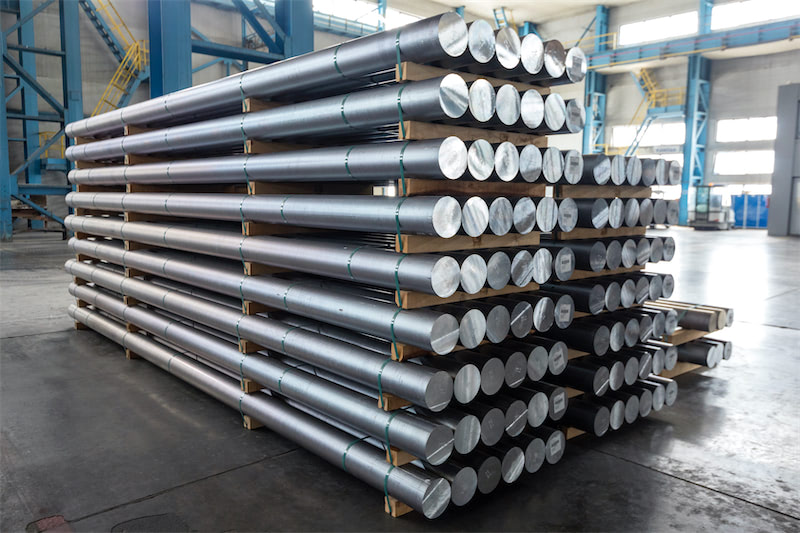 Glimmer of Hope amid Weak Supply and Demand: Review of China's Aluminum Billets Market in H1 2026 and Outlook for H2
[SMM Analysis: Glimmer of Hope amid Weak Supply and Demand: Review of China's Aluminum Billets Market in H1 2026 and Outlook for H2] In H1 2026, China’s aluminum billets market, squeezed by wild swings in aluminum prices and a slow recovery in end-use demand, underwent a turbulent journey from deep pressure to staged repair...
Jul 10, 2026 23:11- Expectations for US Fed Rate Hikes Delayed, Aluminum Prices' Short-Term Weakness Hard to Break [SMM Aluminum Morning Meeting Summary]
[Expectations for US Fed Interest Rate Hikes Delayed, Short-Term Weakness in Aluminum Prices Hard to Break] In China, the proportion of liquid aluminum continued to rise, and warehouse withdrawals of aluminum ingots hit a four-year high in the past week. The further acceleration of the destocking pace has been the biggest highlight recently, but the absolute inventory level remains in a high range. Recently, with the continued narrowing of the geopolitical risk premium coupled with expectations for new project startups outside China, macro headwinds still dominate. LME aluminum is under significant pressure in the short term, and domestic aluminum prices are expected to follow LME aluminum and remain in the doldrums.
Jul 3, 2026 09:49