

- July Aluminum Processing PMI Records 42.2%, Fully Falling into Contraction Territory as End-Use Demand Weakens, Exports Diverge, and Sector Recovery Remains Unlikely in Short Term [SMM Downstream In-Depth Analysis]
[SMM Aluminum Downstream Analysis: July Aluminum Processing PMI at 42.2%, All Segments Enter Contraction Territory; End-Use Demand Weakens, Export Divergence Hinders Near-Term Recovery] In July, the aluminum processing industry exhibited a pattern of broad-based off-season weakness across all segments with structural divergence. Only the new energy sector demonstrated demand resilience, while domestic demand in other sectors contracted broadly and significantly. Export performance was uneven, with aluminum wire and cable exports plummeting and dragging down the industry. Combined with raw material constraints, high-temperature production restrictions, and disturbances from price spread recovery, overall industry activity remains deeply mired in contraction territory, and near-term recovery momentum is insufficient.
Jul 31, 2026 09:55 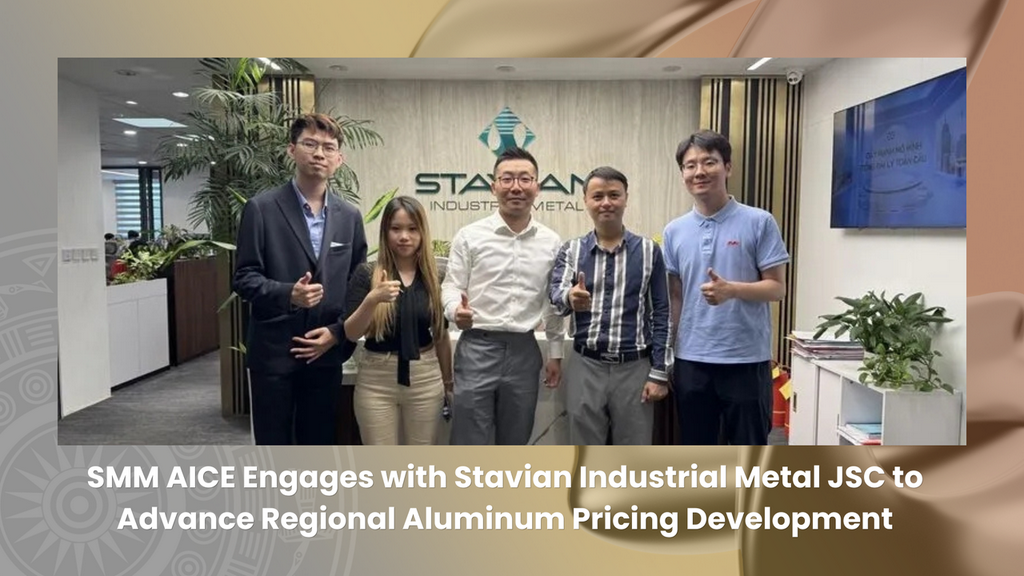 SMM AICE Engages with Stavian Industrial Metal JSC to Advance Regional Aluminum Pricing Development
On July 22, 2026, a delegation from Shanghai Metals Market Information Technology Co., Ltd. (SMM) held in-depth discussions with representatives of Stavian Industrial Metal JSC. The participants included: SMM Logan Lu, CEO of SMM Cason Lou, Director of Aluminum Processing, Marketing Department Lexi Chen, Key Account Manager for Overseas Information Sales Khai Yuen Chin, Senior Overseas Aluminum Analyst Stavian Industrial Metal JSC James (Nguyen Danh Vinh), Deputy Director of International Business Alex (Bui Trung Kien), International Business Representative The two sides exchanged views on the global aluminum market, the development of Vietnam’s aluminum industry, market information services, and the establishment of a regional pricing system, reaching broad consensus on several areas for future cooperation. Focusing on Southeast Asia and Exploring the Evolving Global Aluminum Industry Landscape SMM noted that in recent years, it has continued to expand its sourcing and sales network across Southeast Asia, establishing stable supply-chain connections in Vietnam, Thailand, Malaysia, Indonesia, and other markets. Its business covers multiple metal categories, including aluminum, steel, and copper, while the company continues to explore emerging market opportunities across Southeast Asia. At the SMM AICE 2026 Southeast Asia Aluminum Industry Conference, to be held in Ho Chi Minh City on November 19–20, SMM will officially launch the SMM Vietnam Aluminum Price and provide a detailed explanation of its pricing methodology. Against the backdrop of global supply-chain restructuring, evolving logistics patterns, and deepening regional trade, market demand for high-quality, in-depth, and timely market intelligence and reliable price references continues to rise. To address these needs, SMM has established a global presence across price assessments, market research, databases, consulting services, and international conferences. Its services cover major markets including China, Southeast Asia, Europe, the Americas, and Africa, providing professional market intelligence and data services to participants across the global industrial value chain. Advancing Vietnam’s Pricing System to Support Regional Industry Development SMM noted that aluminum trading in Southeast Asia still commonly references LME prices and the MJP Premium. However, as Vietnam’s manufacturing sector expands rapidly and domestic consumption continues to grow, demand is increasing for regional price benchmarks that better reflect local supply-and-demand fundamentals. Since July 3, 2026, SMM has officially launched the Vietnam 6063 Non-Homogenized Aluminum Billet Processing Fee and the SMM Vietnam 6063 Non-Homogenized Aluminum Billet Price , with both assessments updated daily on each trading day. (Resources come from the SMM official website) In recent years, SMM has continued to develop its global pricing system while accelerating its presence in Southeast Asia. By engaging directly with participants across the industrial value chain and establishing local price data collection networks, SMM is continuously improving its Vietnam market price assessment framework and providing the regional market with more open, transparent, and impartial price references. Representatives from Stavian Industrial Metal JSC expressed strong recognition of this direction and shared insights into the rapid development of Vietnam’s market in recent years. They noted that Vietnam’s aluminum trading volume continues to expand alongside growing domestic demand. Establishing a regional pricing system that more accurately reflects local market conditions would help improve transparency across the industrial value chain and support the healthy and sustainable development of the market. Stavian Industrial Metal JSC Founded in 2021, Stavian Industrial Metal JSC is a member of Stavian Group, one of Vietnam’s major multinational industrial groups. The company specializes in the trading, supply-chain management, processing and manufacturing, and industrial investment of industrial metals including aluminum, steel, copper, and zinc. Its business network spans more than 100 countries and regions worldwide, with the goal of becoming a leading integrated industrial metals service platform in Southeast Asia. In recent years, Stavian has continued to increase investment in Vietnam’s domestic industrial sector, gradually expanding beyond traditional metals trading into industrial investment and advanced manufacturing. Its key areas of development include: Industrial Park Development Stavian Group’s industrial park platform is advancing the development of green industrial parks in Vietnam, with major projects including industrial parks in Thai Nguyen Province and Hung Yen Province. These projects aim to attract industries including electronics manufacturing, machinery manufacturing, supporting industries, logistics, and food processing. They also incorporate ESG principles such as green energy, circular economy practices, and wastewater reuse, supporting Vietnam’s manufacturing upgrade and facilitating foreign investment projects. Green Metals Development The company is actively developing supply chains for green aluminum, green steel, and recycled metals while promoting the use of low-carbon metal materials. Carbon management and ESG principles have also been integrated into the company’s corporate strategy, with the goal of becoming a leading green metals distributor and carbon services provider in Southeast Asia. Major Industrial Cooperation Projects In recent years, Stavian has established strategic partnerships with major Vietnamese enterprises including Viet Hai Group and Dai Dung Group. These partnerships cover areas such as shipbuilding, steel structure engineering, machinery manufacturing, new energy infrastructure, and industrial projects, enabling the companies to jointly participate in major industrial and infrastructure developments across Vietnam. As one of Vietnam’s rapidly growing industrial metals companies, Stavian Industrial Metal JSC plays an important role in supporting the country’s manufacturing upgrade and strengthening its domestic industrial metals supply chain. It has also emerged as a representative local enterprise within Vietnam’s aluminum and broader industrial metals industry. Join the Conversation at SMM AICE 2026 Connect with aluminum producers, processors, traders, manufacturers, certification organisations, industry associations and decision-makers from across Southeast Asia and the global market. Explore aluminum pricing, primary aluminum supply, processing technologies, low-carbon development, CBAM compliance and new opportunities for regional cooperation. ? Ho Chi Minh City, Vietnam ? November 19–20, 2026 Register now: bit.ly/AICE26 and secure your Super Early Bird Pass and save up to USD 200. Register before August 31, 2026.
Jul 29, 2026 09:25- Geely Baikuang Group Co., Ltd. Looks Forward to Meeting You at the 2026 SMM (3rd) South China Nonferrous Metals Annual Conference
As the global green transition and the "dual carbon" goals advance further, the nonferrous metals industry is accelerating its shift toward low-carbon, smart, and high-end development. South China, as a core industry hub, boasts a well-established industry chain, outstanding resource endowments, and strong policy support, generating robust development momentum. Hosted by SMM, the is scheduled to be held from September 9 to 11 in Nanning, Guangxi. Centered on five key topics—price trends, market outlook, trade environment, policy direction, and low-carbon technology—the conference serves as a high-end industry platform for exchange and collaboration. Geely Baikuang Group Co., Ltd. sincerely invites colleagues from all sectors to gather in Nanning, join in this grand event, and jointly promote technological innovation and digital-intelligent transformation, helping enterprises seize opportunities and tackle challenges, and driving the high-quality development of the nonferrous metals industry. Click the to sign up and attend now! Booth No.: B6 Unleashing the Value of Resources for Sustainable Social Development Geely Technology Group was founded in 2017 and is affiliated with Geely Holding Group. It consistently adheres to the development philosophy of "innovation-driven, industry-based," advancing the transformation and upgrading of traditional industries and the growth of strategic emerging industries through technological innovation. The Group has four core industries: new materials (resources), motorcycle smart manufacturing, the low-altitude economy, and power and AI semiconductors, with strategic investments in commercial aerospace, new energy, and other businesses. It continues to strengthen its industry ecosystem advantages and consistently delivers valuable products and services to society. Currently, the Group's annual output value exceeds 100 billion yuan, with a workforce of more than 20,000. Geely Baikuang Group is an important member of the Fortune Global 500 company Geely Holding Group and one of the core enterprises in the new materials (resources) sector of Geely Technology Group. Its business spans multiple fields, including coal, electric power, aluminum, carbon, deep aluminum processing, and ecological manganese. Guangxi Baiming New Materials Co., Ltd. 's 50kt annual capacity project for electrical round aluminum rod represents a critical strategic initiative by Geely Baikuang Group, leveraging its existing liquid aluminum capacity to extend the aluminum industry chain and enhance product added value. It is also a concrete practice of the Group's active response to the strategic deployment for the "second entrepreneurial push" of the aluminum industry by the Autonomous Region and Baise City, while deepening supply-side structural reform. As a vital link in the circular development of Baise's eco-aluminum industry, this project will further optimize the regional aluminum industry layout, promote the efficient local conversion of resources, and strengthen the industry's overall competitiveness. The project is situated within the Longlin Aluminum Plant, part of the Gui-Qian (Longlin) Economic and Industrial Cooperation Park in Mugu Village, Pingban Town, Longlin Various Ethnic Groups Autonomous County. There, it fully leverages the raw material advantage of the Longlin Aluminum Plant's existing liquid aluminum capacity, facilitating the direct supply and conversion of nearby liquid aluminum, thereby significantly reducing remelting energy consumption and production costs. Total project investment is approximately 14.2 million yuan. Once completed and in operation, it is expected to form a production capacity of 50,000 mt per year of electrical round aluminum rod, achieve an annual output value of about 1 billion yuan, and generate annual tax revenue of approximately 2 million yuan. Company's Main Products The electrical round aluminum rods cover mainstream alloy designations such as 1A60, 1370, 1350, 8030, 8R76, 6201, and 8A07 high-conductivity rod, and specifications include wire diameters of Ø9.5, Ø12, Ø15, etc. They are widely used in conductor manufacturing for power cables and fiber optic cables, as well as in electromagnetic wire, enamelled wire, and air-conditioning condenser tubes, providing high-performance materials for motors, transformers, electronic components, and NEV parts, thereby strengthening the foundation for power and signal transmission. The project introduces smart integrated equipment, integrates multiple processes, and precisely controls aluminum semis processing, practicing the principles of high quality, low energy consumption, high efficiency, and sustainability, breaking through traditional limitations, and supporting the green and low-carbon development of China’s aluminum industry. Aluminum Processing Industry The aluminum processing industry is a key breakthrough sector for Geely Baikuang Group to achieve transformation and upgrading. It shoulders the major mission of extending Guangxi’s aluminum industry “second startup” toward advanced aluminum processing. Currently, it includes aluminum wheel hubs, refined aluminum, etc. The aluminum wheel hub project relies on Geely’s systematic advantages in the automotive industry and enjoys huge market demand. For the 10-million-unit-per-year aluminum alloy wheel hub project, Phase I with 5.2 million wheel hubs was launched into production in 2021. Refined aluminum has completed construction of 10,000 mt capacity, with aluminum purity reaching 99.99%, mainly applied in high-tech fields such as electronics and aerospace. At the same time, Geely Baikuang Group is establishing an integrated system covering R&D, production, and sales, and advancing the construction of the aluminum plate/sheet, strip and foil project and the production base for NEV all-aluminum vehicle-supporting aluminum products and parts, to meet the huge demand for aluminum-based composite materials from the NEV industry, enrich Baise’s aluminum industry structure, and promote the high-quality development of Guangxi’s aluminum industry second startup. Manganese Industry The manganese industry is an emerging industry of Geely Baikuang Group, currently including manganese carbonate ore, electrolytic manganese metal, etc. The Geely Baikuang Jingxi Ecological Manganese Industry Integrated Park is one of the important manganese ore industrial bases in Guangxi and even China, with existing manganese carbonate ore resources of 20 million mt, Envision reserves of 40 million mt, and an annual output of 330,000 mt of manganese carbonate ore; electrolytic manganese metal capacity of 60,000 mt has been completed and put into operation. Geely is vigorously promoting NEV production, and Geely Baikuang will actively transform and upgrade toward new energy battery manganese-based materials, providing raw materials to new energy battery enterprises. Aluminum Smelting Industry Contact Information Huang Xiaoma 18177800977 SMM Conference Contact Ding Weiquan 18029344837
Jul 24, 2026 16:59 - The aluminum processing operating rate fell 0.2 percentage points to 61.1% this week, the off-season effect deepened and continued [SMM Aluminum Processing Weekly Survey].
[SMM Weekly Survey on Aluminum Downstream: This Week, Aluminum Processing Operating Rate Dropped 0.2 Percentage Point to 61.1%, Off-Season Effect Deepens and Continues] Overall, as the off-season effect deepens, downward pressure on the industry's operating rate remains unabated. Export orders for aluminum plate/sheet and strip and aluminum foil provide some temporary support, while other sub-sectors are expected to remain in the doldrums in the short term.
Jul 23, 2026 19:44 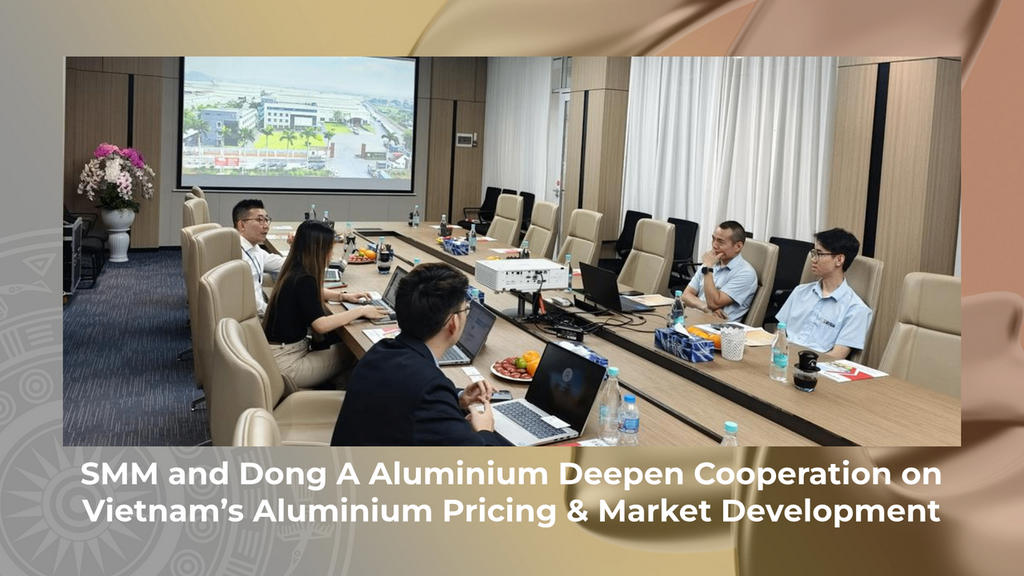 SMM Visits Dong A Aluminum to Jointly Explore Vietnam's Aluminum Pricing and Market Development
On July 22, 2026, a delegation from SMM Information & Technology Co., Ltd. (SMM) visited Dong A Aluminum Company Limited and was warmly received by Deputy General Manager Cao Jiawang and Procurement Manager Chen Jiejun. The two sides held in-depth exchanges on topics including the development of Vietnam's aluminum price system, corporate procurement status and pricing models, trends in the aluminum processing industry, and cooperation for the SMM AICE 2026 Southeast Asia (Vietnam) Aluminum Conference. The SMM delegation included: Logan Lu , CEO of SMM Cason Lou , Director of Aluminium Processing, Marketing Department Lexi Chen , Key Account Manager for Overseas Information Sales Chin Khai Yuen , Senior Overseas Aluminium Analyst They were welcomed by key representatives from Dong A Aluminum, including: Cao Jiawang , Deputy General Manager Chen Jiejun , Procurement Manager Focusing on Procurement Practices: Coexistence of Multiple Pricing Models During the meeting, Dong A Aluminum elaborated on its current procurement status and price usage model. As one of the largest aluminum semis exporters in Vietnam, Dong A Aluminum's procurement system has both international and local characteristics, forming a flexible but complex pricing mechanism. Dong A Aluminum stated that the Vietnamese market currently lacks a locally recognized price reference system with international credibility, and enterprises face challenges such as inconsistent pricing benchmarks and scattered price information in actual operations, hoping that SMM can promote the standardization of Vietnam's aluminum price system. SMM introduced that since July 3, 2026, SMM has officially launched the Vietnam 6063 (non-homogenized) aluminum billet processing fee and SMM Vietnam 6063 (non-homogenized) aluminum billet price point, updated on a daily basis on each trading day. Meanwhile, SMM plans to officially release the SMM Vietnam aluminum price and elaborate on the methodology at the SMM AICE 2026 Southeast Asia (Vietnam) Aluminum Conference to be held in Ho Chi Minh City from November 19 to 20. Dong A Aluminum expressed high attention to this, believing that the launch of SMM Vietnam aluminum price is expected to provide enterprises with a more transparent and authoritative pricing reference, reduce transaction costs, and improve market efficiency. Discussing Industry Trends: Opportunities and Challenges in the Aluminum Processing Industry The two sides also exchanged views on the current status of Vietnam's aluminum processing industry. As a member of a Singapore-based holding group system, Dong A Aluminum has a total investment of over $200 million and an annual comprehensive capacity of 150,000 mt. In 2025, the company's Phase III expansion project was officially completed and put into operation, with six new aluminum extrusion lines installed, bringing the total number of extrusion lines to 25. The company has now established a wide sales network across the country, and its products are popular in multiple international markets such as the US, Australia, Canada, Europe, and Japan. Dong A Aluminum noted that with the commissioning of Vietnam's first aluminum project (Phase I with an annual capacity of 150,000 mt), the Vietnamese aluminum industry chain is accelerating to complete the last link. The increase in local primary aluminum supply will bring new procurement options and cost optimization opportunities for aluminum processing enterprises. At the same time, the imminent implementation of the Carbon Border Adjustment Mechanism (CBAM) and the adjustments to tariff policies in key export markets such as the US have also imposed higher requirements on enterprises' market layout and pricing strategies. The two sides also reached a consensus on cooperation for the SMM AICE 2026 Southeast Asia (Vietnam) Aluminum Industry Conference. Dong A Aluminum indicated that it would actively consider participating in the conference to jointly promote the internationalization of the aluminum market in Vietnam and Southeast Asia. This visit further deepened the communication and mutual trust between SMM and Vietnam's leading aluminum processing enterprises. It provided important first-hand information for market research and data collection on the Vietnamese aluminum pricing system and injected new momentum into the standardization of aluminum pricing in Vietnam. About Dong A Aluminum Dong A Aluminum Co., Ltd. is located in Tan Dan Industrial Park, Le Dai Hanh Ward, Haiphong City, Vietnam. It is an aluminum products producer with high industry reputation and relatively large production scale in Vietnam. The company is a member of a Singapore-based holding group, with a total investment exceeding $200 million and an annual comprehensive capacity of 150,000 mt. It is also one of the largest exporters of aluminum semis in Vietnam. The company owns a modern factory covering an area of nearly 120,000 m², equipped with intelligent and advanced production lines. It has established a fully automated, closed-loop production process covering aluminum ingot storage, melting and casting, extrusion, spraying, anodizing, wood grain treatment, deep processing, and finished product assembly. The company fully applies an intelligent ERP management system to achieve automated management of the entire production and operation process. Currently, the company has 25 extrusion lines with tonnages ranging from 600 mt to 4,500 mt. In 2025, the Phase III expansion project was officially completed and put into operation, successfully entering the list of Vietnam's Top 500 enterprises. With a development direction of becoming a comprehensive aluminum application solution provider, Dong A Aluminum's products are widely used in construction, home furnishings, electronics and power, solar energy, and other fields, and it continues to expand the application of aluminum semis in machinery equipment, precision parts, and the automotive industry. As of now, Dong A Aluminum has established an extensive sales network nationwide, with over 800 dealers, and actively exports to multiple international markets including the US, Australia, Canada, Europe, and Japan. Facing the future, Dong A Aluminum always adheres to the development philosophy of "innovation as the core, quality as the foundation, and service as the commitment," continuously optimizes its production system, upgrades its technological strength, and actively promotes Vietnam's aluminum industry onto the global industrial landscape. Join the Conversation at SMM AICE 2026 Connect with aluminum producers, processors, traders, industry associations, analysts, and decision-makers from across Southeast Asia. Explore the latest market developments, pricing trends, processing technologies, recycling opportunities, and new possibilities for regional cooperation. ? Ho Chi Minh City, Vietnam ? November 19–20, 2026 Register now: bit.ly/AICE26 and secure your Super Early Bird Pass and save up to USD 200. Register before August 31, 2026.
Jul 23, 2026 15:07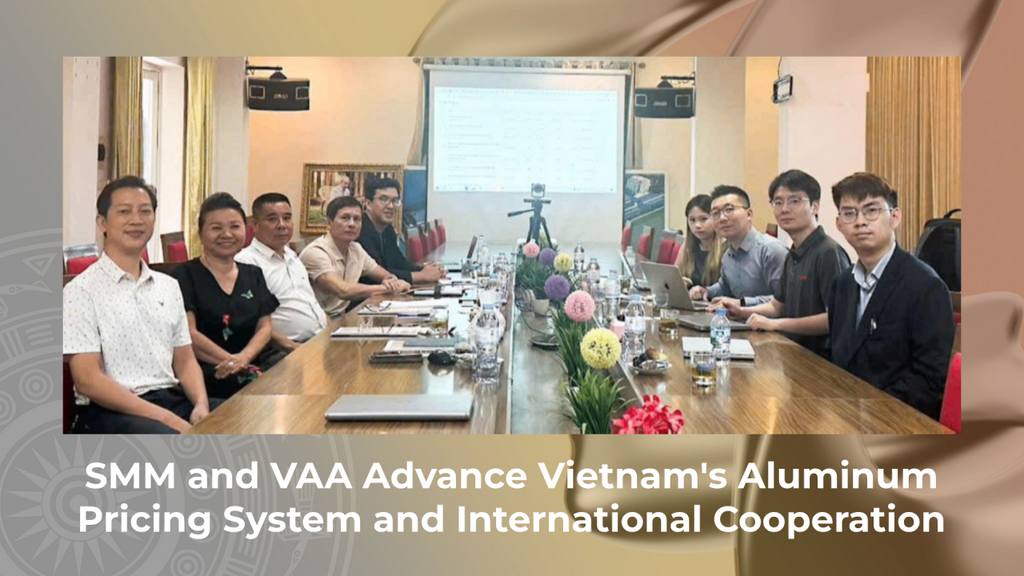 SMM and VAA Advance Vietnam’s Aluminum Pricing System and International Cooperation
Representatives from SMM and the Vietnam Association of Aluminum Profile (VAA) during their meeting in Ho Chi Minh City on July 21, 2026 On July 21, 2026, a delegation from Shanghai Metals Market (SMM) visited the Vietnam Association of Aluminum Profile (VAA) to discuss the development of Vietnam’s aluminum industry, the establishment of a credible local aluminum pricing system, and opportunities for international cooperation. The SMM delegation included: Logan Lu , CEO of SMM Cason Lou , Aluminum Processing Director of the Marketing Department Lexi Chen , Key Account Manager for Overseas Information Sales Khai Yuen Chin , Senior Overseas Aluminum Analyst. They were welcomed by key representatives from VAA, including: Nguyen Minh Ke, President of Vietnam Aluminum Profile Association (VAA) Vu Van Phu, Vice President & Secretary General, VAA, Viet Phap Aluminum Company Le Anh Tuyet, Vice President, VAA; CEO Do Thanh Aluminum Group Nguyen Dung, Chief of Office, VAA Strengthening Transparency in Vietnam’s Aluminum Market During the meeting, SMM and VAA introduced their respective organizations, business activities, and roles within the aluminum industry. The discussion then focused on the development of Vietnam’s aluminum sector, market research and price publication, and potential cooperation surrounding SMM AICE 2026 Southeast Asia Aluminum Conference A key topic was the need for a transparent and internationally recognized aluminum price benchmark in Vietnam. Photo credit: SMM AICE As Vietnam’s aluminum industry continues to expand, the absence of a credible local price reference remains a major challenge for market participants. A reliable benchmark could improve pricing transparency, support more informed commercial decisions, and facilitate cross-border trade. To support this development, SMM officially launched its Vietnam 6063 aluminum billet processing fee and SMM Vietnam 6063 aluminum billet price assessment on July 3, 2026. During the meeting, the SMM team explained the progress of its pricing services in Southeast Asia and addressed VAA’s questions regarding the assessment process. SMM also emphasized the importance of developing a Vietnam aluminum pricing system that reflects local market conditions while gaining recognition from international participants. Official Price Launch at SMM AICE 2026 SMM plans to officially introduce its Vietnam aluminum price and explain the underlying methodology during SMM AICE 2026 Southeast Asia Aluminum Conference , taking place on November 19–20, 2026, in Ho Chi Minh City. The conference will provide a platform for aluminum producers, processors, traders, industry associations, analysts, and other market participants to discuss pricing mechanisms and the broader development of Vietnam and Southeast Asia’s aluminum markets. VAA Chairman Nguyen Minh Ke welcomed SMM’s continued engagement in Vietnam. He highlighted the rapid development of the country’s aluminum industry, particularly following the commissioning of the first phase of a 150,000-ton electrolytic aluminum project, which further strengthens Vietnam’s aluminum value chain. Photo credit: SMM AICE He also noted that the lack of a locally based pricing reference with international credibility has remained a persistent industry challenge. VAA looks forward to deepening its cooperation with SMM and jointly supporting the standardization and international recognition of Vietnam’s aluminum pricing system. Expanding Cooperation Through SMM AICE 2026 SMM and VAA also reached several points of consensus regarding potential cooperation for SMM AICE 2026. VAA expressed its intention to actively consider supporting and participating in the conference. This collaboration could create new opportunities for industry dialogue, information exchange, and stronger connections between Vietnam’s aluminum sector and the wider international market. The visit marks the formal establishment of a cooperative relationship between SMM and VAA. It lays a foundation for future collaboration in aluminum price development, industry information exchange, and international engagement. About the Vietnam Association of Aluminum Profile Established in 2019, the Vietnam Association of Aluminum Profile is one of the country’s most influential aluminum industry organizations. VAA represents nearly 130 member companies involved in aluminum profile manufacturing and trading. Its work focuses on supporting member companies, protecting their legitimate interests, promoting cooperation across the industry, and strengthening the international competitiveness of Vietnam’s aluminum sector. According to VAA, Vietnam’s aluminum profile production reached nearly 1.5 million tonnes in 2024, with an estimated value of USD 4.2 billion, representing year-on-year growth of 14.5%. As the industry continues to grow, cooperation among associations, market information providers, and businesses will become increasingly important in developing stronger market standards and supporting Vietnam’s integration into the global aluminum value chain. Join the Conversation at SMM AICE 2026 Connect with aluminum producers, processors, traders, industry associations, analysts, and decision-makers from across Southeast Asia. Explore the latest market developments, pricing trends, processing technologies, recycling opportunities, and new possibilities for regional cooperation. ? Ho Chi Minh City, Vietnam ? November 19–20, 2026 Register now: bit.ly/AICE26 and secure your Super Early Bird Pass and save up to USD 200. Register before August 31, 2026.
Jul 23, 2026 11:35- SMM AICE Visits Xingfa Aluminum’s Vietnam Base to Advance the Development of a Vietnam Aluminum Pricing System
On July 20, 2026, a delegation from Shanghai Metals Market Information Technology Co., Ltd. (SMM) visited Xingfa International (Vietnam) Co., Ltd. The delegation included: Logan Lu, CEO of SMM Cason Lou, Director of Aluminum Processing, Marketing Department Lexi Chen, Key Account Manager for Overseas Information Sales Khai Yuen Chin, Senior Overseas Aluminum Analyst The delegation received a warm welcome from the management team and department heads at Xingfa Aluminum’s Vietnam base. The two sides held in-depth discussions on the development of an aluminum pricing mechanism in Vietnam, the establishment of international credibility, and coordinated growth across the aluminum industry. Focusing on Vietnam Aluminum Pricing and Exploring a New Market Pricing Mechanism During the meeting, the two sides conducted a detailed analysis of the current pricing landscape in Vietnam’s aluminum market. At present, Vietnam still lacks a locally developed aluminum price benchmark with broad international recognition and credibility. SMM stated that establishing a Vietnam aluminum price reference system widely recognized by the international market would be a crucial step toward improving pricing transparency and facilitating cross-border trade. It will also be one of SMM’s key priorities in the coming period. To support this initiative, SMM will conduct extensive research involving Xingfa Aluminum and other representative aluminum companies in Vietnam. SMM plans to officially launch the SMM Vietnam Aluminum Price and provide a detailed explanation of its pricing methodology at the SMM AICE 2026 Southeast Asia Aluminum Industry Conference, to be held in Ho Chi Minh City on November 19–20. The two sides also exchanged views on emerging industry topics, including the supply-and-demand landscape for primary aluminum in Southeast Asia and the impact of the Carbon Border Adjustment Mechanism (CBAM) on the aluminum industry. CBAM and international carbon certification, in particular, have become major areas of concern for the global aluminum sector. SMM will therefore organize a dedicated session at the conference and invite international experts to provide professional insights and analysis. Deepening Engagement in Southeast Asia as SMM Accelerates Its Expansion in Vietnam Since the beginning of this year, SMM has significantly accelerated the development of its pricing services in Southeast Asia. Since July 3, 2026, SMM has introduced a series of new price assessments for 6063 aluminum billet processing fees in Southeast Asia, as well as CIF Southeast Asia aluminum premiums and discounts. Among them, the Vietnam 6063 non-homogenized aluminum billet processing fee and related price assessment have officially been launched. In addition, the Vietnam Metals Recycling Association visited SMM’s headquarters on July 10. The two sides reached several cooperation agreements concerning services for the recycled metals industry chain. Through continued local cooperation and the integration of international resources, SMM is providing more accurate and authoritative data support for the aluminum value chains in Vietnam and Southeast Asia. During the visit to Xingfa Aluminum, the two sides reached a number of agreements on aluminum price data collection, market promotion, and the organization of industry events. SMM stated that it would invite more international market participants—including representatives from the Middle East, Indonesia and Malaysia, as well as RUSAL and Australian primary aluminum smelters—to contribute to the development of Vietnam’s aluminum pricing system and promote greater regional market integration. The visit further strengthened the strategic cooperation between SMM and Xingfa Aluminum while injecting new momentum into the standardization and internationalization of Vietnam’s aluminum pricing system. Guangdong Xingfa Aluminum Co., Ltd. Founded in 1984, Guangdong Xingfa Aluminum Co., Ltd. (“Xingfa Aluminum”) is one of China’s leading large-scale manufacturers specializing in aluminum extrusion products. In 2011, Guangxin Holdings Group invested in Xingfa Aluminum, pioneering a mixed-ownership model combining state-owned and private capital in China’s aluminum extrusion industry. This marked the beginning of a new phase of sustainable expansion for the company. Xingfa Aluminum currently operates nine major production bases. Its seven modern manufacturing bases in China are located in Sanshui, Foshan; Nanhai, Foshan; Foshan Precision Manufacturing Base; Yichun, Jiangxi; Chengdu, Sichuan; Qinyang, Henan; and Huzhou, Zhejiang. The company also operates overseas production bases in Australia and Vietnam. With the initial formation of its global manufacturing network, Xingfa Aluminum continues to strengthen its advantages in production scale. The company has consistently focused on the research and development, manufacturing, and sale of aluminum extrusion products, covering two core segments: architectural aluminum profiles and industrial aluminum profiles. Architectural aluminum profiles remain one of Xingfa Aluminum’s traditional strengths, with its products widely used in high-end curtain walls, integrated door and window systems, and other building applications. While consolidating its core business, the company has accelerated its expansion into the industrial aluminum profile market. It has developed a range of high-performance products, including battery trays and crash beams for new energy vehicles, as well as aluminum body structures for buses. By strengthening its presence in key segments across the industrial value chain, Xingfa Aluminum’s products are now widely used in rail transit, new energy vehicles, photovoltaics, electronics, and other industries. The company is also extending its advanced aluminum processing technologies into emerging fields such as energy storage and computing infrastructure. In recent years, Xingfa Aluminum has remained committed to strengthening its manufacturing capabilities. As a leading enterprise in Guangdong Province’s high-end aluminum extrusion industry chain, which has an output value of more than RMB 100 billion, the company has played an important role in driving industry development. Xingfa Aluminum continues to focus on breakthroughs in key core technologies and promotes the advancement of its industrial and value chains toward the medium- and high-end markets. The company has received numerous national honors, including National Manufacturing Single-Product Champion Enterprise, National Intellectual Property Demonstration Enterprise, National Technology Innovation Demonstration Enterprise, National Enterprise Technology Center, and National Green Factory. In 2025, Xingfa Aluminum ranked 475th among China’s Top 500 Manufacturing Enterprises, 147th among Guangdong’s Top 500 Enterprises, and 32nd among Guangdong’s Top 500 Manufacturing Enterprises. Join the Conversation at SMM AICE 2026 Connect with aluminum producers, processors, traders, manufacturers, certification organisations, industry associations and decision-makers from across Southeast Asia and the global market. Explore aluminum pricing, primary aluminum supply, processing technologies, low-carbon development, CBAM compliance and new opportunities for regional cooperation. Location: Ho Chi Minh City, Vietnam Date: November 19–20, 2026 Register now: bit.ly/AICE26 and secure your Super Early Bird Pass and save up to USD 200. Register before August 31, 2026.
Jul 23, 2026 10:32  2026 H1 China Aluminum Trade: Divergent Raw Material Imports, Soaring Product Exports, and Trade Structure Shifts
In H1, the industry showed distinct characteristics: upstream raw material imports experienced a mix of hot and cold trends, while mid-and downstream aluminum processing product exports saw explosive growth. Diverging domestic and overseas demand, shifting overseas manufacturing orders, and changes in the overseas raw material supply landscape are jointly reshaping the trade pattern of China's aluminum industry chain.
Jul 21, 2026 18:10- Middle East Situation Volatile and Uncertain, Aluminum Prices Consolidate and Adjust [SMM Aluminum Morning Meeting Summary]
[Mideast Situation Remains Volatile and Uncertain, Aluminum Prices Consolidate and Adjust] Overall, the Middle East situation remains volatile, market concerns over interest rate hikes persist, and supply continues to recover. However, the destocking pattern is difficult to reverse in the short term. Amid the tug-of-war between longs and shorts, aluminum prices are expected to consolidate and adjust in the near term. Going forward, close attention should be paid to the progress of production resumptions and the trend of geopolitical conflicts in the Middle East, changes in LME aluminum ingot inventories, and the condition of downstream processing orders in China.
Jul 21, 2026 09:14 - 2026 China Aluminum Extrusion Industry Semi-Annual Summary and Outlook [SMM Analysis]
SMM, July 12: In the first half of 2026, China's aluminum extrusion industry presented an extreme pattern of structural divergence. Traditional construction extrusion demand remained persistently weak, dragging down the industry’s overall operating load, while industrial extrusion maintained high prosperity, underpinned by new energy, power, and heat dissipation sectors, serving as the core pillar of the industry. Meanwhile, linked volatility in aluminum prices intensified both in and outside China, with the price spread repeatedly narrowing. The export market experienced a "deep V-shaped recovery" trajectory, and the overall industry performance was characterized by "weak recovery in domestic demand, initial suppression followed by recovery in overseas demand, and a stark contrast between strong and weak structural segments." 1. Extrusion Operating Rates: Construction Extrusion Continued to Drag, Industrial Extrusion Resilience Supported the Industry After the 2026 Chinese New Year, the industry entered its traditional peak season for resuming work. In March, extrusion enterprises concentrated on production resumptions and downstream clients engaged in concentrated restocking, pushing the industry's composite operating rate to its H1 peak of 50.6%. Entering Q2, genuine downstream demand follow-through was insufficient, raw material prices fluctuated at high levels, and the industry was further impacted by the rainy season in south China and environmental protection inspections in some regions. As a result, the industry operating rate continued to pull back mildly, falling to 47.6% in June, with the overall operating level weaker than the average for the same period over the past three years. Construction extrusion was the core weak spot dragging down the industry’s overall operations. In H1, data on commercial housing transactions and new construction starts in China remained persistently weak; developers' financial positions showed no significant improvement, and payment returns from project sites were slow. Orders for housing construction-related doors, windows, and curtain wall extrusions continued to shrink. From January to May, domestic aluminum prices generally consolidated at highs, and downstream end-users exhibited strong resistance to high-priced raw materials. Traders and processing plants generally maintained low inventory levels, moving goods in and out quickly, with low willingness to initiate restocking. Although the industry actively expanded non-residential construction demand from industrial parks, standard factories, and government and enterprise public buildings, and home decoration for existing home renovations and home decoration retail recovered slightly, the incremental volume was limited, completely failing to offset the decline in bulk project orders. In H1, construction extrusion operations remained under pressure, making it the biggest drag on the industry. The structural prosperity of the industrial extrusion segment continued to rise, strongly underpinning the industry's operating rates. Demand for power transmission and transformation, energy storage structural components, industrial heat dissipation extrusions, and rail transit supporting profiles maintained steady growth. For PV extrusion, affected by the official cancellation of the export tax rebate policy for PV-related products on April 1, overseas clients concentrated on front-loading orders and enterprises rushed to meet production deadlines in Q1, driving the operating rates for PV frames and mounting extrusions to stage a temporary surge. After the policy took effect, the bonus from overseas rush orders faded, and PV extrusion production schedules returned to rationality, maintaining stable operation from April to June. NEV extrusions showed structural divergence: demand for lightweight extrusions for auto body and chassis remained robust, while demand for ordinary interior extrusions weakened. Overall, the resonance of prosperity across multiple industrial extrusion tracks effectively offset the weak demand for traditional construction materials, highlighting the structural resilience of the industry. 2. Aluminum Extrusion Exports: Deeply Under Pressure in Q1, Continuous Recovery in Q2, V-Shaped Reversal in H1 In H1 2026, China's aluminum extrusion exports followed a V-shaped trend overall, with a sharp decline in Q1 followed by consecutive recoveries in Q2. The driving logic shifted from price inversions and off-season effects overseas at the beginning of the year, towards the release of demand in emerging markets and the transfer of China's processing and manufacturing advantages. Q1: Domestic and Overseas Aluminum Price Inversions Combined with Overseas Off-Season Led to Sharply Weaker Exports Exports from January to February showed off-season resilience, mainly supported by deliveries for orders placed ahead of the Chinese New Year. In January, China exported 81,000 mt of aluminum extrusions, up slightly by 1.4% MoM but down slightly by 5.3% YoY. In February, disruptions from the Chinese New Year holiday saw exports fall to 64,000 mt, a 20.4% MoM decrease but a sharp 62% YoY increase, significantly outperforming the precipitous declines of past Chinese New Year periods. The core reason was that secondary aluminum extrusion enterprises in Guangdong and Fujian concentrated on delivering orders for Southeast Asia and the Middle East before the holiday, while some industrial extrusion enterprises adopted a model of "preliminary domestic processing and deep processing overseas" to speed up contract fulfillment, supporting export volumes at the start of the year. In March, industry exports hit their low point for the first half of the year, with monthly exports of only 48,000 mt, down 24.8% MoM and plunging 32.8% YoY. The core reason for this export slump was not a single geopolitical factor but the resonance of multiple negative factors: first, orders placed ahead of the Chinese New Year overdrew demand from February and March, after which overseas markets entered the traditional consumption off-season; second, LME aluminum saw wild swings in March, and domestic and overseas aluminum prices quickly inverted, compressing export profits for domestic extrusions and leading enterprises to proactively control volumes and take fewer orders; third, the European and US CBAM carbon tariff continued to suppress high-end extrusion exports, causing continuous market shrinkage there, coupled with a slowdown in logistics and customs clearance in some Middle Eastern regions. These multiple factors caused a substantial pullback in export volumes in March. Q2: Emerging Market Volume Surge, Exports See Double YoY and MoM Growth for Two Consecutive Months Starting in April, the price spread between China and overseas markets gradually recovered, the overseas off-season ended, and industry exports began a continuous recovery channel. Exports that month were 76,000 mt, surging 56.8% MoM and up 6.9% YoY, returning to the normal range for past years. Trade and logistics order in the Middle East recovered, stockpiling in Southeast Asia ahead of the rainy season began, and domestic enterprises accelerated their layout in emerging markets in Central Asia and Latin America. Leveraging overseas affiliated warehouses and cross-border stockpiling models to continuously take on rigid demand orders for overseas doors, windows, and curtain walls, export prosperity recovered rapidly. Exports in May continued their high-growth momentum, hitting the monthly peak for H1 at 87,000 mt, up 14.6% MoM and 20.1% YoY. The export structure continued to optimize; low-end construction extrusions saw steady incremental growth, while the export share of high-value-added industrial aluminum components, outdoor aluminum semis, and PV supporting extrusions continued to rise. Southeast Asia, Australia, South America, and Central Asia became the four core growth markets for domestic extrusion exports, effectively offsetting the shrinking demand in European and US markets. 3. H2 2026 Industry Outlook: Weakly Stable Domestic Demand, Marginal Export Weakness, Continued Structural Divergence Looking ahead to H2 2026, the structural divergence pattern in China's aluminum extrusion industry is expected to become further entrenched, with overall operations characterized by "consolidation on a subdued note, industrial support, and construction material drag." On the domestic demand side, the fundamentals of the real estate sector are hard-pressed to see a substantive repair in the short term. Commercial housing new starts and project payment returns are expected to remain weak, and construction extrusion demand will continue to operate in a low range without a trending recovery. Non-residential infrastructure and home decoration retail can only provide a slight offset, unable to reverse the overall weakness of construction extrusions. Industrial extrusion will remain the core pillar of the industry: in H2, steady climbing of domestic PV installations will drive the continued release of demand for PV frames and mounting extrusions; demand for new-type energy storage, data center heat dissipation, and power equipment extrusions will maintain steady incremental growth. NEV extrusions will show a divergence between strong and weak segments; demand for high-end lightweight structural components will be firm, but overall industry overcapacity and intensifying end-user competition will exert marginal contraction pressure on demand for ordinary automotive extrusions. Overall, industrial extrusion can defend the industry’s baseline but can hardly offset the downward pressure from construction extrusions. In H2, the industry's overall operating rate may be slightly lower than in H1. Pressure on the export front will gradually emerge, with the trend potentially turning from the high growth of Q2 to a mild slowdown. In H2, the bonus from overseas traditional peak seasons will gradually fade, while the domestic-overseas aluminum price spread narrows, export processing profits are compressed, and overseas local aluminum processing capacity continues to be released, alongside persistent trade barriers against Chinese aluminum semis in some countries. This will gradually weaken the price advantage of domestic extrusion exports. Although secondary aluminum extrusion exports may still hold cost advantages, homogenized competition in low-end products is fierce and profits remain compressed. The export growth rate for aluminum extrusions is expected to slow down gradually in H2, with overall volumes weaker than in Q2. In summary, throughout 2026, the aluminum extrusion industry is expected to continuously exhibit structural characteristics of weak construction, strong industrial, stable but weak domestic demand, and exports that are high in the first half and low in the second. Industry competition will further concentrate on high-end industrial extrusion, high-value-added deep processing, and overseas emerging markets, with low-end construction extrusion capacity continuously entering a phase of being cleared.
Jul 12, 2026 01:06