

- 2026 H1 Prebaked Anode Market Review and H2 Outlook [SMM Analysis]
Overall, the supply-demand fundamentals of the prebaked anode market are expected to remain stable in H2, but against the backdrop of continuous new capacity release, industry competition may intensify, and price trends will be more influenced by cost-side disruptions and downstream procurement pace.
Jul 15, 2026 17:50 - China Aluminum Market: Inverted-V Pattern in H1; Macro & Fundamentals Headwinds Dampen H2 Outlook
In H1 2026, Shanghai aluminum prices followed a high-first-then-low trajectory. In Q1, a mix of market expectations for Federal Reserve rate cuts and geopolitical tensions in the Middle East drove aluminum prices to multi-year highs. Entering Q2, confirmation of the US strong-dollar policy stance, easing supply disruptions in the Middle East, and a seasonal lull in domestic downstream consumption combined to push the aluminum price center downward continuously. Looking ahead to H2, persistent strong US dollar sentiment and overseas liquidity concerns will cap non-ferrous metal valuations. On the supply side, elevated aluminum prices have incentivized higher production releases; domestic operating capacity is projected to rise month-on-month, while newly commissioned capacity in the Middle East and Indonesia will ramp up output gradually. On the demand side, domestic consumption recovery is set to remain modest. Existing export order backlogs will still prop up aluminum semi-finished product shipments, yet market expectations for new export orders have softened. All told, Shanghai aluminum’s price center is likely to slide further in H2, delivering a full-year high-first-then-low price pattern. 1. H1 2026 Shanghai Aluminum Price Review by Stage 1.1 Q1: Macroeconomics & Geopolitics Dominate, Aluminum Prices Surge Then Consolidate Shanghai aluminum prices in Q1 2026 were primarily dictated by macro sentiment and overseas supply disruptions, with seasonally weak fundamentals taking a backseat. January: Rate Cut Expectations & Capital Inflows Fuel Price Rally Fundamentals: A seasonal lull ahead of the Lunar New Year created demand weakness, leading to a continuous build-up of social aluminum ingot inventories. By late January, SMM-tracked social inventories hit 782,000 tonnes, the highest level for the period in three years. Sustained high aluminum margins squeezed profit margins for downstream processors, dampening their willingness to operate and curbing primary aluminum purchasing activity. Macroeconomics: Markets priced in an impending Fed rate-cut cycle, sending the US Dollar Index sharply lower and drawing heavy speculative capital into commodity futures. Complementary pro-consumption policies rolled out domestically further underpinned aluminum prices. SMM’s average A00 aluminum price stood at RMB 24,086/tonne in January, the highest monthly average in H1. February: Cooling Rate-Cut Hopes Trigger Range-Bound Weakness Fundamentals: Lunar New Year holidays triggered a sharp collapse in downstream procurement, while smelters ramped up ingot casting, pushing social inventories even higher. Post-holiday SMM social inventories climbed to 1.108 million tonnes, with bloated stock levels failing to provide upward price support. Macroeconomics: Dimming Fed rate-cut bets lifted the US Dollar Index, prompting profit-taking liquidation that dragged aluminum prices lower and locked the market into weak consolidation. The average SMM A00 aluminum price retreated to RMB 23,385/tonne in February, down roughly RMB 700 month-on-month. March: Alternating Middle East Supply Risks & Demand Drags Intensify Volatility March trading centered on alternating forces of Middle East supply disruptions and demand-side headwinds, amplifying long-short volatility and driving aluminum prices through a pattern of rally-correction-rebound. Supply-side developments saw widespread overseas production curtailments: Mozal entered maintenance; Qatalum maintained a 60% operating rate and ruled out further output reductions; Alba shut down Lines 1, 2 and 3 with additional cutbacks rumoured; major damage to EGA facilities stoked fears of large-scale production suspensions. SMM estimates tally nearly 4 million tonnes of overseas primary aluminum capacity subject to cuts, including Mozambique’s smelter. Worries over contracting overseas supply became the core catalyst for periodic price rallies. Geopolitical risks: Escalating conflict in the Middle East raised widespread market concerns over shipping security in the Strait of Hormuz, embedding persistent geopolitical risk premiums into aluminum valuations. Demand-side headwinds: Mounting stagflation fears lifted risk aversion; lofty aluminum prices deterred downstream buying, while surging energy and freight costs crushed processor profitability and restrained demand recovery. SMM’s average A00 aluminum price rebounded to RMB 24,386/tonne in March, the second-highest monthly average in H1, alongside markedly wider price swings. 1.2 Q2: Expanding Supply & Marginal Demand Weakness Push Price Center Lower In Q2, high aluminum prices lifted domestic capacity utilization, while the market gradually priced in the impacts of overseas smelter cutbacks, shifting focus back to domestic fundamentals. Shanghai aluminum’s average price fell from roughly RMB 24,665/tonne in April to RMB 23,769/tonne in June, with prices dipping to an intra-year low of RMB 22,665/tonne in late June. Supply side: Strong prices encouraged primary aluminum smelters to boost operating rates and lift domestic output. The market gradually absorbed the impact of cutbacks in Mozambique and the Middle East, weakening the Shanghai-LME aluminum price ratio. Between June and July, rumours circulated that curtailed Middle East capacity would resume production, coupled with sequential commissioning of new Indonesian smelters, amplifying expectations of rising overseas supply. Industry communications indicate domestic primary aluminum output rose approximately 3.5% year-on-year over the first five months. Demand side: Elevated aluminum prices weighed on domestic end-user consumption, yet a stronger LME premium relative to Shanghai aluminum boosted semi-finished aluminum exports, offsetting weak domestic primary aluminum offtake. General Administration of Customs data records cumulative exports of unwrought aluminum and semi-finished products at 2.685 million tonnes in Jan-May, up 10.4% YoY. April single-month exports hit 598,000 tonnes, a one-year-plus high, followed by May shipments of 632,000 tonnes, up 15.5% YoY. Robust export volumes effectively filled the gap left by muted domestic consumption. Inventory side: Q2 delivered a pronounced destocking cycle. Social inventories peaked at 1.465 million tonnes in early May before falling to 1.165 million tonnes by end-June, a total drawdown of around 300,000 tonnes with an accelerated destocking pace. Weekly inventory drawdowns once surged to 170,000 tonnes, a four-year high for single-week de-stocking volumes. 2. Fundamental Supply & Demand Analysis 2.1 Supply: High Smelting Margins Boost Operating Rates, New Capacity Ramp-Ups Keep H1 Supply Ample Persistently robust smelting profitability in H1 2026 significantly expanded production flexibility, acting as the core driver of loose supply conditions through the first half. On one hand, sustained aluminum price strength maintained healthy per-tonne margins, maximizing smelters’ production incentives. On the other hand, new projects commissioned from late 2025 through H1 2026 entered sequential ramp-up phases, delivering steady monthly output increments. Continuous volume growth from newly commissioned capacity further lifted domestic primary aluminum production. The combined effects drove steady gains in national primary aluminum output, resulting in abundant raw material supply across the market. 2.2 Demand: Muted Domestic Consumption, Exports Act as Key Support Domestic primary aluminum demand in H1 2026 displayed a clear divergence: soft domestic offtake offset by buoyant external demand. Persistently high aluminum prices suppressed downstream purchasing, yet semi-finished aluminum exports benefited from favourable cross-market price differentials and delivered standout performance. General Administration of Customs data shows China exported 1.435 million tonnes of aluminum semi-finished products in Jan-May 2026, up 13.7% YoY, with May single-month exports reaching 320,000 tonnes (+14.7% YoY). Elevated export volumes over the first five months created a vital outlet for domestic primary aluminum digestions. The core driver behind export strength was the LME-over-Shanghai price spread: overseas markets faced tight supply expectations stemming from Middle East production cuts, while bloated domestic inventories depressed Shanghai aluminum, creating lucrative profit windows for semi-finished aluminum exporters. 2.3 Inventories: H1 Inventory Build to Multi-Year Highs Followed by Rapid Q2 Destocking Domestic social primary aluminum inventories traversed three distinct phases in H1 2026: rapid accumulation, consolidation at elevated levels, then steep destocking. Early-year seasonal weakness ahead of the Lunar New Year combined with high aluminum prices curbing demand drove continuous inventory builds, which peaked at a multi-year high of 1.465 million tonnes in early May. Subsequent downstream post-holiday restocking and surging export shipments triggered accelerated inventory drawdowns through Q2. The sharp destocking rate stemmed from concentrated export deliveries paired with a wave of downstream replenishment demand. 3. H2 2026 Outlook 3.1 Macroeconomics: Strong US Dollar Caps Metal Valuations The US will maintain its strong-dollar policy stance, keeping the US Dollar Index elevated and capping valuation upside across non-ferrous metals. Middle Eastern geopolitical risk premiums will gradually fade amid improved shipping outlook for the Strait of Hormuz and easing overseas liquidity jitters, creating long-term bearish pressure on aluminum prices. 3.2 Supply: Overseas Capacity Resumptions & New Commissioning Run Parallel Overseas market developments include incremental production restarts across Middle Eastern smelters, alongside faster ramp-up schedules for newly commissioned overseas capacity. 3.3 Demand: Weakening Support from Export Orders Short-term backlogged orders will continue to underpin semi-finished aluminum export volumes, yet narrowing cross-market price spreads have softened market expectations for new export order intake, pointing to downside risks for export growth over the medium-to-long term. Market participants will closely monitor domestic seasonal peak consumption trends and overseas new order placement momentum. 4. Comprehensive Market Assessment All factors considered, the Shanghai aluminum market will face dual headwinds of macro valuation pressure and expanding supply volumes throughout H2 2026.
Jul 9, 2026 20:06 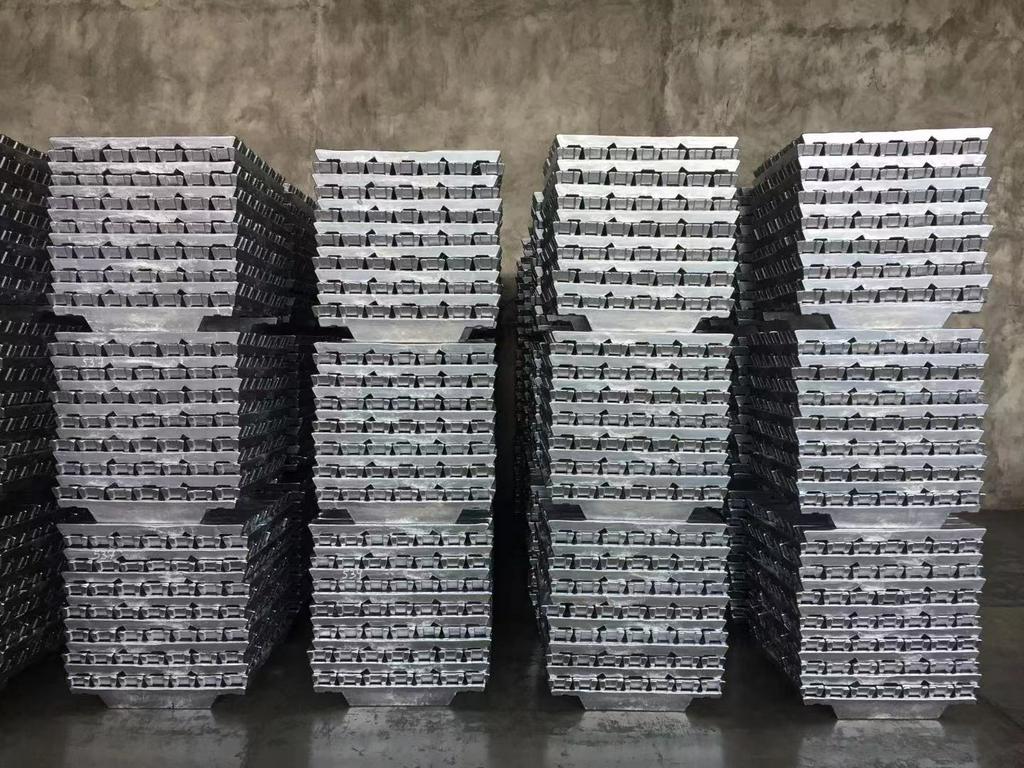 China's aluminum ingot warehouse withdrawals hit a four-year high. With 1 million mt inventory level within reach?
In 2026, China's aluminum ingot inventory has continuously pulled back from a high of 1.465 million mt in early May, and by end-June cumulative destocking of 300,000 mt brought it down to 1.165 million mt, with the destocking pace steepening markedly. Last week, warehouse withdrawals surged to 170,000 mt, hitting a new single-week high in nearly four years. Driven by three factors—the supply-side proportion of liquid aluminum rising more than expected, supportive export demand, and...
Jun 30, 2026 23:13- Aluminum Capacity Shifts to High-Current Potlines
SMM, June 30 – On June 15, 2026, according to the National Development and Reform Commission (NDRC) website, the NDRC, the Ministry of Industry and Information Technology, the Ministry of Ecology and Environment, the State-owned Assets Supervision and Administration Commission of the State Council, the National Energy Administration, and other departments jointly issued the Notice on Launching a Three-Year Campaign for Energy Conservation and Carbon Reduction Upgrades in Key Industries . The notice's requirements for the electrolytic aluminum industry include: promoting large-scale reduction cells of 500 kA and above, and accelerating the upgrade of prebaked anode cells below 300 kA. SMM has compiled publicly available market information. Excluding idled capacity, as of June 2026, cells of 300 kA and below accounted for 16% of total domestic capacity, of which approximately 1.75 million tonnes of capacity already have publicly announced replacement or upgrade projects. It should be noted that the Notice on Launching a Three-Year Campaign for Energy Conservation and Carbon Reduction Upgrades in Key Industries does not yet mandate compulsory phase-out provisions regarding cell amperage requirements. Domestic electrolytic aluminum production is therefore not expected to be materially affected in the near term. Meanwhile, capacity replacement and upgrade projects across the domestic industry are progressing steadily, with replacement projects surfacing frequently. As of June 30, 2026, a total of 13 electrolytic aluminum capacity replacement projects had been publicly announced, of which 8 are upgrade and retrofitting projects. As of June 2026, capacity equipped with 500 kA and above cells accounted for 12.9% of the total, a share expected to rise further going forward. Of the 13 publicly announced projects, 11 plan to build 500 kA or 600 kA cells, representing 93.1% of total proposed capacity under replacement projects. SMM Commentary: Electrolytic aluminum output is unlikely to see significant near-term disruption. However, as replacement and upgrade efforts continue, power consumption per tonne of domestic electrolytic aluminum production is expected to decline further, helping the industry meet its energy conservation and carbon reduction targets.
Jun 30, 2026 17:14 - Dramatic Reversal in US-Iran Conflict, ECB Rate Hike Pressures Metal Prices [SMM Aluminum Morning Meeting Summary]
[U.S.-Iran Conflict Sees Dramatic Reversal, ECB Rate Hike Weighs on Metal Prices] On the fundamentals side, the supply gap outside China is expected to provide strong bottom support for aluminum prices, and expectations of rising energy costs also create a bullish driver for aluminum prices; this Thursday, the destocking pace of China's aluminum ingot social inventory noticeably accelerated, effectively alleviating the previous high inventory pressure. However, China's high inventory pressure remains relatively pronounced and is expected to limit the upside room for domestic aluminum prices. In the short term, domestic aluminum prices are expected to mainly undergo volatile adjustments.
Jun 12, 2026 09:12 - Expectations for US Fed Interest Rate Hikes Game Persists, China’s Accelerating Destocking Signals Short-Term Stabilization [SMM Aluminum Weekly Review]
[SMM Weekly Aluminum Price Review: Expectations for US Fed Rate Hikes Remain Contested, China Accelerates Destocking, Signaling Short-Term Stabilization]
Jun 11, 2026 18:11 - [SMM Aluminum Flash News] Trimet Expands Aluminium Recycling Capacity Across Germany
German aluminum producer Trimet has announced a series of investments to expand its recycling operations across Germany. The company has increased capacity at its Gelsenkirchen recycling plant through the installation of new melting units, adding up to 80,000 tones of annual recycled aluminum output. From August 2026, the site will begin using hydrogen-rich process gas to reduce CO₂ emissions. Trimet is also building a new recycling facility in Hamm, scheduled to start operations by the end of 2026, focusing on aluminum scrap sorting, processing and logistics using laser-based analysis technology. In addition, storage upgrades at its Essen site will add around 16,000 tones of capacity. The company is also expanding its portfolio of high-recycled-content aluminum alloys for automotive and industrial applications.
Jun 10, 2026 17:46 - [SMM Aluminum Flash News] US, EU, Canada and Japan Aluminium Associations Raise Concerns Over China’s Subsidy Support
Aluminum associations from the United States, Europe, Canada and Japan highlighted OECD data showing that global aluminum-sector subsidies totaled USD118.3 billion during 2005-2024, with China accounting for USD101.4 billion, or 86% of the total. In 2024 alone, China received USD10.2 billion of the sector’s USD11.1 billion global subsidies. Industry groups noted that China’s share of global primary aluminum output has risen from 11% to 61% over the past two decades, with subsidy-supported growth extending into downstream processing and recycling. The associations called for coordinated measures, including import monitoring systems, tariff alignment and potential scrap export restrictions, to strengthen supply-chain security and support fair competition.
Jun 4, 2026 10:21 - Qingtongxia Launches Large-Scale Electrolysis Cell Upgrade Project for 420,000 mt Annual Aluminum Output
The "replacing small with large" upgrade and renovation project for electrolysis cells at Qingtongxia has been officially launched for full-scale construction. The project is located within the Qingtongxia branch company's plant area in the industrial park of Qingtongxia City, Wuzhong City, Ningxia Hui Autonomous Region. The project makes full use of part of the land from the original Phase I and Phase II within the plant area, and is laid out and constructed based on the existing Phase II railway. The total site area is 444,200 m², and the planned construction scale is expected to reach an annual aluminum output of 420,000 mt.
Jun 1, 2026 09:59 - Molten Aluminum Proportion Rises Beyond Expectations in May, to Edge Up Slightly in June
SMM News, May 29: According to SMM statistics, domestic primary aluminum output in May 2026 (31 days) rose 2.1% year-on-year and 3.8% month-on-month. Although the recovery of domestic end-user demand has been relatively slow, the persistent widening of the primary aluminum supply gap overseas has strongly boosted export demand for domestic aluminum products. This has effectively underpinned domestic molten aluminum consumption and kept apparent consumption in positive growth territory. The proportion of molten aluminum in domestic production edged up moderately, rising by 1.1 percentage points month-on-month to 76.5% in the month. The overall performance was slightly better than expectations at the start of the month, mainly driven by stronger-than-expected export orders. Based on SMM’s calculation of molten aluminum proportion, domestic primary aluminum ingot output in May fell 1.2% year-on-year and 0.9% month-on-month. Capacity Changes : As of late May, SMM recorded domestic operational primary aluminum capacity at approximately 46.209 million metric tons, with no month-on-month change. Output Forecast : In June 2026, buoyed by improving overseas market demand, export orders for domestic aluminum fabricated products are expected to keep recovering, supporting a slight rebound in the molten aluminum proportion. Overall, the molten aluminum proportion is projected to increase by 0.1 percentage point to 76.6%.
May 30, 2026 00:15