

14results found for 'Trade Protectionism'
Sort by : |
- [SMM Steel] Nippon Steel FY2025-26 profit drops sharply despite higher sales
[SMM Steel] Nippon Steel reported FY2025-26 net profit of JPY44.75 billion, down sharply from JPY382.97 billion a year earlier, while sales rose 15.7% YoY to JPY10.06 trillion. Operating profit fell 55.7% YoY to JPY242.9 billion. Crude steel output increased 27.5% YoY to 50.48 million mt, while shipments declined 1.5% YoY to 31.16 million mt. The company warned that weak global steel demand, rising low-priced Chinese exports, trade protectionism, and Middle East geopolitical risks could continue pressuring earnings.
May 14, 2026 15:49 - 2026 SMM Hong Kong Metals Forum | New Metals Cycle: Prices, Power & Global Wrestling
The 2026 SMM Hong Kong Metals Forum , organized by Shanghai Metals Market (SMM) and sponsored by China Securities International as platinum sponsor, wrapped up successfully at Novotel Hong Kong Century on May 6. With over 300 registrations and 200 on-site attendees, the forum focused on the theme "New Metals Cycle: Prices, Power & Global Wrestling". The event featured keynote speeches by industry experts and SMM analysts, covering base metals, new energy materials, and strategic revaluation of minor and precious metals. Two high-level panel sessions were held, exploring hot topics such as geopolitics, supply-demand fluctuations, CBAM impacts, and market opportunities. It also served as an efficient platform for networking and cooperation across entire industry chains. SMM Opening Address SMM Chairman Adam Fan SMM Chairman Adam Fan stated in the opening address that it was a great honor to gather with elites from all sectors of the industry at this forum. The world is currently at a critical development period, and the exchange of industry ideas is not only an industry necessity but also an inevitable requirement for global development. Adam reviewed the century-long legacy of the London Metal Exchange, which has weathered nearly 150 years of global changes and industry evolution, fully demonstrating that although market structures may change, the fundamental need for risk management and reliable price discovery remains constant. At the same time, Adam candidly acknowledged that global markets are currently mired in a pattern of deep fluctuations. Geopolitical conflicts, supply chain fragmentation, and the compounding crises of energy and food, overlaid with de-globalization and rising trade protectionism, have intensified market uncertainty and inflationary pressures, posing severe challenges to global economic growth and industrial cooperation. Against this backdrop, SMM has steadfastly upheld its mission, refusing to be a bystander to the trend of industry fragmentation, and is committed to serving as a bridge for global industrial connectivity amid a landscape of division. SMM is dedicated to promoting dialogue and exchange, breaking down industry and regional barriers, and bringing together regulators, traders, and producers from around the world to discuss industry development. SMM upholds the principle of information transparency, continuously providing accurate, real-time market data to help the industry see through market fog and clarify market distortions. SMM deepens pragmatic cooperation by building a neutral and professional platform for exchange and matchmaking, driving all parties to pursue collaborative development based on shared interests and transcending political differences. Adam emphasized that information sharing and open collaboration would be leveraged to mitigate market risks and strengthen overall industry resilience, and called on the industry to seize the opportunity of this forum to jointly explore solutions, transforming current challenges into momentum for driving integrated and robust development of the global metals industry. Speech by Platinum Sponsor Wang Guangxue, Member of the Executive Committee of China Securities Co., Ltd. and Chairman of China Securities Futures Co., Ltd. Wang stated that as a vital bridge connecting the capital market and the real economy, China Securities has always been committed to serving the high-quality development of the metals industry. Leveraging the comprehensive financial strengths of CITIC Group, the company has built a full-chain integrated service system covering securities, futures, investment, and research. The company has been deeply engaged in the commodities sector, continuously providing forward-looking research to anticipate market trends, utilizing futures instruments to build robust risk barriers, and empowering industrial upgrading through capital services. It will fully leverage CITIC Group's full-license resource advantages and the strategic value of Hong Kong as an international financial center to continuously strengthen its cross-border comprehensive financial services capabilities. The company aims to tailor integrated risk management and asset allocation solutions at home and abroad for enterprises across the metals industry chain, precisely helping enterprises hedge against price fluctuation risks, and enabling them to operate steadily and advance with high quality in complex market environments. Structural Shifts: Rethinking Commodity Benchmarks in an Era of Persistent Inflation and Rivalry Speaker: Tian Yaxiong, Co-Head of R&D Department, China Securities Futures Tian shared professional research findings and cutting-edge market insights on hot topics including the market outlook for global metals and the deep impact of geopolitics on commodity trends. SMM Industry Analysis: Market Outlook and Pre-seminar Sharing for Base Metals and New Energy Materials (Copper, Aluminum, Nickel, Cobalt, Lithium, and Tin) & How SMM Empowers Your Commodity Trading & Analysis Speakers: Dr. Yanchen Wang, Managing Director of SMM Global UK Ltd.; Thomas Feng, Head of Industry Analysis at SMM Dr. Wang first analyzed the macroeconomic landscape. At the beginning of this year, the manufacturing PMIs of major economies performed quite well, actually exceeding 50%. Without the conflict, demand this year would have been quite strong. However, at the end of February, the US-Iran conflict broke out, and the International Monetary Fund subsequently revised down its global economic growth expectations. He pointed out that China's exports remain one of the three pillars that are still functioning well to date. Regarding automobile consumption, he noted that for the EV market, the positive factor for the auto industry also lies in exports. In Q1 this year, export performance was indeed very strong. If you look at EV exports alone, they actually grew nearly 160% YoY. Driven mainly by growth in global markets, he remains optimistic about the auto industry this year. In Europe, gasoline and diesel prices have risen significantly due to the US-Iran conflict, and EV demand is expected to benefit from this factor. He believes the power sector continues to maintain strong growth. Based on power grid and power generation investment data from the first two months, combined with State Grid Corporation of China's earlier announcement that fixed asset investment during the "15th Five-Year Plan" period is expected to reach 4 trillion yuan, this indicates that electricity demand will drive strong growth. State Grid Corporation of China will build more ultra-high voltage transmission projects, which will undoubtedly support aluminum demand and also copper demand. Aluminum: Wang noted that base metal prices experienced wild swings since the beginning of this year. He also discussed that China's aluminum smelters continued to raise operating rates due to favorable profitability; aluminum demand pulled back in Q1, and high prices drove inventory higher; approximately 950,000 mt of new aluminum smelting capacity in Indonesia may come online in 2026, with some investors watching Angola; and aluminum semis and wheel hub exports maintained growth in Q1. Copper: After copper prices experienced a pullback and adjustment in March, downstream procurement demand in China was rapidly released, providing strong support for copper prices to rebound. Copper prices rose sharply, with the market downplaying geopolitical risks. China's copper cathode demand was robust, and inventory continued to decline. China's copper scrap market was not truly facing a spot shortage issue. The outlook for copper cathode demand is positive. China remains dependent on copper concentrate imports. Spot copper concentrate TCs showed no signs of bottoming out. By-product revenue sustained smelter profits. He also analyzed the DRC sulphuric acid market conditions, the expected slowdown in global refined production growth, and how a refined market supply deficit should support higher copper prices. He also mentioned that the AI industry maintained strong development momentum, bringing new growth momentum to copper demand. Tin: He elaborated from the following perspectives: Myanmar tin production — slow recovery, upward trajectory, 2025-2027E; Indonesia tin ore RKAB quotas — expected to ease slightly in 2026; DRC — major mine production remained stable, but the M23 movement added uncertainty; global tin prices — supply determines the floor, macro factors drive fluctuations; the global tin market is expected to maintain a tight balance, with new mining capacity expected to be concentrated for release in 2028. Thomas Feng shared insights on nickel, cobalt, and lithium: emerging from the trough and entering a new cycle. ►New energy demand landscape: from EV popularization to energy storage deployment. First, he reviewed and provided an outlook on the global NEV market: NEV demand no longer maintains a one-sided high-growth trajectory, but instead exhibits characteristics of regional differentiation, structural divergence, and intensifying cyclical volatility; development paces in China, Europe, and the US have shown notable differences; performance trends of BEVs, PHEVs, and commercial vehicles have diverged; and the impact of inventory and price cycles on industry operations is increasing significantly. Second, in his review and outlook of the global energy storage market, he noted that the global energy storage market will remain concentrated in three key regions: China, the US, and Europe. Driven by 2030 climate goals, emerging markets such as the Middle East, Australia, and Southeast Asia are showing strong growth in demand for large-scale energy storage. Benefiting from cost advantages and improved safety performance, LFP battery market share is expected to continue climbing. ►Lithium: Reshaping the Supply-Demand Pattern in a New Cycle Global lithium carbonate market: shifting from overall surplus to structural tightness, with prices in a post-trough reassessment and recovery phase. Lithium hydroxide supply and demand maintained a tight balance: production on the supply side was driven by demand, the market share of ternary power batteries was squeezed, and room for growth was limited. The concentration of lithium resource supply declined, with marginal growth rates slowing down simultaneously. Significant demand growth drove the continued expansion of resource projects. ►Nickel: Navigating Policy Changes and Narrowing Oversupply Indonesia's nickel ore HPM adjustment: aimed at enhancing the economic value of non-nickel resources. The discussion covered scenario analysis of nickel ore prices following the implementation of the new policy, and the impact analysis of nickel ore benchmark price adjustments on MHP full costs. Indonesia's nickel ore RKAB quota: a tight balance is expected to set the tone for 2026. Global primary nickel is expected to remain in persistent oversupply. Regarding the logic behind refined nickel price trends, it was noted that policy and macro factors jointly amplified price fluctuations, while cost support elevated the long-term price floor. ►Cobalt: Shifting from Surplus to Shortage after the DRC Export Ban——Long-Term Uncertainty Remains Following the DRC policy announcement, cobalt product prices in China rose rapidly. However, high prices suppressed downstream demand, putting prices under pressure. Starting from H2 2025, the Chinese market continued destocking. Amid raw material shortages, enterprises began using MHP and recycled materials as production substitutes. MHP and recycling are expected to continue growing rapidly, effectively bridging the cobalt hydroxide gap. Cost pressure transmitted in both directions: LCO doping/ternary substitution restarted, and consumer cobalt demand is expected to decline by 10%. As persistently high cobalt prices suppress demand, if China secures 90% of the DRC quota, supplemented by MHP and recycling supply, inventory buildup could occur as early as 2026. Panel Discussion: Global Metals Market Outlook——Geopolitics Disruption, Macro Cycles and the Return of Commodity Volatility •Copper and Aluminum Price Rise, 2024-2026 •Precious Metals Storm: Silver Swung Wildly, Gold Hit Record Highs — Interest Rate Cycles, Safe-Haven Demand, and Industrial Logic •Precious Metals and Industrial Metals: Are Commodities Entering a New Cycle •Focus on Critical Minerals: Emerging Region Supply Rise and Policy Shifts, Green Transition Co-Shaping a New Narrative •Chinese Market: The 15th Five-Year Plan Moderator: Yanchen Wang, Managing Director, SMM Global UK Ltd. Panelists: Yahong Tian, Co-Head of R&D, CITIC Futures Henry Van, Head of Industrial Metals Analysis, Trafigura Sharon Ding, Head of China Basic Materials, UBS Justin William Hughes, Commodity Derivatives Distribution, Optiver Xie Shaobo, Head of China, Appian Mining Fund & independent non-executive Director, Zijin Gold International Panelists noted aluminum has great upside—its 10% price rise lags its 4%-5% supply contraction (vs. oil’s 60% price surge on 10% supply drop), with valuation recovery incomplete. They were more optimistic about copper demand, driven by real downstream demand rather than speculation; aluminum semis’ upside is underappreciated due to high oil prices. Long-term, copper and gold are key for mining investment, with scarce high-quality copper mines and solid gold fundamentals. They also discussed US tariffs, China’s metal demand resilience and overseas mining investment. Overseas mining success hinges on resource-to-reserve certainty; West Africa, Latin America, DRC and Zambia are new hotspots, while Australian/Canadian listed miners are undervalued. Enterprises must plan prudently based on risk tolerance. Geopolitical conflicts (e.g., Iran) may trigger energy crises, but current inflation control and China’s high metal consumption share weaken demand impact. Long-term, energy crises will boost electrification, expanding copper/aluminum demand. Investment depends on risk appetite and fundamental grasp. SMM Industry Analysis: Strategic Re-valuation of Minor Precious and Minor Metals in 2026 — The Case of Silver and Tungsten Silver: Market Supply-Demand Balance and Macroeconomic Volatility: Evolution and Shift in Industrial Demand, Particularly Driven by the PV Sector Tungsten: Strategic Status Upgrade - Supply Constraints and High-End Demand Driving the 2026 Price Rally Speaker: Juno Zhu, Senior Analyst of Minor and Precious Metals, SMM Juno shared insights on the strategic revaluation of tungsten and silver. Tungsten: Tungsten prices have surged over 500% since 2025; China holds over 50% of global tungsten reserves, contributes nearly 80% of global production, and possesses a complete industrial value chain; China's tungsten supply constraints in 2025: H1 mining quotas declined 6.45% YoY; global new project stagnation: limited capacity expansion in 2026, with ex-China mine development cycles of 3–5 years; domestic tungsten downstream applications: significant growth in cutting tools and PV tungsten wire in 2025; European market: persistent raw material shortages, with Rotterdam tungsten prices surging since February 2025; China's tungsten product exports: transitioning from primary products to deep-processed products; SMM analysis: the tungsten market supply-demand gap is expected to persist but narrow in 2026; prices are expected to consolidate at highs after overheating cools. Silver: Silver price fluctuations in 2026: an unexpected surge from Q4 2025 to Q1 2026, where frenzied investment demand and capital liquidity completely overshadowed the impact of the industrial off-season. Shift in trade dynamics in Q1 2026: SGE-LBMA premiums reversal and a surge in imports. Demand spike in Q1 2026: the PV industry started with a recovery, and an investment boom generated a phased demand peak. PV market outlook: policy shifts in 2026 are expected to curb demand growth, with overall silver consumption remaining stable. Silver demand outlook for 2026: industrial fundamentals provide support, while investment surges serve as a tactical highlight. Silver supply outlook for 2026: mild annual growth and an expanding secondary supply share are expected to drive a tight balance in the market. Market outlook: short-term trends are expected to revert to industrial fundamentals, while the medium and long-term trajectory is expected to fluctuate at highs driven by safe-haven demand. Panel Discussion: Metals in a Fragmented World: Trading Opportunities in the Age of Instability (Physical Trading and Hedging) •Shifting Liquidity Landscape across LME, CME, and SHFE •Shipping Risks and Sanctioned Metals: Implications for LME Inventory Structure •How European CBAM is Reshaping Global Metals Trade Flows •Is the Metals Market Entering an "Era of Geopolitical Risk Premiums" •Internationalization of SHFE & GFEX: Opportunities and Challenges for Global Investors Moderator: Jean Tang, Commercial Director, SMM Panelist: Anant Jatia, Founder and Chief Investment Officer, Greenland Investment Management Bella Yu, General Manager of Marketing Department, Liyang Unilink E-commerce Co., Ltd. David Wilson, Director of Commodity Strategy, BNP Paribas Duncan Hobbs, Research Director, Concord Resources Nicholas Snowdon, Head of Metals and Mining Research, Mercuria Energy Trading SA Sabrina Qian, Director of Geared broking desk, IFCHOR GALBRAITHS Anant Jatia stated: CBAM represents a major policy shift in Europe's metals sector. It is not merely about raising trade costs, but will profoundly reshape global metal trade flows and pricing logic. CBAM officially took effect in January this year, initially covering categories such as steel and aluminum semis, with its core mechanism incorporating carbon emission intensity costs into Europe's metal pricing system. High-carbon-emission producers will need to bear additional carbon allowance costs, significantly weakening their export competitiveness to Europe, while green capacity powered by clean energy will gain a clear advantage in the European market and capture greater market share. Following the policy's implementation, the landed cost of metals in the European market will rise, sustaining a long-term regional premium similar to the aluminum premium structure in the US market. Compared with the market differentiation among LME-registered brands following CBAM's implementation, what deserves more attention are the entirely new market opportunities it creates. By sourcing low-carbon, high-quality materials, market participants can potentially capture green premiums, while the mechanism will also transform metal trading models and the global trade flow landscape. The panelists also discussed the changing liquidity landscape across LME, CME, and SHFE. They noted that liquidity in the commodity market is becoming increasingly fragmented, with copper and other products now tradable across multiple global futures exchanges. Price discovery is no longer concentrated in a single market, and the traditional pattern of one market leading gains and others following has reversed, with multi-exchange rotation driving price movements becoming the norm. Factors such as geopolitical policies and tariff adjustments have given rise to regional pricing divergence, with price movements in some markets increasingly driven by capital flows and sentiment. Policy and geopolitical events have also significantly affected the spread between futures and spot prices of metals, creating opportunities for cross-market arbitrage. Meanwhile, policies related to critical minerals supply security, regional supply shocks, and geopolitical disruptions have widened the dislocation between regional fundamentals and price signals. The metals market has entered a window of structural arbitrage opportunities, and this trend is expected to persist. Cross-market arbitrage continues to provide liquidity support to exchanges, a phenomenon broadly observed across both industrial and precious metals. In addition, the panelists engaged in in-depth discussions on the differences between exchange liquidity and industrial liquidity, as well as factors influencing metal price trends, including fundamentals, geopolitical developments, energy costs, and commodity transportation costs. Opening Remarks for Coffee Break Xu Tao, CEO of CSCI In his address, Xu Tao stated that Hong Kong serves as a vital hub in the global metals pricing and trading system, playing a key role in the aggregation of LME delivery resources and the internationalization of RMB-denominated commodities. Going forward, China Securities International will continue to leverage its role as a bridge for cross-border business, deepen collaboration with CSC Futures, and provide clients at home and abroad with efficient and professional comprehensive financial services in commodities, contributing to a higher level of opening-up of China's financial markets. Networking (Coffee Break) Acknowledgments The 2026 SMM Hong Kong Metals Forum was successfully held with special thanks to the Platinum Sponsor, China Securities International, for its strong support, as well as sincere gratitude to Liyang Unilink E-commerce Co., Ltd. for its significant contribution to the forum. Going forward, China Securities and China Securities International will continue to leverage the unique geographical and resource advantages of Hong Kong as an international financial center, deepen strategic cooperation with authoritative industry platforms such as SMM, and continuously improve the "onshore + offshore" integrated bulk commodity comprehensive service system, precisely empowering enterprises to seize market opportunities and hedge operational risks, contributing professional expertise to advancing the internationalization of China's bulk commodity market and enhancing the industry's global competitiveness. Liyang Unilink E-commerce Co., Ltd. (formerly Wuxi Stainless Steel Electronic Trading Center) has been engaged in new energy materials and critical metals supply chain services for over 20 years. Through its digital platform and offline service network, the company provides upstream and downstream clients with full-process online services including price negotiation, contract signing, contract execution, payment settlement, cargo delivery, processing, quality inspection, and after-sales services. With transparent pricing, 100% fulfillment guarantee, and strict quality control, it has established stable cooperation with over 30,000 industrial clients. In the field of critical strategic metal resources, Unilink has built a supply chain service system covering 14 critical metal varieties including indium, bismuth, nickel, cobalt, and lithium. Spot delivery volumes of indium and bismuth each account for over 90% of China's consumption. For new energy materials, spot delivery volumes of nickel, cobalt, and lithium on Zhonglian Jin's platform account for 30%, 90%, and 20% of China's consumption respectively, while daily sulfur trading volume exceeds 80,000 mt. Unilink implements a service model of "payment upon delivery, cargo pick-up upon payment," effectively shortening delivery cycles, reducing enterprise operating costs, and helping upstream and downstream clients achieve stable and efficient material scheduling. Zhonglian Jin strictly adheres to national industrial policies and resource management requirements, consistently focusing on serving the real economy, fully ensuring the security and smooth operation of bulk commodity supply chains, and promoting efficient resource allocation. It has ranked among China's Top 500 Service Enterprises and China's Top 20 Growing Internet Enterprises for two consecutive years. With that, the 2026 SMM Hong Kong Metals Forum came to a successful conclusion! Thank you for your help and support for this forum~
May 14, 2026 13:22  【SMM Analysis】Beyond the US & EU: How Anti-Dumping and Green Hydrogen are Reshaping South American Steel Industry
The core logic of the South American steel market is that end-user demand drives everything. Consumption demand is the starting point, filled jointly by local production and imports; imports act as a regulating valve rather than a driving force.
Apr 30, 2026 14:23- [SMM Steel Export Report] 2026 Steel Exports to Rise 0.9%, Billets Drive Growth via "Conflict Spillover"
[SMM Steel Export Special Report] Steel exports are projected to increase by 0.9% in 2026, and billets may become the main force of growth through "conflict spillover" 一Review of Steel Exports in 2025 and Forecast for 2026 Looking back at the previous text ( https://mp.weixin.qq.com/s/XRKfmCwJbx6eUBrgJe_xug ), SMM, now combining market research from over 50 customer questionnaires and market analysis, makes a forecast for steel exports in 2026. First, we present the conclusion: the total export volume of steel (steel products + billets) in 2026 is expected to reach 135 million tons, still showing a growth trend year-on-year, with a growth rate of 0.9%. Data sources: SMM, General Administration of Customs Forecast by Variety: Coated and Galvanized Products Continue to Top the List, While Billets Leverage "Conflict Spillover" to Catch Up Data sources: SMM, General Administration of Customs Looking back at the product mix distribution over the past 25 years, coated and plated products ranked first, followed closely by hot-rolled products and steel billets. In addition, products such as pipes and wire rods also performed quite prominently. Data source: Directly compiled from SMM's research on exporters According to the results of the SMM questionnaire survey, it can be found that the export varieties in 2026 that are more favored by exporters are mainlygalvanized steel, hot-rolled steel, and profiles. It is worth noting that silicon steel also made the list, presumably for two reasons: first, with the global power grid undergoing upgrades, the demand for orientedsilicon steelin transformers has entered a growth phase; second, as the core material for new energy vehicle motors, it is also a major source of profit for China's high-value-added exports. Based on past export data and current market analysis, SMM has estimated and predicted that the main export products in 2026 will be ① Coated and plated products (24%, with positive growth for three consecutive years), As the domestic manufacturing industry transforms towards high-end, industrial transfer, and the booming of home appliance exports, home appliance and automobile factories in regions such as Southeast Asia and North America have all entered the production stage, with rigid demand for high-quality galvanized and color-coated sheets from China. Meanwhile, compared with ordinary hot-rolled, medium and heavy plate, and other deep-processed products, coated and plated products enjoy lower anti-dumping tax rates in some countries, which is also an important means to avoid trade frictions. ② As the product with the greatest development potential this year, billets (14%) currently have obvious advantages. On the one hand, billets in China are low in price and have faced very few trade barriers to date. In the whole year of 2025, the total export volume of billets reached as high as 14.83 million tons, with a year-on-year increase of 134%. According to the latest customs data compiled by SMM, the cumulative export volume of billets from January to February 2026 reached 1.7745 million tons, still achieving a year-on-year increase of 16%. On the other hand, against the backdrop of the US-Iran conflict, Iran's billet exports to Southeast Asia have nearly come to a halt, while China, with fewer overseas trade barriers for billets, will directly fill the market gap left by Iran's exit. The recent SMM Steel Export Weekly Report's research on the booming billet exports has repeatedly confirmed this situation. In summary, it is projected that billet exports will continue to maintain a high-speed growth trend in 2026, with a total volume of 19 million tons, a year-on-year increase of 28%. ③ Hot-rolled (13%) , with the implementation of Vietnam's anti-circumvention measures against Chinese hot-rolled coils this year, the total volume of hot-rolled exports will continue to decline. Meanwhile, in 2025, China's total hot-rolled exports to Saudi Arabia were second only to Vietnam, but now maritime blockades, high insurance costs, and freight rates will all become obstacles to exports to the Middle East, so the outlook for hot-rolled coil exports is not optimistic. However, as the saying goes, "a starved camel is still bigger than a horse." As a necessary product of the "Made in China" machinery and equipment going global (indirect exports), its market dominance remains difficult to shake in the short term. Therefore, even though the decline is significant, its total volume ranking remains relatively high. Data Sources: SMM, General Administration of Customs Regional Forecast: Asia Seeks Change Amid Stability, Africa Mines Potential, and European and American Markets Seek Differentiated Penetration Under "Barriers" Data sources: SMM, General Administration of Customs Reviewing the 25-year steel export data by region, it is clearly evident that the Asian market has a core region and diversified other regions. Regarding the forecast for the flow in 26 years, SMM believes that the general regions will remain unchanged, but in terms of breakdown, ① the Southeast Asian market located in Asia (60%) will see a slight increase in its share in the game between the growth of billets and coated products and the decline of hot-rolled coils, but the share of the Middle East regions such as Saudi Arabia is likely to weaken due to geopolitical conflicts, while the share of the Indian market, which serves as a transit point for transportation to the Middle East, may increase. ② Africa (16%) It is still a blue ocean with huge potential. The promotion of the African Continental Free Trade Area will accelerate the housing and infrastructure building in North Africa and West Africa, and local mineral and energy projects will continue to drive the demand for mining machinery special steel. ③ South America (9%), Europe (8%), and North America (6%) are competing. Among them, under the dual-wheel drive of new infrastructure and resource development, the South American region is expected to continue to expand compared with the same period; while the European market is expected to continue to adjust steel exports to "less but better" under the strict CBAM (carbon border adjustment mechanism) implementation.North America continues to be constrained by high Section 232 tariffs and trade protectionism, and its low share is an objective reality. Data sources: SMM, General Administration of Customs The following figure shows the ranking of export regions preferred by exporters in the SMM questionnaire, which can be used as a reference. Data source: Directly compiled from SMM's research on exporters 70% of merchants are turning to "upholding integrity while seeking innovation": SMM research reveals the compound survival logic of export trade in 2026 Meanwhile, we have also conducted relevant research on the destination countries and their corresponding export varieties. As shown in the figure, the hotspots are concentrated in Latin America, Africa, the Middle East, and Southeast Asia, and the star products remain coated and plated products, hot-rolled products, wire rods, section steels, and steel billets. Data source: Directly compiled from SMM's research on exporters In the current context where the wave of globalization is facing headwinds and the international political and economic landscape is undergoing drastic upheaval, export trade enterprises are standing at an unprecedented crossroads. Faced with the complex external environment of supply chain fluctuations, geopolitical games, and the iteration of consumer demand, waiting for death or passive maintenance is no longer an option. According to the survey data from SMM questionnaires, nearly 70% of exporters, after reviewing their own business maps, have resolutely chosen a compound response strategy of "upholding integrity while seeking innovation": that is, on the basis of ensuring the stable operation of existing advantageous products, they are extending their reach to more forward-looking new product development and new track expansion. We must admit that in the crucible of complex situations, only by continuously iterating the product matrix and responding to the ever-changing market demands with a flexible and adaptable stance can enterprises stand firm in the storm. 二Core factors influencing steel exports in 2026 Although the forecast for the overall steel exports in 2026 is relatively optimistic, we must also pay attention to some external challenges we are currently facing. Apart from the previously mentioned Chinese export license incident, SMM believes that there are mainly three factors affecting exports this year: the first is the expectation of production restrictions (2026 is the first year of the 15th Five-Year Plan, and the National Development and Reform Commission has clearly stated that it will continue to implement the reduction of crude steel production); the remaining two are the EU CBAM (Carbon Border Adjustment Mechanism) and anti-dumping cases. Below, we will provide an interpretation of these two major factors. 2026: The Inaugural Year of the "Carbon Tax" Kicks Off: With Substantive Imposition Looming, How Can China's Steel Exports to the EU Break the Deadlock? Starting from January 1, 2026, CBAM has officially concluded the transitional period of "only reporting, no payment" and entered the substantial collection phase. This mechanism is regarded as a key piece of the puzzle for the EU to achieve its "2050 Carbon neutrality" goal, with its core logic being to levy taxes equivalent to the EU's internal carbon price on high-carbon products imported into the EU, so as to eliminate the risk of "carbon leakage" and protect the competitiveness of the EU's domestic industries. Data source: SMM compiled from public information According to the latest research by SMM, most traders are currently taking a wait-and-see attitude towards steel exports to the EU region due to the issue of certificate fees. Meanwhile, to provide a buffer period for traders, the EU will not impose 100% fees in 2026, but will instead assess based on the "free allowances" of EU domestic enterprises. That is, at present, only a small portion of emissions need to pay for certificate fees, but this coefficient will decline year by year over time (reaching 0 in 2034, i.e., full fees will be charged). In summary, there is no need to be overly worried in the short term. However, due to the significant differences between China's steel production structure (dominated by long blast furnace processes) and that of the EU (where short electric furnace processes account for a relatively high proportion), the medium- to long-term impact on China's steel industry should not be underestimated. For details, please refer to the analysis in the figure below. Data sources: SMM, public information To maintain steel exports to the EU under the influence of policies, we propose the following optimization suggestions: ① Data compliance: As soon as possible, improve the full life cycle (LCA) carbon footprint accounting of export products, establish a carbon ledger that meets EU standards, and actively prepare all relevant materials. ② Product optimization: Prioritize low-carbon emission production lines (such as electric arc furnace lines with a high proportion of scrap steel) to undertake orders for export to the EU. ③ Premium transfer: Explore the brand premium of "green steel" and attempt to offset part of the carbon tariff cost through environmental premiums. ④ Layout adjustment: Focus on the production capacity layout in regions such as Southeast Asia, and evaluate the feasibility of avoiding or mitigating carbon footprint pressure through overseas bases. Break through the fog of "anti-dumping" and jump out of the trap of "pessimistic expectations" Finally, we have compiled the anti-dumping cases that have been adjudicated for the second half of 2025 and 2026. The main product categories affecting steel exports in 2026 are hot-rolled, coated, silicon steel, and medium and heavy plates, and the markets are mostly concentrated in countries such as South Korea, Brazil, Egypt, and India. Data sources: SMM, General Administration of Customs Considering that there is usually a time period of 1 to 1.5 years from case filing to ruling, we have also compiled the following table for relevant cases that may affect steel exports in 2026 in terms of market and product variety. Summary of anti-dumping cases to be implemented in 2026 Data sources: SMM, China Trade Remedy Information Network It should be noted that although there were also many new anti-dumping cases in 2025, they did not have the expected pessimistic impact on the actual total export volume for that year. Therefore, the proportion of the impact factor of this part in the SMM balance model is not large. So, even when evaluated based on the maximum impact upon implementation, there is still an expected increase in this year's actual export volume, with the growth rate of billets remaining the main driver. Copyright and Intellectual Property Statement: This report is independently created or compiled by SMM Information & Technology Co., Ltd. (hereinafter referred to as "SMM"), and SMM legally enjoys complete copyright and related intellectual property rights. The copyright, trademark rights, domain name rights, commercial data information property rights, and other related intellectual property rights of all content contained in this report (including but not limited to information, articles, data, charts, pictures, audio, video, logos, advertisements, trademarks, trade names, domain names, layout designs, etc.) are owned or held by SMM or its related right holders. The above rights are strictly protected by relevant laws and regulations of the People's Republic of China, such as the Copyright Law of the People's Republic of China, the Trademark Law of the People's Republic of China, and the Anti-Unfair Competition Law of the People's Republic of China, as well as applicable international treaties. Without prior written authorization from SMM, no institution or individual may: 1. Use all or part of this report in any form (including but not limited to reprinting, modifying, selling, transferring, displaying, translating, compiling, disseminating); 2. Disclose the content of this report to any third party; 3. License or authorize any third party to use the content of this report; 4. For any unauthorized use, SMM will legally pursue the legal responsibilities of the infringer, demanding that they bear legal responsibilities including but not limited to contractual breach liability, returning unjust enrichment, and compensating for direct and indirect economic losses. Data Source Statement: (Except for publicly available information, other data in this report are derived from publicly available information (including but not limited to industry news, seminars, exhibitions, corporate financial reports, brokerage reports, data from the National Bureau of Statistics, customs import and export data, various data published by major associations and institutions, etc.), market exchanges, and comprehensive analysis and reasonable inferences made by the research team based on SMM's internal database models. This information is for reference only and does not constitute decision-making advice. SMM reserves the final interpretation right of the terms in this statement and the right to adjust and modify the content of the statement according to actual circumstances.
Apr 9, 2026 13:50 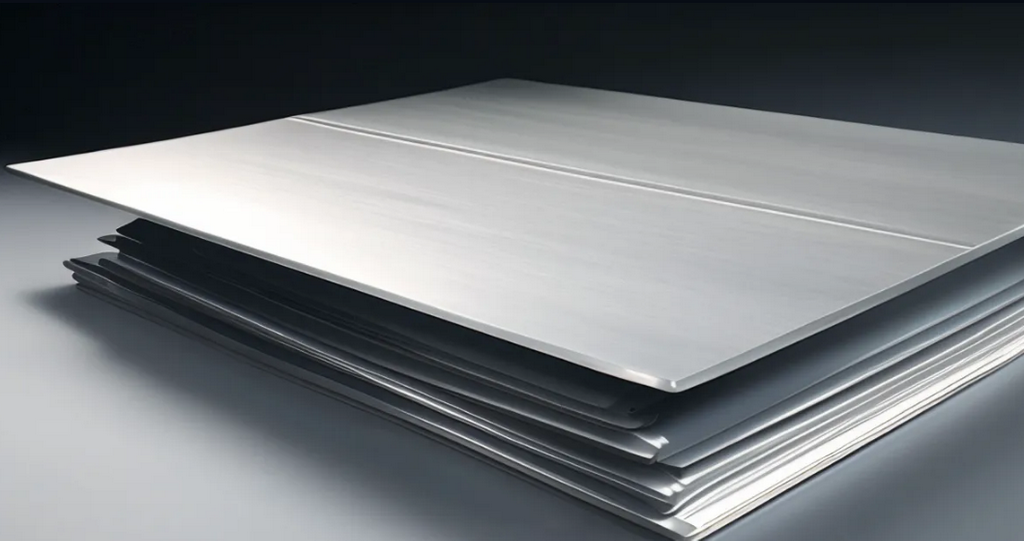 Middle East Conflict & Trade Barriers Disrupt China's Aluminum Plate/Sheet, Strip, and Foil Exports
Among them, the Gulf region was an important consumer market for China in the Middle East: China’s exports of aluminum plate/sheet and strip to Saudi Arabia reached 42,500 mt, and aluminum foil 58,000 mt; exports of aluminum plate/sheet and strip to the UAE reached 103,500 mt, and aluminum foil 93,800 mt; the other four countries (Bahrain, Qatar, Kuwait, and Oman) accounted for combined exports of about 22,000 mt of aluminum plate/sheet and strip and about 11,000 mt of aluminum foil.
Mar 14, 2026 17:35- [SMM Hot Topic] Space-Based PV: When “Computing Power Goes to Space” Meets the Energy Revolution, Is It a Bubble or the Future?
◼ At the beginning of 2026, Musk’s SpaceX plan for 100 GW of annual space PV capacity ignited the A-share market, with multiple concept stocks rising by more than 30 in a single month. At the same time, however, earnings previews from leading PV companies generally showed losses for 2025, and industry fundamentals remained in a deep winter. Behind the stark divergence between the speculative frenzy around the Musk-SpaceX concept and the earnings trough, is the market overly expecting a “second growth curve,” or is this a genuine signal of industrial transformation? ◼ As the global PV industry moves from rapid expansion into a new stage of rational development, its value has gone beyond that of clean energy alone: Against the backdrop of explosive growth in AI computing power driving massive electricity demand, compounded by energy security anxiety triggered by geopolitical conflict in the Middle East, developing PV may become a core strategic choice for countries to achieve their “dual-carbon” goals, build autonomous and controllable energy systems, and reduce electricity costs for end-users. ◼ Since the escalation of the U.S.-Iran conflict at the end of February, the world’s four major benchmark crude oil prices have entered a rapid upward trajectory. Before the outbreak of the conflict, oil prices had remained broadly stable; however, starting on March 2, as the fighting expanded and spread to the Persian Gulf, oil prices immediately entered a sharp uptrend. Note: Shanghai crude oil prices are converted based on the settlement-date exchange rate of 1:0.15. Source: Public information, SMM. ◼ Although the impact borne by different regions varies due to differences in energy mix, geopolitical location, and policy response, the surge in imported crude oil costs driving a broad rise in energy prices has become a common challenge facing all countries. Europe is a case in point. Although Europe’s direct dependence on Middle Eastern crude oil was not high, at only about 5 according to data from energy market intelligence firm Kpler, it remained highly dependent on the region for refined products such as diesel and aviation kerosene, as well as liquefied natural gas. Disruptions in the Strait of Hormuz caused by the conflict directly pushed up Europe’s terminal energy prices—fuel prices at gas stations across the region surged, and natural gas prices broke above EUR 60 per megawatt hour on the 9th, reaching a new high since 2022. The continued rise in energy prices is bound to transmit into broader areas of the economy, increasing overall inflationary pressure and once again underscoring the importance of building secure and controllable energy systems. Accelerating the Clean Transition of the Global Energy Mix, the PV Industry Advances Toward High-Quality Development ◼ The International Energy Agency (IEA) forecasts that, despite economic pressure, global electricity demand momentum remains strong in 2025, with growth rates in 2025 and 2026 expected to be 3.3% and 3.7%, respectively. Data from 2020 to 2025 showed that the global power market followed a trajectory of continued overall growth alongside structural transition toward cleaner energy , with the share of renewable energy sources such as solar rising significantly, although fossil fuels still accounted for the dominant share. ◼ According to the IEA’s Net Zero Emissions Scenario, solar power’s share in the energy mix is expected to rise from less than 2% at present to 12% in 2035 and 28% in 2050. This means PV installations are still far from reaching their ceiling, with substantial room for future growth. ◼ The past five years marked a critical period in which the global PV market shifted from rapid expansion toward rational development. The IEA forecasts that total global new PV installations over the next five years will reach about 3.68 TW, accounting for nearly 80% of new renewable energy additions over the same period, and are expected to become the world’s largest renewable energy source by the end of 2030. This is mainly due to its widening economic advantages—by 2024, the cost of solar PV power generation had already fallen 41% below the cheapest fossil fuel alternative, and these cost advantages are driving rapid growth in both PV installations and power generation share. Source: IEA, public information, SMM. ◼ As a key carrier of PV installations, especially the backbone of utility-scale power plants, solar panel mounting bracket installations are expected to maintain annual average growth of 5%-6% alongside installation growth. Specifically, to achieve annual average new PV installations of 500-600 GW, corresponding module demand is estimated at about 550-700 GW based on the capacity ratio. Assuming a conventional 1:1 module-to-bracket configuration, the annual average installation scale of brackets required for utility-scale PV plants alone would reach at least 250-300 GW. Source: public information, SMM. Escalating Challenges Reshape the Development Logic of the Global PV Market ◼ The PV industry is undergoing resonating internal and external pressures. Internally, the global economic slowdown has become intertwined with social issues, while the industry itself has entered a rational development stage after rapid expansion, making slower installation growth a certain trend. Externally, global trade frictions continue to intensify, with the US, Europe, and other regions erecting nearly insurmountable cost gaps through barriers such as anti-dumping and countervailing duties as well as local content requirements. Challenge 1: Global Trade Frictions and Escalating Trade Barriers ◼ In recent years, countries have introduced a series of policies to build PV trade barriers and reshape the global competitive landscape of the industry. The US imposed “double anti-” duties of as much as 3,403.96% on PV products from four Southeast Asian countries, South Africa raised module tariffs to 10%, and Brazil increased out-of-quota tariffs sharply from 9.6% to 25% through a quota system. Market access requirements for PV in India and Türkiye have also become increasingly stringent. Meanwhile, new supply chain control rules represented by the EU’s Net-Zero Industry Act (NZIA) have extended trade barriers deeper into the industry chain. By setting red lines on “third-country dependence,” they have established quantitative standards for supply chain restructuring. This series of changes has reshaped the competitive dimensions of the international PV industry and significantly raised the threshold for PV product imports and exports. Source: public information, SMM. Challenge 2: New Dynamics in the PV Market, with Incentive and Restrictive Policies Coexisting Source: public information, SMM. Outside China Enterprises Pursue Multi-Dimensional Breakthroughs Through Internal and External Efforts ◼ The practices of solar panel mounting bracket enterprises in the US, India, and other countries show that the key to coping with policy shifts overseas lies in combining “service-oriented” and “high-value” strategies. First, vertically extending from single-equipment sales to a service ecosystem covering the entire life cycle. Second, deepening horizontally by continuously optimizing business structure and extracting value from higher value-added segments. Solution 1: Launch Dedicated Plans Closely Aligned with Government Policies and Local Demand ◼ The global PV industry has now entered a new stage deeply reshaped by both market forces and policy. The growth logic of enterprises is shifting from the past single dimension of relying on technology iteration and cost declines to multi-dimensional competition closely integrating complex policy environments with localized demand. Against this backdrop, the key to corporate success lies in accurately interpreting policy intentions and launching development plans aligned with both market and policy. Tata Power Renewable Energy Limited (TPREL) precisely aligned with India’s “PM Surya Ghar: Muft Bijli Yojana” and launched the dedicated “solar for every home” plan while continuing to provide customized PV solutions. In Q1 FY2026, it added 220 MW of new rooftop PV installations, surging 416% YoY. TPREL also actively responded to local manufacturing policies by establishing 4.3 GW of solar cell and module capacity, ensuring supply while avoiding import tariffs. Through the synergy of “policy response + local capacity + customized services,” TPREL has effectively translated policy dividends into market competitiveness and steadily consolidated its leading position in India’s PV market. Solution 2: Use Acquisitions as a Link to Integrate Resources and Extend from Single Products to the Entire Industry Chain ◼ Competition in the global PV industry has fully escalated into a contest of entire industry chain system integration capabilities, and enterprises’ growth engines are shifting from past reliance on advantages in a single segment to a new model of providing integrated solutions through resource integration. In 2025, Nextracker used acquisitions as the core to integrate resources across the full chain, successively acquiring foundation engineering firms such as Solar Pile International and Ojjo, module supporting firms such as Origami Solar, and electrical system firms such as Bentek, thereby building a full-chain product matrix spanning structural, electrical, and digital solutions. Its performance continued to surge, with revenue rising from $1.9 billion in FY2023 to $3.4 billion in the trailing twelve months ended September 2025. It ultimately announced its transformation into a comprehensive energy solutions provider by renaming itself Nextpower, targeting revenue of more than $5.6 billion in FY2030. This strategy enabled its successful transformation from a single-product supplier into an entire industry chain service provider, solidifying its leading position in the global market. Solution 3: Optimize Business Structure ◼ Trade protectionism in the current PV market continues to intensify, with various trade barriers being layered on one after another. In response to this challenge, PV enterprises can achieve the dual objectives of “compliant operations” and “market retention” through business structure optimization. To avoid the equity constraints on FEOC under the US OBBB Act, Canadian Solar Inc. initiated a US business restructuring with its controlling shareholder CSIQ: it established two new joint ventures to separately manage PV and energy storage businesses, with its own stake set at 24.9% to precisely meet compliance requirements. At the same time, it transferred out 75.1% equity in three overseas plants supplying the US market, receiving a one-off consideration of 352 million yuan. This move enabled Canadian Solar Inc. to retain earnings from the US market through dividends and rental income. In the first three quarters of 2025, it achieved net profit of 990 million yuan, while large-scale energy storage shipments rose 32% YoY. After the adjustment, it focused on strengthening its advantages in non-US markets and successfully stabilized its global business layout with a compliant structure, providing a typical model for the industry in addressing trade barriers. ◼ For Chinese enterprises, in the face of trade frictions and overseas capacity gaps, they need to break through via three paths—“building plants near core markets, reducing costs and improving efficiency through technological innovation, and coordinating both within and outside the industry chain”— by pursuing localized deployment in Southeast Asia, Mexico, and other regions to avoid frequent trade frictions; promoting standardized production and high-end product R&D to enhance competitiveness; and building a “China + overseas” dual-circulation supply chain to stabilize costs. However, overseas expansion still faces challenges such as land and environmental protection costs, talent shortages, and supply chain fluctuations, requiring enterprises to conduct sound risk assessments, leverage policy support, and improve overseas investment service systems. Only by deeply integrating scientific capacity deployment, technological innovation, and industry chain coordination can the mounting bracket industry upgrade from “Made in China” to “Globally Intelligent Manufacturing” and achieve long-term development under the “dual carbon” goals. New Requirements Under the 15th Five-Year Plan, New Topics for PV Enterprises ◼ In a global market full of uncertainties, the consistency and strength of domestic policy have provided fertile ground for the growth of China’s solar panel mounting bracket enterprises. The newly released 15th Five-Year Plan further clarified China’s path for energy and industrial development. On the one hand, the construction of a new-type power system centered on consumption capacity has been listed as a priority task, and green manufacturing and full life cycle management have been formally incorporated into the assessment system. On the other hand, technological self-reliance and self-strengthening together with new quality productive forces have replaced scale competition as the main line of the new development stage. This series of changes signals that the country is driving a profound shift from “competing on capacity” to “competing on system value,” with the core goal of achieving autonomous and controllable energy structure. It is estimated that after the Two Sessions, various departments will successively roll out detailed plans to promote the full implementation of the blueprint. ◼ Key implementation measures include: 1) establishing a “dual controls” system for total carbon emissions and carbon intensity, while improving incentive and restraint mechanisms; 2) vigorously developing non-fossil energy and promoting the efficient use of fossil energy, while strengthening the construction of a new-type power system to ensure stable supply of green electricity; 3) applying both “addition and subtraction” by fostering green and low-carbon industries and promoting energy conservation and carbon reduction in key industry; 4) in addition, accelerating the green transformation of production and lifestyles to consolidate the foundation for green development. ◼ From the perspective of regional development layout, during the 15th Five-Year Plan period, China’s PV industry will show characteristics of regional coordination: north-west China will become the strategic focus by virtue of its natural endowments, exporting electricity through cross-provincial green electricity trading and other means to achieve two-way matching between energy resources and power load; eastern regions, by contrast, will focus on local consumption by high-energy-consuming industries and zero-carbon industrial parks. Source: public information, SMM. ◼ SMM forecasts that China’s new PV installations are expected to reach 208 GW in 2025 and continue growing at an annual average rate of 9% over the next five years, exceeding 292 GW by the end of the 15th Five-Year Plan period. Utility-scale PV will remain dominant, with its installation share staying above 50%. Based on the same logic, we estimate that China’s PV installation market will maintain annual incremental growth of at least 100-120 GW. Source: public information, SMM. ◼ Focusing on China’s steel consumption market for solar panel mounting brackets, SMM estimates that annual steel consumption in China’s PV mounting bracket sector will average about 4-4.5 million mt from 2026 to 2030, accounting for about 30% of total steel consumption in the PV industry over the same period (based on 2026 data). Note: only installation demand for utility-scale PV mounting brackets is included, excluding distributed steel structures, replacement from existing asset depreciation, and exports. Source: public information, SMM. SMM Ferrous Consulting Based on its understanding of the global steel industry chain and regional markets, as well as its strong industry database and network resources, SMM is committed to providing clients with consulting services across the upstream, midstream, and downstream industry chain. Services include market supply and demand research and forecasts, market entry strategies, competitor cost research, and more, covering end-use industry from iron ore, coal, coke, and steel. SMM Ferrous has successfully served more than 300 Fortune Global 500 companies, China Top 500 companies, central state-owned enterprises, state-owned enterprises, publicly listed firms, and start-ups. Data Source Statement: Except for public information, all other data are processed and derived by SMM based on public information, market communication, and SMM’s internal database models, and are for reference only and do not constitute decision-making advice. *This report is an original work and/or compilation work exclusively created by SMM Information & Technology Co., Ltd. (hereinafter referred to as “SMM”), over which SMM lawfully enjoys copyright, protected by the Copyright Law of the People’s Republic of China and other applicable laws, regulations, and international treaties. Without written permission, it may not be reproduced, modified, sold, transferred, displayed, translated, compiled, disseminated, or otherwise disclosed to any third party or licensed to any third party for use in any form. Otherwise, upon discovery, SMM will pursue legal liability for infringement by legal means, including but not limited to claims for breach of contract liability, disgorgement of unjust enrichment, and compensation for direct and indirect economic losses. All content contained in this report, including but not limited to news, articles, data, charts, images, audio, video, logos, advertisements, trademarks, trade names, domain names, layout designs, and any or all other information, is protected by the Copyright Law of the People's Republic of China, the Trademark Law of the People's Republic of China, the Anti-Unfair Competition Law of the People's Republic of China, and other relevant laws and regulations, as well as applicable international treaties relating to copyright, trademark rights, domain name rights, proprietary rights in commercial data and information, and other rights, and is owned or held by SMM and its relevant rights holders. Without prior written permission, no organization or individual may reproduce, modify, use, sell, transfer, display, translate, compile, disseminate, or otherwise disclose the above content to any third party or permit any third party to use it in any form whatsoever. Otherwise, upon discovery, SMM will pursue legal action to hold the infringing party liable, including but not limited to requiring the assumption of liability for breach of contract, disgorgement of unjust enrichment, and compensation for direct and indirect economic losses. The English translation of the above text is:
Mar 12, 2026 14:16 ![[SMM Analysis] January 2026 Global Stainless Steel Market Review: Navigating High Costs and Shifting Supply Dynamics](https://imgqn.smm.cn/production/admin/votes/imagesDRDDb20260213113643.jpeg) [SMM Analysis] January 2026 Global Stainless Steel Market Review: Navigating High Costs and Shifting Supply Dynamics
[SMM Analysis] January 2026 Global Stainless Steel Market Review: Navigating High Costs and Shifting Supply DynamicsThe beginning of 2026 did not bring the calm usually expected in the global stainless steel industry chain ahead of the traditional Lunar New Year offseason. Instead, under the double pincer attack of surging raw material costs and escalating trade protectionism, the market is undergoing a violent restructuring.
Feb 13, 2026 11:32![[SMM Analysis] 2025 Global Stainless Steel Market Review and 2026 Outlook: Global Realignment and Asian Engines](https://imgqn.smm.cn/production/admin/news/en/pic/MnOAV20251226130835.png?imageView2/1/w/176/h/135/q/100) [SMM Analysis] 2025 Global Stainless Steel Market Review and 2026 Outlook: Global Realignment and Asian Engines
[SMM Analysis] 2025 Global Stainless Steel Market Review and 2026 Outlook: Global Realignment and Asian Engines2025 is regarded as the inaugural year of a "mild growth cycle" for the global stainless steel industry.
Dec 26, 2025 13:08- The South Korean government has announced a new package of measures to support the steel industry, which is facing global overcapacity and rising trade protectionism
The South Korean government has announced a new package of measures to support the steel industry, which is facing global overcapacity and rising trade protectionism According to the Ministry of Trade, Industry, and Energy, the state will increase financial assistance, stimulate innovation, and promote the transition to high value-added steel production. The plan includes the creation of a 400 billion won ($278 million) guarantee program to support steel exports, as well as 150 billion won for companies working with steel, aluminum, and copper products. The fund will be jointly financed by steel giant POSCO Group, Industrial Bank of Korea, and Korea Trade Insurance Corp. The program allows companies to obtain preferential loans with reduced interest rates and extended repayment terms. The government will also continue negotiations with key trading partners to lift or ease restrictive measures, such as the US 50% tariff on steel imports or new EU safeguard mechanisms.
Nov 10, 2025 16:07 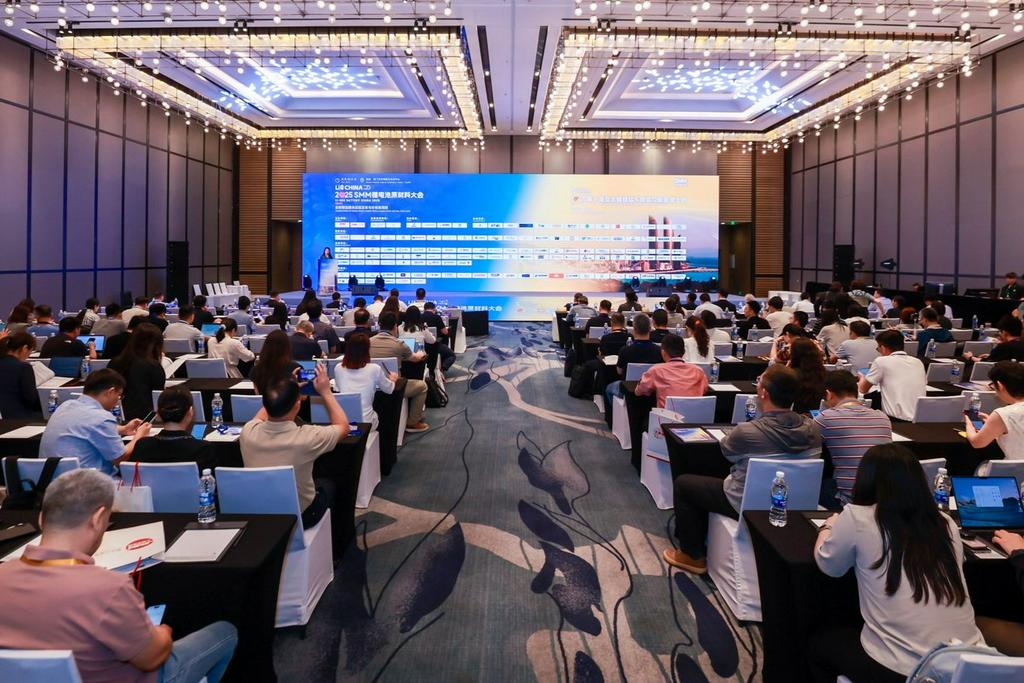 Key Takeaways from APAC (10th) Ni-Cr-Mn Stainless Steel & New Energy Conference 2025
On October 21, the APAC (10th) Ni-Cr-Mn Stainless Steel & New Energy Conference 2025, hosted by SMM Information & Technology Co., Ltd. (SMM), successfully concluded in Xiamen, Fujian!
Oct 24, 2025 14:32