

356results found for 'Real estate'
Sort by : |
- Metals Nearly All Rise, SHFE Nickel, Lithium Carbonate, Polysilicon, Comex Silver Up Over 1%, European Container Freight Index Surges Over 3% [SMM Midday Review]
SMM August 4 news: Metals market: As of the midday close, domestic base metals almost all rose. SHFE copper rose 0.91%, SHFE aluminum rose 1%. SHFE lead rose 0.23%. SHFE zinc fell 0.58%. SHFE tin rose 0.81%. SHFE nickel rose 1.55%. In addition, the most-traded cast aluminum futures rose 0.58%, the most-traded alumina futures rose 0.38%. The most-traded lithium carbonate futures rose 1.07%. The most-traded silicon metal futures rose 0.36%. The most-traded polysilicon futures rose 1.4%. Ferrous metals mostly rose. Iron ore was flat at 702.5 yuan/mt, rebar edged up, while hot-rolled coil edged down. Stainless steel rose 2.06%. Coking coal and coke: the most-traded coking coal contract rose 1.91%, and the most-traded coke contract rose 0.85%. Overseas base metals market, as of 11:41, LME metals all rose. LME copper rose 0.77%, LME aluminum rose 0.56%, LME lead rose 0.80%, LME zinc rose 0.61%. LME tin rose 0.77%. LME nickel rose 0.81%. Precious metals: as of 11:41, COMEX gold rose 0.54%, COMEX silver rose 1.87%. Domestic precious metals: SHFE gold rose 0.35%, the most-traded SHFE silver futures rose 1.64%. Additionally, as of the midday close, the most-traded platinum futures edged up, and the most-traded palladium futures fell 0.54%. As of the midday close, the most-traded European freight futures contract rose 3.19% to 1,843 points. As of 11:41, August 4, some futures midday market quotes: Spot and fundamentals Zinc: In Tianjin market, #0 zinc ingot were mainly traded at 24,760-24,950 yuan/mt, Zijin was traded at 24,880-25,010 yuan/mt, and #1 zinc ingot were mainly traded at around 24,760-24,870 yuan/mt. Zijin was quoted at a premium of around 0-30 yuan/mt against the 2609 contract, Huxin was quoted at 26,220 yuan/mt, #0 zinc ingot was quoted at a discount of around 30-120 yuan/mt against the 2609 contract, and Tianjin market was quoted at a discount of around 110 yuan/mt against Shanghai market. Macro front Domestic: [State Administration for Market Regulation: 20 places including Beijing, Shanghai, etc., designated as national trade secret protection innovation pilot sites] The General Office of the State Administration for Market Regulation issued a notice on promoting typical experiences and practices of national trade secret protection innovation pilot sites. Among them, Beijing Haidian District, Beijing Tongzhou District, Tianjin Binhai High-tech Zone, Shanghai Pudong New Area, Shanghai Fengxian District, Jiangsu Nanjing, Jiangsu Wuxi, Jiangsu Suzhou, Zhejiang Hangzhou, Zhejiang Ningbo, Zhejiang Wenzhou, Anhui Hefei, Fujian Xiamen Haicang District, Hubei Wuhan, Hunan Changsha, Guangdong Guangzhou, Guangdong Shenzhen, Guangdong Foshan, Chongqing Jiangjin District, Sichuan Chengdu Wuhou District were identified as the first batch of national trade secret protection innovation pilot sites. ()Market Regulation Administration [PBOC Net Withdraws 559 Billion Yuan from Open Market Today] PBOC conducted 46.5 billion yuan 7-day reverse repo operations, with an operation rate of 1.40%, unchanged from the previous session. Today, 605.5 billion yuan reverse repos matured. [Shenzhen New Home Sales Up Over 30% YoY in July] According to data from Shenzhen's real estate information platform, the city's new commercial housing sales totaled 3,773 units in July, down 35.2% MoM but up 19.3% YoY; among these, residential sales were 2,664 units, down 6.8% MoM but up 32.5% YoY. Looking at a longer period, new home sales from January to July totaled 35,104 units, a slight 0.7% YoY increase; of these, residential sales totaled 21,935 units, down 10.6% YoY, with the decline narrowing compared with H1. (JIN10 APP) On the US dollar: As of 11:41, the US dollar index rose 0.05% to 100.01. The July US manufacturing PMI data showed strong demand, surging output, and accelerated hiring, marking the fastest expansion in over four years, which to some extent offset the interest rate cut expectations driven by declining oil prices, leaving overall market rate hike expectations relatively unchanged. According to CME FedWatch, the market priced in a 64.5% probability of at least a 25-basis-point rate hike by the Fed in September. (Wall Street CN) (JIN10 APP) Data from the Institute for Supply Management (ISM) showed that the US ISM manufacturing PMI registered 55.6 in July, the highest level since May 2022. A reading above 50 indicates sector expansion, and the industry has remained above that threshold for seven consecutive months. The production index rose to 58.5, the highest since the end of 2021, while the employment gauge indicated that manufacturers added workers for the first time since September 2023. New orders — a signal of demand — also rebounded. Manufacturing momentum has been strong this year, with factories benefiting from solid consumer demand, robust business investment, and government spending on national defense. All but one manufacturing industry reported growth in July, including printing, apparel, and electrical equipment. The only sector reporting contraction was chemical products. Fed’s Williams said he remains optimistic that inflationary pressures will gradually ease, but if that does not happen, the Fed will not hesitate to raise interest rates to ensure price pressures return to target. In an interview with Reuters last Friday, Williams said that if energy prices and trade tariffs have peaked and the economy maintains solid momentum, "I think some of the main factors that have pushed up inflation over the past year and a half will no longer play such a large role, and the disinflationary forces we observed earlier should reemerge."He added: "I am watching very closely what happens to core inflation measures over the coming months, whether that is consistent with inflation trending down to 2% and continuing to move lower, so that we achieve that sustained 2% inflation goal over the longer run by 2028." He also stated: "My own forecast is that inflation will come down somewhat in H2 this year and pull back further next year." Williams reiterated that the current monetary policy stance is "well positioned" to bring inflation back to the target. However, he noted: "If we are not on a path to bring inflation down to 2%... then it would be entirely appropriate to take action to get us back on a path to 2% inflation." (Jin10 Data APP) In terms of data: Today, the US June trade balance, US June JOLTS job openings, US June factory orders MoM, and other figures will be released. Items to watch: SpaceX announces Q2 2026 results; FMS 2026 Flash Memory Summit takes place from August 4-6, with Samsung, SK, and other storage giants in attendance. In terms of crude oil: As of 11:41, both crude benchmarks were up, with WTI rising 0.73% and Brent gaining 1.16%. With the outlook for US-Iran negotiations uncertain and market concerns over supply disruptions persisting, oil prices rebounded after the previous session's plunge. Shipping tracking data shows that six empty Saudi-flagged supertankers changed course in the Gulf of Aden in recent days, heading toward southern Africa. One of them is destined for Gibraltar. On August 3, the six tankers were sailing in formation in the high seas off the coast of Somalia. (Jin10 Data APP) Spot market at a glance: ► ► ► ► ► ► ► ► ► ► ► ► ► ►
Aug 4, 2026 14:12 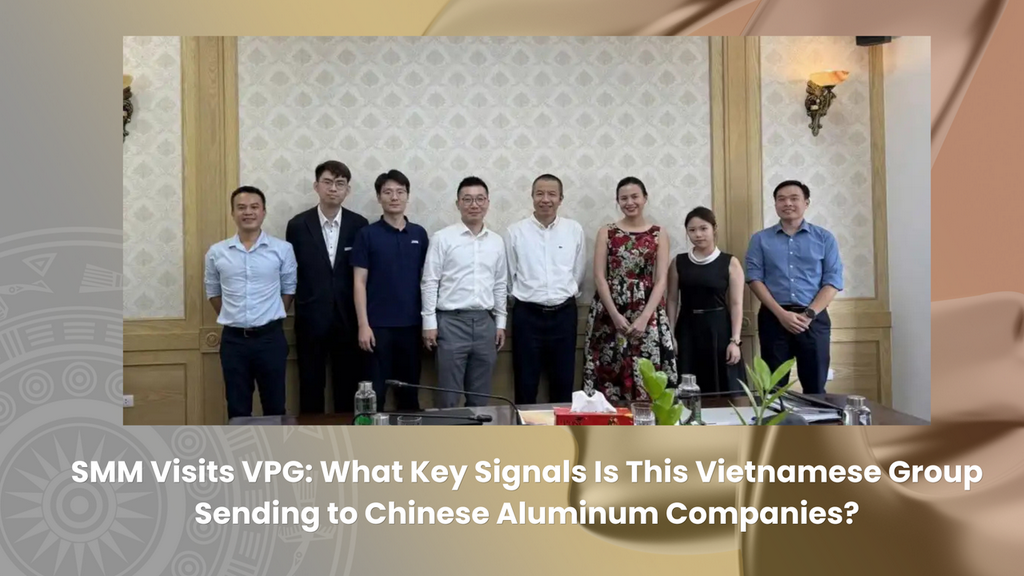 SMM Visits VPG: What Key Signals Is This Vietnamese Group Sending to Chinese Aluminum Companies?
On July 23, 2026, a delegation from Shanghai Metals Market Information Technology Co., Ltd. (SMM) visited VPG (Viet Phuong Group). The delegation included: Logan Lu, CEO of SMM Cason Lou, Director of Aluminum Processing, Marketing Department Lexi Chen, Key Account Manager for Overseas Information Sales Khai Yuen Chin, Senior Overseas Aluminum Analyst The two sides held in-depth discussions on bauxite resource development in Southeast Asia, alumina project development, regional logistics networks, and the development of a Vietnam-based aluminum pricing system. SMM noted that as the global aluminum value chain continues to restructure, China’s alumina market is expected to see sustained demand for overseas resources. Given resource availability and cost considerations, high-quality overseas alumina resources—particularly those from Vietnam and other Southeast Asian markets—are expected to gain greater market potential and competitive advantages. VPG shared updates on the progress of its current projects and said it is actively advancing mineral processing and alumina projects, with Southeast Asia and other international markets set to become key areas of future development. Since 2008, VPG has been engaged in bauxite exploration and development in Sekong Province, Laos, and is currently advancing an integrated industrial project covering bauxite mining, mineral processing, and alumina production. Both sides agreed that establishing an open, transparent, and regionally representative local aluminum pricing system would help improve information transparency and strengthen the international influence of Southeast Asia’s aluminum value chain. They also expressed expectations for deeper cooperation in market research, pricing services, and industry exchanges. What Signals Does SMM’s Visit to VPG Send to Chinese Companies? 01 Vietnam Is Becoming an Important Hub Connecting the Global Aluminum Value Chain In recent years, an increasing number of international companies have viewed Vietnam as an important gateway connecting Southeast Asian resources with global markets. Supported by its established port infrastructure, rapidly expanding manufacturing sector, and growing international trade network, Vietnam is not only benefiting from the relocation of global manufacturing capacity but is also emerging as an important regional hub for the aluminum value chain. For Chinese companies seeking opportunities in Southeast Asia, Vietnam is gradually evolving from an “investment destination” into a “supply chain partner.” 02 Vietnam’s Rapid Market Growth Is Creating New Export Opportunities With free trade agreements such as the EU-Vietnam Free Trade Agreement (EVFTA) taking effect, Vietnam has become a strategic sourcing hub for aluminum products used in the solar industry, including aluminum profiles and PV module frames, with export growth exceeding 20%. EVFTA tariff benefits for EU buyers, together with US Section 301 tariffs, have also encouraged some international buyers to shift sourcing toward Vietnam. Meanwhile, Vietnam aims for electric vehicles to account for 50% of urban vehicles by 2030. As electric vehicles use nearly 30% more aluminum than conventional vehicles, growing EV adoption could generate significant additional aluminum demand. This widening demand gap is expected to create substantial opportunities for aluminum suppliers and exporters. Against this backdrop, SMM AICE is expanding internationally by bringing its conference to Vietnam. The event aims to establish an authoritative platform connecting Chinese aluminum companies with Vietnam and the broader Southeast Asian market, promoting the transition of China-Vietnam aluminum cooperation from “resource complementarity” toward “full-value-chain cooperation and mutual growth.” 03 Future Competition Will Be About Information, Not Just Opportunities Vietnam’s market continues to develop rapidly. At the same time, market rules, policies, cost structures, and pricing mechanisms are constantly evolving. For Chinese companies, identifying projects alone is no longer enough. Timely access to local policies, industry development trends, supply chain changes, and market pricing information is becoming increasingly important. This is also why SMM continues to deepen its presence in the Vietnamese market. Recently, SMM AICE has been conducting intensive visits across Vietnam and the broader Southeast Asian industrial value chain, maintaining close communication with government authorities, industry associations, mining companies, alumina producers, aluminum processors, and other market participants. Through more transparent market intelligence and pricing systems, SMM aims to help global companies better understand market dynamics and reduce decision-making risks. To help more aluminum companies seize emerging opportunities and establish an early presence in the Vietnamese market, SMM AICE Vietnam is coming to Vietnam with a major industry gathering. VPG — Viet Phuong Group Founded in 1996, VPG (Viet Phuong Group) is a well-established diversified investment group in Vietnam, with businesses spanning mining, energy, infrastructure, finance, real estate, and other sectors. Mining is one of the group’s key strategic businesses, with projects involving mineral resources including bauxite, rare earths, and quartz sand. In the aluminum sector, VPG has been engaged in bauxite exploration and development in Sekong Province, Laos, since 2008. The group is currently advancing an integrated project covering bauxite mining, mineral processing, and alumina production. Leveraging Vietnam’s established port infrastructure and regional logistics network, VPG plans to export alumina products to China and other global markets through the Laos–Vietnam cross-border logistics corridor, further integrating into Southeast Asia’s aluminum supply chain. In recent years, the company has continued to advance project development, international cooperation, and market expansion, with the ambition of building a regional aluminum industry platform spanning resource development, alumina production, and international trade. Join the Conversation at SMM AICE 2026 Connect with aluminum producers, processors, traders, manufacturers, certification organisations, industry associations and decision-makers from across Southeast Asia and the global market. Explore aluminum pricing, primary aluminum supply, processing technologies, low-carbon development, CBAM compliance and new opportunities for regional cooperation. ? Ho Chi Minh City, Vietnam ? November 19–20, 2026 Register now: bit.ly/AICE26 and secure your Super Early Bird Pass and save up to USD 200. Register before August 31, 2026.
Aug 3, 2026 16:42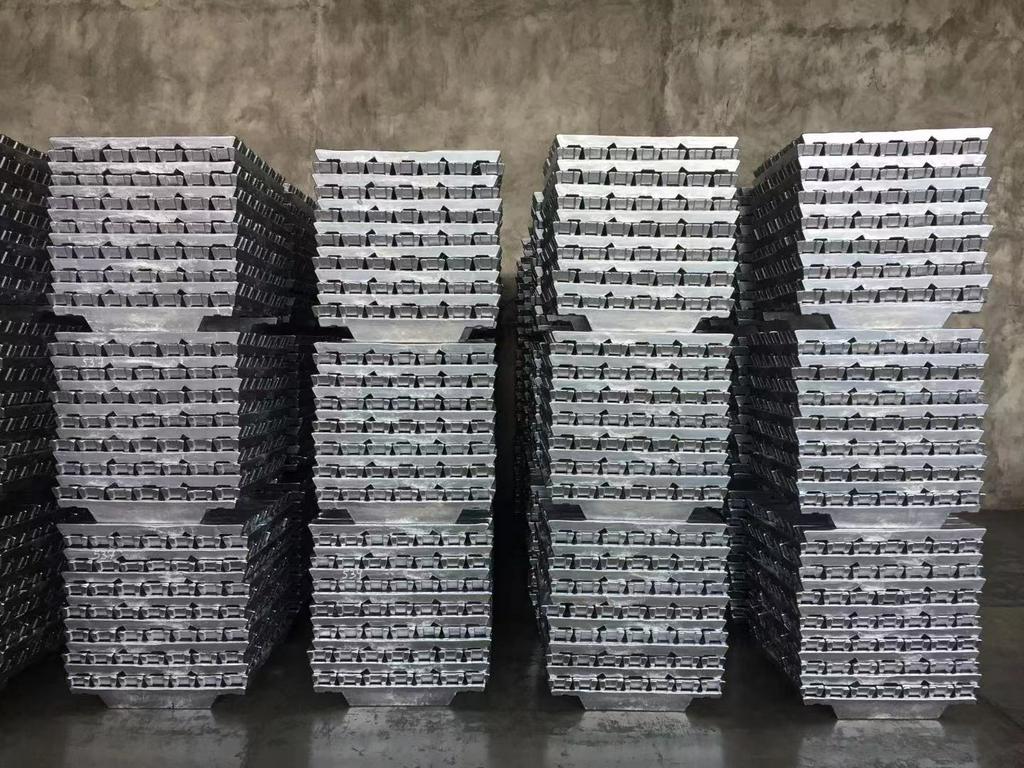 Warehouse Withdrawals Pull Back While Destocking Accelerates, the Logic of China’s Aluminum Ingot Destocking Changing?
As of July 30, China’s aluminum ingot inventory in major consumption areas stood at 953,000 mt. Cumulative destocking from the YTD high of 1.465 million mt in early May has reached 512,000 mt (-35%), with an additional accelerated destocking of 53,000 mt this week, breaking below the 1 million mt threshold as expected. However, the directional divergence between warehouse withdrawals and inventory has raised concerns...
Jul 31, 2026 23:53- Warehouse withdrawals pull back, but destocking accelerates — Is China's aluminum ingot destocking logic changing? [SMM Analysis]
As of July 30, China's major consumption regions reported aluminum ingot inventory of 953,000 mt, having cumulatively destocked 512,000 mt (-35%) from the year's high of 1.465 million mt in early May. Within the week, destocking accelerated further by 53,000 mt, as expected falling below the 1 million mt mark. However, the directional divergence between warehouse withdrawals and inventory drew attention: weekly warehouse withdrawals pulled back to 127,700 mt, losing the advantage of being at a high for the same period in the past four years. The core driving force of this destocking round has shifted from "demand and warehouse withdrawal boost" in June to "supply contraction + slowdown in shipment pace": the proportion of liquid aluminum rose to 78.3% in July, with casting ingot volume down 15.1% YoY; a sharp drop in arrivals in South China pushed Foshan's premium wider by 50 yuan/mt in a single week to 115 yuan/mt; SMM believes...
Jul 31, 2026 23:30 - Increasing Cases of Enterprises Controlling and Cutting Production, Die-Casting Zinc Alloy Operating Rates Decline [SMM Die-Casting Zinc Alloy Weekly Review]
[More Frequent Production Control and Cuts Among Enterprises; Die-casting Zinc Alloy Operating Rates Decline] The decline in operating rates was mainly due to weakening end-use demand, with sluggish shipments at alloy plants leading to production control and cuts. Demand side, end-use consumption was in the traditional off-season, with orders across downstream sectors generally weak...
Jul 31, 2026 16:11 - July Aluminum Processing PMI Records 42.2%, Fully Falling into Contraction Territory as End-Use Demand Weakens, Exports Diverge, and Sector Recovery Remains Unlikely in Short Term [SMM Downstream In-Depth Analysis]
[SMM Aluminum Downstream Analysis: July Aluminum Processing PMI at 42.2%, All Segments Enter Contraction Territory; End-Use Demand Weakens, Export Divergence Hinders Near-Term Recovery] In July, the aluminum processing industry exhibited a pattern of broad-based off-season weakness across all segments with structural divergence. Only the new energy sector demonstrated demand resilience, while domestic demand in other sectors contracted broadly and significantly. Export performance was uneven, with aluminum wire and cable exports plummeting and dragging down the industry. Combined with raw material constraints, high-temperature production restrictions, and disturbances from price spread recovery, overall industry activity remains deeply mired in contraction territory, and near-term recovery momentum is insufficient.
Jul 31, 2026 09:55 - National Bureau of Statistics (NBS): July manufacturing PMI at 49.2%, business climate pulls back somewhat, high-tech manufacturing continues to expand
According to the National Bureau of Statistics (NBS), the manufacturing PMI stood at 49.2% in July, down 1.1 percentage points MoM, with the overall sentiment pulling back somewhat. The non-manufacturing business activity index for July was 49.0%, down 1.2 percentage points MoM, indicating a lower level of non-manufacturing activity compared to the previous month. The composite PMI output index for July was 49.3%, down 1.3 percentage points MoM, signalling that the overall pace of business activity among China's enterprises slowed down MoM. Huo Lihui, chief statistician at the NBS Service Industry Survey Centre, noted that the manufacturing PMI pulled back in July while high-tech manufacturing continued to expand. The manufacturing PMI fell to 49.2%, affected by factors including a relatively high base from the previous period of rapid growth in manufacturing and the traditional production off-season in some manufacturing sectors. The equipment manufacturing and high-tech manufacturing sectors continued to play a supportive and leading role, with their respective PMIs at 51.4% and 53.3%, significantly higher than the overall manufacturing figure and maintaining relatively rapid expansion, steering manufacturing development towards higher quality and innovation. The PMIs for the consumer goods industry and the high-energy-consuming industry were 47.8% and 47.0%, down 2.4 and 0.1 percentage points MoM, reflecting a pullback in sentiment. China PMI Performance in July 2026 I. China Manufacturing PMI Performance In July, the manufacturing PMI stood at 49.2%, down 1.1 percentage points MoM, with sentiment pulling back somewhat. By enterprise size, the PMIs for large, medium, and small enterprises were 49.5%, 49.7%, and 47.4%, respectively, down 1.2, 0.8, and 0.8 percentage points MoM, all below the threshold. Among the five sub-indices that make up the manufacturing PMI, the production index, new orders index, raw material inventory index, employment index, and supplier delivery time index were all below the threshold. The production index was 49.9%, down 1.5 percentage points MoM, indicating that manufacturing production activity experienced some slowdown. The new orders index was 48.5%, down 2.7 percentage points MoM, pointing to a pullback in manufacturing market demand. The raw material inventory index was 48.3%, down 0.1 percentage points MoM, suggesting that inventories of major raw materials in the manufacturing sector continued to decline. The employment index was 49.0%, up 0.5 percentage points MoM, indicating that the labour market sentiment in manufacturing enterprises rebounded somewhat. The supplier delivery time index was 49.5%, down 0.4 percentage points MoM, signalling that delivery times for raw material suppliers in manufacturing lengthened compared to the previous month. II. China Non-Manufacturing PMI Performance In July, the non-manufacturing business activity index was 49.0%, down 1.2 percentage points MoM, with non-manufacturing sentiment lower than in the previous month. By sector, the construction business activity index was 47.0%, down 2.0 percentage points MoM, and the services business activity index was 49.3%, down 1.1 percentage points MoM. Within the services sector, business activity indices for postal services, telecommunications, broadcasting and satellite transmission services, and culture, sports and entertainment were all in the relatively high sentiment territory above 55.0%. By contrast, business activity indices for capital market services and real estate were below the threshold. The new orders index was 44.4%, down 3.6 percentage points MoM, indicating a pullback in market demand sentiment for non-manufacturing. By sector, the new orders index for construction was 40.1%, down 6.2 percentage points MoM, and the new orders index for services was 45.2%, down 3.2 percentage points MoM. The input price index was 49.7%, unchanged from the previous month but still below the threshold, indicating that the overall level of input prices used by non-manufacturing enterprises for business activities continued to decline. By sector, the input price index for construction was 48.7%, down 1.7 percentage points MoM, and the input price index for services was 49.9%, up 0.3 percentage points MoM. The selling price index was 47.9%, down 0.5 percentage points MoM, suggesting that the overall decline in selling prices for non-manufacturing enterprises widened somewhat. By sector, the selling price index for construction was 47.7%, down 2.1 percentage points MoM, and the selling price index for services was 47.9%, down 0.3 percentage points MoM. The employment index was 45.4%, down 0.4 percentage points MoM, indicating that labour market sentiment in non-manufacturing enterprises pulled back somewhat. By sector, the employment index for construction was 40.9%, down 1.4 percentage points MoM, and the employment index for services was 46.2%, down 0.2 percentage points MoM. The business activity expectations index was 55.4%, up 0.1 percentage points MoM, indicating that non-manufacturing enterprises' confidence in market development strengthened. By sector, the business activity expectations index for construction was 51.8%, up 0.7 percentage points MoM, and the business activity expectations index for services was 56.0%, unchanged from the previous month. III. China Composite PMI Output Index Performance In July, the composite PMI output index was 49.3%, down 1.3 percentage points MoM, indicating that the pace of business activity among China's enterprises slowed down MoM. III. China Composite PMI Output Index Performance In June, the composite PMI output index was 50.6%, up 0.1 percentage points MoM, indicating that the overall expansion of business activity among China's enterprises slightly accelerated. China's PMI Pulled Back in July — Interpretation of China’s PMI for July 2026 by Huo Lihui, Chief Statistician at the NBS Service Industry Survey Centre On 31 July 2026, the NBS Service Industry Survey Centre and the China Federation of Logistics and Purchasing released China's PMI. Huo Lihui, chief statistician at the NBS Service Industry Survey Centre, provided the following interpretation. In July, the manufacturing PMI, non-manufacturing business activity index, and composite PMI output index stood at 49.2%, 49.0%, and 49.3%, respectively, down 1.1, 1.2, and 1.3 percentage points MoM. Sentiment was somewhat lower than in the previous month. I. Manufacturing PMI Pulled Back, While High-Tech Manufacturing Continued to Expand In July, the manufacturing PMI fell to 49.2%, affected by factors such as a relatively high base from the earlier period of rapid manufacturing growth and the traditional production off-season in some manufacturing sectors. (1) The equipment manufacturing and high-tech manufacturing sectors continued to play a supportive and leading role. Their PMIs were 51.4% and 53.3%, respectively, significantly higher than the overall manufacturing figure, maintaining relatively rapid expansion and steering manufacturing development towards higher quality and innovation. The PMIs for the consumer goods industry and the high-energy-consuming industry were 47.8% and 47.0%, down 2.4 and 0.1 percentage points MoM, reflecting a pullback in sentiment. (2) Production and demand in some equipment manufacturing industries grew relatively fast. The manufacturing production index and new orders index were 49.9% and 48.5%, respectively, down 1.5 and 2.7 percentage points MoM, indicating that both manufacturing enterprise production and market demand pulled back. By industry, the production and new orders indices for general equipment and computer, communication and other electronic equipment were both above 53.0%, pointing to high market activity and relatively fast growth in production and demand. In contrast, the production and new orders indices for non-metallic mineral products, ferrous metal smelting and rolling processing, and automobiles were below the threshold, suggesting weak supply-demand sentiment. (3) The price indices declined further. The main raw material purchase price index and the EXW price index were 53.2% and 47.8%, respectively, and have fallen for four consecutive months, influenced by recent fluctuations in some commodity prices. Among these, both price indices for non-ferrous metal smelting and rolling processing were below 45.0%. Due to significant price level fluctuations, enterprises' purchase willingness weakened, and the procurement volume index fell to 49.4% this month. (4) Market expectations remained stable. The manufacturing production and business operation expectations index was 54.1%, reflecting continued overall optimism among enterprises regarding market development. By industry, the expectations indices for food, beverage, and refined tea, as well as railway, shipbuilding, aerospace and other equipment, rose above 60.0%, indicating that relevant enterprises' confidence in near-term industry development strengthened. II. Non-Manufacturing Business Activity Index Declined Somewhat, While the Culture and Tourism Sector Remained Relatively Active In July, the non-manufacturing business activity index was 49.0%, down 1.2 percentage points MoM, with non-manufacturing sentiment lower than in the previous month. (1) Sentiment in the culture and tourism sector rebounded. The services business activity index was 49.3%, down 1.1 percentage points MoM, indicating a pullback in services market activity. By industry, driven by summer consumption, residents' leisure, entertainment, and travel activities increased, with the business activity indices for air transport, accommodation, and culture, sports and entertainment rebounding noticeably MoM, as relevant enterprises' business volumes grew relatively fast. The business activity indices for wholesale and monetary and financial services recorded relatively large declines, representing the main factors behind the fall in overall services sector sentiment this month. Meanwhile, the business activity indices for capital market services and real estate were below the threshold. The services business activity expectations index was 56.0%, unchanged from the previous month, pointing to relatively stable confidence among enterprises regarding near-term market development. (2) Construction sector sentiment headed downwards. Affected by unfavourable factors such as recent high temperatures, heavy rainfall, and flooding in some regions, construction progress slowed down somewhat, and the business activity index was 47.0%, down 2.0 percentage points MoM. The construction business activity expectations index was 51.8%, up 0.7 percentage points MoM, indicating that enterprises' confidence in near-term industry development strengthened somewhat. III. Composite PMI Output Index Below the Threshold In July, the composite PMI output index was 49.3%, down 1.3 percentage points MoM, with the pace of business activity among Chinese enterprises slowing down MoM. The manufacturing production index and the non-manufacturing business activity index, which together form the composite PMI output index, were 49.9% and 49.0%, respectively.
Jul 31, 2026 09:49 - [SMM Steel Market Morning News] Political Bureau of the CPC Central Committee: Deepen comprehensive reforms in capital market investment and financing, enhance the resilience and confidence of the capital market
The Political Bureau of the CPC Central Committee: Deepen comprehensive reform of investment and financing in the capital market, and enhance the resilience and confidence of the capital market.
Jul 31, 2026 07:30 - US Fed decision landed, the most-traded SHFE tin contract shot up quickly in the morning then pulled back under pressure [SMM Tin Midday Review]
[SMM Tin Midday Review: US Fed Decision Settles, the Most-Traded SHFE Tin Contract Shot Up Quickly in the Morning Before Pulling Back Under Pressure]
Jul 30, 2026 13:16 - [SMM Steel Morning News] Ministry of Commerce: "Insufficient domestic demand in China leads to overcapacity" not consistent with facts
Ministry of Commerce: "Insufficient domestic demand in China causes overcapacity" does not reflect facts
Jul 29, 2026 07:30