

3749results found for 'Policy'
Sort by : |
- Zimbabwe Earmarks Chrome-Producing Regions for Dedicated Ferrochrome Hubs as H1 Mining Revenue Nears US$5.8 Billion
[SMM Express] Zimbabwe's Ministry of Mines and Mining Development used its three-day Mid-Term Strategic Planning Review Workshop in Kadoma this week to confirm that the country's mining sector generated approximately US$5.73 billion in export earnings during H1 2026 — gold contributing US$3.2 billion and other minerals a further US$2.53 billion through the Minerals Marketing Corporation of Zimbabwe — putting the sector on track to exceed 2025's record US$8.6 billion full-year total. Mines Minister Dr Polite Kambamura used the occasion to announce that government will establish regional beneficiation hubs aligned to each area's mineral endowment, with chrome-producing districts specifically earmarked to specialize in ferrochrome and chromium alloy production, while iron ore regions are directed toward steel. The announcement reinforces the trajectory already visible in Zimbabwe's chrome sector this year: a February 2026 ban on exporting unbeneficiated minerals, combined with policy requiring chrome mining titles above 100 hectares to be tied to ferrochrome furnace development, has been steadily pushing production and investment toward smelting rather than raw ore shipment. Formalizing that push into designated regional hubs — rather than leaving beneficiation to individual operator discretion — signals Harare intends to treat chrome-specific value addition as a structural, geography-based policy rather than a company-by-company negotiation. With the Chamber of Mines projecting 10% sector growth for 2026 and full-year export earnings potentially reaching US$7.5–11 billion, the coming months should show whether the hub concept translates into concrete furnace investment in Zimbabwe's chrome belt or remains, for now, a stated policy direction.
Aug 5, 2026 23:50 - Gold, Silver, Platinum, Palladium Dance Together, Precious Metals Sector Surges Nearly 8%, Shengda Resources and Sichuan Gold Hit Daily Limit [SMM Flash News]
SMM, August 5: Expectations for Middle East geopolitics are shifting toward easing, oil prices have pulled back sharply for two consecutive trading days, and market concerns about inflation have cooled. Expectations for a US Fed interest rate hike in September have pulled back, with multiple positive factors resonating to drive precious metals futures and stocks to strengthen together. In the futures market: As of around 17:12 on August 5, COMEX gold was up 1.7% at $4,223.1/oz; SHFE gold main contract was up 3.1% at 910.4 yuan/g; COMEX silver was up 2.53% at $61.77/oz; SHFE silver main contract was up 7.08% at 15,105 yuan/kg; silver T+D was up 5.8% at 14,988 yuan/kg. Platinum main contract futures were up 9.18% at 441.15 yuan/g; palladium main contract futures were up 8.51% at 329.65 yuan/g. In the stock market: As of market close on August 5, the precious metals sector was up 7.87%. In individual stocks: Sengda Resources and Sichuan Gold hit the daily limit up, while Xiaocheng Technology, Chifeng Gold, Zhongjin Gold, Xingye Silver&Tin, and Shanjin International were among the top gainers. News [South Korea's Central Bank Plans to Purchase Domestically Refined Gold Bars for the First Time in 13 Years] According to South Korean media reports, the Bank of Korea said on Monday that it will cooperate with LS MnM, the Korea Exchange (KRX), and the Korea Securities Depository (KSD) to purchase domestically produced gold for the first time in 13 years through over-the-counter transactions, as heightened geopolitical risks have increased the need to diversify foreign exchange reserves. LS MnM and Korea Zinc produce about 40 to 45 mt of gold annually as a by-product of smelting, of which about 10% is exported. The central bank stated that if relevant enterprises apply, it will consider using the trading and settlement system of the KRX and the storage facilities being prepared by the KSD to purchase some of the gold intended for export. The central bank said it will arrange bulk transactions after prior consultations on price and quantity to limit the impact on domestic gold prices, and that the new channel should reduce foreign exchange risks, since previous overseas purchases were all paid in US dollars. Additionally, the central bank also stated that it purchased a small amount of gold ETFs in Q2. Separately, it was reported that as of July, its gold holdings remained unchanged at 104.4 mt, while South Korea's foreign exchange reserves at the end of June stood at $427.36 billion, including gold reserves worth $4.79 billion. [World Gold Council: Gold Investment Demand Expected to Remain Positive] The World Gold Council report noted that in the remainder of 2026, investment demand is expected to be the main driver of gold demand growth, and will be increasingly supported by over-the-counter trading activities and Asian investment demand. Central banks will remain key gold buyers. High gold prices will continue to suppress gold jewelry demand, but the response of gold ore production and recycled gold supply is expected to be relatively mild. Gold investment demand is expected to remain positive for the rest of 2026. OTC activity and Asian investment demand are expected to play a larger role, while Western gold ETF flows may continue to be sensitive to US Treasury real yields, Fed monetary policy expectations, and the US dollar. Although consumer spending has remained relatively resilient, high gold prices will continue to suppress gold jewelry demand; technology-related gold demand is expected to further benefit from AI investment, but downside risks are accumulating. (Jinshi Data) [Zijin Mining: Terminates Acquisition of United Gold, Plans to Subscribe for 9.2% Equity] Zijin Mining announced on the Hong Kong Stock Exchange that on January 26, 2026, its controlled subsidiary Zijin Gold International signed an Arrangement Agreement with United Gold, under which Zijin Gold International would acquire all outstanding common shares of United Gold for a cash price of C$44 per share, with a total consideration of approximately C$5.5 billion (approximately $4 billion). However, after comprehensive evaluation, both parties believed that certain closing conditions precedent could not be fully satisfied or waived by the deadline stipulated in the acquisition agreement (which had been extended to July 29, 2026) or within a reasonable period thereafter. The parties agreed to terminate the acquisition, and neither party is required to pay a termination fee or any other fees to the other. Meanwhile, the parties separately entered into a Share Subscription Agreement, under which Zijin Gold International intends to subscribe for 12.8 million common shares (representing approximately 9.2% of the enlarged share capital post-issuance) placed by United Gold at a cash price of C$32.55 per share, with a total subscription amount of C$416.6 million, equivalent to approximately $295 million. [Chifeng Gold: Expects H1 2026 Net Profit to Increase by 54%-61% YoY] Chifeng Gold disclosed an earnings forecast on the evening of July 14, expecting its H1 2026 net profit attributable to shareholders to be 1.7 billion yuan to 1.78 billion yuan, up 54%-61% YoY. [Zhaojin Gold: Expects H1 2026 Net Profit to Increase by 347.48%-436.98% YoY] Zhaojin Gold disclosed an earnings forecast on the evening of July 14, expecting its H1 2026 net profit attributable to shareholders to be 200 million yuan to 240 million yuan, up 347.48%-436.98% YoY; recurring net profit is expected to be 80 million yuan to 116 million yuan, up 490.44%-756.14% YoY. [Shandong Humon Smelting: Expects H1 2026 Net Profit to Increase by 81.06%-122.36% YoY] Shandong Humon Smelting disclosed an earnings forecast on the evening of July 14, expecting its H1 2026 net profit attributable to shareholders to be 570 million yuan to 700 million yuan, up 81.06%-122.36% YoY; recurring net profit is expected to be 272 million yuan to 402 million yuan, down 2.03%-33.73% YoY. [Western Gold: H1 2026 Net Profit Expected to Rise 280.16%-333.39% YoY] Western Gold disclosed on the evening of July 13 that it expects its H1 2026 net profit attributable to the parent company to be 500 million to 570 million yuan, up 280.16%-333.39% YoY; and adjusted net profit to be 490 million to 580 million yuan, up 172.96%-223.09% YoY. [Zhongjin Gold: H1 2026 Net Profit Expected at 4.1-4.6 Billion Yuan, up 52.15%-70.7% YoY] Zhongjin Gold disclosed on the evening of July 13 that it expects its H1 2026 net profit attributable to the parent company to be 4.1 billion to 4.6 billion yuan, up 52.15%-70.7% YoY; and adjusted net profit to be 4.05 billion to 4.55 billion yuan, up 36.96%-53.87% YoY. Spot Market Silver On August 5, the morning ex-factory reference average price of SMM #1 silver was 14,556 yuan/kg, up 2.38% from the previous trading day. In the spot market, downstream demand remained sluggish this month, with limited new orders overall. The strengthening silver price further weakened downstream purchase willingness; market transactions mainly relied on support from banking institutions, with deals concentrated around parity, and traders were reluctant to quote. Morning quotations in Shanghai were mostly at parity to a premium of up to 10 yuan/kg against TD; in Shenzhen, some national standard goods were quoted around parity. Although low-priced goods existed, they did not significantly disturb spot trade. Today, the market quoted a discount of 60 to 50 yuan/kg against the most-traded SHFE contract 2610. Overall, expectations for a Strait of Hormuz agreement heated up, inflation concerns eased briefly, and precious metals recovered slightly. In the spot market, the rise in silver prices further suppressed demand, with orders remaining sluggish and trading staying thin. Voices Regarding the future trend of precious metals, some institutions' views are as follows: CITIC Securities research report stated that this year gold prices shot up and then fell rapidly, but we believe gold is still in a major bull market, with reasons including the accelerating expansion of the US fiscal deficit, irreconcilable geopolitical rifts under deglobalization, and continued gold purchases by global central banks providing a floor. Therefore, we think this round of decline in gold prices is merely a temporary correction within the bull market. The current pullback has approached historical extremes, and the $4,000/oz area is highly likely to be the bottom zone for this round. Looking ahead, the impact of the Strait of Hormuz situation on gold prices is expected to shift from a drag to a boost, the Fed's monetary policy may be more optimistic than market expectations, and coupled with surging US military spending driving up the deficit, gold prices are expected to return to an uptrend within the year. Deutsche Bank precious metals strategist Hsueh Michael stated that the "explosive rally phase" for gold prices that began in August 2024 is not yet over, and maintains the forecast of gold at $4,600/oz in Q4 2026. This assessment rests on a triple framework of fair value models, statistical tests, and official demand data, discounting the significant downside risk implied by commodity price ratios. (Zhitong Finance) A research report from CICC Wealth Futures shows: oil prices pulled back, gold rebounded, and currently, the yen's disruption causing moves in the US dollar index is a new disturbance factor, which is expected to have a relatively limited impact on gold price trends. The biggest pressure on gold currently still comes from oil prices. CICC Wealth Futures believes that if oil prices are not excessively strong, the probability of gold maintaining a fluctuating trend or drifting higher is relatively high. Everbright Futures' outlook for August suggests that the short-term gold price trend depends on the evolving US-Iran situation. If the conflict persists or its spillover expands, market sentiment may weaken again, and under liquidity risk expectations, gold prices may continue to underperform. However, if a substantive breakthrough in negotiations occurs, gold prices could stabilize in the short term and undergo a recovery and rebound. At that point, if domestic and overseas financial markets show a synchronized recovery, it can be further confirmed. Nevertheless, it can be expected that with support from rigid central bank purchases and allocation demand, even if a pullback occurs again, the downside should be relatively limited. Additionally, at the Jackson Hole Economic Symposium at the end of August, Warsh may outline a medium-term policy framework. Before that, the US CPI data on the 12th will be a key verification indicator. Overall, gold is likely in a stage of bottom consolidation and sentiment repair, and we hold a cautiously optimistic view. The core risk is that the US-Iran conflict once again pushes oil prices above $90/oz, a significant rebound in US inflation data far exceeding expectations, and the evolving probability of a September rate hike continuing to suppress market sentiment. However, judging from the performance of overseas financial markets and oil prices, a full-scale escalation of the US-Iran conflict is largely unsupported. A Reuters survey showed that after gold prices pulled back significantly from their record highs in January, analysts cut their gold price forecasts for the first time since the end of 2023, though most still expect support from central bank buying and concerns over fiscal sustainability. In the survey of 29 analysts and traders conducted over the past three weeks, the median forecast for gold prices in 2026 was $4,509/oz. That figure is down from $4,916 three months ago and marks the first downgrade in 11 quarters. The average forecast for 2027 is $4,610, compared to a forecast of $5,100 in the previous poll. Gold prices hit an all-time high of $5,595/oz in January, but suffered a sharp pullback in Q2 as the Iran war exacerbated energy inflation and boosted rate hike expectations, marking the worst quarterly performance since 2013. Since the outbreak of the war, spot gold has fallen about 22%. (Jinshi Data APP) Analysts Warren Patterson and Ewa Manthey from ING noted that gold prices rose on Monday, as a sharp decline in oil prices eased inflation concerns and pressured the US dollar and US bond yields. The large drop in oil prices on Monday alleviated inflation worries and the prospect of further monetary tightening. The move came after a pause in US-Iran hostilities. Lower oil prices also weighed on the US dollar and bond yields, improving the outlook for non-yielding assets ahead of this week’s Fed meeting. Markets are now focused on the Fed and the upcoming US inflation data for further guidance on the interest rate outlook. If yields remain subdued, gold prices should continue to be supported near current levels. However, any hawkish surprise from the Fed could limit further upside room in the near term. Commerzbank has lowered its year-end gold price forecast to $4,500 per troy ounce, and now expects platinum to reach $2,000 per troy ounce by year-end, down from a previous forecast of $2,100. Citi said its base case shows that India’s gold imports will remain subdued in the third quarter, despite historically being a seasonal peak for stockpiling. The reasons include ample scrap supply, cautious consumer sentiment and local price discounts curbing demand for fresh imports. However, Citi maintains its short-term gold price target of $4,500 for 0–3 months. This target, the bank said, assumes an easing of tensions in the Strait of Hormuz and a less hawkish turn by the Fed; in the short term there remain many risks that could push gold prices lower again, including a major re-escalation, AI-driven de-risking, and a persistently hawkish stance by the Fed. UBS gold strategist Joni Teves remains optimistic on the medium to long-term outlook for gold. She noted in her comments that gold prices have been rising since the start of this week, with gold stocks in mainland China and Hong Kong surging around 20% over three days – a positive signal. “We believe confidence in gold is starting to improve and continue to expect that prices will rebound from current levels by year-end,” she said. UBS’s global team remains upbeat on gold’s medium-term outlook and forecasts prices will reach $4,675 per ounce by end-2026 and $4,800 per ounce by end-2027. She indicated that the key events to watch going forward are the Fed’s policy tone at the FOMC meeting at the end of July and further developments in the Middle East. (Jinshi Data APP) Analysts at ANZ Research said in a report that physical demand for the metal and central bank purchases are supporting the gold market. These analysts added that while gold prices face short-term headwinds from the US Fed's tightening expectations and a strong US dollar, after months of outflows from exchange-traded funds, gold investment positions look thin, suggesting limited room for further declines. A high-interest-rate environment typically weighs on non-yielding assets like gold. (Zhitong Finance) Goldman Sachs stated that despite pressure from the US Fed's tightening expectations, central bank purchases are expected to provide a floor for gold. Demand remains robust, with the bank estimating that central banks bought 81 mt of gold in May and the three-month average of monthly purchases at 67 mt, far above the pre-2022 average of 17 mt. Goldman Sachs analysts said, "We believe the trend of central banks increasing their gold holdings will continue for many years as they diversify reserves to hedge geopolitical and financial risks." The bank forecasts average monthly purchases will be 50 mt this year and 40 mt next year. (Jin10 Data) Kim Soojin, analyst at Mitsubishi UFJ Financial Group, said, "Recent price action suggests that the market is placing more weight on the likelihood that US interest rates will stay high for longer rather than on gold's traditional safe-haven demand. This leaves gold vulnerable to pressure unless geopolitical risks further translate into a broad deterioration in financial market sentiment." (Jin10 Data) Fidelity International, an asset manager, said it plans to add to its gold positions again at an appropriate time after reducing them earlier this year, believing gold's long-term momentum remains strong. Ian Samson, multi-asset portfolio manager at Fidelity International, said recently, "We plan to add to our gold positions again; the question is just the timing." He said he reduced his gold allocation to a neutral level from January to February this year, when gold's multi-year bull market abruptly ended. Samson expects the gold market to re-enter a bull market sometime in 2027. The logic for a return to a bull market would only be undermined if "governments re-embrace fiscal discipline and central banks are truly committed to bringing inflation back down," "but I don't think we're in that world right now." Samson also noted that continued central bank gold purchases, a key driver of the previous bull market, will continue to support gold prices. A research report from Guoxin Securities shows that after a deep correction in H1, gold prices near $4,000 are gradually showing signs of bottoming out, with further upside only awaiting event catalysts. It recommends building positions in batches near $4,000 on dips and avoiding chasing rallies. Key allocation logic: First, valuations are at historically low levels, providing a notable margin of safety. After a deep pullback in H1, current valuations of gold mining companies have retreated sharply from the beginning of the year to low levels, offering high odds. Going forward, aside from a valuation repair rally, they are expected to further benefit from the price elasticity driven by rising gold prices. Second, earnings elasticity advantage is significant. Gold stocks act as an "amplifier" for gold prices—the cost of gold mining is rigid, so rising gold prices directly translate into profit growth, making earnings elasticity far exceed the gold price increase itself. A research report from Huayuan Securities points out: from a medium-term perspective, the market’s core trading logic has anchored on the pricing chain of "inflation stickiness and resilience exceeding expectations → extended period of high rates by the US Fed → repeated intensification of rate hike expectations within the year," and gold's price center remains dominated by US real bond yields and the US dollar index, with the overall market likely to consolidate on a subdued note. Ceasefire consultations in the Middle East are currently mired in back-and-forth maneuvering, with the two sides significantly diverging on core demands such as troop withdrawal arrangements, nuclear facility inspection mechanisms, and control rights and toll rules for navigation in the Strait of Hormuz. The recurring geopolitical conflicts continue to disrupt global crude oil supply expectations, and the upside risk of energy prices may further entrench inflation stickiness, in turn supporting the US Fed's tightening policy stance. Meanwhile, the simultaneous rise in the US dollar index and US bond yields is creating a dual suppression effect; coupled with gold's safe-haven attributes temporarily yielding to interest rate pricing logic, the upside room for gold prices may continue to be constrained. Key events to watch over the next two weeks include: 1) developments in the Middle East conflict and navigation conditions in the Strait of Hormuz; 2) the US Fed’s interest rate decision to be announced on July 30; 3) the US June PCE to be released on July 30. In the long term, gold’s bullish logic has not weakened but has been further strengthened amid changes in the global macro and geopolitical landscape. 1) The constraints of US fiscal deficits, debt expansion, rising trade protectionism, and intensifying major-country competition are weakening the stability of the US dollar credit anchor, driving a reallocation of global reserve assets toward diversification. Gold is gradually evolving into an important asset for hedging sovereign credit risks, geopolitical fragmentation risks, and risks of restructuring the global monetary system. 2) Continued gold purchases by global central banks still provide solid bottom support for gold prices, and the PBOC’s continued increase in holdings further confirms the official sector’s long-term allocation demand. 3) The late-cycle US economy faces multiple constraints of high interest rates, credit contraction, and a growth slowdown. In the future, whether the US Fed cuts interest rates due to an economic slowdown or is forced to maintain higher rates for longer due to sticky inflation, gold possesses strong long-term allocation value: the former is favorable for declining real interest rates, while the latter strengthens demand for safe-haven and credit-risk protection. Overall, gold remains in a favorable window in the medium and long term, and its price center is expected to continue shifting upward amid the reshaping of the global macro and geopolitical landscape. Recommended Reading:
Aug 5, 2026 17:17 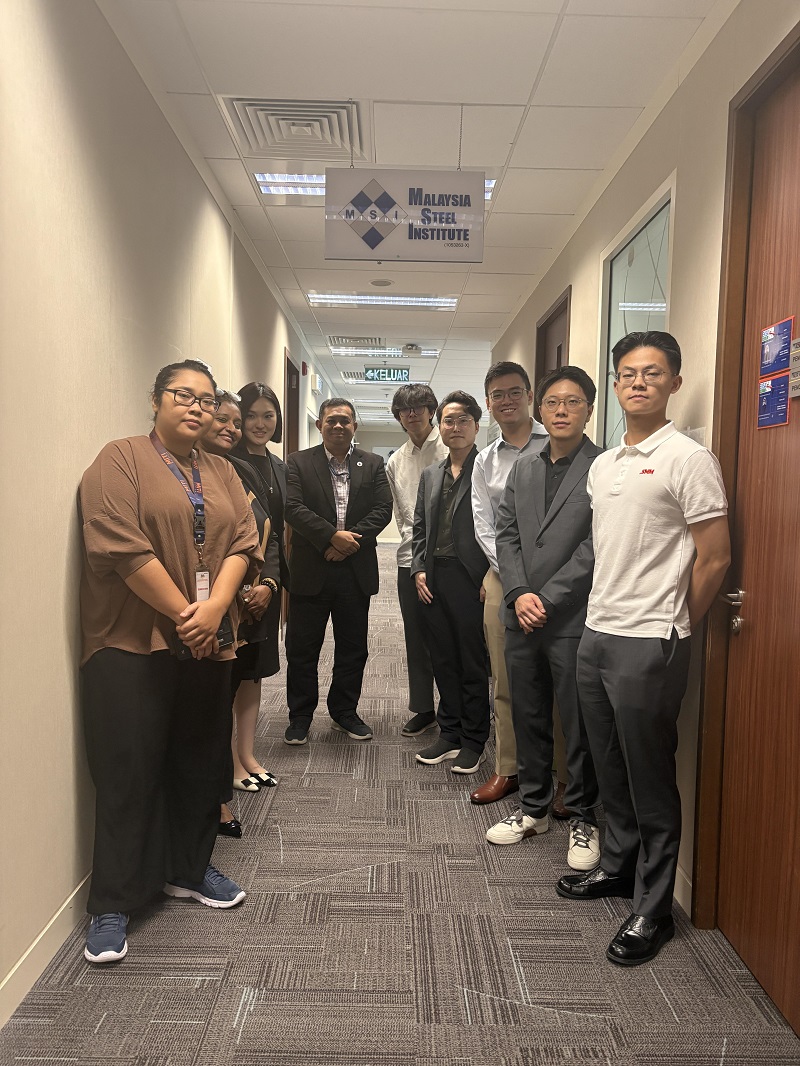 SMM Visits Malaysian Steel Institute (MSI) to Deepen Cooperation on the Southeast Asian Ferrous Metal Industry Chain
Kuala Lumpur, Aug 5 – At a time when the global ferrous metals sector is undergoing constant restructuring, ASEAN has emerged as a pivotal growth hub for the steel industry, fuelled by robust end-market demand, fast-expanding production capacity and shifting cross-border trade dynamics. Regional infrastructure upgrades, local capacity iteration, and trade policy adjustments are collectively driving ongoing changes in the supply-demand structure, pricing system, and supply chain of the ASEAN steel market. The industry urgently needs a specialized, international dialogue platform to address development pain points and unlock global business opportunities. Against this industry background, a delegation from Shanghai Metals Market (SMM) paid a special visit to the Malaysia Steel Institute (MSI) on August 4, and was warmly welcomed by MSI's team including CEO Ts. Dr. Nurl Muiz, Industry Relations and Liaison Shalini and Data Analyst Shamimi, etc. Both sides introduced their respective development overviews, and engaged in in-depth exchanges on cooperation directions, industry data services, exhibition synergy, and other topics, sorted out areas of cooperation alignment, seeking a long-term and mutually beneficial industry cooperation model. MSI presented its institutional positioning and core functions to SMM. As an industrial service organization under the jurisdiction of Malaysia's Ministry of International Trade and Industry (MITI), MSI serves as a key communication bridge between the Malaysian government and the steel industry. Built on a government-enterprise collaboration model, it has been deeply involved in the domestic steel industry for many years, responsible for public services such as industry standard setting, technology R&D, talent cultivation, and detection and testing, undertaking the function of coordinating the steady development of Malaysia's steel industry. Leveraging long-term industry surveys, MSI conducts in-depth market intelligence research on the Southeast Asian steel market, helping member enterprises enhance market competitiveness through data analysis services. The local government is actively advancing the green steel industry development agenda and increasing the green transformation of the steel sector, but enterprise awareness and industry supporting systems on the market side are lagging behind the policy promotion pace. In response, MSI hopes to connect with professional industry platforms to address the industry's development shortcomings, and hopes to rely on SMM's entire industry chain service capabilities to obtain targeted industry development solutions and implementation suggestions, thereby helping the local green steel industry and the entire ferrous metals industry chain achieve steady upgrades. MSI understands and affirms SMM's data service capabilities in the global steel industry, and intends to leverage SMM's industry chain data to improve regular monitoring of steel capacity, production, supply and demand, etc. in Southeast Asia. MSI has long maintained cooperation with multiple international industry organizations. This engagement with SMM aims to jointly enhance the research standards of Malaysia's steel industry and promote high-quality development of the industry. Exhibition-conference synergy is one of the key cooperation directions in this visit. In order to further penetrate the ASEAN metals market, deliver bilateral cooperation outcomes, and build a higher-standard cross-border industry exchange and cooperation bridge, SMM will host the 2026 SMM ASEAN Ferrous Metals Summit from November 26-27, 2026 in Kuala Lumpur, Malaysia. The summit focuses on the development trends of the entire ferrous metals industry chain in ASEAN, covering core categories such as steel, iron ore, and coke. It will delve deeply into key industry topics such as steel demand transformation driven by regional infrastructure upgrades, mineral resource development and utilization, cross-border trade and circulation, industrial green transformation, and market price trend forecasts. The summit will bring together mines, steel enterprises, traders, logistics institutions, financial platforms, and industry research experts globally, leveraging SMM's mature industrial data system and market analysis capabilities to provide authoritative market interpretations and efficient upstream-downstream matchmaking channels for participants. MSI expressed that it will provide promotional support for SMM's relevant industry summits, including official channel promotion, invitation of local quality enterprises, and industry resource matchmaking. Both sides reached a preliminary cooperation consensus in terms of exhibition collaboration, brand synergy, and resource sharing. The in-depth engagement with MSI and the cooperation consensus reached will also lay a solid foundation for the successful implementation of this summit, deepening regional industry penetration in the ASEAN region, and releasing regional industrial cooperation value. About the 2026 SMM ASEAN Ferrous Metals Summit This event is the premium platform in the ASEAN ferrous metals market that converge 400+ decision-makers from mines, mills, trading houses, processors, equipment and technology providers, and logistics operators at the same table — precisely when the regional order is being rewritten. Conference Highlights 1. ASEAN Steel Market Outlook An in-depth analysis of regional steel demand, with consumption expected to reach 87.9 million mt in 2026, driven primarily by Vietnam, Indonesia, and the Philippines. 2. China—ASEAN Trade and Supply Chain Restructuring Exploring shifting flows of HRC, billet, slab, and other steel products amid changing supply patterns, trade remedies, and regional market dynamics. 3. Capacity Expansion and Production Transition Examining ASEAN’s evolving steelmaking landscape, including BF-BOF capacity growth, EAF development, overseas investment, and new regional production hubs. 4. Trade Policies and Market Access Assessing anti-dumping measures, tariffs, RCEP-related opportunities, and regulatory changes reshaping steel trade across ASEAN. 5. High-Growth Demand and Product Opportunities Identifying opportunities from infrastructure, construction, automotive, and advanced steel applications, with a focus on Indonesia, Vietnam, and other emerging markets. 6. Executive Networking and Regional Cooperation Connecting leading producers, traders, buyers, investors, associations, policymakers, and industry experts across ASEAN, China, and global markets. Senior Speakers 2026 Scenes from Past Conferences Conference Agenda Contact: Horin Dong WhatsApp: +8618721310824 Email: horindong@smm.cn Scan the QR code for conference details and more discount information About SMM SMM has long been deeply engaged in global commodity industry services, continuously deepening cooperative ties with government and enterprise institutions and industry associations across various countries, and steadily expanding its global industrial service network. Leveraging a mature collaborative model with Indonesian government, enterprises, and associations, SMM has established a comprehensive closed-loop ecosystem for sharing overseas exhibition and conference information, continuously iterating and upgrading its industrial big data system to achieve efficient global market information exchange and joint resource building and sharing. SMM organizes 50+ professional events each year, including industry summits, industry forums, and field trips. Of these, 40 are deeply rooted in the Chinese market, nearly 10 are precisely positioned in core Southeast Asian markets, and a small number cover Europe and Africa. Overseas events have earned global industry recognition thanks to authoritative industry guest lineups, solid industry survey data, and precise supply-demand matchmaking services. SMM has organized a series of high-end summits in Indonesia in cooperation with local authorities such as the Ministry of Foreign Affairs and the Indonesia Nickel Miners Association (APNI), gathering 300+ industry elites, and were complemented by professional field trip activities along the overseas industry chain, comprehensively empowering regional industry exchanges and trade matchmaking.
Aug 5, 2026 17:04 SMM Releases the 2026 Energy Storage Tier 1 List, Recognizing Industry Leaders Powering Next-Generation Energy Systems
The global energy storage industry enters 2026 in a new phase of accelerated growth and high-quality development. As a cornerstone of next-generation power systems, energy storage is becoming increasingly critical to enabling renewable energy integration, strengthening grid resilience, and supporting the electrification of industries worldwide. Driven by improving economics, evolving electricity market mechanisms, and supportive policy frameworks, demand for energy storage continues to expand across utility-scale, commercial and industrial (C&I), and residential applications. At the same time, the rapid growth of AI computing infrastructure and data centers is creating new demand for large-scale, reliable energy storage solutions, further broadening the industry's growth opportunities. As the market matures, competition is evolving beyond hardware cost alone. Industry leadership is increasingly defined by comprehensive system integration capabilities, product safety, lifecycle management, global delivery capacity, and continuous technological innovation. Companies with integrated supply chains, advanced energy storage solutions, and proven execution capabilities are emerging as the driving force behind the industry's next stage of development. Against this backdrop, Shanghai Metals Market (SMM) has officially released the 2026 SMM Energy Storage Tier 1 List , recognizing manufacturers that demonstrate outstanding performance across technology, product quality, operational excellence, and long-term sustainability. Leveraging SMM's extensive industry expertise and market research, the Tier 1 evaluation adopts a comprehensive multi-dimensional assessment framework covering product competitiveness, delivery capability, system reliability, operational stability, market performance, and sustainable business development. The goal is to identify enterprises that consistently deliver high-quality products while maintaining resilient and responsible operations in an increasingly competitive global market. The companies recognized in the 2026 SMM Energy Storage Tier 1 List represent the industry's leading innovators. Through continuous advancements in technology, safety, and system performance, they are supporting the development of new power systems, accelerating renewable energy adoption, and providing reliable energy solutions for emerging sectors such as AI computing and digital infrastructure. Their achievements also reflect the industry's transition from rapid capacity expansion toward sustainable, high-quality growth focused on safety, efficiency, and long-term value. More than a recognition of market leadership, the SMM Energy Storage Tier 1 List establishes a comprehensive benchmark for excellence in the global energy storage industry. Moving beyond single-factor evaluation criteria, it recognizes companies that combine technological innovation, dependable product performance, reliable delivery, and sustainable operations to create lasting value for customers and the broader energy ecosystem. As the industry continues to evolve through rapid technological advancements, higher safety standards, and expanding global markets, SMM encourages all stakeholders to continue driving innovation, prioritizing product safety and quality, and fostering fair and sustainable competition. Together, the industry can build a stronger, more resilient energy storage ecosystem while accelerating the global clean energy transition and unlocking the immense opportunities of the trillion-dollar energy storage market.
Aug 5, 2026 15:51- [SMM Stainless Steel Daily Review] SS futures price retreated after a rapid rise, stainless steel spot trades cooled.
[SMM Stainless Steel Daily Review] SS Futures Retreat after Rapid Rise; Spot Stainless Steel Trades Cool Down According to SMM on August 5, SS futures generally pulled back, ending yesterday's shot up, and followed SHFE nickel to slump sharply. As of close, the most-traded SS contract settled at 14,475 yuan/mt. In the spot market, dragged by the renewed decline in SS futures, trading sentiment weakened notably, and traders lowered their quotes. Under the sentiment of rushing to buy amid continuous price rise and holding back amid price downturn, transactions turned visibly quiet. The most-traded SS futures contract: at 10:15 am, SS2609 was at 14,480 yuan/mt, down 390 yuan/mt from the previous trading day. Spot premiums for 304/2B in Wuxi were in the range of 490-890 yuan/mt. In the spot market, the average price for cold-rolled 201/2B coil in Wuxi held steady; for cold-rolled 304/2B coil with raw edges, the average price in Wuxi fell by 75 yuan/mt, and in Foshan also fell by 75 yuan/mt; the price for cold-rolled 316L/2B coil in Wuxi was flat; for hot-rolled 316L/NO.1 coil, quotes in Wuxi were unchanged; and cold-rolled 430/2B coil in both Wuxi and Foshan remained flat. This week, macro sentiment turned bearish, dominating metals market trends, and stainless steel futures consolidated on a subdued note under overall pressure. The US Fed's interest rate meeting this week kept rates unchanged as expected, but the overall stance was hawkish, weighing on commodity valuations broadly, and the nonferrous metals sector weakened collectively. Affected by the transmission of macro headwinds, SS futures consolidated on a subdued note in tandem, with the center of futures moving lower and overall market trading sentiment cautious. Spot and inventory side, futures...
Aug 5, 2026 15:38 - Zambian Miners Seek Policy Boost for Copper Output and Infrastructure Ahead of Elections
Mining operators across Zambia are formalizing their policy demands ahead of the upcoming national elections, calling on the government to strengthen incentives for local mineral processing, greenfield exploration, and power generation expansion. Industry leaders emphasize that these measures are vital to achieving the national benchmark of tripling annual copper output to 3 million tonnes. This push coincides with a tight physical market, where surging demand for critical metals in electric vehicles, power networks, and construction has driven benchmark copper futures up over 40% in the past year to $14,000 per tonne. Fiscal stabilization and closer engagement with miners have already drawn over $10 billion in committed investment to Zambia since the 2021 election. However, expanding long-term output hinges on resolving critical infrastructure bottlenecks. According to the Zambia Chamber of Mines, maintaining a robust exploration pipeline via greenfield spending and licensing reforms is essential to secure real industry growth. Meanwhile, unintegrated producers continue to advocate for export duty relief on copper concentrates. Industry executives estimate that Zambia needs at least 2,000 megawatts of additional generation capacity to prevent severe power shortages from capping planned mine expansions. Because mining remains the country's economic backbone, contributing 9% of GDP, 72% of export earnings, and nearly half of government revenue, analysts expect general policy continuity for foreign direct investment following the polls.
Aug 5, 2026 15:35 - Crude Oil Falls for Third Day; Metals Rise Broadly, SHFE Lead Up Over 2%, SHFE Zinc and Lithium Carbonate Lead Gains; Platinum, Palladium, and SHFE Silver Soar [SMM Midday Commentary]
SMM August 5: On the metals markets: As of the midday close, base metals on the domestic market almost all rose. SHFE copper rose 0.79%, SHFE aluminum rose 0.15%, SHFE lead rose 2.61%, SHFE zinc rose 1.38%, SHFE tin rose 0.5%, and SHFE nickel fell 0.78%. In addition, the most-traded cast aluminum futures were flat at 23,365 yuan/mt. The most-traded alumina futures rose 0.99%, the most-traded lithium carbonate futures rose 1.45%, the most-traded silicon metal futures rose 0.72%, and the most-traded polysilicon futures rose 1.83%. Most ferrous metals rose. Iron ore rose 0.93%, rebar rose 0.34%, hot-rolled coil rose 0.5%, and stainless steel fell 2.09%. Coking coal and coke: the most-traded coking coal contract rose 3.27%, and the most-traded coke contract rose 2.13%. On the overseas base metals market, as of 11:45, LME metals broadly rose. LME copper was flat at $14,043/mt, LME aluminum rose 0.22%, LME lead rose 0.71%, LME zinc rose 0.59%, LME tin rose 0.13%, and LME nickel fell 0.2%. On the precious metals front, as of 11:45, COMEX gold rose 0.8% and COMEX silver rose 1.33%. On the domestic precious metals front, SHFE gold rose 1.92%, and the most-traded SHFE silver contract rose 5.35%. In addition, as of the midday close, the most-traded platinum futures rose 7.04%, and the most-traded palladium futures rose 6.01%. As of the midday close, the most-traded European container freight futures fell 8.96% to 1,635 points. As of 11:45 on August 5, the following are some futures’ midday quotes: > Click to view the SMM data dashboard Spot and fundamentals Copper: Today, in Guangdong, #1 copper cathode spot against the front-month contract: high-quality copper was quoted at a premium of 110 yuan/mt, up 10 yuan/mt from the previous trading day; standard-quality copper was at a premium of 30 yuan/mt, up 30 yuan/mt; and SX-EW copper was at a discount of 30 yuan/mt, up 30 yuan/mt. The average price of Guangdong #1 copper cathode was 106,990 yuan/mt, up 450 yuan/mt from the previous trading day, while the average price of SX-EW copper was 106,890 yuan/mt, up 460 yuan/mt. Spot market: Guangdong inventories ended a two-day increase and declined again, mainly due to reduced arrivals... > Click for details Macro front Domestic: [The PBOC’s open market operations net drained 201.5 billion yuan today] The PBOC conducted 5 billion yuan of 7-day reverse repo operations, with an operation rate of 1.40%, unchanged from the previous operation. Today, 206.5 billion yuan of reverse repos matured. > On August 5, the central parity rate of the yuan in the interbank foreign exchange market was 6.7889 yuan per US dollar US dollar side: As of 11:45, the US dollar index fell 0.05% to 99.82. Oil prices fell further, with markets betting that the tight energy supply situation will ease, potentially reducing inflationary pressures, and cooling expectations for US Fed interest rate hikes. (Wall Street CN) According to the CME "FedWatch," the probability that the US Fed will keep rates unchanged in September is 41.6%, while there is a 58.4% probability of a cumulative 25bp rate hike. For October, the probability of rates staying unchanged is 30.5%, with a 53.9% probability of a cumulative 25bp hike and a 15.5% probability of a cumulative 50bp hike. (Jin10 Data APP) "Fed mouthpiece" Nick Timiraos wrote that US Treasury Secretary Bessent’s policy reaction function has shifted to a less dovish stance. His remarks this year suggest that the Fed should continue to hold rates steady. Earlier this year, Bessent cited models showing that the Fed’s policy rate could be anywhere from more than 25bp to over 100bp above the neutral rate. Today (August 4), he put forward two points. He first defended Warsh’s decision last week not to articulate any policy reaction function: "I believe every meeting should be open, and market participants should judge for themselves... I think Warsh wants to keep his options open to achieve the best outcome." Secondly, he did propose a policy reaction function that could be seen as dovish, arguing that near-term shocks should be ignored: "What exactly will be the impact of rising short-term rates? We’ll have to wait and see." He raised this question, but then responded by noting that underlying inflation is "very mild... very steady." "In core inflation, after stripping out the more volatile components influenced by energy, the rest has been very steady. I expect this to continue." (Jin10 Data APP) On the economic data front, US job openings declined somewhat in June, but hiring rebounded slightly, indicating that labour market demand remained relatively stable. eToro’s Bret Kenwell noted that this Friday’s non-farm payrolls report will be the next key period: "If the data is strong, especially amid still-elevated inflation, it will reinforce expectations for a September rate hike; but if the data is weak, combined with last week’s lower-than-expected GDP growth, it could provide more justification for the Fed to stay on hold." (Wall Street CN) Data: Today will see the release of France’s June industrial production m/m, final July services PMIs for France, Germany, the Eurozone, and the UK, Eurozone June PPI m/m, US July ADP employment change, final US July S&P Global services PMI, and US July ISM non-manufacturing PMI, among other data. Watch for: 2028 FOMC voter, Kansas City Fed President Schmid delivered a speech on the US Fed, monetary policy, and agricultural economic outlook. Crude oil: As of 11:45, oil prices on both benchmarks extended their declines from the previous two trading days, with WTI down 1.36% and Brent down 1.06%. Qatar said both the US and Iran are optimistic about an agreement to reopen the Strait of Hormuz, and the relevant proposal has been drafted. US Treasury Secretary Bessent publicly stated that the agreement could be reached on Tuesday or Wednesday. As a result, crude oil futures continued their decline. The Strait of Hormuz is a critical passage for global energy supply; if reopened, it is expected to normalize global oil supply. According to Xinhua News Agency, Iranian Foreign Ministry spokesperson Baghaei said on the 4th that Iran is still negotiating with Oman on the Strait of Hormuz, and the negotiations have made "positive progress" at both technical and political levels. US Treasury Secretary Bessent indicated that an agreement could be reached as early as Tuesday or Wednesday this week. According to a report by Axios on the 4th, regional sources and US officials said that the US, Iran, and Oman are "close to reaching" a temporary agreement to reopen the Strait of Hormuz, and the US side hopes to announce the agreement on the 5th. (From Wallstreetcn APP) Spot Market Overview: ► ► ► ► ► ► ► ► ► ► ►
Aug 5, 2026 14:46 - Macro liquidity expectations and a weak spot market constrain each other, with the most-traded SHFE tin contract continuing to consolidate at highs [SMM Tin Midday Review]
[SMM Tin Midday Review: Macro liquidity expectations and the weak spot market constrain each other, with the most-traded SHFE tin contract continuing to consolidate at highs]
Aug 5, 2026 12:56 - Platinum and palladium surge violently, spot consumption remains sluggish [SMM Daily Review]
Platinum prices surged sharply today. News front, the US Department of Commerce released an announcement on August 4 planning to add 14 downstream derivative products of steel, aluminum, and copper into the scope of Section 232 tariff control. Although the document did not directly mention platinum group metals, the market interpreted it as a signal of continuous escalation of US trade tariff policy tools. Coupled with US Treasury Secretary Bessent's statement on August 4 that the US and Iran were expected to reach an agreement on August 4 or 5 to reopen the Strait of Hormuz, international oil prices pulled back significantly, inflation expectations eased, leading to a pullback in expectations for US Fed interest rate hikes, and the precious metals sector as a whole got a boost. In early trading, the most-traded platinum contract PT2610 on GFEX closed at 432.5 yuan/g, surging 7.04%. The inverted spread between the best ask price of Platinum 9995 on the Shanghai Gold Exchange and GFEX PT2610 remained around 6 yuan/g. Spot market, mainstream quotations for platinum were at a discount of 3.5 yuan/g to 2 yuan/g against the PT2610 contract. Although the mainstream quotation premiums/discounts did not change significantly with the sharp rally in futures, downstream purchase willingness was extremely low, and the bid-ask spread widened. Suppliers, with limited willingness to sell at large discounts, opted to hold prices firm in their offers. Overall, trading in the platinum spot market was very sluggish today.
Aug 5, 2026 12:20 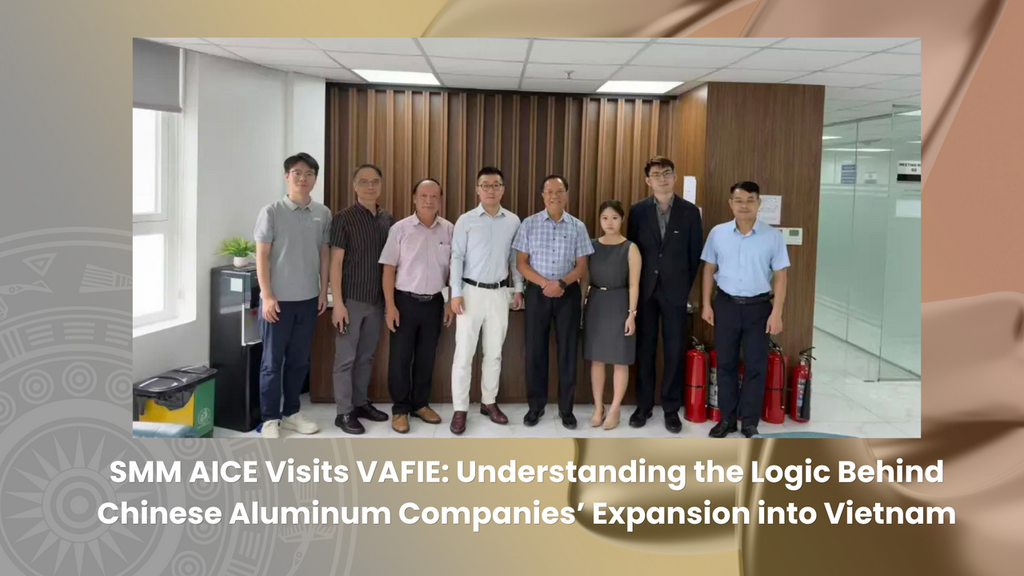 SMM AICE Visits VAFIE: Understanding the Logic Behind Chinese Aluminum Companies’ Expansion into Vietnam
On July 24, 2026, a delegation from Shanghai Metals Market (SMM) visited the Vietnam Association of Foreign-Invested Enterprises (VAFIE). The delegation included: Logan Lu, CEO of SMM Cason Lou, Director of Aluminum Processing, Marketing Department Lexi Chen, Key Account Manager for Overseas Information Sales Khai Yuen Chin, Senior Overseas Aluminum Analyst The delegation held in-depth discussions with VAFIE representatives on Vietnam’s investment environment, cooperation with local investment promotion authorities, business resource connections, and potential collaboration on industry forums. VAFIE noted that it has actively participated in international forums and exhibitions related to Vietnam’s aluminum industry in recent years. As an important organization connecting the Vietnamese government, local industrial parks, and international investors, VAFIE has extensive government and corporate resources in areas including bauxite development, alumina projects, aluminum processing and manufacturing, and related industrial investment promotion. It is also committed to supporting regional economic development and industrial growth across Vietnam. SMM introduced its continued engagement in Vietnam and the broader Southeast Asian market, including its work on developing local pricing systems, conducting industry research, organizing international forums, and connecting companies with relevant business resources. Since July 3, 2026, SMM has launched a series of new price assessments covering Southeast Asian 6063 aluminum billet processing fees and CIF Southeast Asia premiums and discounts. Among them, the Vietnam 6063 Non-Homogenized Aluminum Billet Processing Fee and related price assessment have officially been launched. Both sides agreed that, as Vietnam’s manufacturing sector and foreign investment continue to expand, Chinese and Vietnamese companies have significant potential for cooperation in industrial development, project investment, market intelligence, and international exchanges. They also expressed their intention to pursue deeper cooperation in the future. Understanding the Logic Behind Chinese Aluminum Companies’ Expansion into Vietnam 01 Companies Need More Than Customers — They Need a Local Gateway In recent years, an increasing number of Chinese aluminum companies have turned their attention to Vietnam. Some are exploring opportunities in industrial parks, some are seeking aluminum processing projects, while others are establishing local supply chains. However, after entering the Vietnamese market, many companies discover that finding customers is not necessarily the greatest challenge. The real difficulty lies in identifying a reliable local platform that can connect them with government authorities, regional resources, and suitable project opportunities. In the past, Chinese aluminum companies considering expansion into Vietnam mainly asked: Are operating costs low enough? Which part of Vietnam is most suitable for our business? Today, their priorities are changing: Does the local government support the project? Who can help us turn the plan into a successful local operation? For Chinese aluminum companies, those that establish strong local connections earlier will be better positioned to capture opportunities arising from Vietnam’s industrial upgrading and the restructuring of regional supply chains. 02 Competition Is Not Only About Finding Opportunities — It Is About Execution As more Chinese aluminum companies begin expanding into Vietnam, the country’s policy environment, approval procedures, project licensing requirements, and local investment promotion rules are also evolving. Future competition will not simply depend on who identifies an opportunity first. It will increasingly depend on which companies possess stronger local networks, more accurate policy insights, and more efficient project execution capabilities. This is also a key reason why SMM AICE continues to deepen its presence in Vietnam. Through ongoing visits to companies, industry associations, and government institutions across Vietnam and Southeast Asia, SMM AICE aims to establish more transparent market intelligence, industry research, and international exchange platforms. These efforts are designed to help Chinese aluminum companies assess the Vietnamese market more accurately, reduce decision-making risks, and improve their ability to implement projects successfully. To help more Chinese aluminum companies gain an early advantage and capture emerging opportunities in Vietnam, SMM AICE Vietnam is coming with a major industry gathering. At the conference, SMM will officially launch the SMM Vietnam Aluminum Price and provide a detailed explanation of its pricing methodology. Join the Conversation at SMM AICE 2026 Connect with aluminum producers, processors, traders, manufacturers, certification organisations, industry associations and decision-makers from across Southeast Asia and the global market. Explore aluminum pricing, primary aluminum supply, processing technologies, low-carbon development, CBAM compliance and new opportunities for regional cooperation. ? Ho Chi Minh City, Vietnam ? November 19–20, 2026 Register now: bit.ly/AICE26 and secure your Super Early Bird Pass and save up to USD 200. Register before August 31, 2026.
Aug 5, 2026 10:38