

2942results found for 'MOU'
Sort by : |
- South Korea and Chile Sign MOUs to Deepen Lithium and Copper Supply Chain Cooperation
South Korean President Lee Jae-myung and Chilean President Jose Antonio Kast held a summit in Santiago, and on Thursday the two countries signed five memorandums of understanding, including a mineral resources cooperation document aimed at deepening cooperation in the lithium and copper supply chains.Lee Jae-myung stated that the two countries are "natural and ideal partners" in the field of critical minerals. He pointed out that Chile is the world's largest copper producer and possesses the world's largest lithium reserves, while South Korea has global leading advantages in high-end industries such as semiconductors and power batteries.This mineral cooperation agreement elevates bilateral relevant cooperation to the ministerial level, and plans to expand entire industry chain cooperation for core resources such as lithium and copper, covering information sharing, technology cooperation, and personnel exchanges.
Aug 2, 2026 00:47 - US Dollar Monthly Line Falls, Crude Oil Monthly Lines Surge Over 24%, LME Outperforms SHFE, Copper, Aluminum, and Gold Monthly Lines Close Positive [Overnight Market]
SMM News August 1: Metals markets: Overnight, base metals in the domestic market showed mixed performance. SHFE copper fell 0.18%, gaining 2.9% in July. SHFE aluminum was unchanged at 23,665 yuan/mt, with a July gain of 4.63%. SHFE lead fell 1.41%, SHFE zinc rose 0.64%, and SHFE tin rose 0.72%. SHFE nickel fell 0.24%. In addition, the most-traded alumina futures edged up 0.04%, and the cast aluminum main contract edged up 0.02%. Overnight, most ferrous metals fell. Stainless steel rose 0.17%, iron ore fell 2.85%, rebar fell 0.83%, and hot-rolled coil fell 0.74%. In terms of coking coal and coke: the most-traded coking coal contract fell 1.38%, and the most-traded coke contract fell 1.51%. In the overnight overseas market, LME base metals broadly rose. LME copper edged up 0.03%, with a July gain of 3.16%. LME aluminum rose 0.06%, gaining 2.9% in July. LME lead fell 0.69%. LME zinc rose 0.84%. LME tin rose 0.26%. LME nickel fell 0.35%. Overnight precious metals : COMEX gold fell 1.49%, but posted its second straight weekly gain, up 0.68% for the week, with a July monthly gain of 1.49%; COMEX silver fell 2.1%, with a weekly decline, down 1.92% for the week, and two straight monthly losses, sliding 3.58% in July. Overnight, the most-traded SHFE gold contract rose 0.89%, posting its second straight weekly gain, up 0.55% for the week, with a July monthly gain of 1.52%; the most-traded SHFE silver contract fell 1.01%, but posted two straight weekly gains, up 0.98% for the week, with a July monthly gain of 1.21%. As of 8:16 on August 1, overnight closing prices: Macro front China side: [State Council executive meeting: Study and implement General Secretary Xi Jinping’s important speech on the H1 economic situation and ensuring sound economic work in H2] The meeting stressed that thinking and understanding should be aligned with the Party Central Committee’s scientific assessment of the economic situation, more concrete measures should be taken to promote sustained, innovation-driven, high-quality, and improved economic development, and efforts should be made to achieve a good start to the 15th Five-Year Plan. The efficiency of macro policy implementation must be effectively enhanced, existing policies should be fully and optimally utilized, and pragmatic and effective incremental policies should be timely devised and introduced. Domestic demand must be effectively expanded, with a focus on sectors with great potential and strong driving force to launch a series of robust measures, accelerating the implementation of major projects set in the 15th Five-Year Plan and solidly advancing the planning and construction of the “Six Networks”. Internal growth drivers should be continuously strengthened, with more effective and concrete measures introduced in building a unified national market and improving the business environment. Sustained efforts must be made to prevent and resolve risks in key areas, solidly carry out tasks such as disaster prevention, mitigation and relief, and workplace safety, strengthen assistance to people in need, and firmly uphold the bottom line of people's livelihoods. (CCTV) [Ministry of Industry and Information Technology Conducts Supervision and Inspection at Some Automotive Producers] To further standardize competitive order in the automotive industry and enhance the production consistency and quality and safety level of automotive products, the Equipment Industry Department I of the Ministry of Industry and Information Technology went to Chery Automobile Co., Ltd., NIO Automotive Technology (Anhui) Co., Ltd., and Anhui Jianghuai Automobile Group Co., Ltd. (JAC) from the 30th to the 31st to conduct supervision and inspection on the product safety assurance capabilities and production consistency of road motor vehicle manufacturing enterprises. It is reported that in the next step, the Ministry of Industry and Information Technology will work with relevant departments to deeply carry out actions to enhance production consistency and quality of road motor vehicle products, further strengthen the management of access review and testing verification for "radical" innovative designs of automotive products, urge automobile and motorcycle manufacturers to thoroughly investigate product safety risk hazards, strengthen product testing verification and safety assessment, standardize marketing and publicity practices, safeguard the bottom line of product safety, and effectively protect the legitimate rights and interests of consumers. (Xinhua) [China Securities Regulatory Commission Approves Coke Options Registration] Recently, the China Securities Regulatory Commission approved the registration of coke options on the Dalian Commodity Exchange. The CSRC will urge the Dalian Commodity Exchange to make thorough preparations to ensure the smooth launch and stable operation of coke options. On the US dollar front: Overnight, the US dollar index fell 0.2% to 99.78. On the weekly chart, the US dollar index declined, dropping 1.65% for the week. On the monthly chart, the US dollar index fell, down 1.37% for the month. According to The New York Times, Fed Chairman Warsh is reportedly considering reducing the number of regularly scheduled interest-rate-setting meetings held by the US Fed, a move that could trigger significant shockwaves and would mark the biggest change in how the Fed operates in recent years. Currently, the Fed's 12-member Federal Open Market Committee (FOMC) meets eight times a year to vote on whether to raise, lower, or maintain borrowing costs. According to four people familiar with the matter, Warsh proposed the idea of adjusting the meeting frequency at this week's Fed meeting. The people said that at the meeting this week, Warsh discussed the legal basis the Fed must follow regarding the minimum number of meetings it must hold each year, as well as the timetable for such an adjustment. Warsh asked officials to provide him with their individual views, rather than holding a full discussion on the meeting schedule at this week's meeting. (Jin10 Data APP) Fed Chairman Warsh kept interest rates unchanged this week, but three officials dissented, advocating for an immediate rate hike to address persistent inflation risks. Katharine Neiss, Deputy Head of Global Economics at PGIM Credit, said that Warsh's press conference performance was “weaker than expected” and expected that the US Fed’s “hawkish pivot” would materialize in September, at which point there could be three consecutive rate hikes. Elias Haddad of Brown Brothers Harriman noted: The support for the US dollar from the resilience of US economic activity has been offset by Warsh's failure to translate his tough inflation rhetoric into credible policy action, raising the risk that the US Fed falls behind the curve. According to the CME FedWatch Tool, the market-implied probability of a rate hike in September was 65%, a pullback from 82% a week earlier. (Wall Street CN) Three US Fed policymakers said their dissenting votes in favor of a rate hike this week stemmed from stubborn inflation pressures, indicating that the internal pressure on Fed Chairman Warsh to act is mounting. In statements released Friday morning, Hammack and Kashkari said they were concerned that, although the current round of price increases may have originated from short-term factors such as President Trump's tariff policies and the Iran war, the inflation situation now warrants action by the US Fed. Logan joined them, saying that even if inflation cools somewhat, it is unlikely to fully pull back to the US Fed’s 2% target unless the US Fed raises rates; without any policy restraint, inflation could continue to run above target until an unexpected shock occurs. Kashkari said that if inflation remains stubborn, he could support a series of rate hikes, not just a single increase, to prevent inflation from becoming further entrenched. He said, “A series of small policy adjustments may be preferable to waiting for the situation to develop and ultimately having to take more aggressive action.” Hammack said that if the US Fed does not tighten policy, the pace of price increases could continue to accelerate. She said, “Inflation has been stubbornly above 2% for more than five years, and I am not confident it will pull back to our target on its own.” (Jin10 Data APP) Fed’s Barkin said that whether the interest rate level set by the US Fed is sufficient to curb inflation is an “open question,” and he also said he is uncertain whether he would join the three other regional Fed presidents who voted for a rate hike this week. In an interview on Friday, Barkin said, “I think there is a good case for tightening policy and taking back some of the rate cuts from last year.”He noted that given the slowdown in inflation data in June, "I think one can also argue... there is still time before the next meeting to determine whether the current policy stance is appropriate." Barkin will not be a voting member on interest rate decisions until next year. Furthermore, Barkin was skeptical about whether the labour market has strengthened significantly. He stated, "It does not feel like the labour market is tight." He also pointed out that the transmission of price increases through the economy is uneven, making it difficult to assess how much inflation remains. (Jin10 Data APP) On the macro front: Next week will see the release of China July RatingDog Manufacturing PMI, Switzerland July CPI MoM, France July Manufacturing PMI Final, Germany July Manufacturing PMI Final, Eurozone July Manufacturing PMI Final, UK July Manufacturing PMI Final, US July S&P Global Manufacturing PMI Final, US July ISM Manufacturing PMI, US June Construction Spending MoM, US June Trade Balance, US June JOLTS Job Openings, US June Factory Orders MoM, China July RatingDog Services PMI, France June Industrial Production MoM, France July Services PMI Final, Germany July Services PMI Final, Eurozone July Services PMI Final, UK July Services PMI Final, Eurozone June PPI MoM, US July ADP Employment Change, US July S&P Global Services PMI Final, US July ISM Non-Manufacturing PMI, Switzerland July Seasonally Adjusted Unemployment Rate, Eurozone June Retail Sales MoM, US July Challenger Job Cuts, US Initial Jobless Claims for the week ending August 1, US July Global Supply Chain Pressure Index, US June Wholesale Sales MoM, France Q2 ILO Unemployment Rate, Germany June Seasonally Adjusted Industrial Production MoM, Germany June Seasonally Adjusted Trade Balance, UK July Halifax Seasonally Adjusted House Price Index MoM, France June Trade Balance, Switzerland July Consumer Confidence Index, Canada July Employment Change, US July Unemployment Rate, US July Seasonally Adjusted Nonfarm Payrolls, US July Average Hourly Earnings YoY, US July Average Hourly Earnings MoM, US July NY Fed 1-Year Inflation Expectations, China July Trade Balance in USD terms, China July Foreign Exchange Reserves, China July Trade Balance, China July CPI YoY, China July PPI YoY, and other data. Additionally, attention should be paid next week to: SpaceX releasing its Q2 2026 results; 2028 FOMC voting member and St. Louis Fed President Musalem speaking on the US economy and monetary policy; 2027 FOMC voting member and Richmond Fed President Barkin speaking. Crude oil: Overnight, both oil futures posted sharp gains, with WTI up 3.84% and Brent up 4.79%. On the weekly chart, WTI crude oil futures fell 2.81% over the week, while Brent crude oil futures fell 0.7%. On the monthly chart, WTI crude oil futures surged 24.89% over the month, and Brent crude oil surged 24.8%. The decline in vessel traffic through the Strait of Hormuz heightened market concerns over global crude oil transportation. Uncertainty remains over when crude oil supply from the Middle East will return to normal. The US-Iran ceasefire agreement reached in June completely broke down in early July. From mid-to-late July, the Strait of Hormuz, the world's most critical chokepoint for energy trade, remained severely disrupted, with intermittent blockades at times. Meanwhile, long-range drone strikes by Ukraine on Russian refineries destroyed approximately 30% to 45% of Russia's active refining capacity, pushing European diesel refining margins above $60/barrel and sending global refined product prices near wartime highs. (Wallstreetcn) The international shipping information platform "Marine Traffic" reported on July 31 that vessel transits through the Strait of Hormuz on July 30 dropped to 5 from 22 the previous day, a decline of 77%. Data from the platform showed that all 5 vessels passed through the Strait of Hormuz via the channel on the Iranian side. (Jinshi Data APP) According to CBS News citing multiple sources, the US and Israel are planning one of the most intense bombing campaigns to date against Iranian energy infrastructure, potentially targeting power plants and refineries, with the operation possibly lasting through the weekend. On August 1, Iranian media cited an Iranian official as saying that Iran believes an attack by the US and Israel on Iranian infrastructure would be a "reckless act," and that Iran has formulated a comprehensive plan to respond to "any reckless action by the US." (Jinshi Data APP) According to Iran's Tasnim News Agency, Yemen's Houthi forces stated that in implementing the strategy of "blockade against blockade," 8 Saudi oil tankers have been forced to change course and detour around the Cape of Good Hope after maritime restrictions were imposed on Saudi oil vessels. (Jinshi Data APP) Meanwhile, ICE data showed that for the week ending July 28, Brent crude speculators reduced net long positions by 6,948 lots to 185,083 lots. Diesel speculators increased net long positions by 2,654 lots to 87,194 lots. (Jinshi Data APP) Recommended reading:
Aug 1, 2026 15:51 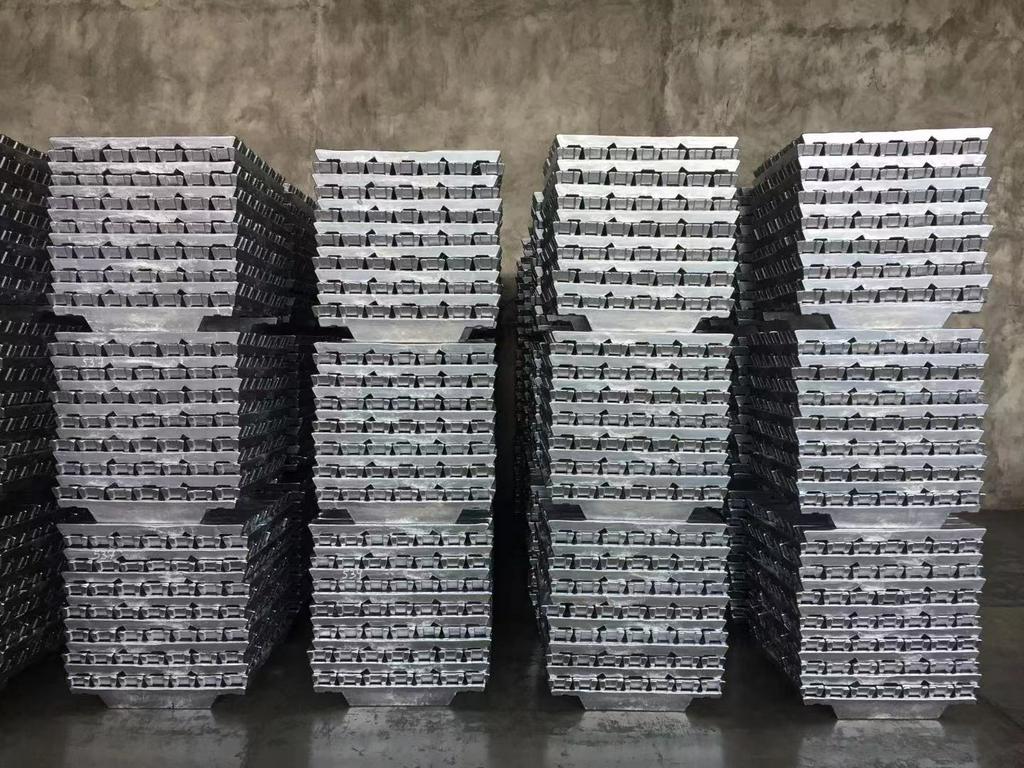 Warehouse Withdrawals Pull Back While Destocking Accelerates, the Logic of China’s Aluminum Ingot Destocking Changing?
As of July 30, China’s aluminum ingot inventory in major consumption areas stood at 953,000 mt. Cumulative destocking from the YTD high of 1.465 million mt in early May has reached 512,000 mt (-35%), with an additional accelerated destocking of 53,000 mt this week, breaking below the 1 million mt threshold as expected. However, the directional divergence between warehouse withdrawals and inventory has raised concerns...
Jul 31, 2026 23:53- Warehouse withdrawals pull back, but destocking accelerates — Is China's aluminum ingot destocking logic changing? [SMM Analysis]
As of July 30, China's major consumption regions reported aluminum ingot inventory of 953,000 mt, having cumulatively destocked 512,000 mt (-35%) from the year's high of 1.465 million mt in early May. Within the week, destocking accelerated further by 53,000 mt, as expected falling below the 1 million mt mark. However, the directional divergence between warehouse withdrawals and inventory drew attention: weekly warehouse withdrawals pulled back to 127,700 mt, losing the advantage of being at a high for the same period in the past four years. The core driving force of this destocking round has shifted from "demand and warehouse withdrawal boost" in June to "supply contraction + slowdown in shipment pace": the proportion of liquid aluminum rose to 78.3% in July, with casting ingot volume down 15.1% YoY; a sharp drop in arrivals in South China pushed Foshan's premium wider by 50 yuan/mt in a single week to 115 yuan/mt; SMM believes...
Jul 31, 2026 23:30 - Alumina Weakness Hard to Change: Cost Support Battles Surplus, 2,600 Level Under Test [SMM Analysis]
July 31, 2026 News: As of today, the most-traded alumina futures contract closed at 2,621 yuan/mt, continuing its recent weak trend. The previous day (July 30), prices briefly dipped to 2,617 yuan/mt intraday, with a single-day decline of 1.37%, hitting a new phase low. Under the weight of multiple bearish factors—sustained supply releases, intensifying import pressure, and fading speculative sentiment—the alumina market is undergoing a fundamentally driven valuation correction. However, unlike the deep decline at the end of 2025, the significantly higher ore-side costs are now building a floor that is hard to break through easily. Supply side, China’s operating alumina capacity remains high, and incremental pressure continues to mount. Enterprises in Guangxi that were previously under maintenance are steadily resuming production, with some production lines already restarted, gradually restoring regional supply capability. Meanwhile, south China still has nearly 3 million mt of new capacity planned for release in the coming months, further reinforcing market expectations of a loose supply pattern. The waning heat on the bauxite front further erodes futures sentiment support. Supply disruptions in Guinea that had previously sparked market concerns are gradually fading from view as time passes. After the news heat dissipated, speculative bull funds exited one after another, stripping the futures of sentiment premium as prices returned to supply-demand fundamentals. The impact of overseas resources continues to weigh on the Chinese market. This year, alumina imports have climbed sharply, with port inventories accumulating to a high of 940,000 mt. The continuous inflow of overseas alumina has not only effectively supplemented domestic supply but also exerted persistent downward pressure on spot quotations. The weakening spot price and futures are in a negative feedback loop, reinforcing the downward price spiral. However, despite bears advancing their logic step by step, current prices are not without resistance. Compared to the December 2025 sell-off to 2,437 yuan/mt, the expected bottom in this round of decline is significantly different. At that time, Guinea bauxite was quoted just over $60/mt, whereas ore prices have now jumped to the $70-75/mt range. The industry average full cost has consequently climbed to around 2,530 yuan/mt. This substantial upward shift in the cost center means that even if fundamentals turn fully bearish, a free-fall price collapse is unlikely to recur, and the cost support effect will strengthen marginally as prices decline. The opening of the export window is one of the few potential rebound variables in the current market. If overseas alumina prices continue rising while domestic prices remain low, and the price spread between Chinese and overseas markets widens enough to cover export costs, the export channel may periodically clear, offering a marginal absorption path for domestic surplus capacity. But rationally speaking, even if the export window opens, the total volume it can divert will still be insufficient to cover the incremental pressure from new capacity in south China. The improvement in exports is more of a short-term rebound catalyst at the sentiment repair level, rather than a sufficient condition for a trend reversal. Overall, in the short term, alumina prices will fluctuate narrowly between the surplus logic and cost support. The core price fluctuation range is expected to stay at 2,600-2,650 yuan/mt. Given that fundamentals will remain loose in August, futures prices may fall below the 2,600 yuan/mt mark, but due to the rigid constraint of ore-side costs, the downside room is relatively limited. (The above information is based on market collection and comprehensive assessment by the SMM research team. The information provided is for reference only. This article does not constitute direct investment advice. Clients should make decisions prudently and not replace their own independent judgment with this. Any decisions made by clients are not related to SMM.) Data source: SMM
Jul 31, 2026 20:51 - ARM Advances Bokoni and Nkomati Projects Despite Mixed Investor Sentiment
[SMM Express] African Rainbow Minerals (ARM) has reaffirmed its commitment to long-term growth following board approval of the R15.2 billion Bokoni platinum project and the R753 million restart of the Nkomati nickel mine. Management described Bokoni as a high-grade, low-cost platinum group metals (PGMs) growth platform capable of producing 350,000–400,000 6E PGM ounces annually, supported by existing infrastructure, a 31-million-ounce measured resource and an expected post-tax net present value of R5.9 billion with a projected internal rate of return of 28%. The Nkomati restart is expected to re-establish South Africa's only primary nickel producer, targeting a 5.3-year payback period and a 28.4% internal rate of return. The investment announcement has, however, generated mixed market reactions. ARM shares have declined 21% this year, with some analysts expressing concerns over the timing and scale of the Bokoni investment and its potential impact on near-term cash flow. Others view the projects as a strategic response to tightening South African PGM supply and improving platinum market fundamentals, arguing that ARM's strong balance sheet and the projects' long-term economics could enhance production resilience and shareholder value through future commodity cycles.
Jul 31, 2026 20:20 - Semiconductor market bucks the trend! Minor metals sector up nearly 3%, with Yunnan Tin and Yunnan Germanium leading the gains [SMM Flash]
SMM, July 31 – Sentiment on A-share semiconductor industry chain futures recovered, and the improved industry chain prosperity transmitted upstream, driving a sharp rally in the strategic minor metal sector. As of the close on July 31, the minor metal sector had risen 2.96%. Among individual stocks, Yunnan Tin and Yunnan Germanium both surged over 8%, while Orient Tantalum, Zhongxi Nonferrous, Xiamen Tungsten, Haotong Technology, Western Metal Materials, Zhangyuan Tungsten, Huaxi Nonferrous, and Shenghe Resources led the gains. This round of minor metal strength was driven by the resonance of multiple industrial dynamics. On one hand, the semiconductor and AI computing track regained heat, with expectations for demand expansion in high-speed optical modules, AI servers, and other fields improving. Germanium and tantalum, as core raw materials for semiconductor optoelectronic devices and high-end tantalum capacitors, are seeing steadily strengthened demand support from downstream emerging industries. On the other hand, germanium and tantalum are strategic dispersed metals with concentrated global supply. Coupled with overseas geopolitical disruptions and expectations of supply tightening from domestic resource controls, while the ongoing localisation of related high-end semiconductor materials continued to advance, this further boosted market allocation sentiment and pushed the sector higher. News [Yunnan Germanium: Subsidiary Signs Major Indium Phosphide Wafer Supply Order Worth RMB 570–855 Million, H1 Net Profit Expected to Increase YoY] Yunnan Germanium announced on July 24 that its controlled subsidiary Yunnan Xinyao recently signed a supply agreement with a client for the sale of indium phosphide wafers (substrates). The total estimated contract value ranges from RMB 570.08 million to RMB 855.12 million (tax inclusive), accounting for 53.48% to 80.23% of the company’s audited revenue for 2025. The contract term runs from August 1, 2026, to December 31, 2027. Regarding the contract’s impact on the listed company, Yunnan Germanium stated that if the contract is fulfilled smoothly, it is expected to have a positive impact on the company’s operating results for the performance years. The specific amount and reporting periods affected will depend on the actual performance of the contract and will be based on the company’s audited revenue. [Orient Tantalum: Domestic Demand for High-Value-Added Products Such as Superalloys and Semiconductor Tantalum Targets Is Gradually Rising] Orient Tantalum stated during an institutional survey on July 23 that, with the continuous development of China’s high-tech and new infrastructure sectors, domestic demand for high-value-added products such as superalloys, semiconductor tantalum targets, and high-purity niobium materials is gradually rising. In recent years, the company has vigorously promoted technical transformation and capacity expansion projects, organized production rationally, and gradually released new capacity. Under the guidance of the strategy for autonomous and controllable industry chains, the localisation substitution process has evolved from breakthroughs in individual products to systematic solutions, laying a solid foundation for the growth of tantalum, niobium, and their alloy products. [Yunnan Tin: Expects H1 2026 Net Profit of 1.47–1.57 Billion Yuan, Up 38.43%–47.85% YoY] Yunnan Tin disclosed an earnings forecast on the evening of July 14, expecting attributable net profit in H1 2026 to be 1.47 billion to 1.57 billion yuan, up 38.43%–47.85% YoY; and recurring net profit is expected to be 1.88 billion to 1.98 billion yuan, up 44.23%–51.91% YoY. Spot Market Tin Overnight, some US chip stocks rebounded, and the Philadelphia Semiconductor Index surged, boosting the performance of tin, known as the “computing metal.” SHFE tin opened higher on July 31, lifting spot prices. In the tin spot market: On July 31, the average price of SMM 1# tin was 425,850 yuan/mt, up 1.51% from the previous trading day. As tin prices rose, spot market trading was sluggish. Fundamentals: (1) Supply: Tight ore and ingot supply, low inventory, amplifying elasticity. Myanmar’s rainy season extends through end-August, with mine flooding and logistics disruptions; Wa State’s June tin ore output was only 6,392 mt in physical content. China’s tin ore imports in July are expected to be basically flat MoM. The slow pace of production resumptions in Wa State has been priced in ahead of time, with no major shutdowns in the near term, but supply contraction expectations during the rainy season have yet to fully materialize. Indonesia’s tin ingot imports in July are expected to show some recovery MoM. (2) Demand: Improved solder operating rates, but acceptance of high prices needs to be tested. The operating rate at solder enterprises was 78.8% in June, up 4.6 percentage points from May; however, after the sharp spot price rally on July 30, downstream users were cautious and stayed on the sidelines, and whether high-priced spot cargoes can be absorbed still requires verification. Stockpiling for new Apple/Huawei models in late August is the next demand trigger point. Institutional Views A research report from Minmetals Securities points out: Germanium accounts for 60% of applications in optical communication and satellite PV fields, making it a metal for “AI computing power + space energy.” With its excellent refractive index tuning capability and radiation resistance, germanium has become a key material for AI data center optical interconnects and low-earth-orbit satellite PV systems. Looking at changes in demand structure, from 2020 to 2026, downstream germanium consumption grew from 160 mt to 240 mt, with optical communication’s share rising to 40% and satellite PV’s share to 20%, together accounting for 60% of total downstream demand. It expects that 90% of the demand growth in 2027 will come from two high-growth sectors: AI hardware and satellite PV. A research report from Caitong Securities shows: As AI computing power demand explodes, the market size of indium phosphide, used as a chip substrate material, will continue to expand. Indium resources are scarce and subject to policy restrictions, and product prices are entering an uptrend. High-purity red phosphorus is a very important semiconductor base material, with high purification technology barriers. Against the backdrop of accelerated AI application deployment driving related infrastructure construction, the indium phosphide substrate industry chain is expected to see dual opportunities from demand growth and domestic substitution. It is recommended to focus on enterprises with resource and technological advantages in the links of indium phosphide, indium, and high-purity red phosphorus. A research report from Datong Securities shows that minor metals have staged an independent rally, with tightened supply combined with strategic attributes leading to a value revaluation. The rare earth sector is preemptively pricing in new regulatory controls, with Myanmar ore imports disrupted, tight spot supply of Pr-Nd oxide driving prices sharply higher; tungsten and antimony ore grades are declining along with environmental protection-driven production restrictions, widening the supply gap, while PV and hard alloy demand remains firm during the off-season, and inventories are at low levels. AI computing power and communications sectors are boosting demand for gallium and germanium, and coupled with export control policies, concentrated stockpiling outside China is widening the price spread between Chinese and overseas markets. Scarce resources are resonating with financial attributes, and the sector continues to be favoured by capital. Recommended Reads:
Jul 31, 2026 20:20 - Limpopo's Illegal Chrome Mining Crackdown Widens: Arrests, Truck Seizures and Asset Forfeitures Mount in 2026
[SMM Express] South Africa's enforcement drive against illegal chrome mining in Limpopo has escalated through mid-2026, with the Hawks arresting five suspects, aged 43 to 50, at an illegal chrome mining site in the Thabazimbi policing area on 12–13 July. The operation, run by the Limpopo Serious Organized Crime Investigation team alongside local SAPS units, the Criminal Record Centre and the Department of Mineral and Petroleum Resources, resulted in charges of illegal mining and contravening environmental law; the suspects appeared at the Thabazimbi Magistrate's Court on 14 July. The arrests form part of a broader, active pattern rather than an isolated incident. In late May, the Asset Forfeiture Unit secured a R4.5 million forfeiture order covering trucks and trailers linked to illegal chrome mining in the Sekhukhune district, and in early July a separate court ruling allowed authorities to seize seven trucks loaded with chrome ore from another illegal operation. Together, the cases point to sustained, coordinated action across Limpopo's chrome belt targeting the trucks, sites and proceeds tied to unlicensed chrome extraction.
Jul 31, 2026 19:52 - LFP Industry Faces Supply Bottlenecks as Demand Surges, Cathode and Iron Phosphate Capacities Strained
Since July, demand across the LFP industry chain has continued to rise, but the supply-side response has lagged. The most notable feature of the current market is that supply tightness is rapidly transmitting from downstream to upstream, creating a cascading inversion of "battery cell production schedule > LFP cathode production schedule > iron phosphate production schedule."
Jul 31, 2026 19:11 - SMM Analysis] Evolution of NEV Battery Pack Integration Technology: From CTM to CTP, and Onward to CTB/CTC
In recent years, the advertised figures for driving range and battery energy density of NEVs have been continuously refreshed. However, many people may not have noticed that such improvements do not entirely stem from breakthroughs in electrochemical systems—the iterations of cathode materials, anode materials, and electrolytes often take years or even longer. The more direct changes have occurred at the structural level within the battery pack. CTM, CTP, CTB, and CTC represent several technology routes with progressively higher levels of battery integration. Their shared logic is simple: reduce intermediate layers and pack the battery more tightly into the auto body. Yet each generation of solutions differs in the trade‑offs among space utilization, manufacturing cost, and ease of repair. I. CTM (Cell to Module): Traditional “Nested Dolls” Approach In the early stages of NEV development, assembly methods for battery packs followed a relatively conservative approach. Battery cells were first assembled into modules, the modules were then arranged into a battery pack, and finally the battery pack was fixed beneath the vehicle floor. Cell→Module→Pack→Auto body thus formed four independent layers. The advantages and disadvantages of this solution are both obvious. The advantage lies in repair convenience—if a single module fails, it can be replaced individually without touching the entire battery pack. At the same time, the module housing provides extra protection for the cells, resulting in relatively mature structural safety. Yet the cost is just as direct: module housings, connectors, and cooling pipes occupy a large amount of space, usually leaving the internal space utilization rate of the battery pack at only about 40%. This meant that for the same volume, the CTM solution could accommodate the fewest cells, limiting the driving range potential. For a long period, CTM was the industry’s default choice because it fit the division‑of‑labor logic of traditional automotive supply chains—battery enterprises supply modules, while automakers are responsible for integration. However, this division of labor also created a structural ceiling: the volumetric utilization rate of the battery pack was difficult to break through. II. CTP (Cell to Pack): Removing the “Middleman” The core change introduced by CTP is eliminating the intermediate module layer, allowing cells to form the battery pack directly; the space utilization rate rose from around 40% to over 70%. Meanwhile, because module housings, connectors, and fasteners were removed, the number of components in the battery pack dropped, and manufacturing costs decreased accordingly. Within the industry, two different technical choices have emerged for the implementation path of CTP. One is the completely module‑free solution represented by BYD’s blade battery. By manufacturing cells into elongated strips and arranging them directly into the battery pack, supported by a honeycomb structure, it not only improves space utilization but also assumes some structural functions. The other is the highly integrated solution represented by CATL’s CTP 3.0 (Qilin battery). It combines cells with multifunctional elastic interlayers into an integrated energy unit and integrates components such as crossbeams, longitudinal beams, cooling plates, and thermal insulation pads, further optimizing the internal layout and thermal management. The Qilin battery achieved a volumetric utilization rate of 72% and a system energy density of 255 Wh/kg. In terms of market penetration, CTP has already secured a dominant mainstream position. Currently, leading domestic NEV manufacturers have launched mass‑produced models equipped with CTP solutions, covering both independent and joint‑venture brands, and spanning a broad price range from entry‑level to high‑end products. At the same time, the market share of the traditional CTM solution has continued to shrink, now retained mainly in some micro vehicles or specific export models. Overall, CTP has become the most prevalent battery integration technology route at this stage. III. CTB and CTC: The Battery Becomes Part of the Auto Body The idea behind CTB (Cell to Body) is to integrate the upper cover of the battery pack with the vehicle floor into a single part. Battery cells are installed directly onto the vehicle floor, eliminating the separate battery pack upper cover. One of the main benefits of this solution is releasing vertical layout space, making the passenger compartment more spacious or creating conditions to lower the vehicle stance. Meanwhile, once the battery pack participates in the body’s load‑bearing, the torsional rigidity of the whole vehicle can increase by more than 70%. BYD’s Seal series and Xiaomi’s Pengcheng series are representative models employing the CTB solution. The torsional rigidity of the Seal body officially announced by BYD reaches 40,500 N·m/°; Xiaomi’s announced CTB battery volumetric efficiency is 77.8%. CTC (Cell to Chassis) goes a step further, integrating the battery system more deeply with the chassis or lower vehicle body and further weakening the structural boundary of the battery pack as an independent assembly. In some solutions, the battery system is also integrated collaboratively with thermal management, electric drive, and high/low‑voltage control modules. Representative examples of this approach are the Tesla Model Y (produced at the Texas factory) and the CTC2.0 Plus solution installed on the Leap Motor C10. The technical goals of CTB and CTC are consistent—exchange structural integration for higher space utilization and body stiffness. The difference between the two routes is mainly reflected in engineering implementation: CTB subtracts elements from the existing body architecture while retaining a relatively independent chassis frame; CTC, on the other hand, treats the chassis and battery as an integrated whole from the very beginning of design, demanding a higher level of upfront vehicle platform definition. From market data, although CTB and CTC are still at a relatively early stage of penetrating from the high‑end to the mass market, this technology route has already begun to extend down to lower price brackets. The 2026 MG4 applies CTB technology to the 60,000–100,000 yuan price range, indicating that structural integration solutions are no longer exclusive configurations for high‑end models. Concerns Regarding Structural Integration Solutions The most direct challenge faced by CTB and CTC structural integration solutions is repair economy. Under the traditional CTM approach, some faults could be repaired by replacing the module. Once CTP eliminated modules, the battery pack can usually still be removed as an independent assembly, but the smallest unit for on‑site repair and the difficulty of repair depend on the specific structure. CTB and CTC further increase the degree of integration between the battery and the auto body, which may raise the difficulty of disassembly, detection, and damage assessment. According to estimates by industry institutions, the single‑repair cost of CTB/CTC solutions is 3 to 5 times that of CTP solutions for equivalent damage. This poses new challenges for insurance companies, repair systems, and used‑car residual‑value management. Currently, some automakers, when promoting CTB solutions, simultaneously roll out supporting services such as “battery‑body integrated warranty” or “chassis armor” to alleviate consumer concerns, but a standardized solution at the industry level has yet to be formed. In addition, CTB and CTC solutions impose significantly higher requirements on vehicle manufacturing precision and after‑sales detection equipment. Once the battery is integrated with the auto body, the disassembly process involves the removal and installation of body structural components. The repair equipment and technical capabilities of traditional 4S stores may need corresponding upgrades, and behind this lies the cost of restructuring the entire after‑sales system. Evolution Direction From CTM to CTP, and then to CTB and CTC, the direction of battery pack integration technology evolution is clear—the fewer the layers, the higher the space efficiency and the stronger the body stiffness. This is an advancement path driven by space efficiency and manufacturing costs. Yet this trend is not a linear acceleration. For CTB and CTC to achieve large‑scale popularization, in addition to breakthroughs in engineering technology, supporting systems such as repair standards, insurance pricing, and used‑car evaluation need to be developed synchronously. Based on current industry data, CTP will maintain its mainstream position, while the penetration rate of CTB/CTC will depend on two variables: the degree of standardization of structural integration solutions, and the speed at which repair costs and the insurance system can adapt. SMM New Energy Industry Research Lithium Battery End‑User Analyst Fu Linqi 18122430020
Jul 31, 2026 19:05