

15results found for 'Kentucky'
Sort by : |
- Toyota to Invest $1 Billion in Kentucky and Indiana, Advance Battery Production Plans
On March 23 (local time), Toyota announced plans to invest $800 million in its Kentucky plant to prepare for a second battery electric vehicle (BEV) production line and expand capacity for the Camry and RAV4. The company will also invest $200 million across two facilities in Indiana to increase production of the Grand Highlander SUV, while advancing parallel efforts related to battery manufacturing.
Mar 24, 2026 16:55 - [SMM Stainless Steel Flash] Acerinox Gains US Investor Attention as "Value Play" Linked to EV and AI Infrastructure
Spanish stainless steel giant Acerinox S.A. has seen a surge in interest from US investors following resilient earnings and a confirmed dividend strategy. As the parent company of Kentucky-based North American Stainless (NAS), Acerinox is being positioned as a strategic "sleeper play" for its exposure to high-value special alloys critical to EV supply chains, data centers, and industrial reshoring. While the company remains a traditional cyclical player, its shift toward high-margin specialty products and a disciplined capex approach has allowed it to maintain solid EBITDA despite weak European demand. For US portfolios, it offers a diversified global alternative to domestic names like Nucor or Cleveland-Cliffs.
Feb 27, 2026 10:17 - Ford Scales Back EV Plan, Opens Battery Factory Capacity to Nissan
[Ford Announces Scaling Back of EV Development Plan] Recently, Ford Motor announced the scaling back of its EV development plan, opening up part of the capacity of its flagship battery factory in Kentucky, US, to Nissan for use. Ford had announced in 2021 an investment of $7 billion to develop the EV industry and collaborated with South Korean battery manufacturer SK On to build two battery factories. However, due to market demand falling short of expectations, the factories were not operating at full capacity. Ford decided to provide part of the capacity to Nissan to produce batteries for Nissan. For Nissan, this collaboration helps to alleviate the cost pressure brought about by import tariffs and supports its plan to produce electric SUVs at its Canton factory in Mississippi. Nissan had previously confirmed that SK On would supply it with batteries made in the US. The specific details of this collaboration have not yet been disclosed, and spokespersons from both Ford and Nissan have not directly responded to related inquiries.
May 23, 2025 15:51 - Ascend Elements Secures $320M to Build Europe's First pCAM Manufacturing Facility in Poland
Ascend Elements, a U.S.-based lithium-ion battery materials company, has secured $320 million, including a 1.22 billion Polish Zloty grant from Poland’s Ministry of Economic Development and Technology, to build its first European precursor cathode active material (pCAM) manufacturing facility in Poland. The facility will utilize the company’s proprietary Hydro-to-Cathode® technology, which recovers nickel, manganese, and cobalt pCAM from spent lithium-ion batteries, aiming to establish a sustainable circular battery materials supply chain in Europe. The plant will be solely owned and operated by Ascend Elements and is part of the EU’s Temporary Crisis and Transition Framework (TCTF) to support the net-zero transition. The project is one of the largest U.S. investments in Poland and is expected to boost regional development, technology advancement, and collaboration with local institutions. Additionally, Ascend Elements operates one of North America’s largest battery recycling plants in Georgia, with a new lithium recovery line targeting 3,000 metric tons of lithium carbonate annually, and is also building a large-scale Hydro-to-Cathode® pCAM plant in Kentucky, expected to be operational by late 2026.
May 20, 2025 23:47 - CEO of JPMorgan Chase: Recession Still Possible in the US, Tariff War Will Have Aftereffects
Jamie Dimon, CEO of JPMorgan Chase, recently stated that the possibility of a US economic recession remains as the impact of tariffs continues to disrupt the global economy. On Thursday (May 15) local time, Dimon told the media at JPMorgan Chase's annual Global Markets Conference in Paris, "We hope to avoid a recession, but at this point, I cannot rule it out." "If a recession does occur, I don't know how severe it will be or how long it will last." The Trump administration's tariff policies have shaken the markets for over a month. Dimon pointed out that some of JPMorgan Chase's clients have postponed investment decisions due to excessive market volatility. Earlier this week, high-level China-US economic and trade talks reached important consensus and made substantive progress, directly reflected in a significant reduction in bilateral tariff levels. The international community has highly praised this development, and the financial markets have also responded positively. Dimon expressed his hope that trade easing could continue, "so that genuine communication can take place." Previously, Dimon had repeatedly called for US Treasury Secretary Scott Bessent to lead trade negotiations and, in his annual letter to shareholders released last month, urged the swift resolution of uncertainties. As the head of the world's largest bank, Dimon wields significant influence in the financial world and is often regarded as an authority in the field. Dimon speaks highly of Bessent, and it was reported that when Bessent was nominated by Trump, Dimon called it an "excellent choice." In his latest interview, Dimon stated that recent volatility persists, and JPMorgan Chase's trading volume has remained high as a result. "Sometimes market volatility is good, and sometimes it's bad. This time it's good, but next time it might not be so optimistic." Dimon believes that tariff instability could lead to the loss of some investments in the US. "There will definitely be some consequences. We've annoyed a lot of people. When I meet them, they say, 'You know what? We're not buying your Kentucky bourbon anymore.'" However, Dimon also noted that this impact may not be widespread, as the US is still not considered a poor investment destination. Benefiting from significant market volatility, JPMorgan Chase's stock trading division achieved record revenue in the first quarter, and all of this occurred before the announcement of reciprocal tariffs on April 2 and their subsequent suspension. Analysts predict that trading revenue for the largest US bank will continue to grow YoY in the second quarter of this year. In this interview covering a wide range of topics, Dimon also expressed optimism about the prospects for negotiations between the EU and the UK, "They have an opportunity to build a truly good relationship, which could somewhat make up for the chaos caused by Brexit."
May 16, 2025 09:15 - Did the Tariff Stick Hit Its Own Foot? America's Largest Aluminum Producer Complains: Losses in Q1 Already Reached $20 Million
US President Trump's tariff policies not only impacted foreign exporters but also harmed US multinational corporations with production sites outside the country. Alcoa, the largest aluminum producer in the US, is one of the "victims." Since taking office in January this year, Trump has announced a series of tariff policies. Currently, the US imposes a 25% tariff on aluminum imports. On Wednesday local time, Alcoa stated that due to US tariffs on aluminum imports from Canada, the company lost approximately $20 million in the first quarter ending March 31. The company also expects that losses in the current quarter (Q2) will reach around $90 million. "About 70% of the aluminum we produce in Canada is shipped to the US, and now it is subject to a 25% tariff," Alcoa CEO William Oplinger said during an earnings call on Wednesday. Alcoa sources some of its raw materials from Chinese suppliers. The company anticipates that hefty US tariffs on China will increase its annual costs by $10 million to $15 million due to the lack of suitable alternative suppliers. Alcoa is headquartered in Pittsburgh and produces aluminum not only in the US but also in Canada, Iceland, Australia, and other locations. According to US Department of Commerce data, Canada is the largest source of US aluminum imports, exporting $11 billion worth of primary aluminum and aluminum products to the US last year. In total, the US imported $27 billion worth of aluminum last year, with other sources including China, Mexico, and others. Trump's aluminum tariffs aim to boost US aluminum production. Data shows that last year, US smelters produced only 670,000 mt of aluminum, compared to 3.7 million mt in 2000. In recent years, smelters in various parts of the US, including Kentucky and Missouri, have shut down, making the country heavily reliant on aluminum imports to meet domestic demand. Speaking about the current US capacity, Oplinger said on Wednesday, "Even if all idle smelting capacity is restarted, the US will still face a 3.6 million mt aluminum shortfall." He also stated, "Until additional smelting capacity is built in the US, the most efficient aluminum supply chain is to continue allowing Canadian aluminum to flow into the US." At the end of February this year, Alcoa warned that Trump's tariffs on aluminum imports could lead to the loss of about 100,000 jobs in the US and would not increase US aluminum production.
Apr 17, 2025 13:18 - Ford and SK On Advance Battery Factory Production to Mid-2025 for E-Vehicles
[Ford and SK Joint Venture Battery Factory Announces Early Production] On August 21th, local time, Ford announced that its BlueOval SK battery factory in Kentucky would commence production in mid-2025, earlier than the original plan. This factory, jointly built by Ford and South Korea's SK On, will produce battery cells for E-Transit vans and F-150 Lightning electric vehicles. Previously, the factory was scheduled to commence production at the end of 2025, but due to adjustments in its electrification strategy, the production timeline has been advanced. The factory will commence trial operations this month, with an anticipated annual production capacity of 45GWh upon completion.
Aug 22, 2024 22:14 - Registration is open for Scrap Expo 2024
The Recycling Today Media Group has announced that registration is officially open for Scrap Expo 2024, the metals recycling and auto dismantling industry's only live demonstration event.
Jul 1, 2024 15:37 - Molten aluminium spill closes I-165 northbound at Fairview Drive overpass in Daviess County
A major incident has closed both northbound and southbound lanes of I-165 at the Fairview Drive overpass.
Jun 28, 2024 09:47 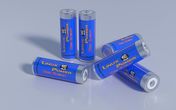 Toyota's battery manufacturing plant in North Carolina is scheduled to start production in the first quarter of next year.
Toyota plans to begin production of electric vehicle power batteries at a new factory in North Carolina next year. The factory will manufacture battery packs for Toyota's hybrid electric vehicles (HEV), plug-in hybrid electric vehicles (PHEV), and battery electric vehicles (BEV).
May 14, 2024 19:26