

5770results found for 'Iron'
Sort by : |
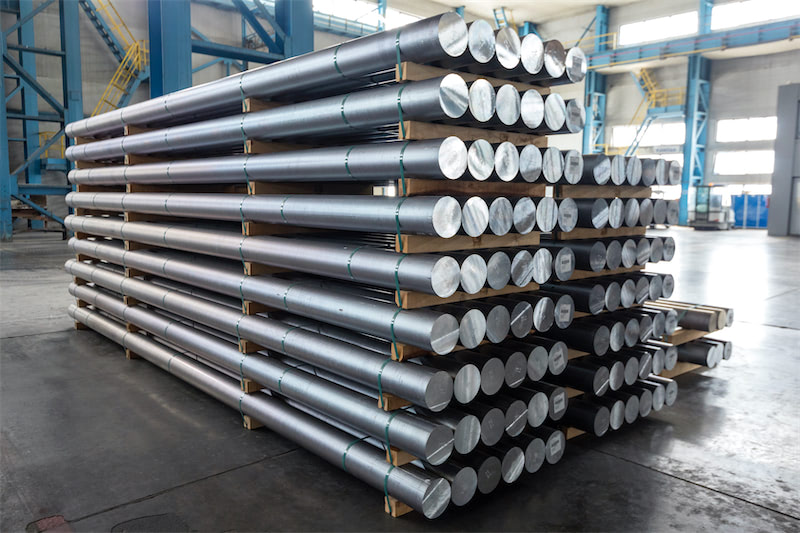 China Aluminum Billet Supply: July Extended the Inertia-Driven Uptrend; Expectations of a Retreat from Highs in August
SMM Aluminum Billet Market: In July, the operating rate of aluminum billet rose 1.1 percentage points MoM to 58.3%, up sharply by 5.2 percentage points YoY. Benefiting from the strong performance of aluminum billet processing fees in Q2...
Aug 15, 2026 19:09- US Dollar Fell; Metals Rose Broadly, with LME Copper Up for Seven Straight Weeks; Coke Rose Nearly 2%; Gold Up for Four Straight Weeks; Crude Oil Posted a Sharp Weekly Gain [Overnight Market]
SMM News on August 15: Metals market: Overnight, domestic base metals generally rose. SHFE copper gained 0.49%; on a weekly basis, SHFE copper fell 0.31% for the week. SHFE aluminum was flat at 23,945 yuan/mt. SHFE lead slipped 0.22%, SHFE zinc rose 0.41%, and SHFE tin increased 0.36%. SHFE nickel edged up 0.07%. In addition, the most-traded alumina futures contract fell 0.19%, while the most-traded casting aluminum contract rose 0.24%. Overnight, ferrous metals showed mixed performance. Stainless steel fell 0.49%, iron ore declined 0.35%, and rebar dipped 0.03%. Hot-rolled coil rose 0.34%. For coking coal and coke: the most-traded coking coal contract rose 1.7%, and the most-traded coke contract gained 1.97%. Overnight, overseas metals: LME base metals all rose. LME copper increased 0.26%; on a weekly basis, LME copper extended gains for seven consecutive weeks, up 1.07% for the week. LME aluminum rose 0.22%. LME lead gained 0.26%. LME zinc climbed 0.45%. LME tin rose 0.36%. LME nickel increased 0.3%. Overnight, precious metals : COMEX gold rose 0.26%; COMEX gold posted a fourth consecutive weekly gain, up 0.73% for the week. COMEX silver fell 0.26%; COMEX silver recorded a second consecutive weekly gain, up 2.09% for the week. Overnight, the most-traded SHFE gold contract rose 0.6%; SHFE gold posted a fourth consecutive weekly gain, up 1.68% for the week. The most-traded SHFE silver contract rose 0.57%; SHFE silver extended gains for four consecutive weeks, up 3.45% for the week. As of 7:17 on August 15, overnight closing prices: Macro front China: [PBOC: Aggregate Social Financing Growth Totaled 22.25 trillion yuan in the First Seven Months; M2 up 7.7% YoY in July] According to preliminary statistics from the PBOC, in the first seven months of 2026, the cumulative growth in aggregate social financing totaled 22.25 trillion yuan, down 174 billion yuan from the same period last year. Among them, RMB loans issued to the real economy increased by 10.17 trillion yuan, 214 billion yuan less than the same period last year; foreign-currency loans issued to the real economy, converted into RMB, increased by 169.4 billion yuan, 241.9 billion yuan more than the same period last year; entrusted loans decreased by 81 billion yuan, 12.1 billion yuan more than the same period last year; trust loans decreased by 67.2 billion yuan, 226.4 billion yuan more than the same period last year; undiscounted bankers’ acceptances decreased by 178.6 billion yuan, 41 billion yuan less than the same period last year; net financing of enterprise bonds was 252 billion yuan, 110 billion yuan more than the same period last year; net financing of government bonds was 776 billion yuan, 115 billion yuan less than the same period last year; and domestic equity financing by non-financial enterprises was 406.1 billion yuan, 184.7 billion yuan more than the same period last year. In the first seven months, RMB loans increased by 1.038 trillion yuan. By sector, household loans decreased by 827.1 billion yuan, including a decrease of 928.1 billion yuan in short-term loans and an increase of 101 billion yuan in medium and long-term loans; loans to enterprises and public institutions increased by 1.1 trillion yuan, including an increase of 434 billion yuan in short-term loans, an increase of 532 billion yuan in medium and long-term loans, and an increase of 119 billion yuan in bill financing; loans to non-bank financial institutions decreased by 394.4 billion yuan. At end-July, the balance of broad money (M2) stood at 35.551 trillion yuan, up 7.7% YoY. The balance of narrow money (M1) stood at 11.546 trillion yuan, up 4% YoY. The balance of currency in circulation (M0) stood at 1.482 trillion yuan, up 11.6% YoY. Net cash injection in the first seven months totaled 725.5 billion yuan. [Shanghai: Promoting the Momentum Build-Up of Leading Industries Such as Integrated Circuits, Civil Aviation, Intelligent Vehicles, and High-End Equipment] Today (August 14), Shanghai Party Secretary Chen Jining spent the entire day conducting a survey in the Lin-gang Special Area of the China (Shanghai) Pilot Free Trade Zone and chaired a symposium. Chen Jining noted that the Lin-gang Special Area must always place advanced manufacturing in a prominent position and unswervingly enhance its capacity level and core competitiveness. Seizing opportunities in digital-intelligent and green transformation, while ensuring project implementation, it should place greater emphasis on fostering an industrial ecosystem, cultivating industry leaders and high-growth enterprises, developing industrial platforms and enhancing service capabilities, strengthening the resilience and stickiness of industrial development, and promoting the momentum build-up of leading industries such as integrated circuits, civil aviation, intelligent vehicles, and high-end equipment. Leveraging the advantage of abundant manufacturing scenarios, it should advance the digital-intelligent transformation of industry by increasing the application of industrial robots, vertical models, and intelligent agents in key links such as production and manufacturing and equipment operation and maintenance, thereby driving systematic transformation across the full process, including industrial design, pilot-scale validation, inspection and detection, and marketing and operations. It should optimize the business environment and improve services for enterprises, and accelerate the cultivation of world-class enterprises. It should deepen reforms of management systems in development zones and refine and improve reform plans around key links such as functional positioning, spatial integration, professional services, and assessment and evaluation. (Shanghai Release) US dollar: Overnight, the US dollar index fell 0.32% to 99.64. Weekly: the US dollar index rose on a weekly basis, up 0.04% for the week. US retail sales for July released on Friday fell 0.6% MoM, the biggest drop in more than a year. Combined with this week’s mild inflation data, market pricing for a US Fed rate hike in September further collapsed. The US dollar index declined. With mild CPI on Wednesday, PPI at zero growth MoM on Thursday, and a downside surprise in retail sales on Friday, the three-hit combination drove the probability of a September rate hike down from 75% at end-July to around 25%. CME FedWatch showed that 67% of traders bet on no change in September. The focus of market pricing has shifted from “how many more rate hikes” to “whether this rate-hike cycle has already ended.” (Wallstreetcn) The US Department of Commerce announced on Friday that July retail sales fell 0.6% MoM, the biggest decline in more than a year, versus market expectations of a slight increase. Core control group sales excluding autos, building materials, and gas stations fell 0.4%, the weakest performance since January 2025. The preliminary University of Michigan consumer sentiment index for August released the same day came in at just 51, well below the expected 54.5. (Wallstreetcn) As households grew concerned about worsening business conditions and rising inflation, US consumer sentiment fell for the first time in three months. According to survey data released by the University of Michigan on Friday, the preliminary August consumer sentiment index dropped to 51, below the final July reading of 55.2. The median economist forecast was 55. Consumers expect prices to rise 4.3% over the next year, edging up MoM and well above the level before the Iran conflict broke out in February. They also expect prices to rise at an annual rate of 3.3% over the next five to 10 years. After improving for two consecutive months, consumers’ confidence in both the short-term and long-term economic outlook deteriorated. Since the start of the year, consumers’ expectations for the labour market have changed relatively little. The survey showed consumers are increasingly worried about inflation, while concerns about unemployment have eased. The survey covered responses collected from July 28 to August 10. During this period, the US national average gasoline price hovered above $4 per gallon. Another report released on Friday showed US retail sales in July posted the biggest drop in more than a year, as consumers cut back on purchases of autos and from online stores. (Jinshi Data APP) US Fed’s Goolsbee said he supported the decision to keep interest rates unchanged in July. He noted that the latest two productivity readings were not ideal, and if productivity continues to weaken, the US Fed may need to reassess market expectations for artificial intelligence (AI). Goolsbee said the latest CPI data were encouraging, but more data are needed before making a judgment; persistent weakness in consumption is concerning, though the current retail sales weakness is only a one-month performance. Meanwhile, US GDP and the labour market were basically stable overall. (From the Wallstreetcn APP) According to CME “FedWatch”: the probability that the US Fed will keep rates unchanged through September is 67.5%, and the probability of a cumulative 25-bp hike is 32.5%. The probability that the US Fed will keep rates unchanged through October is 53.3%, the probability of a cumulative 25-bp hike is 39.8%, and the probability of a cumulative 50-bp hike is 6.8%. (Jin10 Data APP) On the macro front: Next week will see the release of data including China’s July total retail sales (YoY), China’s July industrial value-added above designated size (YoY), Canada’s July CPI (MoM), the US August New York Fed Manufacturing Index, the US August NAHB Housing Market Index, the UK three-month ILO unemployment rate for June, the UK July unemployment rate, the UK July claimant count, Germany’s August ZEW Economic Sentiment Index, the eurozone’s August ZEW Economic Sentiment Index, the weekly change in US ADP employment for the week ending August 1, US July housing starts (annualized), US July building permits, US July import price index (MoM), US July industrial production (MoM), US July pending home sales index (MoM), the UK July CPI (MoM), the UK July retail price index (MoM), the eurozone’s June current account (seasonally adjusted), the eurozone’s final July CPI (YoY), the eurozone’s final July CPI (MoM), the share of RMB payments via Swift in global payments for China in July, China’s one-year loan prime rate through August 20, Australia’s July unemployment rate (seasonally adjusted), Germany’s July PPI (MoM), Switzerland’s July trade balance, the UK August CBI industrial trends orders balance, US initial jobless claims for the week ending August 15, the US August Philadelphia Fed Manufacturing Index, the US July Conference Board Leading Index (MoM), the UK August GfK Consumer Confidence Index, Japan’s July core CPI (YoY), the UK July public sector net borrowing, the UK July retail sales (MoM, seasonally adjusted), France’s preliminary August manufacturing PMI, Germany’s preliminary August manufacturing PMI, the eurozone’s preliminary August manufacturing PMI, the UK preliminary August manufacturing PMI, the UK preliminary August services PMI, Canada’s June retail sales (MoM), the US S&P Global preliminary August manufacturing PMI, the preliminary global services PMI, and the eurozone’s preliminary August consumer confidence index, among others. In addition, next week’s key events include: the National Bureau of Statistics (NBS) releasing the monthly report on residential selling prices in 70 large and medium-sized cities; the State Council Information Office holding a press conference on national economic performance; ECB President Lagarde attending the “Global Economic Outlook” session at the World Economic Forum International Business Council (IBC) meeting; the US Fed releasing the minutes of its monetary policy meeting; and Hang Seng Indexes Company announcing the review results for the Hang Seng Index Series for 2026 Q2. On crude oil: Overnight, both oil futures rose, with WTI up 1.42% and Brent up 2.01%. On a weekly basis, WTI futures rose 5.4% for the week; Brent posted a positive weekly close, up 6.31% for the week. International oil prices rose, driven by an almost complete standstill in traffic through the Strait of Hormuz. Two vessels were attacked in the Strait of Hormuz that day, bringing passage to a near standstill. The US said it could maintain a maritime blockade of Iran indefinitely, and Trump added that he would impose severe economic strikes on Iran. Capital Economics estimated that crude oil flows through the Strait of Hormuz were currently only about 4 million to 5 million barrels per day, far below pre-conflict levels. Prompt Brent maintained a spot premiums structure, indicating continued tightness in physical supply. Capacity at three of the world’s four major refining hubs was damaged, and the surge in refined product prices was being directly passed through to end consumers. (Wallstreetcn) Traders said that as the Strait of Hormuz remained largely closed, Asian refiners were seeking alternative supplies for deliveries later this year, and at least four Asian refiners purchased US crude oil this week. Both the US and Iran claimed control of the Strait of Hormuz, and vessel traffic through the strait fell below this month’s average level in the latter half of the week. With no sign in the near term that shipping through the strait would resume smoothly, tightening fuel supplies will lift refining margins, prompting refiners to lock in crude oil inventory needed for the coming months from markets outside the Gulf region. South Korea’s GS Caltex bought 2 million barrels of Mars crude from Shell, plan to deliver in November. Traders said the cargo was priced at a premium of about $13-14 per barrel to the October Dubai benchmark price. Japan’s third-largest refiner, Cosmo Energy Holdings, bought Mars crude from Trafigura; Japan’s largest refiner, ENEOS, purchased 2 million barrels of WTI crude from Trafigura, plan to deliver in November, at a premium of more than $10 per barrel to October WTI prices. (Jinshi Data APP) US Energy Information Administration (EIA): US oil production is expected to average 13.83 million barrels per day in August, versus 13.82 million barrels per day in July; September is expected to average 13.77 million barrels per day. (Jinshi Data APP) Notably, due to position rolling and contract rollover, NYMEX New York crude oil September futures will complete the last floor trading at 2:30 on August 21 and the last electronic trading at 5:00 a.m. Please pay attention to the exchange’s expiry and rollover notices to manage risk. In addition, the expiry time for US crude oil contracts on some trading platforms is usually one day earlier than the official NYMEX schedule; please pay close attention. Recommended Reading:
Aug 15, 2026 18:04 - Pr-Nd Led the Gains in H1: Semi-Annual Reports from 10 Rare Earth Enterprises Deliver Good News; With the Peak Season Approaching, Can the Market Rally Restart? [SMM Special Topic]
Editor’s Note: Looking back at the H1 rare earth market, it was truly a case of “you reap what you sow.” The rare earth sector as a whole drifted higher amid consolidation, while price performance diverged across products. Pr-Nd oxide rose 22.42% in H1, dysprosium oxide increased 5.97%, and terbium oxide gained 8.37%. As the tide lifts all boats, the rise in rare earth prices directly boosted operating returns for enterprises across the industry chain. According to SMM statistics, the 10 rare earth-related firms that have disclosed semi-annual reports, preliminary earnings releases, and earnings forecasts all delivered varying degrees of earnings growth in H1. The market is now eagerly awaiting the realization of demand in the traditional peak season. At this period of transition from summer to autumn, can the H2 rare earth market sustain H1’s gains, and what kind of market landscape will emerge for upstream and downstream players in the rare earth industry chain? Multiple Rare Earth Companies Report Strong H1 Results A semi-annual earnings forecast disclosed by China Rare Earth on the evening of July 13 showed that, based on preliminary estimates by the company’s finance department, net profit attributable to shareholders of the publicly listed firm for the 2026 semi-annual period was expected to be 3,700 million yuan to 4,300 million yuan, an increase of 297.5013 million yuan to 357.5013 million yuan from the same period last year, up 410.35% to 493.11% YoY. Net profit attributable to shareholders of the publicly listed firm after deducting non-recurring gains and losses for the 2026 semi-annual period was expected to be 3,680.027 million yuan to 4,280.027 million yuan, an increase of 276.2326 million yuan to 336.2326 million yuan from the same period last year, up 301.00% to 366.39% YoY. Regarding the main reasons for the expected earnings increase for the period, China Rare Earth stated: (1) In H1 2026, amid changes in the supply-demand pattern of the rare earth industry and YoY increases in prices of major rare earth products, the company enhanced overall operating value of its core rare earth business by innovating an integrated operating model, coordinating rare earth raw material procurement for separation plants and full-product market sales, and dynamically adjusting its product output mix based on analysis of changes in supply and demand. (2) The company vigorously advanced loss-making enterprise remediation and deepened reform initiatives, achieving notable results; resources were further concentrated in core main businesses and advantaged businesses, and loss-making enterprises significantly reduced losses YoY. (3) The company’s investee, Dabaoshan, maintained stable and high output; sales and prices of copper and sulfur products both rose YoY, increasing enterprise profitability, and the company’s investment income recognized under the equity method increased. A semi-annual earnings forecast disclosed by Huahong Technology on the evening of July 13 showed that net profit attributable to the parent in H1 2026 was expected to be 320 million yuan to 360 million yuan, up 301.84%–352.08% YoY. Regarding the reasons for the performance change, Huahong Technology stated: In H1 2026, benefiting from industry policies and a rebound in downstream demand, prices of major rare earth products in China climbed steadily. The company’s comprehensive utilization segment for rare earth resources seized market opportunities, fully leveraging its overall advantages in capacity scale, cost control, and process technologies, continuously optimizing supply–production–sales coordination and inventory management strategies, and effectively driving a full release of profitability in this segment. The company continued to deepen its layout across the rare earth industry chain, with its downstream rare earth permanent magnet material business expanding steadily. Benefiting from stable demand in end-use sectors such as NEVs, wind power, and industrial automation, this segment continued to scale up, with revenue and product mix continuously improving, becoming an important supplement to earnings growth. Xiamen Tungsten’s semiannual performance forecast showed that, based on preliminary calculations by the finance department, it was expected that in H1 2026, net profit attributable to shareholders of the publicly listed firm would be about 2.2160318 billion yuan, an increase of about 1.2467133 billion yuan compared with the same period last year, up about 128.62% YoY. Based on preliminary calculations by the finance department, it was expected that in H1 2026, net profit attributable to shareholders of the publicly listed firm after excluding non-recurring gains and losses would be about 2.1760263 billion yuan, an increase of about 1.2534882 billion yuan compared with the same period last year, up about 135.87% YoY. Regarding the main reasons for the expected increase in performance for the period, Xiamen Tungsten explained: In H1, amid a market environment where material prices for major raw materials such as tungsten, cobalt, lithium carbonate, and Pr-Nd oxide rose YoY and swung wildly, the company responded proactively, dynamically adjusted its operating strategy, and drove a linked rise in selling prices; meanwhile, it continued to enhance product quality and market development capabilities. Sales of major products such as alloy bars, cutting tools, power battery cathode materials, and magnetic materials climbed steadily, and profitability across the company’s three core businesses—tungsten & molybdenum, new energy materials, and rare earths—improved to varying degrees. Ningbo Yunsheng disclosed a performance forecast on the evening of July 14, showing that, based on preliminary calculations by the finance department, it was expected that in H1 2026, net profit attributable to shareholders of the publicly listed firm would be 240 million yuan to 310 million yuan; compared with the same period last year (statutorily disclosed figures), it would increase by 132.1657 million yuan to 202.1657 million yuan, up 122.56%–187.48% YoY. The net profit attributable to shareholders of the publicly listed firm, excluding non-recurring gains and losses, was expected to be 2.1 billion yuan to 2.8 billion yuan for the 2026 semiannual period. Compared with the same period last year (statutorily disclosed data), this was expected to increase by 1.3954 billion yuan to 1.913954 billion yuan, up 137.01% to 216.01% YoY. Ningbo Yunsheng stated that the main reasons for this performance increase were: during the reporting period, the Company remained client demand-oriented, deeply focused on NEVs, consumer electronics, industrial and other application fields, actively explored emerging and regional markets, seized development opportunities for new projects, continuously optimized its business mix, and increased the proportion of revenue from outside China. Meanwhile, the Company continued to deepen refined management, driving higher product gross margins and resulting in an increase in net profit. The semiannual earnings forecast released by China Northern Rare Earth showed that, based on a preliminary estimate by the Company’s finance department, the net profit attributable to owners of the parent was expected to be 19.8 billion yuan to 20.6 billion yuan for the 2026 semiannual period. Compared with the same period last year (statutorily disclosed data), this was expected to increase by 10.5 billion yuan to 11.3 billion yuan, up 112.74% to 121.33% YoY. The net profit attributable to owners of the parent, excluding non-recurring gains and losses, was expected to be 19.9 billion yuan to 20.7 billion yuan for the 2026 semiannual period. Compared with the same period last year (statutorily disclosed data), this was expected to increase by 10.93 billion yuan to 11.73 billion yuan, up 121.90% to 130.82% YoY. As for the main reasons for the performance increase in the current period: In H1 2026, the Company served the national rare earth resources strategy and fully implemented the requirements for secure control of the rare earth industry chain. Affected by factors such as constrained supply on the raw material end of the market and the release of downstream demand across multiple areas with sustained growth, rare earth product prices overall strengthened and consolidated. Centered on the annual production and operating task targets, the Company made coordinated planning and adopted comprehensive measures, strengthened comprehensive budget management, pursued cost reduction, quality improvement and efficiency enhancement in synergy, scientifically organized production and production schedules, stepped up market sales and marketing operations, deepened reform and innovation, strengthened group management and risk prevention and control, and advanced the deep integration of specialized management, lean management and 5S management with high quality. It promoted the construction of key projects, accelerated the development of new quality productive forces through management and scientific research and innovation, and provided solid support and assurance for the Company to achieve sound operating results with strong industry chain value creation capability and core competitiveness. The Company scientifically refined its production organization and operations, and production of rare earth smelting and separation products, rare earth metal products, and rare earth new materials all reached record highs for the same period; its subsidiary Inner Mongolia North Rare Earth Magnetic Materials Co., Ltd. achieved operating revenue of approximately 9.5 billion yuan in H1, up approximately 107% YoY, maintaining a growth trend for three consecutive years; its subsidiary Inner Mongolia Xi’aoke Hydrogen Storage Alloy Co., Ltd. put its first batch of 1,000 hydrogen-powered two-wheelers into official operation in Baotou City, with cumulative safe mileage reaching 170,000 kilometers, and the project’s demonstration effect was significant. The company continued to benchmark against advanced practices both internally and externally to further tap its potential, strengthened refined management, and achieved significant improvements in multiple economic and technical indicators. Based on targeted measures across business segments: the smelting and separation segment overcame new changes in production costs caused by rising prices of raw and auxiliary materials, effectively controlled cost fluctuations, and scientifically organized production and production scheduling to ensure new demand for product supply; the rare earth metals segment used the strengthening of lean production as a key lever and leveraged digital and intelligent tools to further enhance on-site process operation management, driving new breakthroughs in economic and technical indicators such as quality and material consumption ratios; the rare earth new materials and applications segment fully leveraged the advantages of newly added capacity, precisely aligned with client needs, and made new progress in using production to drive sales promotions. The company deepened coordinated linkage across the industry chain, and on the basis of ensuring stable product supply, consolidated the foundation of cooperation with downstream clients. Shenghe Resources’ H1 performance forecast released on July 10 showed that, based on preliminary calculations by the company’s finance department, net profit attributable to owners of the parent for 2026 H1 was expected to be 800 million to 930 million yuan, an increase of 423.0938 million to 553.0938 million yuan compared to the same period last year, up 112.25% to 146.75% YoY. Net profit attributable to owners of the parent for 2026 H1 after deducting non-recurring gains and losses was expected to be 790 million to 920 million yuan, an increase of 426.487 million to 556.487 million yuan compared to the same period last year, up 117.32% to 153.09% YoY. Regarding the main reasons for the expected increase in performance for the period, Shenghe Resources stated that during the reporting period, influenced by factors such as rare earth industry policies and downstream demand, overall market demand for the company’s major rare earth products improved, and product prices and average selling prices rose significantly compared with the previous year. The company seized market opportunities, optimized its production and sales structure, strengthened management empowerment and cost control, thereby driving a substantial increase in performance. According to the semi-annual report recently released by China Rare Earth, in H1, the supply-demand pattern of the rare earth industry continued to be adjusted and optimized; driven by multiple favorable factors such as rare earth industry policies and a boost in downstream market demand, the overall market trend rose, and Pr-Nd product prices increased notably compared to the same period last year. In line with the annual work plan, the company anchored its targets and further increased pressure, rode the momentum and strove to lead, strengthened Party-building leadership, and closely focused on six key tasks—resource security, efficient operations, technological innovation, project development, deepening reform, and capability building—making targeted efforts and achieving significant phased results. Both operational performance and quality improved in tandem, all operating targets and tasks were successfully completed, and the company worked hard to create a new landscape of high-quality leapfrog development, laying the foundation for a strong start to the “15th Five-Year Plan” period. In H1 , the company achieved operating revenue of 1.647 billion yuan; net profit attributable to shareholders of the publicly listed firm of 237 million yuan, up 46.53% YoY; and net profit attributable to shareholders of the publicly listed firm after deducting non-recurring gains and losses of 240 million yuan, up 55.49% YoY. The H1 performance forecast disclosed by Tianhe Magnetics on July 9 showed that, based on preliminary calculations by the finance department, net profit attributable to owners of the parent company for H1 2026 was expected to be 73 million yuan to 93 million yuan, representing an increase of 19.5448 million yuan to 39.5448 million yuan compared with the same period last year (statutorily disclosed data), up 36.56% to 73.98% YoY. Net profit attributable to owners of the parent company for H1 2026 after deducting non-recurring gains and losses was expected to be 68 million yuan to 88 million yuan, representing an increase of 32.5723 million yuan to 52.5723 million yuan compared with the same period last year (statutorily disclosed data), up 91.94% to 148.39% YoY. Regarding the main reasons for the expected increase in H1 performance, Tianhe Magnetics stated: 1、 In H1, raw material prices fluctuated at elevated levels overall. The company optimized its pricing strategy for certain existing inventory and new orders, and raised product selling prices. 2、In 2026, the company proactively seized market opportunities and carried out sales efforts around “focusing on emerging markets, deepening customer relationships, and optimizing channel layout,” achieving dual-engine growth driven by both international and China markets. Market development delivered notable results, and overall operating revenue is expected to increase by about 30% YoY, with revenue from China operations expected to increase by about 50% YoY. 3、During the reporting period, the impact of non-recurring gains and losses on net profit was expected to be about 5 million yuan, versus non-recurring gains and losses (after tax) of 18.0275 million yuan in the same period last year. The H1 performance forecast released by JL MAG Rare-Earth on July 1 showed that net profit attributable to shareholders of the parent company in H1 2026 was expected to be 400 million yuan to 460 million yuan, up 31.17%-50.84% YoY. Regarding the reasons for the performance change, JL MAG Rare-Earth stated in its announcement: 1、In H1 2026, the company’s management adhered to the annual operating policy of “upholding lawfulness and compliance, maintaining a customer-oriented approach, focusing on the core magnetic material business, building 20,000 mt of new capacity on schedule, actively deploying motor rotors for embodied robots, and reaching new peaks again.” Through measures such as technological innovation, organizational optimization, digital development, and lean management, the company ensured contract performance and delivery to its broad client base while achieving steady growth in operating performance. The company continued to consolidate its leading position in the new energy and energy-saving environmental protection sectors, actively expanded into emerging markets, and operating revenue was expected to be up about 30% YoY. In particular, operating revenue in the NEV and automotive parts segment was up about 30% YoY; in the robotics and industrial servo motor segment, operating revenue was up about 90% YoY, and embodied-robot motor rotor products had already been delivered in small batches. 2. During the reporting period, the impact of non-recurring gains and losses on net profit was expected to be about 32 million yuan; non-recurring gains and losses (after tax) in the same period last year were 70.9405 million yuan. 3. During this reporting period, due to A-share and H-share equity incentives and the issuance of H-share convertible bonds, related expenses such as share-based payment expenses and financial expenses totaled about 121 million yuan; there were no such expenses in the same period last year. Zhong Ke San Huan released its 2026 H1 performance bulletin on the evening of July 20, showing that in H1, the company achieved operating revenue of 36,137.721 million yuan, up 23.67% YoY; total profit of 1,028.001 million yuan, up 1.18% YoY; net profit attributable to shareholders of the publicly listed firm of 492.189 million yuan, up 11.88% from the same period last year; and after excluding the impact of non-recurring gains and losses such as government subsidies, net profit attributable to shareholders of the publicly listed firm excluding non-recurring gains and losses of 323.035 million yuan, up 2.25% from the same period last year. Zhong Ke San Huan’s semiannual performance bulletin showed that in 2026 H1, amid increasingly intense market competition and a complex and volatile external environment, through the joint efforts of all employees, the company’s core product sales were up YoY, and cost-reduction measures such as optimizing formulation processes and reducing the usage of heavy rare earth helped lift the overall gross margin up YoY; the operations of some subsidiaries improved, achieving reduced losses or a turnaround; meanwhile, the company further improved inventory management, optimized the inventory mix of key raw materials, and impairment losses decreased YoY. Affected by the RMB’s appreciation against the US dollar and the euro, the company incurred foreign exchange losses during the reporting period, and financial expenses increased YoY, partially offsetting the profit growth. In H1 This Year, Pr-Nd oxide Rose 22.42%; Dysprosium Oxide and Terbium Oxide Both Increased In 2026 H1, the rare earth oxide market went through a roller-coaster cycle of “sharp surge—plunge—repair—re-divergence.” Pr-Nd oxide saw the most dramatic price fluctuations, while dysprosium oxide and terbium oxide prices rose first, then fell, and then rebounded. Reviewing the H1 price trends of Pr-Nd oxide, dysprosium oxide, and terbium oxide shows that: The average price of Pr-Nd oxide on June 30 was 742,500 yuan/mt, up 136,000 yuan/mt from its average price of 606,500 yuan/mt on December 31, 2025, representing a H1 increase of 22.42%. Meanwhile, the semiannual daily average price of Pr-Nd oxide in H1 this year was 740,530.17 yuan/mt, up 309,577.18 yuan/mt YoY from its daily average of 430,952.99 yuan/mt in H1 2025, a YoY increase of 71.84%. The average price of dysprosium oxide on June 30 was 1,420 yuan/kg, up 80 yuan/kg from its average price of 1,340 yuan/kg on December 31, 2025, representing a H1 increase of 5.97%. However, comparing the daily average price of dysprosium oxide in H1 this year (1,394.09 yuan/kg) with the daily average in H1 2025 (1,660.26 yuan/kg) shows that its daily average in H1 this year fell 16.03% YoY. The average price of terbium oxide on June 30 was 6,475 yuan/kg, up 500 yuan/kg from its average price of 5,975 yuan/kg on December 31, 2025, representing a H1 increase of 8.37%. However, comparing the daily average price of terbium oxide in H1 this year (6,200.26 yuan/kg) with the daily average in H1 2025 (6,634.62 yuan/kg) shows that its daily average in H1 this year fell 6.55% YoY. Since entering August, the rare earth market has maintained a move sideways pattern amid a tug-of-war between upstream and downstream. At present, downstream enthusiasm for inquiries and purchases is not high, market inquiry activity remains relatively limited, and the overall trading atmosphere is sluggish, with rare earth prices continuing to diverge: the Pr-Nd market was affected by the continued pullback in futures prices, leading some suppliers to slightly lower their quotes; medium-heavy rare earth prices showed strong resilience and generally remained stable. In the short term, affected by the market stalemate, Pr-Nd product prices are expected to continue to move sideways within a narrow range. In the medium and long-term, SMM expects that overall supply of Pr-Nd oxide in 2026 will still have a tight underlying basis, but with new capacity in H2 gradually coming on stream, previously idle smelting and separation capacity plans to start up, and subsequent pressure for supply-side loosening may gradually emerge. On the demand side, rising toll processing orders at metal plants in Inner Mongolia will provide some rigid demand support for Pr-Nd oxide. As the traditional September-October peak season approaches, the market holds strong expectations for downstream restocking and stockpiling; end-use demand still has a considerable number of NEV orders awaiting concentrated release in H2. The industrial robot sector’s boom is expected to continue, and demand for rare earth permanent magnets is expected to post a notable increase YoY within the year. While emerging tracks such as humanoid robots and the low-altitude economy are developing rapidly and offer ample long-term growth potential, they are still in the early stage of industry cultivation, and their actual incremental contribution to rare earth permanent magnets remains limited for now. Whether expectations for peak-season demand will be fulfilled and the pace at which new capacity is released will become the key variables shaping the subsequent rare earth market. Voices From Different Parties A research report released by Datong Securities on August 11 noted that rare earth spot prices pulled back in the short term, and downstream magnetic material enterprises were relatively cautious in procurement. However, amid three supply constraints—tighter mining quotas, upgraded export controls, and production cuts in scrap recycling—together with restocking demand in markets outside China, the logic of strategic revaluation remained intact. Overall, policy controls and demand from emerging industries continued to jointly drive the minor metal sector, with the commodity and financial attributes of scarce resources reinforcing each other, and the valuation-repair rally still extending. A China Securities research report stated that, according to data from the General Administration of Customs, rare earth exports in July fell markedly while the average price rose. July rare earth exports totaled 4,223.5 mt, down 29.54% YoY and 17.26% MoM, the lowest single-month level since March; cumulative exports in January–July were 34,706.3 mt, down 10% YoY. Meanwhile, the corresponding average export price was $12.34/kg, surging 103.14% YoY. The export mix tilted toward higher-value medium-heavy rare earth products; markets outside China accepted higher-priced raw material, and the tight global rare earth supply-demand pattern persisted. On the supply side, there was no growth for the time being; production at separation enterprises remained stable, and enterprises that had halted production earlier had no plans to resume operations. Downstream rigid demand support was moderate, and long-term demand expectations were improving. Rare earth prices are expected to consolidate on a strong note in the near term. A Citic Securities research report indicated that, against the backdrop of constraints from indicators combined with declining imports, rigidness in rare earth supply continued to strengthen. Affected by tighter tax policy, the operating rate of scrap recycling enterprises remained persistently low. Industry chain rigid-demand restocking, together with the approaching peak season, is expected to drive demand to recover. Emerging fields such as robotics, the low-altitude economy, and industrial motors are expected to open up longer-term demand growth space. The rare earth industry’s supply-demand pattern may remain tight, and as price increases drive performance, interim results of rare earth industry chain companies are expected to beat expectations. It continued to recommend the strategic allocation value of the rare earth industry chain. Recommended Reading: To learn more fundamental, technical, and policy information on motor raw materials such as rare earths, copper, and aluminum, please participate in: ~
Aug 15, 2026 08:27 - [SMM Analysis] Portugal Cancels Construction of Integrated Lithium Mining and Processing Industry
Grupo José de Mello has scrapped plans to invest €492 million ($566 million) in building a lithium hydroxide refinery in Estarreja, Portugal, dealing a fresh setback to the country's ambition of building a fully integrated domestic lithium mining and processing industry. The project, led by Lifthium Energy a subsidiary jointly held by the José de Mello Group and its chemical arm Bondalti had been designated a "Strategic Project" under the EU Critical Raw Materials Act only months before its cancellation, and had already secured €180 million in public support that was never drawn down. Group CEO Salvador de Mello confirmed the decision in an interview with Portuguese weekly Expresso, stating that despite "all the effort made to secure long-term contracts to allow investment in a factory, this was not possible," and that the company "will not proceed at this stage with an industrial investment in lithium." De Mello cited weak conditions across the European automotive and battery-lithium supply chain, noting the market "is not responding positively" to reindustrialization investments of this scale. Smelting background: Lifthium Energy was established in 2023 within Bondalti before ownership was restructured to 75% direct José de Mello Group control, with Bondalti retaining 15%. The Estarreja site was chosen because it already hosts existing Bondalti chemical processing infrastructure, theoretically reducing greenfield buildout risk. As designed, the refinery would have had capacity to produce 28,000 t/y of battery grade lithium hydroxide sufficient to supply roughly half a million EV battery packs annually and would have created 150 direct jobs. Critically, the plant was engineered around an electrolysis-based "green lithium" refining process using water and clean energy rather than conventional acid-roasting, and was explicitly designed to be feedstock-agnostic not dependent on ore from domestic Portuguese mines, meaning it could have processed imported spodumene concentrate from any origin. Production was originally targeted to start in 2030, later pulled forward toward 2027 in some interim guidance, before the project stalled entirely. Bondalti had already committed around €35 million to development work and had begun environmental licensing procedures for the plant as recently as June 2026. A parallel Lifthium refinery had also been under consideration in Torrelavega, Spain, which secured over €21 million in Spanish government support in September 2024; the Estarreja cancellation casts uncertainty over that project's fate as well. The Estarreja decision follows the November 2024 abandonment of Galp's Aurora lithium conversion project in Setúbal, after battery partner Northvolt's collapse left the project without an anchor customer. With both of Portugal's flagship downstream conversion projects now shelved, the country's refining ambitions have effectively stalled twice in under two years both times citing the identical root cause: an inability to lock in bankable, long-term offtake contracts with European automakers or battery cell producers, even with substantial public co-financing on offer. Mining background: Portugal's only advancing hard-rock lithium asset sits upstream of this collapsed conversion chain the Barroso Lithium Project, developed by London-listed Savannah Resources near the town of Boticas in northern Portugal. Savannah first took a 75% stake in the project in May 2017, when no resource estimate existed, and moved to 100% ownership by 2019. The company holds C-100 Mining Lease 5.42km², valid to 2036 plus the adjacent Aldeia Mining Lease of 2.74km², valid to 2049, and has since completed more than 50,000 metres of resource drilling. Barroso is now classified as Europe's largest known spodumene deposit, with a JORC-compliant resource of 39 Mt containing 411,900 tonnes of Li2O at an average grade of 1.05% Li2O across five orebodies, plus a notably low iron content (0.8% Fe2O3) that favours concentrate quality. Potential extension zones of a further 35-62 Mt are still being evaluated and could materially expand mine life if confirmed. The processing plant is designed to produce roughly 191,000-200,000 t/y of spodumene concentrate at 5.5% Li2O modestly below the 6% Li2O SC6 industry reference grade over a project life generating 2.6 Mt of concentrate in total, alongside by product sales of low-grade pegmatite material and ceramic quartz tailings for the local ceramics sector Portugal has a long standing history of lithium mining for the ceramics and glass industries, though never previously at battery-grade scale. Barroso has been designated a CRMA "Strategic Project" and received a non-reimbursable €110 million grant from the Portuguese state toward construction capex, with Savannah currently targeting production from 2028. Notably, most of the project's future concentrate output remains commercially unallocated, leaving room for a future offtake partner or open market sales. Development has not proceeded without friction. A court injunction triggered a three-week suspension of construction-related work in June 2026 before the Portuguese government stepped in, declaring the project of national and European significance and lifting the halt. Local opposition has centred on the Barroso region's UN FAO "Globally Important Agricultural Heritage System" designation the agricultural equivalent of UNESCO World Heritage status, recognizing the area's traditional polyculture farming and land management systems with community concerns focused on water use, biodiversity, and land access. Savannah has since signed benefit-sharing agreements with two of the three local "baldios" communally managed lands covering the mining concessions, and hundreds of protesters gathered at a camp in Covas do Barroso in early August 2026 to continue opposing the mine, with organisers explicitly linking their campaign to the Estarreja refinery's collapse as evidence the broader domestic lithium value-chain promise is unravelling. SMM View : The collapse of both Portuguese refinery projects leaves Barroso without a natural domestic home for its future spodumene concentrate, exposing the project to a structural offtake gap at the very market it was designed to serve. In the absence of a European buyer, output is more likely to flow into the broader seaborne market, with Asian converters standing out as the most probable destination a pattern consistent with the raw-concentrate export dynamic typically seen in early-stage African supply before local beneficiation capacity comes online. That two separate Portuguese conversion projects have now failed for the same stated reason an inability to secure bankable long-term offtake commitments points to persistently thin confirmed demand from Europe's battery and automotive supply chain, even where state co-financing is on the table. Barroso's progress toward its 2028 construction target, further resource-extension drilling results, and any offtake developments will be key signals for how EU-origin spodumene ultimately positions itself against African and Australian supply in the global concentrate market.
Aug 15, 2026 05:17 - Foshan Jimao Aluminum Proposes New Extrusion Plant with 30,000mt Annual Capacity Awaiting EIA Approval
Foshan Jimao Aluminum Co., Ltd. plans to build an aluminum extrusion production project. The project is currently in the public notice stage prior to approval of its environmental impact report form. Located at Building 5, No. 283 Leping Avenue, Leping Town, Sanshui District, Foshan City, the project has a total investment of 5 million yuan and is expected to produce 27,000 mt of aluminum extrusions for doors and windows and 3,000 mt of other aluminum extrusions per year.
Aug 14, 2026 22:39 - Chongqing Gaofeng's 250,000 mt Aluminum Project to Begin Production by August End
Chongqing Gaofeng New Material Technology Co., Ltd.'s 250,000 mt/year aluminum plate/sheet, strip and foil project is expected to start production successively by the end of August this year. The project is implemented in two phases, with Phase I capacity of 150,000 mt and Phase II capacity of 100,000 mt. It will mainly build aluminum smelting, cast-rolling, cold-rolling, heat treatment, and finishing production lines, as well as supporting utilities and environmental protection facilities.
Aug 14, 2026 22:36 - Is recent gold price strength fleeting or sustainable?
Thursday, August 13, 2026 Following a brutal 30% decline in the price of gold since the start of the year, there are signs the yellow metal is coming back to life with the bullion price up 8% since the beginning of August. The more volatile silver price is up around 16% since the middle of July. The sharp pullback at the start of the year should perhaps not have come as much of a surprise given gold had gained 60% in 2025 and another 30% in January 2026. A contributing factor to recent strength of gold and silver has been renewed weakness in the US dollar against a basket of major currencies in recent weeks. A weaker dollar makes precious metals cheaper for non-dollar buyers. It is the mirror image of the dollar strength which contributed to gold weakness in early 2026. Dollar strength was exacerbated by expectations for central banks to hike interest rates following the US-Iran war in late February as higher energy prices fed through to higher inflation. Since gold does not provide a yield, rising interest rates make gold less attractive compared to stocks and bonds , everything else being equal. Renewed Central Bank buying According to The World Gold Council (WGC), central banks and sovereign wealth funds purchased 289 tonnes of gold in the second quarter of 2026, up 62% year-over-year. Poland was the largest buyer, followed by China, which bought its largest quarterly addition since 2023, taking its reported holdings to 2,346 tonnes. Looking ahead, the WGC’s annual survey found 89% of central bank reserve managers expect central bank holdings to keep rising over the next 12-months, sending a message that demand remains in an upward trend. A separate survey across 76 institutions pointed to structural changes in how reserves were managed, with more than half of central banks running domestic purchase programmes which involved governments buying gold from smaller-scale gold miners within their own country. The WGC describes this as a shift away from holding gold as a legacy asset towards treating gold as an active, strategic allocation amid geopolitical uncertainty, rising currency volatility and reserve diversification . Gold as a hedge Kevin Smith, chief investment officer at Crescat Capital believes there is a scenario where gold could rise to $20,000 per ounce over the next few years. It is a long shot, but not unprecedented. One of Smiths arguments is that the gold price relative to the S&P 500 index is as low as it has been since 2009 and 1970, which reflects the fact that US valuations are at all-time highs, implying there is a small margin of error priced into investor's expectations. Prior peaks in the gold to S&P 500 ratio have coincided with market dislocations. In the current set up, Smith is looking at a scenario where the AI boom doesn’t provide the expected investment returns, leading to disappointment which could cause the stock market to drop in similar fashion to the declines seen in 2001 and 2008, when the S&P 500 halved in value. “A 50% lower S&P 500, combined with a 5.25 gold-to-S&P 500 multiple, which is well below its 1980 peak of 7.58, though slightly above its 1933 peak of 4.76, also gets us to our $20,000 price target for gold,” argues Smith. All bets are off if interest rates stay higher for longer With Federal Reserve chair Kevin Walsh seemingly intent on establishing his inflation-fighting credentials, central banks could hike interest rates to bring inflation back to target, after missing it for more than four years. This would create a headwind for precious metals, which tend to do better in low interest rate environments. Despite these concerns, markets are also cognisant of the other side of the Fed’s dual mandate, which is to keep the economy chugging along and the labour market healthy. The bull market in US stocks means households have a greater proportion of their wealth tied to stocks than ever before, while the national US debt relative to the size of the economy is forecast by the Congressional Budget Office to climb to its highest level since the second world war over the next decade. These factors suggest the central bank will not act hastily to risk failing to meet the other side of its mandate.
Aug 14, 2026 22:02 - [Domestic Iron Ore Brief] Next week, domestic ore price gains are expected to trail imported ore prices, and the price spread between domestic and imported ore is likely to continue narrowing.
The dry-basis, tax-inclusive EXW price of iron ore concentrates in East Liaoning edged down to 860 yuan/mt. According to feedback from mines and beneficiation plants, the local price spread between domestic and imported ore is around 60 yuan/mt, while local steel mills generally have a relatively strong desire to bargain down prices and expect to narrow the spread to around 20 yuan/mt. Local mines and beneficiation plants are mostly selling as usual at steel mills' purchase prices. However, iron ore futures recently drifted higher, and the price spread between domestic and imported ore may continue to narrow. Local iron ore concentrate prices are expected to have limited downside room.
Aug 14, 2026 18:21 - MMi Daily Iron Ore Report (August 14)
Iron ore futures traded firmer today. The DCE most-active contract I2701 settled at RMB 710.5/mt, up 0.42% from the previous session. Spot prices at Qingdao Port rose RMB 5-9/mt from the previous trading day. Traders were active in offering, while mills showed limited enquiry, leaving overall spot transaction volumes moderate as of press time.
Aug 14, 2026 17:58 - [SMM Manganese Ore Weekly Review] Port Spot Cargoes Stay High, Manganese Ore Market Consolidates at Lows
August 14: North China ports: 46% Australian lumps at 40-40.5 yuan/mtu, flat WoW; South African semi-carbonate ore at 32.2-32.7 yuan/mtu, down WoW; Gabonese ore at 37.8-38.2 yuan/mtu, flat WoW; South African high-iron ore at 28.5-29 yuan/mtu, flat WoW; South African medium-iron ore at 35-35.5 yuan/mtu, flat WoW. South China ports: 46% Australian lumps at 42.9-43.4 yuan/mtu, flat WoW; South African semi-carbonate ore at 36.3-36.8 yuan/mtu, flat WoW; Gabonese ore at 40.6-41.1 yuan/mtu, flat WoW; South African high-iron ore at 31.2-31.7 yuan/mtu, flat WoW; South African medium-iron ore at 38-38.5 yuan/mtu, flat WoW. Demand for manganese ore was subdued, port spot cargoes were elevated, and port manganese ore prices would consolidate at lows in the short term.
Aug 14, 2026 17:32