

211results found for 'Inventory data'
Sort by : |
- Surge in Port Arrivals Combined with Inventory Buildup at Ports, Significant Pullback in Hot Metal Production, and Iron Ore Most-Traded Contract Hitting a New Low in Over a Year [SMM Commentary]
SMM, July 30: Iron ore futures continued to drift lower during the day session on July 30, closing down again and fully reflecting the dual bearish pressure from macro headwinds and fundamentals. Earlier macro tailwind expectations gradually fizzled out, and combined with a sharp increase in supply and persistently weak downstream demand, iron ore futures faced a double blow. By the close of the day session on July 30, iron ore extended its losing streak to a fifth consecutive trading day, falling 3.31% to 715 yuan/mt, with an intraday low of 712.5 yuan/mt—a new low since early July 2025. Fundamentals Supply: Weather disruptions outside China fade, port arrivals surge, and supply pressure climbs significantly Chart: SMM 35-port Inventory (10kt) Data Source: SMM In terms of supply: According to SMM shipping data, total global iron ore shipments tracked by SMM reached 27.82 million mt last week, down 10% WoW; cumulative shipments were up 1% YoY. Shipments from Australia and Brazil both edged down slightly, while shipments from non-mainstream countries fell WoW, though shipments from India and Peru rebounded notably. Meanwhile, total China iron ore port arrivals tracked by SMM surged to 30.32 million mt last week, up 54% WoW, with cumulative arrivals up 5% YoY. As weather disruptions outside China gradually recede, port arrivals rebounded markedly, and the supply growth weighed on ore prices. Demand: Off-season compounded by environmental protection-driven production restrictions, hot metal output continues to pull back, and raw material demand support weakens In terms of demand: Environmental protection-driven production restrictions and the traditional off-season effect pushed China’s hot metal output down to a low for the year, and iron ore continued to face pressure from downstream demand. According to an SMM survey, on July 29 the operating rate of blast furnaces at 242 steel mills stood at 88.93%, down 0.47 percentage point WoW. Average daily hot metal output at the sampled mills was 2.4087 million mt, down 16,000 mt WoW. The decline in hot metal output this week was mainly due to disruptions from environmental inspections, especially in the Tangshan area of Hebei, where mills arranged concentrated short-term maintenance, leading to a temporary output reduction. Inventory: Port inventories saw a buildup, with a clear pattern of strong supply and weak demand Chart: SMM Ten-Port Inventory Data (10kt) Data Source: SMM In terms of inventory: As of July 30, according to SMM monitoring data, total inventories at the ten ports tracked by SMM stood at 106.92 million mt, up 1.29 million mt WoW, with coarse fines, concentrate, lump ore, and pellets all showing a slight inventory buildup. The inventory buildup at ports further confirmed the current pattern of strong supply and weak demand, continuing to suppress iron ore market prices. Market outlook for iron ore, in the short term, supply-side growth pressure continues to be released, and the pattern of weak demand during the traditional off-season for downstream end-users is unlikely to reverse quickly. Before significant improvement in construction activity and finished steel consumption, iron ore prices will overall remain in the doldrums. Subsequently, focus will be on tracking the strength and rollout pace of end-use demand recovery during the traditional September-October peak season. From a medium and long-term perspective, the iron ore market in H2 2026 will continue to see an oversupply pattern, with fundamentals weakening QoQ and ore prices still having the possibility of hitting bottom further. However, the escalating US-Iran conflict has pushed up energy costs, driving up ocean shipping costs, which will provide bottom support for iron ore prices. Overall, barring any significant macro or fundamental positive news, the oversupplied fundamentals will prevent iron ore from staging a trend reversal rebound, while the downside room is limited, keeping prices in a pattern of consolidating on a subdued note with insufficient upward momentum and cost-based downside support. Institutional Views A research report from Everbright Futures showed: Australian miner MinRes released its Q2 2026 operational report. The report showed that iron ore production at the Onslow Iron project in Q2 reached 8.754 million mt, up 12% QoQ and 42% YoY; shipments reached 9.596 million mt, up 33% QoQ and 66% YoY, setting a quarterly shipment record. Iron ore shipments from the Pilbara Hub project in Q2 were 2.701 million mt, up 31% QoQ and 7% YoY. For FY2026, MinRes's attributable iron ore shipments reached 29.543 million mt, setting an annual record. Combined with Rio Tinto and Vale's quarterly reports having previously confirmed high production and sales from major mines, the medium-term supply ample pattern was further cemented. On the demand side, hot metal output continued its decline, and low steel mill profits dampened raw material purchase willingness. Ore prices are expected to continue to consolidate on a subdued note in the short term. SDIC Futures stated: Supply side, global shipments pulled back MoM and were weaker than the same period last year. BHP and workers have yet to reach an agreement on pay raises, but currently there are no further strike plans; future attention remains on negotiation progress. China's port arrivals fell below the year-to-date average but were still stronger than the same period last year; port inventories stabilized and rebounded after weather disruptions ended. Demand side, apparent steel demand in the off-season was weak; the proportion of profitable steel mills continued to decline from low levels, leading to more production cuts; hot metal output continued to fall, and iron ore demand faced marginal downside pressure. Recurrent external geopolitical conflicts keep oil prices consolidating at relatively high levels, providing some cost support below the futures market. SDIC Futures expects iron ore futures to consolidate. Yide Futures believes that hot metal output is gradually declining, the seasonal supply decline is not significant, supply-demand marginal improvement is insufficient, and inventory pressure remains high. Although 730-710 offers some support, end-use demand has not yet emerged from the off-season, and rebound momentum is insufficient. Recommended reading:
Jul 30, 2026 19:21 - [SMM Sheets & Plates Daily Review] Inventory Buildup Expected, Fundamental Pressure Continues to Accumulate
The most-traded HRC contract closed at 3,286 today, up 0.15%. In the spot market, cold-rolled and hot-rolled coil prices held steady with an increase of 10 yuan/mt, while trading was average. City HRC inventory data showed slight declines in Zhangjiagang and Shenyang, while Lecong, Ningbo, and Shanghai extended their inventory buildup. Social inventory is expected to continue its off-season buildup trend this week. Cost side, the second round of coke price cuts was officially implemented today. Demand side, off-season sentiment is strong, downstream procurement largely adopts a wait-and-see stance, and demand lacks new growth drivers for now. Looking ahead, with the Politburo meeting at month-end approaching, the market maintains positive expectations for the meeting’s content. However, given weak fundamentals, price fluctuation room remains limited. Sheets & plates prices are expected to stay in a bottom-range consolidation, waiting for a new upward period.
Jul 29, 2026 17:33 - [SMM Steel Market Morning News] H1 new special bond issuance reached 2.07 trillion yuan, with issuance progress at about 47%.
In H1 this year, new special bonds worth 2.07 trillion yuan were issued, with the issuance progress at about 47%. The funds were mainly used for key areas such as municipal and industrial park infrastructure, transport infrastructure, urban renewal, and social programs, effectively meeting the funding needs of major projects in key areas. Special bonds used as project capital exceeded 170 billion yuan, better leveraging the role of government investment to produce a multiplier effect.
Jul 23, 2026 07:35 - [SMM Steel Market Morning News] Anhui's H1 Auto Exports Reach 1.006 Million Units
In H1 this year, Anhui's vehicle exports surpassed one million units, five months earlier than last year," said Jiang Kaiyuan, deputy director of Hefei Customs, recently. It is reported that last year, Anhui province became the first province in China to exceed one million units in annual vehicle exports; in just six months this year, the province's vehicle exports reached 1.006 million units, up 1.2x YoY. During the same period, China's vehicle exports reached 5.096 million units, up 65.3% YoY, exceeding 5 million units for the first time in a half-year period.
Jul 20, 2026 07:35 - Multiple Factors Weighing Down, LME Lead and SHFE Lead Both Hit New Lows [SMM Lead Morning Brief]
[SMM Lead Morning Brief: LME Lead and SHFE Lead Hit New Lows Suppressed by Multiple Factors] SMM, July 15: Overnight, LME lead opened at $1,870.5/mt, consolidating during the Asian session. Entering the European session, LME lead attempted to return to the $1,880/mt level but failed...
Jul 15, 2026 09:01 - Inventory buildup outside China weighs on the market, lead prices in and outside China weaken in tandem [SMM Lead Morning Briefing]
[SMM Lead Morning Meeting Minutes: Overseas Inventory Buildup Weighing Down, Lead Prices Weakening in Tandem Inside and Outside China] Bearish factors in markets outside China have continued to ferment, geopolitical risks remain, compounded by a sharp increase in LME lead inventories to a near 14-year high, exerting significant pressure on lead prices...
Jul 15, 2026 09:00 - 2026 H1 Silicon Metal Market Review and Outlook: Cost Support, Demand Pressure, and Narrowing Price Fluctuation Range [SMM Analysis]
[2026 H1 Silicon Metal Market Review and Outlook: Price Fluctuation Range Narrowed Amid Cost Support and Demand Pressure] Price side: Looking back at H1 2026, affected by low capacity utilization rate of silicon metal, limited demand growth, and silicon metal already trading at relatively low levels, the spot silicon metal price fluctuation range was sharply narrowed under lower-end cost support and upper-end demand pressure. According to SMM price data, the fluctuation range of spot silicon metal prices in 2025 was 38%, while in H1 2026, it narrowed to within 5%. Futures price side, the fluctuation range of the most-traded silicon metal futures contract was 59% in 2025, narrowing to 14% in H1 2026.
Jul 9, 2026 11:54 - Tin Prices Fell Under Pressure in June; Macro Expectations Shifted Combined with Low Inventory, How Far Can the Rebound Go in the Off-Season? [Monthly Outlook]
In June, market expectations for US Fed interest rate hikes heated up, driving the US dollar index up more than 2% for the month. This coincided with the electronics industry entering the traditional off-season and weak end-use demand, while doubts lingered over the sustainability of the AI sector rally. Profit-taking on earlier high-price positions intensified, and these combined factors dragged tin prices lower. SHFE tin fell 7.08% in June, while LME tin dropped 6.68% over the same period. Since the start of July, comments from Warsh at the Sintra Forum that "inflation expectations have declined over the past four weeks, and inflation risks have also diminished," together with US June non-farm payrolls data missing expectations, have cooled market expectations for US Fed rate hikes. At the same time, tech stocks rebounded. These multiple positive drivers pushed tin prices to drift higher in early July. As of around 16:51 on July 6, LME tin was up 1.26% to $52,970/mt, with its month-to-date July gain at 2.56%; SHFE tin was up 3.09% to 410,360 yuan/mt, with a 5.4% month-to-date rise. Spot Market Tin prices fell over 8% in June; spot prices rose for consecutive days in July but wait-and-see sentiment prevails Spot tin prices: SMM #1 tin spot price rose for four consecutive days, with the July 6 quote at 406,900-415,300 yuan/mt and the average price at 411,100 yuan/mt, up 2.96% from the previous trading day. As tin prices rebounded, wait-and-see sentiment intensified in the spot market. Only some rigid demand purchases were made, and overall market trading activity was subdued. Looking at the monthly trend, the average spot price of SMM #1 tin stood at 387,800 yuan/mt on June 30, compared with 425,000 yuan/mt on May 29—a drop of 37,200 yuan/mt, or 8.75%, in just over a month. Notably, as tin prices fell to around 380,000 yuan/mt, downstream restocking demand saw a phase of release. Fundamentals ►Production: Refined tin production edged up MoM in June According to SMM data based on market communication, China's refined tin production edged slightly higher MoM in June 2026, with overall output remaining relatively stable. The slight rise in June refined tin production was driven by two main factors. Supply side, raw material availability showed marginal improvement: earlier overseas tin ore import increases became more evident, and while production resumptions at Myanmar mines were slow, ore continued to flow out, somewhat easing tightness in domestic raw materials. On the other hand, rising arrivals of imported ore at ports drove smelting TCs higher, bringing a phase of relief to the prolonged raw material tightness and creating conditions for smelters to raise operating rates and boost output. However, subsequent production expansion faces multiple constraints: May to July is the traditional rainy season in Myanmar, which limits open-pit mining operations and ore transportation, leading to expectations of a MoM pullback in short-term imported ore arrivals. Overall, the refined tin supply-side is marginally loose at the current stage, but downstream industries are entering the traditional consumption off-season. With both supply and demand weakening, output is unlikely to see a significant surge in the short term. ► Imports: Tin ore imports rose both YoY and MoM in May, with imports from Myanmar surging 384.5% YoY. China's tin ore imports in May were 16,800 mt (equivalent to about 6,408 mt in metal content), up 7.07% MoM and 25.61% YoY, an increase of 1,221 mt in metal content from April (which was equivalent to about 5,187 mt in metal content). Cumulative imports from January to May were 85,900 mt, up 71.41% YoY. China's tin ingot imports in May were 1,838 mt, down 34.4% MoM and 11.46% YoY, with cumulative imports from January to April at 11,196 mt, up 17.75% YoY. Trade data for the tin industry chain from 2025 to May 2026 show the global tin market's supply-demand pattern is undergoing significant structural adjustment, characterized by accelerating supply recovery from overseas mines, easing domestic raw material supply pressure, and downstream smelting increasing supply due to lower raw material costs, while weak overseas demand hinders exports. On the raw material supply side, cumulative tin ore imports from January to May 2026 reached 85,998 mt, surging 71.41% YoY, with May imports alone at 16,831 mt, up 7.07% MoM and soaring 25.61% YoY. This strong rebound was mainly driven by the recovery of Myanmar ore, with tin ore imports from Myanmar reaching 6,634 mt in May, surging 384.5% YoY, and cumulative YoY growth from January to May soaring to 203.49%; in contrast, while tin ore imports from countries outside Myanmar maintained a cumulative positive growth of 34.72%, May single-month volumes still fell 15.23% YoY, indicating a relatively moderate supply recovery from non-Myanmar sources. ► Inventories: SMM weekly tin ingot social inventory across three regions declined for four consecutive weeks. China tin ingot social inventory: According to SMM statistics, as of July 4, 2026, total tin ingot social inventory across three regions in China stood at 7,299 mt, down sharply by 1,374 mt from 8,673 mt the previous week (June 26), a decline of 15.84% WoW. Looking at the trend, since hitting a near-term peak of 13,604 mt in early June, China's tin ingot social inventory has declined for four consecutive weeks, with cumulative destocking over the past month reaching as high as 46.4%. The destocking slope exhibited a "gradual then steep" pattern, and the current inventory level has pulled back to a year-to-date low, signaling marked marginal improvement in the market supply-demand pattern. By region, inventory in Shanghai dropped to 3,750 mt, a weekly decline of 996 mt, contributing 72.5% of the total weekly destocking and making it the dominant force in this round of destocking, reflecting accelerated trade flows in east China and a substantial rebound in downstream purchase willingness. Inventory in Guangdong also declined to 3,449 mt, down 378 mt WoW, accounting for 27.5% of total destocking, confirming that downstream rigid demand in south China, represented by solder enterprises, remained resilient and the pace of stockpiling accelerated. Analyzing the underlying logic, on the one hand, it was driven by restocking after price pullbacks. The dampening effect of previously high tin prices on downstream purchases gradually faded as prices returned to rational levels recently, and pent-up rigid orders were released in a concentrated manner, accelerating the digestion of visible inventory. LME tin inventory: On June 30, LME tin inventory data stood at 8,575 mt, compared to 8,850 mt on May 29, indicating that LME tin inventory declined in June. SMM Outlook On the macro front, a number of macro events in and outside China will continue to disturb tin price movements in July. Outside China, key focus will be on US CPI and PCE inflation data, as well as the US Fed's interest rate meeting at month-end. Earlier, Walsh said that inflation risks have receded, and coupled with the June non-farm payrolls data falling short of expectations, market bets on rate hikes have temporarily cooled. If subsequent inflation data rebounds again and the Fed releases a hawkish tone, a stronger US dollar will suppress tin price trends; conversely, if easing expectations continue, they will provide valuation support for tin prices. At the domestic level, the central bank increased liquidity injections, ultra-long-term special government bonds were steadily implemented, and stimulus policies related to technological transformation of high-end manufacturing and equipment renewal gradually took effect, which are positive for the consumption of tin downstream industries such as semiconductors, AI computing power, and new energy in the medium and long term. However, the weak pattern of the electronics industry during the off-season is hard to reverse quickly in the short term, and the pace of policy dividend releases regarding domestic demand will directly determine the intensity of downstream spot restocking. Fundamentals: On the supply side, the overall tight supply situation of tin ore remained unchanged, but marginal increase signals increased. Smelters maintained stable production with no large-scale production cuts for the time being. On the demand side, entering the traditional consumption off-season, downstream solder enterprises were generally cautious in procurement, and the market relied solely on rigid demand purchases, with high prices significantly dampening purchase willingness. On the inventory side, tin inventories both in and outside China maintained a destocking trend, providing inventory support for tin prices. In summary, changes in macro expectations combined with the performance of the technology sector will affect the fluctuation range of tin prices. Tight ore supply and low overall inventory formed strong fundamental bottom support, acting as a floor for tin prices. However, the sluggish demand during the current off-season will continue to drag on futures, limiting the upside room for tin prices. Looking ahead, it is crucial to closely track US Fed policy direction, the sentiment of the semiconductor industry chain, and continuously monitor the pace of destocking in and outside China. Only when there is a substantial recovery in demand can it provide new upward driving force for tin prices. Recommended reading:
Jul 7, 2026 19:47 - [SMM Sheets & Plates Daily Review] Limited Room for Short-Term Pullback in Sheets & Plates
The most-traded HRC futures contract drifted lower today and closed at 3,285, down 0.79% for the day, falling below previous support. Spot HRC prices fell by 10-25 yuan/mt today, and spot cold-rolled coil prices declined by 10 yuan/mt. Supply side, this week’s impact from hot rolling maintenance was 63,100 mt, down 85,000 mt WoW; next week’s impact from maintenance is 23,100 mt, down 40,000 mt WoW from this week. Overall HRC production is expected to edge up. Demand side, end-users remain in the off-season, and the continued decline in futures led to poor speculative sentiment, with a sluggish overall market atmosphere. Cost side, the ninth round of coke price increases has been implemented, and there are market talks that the 10th round of increases will be launched on Friday. Hot metal output fell by 4,700 mt WoW this week, and cost-side support has weakened somewhat but has not collapsed yet. Looking ahead, contradictions in sheets & plates continue to accumulate. Inventory data released this week show that most cities continued to see inventory buildup, and downstream support remains weak. However, futures have already reached a relatively low level, so there is not expected to be much room for further pullback in the short term. Going forward, close attention should be paid to steel mill maintenance.
Jul 1, 2026 18:00 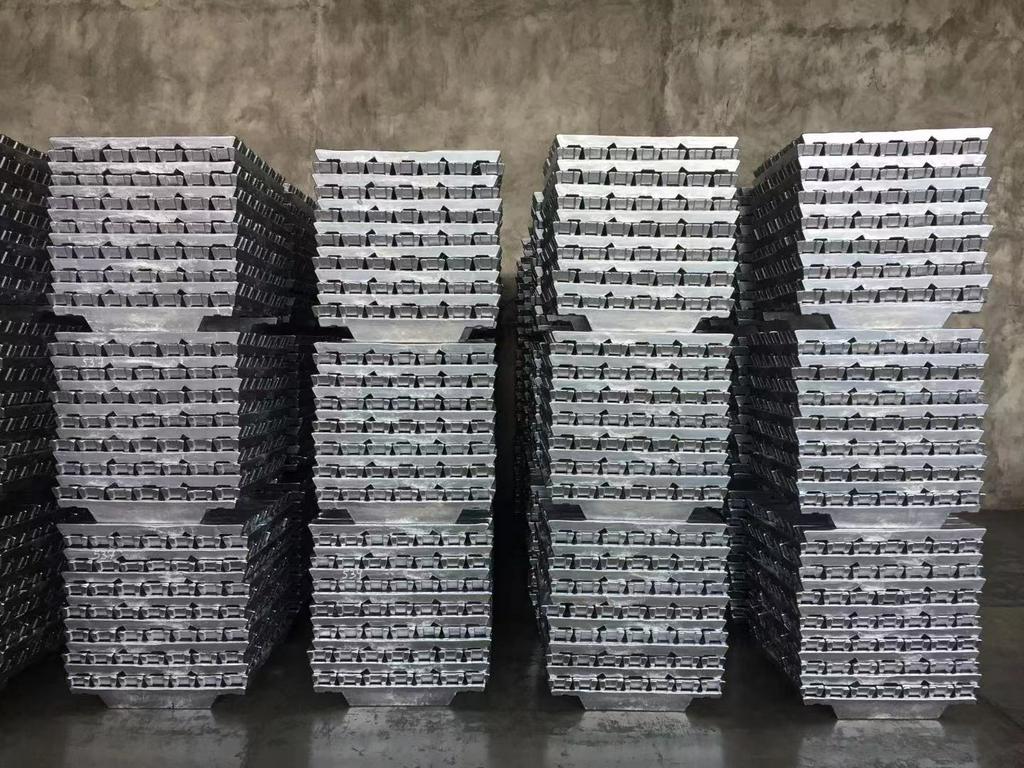 China's aluminum ingot warehouse withdrawals hit a four-year high. With 1 million mt inventory level within reach?
In 2026, China's aluminum ingot inventory has continuously pulled back from a high of 1.465 million mt in early May, and by end-June cumulative destocking of 300,000 mt brought it down to 1.165 million mt, with the destocking pace steepening markedly. Last week, warehouse withdrawals surged to 170,000 mt, hitting a new single-week high in nearly four years. Driven by three factors—the supply-side proportion of liquid aluminum rising more than expected, supportive export demand, and...
Jun 30, 2026 23:13