

1445results found for 'Ferrous Metals'
Sort by : |
- Metals mostly rose, polysilicon surged over 5%, and LME nickel, SHFE zinc, lithium carbonate, NY silver, etc., rose more than 1% [SMM Midday Comment]
SMM August 7 news: Metals market: As of the midday close, domestic base metals nearly all rose. SHFE copper rose 0.56%, SHFE aluminum rose 0.86%. SHFE lead rose 0.48%. SHFE zinc rose 1.35%. SHFE tin fell 0.3%. SHFE nickel rose 0.44%. In addition, cast aluminum most-traded contract futures rose 0.32, alumina most-traded contract fell 0.33%. Lithium carbonate most-traded contract rose 1.23%. Silicon metal most-traded contract rose 2.21%. Polysilicon most-traded contract futures rose 5.03%. Ferrous metals all rose. Iron ore rose 0.28%, rebar edged up, HRC rose 0.43%. Stainless steel rose 1.39%. Coking coal and coke: the most-traded coking coal contract rose 2.6%, the most-traded coke contract rose 3.22%. Overseas base metals: As of 11:40, LME metals all rose. LME copper rose 0.69%, LME aluminum rose 0.31%, LME lead rose 0.4%, LME zinc rose 0.44%. LME tin rose 0.42%. LME nickel rose 1.61%. Precious metals: As of 11:40, COMEX gold rose 0.43%, COMEX silver rose 1.45%. Domestic precious metals: SHFE gold rose 0.28%, the most-traded SHFE silver contract rose 0.11%. Furthermore, as of the midday close, platinum most-traded contract futures fell 1.71%, palladium most-traded contract futures fell 1.55%. As of the midday close, the most-traded European container shipping contract rose 1.79% to 1,682 points. As of 11:40 on August 7, selected futures midday quotes: Spot and fundamentals Copper: Today, Guangdong #1 copper cathode spot against the front-month contract: high-quality copper was at 160 yuan/mt, up 70 yuan/mt from the previous trading day; standard-quality copper was at a premium of 60 yuan/mt, up 50 yuan/mt from the previous trading day; SX-EW copper was at 0 yuan/mt, up 30 yuan/mt from the previous trading day. The average price of Guangdong #1 copper cathode was 108,355 yuan/mt, up 455 yuan/mt from the previous trading day; the average price of SX-EW copper was 108,245 yuan/mt, up 425 yuan/mt from the previous trading day... Macro front Domestic: [Over 30 trillion yuan! China's foreign trade imports and exports continued to grow in the first seven months of this year] The General Administration of Customs today released statistics showing that in the first seven months of this year, China's total foreign trade imports and exports reached 30.13 trillion yuan, up 17.3% YoY, maintaining a sound growth momentum. Of this, exports stood at 17.44 trillion yuan, up 14%; imports were 12.69 trillion yuan, up 22%. In July alone, imports and exports totaled 4.66 trillion yuan, up 19.2% YoY. Of this, exports were 2.71 trillion yuan, up 17.8%, and imports were 1.95 trillion yuan, up 21.2%. [National Energy Administration: Increase independent R&D of key power equipment, promote breakthroughs in key technologies such as power chips and UHV components] The National Energy Administration issued the "15th Five-Year Action Plan for Power Safety Production". It mentioned strengthening "AI+" safety governance, innovating high-precision fault prediction and health management methods for equipment, promoting the integration of AI technology into intelligent safety tools, and studying AI large model-based decision support technology for power safety production. Increase independent R&D of key power equipment, strengthen R&D of new protective materials, set up a special plan for technical breakthroughs in core components of power equipment, and promote breakthroughs in key technologies such as power chips and UHV components. Promote technological innovation in safety and quality control for power construction projects, study and build intelligent supervision systems for power construction projects, and use AI, big data and other means to strengthen off-site supervision and quality supervision of key power projects. (National Energy Administration) [General Administration of Customs: China's integrated circuit exports rose 99.5% YoY in January-July] Data released by the General Administration of Customs showed that China's integrated circuit export value reached $38.74 billion in July, with cumulative exports in January-July reaching $216 billion, up 99.5% YoY. (Jin10 data app) [PBOC drained a net 133 billion yuan via open market operations today, and a net 1,225.5 billion yuan this week] The PBOC conducted 1 billion yuan of 7-day reverse repo operations today. With 134 billion yuan of 7-day reverse repos maturing today, a net drain of 133 billion yuan was achieved. This week, the PBOC conducted 176.5 billion yuan of 7-day reverse repo operations, 300 billion yuan of overnight reverse repo operations, and 500 billion yuan of outright reverse repo operations. With 116.5 billion yuan of 7-day reverse repos and 900 billion yuan of overnight reverse repos maturing this week, a net drain of 1,225.5 billion yuan was achieved. (Jin10 data app) As of 11:40, the US dollar index rose 0.02% to 99.96. The market focused on US non-farm payrolls data for clues on the interest rate outlook. According to CME's "Fed Watch": The probability of the Fed keeping interest rates unchanged in September is 45%, and the probability of a cumulative 25 basis point rate hike is 55%. The probability of keeping rates unchanged through October is 31%, while the probability of a cumulative 25 bp hike is 51.9% and a cumulative 50 bp hike is 17.1%. (Jin10 data app) Fed's Musalem: The current inflation rate is far above the Fed's 2% target, and monetary policy must effectively suppress underlying inflation rather than tolerating high inflation now in the hope of future productivity gains. US labor productivity grew faster than expected in Q2, largely because businesses sought to ease cost pressures. Data released on Thursday showed that nonfarm productivity rose at an annualized rate of 1.4% in Q2, up from an upwardly revised 0.8% in Q1, surpassing the broad market forecast. Unit labor costs increased 1.3%, lower than expected. Fed officials, investors and economists have been looking for signs whether hundreds of billions of dollars in AI investment are starting to lift productivity. However, due to large quarterly fluctuations in official data, it will take time to observe a clear trend. Labor costs are one of the largest expense items for many businesses, and efficiency gains can allow wages to rise without fueling inflation. In the long term, higher productivity helps improve living standards, but some economists worry that if AI-driven productivity growth persists, some businesses might delay hiring or even cut staff. The productivity gain in Q2 was supported by the strongest output growth since Q3 2025, along with a modest increase in hours worked. (Jin10 data app) Data: Today, markets will see the release of France's Q2 ILO unemployment rate, Germany's June seasonally adjusted industrial output MoM, Germany's June seasonally adjusted trade balance, the UK's July Halifax house price index MoM, France's June trade balance, Switzerland's July consumer confidence index, Canada's July employment change, the US July unemployment rate, US July seasonally adjusted nonfarm payrolls, US July average hourly earnings YoY, US July average hourly earnings MoM, the US July New York Fed 1-year inflation expectations, China's July trade balance in USD terms, China's July foreign exchange reserves, China's July trade balance, and other data. Watch for: 2028 FOMC voting member and St. Louis Fed President Musalem to speak on the US economy and monetary policy; 2027 FOMC voting member and Richmond Fed President Barkin to speak. Crude oil: As of 11:40, both benchmark oil prices rose, with WTI up 1.01% and Brent up 1.06%. Concerns over Strait of Hormuz transit outlook supported oil prices. According to preliminary US government data, US imports of Saudi crude oil fell to zero in July, marking the first full month without Saudi crude imports since 1985. Data released by the US Department of Energy on Wednesday showed that Saudi crude shipments to the US completely ceased in July. This is a significant decline given that US refiners purchased more than 800,000 barrels per day of Saudi crude earlier this year. With the closure of the Strait of Hormuz and other war-related supply disruptions pushing up crude prices linked to global benchmarks, US refiners have been seeking alternative supplies to Saudi crude. Saudi crude deliveries to the US have historically dropped to zero in individual weeks, but July is the first full month at the lowest level in over 40 years. According to Kpler data, US imports of Saudi crude are expected to resume at around 300,000 barrels per day this month, in line with recent historical norms. (Jin10 data app) Saudi Arabia lowered its key crude prices for Asia even as negotiations progressed for a deal to ease shipping pressure in the Strait of Hormuz. Despite the Houthi threat to alternative Red Sea routes for eastward crude shipments, Saudi Arabia still cut prices. A price list showed that Saudi Aramco, the state oil company, reduced the price of its Arab Light crude for Asian customers for next-month delivery by 50¢ per barrel to a discount of $2 per barrel versus the regional benchmark. A previous survey showed traders expected Aramco to keep its flagship crude price unchanged. This week, global benchmark Brent crude fell sharply and is now trading near $80 per barrel. (Jin10 data app) Spot market at a glance: ► ► ► Midday comments for other metals will be updated later, please refresh to view~
Aug 7, 2026 12:05 - Crude oil rises, metals: domestic market outperforms overseas market, LME copper retreats after rapid rise, LME nickel and tin lead the losses, coke gains over 2% [Overnight Market]
SMM August 7 News: Metal Markets: Overnight, base metals on the domestic market broadly rose. SHFE copper edged up 0.1%. SHFE aluminum gained 0.38%. SHFE lead edged up 0.1%. SHFE zinc rose 1.11%, while SHFE tin fell 0.98%. SHFE nickel dropped 1.22%. Additionally, the most-traded alumina futures contract edged up 0.09%, while the most-traded foundry aluminum contract fell 0.52%. Overnight, ferrous metals all rose. Stainless steel edged up, iron ore gained 0.35%, and rebar rose 0.17%. Hot-rolled coil (HRC) increased 0.59%. For coking coal and coke: the most-traded coking coal futures contract rose 1.54%, and the most-traded coke contract gained 2.48%. Overnight, on the overseas market, LME base metals mostly fell. LME copper shot up to an intraday high of $14,369.5/mt, a level not seen since January 29, before eventually closing with a 0.4% decline. LME aluminum gained 0.65%. LME lead fell 0.29%. LME zinc rose 0.64%. LME tin dropped 1.43%. LME nickel fell 2.45%. Overnight Precious Metals : COMEX gold fell 0.15%, and COMEX silver dropped 0.81%. Overnight, the most-traded SHFE gold futures contract fell 0.01%, and the most-traded SHFE silver contract declined 0.93%. Closing prices as of 7:03 AM, August 7: Macro Front Domestic (China) News: [Guangdong: Promote the Integration of Futures and Spot Markets for Key Commodities like Iron Ore, Crude Oil, and Rubber to Enhance Pricing Influence on Bulk Commodities] The "15th Five-Year Plan for the Development of the China (Guangdong) Pilot Free Trade Zone (Draft for Comments)" was released for public comment. It mentioned plans to expand financial opening-up in an orderly manner. International financial institutions will be encouraged to set up headquarters in the zone, promoting the development of cross-border finance, innovative finance, venture capital and investment, wealth management, futures trading, asset management, specialty finance, and offshore services. The Plan aims to accelerate the implementation of projects like the Guangdong-Hong Kong-Macao Greater Bay Area International Commercial Bank and the GBA Insurance Service Center. It supports expanding the scale of commodity trading and promoting the integration of futures and spot markets for key commodities like iron ore, crude oil, and rubber to enhance their pricing influence. The Plan will promote the quality improvement and upgrade of fintech regulatory pilots and expand digital yuan application scenarios. It supports pilot programs for cross-border financial innovations such as offshore finance and green finance, and will promote the expansion of pilot programs like cross-border Wealth Management Connect and digital yuan cross-border payments. Institutions within the zone will be supported in developing specialty products like cross-border supply chain finance and intellectual property-pledged financing, and market entities will be guided to develop composite financial products. Pilots for cross-border credit asset transfers and multi-currency integrated accounts will be deepened to promote wider mutual recognition and connectivity of cross-border financial products. (Guangdong Department of Commerce) [CAAM: June Auto Commodity Import and Export Value Hits $31.82 Billion, Up 35.5% YoY] According to data from the General Administration of Customs compiled by the China Association of Automobile Manufacturers (CAAM), the total import and export value of auto commodities in June 2026 was $31.82 billion, up 8.0% MoM and up 35.5% YoY. The import value was $3.39 billion, down 6.1% MoM and down 18.7% YoY; the export value was $28.43 billion, up 10.0% MoM and up 47.2% YoY. From January to June 2026, the cumulative import and export value of national auto commodities totaled $164.74 billion, up 25.5% YoY. The import value was $19.25 billion, down 11.8% YoY; the export value was $145.49 billion, up 33.0% YoY. (Jin10 Data APP) US Dollar: Overnight, the US dollar index rose 0.26% to 99.95. Escalating geopolitical tensions weighed on both US stocks and bonds, causing them to fall. Oil prices jumped, reigniting inflation concerns ahead of the key US employment report. Market focus now turns to Friday's US employment report for new clues on the Federal Reserve's policy path. Stronger-than-expected jobs data could reinforce the case for higher-for-longer interest rates, while any escalation of tensions in the Middle East could push up energy prices and intensify market fluctuations. UBS analyst Ulrike Hoffmann noted: "Short-term risks remain, especially if US data remains firm, oil prices continue to fuel inflation concerns, or the market continues pricing in a more hawkish Fed rate path." Interactive Brokers Senior Economist José Torres stated: "Wall Street reversed again from recent strong gains as the lack of clarity concerning the Strait of Hormuz led investors to question whether the robust rally early this week was justified." (Jin10 Data APP) According to the CME "FedWatch" tool: The probability of the US Fed keeping rates unchanged by September is 45%, while the probability of a cumulative 25 basis point hike is 55%. The probability of the Fed keeping rates unchanged through October is 31%, while the probability of a cumulative 25 basis point hike is 51.9%, and a cumulative 50 basis point hike is 17.1%. (Jin10 Data APP) According to a report by the UK's Financial Times, even after a decision not to reveal too many details on rate strategy triggered a sharp sell-off in government bonds, Fed Chairman Warsh is sticking with his usual concise communication style. People close to Warsh say he acknowledges making some mistakes during his first 10 weeks at the helm of the world's most important central bank, including failing to reinforce his key message on price stability and creating confusion over whether his long-term plan to reform the Fed could influence near-term policy decisions. However, they insisted those mistakes were not enough to derail Warsh's reform plans for the Fed. People familiar with the matter also revealed that Warsh is prepared to raise interest rates at the September meeting if upcoming inflation data proves strong and market expectations for higher borrowing costs rise accordingly. The sources added that while the Fed Chairman raised the possibility of shrinking the central bank's $6.7 trillion balance sheet to tighten monetary policy, interest rates remain the primary tool for now and will be used at upcoming meetings if necessary. (Jin10 Data APP) Macro Events: Data releases today include France's Q2 ILO unemployment rate, Germany's June seasonally adjusted industrial output MoM, Germany's June seasonally adjusted trade balance, the UK's July Halifax seasonally adjusted house price index MoM, France's June trade balance, Switzerland's July consumer confidence index, Canada's July employment change, the US July unemployment rate, US July seasonally adjusted non-farm payrolls, US July average hourly earnings YoY, US July average hourly earnings MoM, US July New York Fed 1-year inflation expectations, China's July US dollar-denominated trade balance, China's July foreign exchange reserves, and China's July trade balance data. Watches: 2028 FOMC voter and St. Louis Fed President Musalem speaks on the US economy and monetary policy; 2027 FOMC voter and Richmond Fed President Barkin delivers remarks. Crude Oil: Overnight, both oil futures rose, with US oil gaining 4% and Brent oil surging 4.57%. Geopolitical risks rekindled, causing oil prices to spike sharply. Wall Street CN mentioned that the new navigation agreement for the Strait of Hormuz, proposed to be signed by Iran and Oman, revealed significant details again, indicating Iran's bid to control the strait. Furthermore, Iran has taken action, striking "enemy targets" near the strait. Iran's Fars News Agency (FARS) reported on Thursday, August 6, local time, that Iran's parliament is reviewing this agreement. Under the agreement, US and Israeli vessels will be barred from transiting the Strait of Hormuz, and nations that have "caused harm to Iran" will also be denied passage permits. Following this news, concerns over risks to global energy transportation rapidly intensified in the market. (Wall Street CN) Saudi Arabia cut its main crude oil price for Asia as negotiations proceed on an agreement aimed at easing shipping pressure in the Strait of Hormuz. The price cut came despite Houthi threats jeopardizing the alternative eastbound crude route via the Red Sea. According to a price list, state oil company Saudi Aramco reduced the price of its Arab Light crude for delivery to Asian clients next month by $0.50 per barrel, setting it at a $2/bbl discount to the regional benchmark. A prior survey showed traders expected Saudi Aramco to keep its flagship crude price unchanged. Global benchmark Brent crude prices fell sharply this week and are now trading near $80/bbl. (Jin10 Data APP) Over the past two months, the UAE has transported more crude oil through the Strait of Hormuz than any other producer, providing a critical supply buffer to a global market suffering from a historic energy crisis. According to energy data firm Kpler, a Very Large Crude Carrier (VLCC) loaded with Emirati cargo appeared in the Gulf of Oman on Tuesday after turning off its Automatic Identification System (AIS) signal at the end of July. The tanker carries crude from the Abu Dhabi National Oil Company. This is just one of dozens of similar tankers that have departed the Persian Gulf since the Abu Dhabi National Oil Company (ADNOC) began implementing a new sales strategy. According to trading sources familiar with the matter, since early June, ADNOC has sold over 130 million barrels of crude oil through seven unprecedented tenders. (Jin10 Data APP)
Aug 7, 2026 08:43 - Data: SHFE, DCE market movement (Aug 06)
The following table shows the ferrous and nonferrous metals movement on the SHFE and DCE on 06 Aug , 2026
Aug 6, 2026 15:54 - In metals, the domestic market outperformed the overseas market; SHFE zinc and coke rose over 1%; LME and SHFE nickel, and LME tin led losses; SHFE gold and silver surged more than 3% [SMM Midday Comment]
SMM, August 6: Metal Markets: As of the midday close, base metals on the domestic market were almost all up. SHFE copper rose 0.4%, SHFE aluminum rose 0.23%. SHFE lead edged up. SHFE zinc rose 1.49%. SHFE tin rose 0.26%. SHFE nickel fell 2.1%. In addition, the most-traded casting aluminum futures contract edged down, while the most-traded alumina contract rose 1.36%. The most-traded lithium carbonate contract fell 1.23%. The most-traded silicon metal contract rose 0.12%. The most-traded polysilicon futures contract fell 0.65%. Ferrous metals were mostly in the green. Iron ore rose 2%, rebar rose 0.67%, and HRC rose 0.53%. Stainless steel fell 1.51%. For coking coal and coke: the most-traded coking coal contract rose 0.74%, and the most-traded coke contract rose 1.99%. On the overseas base metals market, as of 11:42, LME metals were almost all down. LME copper fell 0.36%, LME aluminum rose 0.17%, LME lead fell 0.16%, LME zinc fell 0.37%. LME tin fell 1.58%. LME nickel fell 1.9%. In precious metals, as of 11:42, COMEX gold rose 0.44%, while COMEX silver fell 0.05%. On the domestic precious metals market: SHFE gold rose 3.72%, and the most-traded SHFE silver contract rose 3.19%. Additionally, as of the midday close, the most-traded platinum futures contract rose 1.05%, and the most-traded palladium futures contract rose 1.4%. As of the midday close, the most-traded container shipping futures (Europe route) contract fell 0.63% to 1,651 points. As of 11:42 on August 6, selected futures midday prices: Spot and Fundamentals Copper: Today, spot #1 copper cathode in Guangdong against the front-month contract: high-quality copper was quoted at 90 yuan/mt, down 20 yuan/mt from the previous trading day; standard-quality copper was at a premium of 10 yuan/mt, down 20 yuan/mt; and SX-EW copper was at a discount of 50 yuan/mt, down 20 yuan/mt. The average price of #1 copper cathode in Guangdong was 107,900 yuan/mt, up 910 yuan/mt from the previous trading day, and that of SX-EW copper was 107,820 yuan/mt, up 930 yuan/mt. In the spot market: Guangdong inventory increased again, mainly due to increased arrivals and weakening consumption... Macro Front China: [PBOC’s open market operations saw a net drain of 269.5 billion yuan today] The PBOC conducted 1 billion yuan of 7-day reverse repo operations at an interest rate of 1.40%, unchanged from the previous operation. Today, 270.5 billion yuan of reverse repos matured. [China Gold Association: In H1 2026, increase in domestic gold ETF holdings fell 66.17% YoY] Data from the China Gold Association showed that the increase in domestic gold ETF holdings in H1 2026 was 28.677 mt, down 66.17% from H1 2025. By the end of June 2026, the open interest of gold ETFs in China stood at 276.529 mt. China increased its gold holdings by 40.12 mt in H1 2026, bringing its gold reserves to 2,346.45 mt by month-end June, ranking fifth globally. The country had added to its gold reserves for 20 consecutive months, Nov 2024-Jun 2026. (Jin10 Data APP) On August 6, the central parity rate of the RMB in the interbank foreign exchange market was 6.7895 yuan per US dollar. US Dollar: As of 11:42, the US dollar index edged up 0.03% to 99.72. Cooling US ADP employment data contrasted with elevated ISM services costs, raising stagflation concerns. US ADP employment data missed expectations! The US ADP private payrolls increased by only 44,000 in July, the lowest this year, making Friday's non-farm payrolls data critical. US ADP private-sector employment rose by just 44,000 in July, a new low for the year and below expectations. The goods-producing sector was under pressure, signaling a cooling labour market. However, job-stayers' wages saw robust YoY growth of 7%, indicating persistent structural tightness. The market is focused on Friday's non-farm payrolls data; if it follows the same trend, it would confirm steady employment, supporting the Fed's continued focus on combating inflation. The US ISM Services PMI continued expanding in July, showing demand-side resilience but intensifying stagflation risks. The US ISM services index rose to 54.1 in July, a 0.1-point uptick from June but below the expected 54.5. The new orders index surpassed expectations to hit 57.2, and the prices paid index exceeded forecasts to reach 70.3, while the employment index fell short of expectations, dropping to 47.4 and into contraction territory. Rising costs alongside contracting employment presented stagflationary characteristics. The US Treasury kept its quarterly debt issuance size unchanged, with $40 trillion in debt pressure looming. The latest Treasury refunding statement maintained current auction sizes for coupon-bearing securities but changed the description for future issuance from "increases" to "adjustments," preserving flexibility for future policy shifts. The borrowing estimate for the current quarter was raised to $739 billion, with the total federal debt about to surpass $40 trillion. The Treasury continues to rely on short-term bills to bridge the gap, making financing costs more sensitive to interest rates. The market fears that delaying adjustments could trigger a larger shock from long-term debt issuance later. (From Wall Street Horizon APP) Data: Today will see the release of Switzerland's July seasonally adjusted unemployment rate, the Eurozone's June retail sales MoM, US July Challenger job cuts, US initial jobless claims for the week ending August 1, US July Global Supply Chain Pressure Index, and US June wholesale sales MoM, among other data. To watch: Fed Governor Lisa Cook will speak on the economic outlook; 2027 FOMC voter and San Francisco Fed President Daly will deliver remarks. Crude Oil: As of 11:42, oil prices in both markets edged down, with US crude down 0.28% and Brent crude down 0.13%. The market is focusing on the progress of talks between Iran and Oman. Iranian Deputy Foreign Minister Gharibabadi said in an interview on August 5 that the agreement between Iran and Oman on merchant ship passage through the Strait of Hormuz is close to being finalised. According to local news from the Iranian side on the 5th, both the southern route through Omani territorial waters and the northern route within Iranian territorial waters will be closed, establishing a new passage model in the Strait of Hormuz that differs from the past 60 years. Additionally, Gharibabadi denied that Iran is in negotiations with the US, but stated that Iran has received messages from the US side, and said the US has expressed readiness to resume fulfilling commitments under the previously signed memorandum of understanding. (CCTV) On August 5 local time, US President Trump said in a speech at an event in Las Vegas that recent oil prices have fallen and stabilised to some extent, "We may have to let it go up again," but he "hopes it won't come to that." Trump did not elaborate on the meaning of this statement. An analysis by the Associated Press pointed out that although Trump has repeatedly assured that the war with Iran is about to end, oil prices typically rise anew with the onset of conflicts between the two sides. (CCTV International) Spot Market Overview: ► ► ► ► ► ► ► ► ►
Aug 6, 2026 14:36 - [SMM Stainless Steel Daily Review] Indonesia's Nickel Ore Quota News Impacts Futures, Stainless Steel Futures and Spot Prices Pull Back in Tandem
[SMM Stainless Steel Daily Review] Indonesian Nickel Ore Quota News Hits Futures, Stainless Steel Futures and Spot Prices Pull Back in Tandem According to an SMM report on Aug 6, SS futures trended downward and hit bottom. The SHFE nickel and SS futures dropped together, impacted by news of additional nickel ore quotas under Indonesia's RKAB. As of the midday close, the most-traded SS futures contract settled at 14,380 yuan/mt. In the spot market, the SS futures' successive declines intensified the wait-and-see sentiment in the industry. Although traders generally lowered their quotes in line with futures, inquiries remained sluggish, and transactions weakened further. SS most-traded futures contract. At 10:15 a.m., SS2609 was reported at 14,465 yuan/mt, down 15 yuan/mt from the previous trading day. Spot premiums for 304/2B material in the Wuxi area were in the 405-855 yuan/mt range. In the spot market, the average price of cold-rolled 201/2B coil in Wuxi held stable. For cold-rolled unedged 304/2B coil, the average price in Wuxi fell 75 yuan/mt, while that in Foshan fell 50 yuan/mt. Cold-rolled 316L/2B coil prices in Wuxi were flat. Quotes for hot-rolled 316L/NO.1 coil in Wuxi were unchanged. Cold-rolled 430/2B coil prices in both Wuxi and Foshan were steady. This week, macro sentiment shifted bearish, dominating metal market trends, and stainless steel futures consolidated on a subdued note overall. The US Fed kept interest rates unchanged as expected at its meeting this week, but its overall stance was hawkish. Commodity valuations generally came under pressure, and the nonferrous metals sector weakened collectively. Dragged by the spillover effect of macro headwinds, SS futures followed suit and consolidated on a subdued note, with the center of the futures moving lower. The overall market...
Aug 6, 2026 14:21 - Kunshan Hongfutai Environmental Protection Technology Co., Ltd. signed an advertising cooperation agreement with SMM to jointly promote brand upgrade!
Recently, Kunshan Hongfutai Environmental Protection Technology Co., Ltd. signed a web and APP advertising cooperation agreement with SMM. This partnership aims to expand practical cooperation and promote industry exchange, thereby deepening collaboration, expanding markets, and achieving mutual benefits. Going forward, SMM will leverage its platform advantages as a leading service provider in the non-ferrous metals industry to offer one-stop online marketing solutions through comprehensive digital displays for Kunshan Hongfutai Environmental Protection Technology Co., Ltd. , fostering a virtuous cycle between production and the market, and realizing shared value. Kunshan Hongfutai Environmental Protection Technology Co., Ltd. was established in 1999, obtained the Gold Waste Recycling Permit from the Nanjing Branch of the People's Bank of China in 2001, the Hazardous Waste Operation Permit from the Jiangsu Provincial Department of Environmental Protection in 2004, and the Special Industry Directory Management Certificate from the Kunshan Public Security Bureau in 2024. Located in Kunshan High-tech Industrial Park, Jiangsu Province, the company is adjacent to Shanghai 60 km to the east and Suzhou 30 km to the west, enjoying convenient transportation. The company currently has 98 employees, including five national-level engineers and 10 related technical personnel. It has established school-enterprise cooperation in technology and talent exchange with Soochow University and Jiangsu University of Technology. The company's main business: Disposal, utilization, recycling, processing, and production involving precious metals (gold, silver, platinum, palladium, rhodium, osmium, ruthenium, iridium) in waste materials, waste targets, wipes, pastes, silver contacts, off-cuts, catalysts, waste liquids, adsorption materials, photosensitive materials, etc. Processing trade with supplied materials is available. The company is equipped with advanced incineration, purification, processing, and wastewater and exhaust gas treatment facilities. The company has established a technology center and has been granted over 20 patents. Since 2010, it has been recognized as a "Jiangsu Province High-tech Enterprise". The company has obtained certifications for quality, environment, occupational safety, and UL management systems, and passes annual audits. In 2005 and 2007, it was awarded "Kunshan Circular Economy Demonstration Enterprise" and "Suzhou Circular Economy Pilot Enterprise"; in 2012 and 2013, it was consecutively recognized as a "Clean Production Unit", "Excellent Outward Supporting Unit", and "Safety Production Standardization Unit" in Kunshan; in 2015, it obtained the "Kunshan Science and Technology R&D Center" and "Jiangsu Province Private Technology Enterprise" titles; and in March 2024, it was honored as one of the "Top Ten Green and Safe Enterprises" in Kunshan High-tech Zone. The company's production equipment, "Short-Process Clean and Efficient Separation and Refining Technology and Equipment for Platinum, Palladium, and Rhodium," won the First Prize of the China Nonferrous Metals Industry Science and Technology Award. In 2011, the company established the "Hongfutai Care Fund" under the Kunshan Charity Foundation, contributing its modest share of love and organizing employees to participate in public welfare activities. Vision: To become a leading benchmark enterprise in precious metal recycling in China Mission: To recycle precious metal resources, protect the environment, and create a clean and fresh life Core Values: Integrity and win-win, customer first, diligence and accountability, result-oriented, innovation and efficiency Let us dedicate ourselves to environmental protection and make our homeland more comfortable, harmonious, and beautiful! Welcome for field trips and business cooperation! Contact Information Mr. Guo 18915750888 Mr. Zhan 18915750846 Tel: 0512-57786918-801 Fax: 0512-57799189-0 Email: Email: hft_kefu@126.com Website: http://www.chinahft.com.cn Address: No. 89 Changyang Branch Road, Kunshan High-tech Zone SMM Contact Cao Juanjuan caojuanjuan@ly10000.com 19521491689
Aug 6, 2026 10:01 - China Aluminum Inventory Pullback, Multiple Factors in Play as Aluminum Price Drifts Higher [SMM Aluminum Morning Meeting Notes]
[China's Aluminum Inventory Pullback, Multiple Factors in Play, Aluminum Prices Drift Higher] Overall, recently the macro front has improved, the US Fed's near-term hold on rate hikes has eased the marginal constraint on the non-ferrous metals sector, and China's proportion of liquid aluminum continues to rise while aluminum inventory destocking has resumed, together underpinning aluminum prices. However, the continuous rollout of long-term aluminum capacity outside China, weak traditional end-use demand in China during the off-season, and the recent easing of geopolitical tensions in the Middle East are putting some upward pressure on aluminum prices. It is expected that aluminum prices will maintain a trend of consolidating on a strong note.
Aug 6, 2026 09:05 - ADP Miss + LME Tin Night Session Breaks Through 57,000, SHFE Tin 2609 Closes at 438,200, Up 1.70% [SMM Tin Morning Brief]
[SMM Tin Morning Brief: ADP Misses Expectations + LME Tin Night Session Breaks Through 57,000 SHFE Tin 2609 Closes at 438,200 Up 1.70%]
Aug 6, 2026 08:54 - Dollar’s Two-Day Slide, Metals Mostly Higher; LME Zinc, LME Tin, Alumina Up Over 2%; Gold, Silver Surge [Overnight Market]
SMM August 6 News: Metal market: Overnight, domestic base metals rose broadly. SHFE copper rose 0.56%. SHFE aluminum rose 0.29%. SHFE lead was flat at 15,640 yuan/mt. SHFE zinc rose 1.6%. SHFE tin rose 1.7%. SHFE nickel fell 0.17%. Additionally, the most-traded alumina futures rose 2.56%, and the most-traded casting aluminum contract rose 0.13%. Overnight, ferrous metals mostly rose. Stainless steel fell 0.72%. Iron ore rose 1.85%. Rebar rose 0.74%. Hot-rolled coil rose 0.53%. Coking coal and coke: The most-traded coking coal contract rose 0.94%, and the most-traded coke contract rose 0.56%. Overnight, in the overseas market, LME base metals rose broadly. LME copper rose 0.75%. LME aluminum rose 0.81%. LME lead was flat at $1,890/mt. LME zinc rose 2.31%. LME tin rose 2.1%. LME nickel edged down 0.06%. Overnight precious metals : COMEX gold rose 3.74%, and COMEX silver rose 3.34%. Overnight, SHFE gold most-traded rose 3.58%, and SHFE silver most-traded rose 3.72%. OANDA Senior Market Analyst Kelvin Wong said, "The link between gold and oil prices remains, as oil prices have a huge impact on inflationary pressures in the global economy. If we can see a clear roadmap for further de-escalation of the (Middle East) situation, gold prices could continue to rise." Traders now expect a 59% probability of a Fed rate hike at the September 15-16 policy meeting, down from 67% a day earlier. (Jin10 Data APP) Overnight closing quotes as of 7:11 on August 6: Macro front Domestic: [Foreign Ministry: Firmly Opposes US Abusing National Power to Unreasonably Suppress Chinese Enterprises] In response to reports that the US is drafting regulations to suppress Chinese enterprises, Foreign Ministry spokesperson Lin Jian stated on the 5th when answering a reporter's question that China firmly opposes the US abusing its national power to unreasonably suppress Chinese enterprises. A reporter asked: It is reported that the US is drafting regulations to ban the import of China-made new-type optical transceiver modules and is preparing to impose additional tariffs and set a price floor on polysilicon and related products. Given the US's previous sanctions and restrictions on Huawei, how does China assess the planned US actions? What specific measures will be taken to protect the rights and interests of Chinese enterprises? Lin Jian said, China firmly opposes the US overstretching the concept of national security and abusing its national power to unreasonably suppress Chinese enterprises. Protectionism cannot boost US competitiveness. The US's actions severely hinder normal economic and trade exchanges between China and the US and are not in the interests of any party, including US enterprises and consumers. China will continue to firmly safeguard the legitimate and lawful rights and interests of Chinese enterprises. (Xinhua News Agency) [Guangxi: Trade-in Policy Boosts Smart Home Appliance Consumption] With the implementation of national subsidies combined with local expansion policies coinciding with the summer consumption peak season, the Guangxi home appliance market welcomed a new round of consumption boom. During visits, it was found that the trade-in policy continued to gain momentum, smart home appliances accelerated their entry into millions of households, and consumption upgrading trends were evident. Since the beginning of this year, Guangxi's consumer goods trade-in program has subsidized 2.061 million units of digital and smart products, 95,000 vehicles, and 2.553 million units of home appliances, with total subsidy funds of 2.96 billion yuan, boosting commodity sales of 26.7 billion yuan. Among these, the proportion of county-level participants reached 45.2%, and the proportion of subsidy amount enjoyed in rural areas accounted for 37.1%, indicating rural consumption potential was being rapidly released. Hong Tao, director of the Institute of Business Economics at Beijing Technology and Business University, stated that the trade-in policy, on the basis of continued policy support, has upgraded to a "demand + experience" dual-drive. The national, local, and enterprise levels have established a triple subsidy linkage system, reducing household replacement costs and stimulating consumption vitality while helping the whole society save energy and reduce carbon, promoting the popularization of green and low-carbon lifestyles. (Xinhua News Agency) [CAAM Initiates Establishment of Autonomous Driving Industry Development Joint Committee] Hosted by CAAM, the 16th China Auto Forum was held in Jiading, Shanghai. During the forum, CAAM officially announced the initiation of the establishment of the "Autonomous Driving Industry Development Joint Committee" and held the launching ceremony. At the ceremony, CAAM stated that the Joint Committee will adhere to the principle of "taking safety as the bottom line, with innovation as the driving force, and using coordination to promote development," working with all industry parties to jointly promote the safe, orderly, and large-scale development of China's autonomous driving industry, contributing industrial strength to building an automotive powerhouse and cultivating new quality productive forces. The Joint Committee sincerely invites OEMs, autonomous driving solution providers, chip and sensor companies, software and communication firms, testing and certification agencies, universities, and research institutes, and other relevant industry chain entities to join in discussing development plans, building collaborative mechanisms, and sharing industrial achievements. (CAAM) [DCE: Coke Options to Be Listed for Trading from September 2, 2026 (Wednesday)] The DCE announced that coke options will be listed for trading starting September 2, 2026 (Wednesday). The position limit for coke options is 5,000 lots. Coke options and coke futures have separate position limits. The combined buy holdings of all call options and sell holdings of all put options, as well as the combined buy holdings of all put options and sell holdings of all call options, in an options contract of a certain month for non-futures company members and clients, must not exceed the position limit for the options product. Positions deemed as acting in concert shall be aggregated for calculation. [CPCA: Preliminary Estimates Show July National Passenger Car Market Retail Sales at 1.506 Million Units, Down 18% YoY] Preliminary data from the China Passenger Car Association (CPCA) showed that from July 1 to 31, national passenger car market retail sales totaled 1.506 million units, down 18% YoY and down 6% MoM. Year-to-date cumulative retail sales reached 10.207 million units, down 20% YoY. National passenger car wholesale volumes by automakers from July 1 to 31 were 2.241 million units, up 1% YoY but down 5% MoM, with year-to-date cumulative wholesale volumes at 14.788 million units, down 5% YoY. (from Wall Street News APP) Dollar: Overnight, the US dollar index extended the decline of the previous trading day to fall 0.17% to 99.69. US private employment growth in July was significantly below expectations, indicating that labor market momentum had cooled somewhat, but wage growth remained resilient, and the overall employment situation remained stable. Data released by ADP Research Institute on Wednesday showed that private sector employment increased by 44,000 in July, below the 65,000 expected in a Bloomberg survey of economists and the lowest level this year, following a revised figure of 95,000 in June. The US government's non-farm payrolls report to be released on Friday is closely watched by the market. If the data is confirmed, the current employment trend would support the Fed's continued focus on still-high inflation. (Wall Street News) Driven by a rebound in new orders and business activity, the US services sector maintained a stable expansion trend in July. Data released on Wednesday showed that the July ISM Services Index rose 0.1 point to 54.1, with a reading above 50 indicating expansion. The new orders growth rate accelerated, and the gauge of business activity rose to a five-month high, indicating consumer demand remained resilient. However, rising service and material costs continued to pressure enterprises. As the temporary deal between the US and Iran broke down, driving crude oil and gasoline prices higher, the ISM Prices Paid Index surged to 70.3 in July. With persistently high costs squeezing corporate profits and affecting consumer spending, some companies may choose to delay hiring. The employment gauge of the institute indicated the most pronounced contraction in employment since March. (Jin10 Data APP) Fed Governor Cook reiterated her stance: if inflation does not slow, she is prepared to raise rates , and warned that policymakers may not have the luxury of waiting for inflation to return to the 2% target. Although Cook supported the Fed's decision to hold rates steady at the July policy meeting, she warned that the longer inflation remains above the Fed's target, the harder it will be to tame. In a speech at an event in Alaska, Cook said, "If I don't see signs that inflation is sustainably declining soon, I am ready to act. With inflation above target for five consecutive years, the risk that inflation becomes entrenched in price- and wage-setting behaviour is rising, which would lead to more persistent inflation that is harder to address." But Cook stated that the fading impact of tariffs, the possibility of lower oil prices, and the easing of pressures related to the AI boom could provide a buffer for inflation, thereby avoiding the need to tighten policy . She said her top priority remains bringing inflation back to the Fed's target. In an interview with CNBC on Wednesday, 2026 FOMC voting member and Minneapolis Fed President Kashkari stated that the Fed should now "start gradually raising" rates to lower inflation and avoid the need for more aggressive hikes in the future. Kashkari was one of three voting members who supported a 25-basis-point rate hike at last week's FOMC meeting. He said that with strong corporate earnings and resilient consumers and labor market, there is no evidence that monetary policy is clearly restrictive, making it time to start gradually raising rates. He stressed that this is not advocating for large rate hikes, but rather hoping for "small steps" to avoid the need for sharp policy tightening in the future if inflation becomes entrenched. He added that he is unsure what action the FOMC will take in September, and incoming data will play a key role. Meanwhile, Kashkari said that Fed Chairman Warsh did not pressure him, once telling him: "Do what you think is right for the economy." (Jin10 Data APP) According to CME's "FedWatch": The probability of the Fed holding rates unchanged in September is 45.6%, while the probability of a cumulative 25-basis-point rate hike is 54.4%. For October, the probability of no change is 33.5%, a cumulative 25 bps hike is 52.1%, and a cumulative 50 bps hike is 14.5%. Macro: Today, data to be released include Switzerland's July seasonally adjusted unemployment rate, Eurozone's June retail sales MoM, US July Challenger job cuts, US initial jobless claims for the week ending August 1, US July Global Supply Chain Pressure Index, and US June wholesale sales MoM. Focus on: Fed Governor Lisa Cook's speech on the economic outlook; 2027 FOMC voting member and San Francisco Fed President Daly's speech. Crude oil: Overnight, oil futures showed mixed performance, with WTI falling 0.91% and Brent edging up 0.08%. Iran and Oman are expected to reach an agreement to reopen the Strait of Hormuz, calming oil prices. Wall Street News mentioned that Iran systematically disclosed more details about negotiations with Oman on new transit arrangements for the Strait of Hormuz for the first time and publicly explained the latest contacts between the US and Iran regarding the strait's reopening. On Wednesday, the 5th local time, Iranian Deputy Foreign Minister Gharibabadi said that Iran and Oman are working on a new arrangement for the Strait of Hormuz that differs from the past 60 years. According to the new route design, commercial vessels, whether entering or exiting the strait, would need to pass through Iranian territorial waters in some sections. According to CCTV News, he stressed that arrangements related to the strait should be decided solely by Iran and Oman, and Iran would never accept the involvement of any external forces. (Wall Street News) The US exported a record volume of distillate fuel overseas last week while domestic inventories fell again, indicating that the global scramble for diesel is increasingly drawing down US supplies. According to data released by the US Energy Information Administration (EIA) on Wednesday, distillate fuel exports rose to 1.9 million barrels per day last week, the highest level on record, surpassing the previous peak set in May. Distillate fuels mainly include diesel, heating oil, and other products. At the onset of the US-Iran war, the global diesel market was thrown into disarray. Global fuel supply was disrupted as crude and product tankers could not pass through the Strait of Hormuz. Since then, months of Ukrainian attacks on Russian refining facilities further exacerbated supply pressures. This has made the US one of the few countries globally with sufficient diesel production capacity to churn out large volumes of fuel and export it overseas. US diesel exports have exceeded 1.5 million barrels per day for five consecutive weeks. Even with refiners running at full throttle to produce diesel, US fuel stockpiles are still falling. As of last week, distillate fuel inventories, on a seasonally adjusted basis, had dropped to the lowest level for the same period since 1996. (Jin10 Data APP)
Aug 6, 2026 08:30 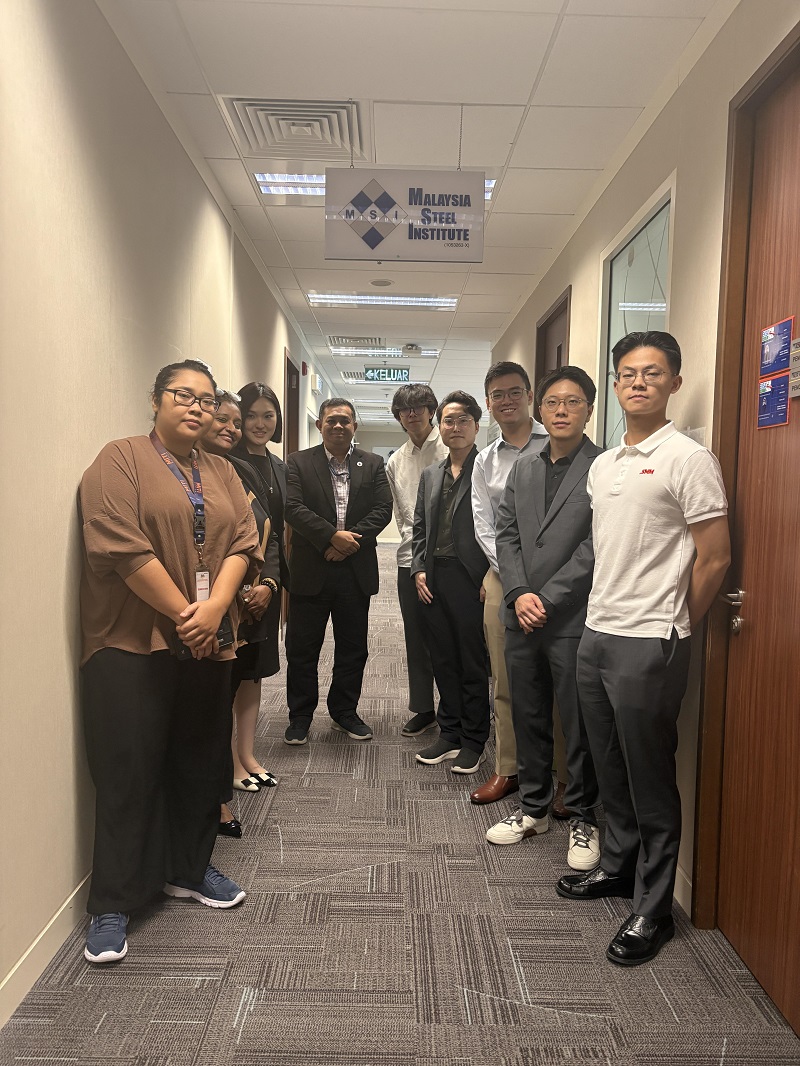 SMM Visits Malaysian Steel Institute (MSI) to Deepen Cooperation on the Southeast Asian Ferrous Metal Industry Chain
Kuala Lumpur, Aug 5 – At a time when the global ferrous metals sector is undergoing constant restructuring, ASEAN has emerged as a pivotal growth hub for the steel industry, fuelled by robust end-market demand, fast-expanding production capacity and shifting cross-border trade dynamics. Regional infrastructure upgrades, local capacity iteration, and trade policy adjustments are collectively driving ongoing changes in the supply-demand structure, pricing system, and supply chain of the ASEAN steel market. The industry urgently needs a specialized, international dialogue platform to address development pain points and unlock global business opportunities. Against this industry background, a delegation from Shanghai Metals Market (SMM) paid a special visit to the Malaysia Steel Institute (MSI) on August 4, and was warmly welcomed by MSI's team including CEO Ts. Dr. Nurl Muiz, Industry Relations and Liaison Shalini and Data Analyst Shamimi, etc. Both sides introduced their respective development overviews, and engaged in in-depth exchanges on cooperation directions, industry data services, exhibition synergy, and other topics, sorted out areas of cooperation alignment, seeking a long-term and mutually beneficial industry cooperation model. MSI presented its institutional positioning and core functions to SMM. As an industrial service organization under the jurisdiction of Malaysia's Ministry of International Trade and Industry (MITI), MSI serves as a key communication bridge between the Malaysian government and the steel industry. Built on a government-enterprise collaboration model, it has been deeply involved in the domestic steel industry for many years, responsible for public services such as industry standard setting, technology R&D, talent cultivation, and detection and testing, undertaking the function of coordinating the steady development of Malaysia's steel industry. Leveraging long-term industry surveys, MSI conducts in-depth market intelligence research on the Southeast Asian steel market, helping member enterprises enhance market competitiveness through data analysis services. The local government is actively advancing the green steel industry development agenda and increasing the green transformation of the steel sector, but enterprise awareness and industry supporting systems on the market side are lagging behind the policy promotion pace. In response, MSI hopes to connect with professional industry platforms to address the industry's development shortcomings, and hopes to rely on SMM's entire industry chain service capabilities to obtain targeted industry development solutions and implementation suggestions, thereby helping the local green steel industry and the entire ferrous metals industry chain achieve steady upgrades. MSI understands and affirms SMM's data service capabilities in the global steel industry, and intends to leverage SMM's industry chain data to improve regular monitoring of steel capacity, production, supply and demand, etc. in Southeast Asia. MSI has long maintained cooperation with multiple international industry organizations. This engagement with SMM aims to jointly enhance the research standards of Malaysia's steel industry and promote high-quality development of the industry. Exhibition-conference synergy is one of the key cooperation directions in this visit. In order to further penetrate the ASEAN metals market, deliver bilateral cooperation outcomes, and build a higher-standard cross-border industry exchange and cooperation bridge, SMM will host the 2026 SMM ASEAN Ferrous Metals Summit from November 26-27, 2026 in Kuala Lumpur, Malaysia. The summit focuses on the development trends of the entire ferrous metals industry chain in ASEAN, covering core categories such as steel, iron ore, and coke. It will delve deeply into key industry topics such as steel demand transformation driven by regional infrastructure upgrades, mineral resource development and utilization, cross-border trade and circulation, industrial green transformation, and market price trend forecasts. The summit will bring together mines, steel enterprises, traders, logistics institutions, financial platforms, and industry research experts globally, leveraging SMM's mature industrial data system and market analysis capabilities to provide authoritative market interpretations and efficient upstream-downstream matchmaking channels for participants. MSI expressed that it will provide promotional support for SMM's relevant industry summits, including official channel promotion, invitation of local quality enterprises, and industry resource matchmaking. Both sides reached a preliminary cooperation consensus in terms of exhibition collaboration, brand synergy, and resource sharing. The in-depth engagement with MSI and the cooperation consensus reached will also lay a solid foundation for the successful implementation of this summit, deepening regional industry penetration in the ASEAN region, and releasing regional industrial cooperation value. About the 2026 SMM ASEAN Ferrous Metals Summit This event is the premium platform in the ASEAN ferrous metals market that converge 400+ decision-makers from mines, mills, trading houses, processors, equipment and technology providers, and logistics operators at the same table — precisely when the regional order is being rewritten. Conference Highlights 1. ASEAN Steel Market Outlook An in-depth analysis of regional steel demand, with consumption expected to reach 87.9 million mt in 2026, driven primarily by Vietnam, Indonesia, and the Philippines. 2. China—ASEAN Trade and Supply Chain Restructuring Exploring shifting flows of HRC, billet, slab, and other steel products amid changing supply patterns, trade remedies, and regional market dynamics. 3. Capacity Expansion and Production Transition Examining ASEAN’s evolving steelmaking landscape, including BF-BOF capacity growth, EAF development, overseas investment, and new regional production hubs. 4. Trade Policies and Market Access Assessing anti-dumping measures, tariffs, RCEP-related opportunities, and regulatory changes reshaping steel trade across ASEAN. 5. High-Growth Demand and Product Opportunities Identifying opportunities from infrastructure, construction, automotive, and advanced steel applications, with a focus on Indonesia, Vietnam, and other emerging markets. 6. Executive Networking and Regional Cooperation Connecting leading producers, traders, buyers, investors, associations, policymakers, and industry experts across ASEAN, China, and global markets. Senior Speakers 2026 Scenes from Past Conferences Conference Agenda Contact: Horin Dong WhatsApp: +8618721310824 Email: horindong@smm.cn Scan the QR code for conference details and more discount information About SMM SMM has long been deeply engaged in global commodity industry services, continuously deepening cooperative ties with government and enterprise institutions and industry associations across various countries, and steadily expanding its global industrial service network. Leveraging a mature collaborative model with Indonesian government, enterprises, and associations, SMM has established a comprehensive closed-loop ecosystem for sharing overseas exhibition and conference information, continuously iterating and upgrading its industrial big data system to achieve efficient global market information exchange and joint resource building and sharing. SMM organizes 50+ professional events each year, including industry summits, industry forums, and field trips. Of these, 40 are deeply rooted in the Chinese market, nearly 10 are precisely positioned in core Southeast Asian markets, and a small number cover Europe and Africa. Overseas events have earned global industry recognition thanks to authoritative industry guest lineups, solid industry survey data, and precise supply-demand matchmaking services. SMM has organized a series of high-end summits in Indonesia in cooperation with local authorities such as the Ministry of Foreign Affairs and the Indonesia Nickel Miners Association (APNI), gathering 300+ industry elites, and were complemented by professional field trip activities along the overseas industry chain, comprehensively empowering regional industry exchanges and trade matchmaking.
Aug 5, 2026 17:04