

3127results found for 'Fed'
Sort by : |
- SHFE Cast Aluminum Alloy Warrants Drop to 17,553 mt on August 3
[SMM Flash] SHFE data showed that on August 3, total registered cast aluminum alloy warrants stood at 17,553 mt, down 118 mt from the previous trading day. The regional breakdown was as follows: Shanghai (1,506 mt, down 0 mt), Guangdong (1,490 mt, down 88 mt), Jiangsu (3,806 mt, down 0 mt), Zhejiang (6,932 mt, down 30 mt), Chongqing (3,034 mt, down 0 mt), Sichuan (785 mt, down 0 mt).
Aug 3, 2026 17:07 - 【SMM Aluminum Flash News】Australia Nears Power Support Deal for Tomago Aluminum Smelter
Australia's federal and New South Wales governments are in the final stage of negotiations on a long-term power support package for the Tomago aluminum smelter, with an announcement expected in August. The proposal includes a long-term power purchase agreement (PPA) with state-owned Snowy Hydro, providing electricity below market prices to secure the smelter's operations beyond the expiry of its current power contract in 2028. The annual subsidy is estimated at US$300–470 million. Tomago consumes around 12% of New South Wales' electricity and is one of Australia's most strategically important primary aluminum smelters.
Aug 3, 2026 16:50 - 【SMM Aluminum Flash News】ALFED Calls for Greater Domestic Recycling Capacity to Retain Aluminum Value in the UK
The Aluminium Federation (ALFED) said the UK already has strong aluminum collection and recycling systems, but lacks sufficient high-value domestic processing capacity, resulting in large volumes of aluminum scrap being exported. In 2025, the UK exported more than 623,000 tonnes of aluminum scrap, including over 23,000 tonnes to the United States, while still importing around 90,000 tonnes of scrap. ALFED called for greater investment in advanced sorting, alloy-specific recycling and remelting capacity, arguing that treating aluminum scrap as a strategic secondary raw material would strengthen supply chain resilience, reduce reliance on primary aluminum imports and retain more economic value within the UK.
Aug 3, 2026 16:30 - SHFE aluminum opened lower but rebounded, though positions declined significantly; alumina continues to consolidate on a weak note [SMM Aluminum Briefing]
SMM, August 3: The SHFE aluminum 2608 contract opened at 23,400 yuan/mt today, reached a high of 23,665 yuan/mt, hit a low of 23,400 yuan/mt, and closed at 23,625 yuan/mt, down 10 yuan/mt or 0.04% from the previous trading day. Trading volume was 12,000 lots, open interest was 40,300 lots, and daily position change was -5,189 lots. The price stood above the MA5 (23505), MA10 (23357.50), MA20 (23228.50), and MA40 (23362.25), but still below the MA60 (23758.92). The short-term repairing pattern continued, but resistance remained overhead. In the MACD indicator, the DIFF (23.83) was above the DEA (-72.27), and the histogram recorded 192.20, with bullish momentum still releasing. Trading volume was low, and the daily position change of -5,189 lots indicated a significant capital outflow. The session’s low opening and subsequent recovery largely reflected position-squaring repair, and sustained upward momentum still needs to be observed. SMM comment: The indirect technical talks between the US and Iran made progress, with both sides discussing fund returns and strait security, and nuclear issue consultations are about to start. The geopolitical risk premium continued to shrink, disputes over the management of the Strait of Hormuz persisted, and the resumption of navigation through the strait remained uncertain. The US Fed’s hawkish pivot boosted the US dollar index, weighing on non-ferrous metals prices. Under macro headwinds, aluminum prices in China and overseas fell. In the short term, bearish factors dominate, and aluminum prices are expected to continue in the doldrums. The alumina 2609 contract opened at 2,627 yuan/mt today, reached a high of 2,648 yuan/mt, hit a low of 2,621 yuan/mt, and closed at 2,633 yuan/mt, down 2 yuan/mt or 0.08% from the previous trading day. Trading volume was 149,700 lots, open interest was 227,200 lots, and daily position change was -15,651 lots. The price remained below the MA5 (2653.60), MA10 (2682.50), MA20 (2690.55), MA40 (2764.93), and MA60 (2773.88). The moving averages maintained a bearish alignment, and the weak pattern of futures continued. In the MACD indicator, the DIFF (-35.37) was below the DEA (-31.96), and the histogram recorded -6.81, indicating persistent bearish momentum. Trading volume remained at a certain level, but the daily position change of -15,651 lots showed a significant capital outflow. Near-term futures are likely to continue consolidating on a weak note at low levels. SMM comment: According to SMM data, as of last Thursday, China’s total alumina inventory edged down WoW. Looking at the inventory structure, the raw material inventory at aluminum smelters continued to destock slightly, but due to recent large price fluctuations and market division over the outlook, restocking willingness was weak, with end-users mainly taking a wait-and-see approach. In-factory alumina inventory decreased, mainly due to phased maintenance at some northern enterprises, where production constraints led to prioritized consumption of in-factory inventory. This effect is expected to gradually fade after the maintenance ends next week. Port inventory continued building, with overseas port arrivals staying high, and imported resources supplemented spot supply, adding to market pressure. Overall, the oversupply pattern remained unchanged. Before Guinea’s bauxite quota policy is implemented, the market lacks a clear bullish driver. Next week’s inventory is expected to shift from weak destocking to a slight inventory buildup, supply and demand will remain loose, and alumina prices will continue to consolidate on a weak note. [The information provided is for reference only. This article does not constitute direct investment research advice. Clients should make decisions cautiously and not use this as a substitute for independent judgment. Any decision made by clients is not associated with SMM]
Aug 3, 2026 16:30 - SS Futures Pull Back, Stainless Steel Spot Trades Remain Weak [SMM Analysis]
[SMM Analysis] SS Futures Pull Back, Stainless Steel Spot Trades Remain Sluggish According to SMM on August 1, SS futures showed an overall decline and pullback trend. Dragged down by the pullback in SHFE nickel, SS fell in tandem. At the close, the most-traded SS contract settled at 14,470 yuan/mt. In the spot market, SS futures retreated notably. Although NPI prices have been holding up well recently, lending cost support to stainless steel spot prices which fluctuated only slightly, market inquiries and transactions weakened further, and some agents lowered prices to take orders. SS most-traded contract. At 10:15 a.m., SS2609 was at 14,525 yuan/mt, down 185 yuan/mt from the previous trading day. Spot premiums for 304/2B in Wuxi were in the 445-895 yuan/mt range. In the spot market, the average price of cold-rolled 201/2B coil in Wuxi held steady; for cold-rolled 304/2B coil with mill edge, the average price in Wuxi dropped 25 yuan/mt, and in Foshan dropped 25 yuan/mt; cold-rolled 316L/2B coil in Wuxi fell 100 yuan/mt; the quote for hot-rolled 316L/NO.1 coil in Wuxi was unchanged; cold-rolled 430/2B coil in both Wuxi and Foshan was flat. This week, macro sentiment turned bearish and dominated the metals market, leaving stainless steel futures under pressure and consolidating on a subdued note. The US Fed kept rates unchanged this week as expected, but its overall tone was hawkish, broadly weighing on commodity valuations, and the nonferrous metals sector weakened across the board. Dragged down by the transmission of macro headwinds, SS futures followed suit and consolidated on a subdued note, with the center of futures trading shifting lower and overall market sentiment turning cautious. ……
Aug 3, 2026 16:08 - Crude Oil Plunges, Metals Broadly Decline; Iron Ore, LME and SHFE Nickel, and SHFE Lead Lead Losses; Polysilicon Surges Over 7% [SMM Midday Review]
SMM, August 3: Metal market, as of the midday close, domestic base metals showed mixed performance. SHFE copper rose 0.13%, SHFE aluminum fell 0.4%. SHFE lead fell 1.25%. SHFE zinc rose 1.02%. SHFE tin rose 0.36%. SHFE nickel fell 1.91%. Additionally, the most-traded cast aluminum futures contract fell 0.21%, the most-traded alumina contract fell 0.34%. The most-traded lithium carbonate contract fell 1.02%. The most-traded silicon metal contract rose 0.86%. The most-traded polysilicon futures contract rose 7.11%. Ferrous metals all declined. Iron ore fell 2.44%, rebar fell 0.86%, HRC fell 0.71%. Stainless steel fell 1.16%. Coking coal and coke: the most-traded coking coal contract fell 1.04%, and the most-traded coke contract fell 1.37%. Overseas base metals, as of 11:48, LME metals mostly fell. LME copper rose 0.17%, LME aluminum fell 0.3%, LME lead fell 0.16%, LME zinc rose 0.78%. LME tin fell 0.27%. LME nickel fell 1.42%. Precious metals, as of 11:48, COMEX gold rose 0.27%, COMEX silver rose 0.92%. Domestic precious metals: SHFE gold fell 0.57%, the most-traded SHFE silver contract fell 0.48%. Additionally, as of the midday close, the most-traded platinum futures contract rose 0.52%, while the most-traded palladium futures contract fell 0.21%. As of the midday close, the most-traded European container shipping freight rate futures contract rose 2.94% to 1,801 points. As of 11:48 on August 3, selected futures midday quotes: Spot and Fundamentals Copper: Today, spot #1 copper cathode in Guangdong against the front-month contract: high-quality copper was quoted at 100 yuan/mt, down 20 yuan/mt from the previous trading day; standard-quality copper was quoted at a premium of 10 yuan/mt, down 30 yuan/mt from the previous trading day; SX-EW copper was quoted at a discount of 50 yuan/mt, down 30 yuan/mt from the previous trading day. The average price of #1 copper cathode in Guangdong was 105,815 yuan/mt, up 25 yuan/mt from the previous trading day, while SX-EW copper averaged 105,695 yuan/mt, up 5 yuan/mt. Spot market: After the weekend, Guangdong inventory ended a three-session decline... Macro Front China: [China's July RatingDog manufacturing PMI recorded 50.9, marking the eighth consecutive month in expansion territory] China’s July RatingDog manufacturing PMI recorded 50.9, down 0.8 percentage points from June, extending its expansion streak to an eighth consecutive month and tying with the longest expansion run in five years. Overall, manufacturing expansion continued in July, but the pace slowed. New orders continued to grow, cost pressure further eased, and new export orders returned to expansion, releasing a positive signal. However, purchasing activity declined somewhat, and the inventory of input goods accumulated earlier by enterprises kept rising, which are risk points to monitor going forward. (RatingDog) [The CSRC and Hong Kong SFC Jointly Announce New Measures to Deepen Pragmatic Cooperation and Close Collaborative Development Between the Two Markets] The China Securities Regulatory Commission (CSRC) and the Securities and Futures Commission (SFC) of Hong Kong jointly announced a series of new measures to further deepen pragmatic cooperation and close collaborative development between the two markets. Covering multiple areas including listing and financing, index cooperation, futures products, exchange-traded funds (ETFs), internationalization of financial institutions, green finance, and professional qualification facilitation, the specific measures include: continuing to support eligible domestic enterprises to list and raise funds in Hong Kong; supporting index companies in both markets to strengthen cooperation and launch more indices based on Chinese assets, enhancing the international influence of Chinese indices and assets; deepening cooperation in futures markets and supporting Hong Kong in launching more RMB-denominated and settled futures products; supporting institutions in both markets to launch more ETF products based on the two markets and aligned with China’s modern industrial system, and implementing a fast-track registration mechanism for regular equity ETF products, among others. (Jin10 Data APP) [Hong Kong Exchange Officially Launches 5-Year RMB Government Bond Futures] Hong Kong Exchanges and Clearing Limited (HKEX) today (August 3) officially launched the 5-year RMB government bond futures. As the only government bond futures contract product in the offshore market, it aims to meet the growing interest rate risk management and trading needs of overseas investors. The launch of the 5-year government bond futures is an important step in promoting Hong Kong as an offshore RMB hub and risk management center. (CCTV News) [The PBOC's Open Market Operations Resulted in a Net Withdrawal of 562.5 Billion Yuan Today] The PBOC conducted 63 billion yuan in 7-day reverse repo operations and 300 billion yuan in overnight reverse repo operations today. With 325.5 billion yuan in 7-day reverse repos and 600 billion yuan in overnight reverse repos maturing today, the net withdrawal for the day was 562.5 billion yuan. 》 On August 3, the central parity rate of the yuan in the interbank foreign exchange market was 6.7898 per US dollar. US Dollar: As of 11:48, the US dollar index was down 0.05% at 99.75. According to the CME FedWatch Tool: the probability that the Fed will keep interest rates unchanged at the September meeting is 26.4%, while the chance of a cumulative 25bp rate hike stands at 73.6%. For the October meeting, the probability of keeping rates unchanged is 19.9%, with a 62.1% probability of a cumulative 25bp hike and a 17.9% chance of a cumulative 50bp hike. According to the New York Times, Fed Chairman Warsh is reportedly considering reducing the number of regularly scheduled interest-rate decision meetings of the Federal Reserve, a move that could cause significant shockwaves and would mark the most significant change in the Fed's operations in recent years. Currently, the 12-member Federal Open Market Committee (FOMC) meets eight times a year to vote on whether to raise, lower, or maintain borrowing costs. According to four people familiar with the matter, Warsh raised the idea of adjusting the meeting frequency at this week's Fed meeting. According to the sources, at this week's meeting, Warsh discussed the legal basis the Fed must adhere to regarding the minimum number of meetings required annually, as well as the timetable for such adjustments. It was said that Warsh asked officials to provide him with their views, rather than holding a full discussion on the meeting schedule at this week's meeting. (Jin10 Data APP) Other currencies: Japan's Ministry of Finance said the intervention was aimed at addressing recent excessive, disorderly movements in the yen. It will not hesitate to conduct further foreign exchange intervention with the United States, and plans to use the Fed's Foreign and International Monetary Authorities (FIMA) Repo Facility in the future. JPMorgan said that the U.S. Treasury Department's liquidity resources available to support further coordinated currency intervention with Japan are limited, but its firepower could be significantly expanded if officials take more unconventional measures. Strategists including Junya Tanase wrote in a report that as of June, the Treasury's Exchange Stabilization Fund held around €13 billion in euro-denominated assets and $25.5 billion in assets, which pales in comparison to Japan's intervention scale of roughly $35 billion to $60 billion between 2022 and 2026. JPMorgan noted that the Treasury could significantly boost its firepower by converting its holdings of International Monetary Fund Special Drawing Rights (SDRs) into dollars, and by swapping foreign currency assets into dollars. In that scenario, the Treasury could theoretically mobilize up to around $187 billion, and the participation of the Fed could effectively double the scale of any intervention. However, they wrote: "We do not think the Treasury has unlimited capacity to intervene, as the Exchange Stabilization Fund's resources are finite and new funds might require congressional appropriation." (Jin10 Data APP) Data: Today will see the release of Switzerland July CPI m/m, France July manufacturing PMI final, Germany July manufacturing PMI final, Eurozone July manufacturing PMI final, UK July manufacturing PMI final, US July S&P Global manufacturing PMI final, US July ISM manufacturing PMI, US June construction spending m/m, and other data. Crude oil: As of 11:48, oil prices on both exchanges fell sharply, with WTI down 5.52% and Brent down 4.9%. Oil prices tumbled sharply in early Asian trading on Monday, following Trump’s announcement that the US and Iran would resume negotiations on Monday, significantly raising market expectations for the reopening of the Strait of Hormuz. (Wall Street CN) The decline in oil prices was driven by two major factors. First, the news of the US-Iran negotiations resuming directly boosted expectations for the restoration of shipping in the Strait of Hormuz. Second, major OPEC+ members again slightly raised production quotas, further intensifying supply-side pressure. Iranian Foreign Minister Abbas Araghchi stated on Telegram on Sunday that negotiations between Iran and Oman are in their final stage, with both sides discussing new shipping routes for the Strait of Hormuz. However, Iranian Foreign Ministry Spokesperson Esmail Baghaei added in an interview with Iran’s state television that the relevant negotiations do not concern the opening or closing of the strait. (Wall Street CN) Spot Market Overview: ► ► ► ► ► ► ► ► ► ► ► ► ►
Aug 3, 2026 14:17 - Invitation Letter for the 2026 Automotive Supply Chain Visits GAC Event
To align with the national strategy for high-quality development of the automotive industry and the policy requirements of initiatives such as Guangdong Province's auto parts industry "Strong Chain Project," with the aim of deepening local matching within the automotive industry chain and promoting the coordinated and integrated development of the Guangdong automotive industry, the Guangdong Automotive Industry Association and GAC Parts Co., Ltd. will jointly host the "2026 Automotive Supply Chain into GAC" event. We sincerely invite relevant units to exhibit and participate. The specific details are as follows: I. Basic Information of the Event Theme: New Quality Empowerment, Smart Drive for the Future Time: August 26, 2026 Venue: GAC Trumpchi Address: No. 633, East Jinshan Avenue, Panyu District, Guangzhou II. Organizational Structure of the Event Guiding Unit: Guangzhou Automobile Group Co., Ltd. Organizers: Guangdong Automotive Industry Association, GAC Parts Co., Ltd. Co-organizers: GAC Group Procurement Headquarters, GAC Group Large R&D (Product Management) System, Guangdong Electronic Information Industry Association, Guangdong Connector Association, Shenzhen Automotive Electronics Industry Association, Guangzhou Automotive Industry Association, Guangzhou Intelligent Connected and NEV Industry Talent Federation, Infocom Conference Exhibition (Shanghai) Co., Ltd., Shanghai Zishen Business Consulting Co., Ltd. III. Main Agenda of the Event (I) Morning Arrangements (Held Concurrently Throughout the Day): 9:00-17:00: Product display and exchange; 9:00-17:00: One-on-one matching negotiations between exhibiting enterprises and GAC Group procurement, R&D, GAC Parts and its subordinate enterprises, and specially invited Tier 1 suppliers (10 companies). (II) Afternoon Arrangements: 13:30-14:00: Check-in for participants 14:00-14:30: Leadership exhibition tour 14:30-14:35: Remarks by government department leaders 14:35-14:40: Remarks by GAC Group leaders 14:40-15:00: Release of requirements by GAC Group's Large R&D System and Procurement Headquarters 15:00-15:10: Release of supplier requirements by GAC Parts (including direction, technology, quality, cost, and delivery requirements) 15:10-16:40: Roadshow by enterprises in the fields of new materials, lightweighting, intelligent connectivity, smart cockpits, and suspension systems 16:00-17:00: Free exchange and matching / factory tour IV. Requirements for Exhibiting Enterprises Fields: Tier 1, Tier 2, and Tier 3 supporting suppliers in the fields of new materials, lightweighting, intelligent connectivity, smart cockpits, and suspension systems. System Requirements: Primarily enterprises outside the GAC system. Qualification Conditions: Annual revenue exceeding 10 million yuan, holding ISO14000 and IATF16949 certifications, and possessing stable supply capabilities. Note: After registration, exhibiting enterprises must be approved by GAC Group and GAC Parts before participating in this product display. V. Fee Standards For more information or if you are interested in exhibiting, please contact: Lou Kexin 190 6801 9380 (The information in this document is sourced from the Guangdong Automotive Industry Association)
Aug 3, 2026 14:15 - Fundamental Support and Geopolitical Easing Signals Intertwine, the Most-Traded SHFE Tin Contract Continues to Consolidate at Highs [SMM Tin Midday Review]
[SMM Tin Midday Review: Fundamentals Support and Geopolitical Easing Signals Intertwine, the Most-Traded SHFE Tin Contract Continues to Consolidate at Highs]
Aug 3, 2026 12:37 - US-Iran Negotiations Kick Off, Silver Prices Drift Higher [SMM Daily Commentary]
[SMM Daily Review: US-Iran Negotiations Kick Off, Silver Drifts Higher] SMM, August 3 – US-Iran negotiations kicked off, with risk-off sentiment intertwined with plummeting crude oil and a weakening US dollar. The market interpreted this as a net bullish factor, and silver prices rebounded. Spot trading was sluggish early this month, with both supply and demand remaining weak. Attention turns to guidance from US economic data.
Aug 3, 2026 11:18 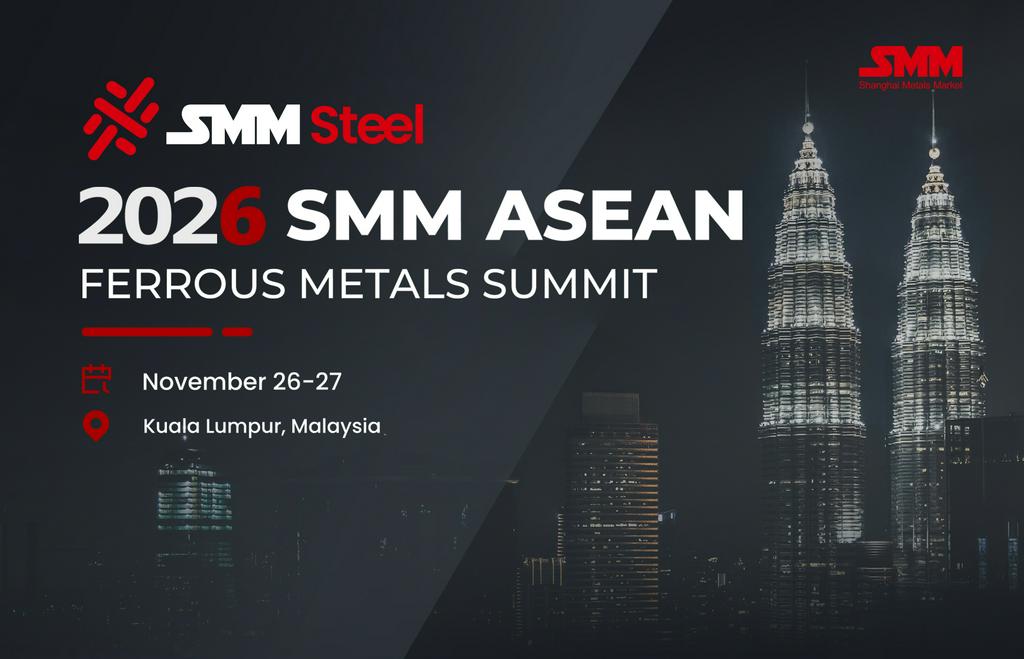 SMM Visits Malaysian Iron and Steel Industry Federation (MISIF) to Jointly Promote ASEAN Ferrous Metals Industry Synergy
Kuala Lumpur, Aug 3 – At a time when the global ferrous metals sector is undergoing constant restructuring, ASEAN has emerged as a pivotal growth hub for the steel industry, fuelled by robust end-market demand, fast-expanding production capacity and shifting cross-border trade dynamics. Regional infrastructure upgrades, local capacity iteration, and trade policy adjustments are collectively driving ongoing changes in the supply-demand structure, pricing system, and supply chain of the ASEAN steel market. The industry urgently needs a specialized, international dialogue platform to address development pain points and unlock global business opportunities. Against this industry background, a delegation from Shanghai Metals Market (SMM) paid a special visit to the Malaysian Iron and Steel Industry Federation (MISIF) on July 31, and was warmly welcomed by MISIF's CEO Tan Ai Joo and Manager Eveline Chu. Both sides engaged in in-depth discussions on core topics such as cross-border resource coordination, exhibition cooperation, industrial information sharing, and co-construction of market trends, with a focus on SMM's industrial layout in the ASEAN region and the building of a cross-border cooperation ecosystem. Regarding long-term cooperation in the future , both sides engaged in in-depth discussions on a mutually beneficial, win-win, and sustainable regular cooperation mechanism, laying the foundation for the future joint empowerment of the steel industry in Malaysia and ASEAN. Industry data and market services cooperation was one of the core priorities of this discussion. MISIF shared the development status of the Malaysian steel market, industry statistical characteristics, and report publication plans. SMM detailed its platform’s compliant subscription service model, which strictly protects enterprises’ confidential operational data and can provide customized industry insights, market analysis, and trend research services tailored to local Malaysian market characteristics and enterprise-specific needs. Furthermore, the two sides exchanged views on global cross-border trade data discrepancies, customs statistical characteristics of various countries, and international trade market variables, etc. Leveraging its comprehensive port data monitoring system, SMM can provide data-sharing services such as high-frequency updated actual port inventories in China. Both sides reached a consensus on establishing a regularized communication mechanism in the future to continuously carry out collaborative exchanges on industry information, market data, and industry trends. SMM has formally extended an invitation to MISIF to bring its member enterprises to attend the 2026 SMM ASEAN Ferrous Metals Summit from November 26-27, 2026 in Kuala Lumpur, Malaysia and share industry insights, jointly building a multilateral dialogue platform for the ferrous metals industry that links multiple ASEAN countries. About the 2026 SMM ASEAN Ferrous Metals Summit SMM is thrilled to announce that we will hold the 2026 SMM ASEAN Ferrous Metals Summit from November 26-27, 2026 in Kuala Lumpur, Malaysia. This event is the premium platform in the ASEAN ferrous metals market that converge 400+ decision-makers from mines, mills, trading houses, processors, equipment and technology providers, and logistics operators at the same table — precisely when the regional order is being rewritten. Conference Highlights 1. ASEAN Steel Market Outlook An in-depth analysis of regional steel demand, with consumption expected to reach 87.9 million mt in 2026, driven primarily by Vietnam, Indonesia, and the Philippines. 2. China—ASEAN Trade and Supply Chain Restructuring Exploring shifting flows of HRC, billet, slab, and other steel products amid changing supply patterns, trade remedies, and regional market dynamics. 3. Capacity Expansion and Production Transition Examining ASEAN’s evolving steelmaking landscape, including BF-BOF capacity growth, EAF development, overseas investment, and new regional production hubs. 4. Trade Policies and Market Access Assessing anti-dumping measures, tariffs, RCEP-related opportunities, and regulatory changes reshaping steel trade across ASEAN. 5. High-Growth Demand and Product Opportunities Identifying opportunities from infrastructure, construction, automotive, and advanced steel applications, with a focus on Indonesia, Vietnam, and other emerging markets. 6. Executive Networking and Regional Cooperation Connecting leading producers, traders, buyers, investors, associations, policymakers, and industry experts across ASEAN, China, and global markets. Senior Speakers 2026 Scenes from Past Conferences Conference Agenda Contact: Horin Dong WhatsApp: +8618721310824 Email: horindong@smm.cn Scan the QR code for conference details and more discount information About SMM SMM has long been deeply engaged in global commodity industry services, continuously deepening cooperative ties with government and enterprise institutions and industry associations across various countries, and steadily expanding its global industrial service network. Leveraging a mature collaborative model with Indonesian government, enterprises, and associations, SMM has established a comprehensive closed-loop ecosystem for sharing overseas exhibition and conference information, continuously iterating and upgrading its industrial big data system to achieve efficient global market information exchange and joint resource building and sharing. SMM organizes 50+ professional events each year, including industry summits, industry forums, and field trips. Of these, 40 are deeply rooted in the Chinese market, nearly 10 are precisely positioned in core Southeast Asian markets, and a small number cover Europe and Africa. Overseas events have earned global industry recognition thanks to authoritative industry guest lineups, solid industry survey data, and precise supply-demand matchmaking services. SMM has organized a series of high-end summits in Indonesia in cooperation with local authorities such as the Ministry of Foreign Affairs and the Indonesia Nickel Miners Association (APNI), gathering 300+ industry elites, and were complemented by professional field trip activities along the overseas industry chain, comprehensively empowering regional industry exchanges and trade matchmaking.
Aug 3, 2026 10:16