

325results found for 'Electric Vehicles'
Sort by : |
- Copper Prices Near Record High Amid Supply Tightness and Strong Demand
Copper prices advanced towards a record closing high as tightening physical supply continued to support the market alongside resilient long-term demand. The London Metal Exchange (LME) three-month copper contract strengthened as sustained inflows of metal into the United States and increased buying activity from China reduced the availability of copper in other regions. Large volumes of refined copper have been shipped into the U.S. this year as traders positioned ahead of a potential decision on refined copper import tariffs. At the same time, stronger purchasing activity from China has intensified competition for available material, further tightening the physical market. These developments have contributed to copper gaining approximately 14% since the beginning of 2026, building on three consecutive years of annual gains. Beyond near-term supply tightness, the market continues to be supported by long-term demand from power infrastructure, renewable energy, electric vehicles and artificial intelligence-related data centres. However, declining ore grades at existing operations and the increasing cost and complexity of developing new mines continue to constrain future supply growth. The latest price gains highlight a market increasingly influenced by physical supply constraints rather than demand alone. With inventories remaining tight and new mine supply struggling to keep pace with long-term consumption growth, sustained price strength could continue to support investment in mine expansions, brownfield redevelopment and domestic copper processing capacity.
Aug 7, 2026 21:49 - Eqonic Group Unveils Aluminum-Based Battery for Sustainable Energy Storage Solutions
[SMM Aluminum Express News] Eqonic Group has confirmed that aluminum is the core material behind its next-generation battery technology, positioning the metal as an alternative to lithium, sodium and rare earth-based chemistries. The UK company said its proprietary aluminum-based battery has successfully demonstrated laboratory-scale performance and is designed to offer improved safety, lower costs, greater recyclability and reduced reliance on critical minerals. Eqonic said the technology is initially targeting long-duration stationary energy storage, industrial applications and critical infrastructure rather than electric vehicles. The company is continuing research and commercialisation efforts, with support from the UK Government's Battery Innovation Programme to advance manufacturing and scale-up of its aluminum-based battery platform.
Aug 6, 2026 16:08 - Zambian Mining Industry Looks to Election for Support to Expand Copper Production
With Zambia's general election scheduled for August 13, the country's mining industry is calling for stronger government support to accelerate copper sector expansion, including incentives for mineral processing, increased greenfield exploration and additional power generation capacity. Africa's second-largest copper producer aims to increase annual copper output to 3 million tonnes, nearly triple current production, to capitalize on rising global demand driven by electric vehicles, power grids and infrastructure development. Benchmark copper prices have climbed more than 40% over the past year to around US$14,000 per tonne. The Zambia Chamber of Mines said tax reforms and improved engagement between government and mining companies have attracted more than US$10 billion of investment since the 2021 election. President Hakainde Hichilema is expected to win re-election, with mining policies likely to remain largely unchanged.
Aug 6, 2026 09:48 - Electric Vehicles Excluded From “Korean IRA” Tax Credit Scheme
In the tax reform plan announced on August 3, the South Korean government limited domestic production tax credit support to six sectors: semiconductors, secondary batteries, artificial intelligence (AI) robot components, critical materials, solar power and wind power. As a result, electric vehicles were excluded from the domestic production tax credit scheme, often referred to as the “Korean IRA.”
Aug 5, 2026 18:43 - Zambian Miners Seek Policy Boost for Copper Output and Infrastructure Ahead of Elections
Mining operators across Zambia are formalizing their policy demands ahead of the upcoming national elections, calling on the government to strengthen incentives for local mineral processing, greenfield exploration, and power generation expansion. Industry leaders emphasize that these measures are vital to achieving the national benchmark of tripling annual copper output to 3 million tonnes. This push coincides with a tight physical market, where surging demand for critical metals in electric vehicles, power networks, and construction has driven benchmark copper futures up over 40% in the past year to $14,000 per tonne. Fiscal stabilization and closer engagement with miners have already drawn over $10 billion in committed investment to Zambia since the 2021 election. However, expanding long-term output hinges on resolving critical infrastructure bottlenecks. According to the Zambia Chamber of Mines, maintaining a robust exploration pipeline via greenfield spending and licensing reforms is essential to secure real industry growth. Meanwhile, unintegrated producers continue to advocate for export duty relief on copper concentrates. Industry executives estimate that Zambia needs at least 2,000 megawatts of additional generation capacity to prevent severe power shortages from capping planned mine expansions. Because mining remains the country's economic backbone, contributing 9% of GDP, 72% of export earnings, and nearly half of government revenue, analysts expect general policy continuity for foreign direct investment following the polls.
Aug 5, 2026 15:35 - [SMM Analysis] Europe's Stainless Steel Scrap Slide: Not the Summer Shutdowns, but the Slab Channel Nobody Closed
Indonesian stainless slab moving through a trade-measure gap, not summer shutdowns, explains why European stainless scrap weakened while Asian stainless scrap rose between the mid-July low and 3rd August.
Aug 4, 2026 13:08 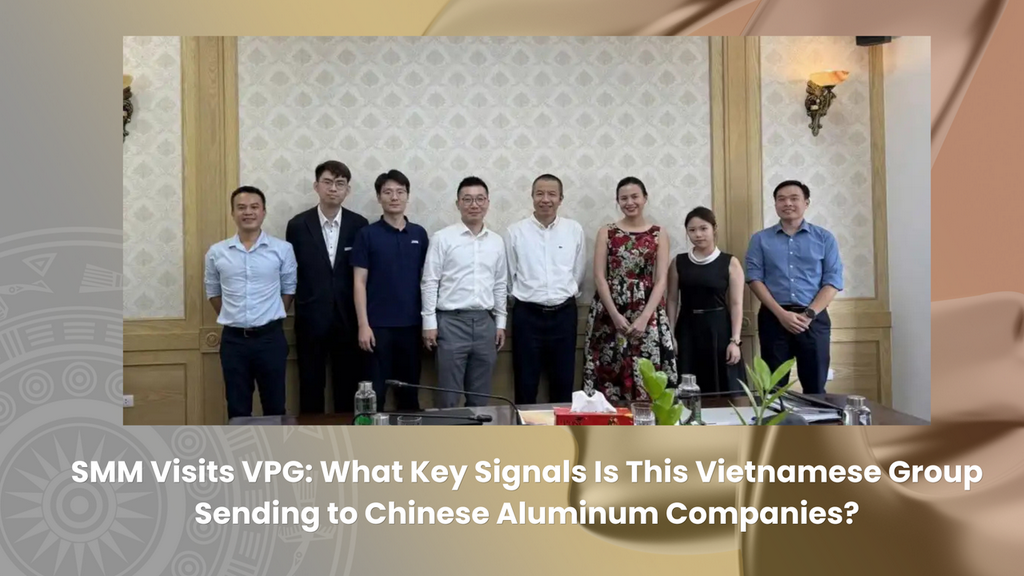 SMM Visits VPG: What Key Signals Is This Vietnamese Group Sending to Chinese Aluminum Companies?
On July 23, 2026, a delegation from Shanghai Metals Market Information Technology Co., Ltd. (SMM) visited VPG (Viet Phuong Group). The delegation included: Logan Lu, CEO of SMM Cason Lou, Director of Aluminum Processing, Marketing Department Lexi Chen, Key Account Manager for Overseas Information Sales Khai Yuen Chin, Senior Overseas Aluminum Analyst The two sides held in-depth discussions on bauxite resource development in Southeast Asia, alumina project development, regional logistics networks, and the development of a Vietnam-based aluminum pricing system. SMM noted that as the global aluminum value chain continues to restructure, China’s alumina market is expected to see sustained demand for overseas resources. Given resource availability and cost considerations, high-quality overseas alumina resources—particularly those from Vietnam and other Southeast Asian markets—are expected to gain greater market potential and competitive advantages. VPG shared updates on the progress of its current projects and said it is actively advancing mineral processing and alumina projects, with Southeast Asia and other international markets set to become key areas of future development. Since 2008, VPG has been engaged in bauxite exploration and development in Sekong Province, Laos, and is currently advancing an integrated industrial project covering bauxite mining, mineral processing, and alumina production. Both sides agreed that establishing an open, transparent, and regionally representative local aluminum pricing system would help improve information transparency and strengthen the international influence of Southeast Asia’s aluminum value chain. They also expressed expectations for deeper cooperation in market research, pricing services, and industry exchanges. What Signals Does SMM’s Visit to VPG Send to Chinese Companies? 01 Vietnam Is Becoming an Important Hub Connecting the Global Aluminum Value Chain In recent years, an increasing number of international companies have viewed Vietnam as an important gateway connecting Southeast Asian resources with global markets. Supported by its established port infrastructure, rapidly expanding manufacturing sector, and growing international trade network, Vietnam is not only benefiting from the relocation of global manufacturing capacity but is also emerging as an important regional hub for the aluminum value chain. For Chinese companies seeking opportunities in Southeast Asia, Vietnam is gradually evolving from an “investment destination” into a “supply chain partner.” 02 Vietnam’s Rapid Market Growth Is Creating New Export Opportunities With free trade agreements such as the EU-Vietnam Free Trade Agreement (EVFTA) taking effect, Vietnam has become a strategic sourcing hub for aluminum products used in the solar industry, including aluminum profiles and PV module frames, with export growth exceeding 20%. EVFTA tariff benefits for EU buyers, together with US Section 301 tariffs, have also encouraged some international buyers to shift sourcing toward Vietnam. Meanwhile, Vietnam aims for electric vehicles to account for 50% of urban vehicles by 2030. As electric vehicles use nearly 30% more aluminum than conventional vehicles, growing EV adoption could generate significant additional aluminum demand. This widening demand gap is expected to create substantial opportunities for aluminum suppliers and exporters. Against this backdrop, SMM AICE is expanding internationally by bringing its conference to Vietnam. The event aims to establish an authoritative platform connecting Chinese aluminum companies with Vietnam and the broader Southeast Asian market, promoting the transition of China-Vietnam aluminum cooperation from “resource complementarity” toward “full-value-chain cooperation and mutual growth.” 03 Future Competition Will Be About Information, Not Just Opportunities Vietnam’s market continues to develop rapidly. At the same time, market rules, policies, cost structures, and pricing mechanisms are constantly evolving. For Chinese companies, identifying projects alone is no longer enough. Timely access to local policies, industry development trends, supply chain changes, and market pricing information is becoming increasingly important. This is also why SMM continues to deepen its presence in the Vietnamese market. Recently, SMM AICE has been conducting intensive visits across Vietnam and the broader Southeast Asian industrial value chain, maintaining close communication with government authorities, industry associations, mining companies, alumina producers, aluminum processors, and other market participants. Through more transparent market intelligence and pricing systems, SMM aims to help global companies better understand market dynamics and reduce decision-making risks. To help more aluminum companies seize emerging opportunities and establish an early presence in the Vietnamese market, SMM AICE Vietnam is coming to Vietnam with a major industry gathering. VPG — Viet Phuong Group Founded in 1996, VPG (Viet Phuong Group) is a well-established diversified investment group in Vietnam, with businesses spanning mining, energy, infrastructure, finance, real estate, and other sectors. Mining is one of the group’s key strategic businesses, with projects involving mineral resources including bauxite, rare earths, and quartz sand. In the aluminum sector, VPG has been engaged in bauxite exploration and development in Sekong Province, Laos, since 2008. The group is currently advancing an integrated project covering bauxite mining, mineral processing, and alumina production. Leveraging Vietnam’s established port infrastructure and regional logistics network, VPG plans to export alumina products to China and other global markets through the Laos–Vietnam cross-border logistics corridor, further integrating into Southeast Asia’s aluminum supply chain. In recent years, the company has continued to advance project development, international cooperation, and market expansion, with the ambition of building a regional aluminum industry platform spanning resource development, alumina production, and international trade. Join the Conversation at SMM AICE 2026 Connect with aluminum producers, processors, traders, manufacturers, certification organisations, industry associations and decision-makers from across Southeast Asia and the global market. Explore aluminum pricing, primary aluminum supply, processing technologies, low-carbon development, CBAM compliance and new opportunities for regional cooperation. ? Ho Chi Minh City, Vietnam ? November 19–20, 2026 Register now: bit.ly/AICE26 and secure your Super Early Bird Pass and save up to USD 200. Register before August 31, 2026.
Aug 3, 2026 16:42- 【SMM Aluminium Flash News】Mercedes-Benz to Use 75% Post-Consumer Recycled Aluminium from Hydro in Next-Generation EVs
Mercedes-Benz and Norsk Hydro have expanded their long-term partnership to accelerate the use of recycled aluminium in Europe. Under the agreement, Mercedes-Benz will become the first European automaker to use Hydro CIRCAL in serial production for its next-generation large electric vehicles. The material contains at least 75% post-consumer recycled (PCR) aluminium, up from the previous minimum of 25%. The companies will also expand the use of Hydro REDUXA low-carbon primary aluminium, aiming to reduce emissions, strengthen regional supply chains, and support circularity across the automotive value chain.
Aug 3, 2026 16:30 - Hydrogen fuel cell vehicle production and sales were under pressure in H1, and large-scale promotion still awaits a breakthrough.
Recently, CAAM released the automobile production and sales data for June 2026. In H1, China's automotive industry continued its transformation and upgrading trend, with the traditional internal combustion engine vehicle market further stabilizing and NEV maintaining growth. From January to June, NEV production and sales reached 7.438 million and 7.446 million units, respectively, both showing YoY growth, with pure electric vehicle sales accounting for 67%. Against the backdrop of an overall positive NEV market, hydrogen fuel cell vehicles performed relatively weakly. In H1, China's hydrogen fuel cell vehicle production and sales were approximately 500 and 700 units, respectively, down 59.9% and 50.1% YoY. In June alone, production and sales were about 100 and 50 units, with YoY declines of 46.8% and 78.9%, indicating that market promotion remains under significant pressure. There is a mismatch between early-stage investment and long-term returns. Currently, hydrogen transportation has formed an industry chain covering hydrogen production, storage and transportation, refueling, and end-use applications, but various constraints still exist at each stage. At the hydrogen production end, the construction of hydrogen refueling station infrastructure usually requires high investment, with a long payback period. Affected by insufficient hydrogen supply sources and network density, some stations have low operational efficiency. The storage and transportation segment has yet to form a mature and unified refueling system, and coupled with generally high costs of hydrogen production, storage, transportation, and refueling, the economic viability of end-use applications still needs further verification. Industry insiders believe that the slowdown in fuel cell vehicle development is the result of multiple factors, including technology, costs, supporting facilities, and market demand. High hydrogen production and refueling costs make fuel cell vehicles less economical to purchase and operate than internal combustion engine vehicles and pure electric vehicles. High land costs in some large cities also increase the difficulty of site selection and construction for hydrogen refueling stations. Meanwhile, the limited number of supporting facilities and insufficient station profitability further constrain vehicle promotion. The industry has not yet achieved economies of scale. Profit pressure also reflects the development challenges of the hydrogen fuel cell industry. Take the domestic hydrogen fuel cell industry leader Yihuatong as an example: the company's net loss attributable to shareholders of the parent company in 2025 was 671 million yuan, with the loss further widening compared to 2024. The enterprise stated that the prolonged losses were mainly affected by factors such as the early-stage commercialization characteristics of the hydrogen fuel cell industry and changes in the business environment. The industry is still in the initial stage of development, without yet forming large-scale market effects. Market orders are relatively small, competition is intense, and product prices remain under pressure. At the same time, high-tech industries require long-term R&D investment, and the conversion of technological achievements into commercial returns also takes a certain period. It is widely believed within the industry that breaking the bottleneck in the large-scale development of hydrogen fuel cell vehicles requires joint efforts from all parties in the industry chain. Enterprises should maintain a dynamic balance between operation and R&D, continuously optimize cost structures, and seek breakthroughs in technology expansion and application scenario innovation. At the same time, the industry must follow the laws of development and avoid an imbalance between long-termism and short-term market enthusiasm.
Aug 3, 2026 10:44 - SMM Analysis: Indonesia REE Checks Disrupt Nickel Product Exports; Regulatory Clarification Becomes Key Focus
Background: Pangkalpinang Case Triggered Wider REE Scrutiny Indonesia’s recent rare earth element (REE), or Logam Tanah Jarang (LTJ) , inspection issue appears to have been triggered by stricter government scrutiny following the Pangkalpinang case. The initial case was linked to alleged irregularities involving around 390 tonnes of REE-containing material and involved PT Putraprima Mineral Mandiri, PT Sucofindo, and the Pangkalpinang Customs office. This raised a broader regulatory question: when a mining product contains rare earth elements or radioactive elements as associated content, should it still be treated as its main export product, or should it fall under rare-earth-related export restrictions? This issue quickly affected Indonesia’s wider mineral export chain. Products such as NPI, ferronickel, MHP, alumina, and tin-related products are not exported as rare earth products. However, they may contain trace amounts of associated REE or radioactive elements. As a result, surveyors and customs became more cautious, causing delays in LS issuance and customs clearance for some cargoes. For the nickel industry, the issue became an immediate concern because both NPI/ferronickel and MHP exports were affected by additional testing requirements. Market feedback indicated that some cargoes were temporarily stuck, and the disruption was not limited to one company. Some traders also reported that QMB-related cargoes could not be shipped smoothly during the disruption period. Why REE Matters: Indonesia Moves to Protect Critical Mineral Value Before Export REE matters because rare earth elements are strategic materials used in high-value industries such as electric vehicles, permanent magnets, electronics, renewable energy, and defense-related materials. For Indonesia, the issue is not only about export clearance, but also about resource-value control. The government is increasingly focused on identifying and protecting critical mineral value before it leaves the country. The challenge is that REE often appears not as a standalone product, but as an associated or trace element in other mineral products. If every product containing small REE content is treated as a restricted rare earth export, normal mineral shipments could be delayed. However, if REE content is not monitored at all, Indonesia may lose control over strategic mineral value. The 17 rare earth elements generally include lanthanum, cerium, praseodymium, neodymium, promethium, samarium, europium, gadolinium, terbium, dysprosium, holmium, erbium, thulium, ytterbium, lutetium, yttrium, and scandium . In the recent market discussion, testing was understood to cover these 17 REE elements, while radioactive elements such as thorium and uranium also became part of the inspection concern. The problem is that rare earth elements are often not produced as standalone products. They can appear as associated elements in other mining products. This creates a regulatory grey area. If every exported product containing trace REE must be treated as a rare earth export, then many normal mineral shipments could be delayed. But if associated REE content is not checked at all, Indonesia risks losing control over strategic mineral value. Therefore, the market concern is not only whether nickel exports are blocked. The larger concern is whether Indonesia is entering a new phase where exports of mineral products require more detailed chemical-content verification. What Happened in the Market: LS Delays and Additional Testing Disrupted Mineral Shipments According to SMM’s market understanding, the recent inspection requirement temporarily affected exports of several Indonesian processed mineral products. For nickel products, the impact was mainly reflected in three areas. LS issuance slowed down. The LS report is a key export document, so delays directly affected customs clearance and shipment release. According to SMM’s understanding on July 24, it is reported that around 102 surveyor reports were delayed due to differences in interpretation regarding REE checks during export verification. Some cargoes were temporarily stuck at ports. Market participants reported delays in NPI and MHP shipments, while some traders also mentioned that QMB-related cargoes faced similar obstacles. Exporters had to organize additional testing. The government required checks on 17 REE elements and radioactive elements in certain products. Some companies were still waiting for test results or clarification from surveyors and customs. Therefore, this was not a direct export ban on nickel products. It was mainly a temporary administrative and testing bottleneck caused by unclear implementation standards for associated REE and radioactive elements. Impact on the Nickel Market: NPI and other Nickel Product Exports Affected Mainly Through Shipment Delays For the NPI and ferronickel market, the short-term impact was mainly reflected in shipment timing rather than production. Some port-side cargoes were delayed because LS reports and customs clearance were affected. According to SMM’s latest market understanding, LS reports are currently being issued in batches, and some high-grade NPI cargoes at ports have started to be released. As the current disruption mainly occurred during the export documentation and clearance process, the direct impact on NPI production was limited. If LS issuance and customs clearance continue to normalize, the impact on the overall NPI market is expected to remain limited. At this stage, the issue is more related to temporary export procedure disruption rather than a confirmed structural restriction on NPI exports. For the MHP market, some shipments were also affected by the REE-related inspection requirement. According to market feedback, certain MHP cargoes, were temporarily unable to be shipped smoothly during the disruption period. Similar to NPI, the key issue was mainly related to LS issuance, testing requirements, and customs clearance rather than a direct restriction on MHP production. The government’s latest coordination result clarified that export procedures should refer to the main mining product and its derivatives, rather than automatically treating associated REE or radioactive elements as the basis for export restriction. Market Feedback and Industry Concerns: Lack of Technical Standards Created Uncertainty for Exporters Market feedback shows that the REE-related inspection requirement has created practical disruption for Indonesia’s mineral export chain. According to FINI Chairman Arif Perdanakusumah, at least 120 commodity vessels were unable to sail or leave ports due to the requirement to test rare earth element content. He noted that the situation caused losses not only for companies, but also for the government, mainly because there was still no clear regulation providing technical guidance on REE content limits. Industry associations generally understand that the policy is part of the government’s effort to improve mineral governance. However, they also emphasized that the technical implementation needs to be reviewed, especially because many mining products contain REE only as associated or trace elements rather than as the main product. This distinction is important for commodities such as nickel, bauxite, tin, and copper, where companies are licensed and designed to produce the main commodity, while REE content may naturally appear as a by-product or associated element. The bauxite industry also raised similar concerns. ABI Chairman Ronald Sulistyanto stated that the REE issue should be returned to its core technical framework and handled by the Ministry of Energy and Mineral Resources, as the ministry has the relevant mining and mineral expertise. He stressed that the key question is whether REE is the main product or only an associated element. If it is the main product, then specific export restrictions may apply. However, if it is only an associated element, the issue requires more detailed technical clarification rather than broad export disruption. IMA Executive Director Sari Esayanti also highlighted that most mining companies are currently oriented toward their main licensed commodity and existing processing design. In many commodities such as tin, bauxite, nickel, and copper, REE generally appears as an associated element. She also noted that most mining companies do not yet have sufficient facilities or technology to identify, separate, or economically utilize REE elements. As a result, new interpretations around REE reporting or export obligations have created uncertainty for business players. From the industry’s perspective, the most urgent requirement is technical certainty. Companies need clearer parameters, testing methodology, and reporting mechanisms so that all exporters, surveyors, and customs authorities apply the same standard. Without consistent technical guidance, similar shipment delays could occur again even if the current bottleneck is gradually resolved. Government Update and Resolution The most important update came from the Indonesian government coordination letter dated July 31, 2026. According to the letter, Indonesia’s Coordinating Ministry for Economic Affairs held a coordination meeting on July 30 to discuss export obstacles related to REE and/or radioactive content in mining products and derivatives. Key points from the government coordination result: Exports should continue to follow existing trade regulations , including Minister of Trade Regulation No. 23/2023 on export policies and arrangements, and Minister of Trade Regulation No. 22/2023 on prohibited export goods, as amended by later regulations. The regulation should apply to the main mining product and its derivatives, not automatically to associated elements contained in those products. This is the most important clarification for NPI, ferronickel, MHP, alumina, and other processed mineral products. Products containing radioactive elements may still be exported if the content is classified as Naturally Occurring Radioactive Material, or NORM. This helps reduce the risk that trace radioactive content automatically blocks exports. Exporters, surveyors, and customs should refer to the main product classification when processing exports. This provides a basis for LS issuance and customs clearance to gradually resume. A Legal Opinion from the Attorney General’s Office will be prepared in parallel to support the regulatory clarification. The government plans to accelerate revisions to Minister of Trade Regulation No. 23/2023, Minister of Trade Regulation No. 22/2023, and Minister of ESDM Regulation No. 25/2018. Discussions are expected to start on August 3, 2026, with completion targeted within around one week. SMM View: Short-Term Export Disruption, but a Longer-Term Signal of Stricter Mineral Supervision SMM believes the REE inspection issue is a short-term disruption, but also an important policy signal. In the short term, the impact on NPI and MHP exports should gradually ease as LS reports are issued and customs interpretation becomes clearer. If cargo clearance continues to normalize, the impact on overall nickel supply-demand balance should remain limited. However, the event shows that Indonesia is strengthening supervision over critical mineral content, export documentation, and resource-value protection. Even after the current disruption is resolved, exporters may face stricter testing, clearer reporting requirements, and closer coordination among surveyors, customs, ESDM, the Ministry of Trade, and other agencies. Going forward, the market should monitor: Whether all delayed LS reports can be fully cleared. Whether future shipments will require full REE and radioactive-content testing. Whether the government will set clear thresholds for REE, thorium, uranium, and NORM classification. Whether the revised regulations clearly distinguish main export products from associated trace elements. Whether NPI, ferronickel, MHP, alumina, and tin-related products will face different implementation standards. Overall, this event should not be interpreted as a direct ban on NPI or MHP exports. It is more accurately a regulatory clarification process triggered by Indonesia’s stronger focus on rare earth and radioactive element content in mineral products. If implementation becomes clear quickly, the impact will remain temporary. If rules remain vague, shipment delays and administrative friction could reappear.
Aug 2, 2026 11:23