

266results found for 'Development trend'
Sort by : |
- SMM Visited Chambishi Copper Smelter Ltd., Both Sides Had In-Depth Exchange on Current Status and Future Development of Copper Industry Chain
On April 14, Ye Jianhua, Director and Supervisor of the Industry Research Department of SMM Information & Technology Co., Ltd. (SMM), Feng Chundi, Expert of the SMM Industry Research Institute, and Wu Tao, SMM Copper & Tin Overseas Marketing Manager, visited Chambishi Copper Smelter Limited (CCS) for exchange and survey, where they received warm hospitality from CCS leadership. During the visit, both parties engaged in pragmatic communication based on their respective core businesses. Leveraging its core strengths in non-ferrous metal price index R&D, industry chain big data monitoring, copper market analysis, in-depth industry research, and global non-ferrous resource connectivity, SMM shared insights on international copper market operating logic and price trend analysis, in the context of the current global copper smelting supply-demand pattern, raw material procurement landscape, and TC fluctuation trends. As a key copper smelting producer outside China, CCS provided a detailed introduction to its production and operation status, smelting process advantages, capacity release pace, raw material procurement, and product exports layout, elaborating on practical experience of ex-China copper smelters in production management, cost control, green production, and localized operations. Meanwhile, both parties exchanged views on common industry topics including development pain points of copper smelting outside China, raw material supply security, finished product circulation and trade, industry policy changes, and low-carbon smelting development trends. They also reached preliminary consensus on future directions such as industry chain information sharing, market data sharing, joint market analysis, and industry resource coordination, laying a solid foundation for deepening regular exchanges and promoting high-quality collaborative development of the copper smelting industry chain. Introduction to Chambishi Copper Smelter Limited (CCS) Chambishi Copper Smelter Limited (CCS) is the first large-scale modern pyrometallurgy copper smelting enterprise invested, fully independently designed and constructed by China outside China. Located in the Zambia-China Economic and Trade Cooperation Zone, the company has 170 Chinese staff and 1,600 Zambian employees. CCS has consistently focused on its vision of "building an evergreen, world-class smelter," upholding the corporate spirit of "self-transcendence, continuous breakthroughs, and pursuit of excellence," benchmarking against first-class standards with meticulous craftsmanship, and continuously strengthening and optimizing enterprise management, with its comprehensive competitiveness steadily improving. As of the end of 2024, the company had produced over 3.3 million mt of copper products and 8.7 million mt of sulphuric acid, with cumulative sales revenue of approximately $21 billion, effectively driving local economic development in Zambia and becoming a shining pearl along the Belt and Road! Enterprise History and Development Achievements (Pursuing Excellence, Benchmarking Against the Best and Forging Ahead) To extend the industry chain and retain more added value locally, in 2006, China Nonferrous Metal Mining (Group) Co., Ltd. partnered with Yunnan Copper to introduce the advanced ISA copper smelting process to Zambia, with shareholding ratios of 60% and 40%, respectively. From the design stage, the company drew on successful experience in China and combined it with the characteristics of Zambian raw materials to re-optimize and innovate key processes and technologies of the ISASMELT process, strengthening system integration. This resulted in multiple innovative achievements, including "Integration Innovation and Application of ISASMELT Furnace" and "Comprehensive Automated Control System," which were awarded the First Prize for Scientific and Technological Progress by CNIA in 2010. The ISASMELT furnace campaign life broke world records multiple times, with the second campaign reaching 218 weeks and the third campaign reaching 244 weeks, becoming an international benchmark. In 2021 and 2022, the company's copper production exceeded the designed capacity of 250,000 mt for two consecutive years, making history. In 2024, production further surpassed 260,000 mt, setting a new historical record. In September 2013, the company was honored with the title of Advanced Collective of Central State-Owned Enterprises. In July 2021, it was successfully selected as a benchmark enterprise under the management of the State-owned Assets Supervision and Administration Commission of the State Council. Process Flow (Dedicated and Professional, Pursuing Excellence for Development) The company adopted the internationally advanced and mature process of "oxygen-enriched top-blown submerged bath smelting, electric furnace settling and separation, PS converter blowing, and anode furnace pyrometallurgy refining" to produce copper anode, and the "double-conversion double-absorption" process to produce sulphuric acid. Adhering to the concept of sustainable development, the company built a slag flotation recovery system with a daily processing capacity of 1,500 mt of slag and a bismuth recovery system with a daily processing capacity of 6 mt of flue dust, continuing to recover metals such as copper, cobalt, and bismuth from smelting slag and flue dust. Social Responsibility (Cooperation and Sharing, Giving Back to Society with Strong Responsibility) The company actively practiced its core values of "dedication, cooperation, and sharing," consistently focusing on its core business of copper pyrometallurgy smelting, cooperating extensively with upstream and downstream clients, and sharing development achievements with employees and local communities. Since its establishment, the company had cumulatively paid over $300 million in various taxes and fees in Zambia, created over 5,000 job opportunities, and cooperated with more than 300 local suppliers, contributing to Zambia's green, harmonious, and shared development. The company actively fulfilled its social responsibilities by increasing investment in social welfare programs for local communities in Zambia, covering infrastructure, education, healthcare, and sanitation. It sponsored the renovation of clinics in Kalulushi, the Bushifire Orphanage, and donated to build classrooms at Buyantashi School, Luato Market, Kankuko Bridge, Chibuluma Community Tennis Court, Chimfunshi Chimpanzee Rescue Center, and Modern Stars Football Club, among others. The cumulative investment exceeded $4 million, earning high praise from the local government and warm welcome from the public, and establishing a positive corporate image. The company actively promoted employee localization and continuously achieved skills transfer. The company invested over 5 million Kwacha, and externally carried out technical and non-technical training programs in electric welding, electrical power, pneumatics, technical control, management supervision, and equipment maintenance through the China-Zambia Vocational and Technical College, TEVETA Fund, and other channels. Internally, through mentorship programs, the company conducted business training in masonry, fitting, and other skills. The localization rate of company employees reached over 92%, local employees' skills were significantly improved, and technical expertise was exported to the DRC. Vision and Outlook (Staying True to Our Mission, Building a Shared Future Together) Innovation-driven development knows no bounds. Over the past decade, the company has upheld a sense of survival crisis and market competition awareness, adhered to innovation-driven development, and achieved high-quality growth. In 2021, the company's IT infrastructure was completed and successfully put into use, committed to building an automated, digitalized, and intelligent factory. In August 2023, the company's anode furnace pyrometallurgy refining system technical renovation project was completed and put into operation. In November 2024, the company's three-year action plan for technology-empowered safety and environmental protection was officially established, focusing on technology empowerment and fostering new quality productive forces, propelling the company's high-quality development to a new level. Through collaborative development, benchmarking against first-class standards, technological innovation, and increased production and efficiency, the company continues to advance toward its enterprise vision of "becoming an evergreen, world-class smelter." is scheduled to be held on October 13-14, 2026 in Lusaka, Zambia. Welcome to participate! Contact Person : Wu Tao: 18270916376 jennywu@smm.cn
Apr 28, 2026 18:32 - Focusing on Tin, Tantalum, and Tungsten Resource Development, SMM Visited MMR to Deepen Industry Collaboration and Alignment
On April 16, Ye Jianhua, Director and Supervisor of SMM's Industry Research Department, Feng Chundi, Expert of SMM's Industry Research Institute, and Wu Tao, SMM Overseas Marketing Manager for Copper and Tin, visited Mining Mineral Resources (MMR) for a field trip and exchange, where they received a warm welcome from MMR's leadership. During the exchange, MMR and SMM engaged in in-depth discussions on the current status of the strategic minor metal industry and cross-border supply chain cooperation. MMR has been deeply engaged in compliant mining of critical minerals for over 15 years, with a strategic focus on three key minerals — tin, tantalum, and tungsten. The company holds multiple mining licenses in mineral-rich regions of the DRC, with concentrated resource deployment and exceptional endowment. The enterprise strictly adheres to compliant mining, full-process traceability, and international operational standards, ensuring long-term stable and compliant mine operations. SMM has long been deeply engaged in non-ferrous and rare metals, with core coverage spanning price quotations, industry surveys, and market analysis, comprehensively empowering global mineral trade and industry chain integrated services. Leveraging their respective business strengths, both parties exchanged practical experience on ex-China mineral development, compliance system building, raw material circulation coordination, and industry development trends, laying a solid foundation for subsequent industrial synergy and resource collaboration. Mining Mineral Resources (MMR) Overview Mining Mineral Resources (MMR) has been deeply engaged in compliant mining of critical minerals for over 15 years, with a core focus on the 3T strategic minerals (tin, tantalum, and tungsten). The company holds a portfolio of multiple mining licenses in mineral-rich regions of the DRC: tin (14 licenses covering 2,800 sq km), tantalum (6 licenses covering 400 sq km), and tungsten (1 license covering 300 sq km). The company upholds compliant procurement, full traceability, and international standard compliance systems, building a solid foundation for business operations. Key Tin Producer in Africa • 11 mechanized mines (including open-pit and underground mines) • Annual tin concentrates capacity: 10,000 mt Annual trading volume: 6,500 mt; annual mechanized mining production: 3,500 mt. Mechanized Mining Operations 8 beneficiation plant areas with a combined feed capacity of over 1,500 mt per hour; monthly tin concentrates production of 300 mt; creating employment opportunities and empowering inclusive community development. Smelting Production and Global Supply LME Grade A tin equivalent; Responsible Minerals Initiative (RMI) certified smelter; annual refined tin capacity: 4,500 mt. Tantalum Mining Operations The only mechanized tantalum ore beneficiation plant in the DRC; capacity: 20 mt per year of high-grade tantalum concentrates (grade 30% and above); equipped with modern laboratory detection and quality assay facilities. Ore-to-Alloy Entire Industry Chain Lead-free and tin-lead solder alloys, available in bars, wires, electrodes, and casting ingots. The only enterprise in Africa with a complete ore-to-alloy entire industry chain. Corporate Social Responsibility MMR is well aware of its significant social responsibility to the communities in the mining areas. The corporate social responsibility system is built on four core pillars: healthcare, education development, infrastructure improvement, and entrepreneurship empowerment. Scheduled to be held on October 13-14, 2026 in Lusaka, Zambia. Welcome to join us~ Conference Contact : Wu Tao: 18270916376 jennywu@smm.cn
Apr 28, 2026 17:56 - [SMM Analysis] Anode Material Leverages Battery Cell Technology Tailwinds to Achieve Track Upgrade
[SMM Analysis: Anode Material Achieves Track Upgrade Riding the Tailwind of Battery Cell Technology] The material upgrade demand on the battery cell side is effectively driving structural growth in demand for sub-segments such as silicon carbon anode, hard carbon anode, and high-end modified graphite.
Apr 27, 2026 15:19 - Promoting Collaborative Development of the Copper Industry Chain: SMM Visits ZCCM-IH
On April 13, Ye Jianhua, Director and Supervisor of the Industry Research Department of SMM Information & Technology Co., Ltd. (SMM), Feng Chundi, Expert of the Industry Research Department of SMM, and Wu Tao, Overseas Marketing Manager of SMM's Copper and Tin Division, visited ZCCM INVESTMENTS HOLDINGS PLC (ZCCM-IH). They were warmly received by Chitalu Kabalika, Industrial Metals and Minerals Investment Analyst at ZCCM-IH, Kambole Mwanakatwe, Precious Metals and Minerals Investment Analyst, among others. During this visit, both parties leveraged their respective core business strengths and conducted in-depth discussions on the compilation methodology of SMM's copper price and copper concentrates price indices, their influence on industry pricing, and the transmission mechanisms in international markets, exploring the reference value of these price indices for Zambian copper ore trade and mining project investment. Discussions also covered ZCCM-IH's copper mine asset operations, resource reserves, and capacity planning, among other topics, jointly exploring the local copper mining industry's supply-demand pattern, cost landscape, and medium and long-term development trends. In addition, both parties exchanged views on potential cooperation directions, including information sharing across the copper industry chain, joint analysis of market trends, and collaboration on ex-China mining resources. This exchange effectively connected the business synergies between both parties, deepened mutual understanding and industry consensus, and laid a solid communication foundation for subsequent positive interactions in copper industry data services, market research, and resource collaboration, as well as for exploring diversified cooperation opportunities and pursuing mutual benefits. Introduction to ZCCM INVESTMENTS HOLDINGS PLC ZCCM Investments Holdings Plc is a diversified mining investment holding company with a strategic focus on Zambia's mining and energy sectors. The group's investment portfolio covers commodities including copper, gold, amethyst, manganese, limestone, and electricity/thermal energy. VISION : "To be a world-class mining and energy investment company for the benefit of the Zambian people." MISSION : "To sustainably create tangible wealth for the Zambian people and all stakeholders." TAGLINE : "Unlocking national wealth value for all stakeholders." The above vision and mission reflect the company's renewed focus on the mining sector and the strategic theme of " Investing S.M.A.R.T.L.Y ." "SMARTLY" represents seven strategic pillars: ZCCM-IH is committed to Sustainability , deeply integrating Environmental, Social, and Governance (ESG) principles into its business model; the team proactively Managed related operations, driving portfolio and revenue growth through business Accretive value and agility; while ensuring investments are Risk mitigated , advancing projects in a Timely and efficient manner; upholding the goal of business **Longevity**, and ultimately delivering returns on investment and maximizing shareholder value (Yields). VALUES : The realization of our vision and mission is underpinned by the enterprise's deeply rooted core values. These principles guide all actions of the enterprise. The following values form the cornerstone of our corporate culture. ZCCM-IH Portfolio ZCCM-IH holds a unique strategic position in Zambia's mining and energy sectors, with core interests in both fields. The following is a list of enterprises covered by the ZCCM-IH portfolio: ZCCM-IH Growth Portfolio Future Outlook The ZCCM-IH Strategic Plan, 2020-2026 sets out the core direction for the company's development, helping the enterprise fully unlock asset value, maximize asset returns, and deliver tangible benefits to all shareholders. During this phase, the company focuses on three core strategic priorities: deepening engagement in the mining sector and advancing diversification of mineral product categories; innovating revenue generation models, developing diversified income streams, and unlocking the value of the existing asset portfolio; and strengthening operational management and financial control capabilities to build and continuously enhance long-term core shareholder value. The company is deeply committed to social responsibility, dedicated to creating sound and compliant business performance, sustainable development outcomes, and social benefits for shareholders, local communities, and Zambia as a whole. Leveraging the comprehensive strengths accumulated through over fifty years of deep engagement in the mining industry, combined with a professional and experienced core team, the company is expected to continue driving the implementation of its strategic plans and sustained growth, while consolidating existing development achievements. Scheduled to be held on October 13-14, 2026 in Lusaka, Zambia. You are welcome to participate! Conference Contact : Wu Tao: 18270916376 jennywu@smm.cn
Apr 27, 2026 09:11 - AI Orders Remained Red-Hot with Optimistic Copper Foil Demand, Copper Cable High-Speed Connectivity Rose Over 2%, Far East Shares Hit Daily Limit [SMM Express]
SMM, April 22: The global new energy and AI industries maintained high prosperity, coupled with traditional consumer electronics entering a seasonal peak, driving a comprehensive recovery in demand for copper foil and high-speed connectivity products. In March 2026, China's copper foil exports hit a single-month record high. The power and ESS sectors maintained high prosperity with steadily growing orders; AI-related orders remained robust, with optimistic demand for copper foil across all specifications, and the operating rate of copper foil enterprises rose both YoY and MoM in March. Supported by these fundamentals, copper cable high-speed connectivity, as a core component of AI computing infrastructure, continued to see improving demand expectations. Combined with resonating capital sentiment in the sector, copper cable high-speed connectivity concept stocks strengthened overall on April 22. As of the close on the 22nd, the copper cable high-speed connectivity concept rose 2.29%. Among individual stocks, Far East Holdings hit the daily limit, while Hengtong Optic-Electric, ZTT, Shenlan Technology, Changxin Bochuang, Zhaolonginterconnect, and Kingsinno led the gains. News [State Council: Advancing Computing Power Layout and Edge Computing Power Development in an Orderly Manner, Improving Intelligent Computing Cloud Service System] The State Council issued the "Opinions on Promoting the Expansion and Quality Improvement of the Service Industry." It mentioned deepening the implementation of the Industrial Internet innovation and development project, advancing the industrial data foundation initiative, cultivating data cooperation consortia, and building a number of high-quality industry datasets. It also called for developing professional services such as data annotation and certification, exploring the establishment of classified and graded mechanisms for data rights confirmation, evaluation, and pricing. Computing power layout and edge computing power development will be advanced in an orderly manner, and the intelligent computing cloud service system will be improved. The application of urban information modeling platforms and building information modeling technologies will be accelerated. [China's Intelligent Computing Power Scale Reaches 1882 EFLOPS] Zhang Yunming, Vice Minister of the Ministry of Industry and Information Technology, stated on the 21st that computing power infrastructure has become a key foundation driving the development of artificial intelligence. As of month-end in March, China's intelligent computing power scale reached 1882 EFLOPS. At a press conference held by the State Council Information Office on the same day, Zhang Yunming said that recently, the Ministry of Industry and Information Technology has been making sustained efforts in key areas such as enabling small and medium-sized enterprises with inclusive computing power and computing-electricity coordination, and the computing power industry has shown a positive development trend. Industrial innovation has become stronger, with the in-depth implementation of the computing power foundation "open competition" initiative, the conduct of policy research and standard formulation for computing-electricity coordination, and the promotion of accelerated implementation of generation-grid-load-storage and green electricity direct connection. Network transmission has become smoother, with over 70 computing power corridors built around computing power hubs over the past two years, and the implementation of the metropolitan "millisecond computing" special initiative, among others. [National Advanced Computing Industry Innovation Center Qingdao Base Officially Launched] According to Sugon, on April 22, the National Advanced Computing Industry Innovation Center Qingdao Base was officially launched in Laoshan District, Qingdao. The National Advanced Computing Industry Innovation Center is a national-level industrial innovation platform established in 2018 with the approval of the National Development and Reform Commission (NDRC), aimed at achieving breakthroughs in core technologies in the field of advanced computing and fostering internationally competitive industrial clusters. The Qingdao base launched this time, co-built with the participation of Sugon, will leverage regional industrial advantages to create an advanced computing innovation platform integrating technology R&D, commercialization of research outcomes, and industrial incubation, further pooling industry resources, driving regional industrial intelligent upgrading, and injecting strong "computing power momentum" into the digital economy development of Qingdao and even Shandong Province. [Yuandong Holdings: Q1 2026 Net Profit of 96.6284 Million Yuan, up 110.36% YoY] Yuandong Holdings disclosed its Q1 2026 report on April 22. The company achieved total operating revenue of 5.325 billion yuan, up 9.26% YoY; net profit attributable to the parent company was 96.6284 million yuan, up 110.36% YoY. [Rickda: Achieved Small-Batch Delivery of 400G/800G Products and Is Driving Capacity Ramp-Up] Rickda released an investor relations activity record announcement. The company is a quality supplier capable of simultaneously providing comprehensive solutions for optical, electrical, microwave, high-speed data, and fluid connections. It has also deployed multiple products for AI applications, including power supply, high-speed transmission, and liquid cooling categories. High-speed copper cable connector-related products are primarily led by Suzhou Richuang Connection Technology Co., Ltd., with planned products mainly including AEC, DAC, and ACC high-speed copper cable products, high-speed board-to-board connectors, high-speed I/O connectors, and other product series. Currently, Richuang has achieved small-batch delivery of 400G/800G products and is driving capacity ramp-up, while multiple products with even higher speeds are also progressing as planned. [Tongguan Copper Foil: The Company's High-Frequency High-Speed PCB Copper Foil Can Be Widely Used in 5G Communication Equipment, High-Computing-Power Servers, and Other Network Equipment and Network Connectors] Tongguan Copper Foil stated on the investor interaction platform on March 23 that the company's high-frequency high-speed PCB copper foil can be widely used in 5G communication equipment, high-computing-power servers, data centers, switches, and other network equipment and network connectors. [Xinhongye: Dedicated Technical Research Has Been Conducted in the High-Speed Copper Cable Connection Field for Intelligent Computing Scenarios] Xinhongye stated on the interaction platform on March 17 that the company pays close attention to the development trends of computing power data centers and the computing-power-and-electricity synergy industry, and will leverage its core business and technological advantages to continuously track industry dynamics and prudently evaluate opportunities for penetration and deployment in related fields. The current AI intelligent computing industry is trending toward the parallel development and synergy of optical and copper solutions. Leveraging its core copper cable technology advantages, the company has launched dedicated technical research in the high-speed copper cable connectivity domain for intelligent computing scenarios. Meanwhile, in line with the industry's technological evolution, the company maintains forward-looking technical research and market tracking in fiber optic-related fields, and is expected to steadily advance related deployments based on industry demand, technological development, and its own strategic planning. AI-Related Orders Remain Red-Hot with Optimistic Demand across All Copper Foil Specifications According to SMM, the operating rate of Chinese copper foil enterprises rose both YoY and MoM in March 2026. Downstream demand recovered rapidly after Chinese New Year, with both production and sales of lithium battery copper foil and electronic circuit copper foil climbing in March, bringing the overall industry operating rate close to 90%. End-use demand side, the power and ESS sectors maintained high prosperity with steady order growth. The traditional consumer electronics industry transitioned smoothly into peak season, AI-related orders remained red-hot, and demand across all copper foil specifications performed optimistically . Global New Energy and AI Industries Show High Prosperity — March Copper Foil Exports Hit a Single-Month Record High According to data from the General Administration of Customs, China's copper foil (HS codes: 74101100, 74102190) imports in March 2026 totaled 8,220.04 mt, up 11.88% YoY and up 27.59% MoM. China's copper foil exports in March 2026 totaled 6,663.48 mt, up 56.19% YoY and up 38.23% MoM. Statistics showed that both China's copper foil imports and exports rose to elevated levels in March 2026, with exports hitting a single-month record high. Global new energy and AI industries exhibited high prosperity, coupled with optimistic demand during the seasonal consumption peak. Voices from Various Parties A Huaxi Securities research report stated that external geopolitical risks persist at the current juncture, and market risk appetite may affect short-term market fluctuations. AI remains a key investment theme in the near term, with attention on domestically produced computing power and computing power leasing driven by supply-demand imbalance, as well as optical module and fiber optic cable segments with strong earnings certainty. Computing power supply-demand imbalance is intensifying, with computing power consumption expanding sharply and the three major cloud providers collectively raising prices. On one hand, the current supply-demand imbalance reflects robust demand in upstream chips and computing power leasing industries, with enhanced bargaining power driving price increases, benefiting domestic AI chip and computing power leasing producers. On the other hand, rising AI service costs will be transmitted to downstream application development, potentially accelerating downstream industry consolidation and improving computing power utilization efficiency. Changjiang Securities believed that geopolitical conflicts were accelerating the restructuring of global supply chains, enhancing China's irreplaceability as the "world's factory," and that related export chain and manufacturing leading assets may command a "scarcity premium." In terms of allocation, regardless of whether the Middle East conflict fluctuated, three main themes should be firmly pursued. First, the AI trend that conflicts could hardly alter — focusing on AI infrastructure such as computing power, storage capacity, and power equipment, as well as "HALO" asset opportunities. Second, the urgency of conflicts accelerating the energy revolution — focusing on new energy sectors such as lithium battery and hydrogen energy, as well as resource commodities including non-ferrous metals, oil, and coal. Third, sectors at cyclical bottoms where earnings were expected to gradually improve, such as chemicals, steel, and condiments. Data showed that the CSI A500 Index, closely tracked by A500 ETF South China, covered high-quality large- and mid-cap leading enterprises in A-shares, evenly distributed across core areas such as emerging manufacturing and consumption upgrading, with a focus on new quality productive forces. Investors could gain exposure through A500 ETF South China and its feeder funds in one step. A Huatai Securities research report believed that, with the rapid increase in demand for 800G and 1.6T optical modules in recent years and the approaching 3.2T era, the development opportunities for upstream core materials of optical modules were promising. It systematically reviewed the growth logic of two major industries — InP substrates and thin-film lithium niobate. InP substrates, as upstream core raw materials for optical chips, benefited from the rapid boost in demand from optical chip producers, with the industry showing an undersupply trend. Modulators made from thin-film lithium niobate, leveraging advantages such as low power consumption and high bandwidth, were expected to enter an adoption window in 3.2T pluggable solutions in the future, with broad growth potential across the industry chain. A Shanxi Securities research report indicated that NVIDIA made a $2 billion strategic investment in Marvell to cooperate on expanding the NVLINKFusion ecosystem. On March 31 local time, NVIDIA and Marvell announced a strategic partnership to connect Marvell with NVIDIA's AI factory and AI-RAN ecosystem through NVIDIA NVLINKFusion. Marvell would provide customized XPUs and NVLINKFusion-compatible expansion networks, while NVIDIA would provide supporting technologies, including Vera CPU, ConnectX NICs, Bluefield DPU, NVLINK interconnects, and SpectrumX switches, as well as rack-scale AI computing. Marvell is one of the world's leading ASIC custom service providers, with clients including AWS, Microsoft, and Google. It is a major global supplier of optical module DSP and EIC, and has focused on CPO deployment through the acquisition of CelestialAI. We believe that NVIDIA's strategic investment in Marvell is expected to enhance Marvell's design capabilities in memory semantics, high-speed SERDES, and super-node systems, and to facilitate the expansion of the NVLINKFusion ecosystem. NVIDIA's NVLINK Scaleup technology encompasses an overall solution covering NVLINK SERDES, NVLINK chiplets, NVLINK switches, and rack-scale expansion architecture (including NVLINK SPINE, copper cabling systems, innovative mechanical architecture, power supply, and liquid cooling technologies). NVIDIA unveiled a complete copper-connected rack-scale solution at GTC 2026, including Rubin NVL72, Rubin Ultra NVL144, LPX 256, and ETL 256. Shanxi Securities believed that Marvell's participation is expected to expand the addressable market for copper connectivity. NVIDIA has positioned CPO as one of the most important transformations in Feynman-generation Scaleup technology, and combined with Marvell's silicon photonics technology, we believe the CPO penetration rate is expected to gradually increase. Soochow Securities' research report commenting on Fujida noted: a leading player in China's RF connector industry. The company specializes in the R&D, sales, and services of connectors, cables, cable assemblies, and microwave components, holding a leading position in China and non-China markets. Since its establishment in 1998, the company has been deeply engaged in the RF interconnect field. Backed by AVIC Optronics (its controlling shareholder), it has gradually expanded from traditional general-purpose RF connectors to high-end new product categories, including RF cables (aerospace applications), advanced ceramic products (chip integrated packaging applications), and RF links (active and passive microwave components). In 2025, the company achieved revenue of 881 million yuan and net profit attributable to the parent company of 78 million yuan, up 15.5% and 52.0% YoY, respectively. The company has positioned itself in five core tracks, with broad prospects for high-end connectors: 1) Demand in the defense informatization sector remained strong, with new products showing considerable potential. 2) The civil aerospace satellite sector has become a new growth engine. 3) The semiconductor equipment industry urgently needs high-end RF/electrical connectors. 4) The domestic supply chain for high-end electronic measurement instruments is embracing opportunities. 5) High-speed copper cables and quantum communication cable products are benefiting from the data center construction boom. Large-scale growth in data center infrastructure is boosting high-speed transmission products to gradually evolve toward system-level solutions. The company's high-speed copper cables have achieved product category expansion around 400G components, reaching an internationally leading level; meanwhile, in the quantum communication field, the company has deployed cryogenic superconducting cables, achieved initial small-batch supply, and is expected to gradually achieve commercialization. Recommended Reading:
Apr 22, 2026 20:38 - Second Round of Coke Price Increase Implemented, Tight Spot Supply and Demand, Coal Mining Sector Rose Over 2% [SMM News Flash]
SMM April 21: As the anti-involution policy continued to advance, the second round of coke price hikes was officially implemented. This, combined with persistently tight spot supply and demand, capacity constraints caused by Daqin Railway maintenance, the highlighted coal substitution advantage driven by high oil prices, and incremental demand from continued increases in hot metal production, created multiple positive factors that drove the coal mining sector to a two-day winning streak. Specifically, on the supply side, the Daqin Railway spring concentrated maintenance restricted north-to-south coal transportation capacity, inventories continued to decline, and the implementation of coke price hikes further transmitted cost support, pushing coal prices steadily upward. On the demand side, a stronger-than-usual off-season pattern emerged, with hot metal production continuing to edge up, coupled with significant YoY and MoM increases in daily consumption at coastal power plants. Restocking demand from the construction materials and other industries was released ahead of the Labour Day holiday, and with power plant inventories at low levels, seasonal restocking demand was activated early. In addition, tensions in the Middle East pushed up international oil prices, highlighting the economic advantage of coal-fired power, while the defensive attributes of the coal sector attracted some capital inflows, jointly driving the sector higher. As of the close on April 21, the sector gained 2.27%, with individual stocks performing actively. Gansu Energy Chemical, Huayang New Material Technology, Yankuang Energy, Shaanxi Coal Industry, and Lu'an Clean Energy led the gains. Futures market: As of the daytime close on April 21, ferrous metals mostly rose, with coking coal up 1.53% and coke up 2.42%. Spot market Hot metal production is expected to continue edging up this week On April 15, the blast furnace operating rate of the 242 steel mills tracked by SMM rose WoW. The sample steel mills' daily average hot metal production increased WoW. Last week, according to the latest SMM survey, no new blast furnace maintenance was reported, and a total of 2 blast furnaces resumed production, mainly concentrated in Shanxi. Currently, blast furnace profits were under pressure, and most steel mills produced normally as planned. The pace of maintenance and production resumptions remained generally stable, with hot metal production staying relatively steady. Looking ahead to this week, hot metal production is expected to continue edging up. Spot market: On April 21, the Linfen low-sulphur coking coal price was quoted at 1,530 yuan/mt. The Tangshan low-sulphur coking coal price was quoted at 1,550 yuan/mt. The nationwide average price of first-grade metallurgical coke (dry quenching) was 1,845 yuan/mt. The nationwide average price of quasi-first-grade metallurgical coke (dry quenching) was 1,705 yuan/mt. The nationwide average price of first-grade metallurgical coke (wet quenching) was 1,490 yuan/mt. The nationwide average price of quasi-first-grade metallurgical coke (wet quenching) was 1,400 yuan/mt. Coking coal market: Production at some mines that had previously cut production recovered somewhat, but major mines were still affected by safety inspections, and the incremental supply of coking coal remained limited. Moreover, futures rallied, market sentiment warmed notably, stimulating some coal grades to stabilize and rebound. In the short term, coking coal prices may hold up well. Coke market: In terms of supply, coke enterprises' per-mt profitability has recovered, production enthusiasm was moderate, shipments were relatively smooth, and in-plant coke inventory remained at low levels. Demand side, steel mills maintained strong production enthusiasm, hot metal production edged up, providing solid just-in-time procurement support for coke. Additionally, with the Labour Day holiday approaching, some steel mills released pre-holiday restocking demand. Overall, the coke supply-demand structure remained tight, and the coke market may hold up well in the short term. Institutional Views A Datong Securities research report showed: on coking coal, driven by downstream restocking and coke price hike expectations, port coking coal prices rose, while mine-mouth coal prices showed some divergence. At ports, Shanxi-origin coking coal warehouse-pickup prices at Jingtang Port rose WoW, while mine-mouth prices generally showed a stable-to-declining trend. Internationally, Australian Peak Downs hard coking coal CFR China prices were flat WoW. In the short term, with continued growth in hot metal production, sentiment boost from coke price hikes being implemented, and downstream restocking demand release, the coking coal market may see slight upward momentum. A Shanxi Securities research report noted: currently, Daqin Line maintenance-related destocking and high landed costs of imported coal supported coal prices. Power plant daily consumption was at seasonal lows, while chemicals, steel mills, and other industries drove coal demand. Attention should be paid to the sustainability of just-in-time procurement from non-power industries and the summer electricity consumption peak after May. Investment recommendation: high uncertainty from US-Iran conflicts corresponds to high volatility, but oil prices are unlikely to decline significantly in the short term. Recovery signals have been confirmed, coal PPI is about to turn positive, coal prices are expected to rise, and coal stocks are poised for a Davis Double Play. A Guohai Securities research report suggested that, from a broader perspective, the supply-side constraint logic for the coal mining industry remains unchanged, while demand may experience periodic fluctuations, with prices also showing certain oscillations and dynamic rebalancing. From the long-term industry development trend, the aforementioned driving factors still exist, and coal prices still have upward momentum over the long term. The process may be tortuous, but the direction should be clear. Leading coal enterprises have high asset quality, abundant cash flows on their books, exhibiting "five highs" — high profitability, high cash flow, high barriers, high dividends, and high margin of safety. Since 2025, multiple central and state-owned coal enterprises have initiated share buyback and asset injection plans for their publicly listed firms, also releasing positive signals, demonstrating confidence in coal enterprise development, and enhancing corporate growth potential and stability. A Guangda Futures research report analyzed: Coking coal: supply side, most mines at production areas operated largely normally. There were reports that Mongolian coal throughput decreased due to factors such as fuel shortages. Recently, downstream buyers moderately restocked raw material coal, and overall inventory continued destocking. Demand side, steel mills maintained high hot metal production, with a preference for coke procurement. The second round of coke price increases was implemented, and coking enterprises restocked some coal grades with higher cost-effectiveness. Coking coal futures are expected to hold up well in the short term. Coke: Supply side, coking enterprises in some regions were constrained in operations due to government ultra-low emission retrofit requirements. Coking enterprises saw good shipments, and coke inventory mostly remained at low levels. Demand side, steel mills had a relatively strong willingness to produce, and mainstream steel mills accepted the second round of coke price increases. Transportation restrictions emerged in some regions, and steel mills experienced continuous destocking, with high procurement enthusiasm. Coke futures are expected to fluctuate upward in the short term. Southwest Futures stated: In the short term, changes in the Middle East situation may still have sentiment impact on futures prices, but the impact on the actual supply-demand pattern of coking coal and coke is relatively small. Coking coal side, production at some mines in major producing areas was affected, but the impact on production was limited. Demand side, the online auction atmosphere improved recently, and quotes for some coal grades were raised. Coke side, some coking enterprises currently cut production, but the change in supply was relatively small; demand side, national daily hot metal production may continue to rebound, and demand expansion provides support for coke prices; the second round of spot coke price increases is being implemented. From a technical perspective, coking coal and coke futures may continue to move sideways in the medium term. Strategy-wise, investors may watch for buying opportunities at low levels and pay attention to position management. Recommended reading:
Apr 21, 2026 19:11 - 2026 LABC Will Take Place in Vietnam during Nov 12-13: Secure Super Early Bird Discount & Connect with Global Players
Shanghai Metals Market (SMM) is thrilled to announce that our 2026 SMM Global Lead-Acid Battery Supply Chain Industry Conference is scheduled to take place in Ho Chi Minh City, Vietnam, during November 12-13, 2026!
Apr 17, 2026 14:27 - Sodium-Ion Battery Industry Advances Steadily with Accelerated Tech, Expanding Applications
This week, the sodium-ion battery industry operated steadily overall, with industry prosperity continuing to rise. On the technological front, key performance metrics such as high safety, long cycle life, and low cost continued to achieve breakthroughs, laying a solid foundation for large-scale applications. With policy and industry working in synergy, upstream and downstream projects along the industry chain advanced steadily. Supporting infrastructure across materials, battery cells, system integration, and end-use applications continued to improve, with capacity deployment gradually materializing. The pace of scenario validation in energy storage, telecom backup power, and other fields accelerated, and market recognition of sodium-ion batteries' substitution and complementary effects increased. Overall, the industry is demonstrating a development trend characterized by **accelerating technological iteration, broadening application scenarios, and an increasingly mature industry chain**. The industrialisation of sodium-ion batteries continues to advance, with a promising medium and long-term development outlook.
Apr 16, 2026 16:06 - [SMM In-Depth Analysis] From 90 Million to 260 Million, Production More Than Doubled, the Largest Iron Ore Production Region Outside Australia and Brazil: A Comprehensive Analysis of African Iron Ore
Over the past half-century of industrialisation, the global seaborne iron ore market took shape and solidified into a "duopoly" supply structure dominated by Australia's Pilbara region and Brazil's Carajás and Iron Quadrangle regions. However, with the evolution of macroeconomic cycles, the structural shift in China's economic growth momentum, and the historic imperative for the global steel industry to transition toward low-carbonisation and green development, this traditional supply landscape is undergoing an unprecedented reshaping. On November 26, 2025, as the first commercial vessel loaded with Simandou iron ore slowly departed Mabariya Port for the open sea, Guinea's Simandou iron mine officially commenced production. As the world's largest and highest-quality greenfield iron ore project, this milestone signalled the gradual rise of the African continent—long relegated to a secondary position—as an important emerging force in the global ferrous metals market. Why should we pay attention to the African market? The African continent's iron ore resources are regarded as the third most important region for global iron ore supply, after Brazil's Carajás region and Australia's Pilbara region. The sheer scale and high grade of its resources account for 13.8% of global iron ore resources. It is also set to be the primary supply-side growth driver over the next five years. Therefore, changes in African iron ore will long remain a key market determining international iron ore prices . This article provides a comprehensive analysis of the current status and landscape of African iron ore and select steel markets, offers an in-depth discussion of future development trends, and presents a data-driven outlook on market changes. I. Global Iron Ore Background According to SMM survey data, as of 2025, global iron ore production is estimated at approximately 2.472 billion mt. Of this, Africa contributed approximately 95 million mt, accounting for nearly 4% of total global production. With the successive commissioning of various large-scale mining projects, Africa's iron ore capacity is expected to double by 2030, reaching a scale of nearly 259 million mt. Assuming no production cuts in other regions, Africa-produced iron ore's global market share is expected to rise to nearly 10%, while the global iron ore market's oversupply is estimated to increase to approximately 220 million mt. (Chart-1: Balance Sheet) Although the international iron ore market has already entered a prolonged cycle of loose supply, the substantive supply shock from African iron ore is expected to materialise gradually only over the next five years. In the short term, based on an estimated 15 million mt of new African shipments in 2026, their outstanding high-grade characteristics are expected to quickly meet steel mills' current demand for low-carbon ore blending, allowing the market to absorb them smoothly, with a relatively mild impact on absolute international iron ore prices. The key point to watch will be from 2028 to 2029. As railway, port, and other infrastructure facilities still under development in Africa are fully connected, the surge in high-grade iron ore production will exert heavy downward pressure on the right side of the global iron ore cost curve. This will not only systematically push down the price center of iron ore but also trigger intense structural squeeze; that is, the survival space for low-grade, high-cost mines will be significantly compressed. This price downcycle is expected to persist through 2028. When international ore prices fall below the marginal cost support level of $90/mt, non-mainstream small mines on the far right of the cost curve will be forced to shut down and exit the market. By then, the global iron ore supply landscape will have completed a new round of reshuffle, re-forming a multi-oligopoly ecosystem dominated by ultra-large, low-cost mines (including new African mines), supplemented by quality mid-sized mines. (Chart-2: Price Forecast Curve) II. African Market Current Landscape: South Africa as the Dominant Leader with Multiple Strong Players, West African Countries Actively Expanding Having analyzed the foundation of the global iron ore market landscape, the focus will now shift to the overall situation in Africa. As the primary driving force behind supply growth over the next five years, Africa's iron ore production is concentrated in West Africa and South Africa. Currently, Africa is dominated by three major countries. Among them, South Africa is the largest producer, with production reaching approximately 67 million mt in 2025, and its export shipments firmly hold an absolute dominant position of approximately 65% of Africa's total iron ore exports. However, constrained by potential structural limitations, the future organic growth potential of South Africa's iron ore industry is relatively limited. As major iron ore projects in other emerging resource-rich African countries successively come into production and release capacity, South Africa's share in Africa's overall export market is expected to face sustained contraction. Next is Mauritania, as Africa's second-largest iron ore producer, with production of 15 million mt in 2025 and export volumes of approximately 12 million mt, accounting for 12% of the African market. Mauritania borders the Atlantic Ocean, possesses abundant high-grade iron ore deposits deep in the Sahara Desert, and enjoys exceptionally favorable geographic location and mineral resources. Moreover, it is within close proximity to European and Middle Eastern markets that urgently need green industrial raw materials, providing it with unique advantages for absorbing the global transfer of green metallurgical capacity. It will be a highly promising iron ore supplier in the future. In addition, Sierra Leone, as another important supply hub in the region, also has an expected production of 12 million mt in 2025, holding a stable share of approximately 12% in the African export market. Chinese-invested iron ore mines within the country are actively expanding their operations. Macro trade flow perspective, based on full-year 2024 trade data, the proportion of African iron ore shipped to the Chinese market was relatively low compared to traditional mainstream mining regions, accounting for only about 60%, while the broader Asian market encompassing China, Japan, and South Korea collectively absorbed approximately 70% of African iron ore shipments. Meanwhile, Western European countries represented by the Netherlands and Germany constituted the core secondary shipping destination for African iron ore, with a trade flow share of nearly 14%. The remaining marginal trade flows exhibited a diversified pattern, radiating broadly to emerging steel capacity clusters in the Middle East, including Bahrain, Oman, and Saudi Arabia. (Chart-3: African Iron Ore Market Overview) Enterprise level, Kumba Iron Ore and Assmang , both based in South Africa, became Africa's largest and second-largest iron ore producers with annual production of 37 million mt and 17 million mt, respectively. Kumba's mines such as Sishen are globally renowned for producing high-grade fines (>62%) and premium lump with excellent physical and metallurgical properties (Premium Lump, Fe 65.2%). Under the current trend of blast furnace emission reduction, this type of lump ore that can be directly charged into furnaces and reduce sintering carbon emissions has been highly sought after by the market, commanding a significant premium. Assmang also possesses high-quality iron ore assets, jointly controlled by African Rainbow Minerals (ARM) and Assore at a 50:50 ratio. Its Assmang fines and Assmang lump (grade at 64-65%) are also high-quality direct furnace charge materials. However, for this enterprise, the biggest bottleneck lies not at the pit head but on the rails. Heavy reliance on Transnet's rail shipping capacity means that logistics bottlenecks frequently cap its shipment volumes. SNIM (Société Nationale Industrielle et Minière de Mauritanie) is Mauritania's state-owned mining company and Africa's third-largest iron ore producer after the two South African companies. Unlike mainstream Australian and Brazilian ore, SNIM's products occupy a unique niche in terms of physicochemical specifications and market segmentation. Its most widely traded product is TZFC fines, characterized by extremely low aluminum (Al2O3) and phosphorus (P) content. As an excellent blending raw material, major steel mills prefer to blend SNIM ore fines with high-aluminum Australian fines (such as certain Pilbara blend ores) to significantly dilute the impurity ratio in furnace charge and optimize blast furnace performance. (Chart-4: Top-Tier Enterprises) III. Transformation of the African Market: Major Producing Countries May Stagnate While Emerging Projects Become Key Growth Drivers So where will future growth come from? According to SMM observations, the African market is expected to undergo significant structural changes over the next five years. Multiple large-scale iron ore projects across African countries are already under construction and plan to commence production before 2030. Based on estimates, Africa's iron ore supply is expected to grow substantially from approximately 95 million mt currently to 260 million mt over the next five years, representing a cumulative increase of up to 85%. The market landscape will also shift from South Africa-dominated exports led by Western players to Guinea-dominated exports. (Chart-5: African Market Production Trend) The primary growth driver will come from Guinea in West Africa. The country's renowned Simandou iron ore mine, jointly developed by multiple enterprises, is currently the world's largest undeveloped high-grade open-pit hematite deposit. With resource reserves exceeding 5 billion mt and a designed capacity of 120 million mt, it is the project with the greatest strategic potential to reshape the existing iron ore market landscape. Since the first ore shipment in late November 2025, as of Q1 2026, Simandou's main export port, Morebaya Port, has cumulatively shipped nearly 1.6 million mt. Blocks 1 and 2, developed under the leadership of the Winning Consortium Simandou (WCS), have been successfully commissioned, with 2026 capacity expected to be achieved and shipments expected to reach full production of 60 million mt within the next 2–3 years. Blocks 3 and 4, which are expected to commence production in Q1 2026, are led by Simfer (a Rio Tinto & Baowu joint venture) and are expected to ship 5 million mt of ore in 2026, reaching full production of 60 million mt over 30 months. In other words, Guinea is expected to reach 120 million mt before 2030, vaulting to become the world's second-largest iron ore project, behind only Brazil's S11D project (with a post-expansion designed capacity of 200 million mt, expected to commence production in 2030). Other countries such as Liberia, Gabon, Sierra Leone, and Congo Republic all have iron ore projects under development, with a combined capacity of approximately 46 million mt planned to commence production by 2030. The largest among these is the Tokadeh Phase II project (Tokadeh Phase II) in Liberia, owned by ArcelorMittal (AML), which is expected to commence production in H2 2026 and reach full production of 20 million mt capacity by year-end, with iron ore concentrate expected to exceed Fe 66%. Given that AML's steelmaking capacity in Europe cannot absorb such a massive increase in the short term, the majority of Tokadeh 's products are expected to flow into the international market for trading, exerting downward pressure on iron ore concentrate prices. Currently, the largest exporting country, South Africa, is expected to largely maintain its production within the range of 63–67 million mt, with a risk of slight decline. The primary reason is that South Africa's iron ore transportation is highly dependent on the heavy-haul railway line (TFR) from Sishen to Saldanha Port. In recent years, Transnet Freight Rail (TFR), under South Africa's national transport company Transnet, has seen a significant decline in transport capacity due to numerous issues including locomotive and rolling stock shortages, frequent cable theft, and prolonged underinvestment in infrastructure, resulting in severely reduced transportation capacity for major bulk commodities such as iron ore and coal. South Africa's largest iron ore mine, Kumba, in its 2025 year-end financial report released in February 2026, indicated that its total finished product inventories reached as high as 7.5 million mt , increasing rather than decreasing compared to 6.9 million mt at the end of 2024. As railway transport capacity failed to match mine production capabilities, major South African iron ore producers were forced to accumulate large inventories at mine sites. To prevent inventory overflow, miners had to proactively lower production guidance. Although miners have been working to address transportation issues, the deep-rooted railway problems are difficult to resolve in the short term. Beyond 2030, there is also Mauritania's SNIM strategic growth blueprint. In the first phase (Horizon 1), the company plans to raise annual capacity to 45 million mt by 2031 through implementing lean production, equipment and technology upgrades, and joint development of new reserves. Of this, 20 million mt will be absorbed by SNIM's own wholly-owned capacity, while another 25 million mt will be achieved through attracting international capital to form joint ventures. Furthermore, SNIM has even set its sights on 2045 (Horizon 3), formulating a long-term goal of raising annual capacity to 80 million mt . In addition, there is the MIFOR project in the DRC. On March 26, 2026, the DRC signed a relevant memorandum of understanding with China, and the MIFOR project was listed as a flagship project with priority support. The mine is estimated to hold cumulative resources of 15 billion to 20 billion mt, with an average grade exceeding 60%. Its potential scale is considered to be approximately 2.5 times that of the Simandou project in Guinea. The first phase of the project is expected to cost $28.9 billion, involving the construction of a heavy-haul freight railway combined with Congo River shipping, ultimately connecting to the Banana deep-water port on the Atlantic coast. Initial annual production is expected to be 50 million mt, with a long-term goal of expanding to 300 million mt per year . All these projects are destined to make Africa an indispensable source of iron ore supply in the future. (Chart-6: Selected African Iron Ore Projects) IV. Global Steel Industry Chain Transformation: Will Africa, as a Hub of High-Grade Ore, Empower DRI Production? Notably, most of Africa's currently operating and planned iron ore projects have an average total iron grade (Fe) largely above 65% , with extremely low impurity content. This scarce high-grade ore is an ideal raw material for the direct reduced iron (DRI) process. As the DRI-EAF green steel route gains traction in Europe, the US, and China, future demand for iron ore with grades of 65% and above will surge exponentially. This will confer an exceptionally high "grade premium" on major iron ore projects including South Africa's Kumba, Guinea's Simandou, and other mines coming into production in the future. In the long run, the pricing benchmark for iron ore is inevitably shifting away from the traditional Platts 62% index, and African miners will gain bargaining leverage when renewing long-term agreements, thereby reshaping the global industry chain profit distribution landscape. In line with the global carbon neutrality trend, international investors, encouraged by local governments, are actively deploying high-value-added processing facilities, including DRI plants and high-grade pellet plants, aiming to fully leverage Africa's abundant high-grade iron ore resources and enormous energy potential for DRI production. Based on SMM's observations, approximately 200,000kt of DRI capacity is expected to emerge in Africa by 2030. The largest project among them is an 8.1 million mt DRI complex located in Libya, a joint venture between Turkish steel mill Tosyali and Libya's national steel company. (Chart-7: African DRI Projects) As China advances its "dual carbon" goals, the steelmaking industry is undergoing corresponding adjustments. China has set out a strategic blueprint for carbon peaking by 2030 and carbon neutrality by 2060. The traditional high-carbon-emission long-process steelmaking route dominated by blast furnace-converter operations is facing extremely stringent capacity replacement policies and environmental protection regulations. Meanwhile, the global trade system is also accelerating the imposition of carbon costs — for example, the implementation of the EU's Carbon Border Adjustment Mechanism (CBAM) — compelling the global steel supply chain to accelerate its transition from the source toward a low-carbon or even zero-carbon "green steel" era. Under this irreversible transformation trend, the short-process route combining DRI with electric furnace (EAF) has become the most commercially feasible decarbonization pathway. To meet the surging global demand for green steel in the future, market forecasts indicate that by the 2030s, global DRI designed capacity will need to increase by hundreds of millions of metric tons. This dramatic expansion in production scale will profoundly reshape the global steel supply landscape. The share of traditional pig iron production will gradually decline, while low-carbon DRI supply will directly determine the competitiveness of major economies in the global green steel market. In particular, the "hydrogen metallurgy" technology, which uses green hydrogen to replace natural gas and coal for iron ore reduction, is widely recognized by the industry as the core to achieving ultimate zero-carbon steelmaking. (Chart-8: Reshaping of the Steel Industry Chain Under Green Transformation) Represented by world-class high-quality iron ore projects such as Simandou in Guinea, the gradual commissioning of these super mines is expected to inject over 100 million mt of high-grade iron ore supply into the global market annually, significantly alleviating the global shortage of DRI-grade ore. More critically, North Africa and West Africa possess solar and wind energy potential that is second to none globally, enabling large-scale green hydrogen production at extremely low costs locally. This perfect combination of "high-grade ore + affordable green hydrogen" has led multinational capital and steel giants to increasingly favor establishing DRI production lines directly on African soil, reducing iron ore locally into low-carbon Hot Briquetted Iron (HBI) that is convenient for transport, before shipping it to electric furnaces in Asia and Europe for smelting. As a result, Africa will formally transition from the old era to become an indispensable part of the green iron production chain.
Apr 8, 2026 14:52 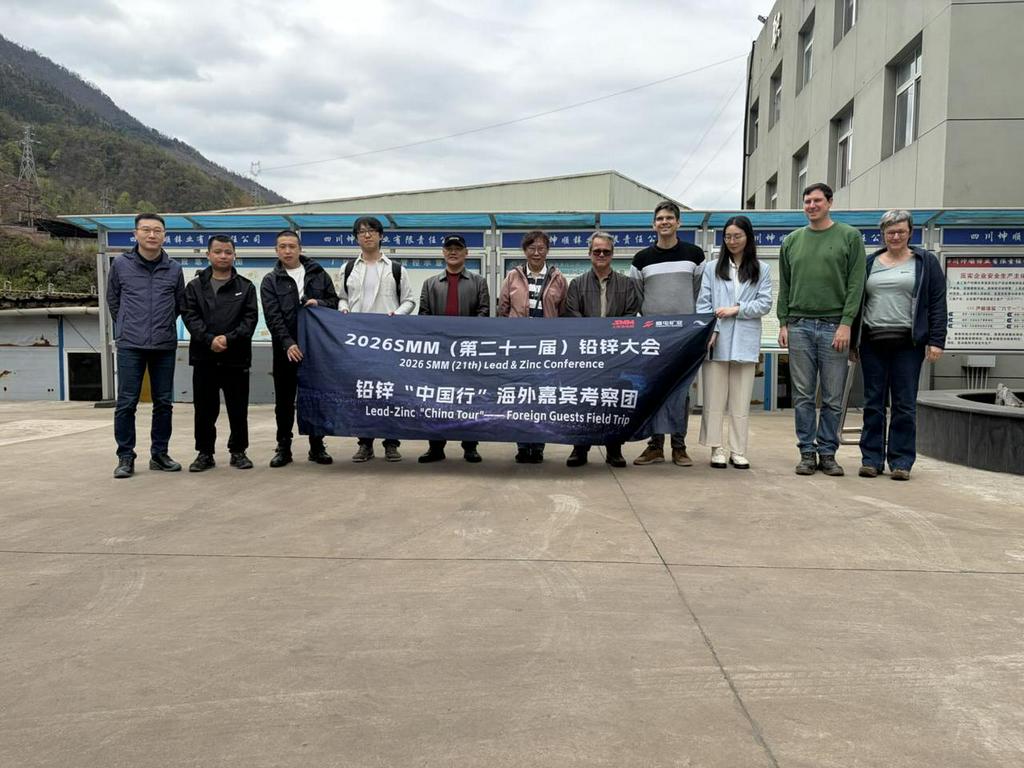 Post-Conference Tour: Connecting Global Lead-Zinc Giants with Key Chinese Players
The 2026 SMM (21st) Lead & Zinc Conference and Industry Expo opened grandly at Howard Johnson Agile Plaza in Chengdu, Sichuan during March 25–27 2026. Organized by SMM, the event brought together global enterprises, professional experts and industry peers from across the entire lead and zinc supply chain. Participants focused on industry hot topics, analyzed market trends and explored development strategies, establishing a highly efficient platform for communication and collaboration to support high-quality growth of the sector. To further strengthen the overseas delegation’s comprehensive understanding of China’s lead and zinc industrial chain and build closer connections between international industry peers and key producers in China, SMM led a high-level overseas delegation on a multi-day industrial tour starting on the afternoon of March 27. The delegation included representatives from global giants, such as Nyrstar, a top European lead and zinc smelting firm, Nexa Resources, a South American giant in lead-zinc mining and smelting, and Befesa, a pioneer in zinc recycling. During the tour, the delegation visited 8 Chinese enterprises. including: COSCO Shipping Sichuan Chengtun Zinc & Germanium Technology Sichuan Kunshun Zinc Industry Yunnan Luoping Zinc & Electricity Hongzhou Hongqian Nonferrous Chemical Yunnan Zhenxing Industrial Group Mengzi Mining & Metallurgy Danxia Smelter of Shenzhen Zhongjin Lingnan Nonfemet The delegation members went deep into production sites, held in-depth discussions and exchanges, and gained a full picture of China’s lead and zinc industry in terms of production operations, technological innovation, capacity scale and market layout, greatly enhancing their insight into and understanding of the entire industrial chain. SMM has systematically compiled detailed information of all enterprises that were visited during this tour, with details below: COSCO Shipping On the afternoon of March 27, the delegation visited COSCO Shipping for an exchange, where they received a warm welcome from the company's leadership. Both sides engaged in discussions on topics such as equipment transportation and technological upgrades. Sichuan COSCO Shipping Logistics Supply Chain Management Co., Ltd. is a wholly-owned subsidiary of COSCO Shipping Logistics Supply Chain Co., Ltd., registered and established in Chengdu, Sichuan Province, with an investment of 30 million yuan. COSCO Shipping Logistics Supply Chain Co., Ltd. is affiliated with China COSCO Shipping Corporation Limited and serves as a core member of the "shipping, ports, and logistics" segment of COSCO Shipping Group, as well as an important component of its global digital supply chain system. The company operates warehouse space exceeding 6 million m², including 19 futures delivery warehouses. China COSCO Shipping Corporation Limited is a globally leading shipping enterprise group, with a combined fleet capacity of 130 million DWT across 1,535 vessels, ranking first in the world. Sichuan COSCO Shipping Logistics Supply Chain Management Co., Ltd. holds business qualifications and an operational scope covering multiple transportation modes including sea, land, air, and rail, providing comprehensive logistics services spanning both international and Chinese markets. Since entering the non-ferrous metals delivery warehouse business in 2016, the company has adhered to the principle of "client-centered and market-oriented," continuously enhancing its service capabilities and achieving steady business growth. Currently, at key logistics periods such as Shanghai Baoshan, Shanghai Yangshan, and Yixing in Jiangsu, the company successfully operates delivery warehouses designated by the Shanghai Futures Exchange for copper, nickel, zinc, and other products. It has become one of the three major non-ferrous metals warehouses of SHFE and was honored with the title of "Top Ten Designated Non-Ferrous Metals Delivery Warehouses" by the Shanghai Futures Exchange for two consecutive years. Sichuan Chengtun Zinc & Germanium Technology Co., Ltd. On March 28, the delegation visited Sichuan Chengtun Zinc & Germanium Technology Co., Ltd. (Shimian City). Both sides engaged in in-depth exchanges on the development of the zinc smelting industry, with a focus on thorough discussions regarding product processing, production techniques, capacity scale, market trends, and the current challenges facing the industry. Sichuan Chengtun Zinc & Germanium Technology Co., Ltd. was established on December 6, 2015, with a registered capital of 1.6 billion yuan. The company has an annual capacity of 300,000 mt of electrolytic zinc, 150,000 mt of sulphuric acid, 400,000 mt of electrolytic zinc waste residue processing, and 40 mt of high-purity germanium dioxide. On January 16, 2019, the company was approved by the China Securities Regulatory Commission and merged into the publicly listed firm Chengtun Mining Group Co., Ltd. The company's main business includes smelting and R&D of zinc-germanium series products, as well as comprehensive recovery of multiple metals. It has formed a complete industry chain from zinc concentrates entering the plant to finished products leaving the plant. Its production lines include zinc calcine, electrolytic zinc, electrolytic zinc waste residue processing, and comprehensive recovery of rare and precious metals. Sichuan Kunshun Zinc Industry Co., Ltd. (Shimian City) On March 28, the delegation headed to Sichuan Kunshun Zinc Industry Co., Ltd. (Shimian City) for a visit and exchange, where they received a warm reception from the enterprise. Both parties held in-depth discussions and exchanges on zinc smelting, covering topics such as production costs, production and market landscape, raw material procurement and processing, industry chain competitive advantages, and distinctive process technologies. Sichuan Kunshun Zinc Industry Co., Ltd. is a specialized and green environmental protection enterprise jointly invested and established by Sichuan Metallurgical Holding Group Co., Ltd. and Shimian Dongshun Zinc Industry Co., Ltd. to implement the national green production philosophy, actively develop the circular economy, and promote the comprehensive utilization of solid waste resources. It integrates solid waste treatment, recycling, and resource regeneration. The company primarily uses high-tech methods to carry out clean utilization and harmless treatment of heavy metal-containing waste generated by industries such as metallurgy and chemicals, eliminating the environmental impact of heavy metal solid waste at the source. The company was established in 2021 and is located in Zhuma Industrial Park, Shimian County, Ya'an City, Sichuan Province, covering an area of 65 mu with a total investment of 180 million yuan. The company has built a 3.5m × 50m Waelz rotary kiln production line, equipped with advanced and well-established low-grade zinc oxide production technology, achieving a resource recovery utilization rate of over 95% and effectively managing waste gas, noise, solid waste, and groundwater risks. It is also equipped with supporting facilities including desulphurization, denitrification, and flue gas defogging towers, as well as a wastewater treatment station, raw material warehouse, raw material pre-washing workshop, water slag processing workshop, biomass semi-gasification furnace, zinc crystallized salt workshop, production safety and environmental protection center, and laboratory for detection and testing. The company holds qualifications for treating hazardous waste categories including HW12, HW17, HW23, HW48, and HW49, with an annual capacity to process 100,000 mt of zinc-containing waste. Its main products include low-grade zinc oxide and zinc crystallized salt. The company has always upheld the green and environmentally friendly development philosophy, adhering to the fundamentals of "being responsible for the environment, for clients, and for employees," guided by technological innovation, and targeting the "reduction, recycling, and detoxification" of solid waste pollution prevention and control. The company is committed to building a modern "solid waste" management and disposal service provider, actively carrying out emergency environmental protection disposal, proactively assuming social service functions, and making positive contributions to promoting the circular economy development in Sichuan and strengthening the ecological civilization construction of lucid waters and lush mountains! Yunnan Luoping Zinc & Electricity Co., Ltd. (Qujing City) On March 30, the delegation visited Yunnan Luoping Zinc & Electricity Co., Ltd. (Qujing City) for exchanges. During the meeting, both sides conducted in-depth discussions on key topics including magnesium removal process optimization, production management organization, and raw material substitution plans, and put forward constructive suggestions on improving the plant environment. Yunnan Luoping Zinc & Electricity Co., Ltd. was established to fully leverage Luoping's local hydropower and lead-zinc mineral resource advantages. In accordance with the "ore, electricity, and smelting integration" development strategy proposed by the Luoping County Party Committee and County Government, and the overall requirements of the Municipal Party Committee and Municipal Government for the reform of industrial enterprises across the city, the company was registered and established at the Yunnan Provincial Administration for Industry and Commerce on December 21, 2000. It was listed on the Shenzhen Stock Exchange A-share market in 2007 and is a state-controlled enterprise under Luoping County. The company's assets are an optimized combination of three components: hydropower, lead-zinc mines, and zinc smelting. In terms of company assets, they are primarily composed of three advantageous resources of Luoping: mineral, hydropower, and zinc smelting. These mainly include six production units: Luoping County Fule Lead-Zinc Mine with an annual processing capacity of 100,000 mt of raw ore, Lazhuang Power Plant with annual power generation of 250 million kWh (installed capacity of 60,000 kW), a zinc smelter with an annual output of 120,000 mt of electrolytic zinc, a zinc powder plant with an annual output of 12,000 mt of ultra-fine zinc powder, a comprehensive utilization plant with an annual processing capacity of 129,500 mt of zinc slag, and a sulphuric acid plant with an annual output of 140,000 mt of sulphuric acid, achieving a total annual industrial output value exceeding 2 billion yuan. The company has six wholly-owned subsidiaries. The company's main businesses include hydropower generation, mining of lead, zinc, and other non-ferrous metals, as well as the production and sales of zinc smelting and its extended products. It is currently the only publicly listed firm in China's zinc smelting industry that integrates mining, power generation, chemical processing, and smelting. Its products include zinc sulphide concentrates, lead concentrates, zinc ingots, industrial sulphuric acid, ultra-fine zinc powder, cadmium, germanium concentrates, silver concentrates, copper concentrates, zinc alloys, industrial and residential electricity, edible oils and fats, among others. Its main product, "Jiulong" brand zinc ingots, is popular in non-ferrous product markets in and outside China thanks to its superior product quality and corporate reputation. Honghe Prefecture Hongqian Non-ferrous Chemical Joint-Stock Co., Ltd. On March 31, the delegation visited Honghe Prefecture Hongqian Non-ferrous Chemical Joint-Stock Co., Ltd. for exchanges. The two sides held in-depth discussions on topics including the economic benefits of smelting by-products, energy utilization efficiency, the current status of enterprise development, and future cooperation intentions. Honghe Prefecture Hongqian Non-ferrous Chemical Joint-Stock Co., Ltd. was established on August 1, 2007, with a registered capital of 50 million yuan. The total investment in project construction was 475.5543 million yuan. The company currently has over 600 employees and covers an area of 443 mu. The plant is located in the Heishenmiaobo Industrial Zone, situated in the central area of the Gejiu-Kaiyuan-Mengzi urban cluster. The company is a new-type joint-stock enterprise centered on crude lead smelting, integrating sulphur dioxide acid production, waste heat power generation, lead electrolysis, and recovery of precious and rare metals such as gold, silver, antimony, and bismuth, with further extension into deep processing of lead-series products including red lead, massicot, electrode plates, and storage batteries. It is a benchmark enterprise among private lead smelters in the city, featuring a relatively large scale, advanced technology, compliance with environmental protection standards, comprehensive utilization of resources, and a complete industry chain. The company pioneered the application of new technologies to upgrade and transform the traditional crude lead smelting model among private enterprises in the city. The company has formulated the working philosophy of "prioritizing environmental protection, ensuring safety, attracting talent, enforcing strict management, and enhancing efficiency," and continues to drive high-quality development. In April 2007, the company commissioned China ENFI Engineering Technology Co., Ltd. to conduct a feasibility study on the lead smelting technological transformation project, and determined a comprehensive industrial facility technological transformation project with a total investment of 490 million yuan and an annual capacity of 60,000 mt of crude lead. On December 21, 2009, the "Demonstration Project of Oxygen-Enriched Bottom-Blowing Lead Smelting Technology with Annual Output of 60,000 mt of Crude Lead" was designated by the Provincial Department of Science and Technology as a 2009 Yunnan Provincial Science and Technology Innovation Project. In 2010, it was further designated as a key industrial project by the provincial, prefectural, and municipal governments. On November 14, 2011, the company obtained ISO9001:2008 quality management system certification. On March 7, 2012, "HSPb99.94PCT" was successfully registered on the London Metal Exchange. In 2019, the company successively passed the safety completion acceptance and environmental impact assessment completion acceptance, fully achieving compliant operations and sustainable development. Yunnan Zhenxing Industrial Group Co., Ltd. On March 31, the delegation headed to Yunnan Zhenxing Industrial Group Co., Ltd. for a visit and exchange. Both parties conducted in-depth discussions on topics including Yunnan Province's mineral resource endowment, smelting industry development trends, corporate business strategies, and technological innovation applications, jointly assessing the current status and prospects of the industry and analyzing the challenges and opportunities ahead. Yunnan Zhenxing Industrial Group Co., Ltd. (hereinafter referred to as "the Group") was founded in 1996 and is located in the Chongposhao New Materials Industrial Park, Shadian Sub-district Office, Gejiu City. The Group currently has 7 subsidiaries, 2 holding companies, and 1 equity-participation company, with approximately 3,000 employees. Its capacity reaches annual output of crude lead (100,000 mt), electrolytic lead (60,000 mt), zinc ingot (20,000 mt), lead-acid battery plates (9 million sets), lead-acid batteries (6 million units), superphosphate (350,000 mt), sulphuric acid (200,000 mt), and monoammonium phosphate (MAP) (60,000 mt). The Group has established five major production sites and five major product brands covering crude lead raw material, lead-zinc smelting, power supply manufacturing, fertilizer and chemical production, and resource recovery. It has formed an internal industrial cycle spanning lead ore mining—lead-zinc smelting—lead-based alloy melting—battery manufacturing—waste battery recycling—precious metals production, making it one of the few private non-ferrous enterprises in China with a complete lead industry chain. Since 2013, the Group has been consecutively recognized as one of the Top 100 Non-Public Enterprises in Yunnan Province. In 2025, it ranked 41st among the "Top 100 Non-Public Enterprises in Yunnan Province" and was selected for the first time into the "Top 20 Private Enterprises in Innovation Capability," ranking 7th. Yunnan Shadian Lead Industry Co., Ltd., a subsidiary controlled by the Group, ranked 71st. The Group has received nearly 100 honors at various levels, including "High-tech Enterprise," "Outstanding Private Technology Enterprise," "Enterprise with Harmonious Labor Relations," "Provincial Model Collective for Ethnic Unity and Progress," and "Key Enterprise for Industrial Development in Honghe Prefecture" in Yunnan Province. The Group's Yunsha brand lead ingot was successfully registered on the London Metal Exchange in 2007 and on the Shanghai Futures Exchange in 2020. In 2021, the Group was rated AAA in enterprise credit rating in the national non-ferrous metals industry. In August 2024, it was designated as a "Qiangyuan Zhuqi" Industry-Finance Service Base by the Shanghai Futures Exchange. Looking ahead, the Group will pursue the philosophy of "seeking survival, pursuing development, and accelerating enterprise transformation and upgrading," adhering to the working approach of "rooting in Honghe, basing in Yunnan, radiating to surrounding regions, and expanding across China." It will thoroughly implement strategies of enterprise management transformation, technology-driven development, talent empowerment, and sustainable development, striving to achieve significant increases in capacity and production of major products by 2035, with gross industrial output value up YoY, and to build itself into a 10 billion green lead-zinc comprehensive recycling technology enterprise. Mengzi Mining and Metallurgy Co., Ltd. On March 31, SMM and the field trip delegation headed to Mengzi Mining and Metallurgy Co., Ltd. for a visit and exchange. Both parties engaged in in-depth discussions on the entire zinc smelting process, covering topics including production technology, raw material supply, product sales, environmental protection governance, and future development plans, aiming to share experience, address industry pain points, and jointly clarify the direction of development. Mengzi Mining and Metallurgy Co., Ltd. was established in 1996. It is a resource-based mining and metallurgy enterprise integrating R&D, exploration, mining, mineral processing, smelting, and trading, with a focus on comprehensive utilization of resources. The company is one of the few comprehensive private enterprises in the non-ferrous metal industry that possesses an entire industry chain and operates independent trading and supply chain business platforms. It is among the top 100 enterprises in Yunnan Province and a key enterprise in Honghe Prefecture. Shenzhen Zhongjin Lingnan Nonfemet Co., Ltd. — Danxia Smelter On April 2, the SMM delegation visited Zhongjin Lingnan's Danxia Smelter for a survey and field trip to the core plant area. In-depth discussions were held on production operations, technological R&D, and raw material procurement, covering key topics such as production capacity, technical cooperation, and raw material procurement strategies. Shenzhen Zhongjin Lingnan Nonfemet Co., Ltd. (hereinafter referred to as "Zhongjin Lingnan") was established in September 1984 and listed on the Shenzhen Stock Exchange in January 1997 (stock code: 000060). It is an internationalized entire industry chain resource company primarily engaged in lead, zinc, and copper mining, mineral processing, and smelting, as well as comprehensive recovery of rare, scattered, and precious metals. It is a publicly listed firm controlled by Guangsheng Holdings Group, a key wholly state-owned enterprise under Guangdong Province. Zhongjin Lingnan's business covers segments including mines, smelting, new materials, and supply chains. It has 23 directly affiliated enterprises, wholly-owned and controlled subsidiaries. Major operating entities include Fankou Lead-Zinc Mine, Shaoguan Smelter, Danxia Smelter, Zhongjin Copper Co., Guangxi Mining Co., Perilya Limited in Australia, Zhongjin Technology Co., and Huajiari Co. The company has an annual output of 300,000 mt of lead and zinc metal content in concentrates, 450,000 mt of smelted lead and zinc products, 450,000 mt of copper cathode, 21,000 mt of aluminum extrusion, 20,000 mt of battery zinc powder, and 5,400 mt of composite metal materials. Among these, its battery zinc powder ranked first in Chinese market share, nickel-metal hydride and nickel-cadmium battery electrode sheets & plates materials ranked first in Chinese market share, and thermal bimetal ranked first in Chinese market share. The 2026 field trip brought together some global lead and zinc industry leaders for an inspiring and highly productive journey across China’s leading smelters and enterprises. The warm welcome, operational excellence, and innovative technologies on display made this event a resounding success — and we extend our deepest gratitude to all the companies and participants who made it happen. Looking ahead – Save the date for 2027: We are excited to announce that the 2027 SMM (22nd) Lead & Zinc Conference and Industry EXPO will take place from March 17–19, 2027 in Kunming, Yunnan, China . This premier event will once again bring together the global lead-zinc community for high-level networking, insight sharing, and industrial exploration. Interactive call – We want to hear from you: As we plan the field trip for the 2027 conference, we’d love your input. Which smelters or companies would you most like to visit for technical exchange and on-site learning? Please share your suggestions in the comments below — your feedback will help shape the 2027 experience. Let us know where the industry should go next!
Apr 7, 2026 14:32