

1121results found for 'Chinese New Year'
Sort by : |
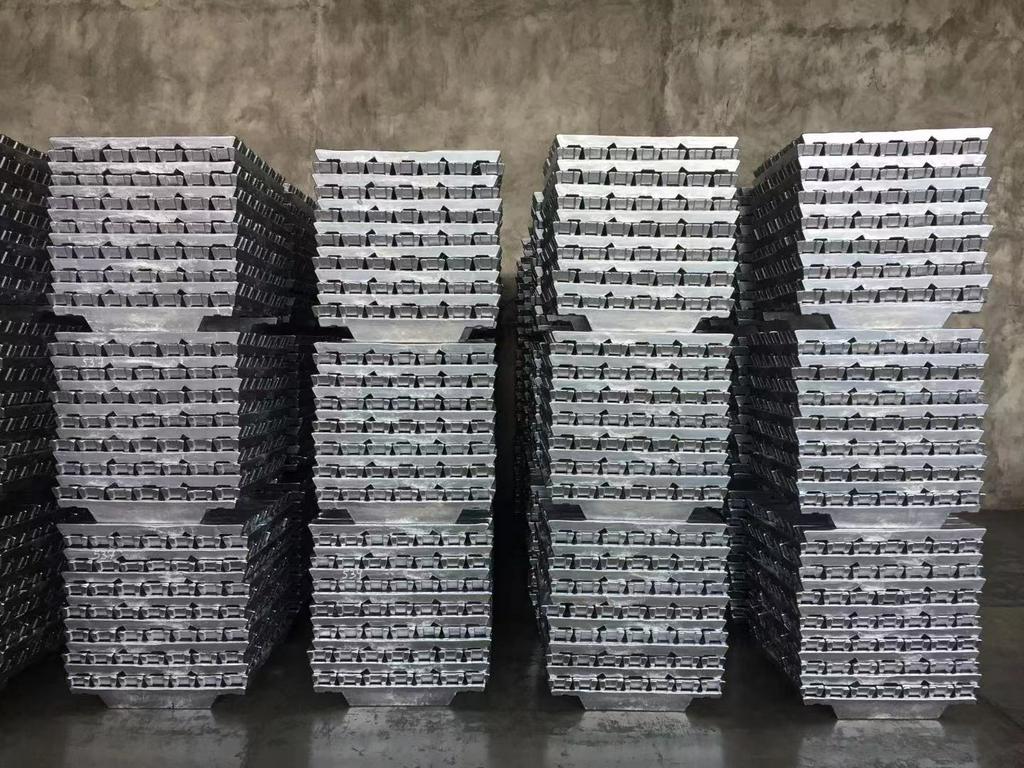 China's aluminum ingot warehouse withdrawals hit a four-year high. With 1 million mt inventory level within reach?
In 2026, China's aluminum ingot inventory has continuously pulled back from a high of 1.465 million mt in early May, and by end-June cumulative destocking of 300,000 mt brought it down to 1.165 million mt, with the destocking pace steepening markedly. Last week, warehouse withdrawals surged to 170,000 mt, hitting a new single-week high in nearly four years. Driven by three factors—the supply-side proportion of liquid aluminum rising more than expected, supportive export demand, and...
Jun 30, 2026 23:13 June Aluminum Semis PMI Falls Back to Contraction Territory at 46.6%, Domestic Demand Weakness Weighs on All Segments
In June the aluminum processing industry exhibited a pronounced divergence pattern of "external demand outperforming domestic demand, with the aluminum wire and cable industry unable to sustain the market on its own." Export orders, energy storage, UHV, and other areas provided structural support, but a combination of weak domestic consumption, wild swings in aluminum prices, and policy disruptions made it difficult for the overall industry sentiment to recover markedly in the short term.
Jun 29, 2026 22:36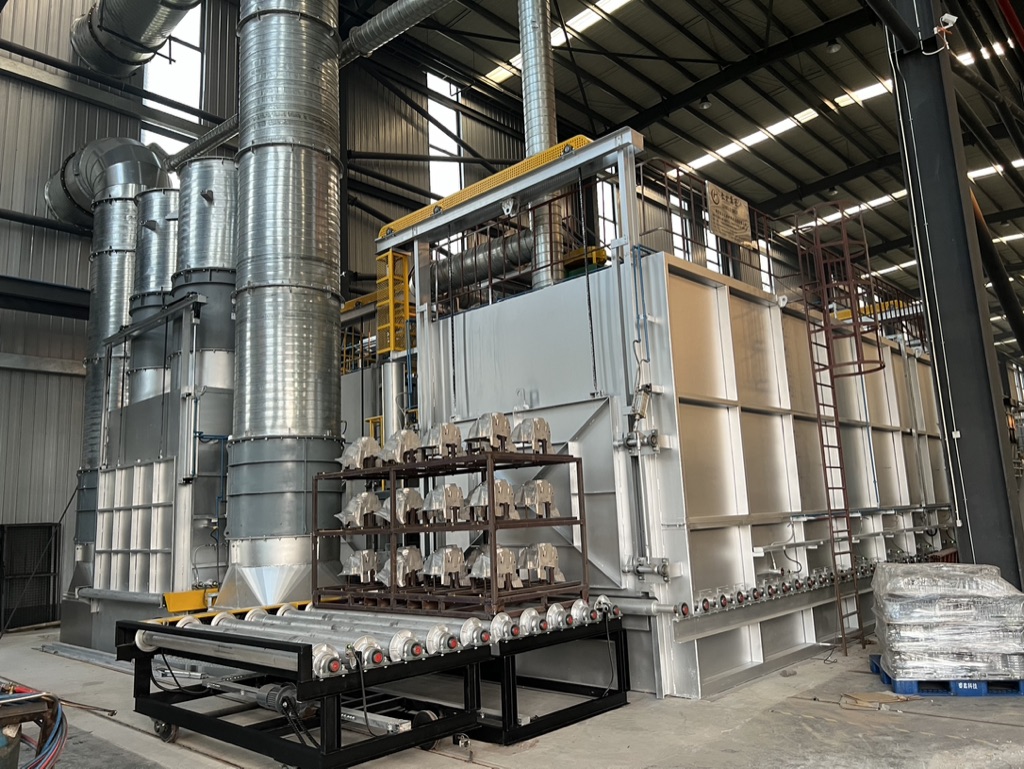 Southeast Asia 6063 Aluminum Billet Market Price System Accelerates Segmentation【SMM Analysis】
With the continued expansion of aluminum processing and downstream industries in Southeast Asia, regional aluminum billet production, consumption and trade markets have attracted growing attention. Malaysia, Thailand and Vietnam are not only important aluminum billet production and consumption hubs in Southeast Asia, but also play a key role in regional aluminum billet trade flows. Markets such as Indonesia, the Philippines and Cambodia, meanwhile, are still at a stage where local processing capacity development and demand for imported aluminum billet are growing simultaneously. Since March 2026, the escalation of geopolitical conflicts in the Middle East has caused significant disruption to the global aluminum supply chain. On the one hand, uncertainty over the supply of primary aluminum and aluminum processed products from the Middle East has increased, pushing up procurement interest in primary aluminum, aluminum billet and secondary aluminum resources across Asian markets outside China. On the other hand, fluctuations in crude oil prices and ocean freight costs have further lifted regional aluminum processing and trading costs. Against this backdrop, LME aluminum prices, Asian regional premiums and Southeast Asian local aluminum billet processing fees have all fluctuated to varying degrees. At the same time, changes in the SHFE/LME price ratio have periodically affected the export arbitrage window for Chinese aluminum processed products. When overseas aluminum prices are stronger than domestic prices and export margins improve, Chinese aluminum processed products and some processing-trade resources show greater willingness to flow into the Southeast Asian market, creating certain disruptions to local billet supply-demand dynamics and quotations. When the price spread narrows, however, regional pricing returns to a framework driven jointly by local supply, imports from the Middle East and other overseas resources. Trade Flows From the perspective of export destinations, the flow of Southeast Asian products under HS760120 is relatively concentrated. In 2025, the top ten export destinations for Southeast Asian HS760120 products totaled around 1.2695 million mt, accounting for approximately 93.3% of total Southeast Asian exports. China was the largest destination, with full-year exports of around 602,100 mt, accounting for approximately 44.3%. Japan, Vietnam and India followed, with around 149,300 mt, 143,500 mt and 111,700 mt respectively, accounting for approximately 11.0%, 10.5% and 8.2%. It should be noted that HS760120 includes primary aluminum alloy ingots, secondary aluminum alloy ingots, other aluminum alloy billets and some cast aluminum alloy products. Therefore, this data mainly serves as a reference for observing trade flows of unwrought aluminum alloys and aluminum alloy billets in Southeast Asia, and cannot be directly equated with 6063 aluminum billet export volumes. Entering 2026, affected by the escalation of the Middle East conflict, uncertainty in the global supply chain for primary aluminum and aluminum processed products increased, and trade flows of aluminum raw materials and aluminum billets in Asia saw certain adjustments. Data shows that total Southeast Asian HS760120 exports fell to around 88,800 mt in February 2026, before rebounding to around 110,700 mt in March and further increasing to around 116,600 mt in April. From February to April, cumulative growth reached approximately 31.2%. In terms of destination changes, China remained the largest export destination, although exports to China declined in April compared with March. India, South Korea, Taiwan, China and Japan showed more obvious increases from March to April. Among them, exports to India rose from around 8,200 mt in February to around 15,700 mt in April; exports to South Korea increased from around 2,400 mt in February to around 10,000 mt in April; exports to Taiwan, China climbed from around 1,500 mt in February to around 4,100 mt in April; while exports to Japan recovered to around 13,700 mt in April. Overall, the rebound in Southeast Asian HS760120 exports from February to April 2026 reflected, on the one hand, the gradual recovery of regional trade after the Chinese New Year holiday. On the other hand, it may also have been related to Asian buyers increasing procurement of Southeast Asian regional resources and supplementing alternative supply sources after the Middle East conflict raised supply risks for overseas primary aluminum, aluminum billet and secondary aluminum. Considering that China, India, Japan, South Korea and Taiwan, China are all important aluminum processing and consumption markets in Asia, the increase in Southeast Asian product flows to these markets indicates that regional unwrought aluminum alloys and aluminum alloy billets have played a certain supplementary and balancing role in trade during periods of supply chain disruption. For the 6063 aluminum billet market, this trend cannot be directly equated with changes in 6063 aluminum billet exports, but it can serve as an important reference for assessing the circulation activity of aluminum billets and aluminum alloy raw materials in Southeast Asia, regional substitution demand and fluctuations in processing fees. Market and Price Analysis With the continued expansion of aluminum processing and downstream enterprises in Southeast Asia, the situation of 6063 aluminum billet differs across countries due to variations in processing levels and downstream demand. Overall, Malaysia and Thailand are the main aluminum billet producing countries in the region and also have certain local consumption capacity. Vietnam’s aluminum processing capacity is growing rapidly, but some local quotations are still mainly for non-homogenized cast billets. Markets such as Cambodia and the Philippines remain at a stage where local processing capacity development coexists with demand for imported aluminum billet. In terms of homogenization status, mainstream 6063 aluminum billet quotations in Malaysia and Thailand usually already include homogenization treatment, and the relevant homogenization cost is mostly included in the aluminum billet processing fee quoted by producers. A small number of non-homogenized 6063 aluminum billet quotations also exist in the Thai market, which can be used to observe the basic processing cost of cast billets. The situation in Vietnam is different. As some enterprises mainly quote non-homogenized cast billets, the apparent processing fee for 6063 aluminum billet is usually around $50-100/mt lower than homogenized quotations in Malaysia and Thailand. Aluminum billet homogenization is an important heat-treatment process in the production of 6063 aluminum billet. It usually refers to placing cast aluminum billets into a homogenizing furnace for heating, holding and cooling treatment, so that the internal composition distribution of the billet becomes more uniform and microstructural segregation formed during casting is improved. For 6063 aluminum billet, homogenization helps improve stability in the subsequent extrusion process, reduce extrusion cracking, surface defects and performance fluctuations, and improve the surface quality and yield of extruded profiles. Therefore, in the aluminum extrusion value chain, homogenized aluminum billet generally has higher use value than non-homogenized cast billet. According to SMM market research, since March 2026, under the influence of factors such as the escalation of Middle East geopolitical conflicts, tighter supply of overseas primary aluminum and aluminum billet resources, and fluctuations in energy and ocean freight costs, 6063 aluminum billet processing fees in major Southeast Asian countries rose to varying degrees. Among them, processing fees for homogenized 6063 aluminum billet in Malaysia and Thailand once increased from the previous $200-250/mt to $250-300/mt, with some high-end quotations even exceeding $300/mt during the peak period. As the Middle East situation eased periodically in mid-June, 6063 aluminum billet processing fees in Malaysia and Thailand declined. At present, mainstream 6063 aluminum billet processing fees in Malaysia have stabilized around $250/mt, and mainstream processing fees for homogenized aluminum billet in Thailand have also stabilized around $250/mt. However, due to differences in raw material structure, product status and quotation basis among enterprises, processing fees still show a wide range. In Thailand, some 6063 aluminum billet processing fees have fallen to as low as around $100-150/mt. In Vietnam, from March to June, 6063 aluminum billet processing fees rose from the previous $150-200/mt to $200-250/mt, before falling back to around $200/mt in mid-June. In addition, from the perspective of the imported aluminum billet arrival market, from May to June, SMM learned that CIF Thailand and Malaysia 6063 aluminum billet premiums/discounts were mostly around a premium of $100/mt, while some low-priced resources even fell to a discount of around $100/mt. These resources were mainly 6063 aluminum billets processed in China under processing trade and then re-exported to the Southeast Asian market. Amid cost advantages and an increase in cargo inflows at certain stages, these resources exerted some impact on the local aluminum billet market in Southeast Asia. From March to April, affected by Middle East geopolitical conflicts, uncertainty over some Middle Eastern aluminum supply increased. Asian buyers in India, Japan, South Korea and Taiwan, China showed higher interest in Southeast Asian aluminum billets and related aluminum alloy resources, driving some Southeast Asian aluminum billet resources to flow out of the region and supporting stronger regional quotations. However, entering May and June, as Chinese aluminum billets flowed into markets such as Thailand and Malaysia through processing trade and re-export channels, competition pressure faced by local Southeast Asian aluminum billet plants increased. SMM research shows that sales pressure for some 6063 aluminum billet producers in Malaysia and Thailand has increased compared with earlier levels, and low-priced imported arrival resources have put certain downward pressure on local ex-works processing fees and the transaction price center. Outlook for Southeast Asian Aluminum Processing Looking ahead, the Southeast Asian 6063 aluminum billet market will continue to evolve around regional processing capacity expansion, import substitution, changes in raw material structure and overseas low-carbon requirements. In the short term, Malaysia, Thailand and Vietnam will remain the core markets for 6063 aluminum billet production and consumption in Southeast Asia. Malaysia and Thailand have relatively mature local billet casting and homogenization capacity, and their pricing systems are closer to a quotation logic based on “LME + regional premium + homogenized processing fee.” Vietnam, meanwhile, still has room for growth in aluminum billet demand as aluminum extrusion and downstream processing capacity improves, but the quotation basis for homogenized and non-homogenized products still needs to be further differentiated. Although local sample coverage in markets such as Indonesia, the Philippines and Cambodia remains limited at present, with the advancement of local aluminum processing projects, future demand for imported aluminum billet, secondary aluminum billet and intra-regional trade flows will remain worth monitoring. In the medium to long term, CBAM and overseas customers’ low-carbon procurement requirements may further drive segmentation in the price system of the Southeast Asian aluminum value chain. For the Southeast Asian aluminum billet market, the impact of CBAM may not necessarily be directly reflected through large-scale exports of aluminum billet itself to Europe, but may instead be transmitted through the export value chain of aluminum profiles, window and door profiles, industrial profiles and other deep-processed products. In the future, when European customers procure aluminum processed products from Southeast Asia, they may pay greater attention to raw material sources, the ratio of primary aluminum, in-house new scrap and aluminum scrap, carbon emission data during production, supply chain traceability and third-party verification capability. Against this backdrop, enterprises with stable homogenization capacity, clear raw material structures, the ability to provide emissions data and low-carbon material options may gain stronger advantages in securing export orders and price negotiations. From the perspective of the price system, CBAM may not immediately drive a one-sided increase in Southeast Asian 6063 aluminum billet processing fees, but it will raise market requirements for differentiating “product status” and “raw material attributes.” In the future, price spreads between liquid aluminum direct-cast billets, remelted aluminum ingot billets and remelted aluminum scrap billets, price spreads between homogenized and non-homogenized aluminum billets, and differences between CIF imported aluminum billet premiums and local ex-works processing fees are all expected to become key areas of market attention. As the aluminum processing industry in Southeast Asia continues to expand, the 6063 aluminum billet market may gradually develop from relatively broad trade quotations in the past toward a more segmented price system differentiated by country, alloy grade, homogenization status, raw material attribute and trade term. SMM Price Points Against the backdrop of regional processing expansion and low-carbon trends, Southeast Asian 6063 aluminum billet processing fees have gradually become one of the key price indicators followed by the market. To help enterprises better track price changes in the Southeast Asian 6063 aluminum billet market, SMM, after market research and improvement of its pricing methodology, will add a series of Southeast Asian 6063 aluminum billet processing fee, calculated reference price and CIF premium/discount price points starting from 3rd July 2026 (Friday) onward for market reference. The Southeast Asian 6063 Aluminum Billet Premium price points will be updated on a weekly basis every Friday at 12:00 noon Kuala Lumpur time, Malaysia, which is the same as Beijing time, GMT+8. Due to differences in settlement methods among enterprises, the full aluminum billet price may vary. For reference, it can be estimated using the following formula: 【LME Official Cash Settlement Price + Quarterly MJP + 6063 Aluminum Billet Processing Fee】. Details of the relevant price points are as follows: Cambodia 6063 Aluminum Billet (Homogenized) Premium, ex-works Cambodia, USD/tonne Malaysia 6063 Aluminum Billet (Homogenized) Premium, ex-works Malaysia, USD/tonne Thailand 6063 Aluminum Billet (Homogenized) Premium, ex-works Thailand, USD/tonne Thailand 6063 Aluminum Billet (Non-homogenized) Premium, ex-works Thailand, USD/tonne Vietnam 6063 Aluminum Billet (Non-homogenized) Premium, ex-works Vietnam, USD/tonne The SMM Southeast Asian 6063 Aluminum Billet price points will be updated on a daily basis every working day at 12:00 noon Kuala Lumpur time, Malaysia, which is the same as Beijing time, GMT+8. The SMM calculated reference price will be derived using the formula: 【LME Official Cash Settlement Price (D-1) + Quarterly MJP + Latest 6063 Aluminum Billet Processing Fee】. Based on this, SMM will publish low-end, high-end and average calculated reference prices. Details of the relevant price points are as follows: SMM Cambodia 6063 Aluminum Billet (Homogenized), ex-works Cambodia, USD/tonne SMM Malaysia 6063 Aluminum Billet (Homogenized), ex-works Malaysia, USD/tonne SMM Thailand 6063 Aluminum Billet (Homogenized), ex-works Thailand, USD/tonne SMM Thailand 6063 Aluminum Billet (Non-homogenized), ex-works Thailand, USD/tonne SMM Vietnam 6063 Aluminum Billet (Non-homogenized), ex-works Vietnam, USD/tonne At the same time, to provide a reference comparison for the Southeast Asian 6063 aluminum billet processing and trading market, SMM will also launch CIF Southeast Asia 6063 Aluminum Billet Premium price points for market reference. The CIF Southeast Asia 6063 aluminum billet premium/discount price points will be updated on a weekly basis every Friday at 12:00 noon Kuala Lumpur time, Malaysia, which is the same as Beijing time, GMT+8. Due to differences in settlement methods among enterprises, the full imported aluminum billet price may vary. For reference, it can be settled using the following formula: 【LME Official Cash Settlement Price + Quarterly MJP + 6063 Aluminum Billet Premium/Discount】. Details of the relevant price points are as follows: CIF Thailand 6063 Aluminum Billet (Non-homogenized) Premium Summary Overall, the Southeast Asian 6063 aluminum billet market is currently at a stage where regional processing capacity expansion, trade flow adjustments and price system segmentation are taking place simultaneously. In the short term, Middle East geopolitical conflicts, changes in overseas primary aluminum and aluminum billet supply, and fluctuations in energy and ocean freight costs will continue to affect Southeast Asian aluminum billet processing fees and import premiums/discounts. At the same time, changes in the SHFE/LME price ratio will also continue to periodically affect the willingness of Chinese aluminum processed products and related aluminum billet resources to flow into the Southeast Asian market. From the perspective of market structure, Malaysia, Thailand and Vietnam remain the core markets for 6063 aluminum billet production, consumption and trade circulation in Southeast Asia. Among them, Malaysia and Thailand have relatively mature pricing systems for homogenized aluminum billet, while Vietnam still requires separate differentiation in price basis due to the relatively high share of non-homogenized cast billet quotations. Going forward, as local processing capacity develops in markets such as Indonesia, the Philippines and Cambodia, changes in regional imported aluminum billet, secondary aluminum billet and local processing fees will also become areas worth continuous tracking. In the medium to long term, CBAM and overseas low-carbon procurement requirements will further increase the importance attached by the Southeast Asian aluminum processing value chain to raw material structure, homogenization capability, carbon emission data and supply chain traceability. Although CBAM may not necessarily drive an immediate one-sided increase in 6063 aluminum billet processing fees, it will prompt the market to more clearly distinguish between different product bases, including liquid aluminum direct-cast billets, remelted aluminum ingot billets, remelted aluminum scrap billets, as well as homogenized and non-homogenized products. Against this backdrop, the launch of SMM Southeast Asia 6063 aluminum billet processing fee, calculated reference price and CIF premium/discount price points will help the market more clearly track changes in regional aluminum billet costs, import substitution space, trade flow adjustments and price differentiation trends under the low-carbon transition.
Jun 26, 2026 14:36- Downstream Rigid Demand Under Pressure Leads to Decline in May Manganese Ore Imports [SMM Analysis]
According to the latest release from the General Administration of Customs, SMM data show that China's total manganese ore imports in May 2026 amounted to 2.7278 million mt, down 3.06% MoM and 7.32% YoY. In January-May 2026, total manganese ore imports reached approximately 14.4745 million mt, up 2.699 million mt YoY (compared with about 11.7755 million mt in January-May 2025), an increase of 22.92% YoY. Specifically, Australian ore imports were 489,500 mt, up 42.79% MoM; South African ore 1.5865 million mt, up 3.15% MoM; Gabonese ore 276,800 mt, up 36.8% MoM; Ghanaian ore 171,800 mt, down 61.57% MoM; Brazilian ore 132,900 mt, up 21.3% MoM, Myanmar ore 57,400 mt, down 0.68% MoM.
Jun 22, 2026 14:08 ![[SMM Analysis] NPI Market: Supply Crunch Fuels H1 Price Surge, Tight Balance to Persist Through 2030](https://imgqn.smm.cn/usercenter/qLeLR20251217171733.jpg) [SMM Analysis] NPI Market: Supply Crunch Fuels H1 Price Surge, Tight Balance to Persist Through 2030
[SMM Analysis] NPI Market: Supply Crunch Fuels H1 Price Surge, Tight Balance to Persist Through 2030In H1 2026, the Indonesian 10-12% high-grade NPI (delivered to port, tax inclusive) market trended steadily upward, with the SMM average price rising 12% compared to the same period in 2025. Price movements were characterized by “stepwise increases and fluctuations at highs.” Each round of supply-demand imbalance and policy disruption pushed prices onto a higher level.
Jun 18, 2026 09:01- China’s Aluminum Ingot Inventory Falls Rapidly After Hitting 1.47 Mt Peak —How Far Can Destocking Go? [SMM Analysis]
China’s aluminum ingot inventory, after hitting a peak not seen in nearly three years in 2026, accelerated its pullback this week. According to SMM statistics, as of June 11, aluminum ingot inventory in major Chinese consumption areas was reported at 1.312 million mt, having cumulatively destocked by nearly 160,000 mt from the early-May high of around 1.47 million mt. The single-week decline this week reached 48,000 mt, clearly steepening the destocking slope...
Jun 14, 2026 18:32 - [SMM Analysis] Capacity Expansion Continues to Suppress Prices, Non-oriented Struggles to Shake Off Downturn Shadow
Semi-Annual Review and Outlook: Capacity Expansion Continues to Suppress Prices, Non-oriented Struggles to Shake Off Downturn Shadow
Jun 11, 2026 14:15 - Urban Renewal 15th Five-Year Plan Implemented, Real Estate Sector Receives Policy Boost, Tianjian Group and Others Hit Daily Limit [SMM News Flash]
SMM, May 29: Following the State Council's release of the Urban Renewal 15th Five-Year Plan, the real estate industry received new policy catalysts. On May 29, the real estate development sector rose accordingly, with the market optimistic about incremental investment opportunities in areas such as urban village renovation, old residential community upgrades, and municipal infrastructure construction following the plan's implementation. As of the close on May 29, the real estate development sector gained 0.68%, and real estate services rose 0.26%. In terms of individual stocks, Fuxing Co., Sunshine Co., Tianjian Group, Xiangjiang Holdings, Everbright Jiabao, and several others hit the daily limit, while Vanke A, Financial Street, Tefа Services, and China Merchants Shekou led the gains. News [State Council Releases Urban Renewal 15th Five-Year Plan: City-Specific Policies to Increase Supply of Upgraded Housing and Regulate Development of Housing Rental Market] The State Council released the Urban Renewal 15th Five-Year Plan. The plan proposes to comprehensively assess the base of existing urban asset resources, promote classified disposal of land that has been allocated but not yet developed and projects under construction, and revitalize idle and underutilized old factory buildings, commercial and office properties, commodity housing, and public housing. It is expected to accelerate the construction of a new model for real estate development and improve fundamental systems for commodity housing development, financing, and sales. The plan calls for optimizing the supply of affordable housing, strengthening housing security for low-income urban households with housing difficulties, better meeting the basic housing needs of working-class groups facing housing difficulties with modest incomes, and gradually addressing the transitional housing difficulties of new urban residents, young people, and other groups. City-specific policies are expected to increase the supply of upgraded housing and regulate the development of the housing rental market. The plan encourages real estate development enterprises to transform and participate in urban renewal. It is expected to deepen the reform of the housing provident fund system, expand its scope of use, strive to meet the diversified housing needs of contributors at different stages, and support flexible employment workers in participating in the housing provident fund system. The plan also aims to strengthen and regulate the management of existing urban infrastructure assets. [Huang Guanglie, Deputy Secretary General of Guangzhou Municipal Government: Confident in Further Consolidating the Stabilizing and Improving Trend of Guangzhou's Property Market] On May 26, Guangzhou held a press conference on the supporting documents for the Implementation Opinions on Further Promoting Stable and Healthy Development of the Real Estate Market. Huang Guanglie, Deputy Secretary General of the Guangzhou Municipal Government, stated that going forward, Guangzhou will continue to improve the two major systems of the housing market and housing security, and continuously optimize property market regulation measures. The Municipal Bureau of Planning and Natural Resources, the Municipal Bureau of Housing and Urban-Rural Development, the Municipal Provident Fund Center, and other departments have issued supporting rules on matters such as land supply, special subsidies for "sell old, buy new," and "commercial-to-provident fund loan conversion." Huadu District responded swiftly by launching eight specific measures. State-owned enterprises represented by Guangzhou Anju Group are accelerating the launch of pilot work on the acquisition and revitalization of second-hand housing. We believe that as these detailed rules are fully implemented and all sectors advance in coordination, we are confident in further consolidating the stabilizing and improving trend of Guangzhou's property market. (Jin10 Data APP) [Guangzhou's Real Estate Market Activity Has Been Continuously Rising Since May] On May 26, Guangzhou held a press conference on the series of supporting documents for the "Implementation Opinions on Further Promoting the Stable and Healthy Development of the Real Estate Market." Huang Guanglie, Deputy Secretary General of the Guangzhou Municipal Government, noted that on April 30, Guangzhou issued the "Implementation Opinions on Further Promoting the Stable and Healthy Development of the Real Estate Market" (known as the "Sui Eight Measures"). As the policy effects continued to release, market activity kept rising. Since May, weekly visits, subscriptions, and online signings at key new residential projects citywide increased by 26.9%, 36.9%, and 11.4% WoW, respectively; weekly signing volume of pre-owned residential properties rose 9.3% WoW, while new listing volume decreased 16.7% YoY. The new housing provident fund policy took effect, with 4,484 loan applications accepted totaling 4.746 billion yuan, up 47.05% and 56.43% YoY, respectively. [Guangzhou: Removing Restrictions on "Only Housing in the City" and Number of Provident Fund Loan Uses] On May 26, 2026, the Guangzhou Housing Provident Fund Management Center issued the normative document "Measures for Converting Commercial Personal Housing Loans to Housing Provident Fund Personal Housing Loans in Guangzhou (Interim)." It proposed expanding the scope of commercial loan banks by removing the restriction that "the original commercial loan bank must be a housing provident fund entrusted bank," allowing commercial loans from non-housing provident fund handling banks to be converted into pure housing provident fund loans. Requirements on loan types, terms, and provident fund contribution periods were relaxed. For commercial-to-provident-fund conversion handled by housing provident fund loan handling banks, applicants whose convertible provident fund loan amount is not enough to fully repay the original commercial loan principal and interest may choose to convert to a combined loan. The requirement for account opening and cumulative housing provident fund contribution period was reduced from "60 months" to "36 months." The original commercial loan disbursement period was shortened from "more than 3 years" to "more than 2 years." Restrictions on "only housing in the city" and the number of provident fund loan uses were removed, no longer requiring that "the mortgaged property is the applicant's family's only housing in the city," supporting applications for first and second improved housing. Applicants who "have never used or have used housing provident fund loans only once" may also apply for commercial-to-provident-fund conversion, free from the restriction of "never having used housing provident fund loans." (Jin10 Data) [Xiong'an New Area: Maximum Housing Provident Fund Loan Amount Raised to 800,000 Yuan] Notice of the Xiong'an New Area Housing Management Center on Optimizing and Adjusting Housing Provident Fund Withdrawal and Loan Policies. The policy stipulates that for depositors meeting the New Area's rental housing withdrawal conditions, those who have not registered a housing lease contract may withdraw up to 17,000 yuan per year; those who have registered a housing lease contract on the "Hebei Xiong'an New Area Housing Rental Information Service Platform" may withdraw up to 25,000 yuan per year. Depositors purchasing owner-occupied housing in the New Area and applying for housing provident fund loans may borrow up to 800,000 yuan. Employees of Beijing-sourced relocated units whose housing provident fund deposit location is in the New Area may borrow up to 1.2 million yuan when purchasing owner-occupied housing in the New Area and applying for housing provident fund loans. Families with two or more children purchasing owner-occupied housing in the New Area and applying for housing provident fund loans may have their maximum loan amount increased by 200,000 yuan. For employee families who have only one housing provident fund loan record nationwide that has been fully repaid and own no property in the New Area, the first-home housing provident fund loan policy shall apply. (Xiong'an Provident Fund) [Supreme Court's Liu Guixiang: Preventing and Resolving Risks in Key Areas Such as Finance and Real Estate] On May 27, Liu Guixiang, Vice-Ministerial-Level Full-Time Member of the Adjudication Committee and Second-Grade Grand Justice of the Supreme People's Court, stated at a press conference held by the State Council Information Office that the people's courts will fully safeguard national security and social stability, punish criminal acts that endanger national security, public safety, and undermine the socialist market economic order in accordance with the law, and adhere to market-oriented and rule-of-law principles to coordinate administrative, civil, and criminal adjudication functions to prevent and resolve risks in key areas such as finance and real estate. [China Index Academy: Property Developers' Bond Financing in April Up Nearly 30% YoY] The latest data released by the China Index Academy showed that in April, total bond financing in the real estate sector reached 61.48 billion yuan, up 28.8% YoY and up 18.5% MoM. Specifically, credit bond financing in the real estate sector totaled 37.48 billion yuan (up 2.6% YoY, down 9.1% MoM), accounting for 61%; ex-China bond financing was 3.43 billion yuan, accounting for 5.6%; ABS financing was 20.57 billion yuan (up 83.9% YoY, up 93.1% MoM), accounting for 33.5%. [Marco Polo: Q2 Sales Improved QoQ] Marco Polo stated at a recent earnings briefing that in Q1 2026, affected by the late Chinese New Year holiday and slow market activation, the industry overall declined YoY to some extent. Since Q2, the real estate market in some cities has shown structural stabilization and recovery, with new home markets broadly stopping falling, and second-hand housing prices in core cities such as Guangzhou, Shenzhen, and Hangzhou beginning to rise with active transactions. The company adopted multiple measures, including building regional empowerment centers, promoting the sinking of its dealer network, expanding non-residential project business, and strengthening cooperation with whole-house decoration enterprises, resulting in a QoQ improvement in sales in Q2. [Guangzhou Anju Group to Launch Pilot Work Supporting Residents in "Selling Old and Buying New"] On May 26, Guangzhou held a press conference on the series of supporting documents for the "Implementation Opinions on Further Promoting the Stable and Healthy Development of the Real Estate Market." Qian Zhe, Deputy Secretary of the Party Committee and General Manager of Guangzhou Anju Group, stated that to support residents in improving their housing conditions and facilitate the exchange chain between pre-owned and new housing, Anju Group will immediately launch pilot work supporting residents in "selling old and buying new," with a trial period ending on December 31, 2026. Following the principle of "government guidance, market-based operation, and voluntary participation," the group will acquire pre-owned residential properties through market-oriented approaches. The pilot acquisition targets pre-owned residential properties within Guangzhou's Ring Expressway, with a total price of no more than 3 million yuan, a floor area of less than 70 m², and no restriction on building age. The acquired old properties will be prioritized for use as affordable housing, talent apartments, and other purposes, primarily serving the housing needs of new urban residents, young people, and other groups, as well as resident relocation for urban self-renewal projects. [Guangzhou Huadu District Sees "Rising Volume, Stable Prices, and Active Transactions" After New Policy Implementation] On May 26, Guangzhou held a press conference on the series of supporting documents for the "Implementation Opinions on Further Promoting the Stable and Healthy Development of the Real Estate Market." Mai Shaoming, Deputy District Head of Huadu District, Guangzhou, stated that after the implementation of the "Eight Measures for Guangzhou," Huadu District took the lead in the city to introduce the "Eight Measures for Huadu." Since the new policy took effect, the real estate market in Huadu District has seen a sustained rebound in market activity and a continuous release of transaction vitality. Project visits, subscriptions, policy inquiries, and pre-owned housing market transactions all surged significantly. Policy inquiries focused on core topics such as pre-sale school enrollment eligibility, online contract-based school enrollment, and trade-in policy subsidies. The overall market demonstrated a positive trend of "rising volume, stable prices, and active transactions." [Xiamen Introduces Six Housing Provident Fund Measures: "Sell Old, Buy New" Loans to Be Executed at First-Home Interest Rates] On May 19, the Xiamen Housing Provident Fund Center announced on its website that, in order to implement the spirit of the "Several Opinions on Further Promoting the Stable Development of the Real Estate Market" issued by the Fujian Provincial Department of Housing and Urban-Rural Development, and in light of Xiamen's actual conditions, the city introduced six housing provident fund measures upon approval by the Xiamen Housing Provident Fund Management Committee. Among them, it was proposed that "sell old, buy new" loans be executed at first-home interest rates. If a depositor sells a self-owned property within Fujian Province and purchases a second self-occupied property in Xiamen within 12 months, and applies for a housing provident fund loan that meets the lending conditions, the loan will be executed at the first-home housing provident fund loan interest rate. Housing provident fund loans for multi-child families are executed at first-home loan interest rates. For multi-child families purchasing a second owner-occupied home in the city and applying for housing provident fund loans, those meeting the provident fund loan conditions will have loans executed at first-home housing provident fund loan interest rates. [Hunan Issued Policies to Support Acquisition of Existing Commercial Housing and Housing "Trade-in"] On May 13, the Hunan Provincial Department of Housing and Urban-Rural Development, together with nine departments including the Provincial Development and Reform Commission and the Provincial Department of Finance, issued the "Several Measures of Hunan Province to Further Promote Stable and Healthy Development of the Real Estate Market." This "New Xiang Ten Measures" is an optimization and upgrade based on the 2025 "Several Measures of Hunan Province to Promote Stable and Healthy Development of the Real Estate Market," focusing on formulating relevant support measures in areas such as acquisition of existing commercial housing, housing "trade-in," "quality housing" construction, "three-in-one" housing projects, and provident fund policy optimization. The "New Xiang Ten Measures" specified that for loans applied for purchasing newly-built commercial housing within the province (including housing provident fund loans and commercial loans), housing unit counts are determined at the county/city/district (park) level; for those already owning housing in the county/city/district (park) where the intended purchase is located, one housing unit is deducted from the count; the minimum down payment ratio of 30% for commercial property loans is implemented. [Hunan: College Graduates and High-level Talents Staying in or Coming to Hunan for Employment and Entrepreneurship Can Apply for Loans After 1 Month of Provident Fund Contributions] On May 13, the Hunan Provincial Department of Housing and Urban-Rural Development and eight other departments issued the "Several Measures of Hunan Province to Further Promote Stable and Healthy Development of the Real Estate Market." The "New Xiang Ten Measures" proposed that for college graduates, young talents, and high-level talents staying in or coming to Hunan who apply for housing provident fund loans for their first home purchase within the province, they can apply after only 1 month of contributions, with maximum preferential down payment ratios, and the maximum loan amount may not be linked to account balances but reasonably determined based on work compensation base and labor (employment) contract duration. Among them, the maximum housing provident fund loan amount for high-level talents can be relaxed to 4 times the standard, and for college graduates and young talents staying in or coming to Hunan for employment and entrepreneurship, it can be relaxed to 2 times. For first-marriage and first-birth families and families with two or more children using housing provident fund loans to purchase newly-built commercial housing, the loan amount cap is further increased by more than 30%. The age limit for housing provident fund personal loans is extended, with a maximum of 5 years added beyond the statutory retirement age. [A Residential Land Parcel in Nanchang Sold at 12.5% Premium] On May 8, Nanchang sold a residential land parcel with a transfer area of 12.1409 mu and a planned building area of 9,712.72 sqm, with a floor area ratio of 1.1. The starting land price was 4 million yuan/mu, totaling a starting price of 48.56 million yuan, with a starting floor price of 5,000 yuan/sqm. Ultimately, Yingtan Wanjing Real Estate Development Co., Ltd. won the land parcel at a land price of 4.5 million yuan per mu, equivalent to a total price of 54.63 million yuan, with a transaction floor price of 5,625 yuan/㎡ and a premium rate of 12.5%. [Beijing Real Estate Market Activity Climbs, Pre-owned Home Trading Volume Hits Nearly 5-Year High] During this year's Labour Day holiday, as new real estate policies were intensively rolled out in multiple cities, real estate market activity climbed. In Beijing, the pre-owned housing market continued the momentum since April, with trading volume and showing volume rising steadily. The latest data showed that during the first four days of the Labour Day holiday, the number of pre-owned home transactions in Beijing surged 72% YoY, indicating strong market performance. In April, which just ended, Beijing's pre-owned home trading volume reached nearly 18,000 units, hitting the highest level for the same period in nearly five years. [Guangzhou Labour Day Holiday New Residential Subscription Volume Up Over 50% YoY] On May 6, it was learned from the Guangzhou Municipal Housing and Urban-Rural Development Bureau that during the Labour Day holiday, Guangzhou's real estate market activity rebounded significantly, with both new and pre-owned residential markets improving in tandem and a clear recovery trend in the property market. Data showed that from May 1 to 5, the new residential market in Guangzhou heated up notably, with a citywide daily average of 8,692 visits to new residential projects (up 30.8% YoY) and a daily average subscription volume of 634 units (up 50.1% YoY). The pre-owned residential market maintained steady growth. During the holiday, daily average showings and daily average subscription volume grew 15.6% and 5.2% respectively compared with April, while subscription volume was up 63.4% YoY. Meanwhile, new listing volume of pre-owned homes pulled back somewhat. A spokesperson from the Guangzhou Municipal Housing and Urban-Rural Development Bureau stated that on April 30, Guangzhou issued implementation guidelines on further promoting stable and healthy development of the real estate market, proposing multiple measures covering areas such as optimizing housing provident fund usage and facilitating property swap chains. The policy dividends were quickly transmitted, and market response was evident. [Zhongshan, Guangdong: Pre-owned Housing Acquired by Developers Can Be Resold; Minimum Down Payment for Commercial Property Loans Set at 30%] The Zhongshan Municipal Housing and Urban-Rural Development Bureau of Guangdong Province issued the "Several Measures for Continuously Promoting Stable and Healthy Development of the Real Estate Market in Zhongshan" to further implement the digestion of existing housing inventory and optimize incremental housing supply, and to better meet residents' essential and upgrading housing needs. The "Several Measures" comprised seven articles, including continuing to support residential housing trade-in policies; encouraging market-oriented operation of commodity housing trade-in programs; increasing housing provident fund support for home purchases; optimizing the criteria for determining the number of housing units under provident fund loans; accelerating destocking of commercial properties and encouraging multiple approaches to revitalize existing resources; increasing financial support and lowering the minimum down payment ratio for commercial property purchase loans; and piloting housing voucher-based resettlement compensation. Among them, the Several Measures stipulate that repurchased old housing can be resold, renovated and then sold, or used for market-oriented rental housing, talent apartments, affordable rental housing, etc. The minimum down payment ratio for commercial property purchase loans was adjusted to no less than 30%. [China Real Estate News: Stabilizing the Property Market Requires Good "Forward Planning"] On May 4, China Real Estate News published an editorial stating that amid complex and volatile internal and external shocks, the property market's performance since the beginning of this year was hard-won, and will lay a solid foundation and inject firm confidence for efforts to stabilize the real estate market. Therefore, the upcoming months of May and June are crucial, and localities should continue to do good "forward planning." The more detailed and thorough the work on "forward planning" for stabilizing the real estate market, the more solid the foundation for market stability. The stability and vitality of the property market should be reflected in the transformation of "good housing" toward higher quality, and the innovation momentum of "good housing" should be further released and continuously expanded. The stability and vitality of the property market should also be reflected in the overall satisfaction of demand, and the housing replacement cycle should be further facilitated. The core value of the housing trade-in policy lies in breaking this deadlock through institutional innovation. Localities should build bridges between old housing disposal and new housing purchase through government guidance, state-owned enterprise participation, and market-based operations, both facilitating the replacement process and reassuring buyers of price stability. Meanwhile, financial support will be increased for converting existing commercial housing into affordable housing, resettlement housing, dormitories, and talent housing. This will provide stable absorption channels for inventory to accelerate market clearing, effectively broaden the supply sources of affordable housing, shorten construction cycles, and address the housing difficulties of key groups such as low- and middle-income groups, new urban residents, and young people at relatively low social costs, forming an overall favorable landscape where new housing is well managed, second-hand housing is active, and the high-end has a market, the mid-end has support, and the low-end has guarantees, building momentum for real estate market stability and high-quality development. [Suzhou: Raising Maximum Housing Provident Fund Loan Limits, with Individual Maximum Loan Amount Adjusted to 1.5 Million Yuan] Suzhou recently issued several measures to further promote stable and healthy development of the real estate market. Among them, it mentioned optimizing the criteria for determining the number of provident fund loans and housing units, with first-home provident fund loan policies applied when applicants have no outstanding provident fund loan balance nationwide. The maximum provident fund loan limits were raised, with the individual maximum loan amount adjusted to 1.5 million yuan and the family maximum loan amount adjusted to 2 million yuan. For purchases of newly built green residential buildings rated two-star or above, the provident fund loan amount can be increased by 20%; for purchases of newly built "dual-smart and fully-equipped" improved housing, the provident fund loan amount can be increased by 50%. For purchases of newly built commercial housing projects sold as completed properties, the provident fund loan amount can be increased by 50%. Provident fund loans can be applied for when purchasing completed property-right apartments. [Wuhan Announces New Property Market Policies, Expanding the Scope of Cross-City Housing Provident Fund Loans] On April 30, the Wuhan Housing and Urban Renewal Bureau, Wuhan Municipal Finance Bureau, and Wuhan Housing Provident Fund Management Center issued the Notice on Further Optimizing and Improving the City's Real Estate Policy Measures. The notice proposed that from May 1 to December 31, 2026, when resident families apply for commercial personal housing loans to purchase newly built commercial housing, if family members have no complete housing units in the district where the intended new commercial housing is located, the purchase will be recognized as the family's first home. Employees contributing to provident funds in cities nationwide who purchase self-owned housing in Wuhan or have outstanding commercial housing loans may apply for housing provident fund loans from the Wuhan Provident Fund Center, with the restriction requiring borrowers (including spouses) to hold Wuhan household registration removed. [Zhanjiang Optimizes Property Market Policies: Housing Purchase Subsidies and Provident Fund Loan Limits Increased] According to the Zhanjiang Municipal Housing and Urban-Rural Development Bureau, to adapt to the new situation in the real estate market, Zhanjiang introduced the "Zhanjiang Seven Measures" policy aimed at promoting housing absorption and optimizing supply. The policies include raising housing provident fund loan limits, with the maximum loan amount for homebuyers reaching 1.2 million yuan, and military families eligible for an additional 200,000 yuan in loans; implementing housing purchase subsidies, with buyers eligible for subsidies of up to 20,000 yuan. The policies also cover reducing real estate enterprises' operating costs, optimizing residential design, streamlining approval processes, and supporting the sound development of the real estate industry and urban construction. The policies take effect immediately and are valid for three years. [Tianjin Optimizes Real Estate Supply to Promote Housing Consumption] Tianjin issued a notice on optimizing the city's real estate supply to promote housing consumption. It mentioned using special bond funds to reclaim and repurchase existing idle land. Enterprises are supported in advancing the continued development of real estate projects through reasonable optimization of design requirements and other means. Business entities that repurchase existing commercial housing for use as rental housing may enjoy preferential tax policies related to housing rental if they meet the conditions. For cases where existing commercial housing is certified as being converted into allocation-based affordable rental housing, the land use nature will not be changed within the original land use period, no supplementary land price will be required, and preferential pricing policies for water, electricity, gas, and heating will be enjoyed in accordance with national and municipal regulations. The national tax policy supporting residents' housing replacement purchases is implemented. From January 1, 2026 to December 31, 2027, taxpayers who sell self-owned housing within Tianjin and repurchase housing in Tianjin within one year after the sale of their current housing will be eligible for a refund of the individual income tax already paid on the sale of their current housing. [Shenzhen Municipal Housing and Construction Bureau Issues Notice on Further Optimizing and Adjusting the City's Real Estate-Related Policies] On April 29, the Shenzhen Municipal Housing and Construction Bureau issued a notice to further optimize real estate regulatory policies. Regarding purchase restrictions, eligible resident families may purchase one additional housing unit within the areas of Futian, Nanshan, and Xin'an Sub-district in Bao'an; non-Shenzhen-registered families holding valid residence permits may also purchase one unit in the above areas. Regarding provident funds, the maximum family loan amount was raised to 1.3 million yuan, with first-home buyers and multi-child families eligible for a maximum increase of 70%. The new policy takes effect from May 29. [Zhuhai Municipal Housing and Urban-Rural Development Bureau and Five Other Departments Optimize and Adjust the City's Real Estate Policy Measures] The Zhuhai Municipal Housing and Urban-Rural Development Bureau and five other departments issued a notice on optimizing and adjusting the city's real estate policy measures. The notice proposed optimizing housing provident fund loan policies. First, raising housing provident fund loan limits. For those eligible for provident fund loans, the maximum housing provident fund personal housing loan amounts for single- and dual-contributor employee families were adjusted from 800,000 yuan to 1 million yuan and from 1.3 million yuan to 1.5 million yuan, respectively. Second, expanding the scope of housing purchase support for multi-child families. When multi-child families apply for provident fund loans to purchase a second self-occupied housing unit, the loan amount may be increased by 20% above the eligible loan amount, but shall not exceed the city's maximum provident fund loan limit. Third, raising the loan amount increase ratio for purchasing green buildings. When contributing employees purchase commercial housing that meets the national two-star green building standard or commercial housing in certified prefabricated building projects, the loan amount may be increased by 20% above the eligible loan amount, but shall not exceed the city's maximum provident fund loan limit; for purchases of commercial housing meeting the national three-star green building standard, the loan amount may be increased by 30% above the eligible loan amount, but shall not exceed the city's maximum provident fund loan limit. [Foshan Launches Commercial Housing "Trade-in" Program! First Batch Involves 22 Projects] Recently, the Notice of the Foshan Municipal Housing and Urban-Rural Development Bureau on Organizing the First Batch of Commercial Housing "Trade-in" Program was officially released. This is not a simple encouragement document; it is a solution that systematically unblocks replacement bottlenecks through model innovation and a policy package. It promotes the real estate market's transition from "one-sided transactions" to a "virtuous cycle between existing and incremental housing," achieving multi-party wins for residents, enterprises, and the market. The innovation of Foshan's trade-in policy lies in introducing multiple real estate enterprises to participate jointly: Foshan Anju, Chancheng Anju, Nanhai Youju, Shunde Chengtie, Gaoming Airport Construction, and Sanshui Anju serve as repurchasing entities; Foshan Chengfa, Foshan Urban Renewal, Foshan Lianzhi, Heyue Yaji, Shunkong Chengtou, Yongdeli Commerce, Sanshui Chanfa, and Miaohui Real Estate provide new housing sources. This model determines old housing value through negotiation and sets a "contract termination protection period" to avoid blindly pushing for lower prices, thereby completing the "sell old, buy new" closed loop and serving as a market stabilizer. Voices from Various Parties BOC International Securities believes the real estate industry is at an important window where fundamentals and market expectations are resonating in recovery. Current policies continue to exert force, with first-tier cities optimizing purchase and loan restrictions and core cities optimizing provident fund policies, all of which have had a certain effect on releasing genuine housing demand, with some first-tier city property markets seeing a sustained two-month recovery. In the short term, the window of resonance between policy and high-frequency transaction improvement remains, and it is necessary to track whether the subsequent transaction recovery trend can continue, which will depend on inventory destocking progress and whether prices stabilize. From an investment perspective, most real estate enterprises made relatively large impairment provisions in 2025, and may consolidate at lows in 2026, so sector profit margins and performance may rebound in 2027, potentially leading to improved market valuations for 27E in Q4 this year. In addition, some commercial property holding companies have already positioned themselves ahead in new business formats, new models, and new scenarios, and are better positioned to seize opportunities in the new consumption era. A China Post Securities research report shows that in the phase where policy and high-frequency transactions are "resonating but not fully," the industry's β remains constrained by the verification progress of "destocking and price stabilization." The pattern of second-hand housing recovering first while new housing lags continues, and capital in the secondary market continues to favor assets with α characteristics (those deeply rooted in core cities, with precise land acquisition, and strong product and operational capabilities). Although there is policy support and improvement in the second-hand housing chain in core cities, land and new construction starts remain weak, and fluctuations in net financing suggest that industry clearing has not concluded, and β rallies remain susceptible to data disturbances. Against this backdrop, China Post Securities recommends focusing on China Resources Land, China Overseas Land & Investment, China Jinmao, Poly Property and China Merchants Shekou. Huayuan Securities' research report believes that in 2026, three major trends are worth anticipating: 1) The real estate adjustment is expected to near its end: reviewing real estate crises in major global economies, the average decline was 35% with an average adjustment period of 6 years, and the length and depth of China's actual housing price adjustment have already been relatively sufficient. 2) Structural opportunities in "good housing": China's real estate market has entered a phase of structural differentiation, with the central government frequently mentioning the construction of good housing. Under the catalyst of policy orientation and changes in supply-demand structure, high-grade residential properties may usher in a development wave. 3) Hong Kong property market recovery continues: driven by multiple favorable factors, market sentiment in Hong Kong's private residential market has gradually recovered, and they believe Hong Kong-based developers are expected to see a new round of value re-rating. They maintain a "bullish" rating on real estate. A CITIC Securities research report stated that in April, the floor space of commercial buildings sold nationwide fell 9.5% YoY, with the decline widening 2.1 percentage points from March; sales revenue fell 7.6% YoY, with the decline narrowing 5.7 percentage points from March. New and second-hand housing prices continued to adjust. In April, the MoM decline in the price indices of newly built commercial residential housing and second-hand residential housing across 70 large and medium-sized cities nationwide remained flat MoM. Second-hand housing prices in first-tier cities all rose, with second-hand residential prices in Shanghai, Beijing, Shenzhen, and Guangzhou up 0.7%, 0.4%, 0.3%, and 0.2% MoM, respectively. First-tier city property markets continued to recover, and the real estate market is gradually stopping its decline and stabilizing. They are bullish on Hong Kong, commercial properties, and quality enterprises focused on core city tracks.
May 29, 2026 18:05 - Multiple Regions Optimized Real Estate Policies, Property Sector Rose, Multiple Stocks Including Beichen Industrial and Tianjian Group Hit Daily Limit [SMM News Flash]
SMM News, May 28: Recently, multiple regions across China released policies to promote the stable and healthy development of the real estate market. Provinces and cities including Guangzhou, Shenzhen, Xiamen, Hunan, and Suzhou successively optimized property market regulation details, including measures such as relaxing provident fund loan conditions, raising loan limits, advancing state-owned enterprise acquisition of existing second-hand housing, and implementing housing "trade-in" policies, which are expected to gradually activate housing replacement demand and revitalize existing housing stock. As policy effects gradually materialized, transaction activity in core cities such as Beijing, Shanghai, Guangzhou, and Shenzhen recovered, real estate enterprises' financing environment showed marginal improvement, and industry fundamentals saw slight repair. Boosted by both policies and fundamentals, coupled with some capital reallocation, the real estate sector posted a counter-trend rally. As of the market close on May 28, the real estate development sector rose 0.99%, and real estate services rose 1.39%. In terms of individual stocks: Beichen Property, Tianjian Group, Xiangjiang Holdings, Vantone Development and other stocks hit the daily limit, while Xinhuangpu, Jintou Chengkai, Black Peony, Yue Hong Yuan A, and Worldunion all ranked among the top gainers. News [The Political Bureau of the CPC Central Committee Held a Meeting to Analyze and Study the Current Economic Situation and Economic Work] The Political Bureau of the CPC Central Committee held a meeting on April 28 to analyze and study the current economic situation and economic work. Xi Jinping, General Secretary of the CPC Central Committee, presided over the meeting. The meeting noted that since the beginning of this year, the CPC Central Committee with Comrade Xi Jinping at its core has strengthened overall leadership over economic work, taking a holistic and forward-looking approach. All regions and departments have acted proactively and adopted comprehensive measures. China's economy got off to a strong start, with major indicators performing better than expectations, demonstrating strong resilience and vitality. At the same time, there are some difficulties and challenges, and the foundation for sustained and steady economic improvement needs to be further consolidated. Confidence should be strengthened, and economic work should be pursued with greater intensity and more practical measures. The meeting pointed out the need to effectively prevent and defuse risks in key areas. Efforts should be made to stabilize the real estate market and solidly advance urban renewal. Local government debt risks should be resolved in an orderly manner, with a focus on addressing the issue of overdue payments to enterprises. Reform of small and medium-sized financial institutions should be promoted, and confidence in the capital market should be stabilized and strengthened. [Huang Guanglie, Deputy Secretary General of Guangzhou Municipal Government: Confident in Further Consolidating the Stabilizing and Improving Trend of Guangzhou's Property Market] On May 26, Guangzhou held a press conference on the series of supporting documents for the "Implementation Opinions on Further Promoting the Stable and Healthy Development of the Real Estate Market." Huang Guanglie, Deputy Secretary General of Guangzhou Municipal Government, stated that going forward, Guangzhou will continue to improve the two major systems of the housing market and housing security, and continuously optimize property market regulation measures. Departments including the Municipal Bureau of Planning and Natural Resources, the Municipal Bureau of Housing and Urban-Rural Development, and the Municipal Provident Fund Center have issued supporting rules on matters such as land supply, special subsidies for "sell-old-buy-new," and "commercial-to-provident fund loan conversion." Huadu District responded swiftly by launching the "Huadu Eight Measures" as specific initiatives. State-owned enterprises represented by Guangzhou Anju Group are accelerating the launch of pilot work on second-hand housing acquisition and revitalization. We believe that as these detailed rules are fully implemented and various sectors advance in coordination, we are confident in further consolidating the stabilizing and improving trend of Guangzhou's property market. (Jin10 Data APP) [Guangzhou's Real Estate Market Activity Has Been Continuously Rising Since May] On May 26, Guangzhou held a press conference on the series of supporting documents for the "Implementation Opinions on Further Promoting the Stable and Healthy Development of the Real Estate Market." Huang Guanglie, Deputy Secretary General of the Guangzhou Municipal Government, introduced that on April 30, Guangzhou issued the "Implementation Opinions on Further Promoting the Stable and Healthy Development of the Real Estate Market" (known as the "Sui Eight Measures"). As the policy effects continued to release, market activity has been continuously rising. Since May, weekly visits, subscriptions, and online signings at key new residential projects citywide increased by 26.9%, 36.9%, and 11.4% WoW respectively; weekly signing volume of second-hand residential properties rose 9.3% WoW, while new listing volume decreased 16.7% YoY. The new housing provident fund policy has taken effect, with 4,484 loan applications accepted totaling 4.746 billion yuan, up 47.05% and 56.43% YoY respectively. [Guangzhou: Removes Restrictions on "Only Housing in the City" and Number of Provident Fund Loan Uses] On May 26, 2026, the Guangzhou Housing Provident Fund Management Center issued the normative document "Implementation Measures for Converting Commercial Personal Housing Loans to Housing Provident Fund Personal Housing Loans in Guangzhou (Provisional)." It proposed expanding the scope of commercial loan banks by removing the restriction that "the original commercial loan bank must be a housing provident fund entrusted bank," allowing commercial loans from non-housing provident fund handling banks to be converted to pure housing provident fund loans. It relaxed requirements on loan types, terms, and provident fund contribution duration. For commercial-to-provident-fund conversion business handled by housing provident fund loan handling banks, applicants whose convertible loan amount is not enough to fully repay the original commercial loan principal and interest may choose to convert to a combination loan. The requirement for account opening and cumulative housing provident fund contribution duration was reduced from "60 months" to "36 months." The original commercial loan disbursement period was shortened from "more than 3 years" to "more than 2 years." The restrictions on "only housing in the city" and the number of provident fund loan uses were removed, no longer requiring that "the loan property is the applicant's family's only housing in the city," supporting applications for first and second improved housing. Applicants who "have never used or have only used housing provident fund loans once" may also apply for commercial-to-provident-fund conversion, no longer subject to the restriction of "never having used housing provident fund loans." (Jin10 Data) [Xiong'an New Area: Maximum Housing Provident Fund Loan Amount Raised to 800,000 Yuan] Notice from the Xiong'an New Area Housing Management Center on Optimizing and Adjusting Housing Provident Fund Withdrawal and Loan Policies. The policy stated that for depositors meeting the rental housing withdrawal conditions in the New Area who have not registered their housing lease contracts, the maximum annual withdrawal amount was raised to 17,000 yuan; for those who have registered their housing lease contracts on the "Hebei Xiong'an New Area Housing Rental Information Service Platform," the maximum annual withdrawal amount was raised to 25,000 yuan. For depositors purchasing owner-occupied housing in the New Area and applying for housing provident fund loans, the maximum loan amount was raised to 800,000 yuan. For employees of entities relocated from Beijing whose housing provident fund contributions are deposited in the New Area, the maximum loan amount for purchasing owner-occupied housing in the New Area was raised to 1.2 million yuan. For families with two or more children purchasing owner-occupied housing in the New Area and applying for housing provident fund loans, the maximum loan amount was increased by an additional 200,000 yuan. For employee households with only one housing provident fund loan record nationwide that has been fully repaid and who have no property in the New Area, the first-home housing provident fund loan policy shall apply. (Xiong'an Provident Fund) [Supreme Court's Liu Guixiang: Preventing and Mitigating Risks in Key Areas Such as Finance and Real Estate] On May 27, Liu Guixiang, Vice-Ministerial-Level Full-Time Member of the Adjudication Committee and Second-Grade Grand Justice of the Supreme People's Court, stated at a press conference held by the State Council Information Office that the people's courts would fully safeguard national security and social stability, lawfully punish criminal acts that endanger national security and public safety and undermine the socialist market economic order, and adhere to the principles of marketization and rule of law, coordinating the functions of administrative, civil, and criminal adjudication to prevent and mitigate risks in key areas such as finance and real estate. [China Index Academy: Property Developer Bond Financing up Nearly 30% YoY in April] The latest data released by the China Index Academy showed that in April, total bond financing in the real estate sector reached 61.48 billion yuan, up 28.8% YoY and up 18.5% MoM. Specifically, credit bond financing in the real estate sector totaled 37.48 billion yuan (up 2.6% YoY, down 9.1% MoM), accounting for 61%; ex-China bond financing was 3.43 billion yuan, accounting for 5.6%; ABS financing was 20.57 billion yuan (up 83.9% YoY, up 93.1% MoM), accounting for 33.5%. [Marco Polo: Q2 Sales Improved QoQ] Marco Polo stated at a recent earnings briefing that in Q1 2026, due to the late Chinese New Year holiday and a slow market start, the industry experienced a certain degree of YoY decline overall. Since Q2, the real estate market in some cities has shown structural stabilization and recovery, with the new housing market broadly stopping its decline. Core cities such as Guangzhou, Shenzhen, and Hangzhou saw second-hand housing prices begin to rise, with active transactions. The company improved its Q2 sales on a QoQ basis through various measures, including building regional empowerment centers, promoting the expansion of its dealer network into lower-tier markets, developing non-residential engineering projects, and strengthening cooperation with whole-house decoration enterprises. [Guangzhou Anju Group to Launch Pilot Work Supporting Residents in "Selling Old and Buying New"] On May 26, Guangzhou held a press conference on the supporting documents for the "Implementation Opinions on Further Promoting the Stable and Healthy Development of the Real Estate Market." Qian Zhe, Deputy Secretary of the Party Committee and General Manager of Guangzhou Anju Group, stated that to support residents in improving their housing conditions and facilitate the exchange chain between pre-owned and new housing, Anju Group will immediately launch pilot work supporting residents in "selling old and buying new," with a trial period ending on December 31, 2026. Following the principle of "government guidance, market-based operation, and voluntary participation," the group will acquire pre-owned residential properties through market-oriented approaches. The pilot acquisition targets pre-owned residential properties within Guangzhou's Ring Expressway, with a total price of no more than 3 million yuan, a floor area of less than 70 m², and no restriction on building age. The acquired properties will be prioritized for use as affordable housing, talent apartments, and other purposes, primarily serving the housing needs of new urban residents, young people, and other groups, as well as resident relocation for urban self-renewal projects. [Guangzhou Huadu District Sees "Rising Volume, Stable Prices, and Active Transactions" After New Policy Implementation] On May 26, Guangzhou held a press conference on the supporting documents for the "Implementation Opinions on Further Promoting the Stable and Healthy Development of the Real Estate Market." Mai Shaoming, Deputy District Head of Huadu District, stated that after the implementation of the "Eight Measures for Guangzhou," Huadu District took the lead in the city by introducing the "Eight Measures for Huadu." Since the new policy took effect, the real estate market in Huadu District has seen a continued rebound in market activity and a steady release of transaction vitality. Project visits, subscriptions, policy inquiries, and pre-owned housing transactions all surged significantly. Policy inquiries focused on core topics such as pre-sale school enrollment eligibility, online contract registration for school enrollment, and trade-in subsidies. The market overall demonstrated a positive trend of "rising volume, stable prices, and active transactions." [Xiamen Introduces Six Housing Provident Fund Measures: "Sell Old, Buy New" Loans to Be Executed at First-Home Interest Rates] On May 19, the Xiamen Housing Provident Fund Center announced on its website that, in order to implement the spirit of the "Several Opinions on Further Promoting the Stable Development of the Real Estate Market" issued by the Fujian Provincial Department of Housing and Urban-Rural Development, and in light of Xiamen's actual conditions, the city introduced six housing provident fund measures upon approval by the Xiamen Housing Provident Fund Management Committee. Among them, it was proposed that "sell old, buy new" loans be executed at first-home interest rates. Depositors who sell their own residential properties within Fujian Province and purchase a second self-occupied residential property in Xiamen within 12 months and apply for a housing provident fund loan shall, if they meet the provident fund loan conditions, be subject to the first-home housing provident fund loan interest rate. Housing provident fund loans for multi-child families are executed at first-home loan interest rates. For multi-child families purchasing a second owner-occupied home in the city and applying for housing provident fund loans, those meeting the provident fund loan conditions will have loans executed at first-home housing provident fund loan interest rates. [Hunan Issued Policies Supporting Acquisition of Existing Commercial Housing and Housing "Trade-in"] On May 13, the Hunan Provincial Department of Housing and Urban-Rural Development, together with the Provincial Development and Reform Commission, the Provincial Department of Finance, and six other departments, issued the "Several Measures of Hunan Province to Further Promote Stable and Healthy Development of the Real Estate Market." This "New Xiang Ten Measures" is an optimization and upgrade based on the 2025 "Several Measures of Hunan Province to Promote Stable and Healthy Development of the Real Estate Market," focusing on formulating relevant support measures in areas such as acquisition of existing commercial housing, housing "trade-in," "quality housing" construction, "three-in-one" housing projects, and optimization of provident fund policies. The "New Xiang Ten Measures" specified that for loans applied for purchasing newly-built commercial housing within the province (including housing provident fund loans and commercial loans), housing unit counts are determined at the county/city/district (park) level, and for those already owning housing in the county/city/district (park) where the intended purchase is located, one housing unit is deducted from the count; the minimum down payment ratio of 30% for commercial property loans is implemented. [Hunan: College Graduates and High-level Talents Staying in or Coming to Hunan for Employment and Entrepreneurship Can Apply for Loans After 1 Month of Provident Fund Contributions] On May 13, the Hunan Provincial Department of Housing and Urban-Rural Development and eight other departments issued the "Several Measures of Hunan Province to Further Promote Stable and Healthy Development of the Real Estate Market." The "New Xiang Ten Measures" proposed that for college graduates, young talents, and high-level talents staying in or coming to Hunan who apply for housing provident fund loans for their first home purchase within the province, they can apply after only 1 month of contributions, with maximum preferential down payment ratios, and the maximum loan amount may not be linked to account balances but reasonably determined based on work compensation base and labor (employment) contract duration. Among them, the maximum housing provident fund loan amount for high-level talents can be relaxed to 4 times the standard, and for college graduates and young talents staying in or coming to Hunan for employment and entrepreneurship, it can be relaxed to 2 times. For first-marriage and first-birth families and families with two or more children using housing provident fund loans to purchase newly-built commercial housing, the loan amount cap is further increased by more than 30%. The age limit for housing provident fund personal loans is extended, with a maximum increase of 5 years beyond the statutory retirement age. [A Residential Land Parcel in Nanchang Sold at 12.5% Premium] On May 8, Nanchang sold a residential land parcel with a transfer area of 12.1409 mu and a planned building area of 9,712.72 sqm, with a floor area ratio of 1.1. The starting land price was 4 million yuan/mu, totaling a starting price of 48.56 million yuan, with a starting floor price of 5,000 yuan/sqm. Yingtan Wanjing Real Estate Development Co., Ltd. ultimately won the land parcel at a land price of 4.5 million yuan/mu, equivalent to a total price of 54.63 million yuan, with a transaction floor price of 5,625 yuan/㎡ and a premium rate of 12.5%. [Beijing Real Estate Market Activity Climbs, Pre-owned Home Trading Volume Hits Nearly 5-Year High] During this year's Labour Day holiday, as new real estate policies were intensively implemented in multiple cities, real estate market activity climbed. In Beijing, the pre-owned housing market continued the momentum since April, with trading volume and showing volume rising steadily. The latest data showed that during the first four days of the Labour Day holiday, the number of pre-owned home transactions in Beijing surged 72% YoY, indicating strong market performance. In April, which just passed, Beijing's pre-owned home trading volume reached nearly 18,000 units, hitting the highest level for the same period in nearly 5 years. [Guangzhou Labour Day Holiday New Residential Subscription Volume Up Over 50% YoY] On May 6, it was learned from the Guangzhou Municipal Housing and Urban-Rural Development Bureau that during the Labour Day holiday, Guangzhou's real estate market activity rebounded significantly, with both new and pre-owned residential markets improving in tandem and a clear recovery trend in the property market. Data showed that from May 1 to 5, the new residential market in Guangzhou heated up significantly, with a citywide daily average of 8,692 visitor groups to new residential projects (up 30.8% YoY), and a daily average subscription volume of 634 units (up 50.1% YoY). The pre-owned residential market maintained steady growth. During the holiday, daily average showing visits and daily average subscription volume grew 15.6% and 5.2% respectively compared to April, while subscription volume was up 63.4% YoY. Meanwhile, new listing volume of pre-owned homes pulled back. A spokesperson from the Guangzhou Municipal Housing and Urban-Rural Development Bureau stated that on April 30, Guangzhou issued implementation opinions on further promoting stable and healthy development of the real estate market, proposing multiple measures covering areas such as optimizing housing provident fund usage and facilitating property swap chains. The policy dividends were quickly transmitted, with notable market feedback. [Guangdong Zhongshan: Pre-owned Housing Acquired by Developers Can Be Resold; Minimum Down Payment for Commercial Property Loans Set at 30%] The Housing and Urban-Rural Development Bureau of Zhongshan City, Guangdong Province, issued the "Several Measures for Continuously Promoting Stable and Healthy Development of the Real Estate Market in Zhongshan" to further implement the digestion of existing housing inventory and optimize incremental housing supply, better meeting residents' essential and upgrading housing needs. The "Several Measures" comprised 7 articles, including continuing to support residential housing trade-in policies; encouraging market-oriented operation of commodity housing trade-in programs; increasing housing provident fund support for home purchases; optimizing the criteria for determining the number of housing units under provident fund loans; accelerating destocking of commercial properties and encouraging multiple approaches to revitalize existing resources; increasing financial support and lowering the minimum down payment ratio for commercial property purchase loans; and piloting housing voucher-based resettlement compensation. Among them, the Several Measures stipulate that repurchased old housing can be resold, renovated and then sold, or used for market-oriented rental housing, talent apartments, affordable rental housing, etc. The minimum down payment ratio for commercial property purchase loans was adjusted to no less than 30%. [ China Real Estate News: Stabilizing the Property Market Requires Good "Forward Planning" ] On May 4, China Real Estate News published an editorial stating that amid complex and volatile internal and external shocks, the property market's performance since the beginning of this year was hard-won, and will lay a solid foundation and inject firm confidence for efforts to stabilize the real estate market. Therefore, the upcoming months of May and June are crucial, and localities should continue to do good "forward planning." The more detailed and thorough the forward planning work for stabilizing the real estate market, the more solid the foundation for market stability. The stability and vitality of the property market should be reflected in the transformation of "good housing" toward higher quality, and the innovation momentum of "good housing" should be further released and continuously expanded. The stability and vitality of the property market should also be reflected in the overall satisfaction of demand, and the housing replacement cycle should be further facilitated. The core value of the housing trade-in policy is precisely to break this deadlock through institutional innovation. Localities should focus on building bridges between old housing disposal and new housing purchase through government guidance, state-owned enterprise participation, and market-based operations, both facilitating the replacement process and reassuring homebuyers about price stability. Meanwhile, financial support will be increased for converting existing commercial housing into affordable housing, resettlement housing, dormitories, and talent housing. This will both provide stable absorption channels for inventory to accelerate market clearing, and effectively broaden the supply sources of affordable housing, shorten the construction preparation cycle, and solve the housing difficulties of key groups such as low- and middle-income groups, new urban residents, and young people at relatively low social costs, forming an overall favorable pattern where new housing is well managed, second-hand housing is active, and the high-end has a market, the mid-end has support, and the low-end has guarantees, building momentum for the stability and high-quality development of the real estate market. [ Suzhou: Raising Maximum Housing Provident Fund Loan Limits, with Individual Maximum Loan Amount Adjusted to 1.5 Million Yuan ] Suzhou recently issued several measures to further promote the stable and healthy development of the real estate market. Among them, it mentioned optimizing the criteria for determining the number of provident fund loans and housing units. If the applicant has no outstanding provident fund loan balance nationwide at the time of application, the first-home provident fund loan policy applies. The maximum provident fund loan limits were raised, with the individual maximum loan amount adjusted to 1.5 million yuan and the family maximum loan amount adjusted to 2 million yuan. For purchases of newly built green residential buildings rated two-star or above, the provident fund loan amount can be increased by 20%. For purchases of newly built improved-type housing with "two-smart-one-complete" features, the provident fund loan amount can be increased by 50%. For purchases of newly built commercial housing projects sold as completed properties, the provident fund loan amount can be increased by 50%. Provident fund loans can be applied for when purchasing completed property-right apartments sold as existing homes. [ Wuhan Announces New Property Market Policies, Expanding the Scope of Cross-Regional Housing Provident Fund Loans ] On April 30, the Wuhan Housing and Urban Renewal Bureau, the Wuhan Finance Bureau, and the Wuhan Housing Provident Fund Management Center issued the Notice on Further Optimizing and Improving Real Estate Policy Measures in the City. The notice proposed that from May 1 to December 31, 2026, when a resident family applies for a commercial personal housing loan to purchase newly built commercial housing, if no family member owns a complete housing unit in the district where the intended new commercial housing is located, it shall be recognized as the family's first home. Employees contributing to provident funds in cities nationwide who purchase their own housing in Wuhan or have outstanding commercial housing loans may apply for housing provident fund loans from the Wuhan Provident Fund Center, with the restriction requiring the borrower (including spouse) to hold Wuhan household registration being removed. [ Zhanjiang Optimizes Property Market Policies: Housing Purchase Subsidies and Provident Fund Loan Limits Increased ] According to the Zhanjiang Housing and Urban-Rural Development Bureau, to adapt to the new situation in the real estate market, Zhanjiang introduced the "Zhanjiang Seven Measures" policy aimed at promoting housing absorption and optimizing supply. The policy includes raising housing provident fund loan limits, with homebuyers eligible for a maximum loan of 1.2 million yuan, and military families eligible for an additional 200,000 yuan in loans. A housing purchase subsidy was implemented, with buyers eligible for a maximum subsidy of 20,000 yuan. The policy also covers reducing operating costs for real estate enterprises, optimizing residential design, streamlining approval processes, and supporting the healthy development of the real estate industry and urban construction. The policy took effect immediately and is valid for three years. [ Tianjin Optimizes Real Estate Supply to Promote Housing Consumption ] Tianjin issued a notice on optimizing the city's real estate supply to promote housing consumption. It mentioned making good use of special bond funds to reclaim and repurchase existing idle land. Enterprises are supported in advancing the continued development of real estate projects through reasonable optimization of design requirements and other means. Business entities that repurchase existing commercial housing for use as rental housing may enjoy preferential tax policies related to housing rental if they meet the conditions. For cases where existing commercial housing is certified as being converted into allocation-based affordable rental housing, the land use nature will not be changed within the original land use period, no supplementary land price payments will be required, and preferential pricing policies for water, electricity, gas, and heating will be enjoyed in accordance with relevant national and municipal regulations. The national tax policy supporting residents' housing replacement purchases was implemented. From January 1, 2026 to December 31, 2027, taxpayers who sell their own housing within Tianjin and repurchase housing in Tianjin within one year after the sale of their current housing will be eligible for a refund of the individual income tax already paid on the sale of their current housing. [ Shenzhen Housing and Construction Bureau Issues Notice on Further Optimizing and Adjusting Real Estate Policies ] On April 29, the Shenzhen Housing and Construction Bureau issued a notice to further optimize real estate regulatory policies. Regarding purchase restrictions, eligible resident families may purchase one additional housing unit within Futian, Nanshan, and Xin'an Sub-district of Bao'an. Non-Shenzhen-registered families holding valid residence permits may also purchase one unit in the above areas. Regarding provident fund, the maximum family loan amount was raised to 1.3 million yuan, and first-home buyers and multi-child families may enjoy a maximum increase ratio of 70%. The new policy takes effect from May 28. [ Six Departments Including the Zhuhai Housing and Urban-Rural Development Bureau Optimize and Adjust the City's Real Estate Policy Measures ] Six departments including the Zhuhai Housing and Urban-Rural Development Bureau issued a notice on optimizing and adjusting the city's real estate policy measures. The notice proposed optimizing housing provident fund loan policies. First, raising housing provident fund loan limits. For those eligible for provident fund loans, the maximum housing provident fund personal housing loan amounts for single- and dual-contributor employee families were adjusted from 800,000 yuan to 1 million yuan and from 1.3 million yuan to 1.5 million yuan, respectively. Second, expanding the scope of home purchase support for multi-child families. When multi-child families apply for provident fund loans to purchase a second self-occupied housing unit, the loan amount may be increased by 20% above the eligible loan amount, but shall not exceed the city's maximum provident fund loan limit. Third, raising the increase ratio for loans for purchasing green buildings. When contributing employees purchase commercial housing that meets the national two-star green building standard or commercial housing in projects certified as prefabricated construction, the loan amount may be increased by 20% above the eligible loan amount, but shall not exceed the city's maximum provident fund loan limit. For purchases of commercial housing that meets the national three-star green building standard, the loan amount may be increased by 30% above the eligible loan amount, but shall not exceed the city's maximum provident fund loan limit. [ Foshan Launches Commercial Housing "Trade-in" Program! First Batch Involves 22 Projects ] Recently, the Notice of the Foshan Housing and Urban-Rural Development Bureau on Organizing the First Batch of Commercial Housing "Trade-in" Program was officially released. This is not a simple encouragement document; it is a solution that systematically unblocks replacement bottlenecks through model innovation and a policy package. It promotes the real estate market's transformation from "one-sided transactions" to a "virtuous cycle between existing and incremental housing," achieving a multi-party win for residents, enterprises, and the market. The innovation of Foshan's trade-in policy lies in introducing multiple real estate enterprises to participate jointly: Foshan Anju, Chancheng Anju, Nanhai Youju, Shunde Chengtie, Gaoming Airport Construction, and Sanshui Anju serve as the repurchasing entities, while Foshan Chengfa, Foshan Urban Renewal, Foshan Lianzhi, Heyue Yaji, Shunkong Chengtou, Yongdeli Trading, Sanshui Chanfa, and Miaohui Real Estate and other developers provide new housing sources. This model determines old housing value through negotiation, sets a "contract termination protection period" to avoid blindly pushing for lower prices, thereby completing the "sell old, buy new" closed loop and serving as a market stabilizer. Voices from Various Parties BOC International Securities believes the real estate industry is at an important window where fundamentals and market expectations are resonating in recovery. Current policies continue to exert force, with first-tier cities optimizing purchase and loan restrictions and core cities optimizing provident fund policies, all of which have had a certain effect on releasing genuine home purchase demand, with some first-tier city property markets showing a sustained two-month recovery. In the short term, the window of policy and high-frequency transaction improvement resonance remains, and it is necessary to track whether the subsequent transaction recovery trend can continue, which will depend on inventory destocking progress and whether prices stabilize. From an investment perspective, most real estate enterprises made relatively large impairment provisions in 2025, and may consolidate at lows in 2026, so sector profit margins and performance may rebound in 2027, leading to improved market views on 27E valuations in Q4 this year. In addition, some commercial property holding companies have already positioned themselves ahead in new business formats, new models, and new scenarios, and are better positioned to seize opportunities in the new consumption era. A China Post Securities research report shows that in the phase where policy and high-frequency transactions are "resonating but not fully," the industry's β remains constrained by the verification progress of "destocking and price stabilization." The pattern of second-hand housing recovering first while new housing lags continues, and capital in the secondary market continues to favor assets with α characteristics (those deeply rooted in core cities, with precise land acquisition, and strong product and operational capabilities). Although there is policy support and improvement in the second-hand housing chain in core cities, land and new construction starts remain weak, and fluctuations in net financing suggest that industry clearing has not concluded, and β rallies remain susceptible to data disturbances. Against this backdrop, China Post Securities recommends focusing on China Resources Land, China Overseas Land & Investment, China Jinmao, Poly Property and China Merchants Shekou. Huayuan Securities research report believes that in 2026, three major trends are worth looking forward to: 1) The real estate adjustment is expected to approach its end: reviewing real estate crises in major global economies, the average decline was 35% with an average adjustment period of 6 years, and the length and depth of China's actual housing price adjustment have already been relatively sufficient. 2) Structural opportunities in "good housing": China's real estate market has entered a phase of structural differentiation, with the central government frequently mentioning the construction of good housing. Under the catalyst of policy orientation and supply-demand structure changes, high-grade residential properties may usher in a wave of development. 3) Hong Kong property market recovery continues: driven by multiple favorable factors, market sentiment in Hong Kong's private residential market has gradually recovered, and it believes Hong Kong-based developers are expected to see a new round of value re-rating. It maintains a "bullish" rating on the real estate sector. A CITIC Securities research report stated that in April, the floor space of commercial buildings sold nationwide fell 9.5% YoY, with the decline widening 2.1 percentage points from March. Sales revenue fell 7.6% YoY, with the decline narrowing 5.7 percentage points from March. New and second-hand housing prices continued to adjust. In April, the MoM declines in the price indices of newly built commercial residential housing and second-hand residential housing across 70 major cities nationwide were flat MoM. Second-hand housing prices in first-tier cities all rose, with second-hand residential prices in Shanghai, Beijing, Shenzhen, and Guangzhou rising 0.7%, 0.4%, 0.3%, and
May 28, 2026 20:30 - Logistics Disruptions Hit China’s April Zinc Concentrate Imports, No Significant Recovery Seen in May
According to the latest customs data, China imported 447,700 mt in physical content of zinc concentrates in April 2026, down 17.95% MoM from March (97,900 mt in physical content) and down 9.49% YoY. Cumulative zinc concentrate imports from January to April totaled 2.0021 million mt in physical content, up 16.92% YoY cumulatively.
May 20, 2026 14:22