

29results found for 'China gold'
Sort by : |
- China Nonferrous, China Gold Sign Pact for Strategic Mineral Exploration and Development Cooperation
[Mining and Metallurgical Enterprise Dynamics] Yesterday, China Nonferrous Metal Mining (Group) Co., Ltd. and China Gold Group Co., Ltd. signed a comprehensive framework agreement to deepen strategic cooperation. In the fields of geological exploration and mineral resource development, the two parties will collaborate on prospecting, exploration, resource investment, and development, focusing on key metallogenic belts both domestic and overseas, as well as regions along the Belt and Road, jointly expanding the overseas mineral resource market.
Feb 11, 2026 17:14 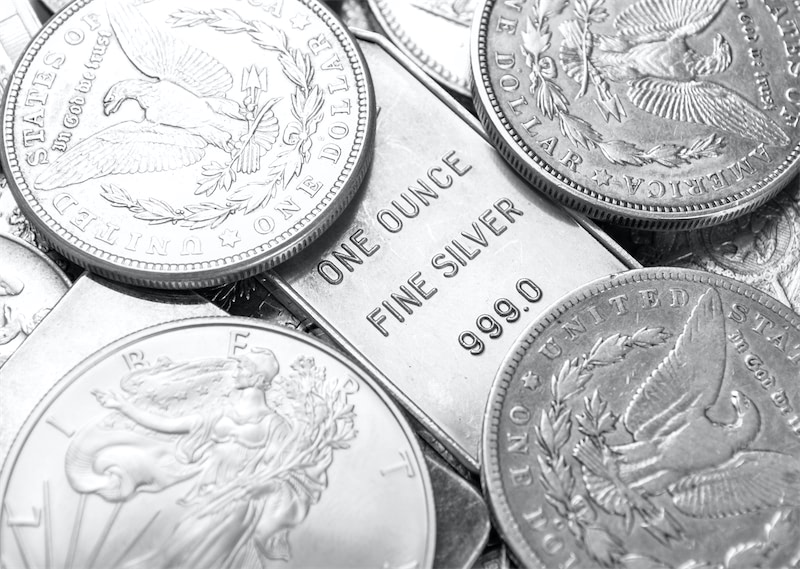 Global Silver Investment to Remain Strong in 2026 Against the Backdrop of a Sixth Consecutive Annual Market Deficit
(Washington, D.C. – February 10, 2026) After posting its strongest annual performance since 1979 last year, silver prices continued to set new highs in 2026, fueled by rising investor interest.
Feb 11, 2026 09:27 India gold premiums more than halve; China demand up ahead of Lunar New Year
Feb 6 (Reuters) - Gold premiums in India more than halved from decadal highs this week as price volatility deterred buyers, while a pullback from record prices lifted demand in China ahead of the Lunar New Year.
Feb 9, 2026 15:01- Goldman Sachs Once Again Bullish: Global Capital Returns to China, Bullish on China's "Top 10" Stocks
Recently, Kinger Lau, Chief China Equity Strategist at Goldman Sachs, released a research report titled "The Return of China's Private Enterprises: The Tide Has Turned". Lau pointed out that driven by various macro, policy, and micro factors, the medium-term investment prospects for China's private enterprises are improving.
Jun 16, 2025 13:37 - HK Stocks Close | All Three Major Indices Adjust Collectively, Innovative Drugs and Gold Buck the Trend to Strengthen
The three major Hong Kong stock indices weakened collectively. By the close, the Hang Seng Index fell 0.08% to 24,162.87, the Tech Index dropped 0.76% to 5,392.19, and the HSCEI declined 0.15% to 8,767.36. Note: Hang Seng Index performance From the above, the Hang Seng Index once dipped to 24,013.95 in the afternoon, then continued its fluctuating trend. The Tech Index and HSCEI showed similar movements during the same period. Today's market Market-wise, pharmaceutical, gold, and banking stocks strengthened, while new consumer and semiconductor-related stocks weakened. Innovative Drugs Lead Gains, Blue Chips Hit New Highs By the close, 3SBio (01530.HK), China Medical Group (08225.HK), and Luye Pharma (02186.HK) rose 9.84%, 8.33%, and 4.39% respectively. Note: Pharmaceutical stocks performance 3SBio led the sector's gains and briefly hit a record high during the session. This followed its overseas licensing deal - the company granted Pfizer global rights (excluding mainland China) for its self-developed PD-1/VEGF bispecific antibody SSGJ-707. The agreement includes a non-refundable $1.25 billion upfront payment, up to $4.8 billion in potential milestone payments, and double-digit percentage sales royalties. The market generally views Hong Kong as the "springboard for Chinese innovative drugmakers going global", potentially entering a historic investment opportunity window. Gold Rally Extends, Silver Poised for Catch-Up By the close, China Silver Group (00815.HK), Tongguan Gold (00340.HK), and China Gold International (02099.HK) advanced 17.65%, 7.09%, and 4.50% respectively. Note: Gold stocks performance China Securities noted silver twice broke through the key $35.5/oz resistance level weekly. Against a five-year supply-demand gap, tariff policy easing triggered gold-silver ratio correction, with silver's catch-up momentum expected to continue. COMEX silver futures open interest rose 12% weekly, indicating accelerated institutional positioning in precious metals. Banking Stocks Show Steady Gains By the close, Qingdao Bank (03866.HK), Chongqing Bank (01963.HK), and Minsheng Bank (01988.HK) climbed 6.80%, 2.95%, and 2.55% respectively. Note: Performance of banking stocks GF Securities pointed out that under the condition where the central bank safeguards the stability of the interbank market, the liquidity pressure in the bond market has decreased, and concerns about rising interbank interest rates have been eliminated. It is expected that the intensity of monetary policy and credit efforts to stabilize growth will increase in June and the second half of the year (H2). Deep correction in new consumption stocks, valuation pressure amidst upcoming lock-up expiry At the close, Guming (01364.HK), BLK (00325.HK), and Cha Baidao (02555.HK) fell by 6.69%, 6.21%, and 5.60%, respectively. Note: Performance of new consumption concept stocks In terms of news, the adjustment pressure mainly comes from two aspects: firstly, the previous valuations have overextended growth prospects; secondly, the lock-up expiry is approaching, with Guming set to have 2.23 billion locked-up shares released on August 12, accounting for over 40% of the float. The consumer sector exhibits a clear rotation from high to low valuations, with capital shifting towards the pharmaceutical and financial sectors, which offer greater safety margins. Semiconductor stocks under pressure and volatile, with short-term fluctuations likely to persist At the close, Shanghai Fudan (01385.HK), Hua Hong Semiconductor (01347.HK), and SMIC (00981.HK) fell by 4.36%, 3.08%, and 1.89%, respectively. Note: Performance of semiconductor stocks In terms of news, the impact of SMIC's Q1 yield fluctuations may persist for 4-5 months, primarily due to insufficient process stability during the equipment verification period; Hua Hong Semiconductor's Q2 revenue guidance is 3-5% below market expectations. Donghai Securities believes that despite tariff disruptions in the industry in May, the trend of improving supply and demand remains unchanged. It suggests focusing on leading companies in niche sectors experiencing accelerated localization substitution. Individual stock movements METALIGHT falls over 30% on its debut, with international placement only 2.49 times subscribed METALIGHT (02605.HK) fell by 30.26% to close at HK$6.80. Notably, on the trading day before its listing, the stock already showed a trend of moving downwards after a higher opening in the grey market. In terms of subscription, METALIGHT was 274.44 times subscribed in the public offering phase, but only 2.49 times subscribed in the international placement phase. China Rare Earth surges over 13% as rare earth exports are somewhat relaxed China Rare Earth (00769.HK) rose by 13.24% to close at HK$0.77. In terms of news, on June 7, a spokesperson for the Ministry of Commerce answered questions from reporters regarding export control measures on medium-heavy rare earth, stating that implementing export controls on rare earths is in line with international practices, and China has approved a certain number of compliant applications in accordance with the law. Guotai Haitong Securities previously pointed out that after China implemented export controls on medium-heavy rare earth, overseas prices for medium-heavy rare earth have surged, rapidly widening the price spread between domestic and overseas markets. Domestic export licenses have been gradually issued, and the bank believes that the overseas price increases are expected to gradually transmit to the domestic market.
Jun 10, 2025 19:12 - Silver May Usher in a Super Cycle! Hong Kong Stocks Related to Silver Soar Over 20%, Institutions Raise Silver Price Forecast to $50
This week, the global precious metals market has witnessed a historic moment. Following gold's breakthrough above $3,400 per ounce, silver has taken the lead in the gains. Currently, silver prices have surged past the $36 per ounce mark. Note: Performance of COMEX silver Driven by the soaring silver prices, the precious metals sector in the Hong Kong stock market has strengthened once again. As of press time, China Silver Group (00815.HK) has risen by 20.55%, China Gold International Resources (02099.HK) by 3.30%, Zijin Mining (02899.HK) by 2.23%, and Zhaojin Mining (01818.HK) by 2.22%. Note: Performance of precious metals stocks in the Hong Kong stock market In terms of news, the Trump administration raised steel and aluminum tariffs from 25% to 50% in early June, sparking market concerns that key metals could become the next target for tariff increases. As a core industrial metal in the new energy sector, silver's strategic value is being re-evaluated. Analysts point out that if the US imposes tariffs on silver-related industry chains, it could further exacerbate supply chain tensions. Additionally, the US ISM Non-Manufacturing PMI for May fell below the 50 mark to 49.9, and the ADP employment data significantly missed expectations. Coupled with Minneapolis Fed President Neel Kashkari's dovish stance, market expectations for a September interest rate cut by the US Fed have surged to 97.5%. Historical data shows that silver's price elasticity during interest rate cut cycles is significantly higher than that of gold. During the interest rate cut cycles from 2001-2003 and 2020-2021, silver prices rose by more than 50% in both periods. Among the biggest beneficiaries of this silver rally is undoubtedly China Silver Group, a professional silver producer and comprehensive operator in China, with a business scope covering the entire industry chain of silver manufacturing, new jewelry retail, and silver trading. Institutions say silver may enter a "super cycle" Ole Hansen, head of commodity strategy at Saxo Bank, pointed out that with the US dollar index falling to a two-year low and geopolitical risks reigniting, precious metals are experiencing a breakthrough rally. Given that silver's market size is only one-tenth that of gold, the same amount of capital inflows will trigger greater price volatility. Guosen Futures believes that silver, with its dual attributes of being a safe-haven asset and an industrial metal, has greater room for valuation repair amid escalating trade frictions. If the US Fed initiates an interest rate cut cycle, silver's target price could potentially reach $40-50 per ounce.
Jun 6, 2025 13:35 - This county town exudes an air of luxury
Zhaoyuan in Shandong Province, China's county with the highest "gold content," saw its total output value of the gold industry exceed 100 billion yuan last year, ranking first among all county-level cities nationwide. The region has established an entire gold industry chain, spanning from upstream exploration and mining, midstream smelting and processing, to downstream design and retailing. Amidst the current scenario where gold prices have repeatedly hit new historical highs, the city exudes an air of opulence. Recently, a reporter from Cailian Press visited this small city and engaged in discussions with numerous individuals involved in the local gold industry chain to understand their perspectives on gold price trends, the situation of upstream reserve and production increases, the recent developments in midstream smelting and processing, as well as the new trends emerging in the "time-honored" downstream gold jewelry sector. Upstream: Reserve and Production Increases in Progress The Jiaodong region, where Zhaoyuan is located, is China's largest gold ore concentration area, with proven gold resources exceeding 5,800 mt, accounting for 35% of the country's total reserves. Notable ore-controlling faults in the region include the Sanshandao Fault, Jiaojia Fault, Zhaoping Fault, and Jinniushan Fault. Among them, Zhaoyuan's gold resources are mainly distributed within the fault structures of the Zhaoping Fault Zone, with the Linglong ore field in the north being a world-class ore field with reserves exceeding 1,000 mt. Currently, Zhaoyuan boasts two gold mines under active exploitation that rank among China's top ten gold mines. One of them, the Linglong Gold Mine, belongs to Shandong Gold Group, while the other, the Xiadian Gold Mine, belongs to Zhaojin Group. In addition, enterprises such as China National Gold Group Corporation and Jindu State Investment also possess abundant resources in the local area. With the soaring international gold prices—which surged by 26.8% throughout last year and even exceeded $3,500 per ounce at one point this year—the topic of gold prices has begun to attract increasing discussions. Industry insiders in Zhaoyuan told Cailian Press, "The pricing mechanism of gold is based on credit, influenced by supply and demand dynamics, and underpinned by mining costs. From a medium and long-term perspective, the upward trend is evident." The sustained increase in gold prices has profound implications for gold mining enterprises. On one hand, the production cost per gram of gold for major domestic publicly listed gold firms mostly fell within the 200-300 yuan range last year, and the rise in gold prices directly boosted their profits. On the other hand, the increase in gold prices has made it economically viable to mine ore deposits with lower grades or higher costs, leading to significant reserve and production increases for gold mining enterprises. According to the 2025 Zhaoyuan Government Work Report, key local enterprises in Zhaoyuan "achieved remarkable results in reserve and production increases last year," implementing a total of 17 in-region exploration projects and 2 out-of-region M&A projects. The annual new gold reserves reached 178.2 mt, and self-produced gold output amounted to 28.1 mt, representing increases of 10.5% and 16.1%, respectively. The local target for 2025 is to strive for gold production to exceed 31.25 mt and to increase proven reserves by 33.3 mt. Midstream: Gold Bars in Undersupply Zhaoyuan is not only rich in gold ore resources but also serves as the country's largest base for gold intensive and deep processing. Zhaojin Refining, a subsidiary of Zhaojin Group, is the leading enterprise in the local deep-processing industry chain. It holds certifications from the Shanghai Gold Exchange, Shanghai Futures Exchange, and London Bullion Market Association as a "qualified refiner capable of producing standard gold and silver ingots." With an annual refining capacity of 200 mt of gold and 1,000 mt of silver, it ranks first in the industry in terms of gold refining production. Local industry insiders told Cailian Press that gold refining has become fully marketized, with thin profit margins. Core competitiveness depends on production and management efficiency. However, as gold prices doubled over the past two years, processing fees also rose significantly, leading to a substantial improvement in profitability and keeping the entire industry at a high prosperity level this year. Additionally, Zhaojin Refining collaborates extensively with major domestic banks in the field of gold deep-processing, offering comprehensive services including design, processing, distribution, repurchase, customization, and warehousing logistics for precious metal products. Since last year, there has been an "explosive" surge in public demand for investment gold bars, with orders pouring in continuously. Zhaojin Refining's gold bar production workshop once had its production schedule booked a month in advance, forcing workers to work overtime. Due to its heavy involvement in physical gold trading, upstream and midstream gold mining companies need to use "futures + options" combinations for risk hedging and price protection to mitigate market risks caused by gold price fluctuations. Seizing this opportunity, Zhaojin Group entered the futures market, and its subsidiary Shandong Zhaojin Investment Co., Ltd. became one of the largest gold traders on the Shanghai Gold Exchange, consistently ranking among the top three comprehensive members. This serves as a model for the integration of industry and finance in the gold sector. Downstream: Repositioning of Gold Jewelry The rapid rise in gold prices has not been universally welcomed in the gold industry chain, with some benefiting while others suffer—particularly downstream gold jewelry retailers. This is because when gold prices rise from low levels, the increase stimulates jewelry consumption. However, once prices reach a psychological high, further increases tend to suppress jewelry demand. Consequently, since H2 last year, typical gold jewelry stocks such as Lao Feng Xiang, Caibai Co., Ltd., and China Gold have generally faced declining performance and stock prices, starkly contrasting with the continuous climb in gold prices. However, against the backdrop of persistently high gold prices, will gold jewelry consumption inevitably continue to shrink? In Zhaoyuan, industry insiders hold differing views. "If you look at the three newly emerging jewelry brands—Laopu, Linchao, and Junpei—they remain completely unaffected by the surge in gold prices." The professional attributes this to the core strategy of brands like Laopu, which emphasize ancient-style gold jewelry with a focus on design, craftsmanship, and artistic value. These brands align with the current trend of Chinese aesthetic revival and psychologically "capture" consumers, making them view their purchases as luxury or collectible items, thereby desensitizing them to the relationship between product pricing and real-time gold prices. "This brings us a profound insight: the competition in the gold jewelry industry is increasingly focused on product strength and design. The new generation of consumers, including young people, place greater emphasis on the self-pleasing and collectible attributes of gold jewelry. Only by continuously exerting efforts in this dimension can we break through in an environment of high gold prices." Currently, Zhaojin Group is focusing on building its brand "Zhaojin Silver House" (formerly known as Zhaoyuan Silver Workshop, established in 1908). It has launched product series such as "Contemporary Treasure" and "Dunhuang Splendid Ornaments," attempting to secure a place in the fiercely competitive gold retail market through innovative designs that integrate traditional culture. In Zhaoyuan, beyond the traditional business models of gold mining, smelting, and retail, efforts are being made to explore more economic growth points centered around gold themes. Today, Zhaoyuan is promoting the deep integration of "gold + culture + tourism" offline, attempting to leverage the Gold Town to delve into the millennium-old gold culture and experience the intangible cultural heritage of the Song Dynasty. It is constructing a new pattern of integrated development of industry, culture, and tourism that encompasses "mining gold, making gold, playing with gold, buying gold, and exchanging gold," further cultivating a characteristic cultural tourism IP of "China's Gold Capital." Locals in Zhaoyuan say that the charm of gold lies in its heritage from antiquity, yet it always manages to remain fresh and relevant.
Jun 2, 2025 21:20 - "Invoices have already been issued!" Branded gold stores are employing various strategies to seize the "520" market. Can gold sales see an uptick during the period of declining gold prices?
"We've already made sales this morning. After all, it's a holiday!" a staff member from a gold store in Guangzhou told a reporter from Cailian Press. As "520" (homophonic for "I love you") approached, multiple gold brands, including China Gold and Chow Sang Sang (00116.HK), launched corresponding promotional activities, such as instant discounts of 100 yuan for purchases of gold worth 520 yuan or more, a 50 yuan discount per gram, exchanging old gold for new pieces at no cost, and offering a 20% discount on designated gold jewelry with fixed prices. Recently, gold prices have shown a fluctuating trend. Market data indicates that in just over a month, international gold prices have fallen nearly 10% from the historical high of $3,500 per ounce in late April. On May 15, spot gold prices briefly dipped to $3,120 per ounce, but have since rebounded in the past two days, reaching $3,225 per ounce as of press time. Affected by international gold prices and combined with holiday promotions, the quoted prices for branded gold jewelry have generally fallen below the 1,000 yuan per gram threshold. A visit by a Cailian Press reporter found that today, the listing prices for pure gold jewelry from most gold brands are around 982 yuan per gram, a significant decrease from the 1,061 yuan per gram on April 22. At the "520" period, "romantic demand" has boosted gold consumption. At a gold store in Guangzhou, Mr. Fu purchased a gold necklace alone, stating, "It's a gift for my loved one on the holiday." Ms. Zhang spent over 4,000 yuan on gold jewelry for herself, including a Pixiu bracelet. A staff member at the store told a Cailian Press reporter, "The discount activities for '520' started a few days ago, and the number of people buying gold jewelry has increased significantly. 'We've already made sales this morning. It's indeed selling better than usual.'" Due to the continuous rise in gold prices since the beginning of this year, gold jewelry companies have generally faced pressure on their performance. A senior executive from Chow Tai Seng (002867.SZ) stated at a recent earnings briefing that in Q1 2025, amid increasing uncertainties in the external economic environment and a rapid increase in gold prices, market sentiment has become cautious. Franchisees have shown a lower willingness to make short-term purchases and replenish inventory, putting pressure on the company's franchising business. From this perspective, the decline in Q1 performance was somewhat expected by the company. However, we have also observed some positive signs, such as notable growth in gross profit and profit for the company's self-operated businesses (offline + e-commerce), as well as a significant increase in the overall gross profit margin. Lao Feng Xiang (600612.SH) mentioned that in Q1 this year, due to the rapid increase in gold prices in the short term, the sales volume in kilograms at the company's Chinese New Year ordering conference decreased YoY, which in turn affected the company's revenue in Q1. Recently, despite the significant decline in gold prices and the positive impact brought by "520" to the industry, many interviewees still believe that the gold sales market is unlikely to recover in the short term. A partner from a Shanghai Gold Exchange member company in Shuibei told a Cailian Press reporter that despite the recent correction in gold prices, there has been no significant increase in downstream shipments. "The current gold price is still at a high level. "No new products have been launched in the market, mainly because the current 5.2-gram products already cost nearly 5,000 yuan," said Song Yunming, Chief Analyst at Asamin International Economic Consulting, to a Cailian Press reporter. {{ }} Affected by multiple factors such as tariffs and the Russia-Ukraine relationship, spot gold faced greater downward pressure than upward support in Q2 and early Q3. The phased fluctuation downward indeed created opportunities for adjustment cycles, but the price level around $3,200 per ounce was not worth considering. {{ }} Under such circumstances, gold jewelry producers began to adopt strategies such as integrating online and offline sales and promoting lightweight gold jewelry to boost sales. {{ }} Wu Changfeng, Director and Deputy General Manager of Mankar Dragon, stated that as Generation Z becomes the main consumer force, online and offline channels have entered a phase of deep integration. "We observe that consumers rely on online platforms for product browsing, price comparisons, and initial screenings, while also valuing the in-person experience and product customization at physical stores. Therefore, we have achieved omnichannel synergy through the model of 'online precise lead generation + offline immersive experience': our online store leverages digital tools such as videos and live-streaming sales to enhance conversion rates, while our physical stores strengthen immersive shopping scenarios and VIP services, ultimately connecting the consumer data loop through a membership system. This omnichannel retail strategy not only meets the hybrid needs of the new generation of consumers to 'order anytime, anywhere, and experience in-store as needed' but also brings us an increase in cross-channel repurchase rates." Chow Tai Seng revealed that from 2017 to 2024, the average growth rate of e-commerce sales revenue reached 37.32%. {{ }} Previously, a representative from a publicly listed firm told a Cailian Press reporter, "Consumers tend to visit physical stores for expensive items, while lightweight or lower-value items may be more conveniently purchased online. Young people value the convenience of channels and are accustomed to this consumption scenario." {{ }} Cailian Press reporters noted that on e-commerce platforms, gold jewelry sold by gold brands includes small rings, bracelets, earrings, necklaces, etc., with most prices below 3,000 yuan. {{ }} When asked about the subsequent trend of gold prices, Song Yunming told a Cailian Press reporter that prices may continue to decline in the short term. "On the one hand, gold prices have risen by more than 30% this year, with irrational speculative sentiment prevailing in the market in the second half of April, and many buyers entering at high prices. This corrective fluctuation guides market sentiment back to rationality and even generates risk aversion. On the other hand, bullish and bearish factors are intertwined in the fundamentals, with clear downward pressure around $3,430 per ounce. The risk of short-term overall fluctuation downward still exists. Within a 90-day window, it cannot be ruled out that spot gold may fall below $3,000 per ounce, with key support levels to watch in the range of $2,850-2,930 per ounce."
May 21, 2025 08:55 - China's Gold Production Rose 1.18% YoY in Q1, Driven by Domestic and Imported Raw Materials
The latest statistics from the China Gold Association show that in Q1, China's domestic gold production from raw materials reached 87.243 mt, up 1.284 mt YoY, representing a YoY growth rate of 1.49%. This includes 61.772 mt of gold produced from gold mines and 25.471 mt of gold produced as a by-product of non-ferrous metals. In addition, in Q1, China produced 53.587 mt of gold from imported raw materials, up 0.68% YoY. Including this gold produced from imported raw materials, China's total gold production reached 140.83 mt, up 1.18% YoY.
May 12, 2025 13:39 - China's gold production was up 1.49% YoY in Q1.
According to the latest statistics from the China Gold Association, in Q1, domestic gold production from raw materials reached 87.243 mt, up 1.284 mt YoY, representing a 1.49% YoY increase. This included 61.772 mt of gold produced from gold mines and 25.471 mt of gold produced as a by-product of non-ferrous metals. Additionally, in Q1, gold production from imported raw materials was 53.587 mt, up 0.68% YoY. Including this gold produced from imported raw materials, China's total gold production reached 140.83 mt, up 1.18% YoY. In Q1, gold enterprises seized the opportunities brought about by rising gold prices, further reducing the cut-off grade to maximize the utilization of gold mine resources, leading to steady growth in gold production. Key gold mine projects, such as Haiyu, Shaling, and Xiling, advanced rapidly. Major gold enterprises actively adjusted their gold production layouts and promoted the construction of intelligent and green mines. China's large gold groups actively pursued an "outbound" strategy, accelerating the pace of gold M&A with remarkable results. On March 10, Chifeng Jilong Gold Mining Co., Ltd. was listed on the main board of the Hong Kong Stock Exchange, becoming the third domestic gold enterprise to be listed on both the "A+H" dual platforms, following Zijin Mining and Shandong Gold. In Q1, China's large gold groups produced 18.485 mt of gold from overseas mines, up 13.14% YoY. In Q1, China's gold consumption reached 290.492 mt, down 5.96% YoY. This included 134.531 mt of gold jewelry, down 26.85% YoY; 138.018 mt of gold bars and coins, up 29.81% YoY; and 17.943 mt of gold for industrial and other uses, down 3.84% YoY. Due to the suppression of high gold prices, consumer demand for gold jewelry remained weak, with traditional gold, high-purity gold, and small-weight gold jewelry being in higher demand. Products combining gold with other materials were also popular among young consumers. The complex and volatile geopolitical situation and economic uncertainties further highlighted gold's function as a safe-haven asset and a store of value, leading to a rapid and substantial increase in private investment demand for gold bars and coins. Industrial gold use showed a slight decline due to the impact of high gold prices. In Q1, China's gold market trading volume and turnover showed significant growth trends. The total two-way trading volume of all gold varieties on the Shanghai Gold Exchange was 16,000 mt (8,000 mt one-way), up 4.57% YoY, with a two-way turnover of 10.7 trillion yuan (5.35 trillion yuan one-way), up 42.85% YoY. The total two-way trading volume of all gold varieties on the Shanghai Futures Exchange was 55,400 mt (27,700 mt one-way), up 91.17% YoY, with a two-way turnover of 30.52 trillion yuan (15.26 trillion yuan one-way), up 143.69% YoY.In Q1, the open interest of domestic gold ETFs increased by 23.47 mt, up 5.49 mt from Q1 2024, representing a 327.73% YoY increase. By the month-end of March, the holdings of domestic gold ETFs reached 138.21 mt. On February 7, the National Administration of Financial Regulation issued the Notice on Conducting Pilot Programs for Insurance Funds to Invest in Gold Business, clarifying that insurance companies could conduct pilot programs for investing in gold business for the purpose of medium and long-term asset allocation. On March 25, the Beijing Branch of Industrial and Commercial Bank of China, in collaboration with China Life Insurance Company Limited, completed the nation's first insurance fund gold investment inquiry transaction under the new policy framework of the National Administration of Financial Regulation for conducting pilot programs for insurance funds to invest in gold business. This marked the first batch of gold transactions involving insurance funds entering the market. The investment channels for insurance funds were further broadened, injecting new vitality into the development of the gold market to a certain extent. By the month-end of March, the London spot gold fixing price was US$3,115.1 per ounce, up 17.79% from US$2,644.60 per ounce at the beginning of the year. The average price in Q1 was US$2,859.62 per ounce, up 38.16% from US$2,069.80 per ounce in the same period of 2024. The closing price of Au9999 gold on the Shanghai Gold Exchange was 730.8 yuan per gram by the month-end of March, up 19.02% from the opening price of 614 yuan per gram at the beginning of the year. The weighted average price in Q1 was 670.67 yuan per gram, up 37.68% from 487.11 yuan per gram in Q1 2024. In Q1, China increased its gold holdings by 12.75 mt. As of the month-end of March, China's gold reserves stood at 2,292.33 mt.
May 12, 2025 13:36