

86results found for 'Carbon Border Adjustment Mechanism (CBAM)'
Sort by : |
- [ EU ETS Revisions May Delay Full Carbon Costs for Turkish Steel Exporters ]
The European Commission is proposing a timeline extension for the phase-in of its Emissions Trading System (ETS) free allowance reductions, pushing the full carbon cost integration out to 2038. This regulatory revision would significantly moderate the near-term compliance costs imposed by the Carbon Border Adjustment Mechanism (CBAM). Turkish steel and aluminum exporters would benefit from a more gradual phase-in, protecting their price competitiveness within the European market over the next decade.
Aug 17, 2026 11:32 - [SMM Analysis] Fractured Rebar and the Next Unknown Earthquake: Why Southeast Asia Must Purge Induction-Furnace Steel
In 2017, China used a hard “June 30” deadline to purge roughly 140 million tonnes of “ground-strip steel” (ditiaogang) capacity. But the furnaces did not disappear. Customs data tells the rest: after the ban, Southeast Asia's share of China's electric-furnace equipment exports climbed as high as 40.6%, and Indonesia's imports rose roughly 19-fold over eight years to become the world's No. 1 destination.
Aug 12, 2026 14:15 ![[SMM Analysis] Southeast Asia Aluminum Scrap Market Remains Range-Bound; ADC12 Stays Under Pressure, CBAM in Focus](https://imgqn.smm.cn/production/admin/votes/imageslvDRc20240314085754.png) [SMM Analysis] Southeast Asia Aluminum Scrap Market Remains Range-Bound; ADC12 Stays Under Pressure, CBAM in Focus
[SMM Analysis] Southeast Asia Aluminum Scrap Market Remains Range-Bound; ADC12 Stays Under Pressure, CBAM in FocusThe SEA secondary aluminum market remained mixed this week. Aluminum scrap prices were largely stable, while ADC12 remained under pressure due to weak downstream demand. Buying activity stayed cautious, although UBC scrap held firm on tighter supply and steady recycling demand. Market attention also shifted to the EU's Carbon Border Adjustment Mechanism (CBAM), with growing focus on carbon reporting, recycled content, and supply chain traceability as compliance requirements continue to evolve.
Jul 31, 2026 10:37 Default Values Widen CBAM Exposure Gaps for HS7601; Mozambique Leads Total Exposure While China Ranks High【SMM Analysis】
Following the start of the definitive phase of the EU Carbon Border Adjustment Mechanism (CBAM) in 2026, differences in country-specific default values , default production routes and corresponding benchmarks have begun to translate into significantly different theoretical certificate exposures for unwrought aluminium. SMM analysed EU-27 imports of unwrought aluminium under HS/CN 7601 from non-EU origins and matched the trade data with the 2026 default value, default production route and CBAM benchmark assigned to each origin. The theoretical unit certificate exposure in this analysis is calculated as: 2026 theoretical unit certificate exposure = 2026 default value − benchmark × 97.5% × cross-sectoral correction factor The cross-sectoral correction factor, or CSCF, is provisionally assumed to be 1. The calculation does not deduct any qualifying carbon price effectively paid in the country of origin. The results therefore indicate the relative CBAM exposure of different origins under the default-value scenario. They do not represent the final number of certificates that EU importers will be required to surrender or the final monetary cost. EU-27 unwrought aluminium imports rose 7.0% in 2025 According to SMM calculations, EU-27 imports of unwrought aluminium under HS/CN 7601 from non-EU origins reached approximately 7.63 million tonnes in 2025 , up from 7.13 million tonnes in 2024. This represented an increase of about 502,200 tonnes, or 7.0% year on year . Of the 2025 total, approximately 4.56 million tonnes originated from countries subject to CBAM, accounting for 59.7% of total imports. Imports from CBAM-exempt origins, including Norway, Iceland and Switzerland, amounted to approximately 3.05 million tonnes , representing around 40.0% of the total. A further 25,800 tonnes were recorded without a specified origin and were excluded from the country-level exposure ranking. Applying the 2026 default values and benchmarks to the 2025 trade structure produces an estimated theoretical certificate exposure of approximately 4.09 million tCO₂e for imports from CBAM-covered origins. The trade-weighted average unit exposure was approximately 0.898 tCO₂e per tonne of product . As 2025 remained within the CBAM transitional period, these figures are scenario-based estimates using 2025 trade volumes and the 2026 calculation rules. They do not represent actual certificate obligations for 2025. Primary aluminium route accounted for more than 99% of theoretical exposure The primary aluminium route dominated both CBAM-covered import volumes and theoretical certificate exposure. In 2025, imports assigned to the primary aluminium route totalled approximately 4.46 million tonnes , accounting for 97.8% of imports from CBAM-covered origins. Their theoretical certificate exposure reached approximately 4.06 million tCO₂e , representing 99.3% of the total exposure. The trade-weighted average unit exposure for the primary aluminium route was approximately 0.912 tCO₂e per tonne of product . By comparison, imports assigned to the secondary aluminium route amounted to approximately 99,500 tonnes, or 2.2% of CBAM-covered imports. Their theoretical certificate exposure was approximately 30,600 tCO₂e, with an average unit exposure of around 0.307 tCO₂e per tonne . The gap between the two routes reflects differences in both country default values and the applicable benchmarks. For HS/CN 7601, the benchmark used for the primary aluminium route is 1.423 tCO₂e per tonne , compared with 0.091 tCO₂e per tonne for the secondary aluminium route. This means that, under a default-value declaration scenario, the theoretical CBAM exposure of EU-27 unwrought aluminium imports remains highly concentrated in primary aluminium supply. Mozambique recorded the highest unit exposure, with China also ranking near the top The results show a clear divergence in theoretical unit exposure among origin countries. Mozambique recorded the highest unit exposure among major origins with a country-specific default value, at approximately 2.130 tCO₂e per tonne of product . China followed at approximately 1.913 tCO₂e per tonne , placing it among the origins with the highest default-value-based unit exposure. South Africa recorded an estimated unit exposure of approximately 1.207 tCO₂e per tonne , followed by Russia at 0.989 tCO₂e and Canada at 0.769 tCO₂e. Bahrain, the United Arab Emirates, India, the United Kingdom, Egypt and Kazakhstan share similar default values under the primary aluminium route, resulting in unit exposure of approximately 0.670 tCO₂e per tonne . Australia, Brazil, Malaysia, Oman, Qatar, Saudi Arabia and the United States recorded unit exposure of approximately 0.483 tCO₂e per tonne . Origins assigned to the secondary aluminium route generally recorded approximately 0.307 tCO₂e per tonne . A high unit exposure does not necessarily mean that an origin faces the greatest aggregate impact. Total exposure also depends on the volume of trade with the EU-27. China illustrates this distinction. EU-27 imports of HS/CN 7601 products from China reached approximately 12,400 tonnes in 2025 , up 24.3% year on year. This corresponded to theoretical certificate exposure of about 23,700 tCO₂e . China therefore ranked near the top on a unit basis, but its comparatively limited shipment volume to the EU-27 kept its aggregate exposure well below that of Mozambique, Canada and several major Gulf suppliers. Mozambique’s total theoretical exposure reached 1.34 million tCO₂e After incorporating 2025 import volumes, Mozambique emerged as the origin with the highest aggregate theoretical certificate exposure. EU-27 imports from Mozambique reached approximately 628,000 tonnes in 2025 , up 17.5% year on year. Based on unit exposure of 2.130 tCO₂e per tonne, its total theoretical exposure was approximately 1.34 million tCO₂e . Mozambique alone accounted for 32.7% of the theoretical exposure associated with CBAM-covered origins. However, the above total exposure is a static estimate based on 2025 trade volumes. Power supply constraints may limit Mozambique’s aluminium smelting capacity and output in 2026–2027, potentially reducing its exports to the EU. As a result, its actual near-term aggregate CBAM exposure may not reach the theoretical level estimated using 2025 trade volumes. Canada supplied approximately 682,800 tonnes to the EU-27 in 2025. Although its unit exposure was considerably lower than Mozambique’s, its larger trade volume lifted its aggregate theoretical exposure to approximately 524,800 tCO₂e , equivalent to 12.8% of the total. Bahrain, the United Arab Emirates, Russia and South Africa recorded theoretical total exposures of approximately 350,900 tCO₂e, 329,300 tCO₂e, 322,200 tCO₂e and 263,600 tCO₂e, respectively. Mozambique, Canada, Bahrain, the United Arab Emirates, Russia and South Africa together accounted for approximately 76.4% of total theoretical certificate exposure. Mozambique’s position was driven by the combination of a high unit default-value exposure and substantial trade volume. Canada’s unit exposure was not among the very highest, but its large and rapidly increasing export volume significantly amplified its aggregate impact. Four-quadrant analysis places China in the “high intensity, low trade volume” category A four-quadrant analysis using 2025 EU-27 import volume on the horizontal axis and 2026 theoretical unit certificate exposure on the vertical axis provides a clearer view of the combined influence of carbon intensity and trade scale. The core high-exposure quadrant includes Mozambique, Canada, Bahrain, the United Arab Emirates, Russia, South Africa, India and the United Kingdom. These origins combine comparatively large trade volumes with relatively high unit exposure and are the main contributors to aggregate CBAM exposure for EU-27 unwrought aluminium imports. China is the most prominent origin in the high intensity, low trade volume quadrant . Its theoretical unit exposure of approximately 1.913 tCO₂e per tonne is second only to Mozambique, but its current export volume to the EU-27 remains comparatively limited. Ukraine and South Korea are among the origins in the trade-volume-driven quadrant . Both are assigned to the secondary aluminium route and have relatively low unit exposure, but their larger trade volumes increase their aggregate exposure compared with other secondary-route origins. Vietnam, Morocco, Serbia, Bolivia and Mexico are among the origins in the low-exposure quadrant , reflecting both lower unit exposure and limited trade volumes. For Vietnam, HS/CN 7601 unwrought aluminium is assigned to the secondary aluminium default route, resulting in theoretical unit certificate exposure of approximately 0.307 tCO₂e per tonne in 2026, significantly below that of most origins assigned to the primary aluminium route. EU-27 imports from Vietnam amounted to approximately 7,100 tonnes in 2025, down around 27.1% year on year, corresponding to theoretical total certificate exposure of about 2,200 tCO₂e. Vietnam’s overall CBAM exposure therefore remains relatively limited at present. However, should its exports to the EU expand in the future, access to and verification of actual emissions data will remain an important factor affecting the relative competitiveness of Vietnamese products. The quadrant thresholds are analytical dividing lines based on the median values of CBAM-covered origins with actual trade. They do not represent regulatory thresholds set by the EU. Theoretical exposure reached approximately 642,400 tCO₂e in Q1 2026 In the first quarter of 2026, EU-27 imports of unwrought aluminium under HS/CN 7601 from non-EU origins reached approximately 1.52 million tonnes , with a total import value of around €4.36 billion . The average import value was approximately €2,873 per tonne . Imports from CBAM-covered origins amounted to approximately 782,800 tonnes , accounting for 51.6% of total imports. Imports from CBAM-exempt origins reached around 733,000 tonnes, or 48.4%. Based on the 2026 default values and benchmarks, imports from CBAM-covered origins generated theoretical certificate exposure of approximately 642,400 tCO₂e during the quarter. Mozambique remained the largest contributor, with theoretical exposure of around 150,500 tCO₂e. Canada followed with approximately 86,800 tCO₂e, the United Arab Emirates with 82,100 tCO₂e, Bahrain with 63,400 tCO₂e and South Africa with 56,200 tCO₂e. As the analysis does not include Q1 2025 comparison data, no year-on-year conclusion has been drawn for Q1 2026 import volumes or exposure. The quarterly figures are used primarily to illustrate the origin structure during the initial stage of the definitive CBAM period. Access to and verification of actual emissions data could become an important competitiveness factor Country default values are fallback parameters applied when producers are unable to provide actual emissions data that meet EU requirements. They do not necessarily reflect the actual carbon intensity of a specific producer or shipment. For origins with relatively high default-value exposure, including China, Mozambique, South Africa and Russia, producers whose actual embedded emissions are materially lower than the applicable country default value could reduce the certificate exposure faced by EU importers by establishing robust emissions-monitoring systems and providing complete, verified emissions data. Conversely, where suppliers are unable to provide emissions information that is complete, traceable and compliant with EU requirements, importers may have to rely on the relevant country default value. A higher default value could consequently affect supplier selection, purchase negotiations and long-term contract arrangements. The final number of certificates to be surrendered will also depend on actual embedded emissions, production-route classification, data verification and any qualifying carbon price effectively paid in the country of origin. The actual CBAM cost will additionally depend on the CBAM certificate price, which is linked to EU Emissions Trading System allowance prices. The theoretical certificate exposure calculated in this analysis should therefore not be interpreted directly as either the final certificate obligation or the final CBAM cost. Overall, the impact of CBAM on trade in HS/CN 7601 unwrought aluminium will not be determined by country default values alone. Unit certificate exposure, trade scale, actual emissions and the availability of reliable carbon data will jointly shape the competitive position of different origins and producers in the EU market. As the definitive phase progresses, differences in low-carbon production capability, emissions-data management and verification capacity are likely to become increasingly visible in procurement decisions, export competitiveness and trade flows. Data note: The trade scope covers EU-27 imports of unwrought aluminium under HS/CN 7601 from non-EU origins. CBAM-exempt origins, including Norway, Iceland and Switzerland, are included in total import statistics but excluded from theoretical certificate exposure. Origins without a country-specific default value are assigned the applicable value for “Other Countries and Territories.” Unspecified origins are excluded from the country ranking. Theoretical exposure does not deduct qualifying carbon prices paid in third countries. Source: EU-27 import data, EU CBAM default values and benchmarks; compiled by SMM.
Jul 30, 2026 09:09- [SMM Analysis] 33% Overproduction: Oman’s DRI Plant Rewriting Global DRI Standard
As of July 11, 2026, the direct reduced iron (DRI) plant of Jindal Steel Oman in Sohar operated continuously for 188 days without any unplanned shutdowns. The 6.5-meter shaft furnace set a record for the highest monthly production of 185,710 mt in May 2026, with an average operating rate of 249.6 mt per hour. The facility’s production exceeded its original designed capacity of 1.5 million mt by 33%, establishing a new global benchmark for operational efficiency. The Sohar plant integrates gas-based direct reduction (using reformed natural gas to reduce iron ore) with a 220-mt Danieli electric furnace, where hot DRI is charged directly into the furnace by gravity. Billed as the world’s first gravity-fed hot DRI charging system, it achieves significant energy savings. In early 2026, the EAF side also set records: monthly production of 235,112 mt of liquid steel at a rate of 324 mt/hour, with a charge mix of 61% hot DRI, 37% cold DRI, and 2% hot briquetted iron (HBI), and electricity consumption of 493 kWh per mt of steel. In other words, from reduction to melting, this is a fully integrated DRI-EAF process, and the high stability of the shaft furnace serves as the foundation for the entire chain’s efficiency. Jindal’s record carries weight because it falls within a strengthening megatrend. According to data from Midrex and the World Steel Association, global DRI production reached 140.8 million mt in 2024, setting a new record high, up 3.8% YoY (the previous record was 135.7 million mt in 2023). The cumulative increase since 2019 is approximately 32.7 million mt, an increase of over 30%. More notably, this growth outpaced the mild 1% growth in global crude steel production over the same period. The DRI route is steadily expanding its share in the overall steel landscape. Midrex technology accounted for 54.1% of total production and approximately 80.1% of shaft-furnace DRI output. However, this growth is highly concentrated. In 2024, India ranked first globally with 54.7 million mt, accounting for over one-third of the total. Iran followed with 34.7 million mt, and together the two countries accounted for about 63% of the global total. Next came Russia (8.0 million mt), Saudi Arabia (6.6 million mt), and Egypt (6.4 million mt). The landscape broadly splits into two segments: one is India’s vast domestic demand-driven system based on coal-based rotary kiln sponge iron, and the other is the gas-based DRI cluster in the Middle East and North Africa (MENA) built on cheap natural gas. Jindal Steel Oman’s Sohar plant falls into the latter category. This concentration also means that any disruption in natural gas supply, energy policy, or geopolitical turbulence in one location will be magnified to affect global DRI supply. To grasp the strategic value of such plants, one must place them within the carbon intensity framework. According to the representative route values from the World Steel Association, the blast furnace–converter integrated route emits approximately 2.3 mt CO₂ per mt of steel, while the scrap-based electric furnace route records the lowest at around 0.7 mt. The gas-based direct reduction–electric furnace route falls in between, at roughly 1.43 mt. This means that before green hydrogen direct reduction achieves true scale, gas-based DRI represents the most viable low-carbon iron source pathway beyond the blast furnace. It is not zero-carbon, but it can already reduce the carbon footprint to around 60% of the blast furnace route. A gas-based DRI plant like Jindal Shuhar—efficient, low-cost, and running stably—sits right at the sweet spot of this transitional pathway. Placed back into the trade dimension of the ferrous metal industry chain, the Middle East’s gas-based DRI and HBI have long played the role of supplying green iron to Europe, Turkey, and the US. The top five global DRI importers in 2024 were the US (1.5 million mt), Turkey (1.2 million mt), India (900,000 mt), Mexico (800,000 mt), and Italy (700,000 mt). As the EU Carbon Border Adjustment Mechanism (CBAM) enters the actual payment phase and embedded carbon costs increase year by year, the premium window for exporting low-carbon iron sources to Europe is opening up. Plants that can spread fixed unit costs thinner and push annualized output to 133% of designed capacity are precisely the most resilient marginal suppliers along this trade flow. Viewed from this angle, Jindal’s 188-day record is not merely a straightforward milestone.
Jul 29, 2026 17:58 - [SMM Analysis] CBAM Costs Are Taking Effect, Verification Capacity Lags: What Stainless Steel Exporters Need to Know
Rising compliance costs, a verification bottleneck, and tightening EU import quotas combine to reshape the competitive landscape for Asian stainless steel suppliers in Europe from 2026 onward. The EU CBAM entered its definitive implementation phase on January 1, 2026 — transitioning from a reporting exercise into a mechanism with real trade cost implications.
Jul 29, 2026 13:53 ![[SMM Analysis] The Sideways Champion: Five Years of Rerouting Indonesia's Stainless Steel](https://imgqn.smm.cn/production/admin/votes/imageszvOhn20260727171758.png) [SMM Analysis] The Sideways Champion: Five Years of Rerouting Indonesia's Stainless Steel
[SMM Analysis] The Sideways Champion: Five Years of Rerouting Indonesia's Stainless SteelTariffs, certification regimes and quotas, not demand, have redrawn Indonesia's 4.7 million-mt export map since 2021: China's share has halved, India has quadrupled, and Europe's door has narrowed to a slab-shaped hole.
Jul 27, 2026 17:14- (SMM Analysis) JSW Steel's Expansion Pipeline Gathers Pace as India Demand Offsets Import Pressures
JSW Steel expects production and sales to strengthen from Q2 FY27 as the expanded Blast Furnace-3 at Vijayanagar ramps up, while reaffirming an aggressive capacity expansion pipeline spanning Dolvi, Odisha, Utkal and Kadapa. Despite the planned BF-3 shutdown, the company reported record first-quarter steel sales of 6.25 million tonnes, supported by resilient domestic demand and a 46% year-on-year increase in exports.
Jul 23, 2026 16:23 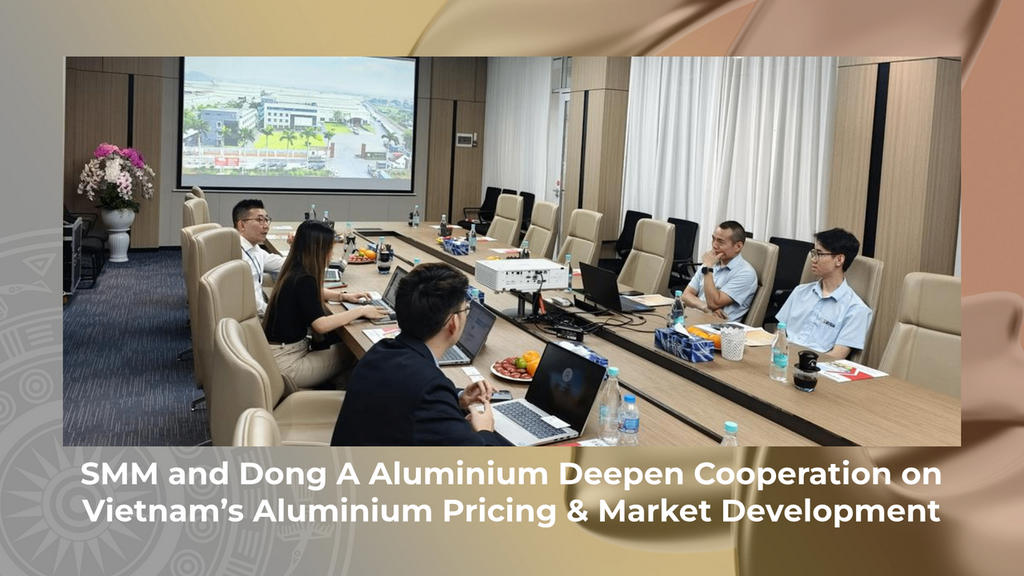 SMM Visits Dong A Aluminum to Jointly Explore Vietnam's Aluminum Pricing and Market Development
On July 22, 2026, a delegation from SMM Information & Technology Co., Ltd. (SMM) visited Dong A Aluminum Company Limited and was warmly received by Deputy General Manager Cao Jiawang and Procurement Manager Chen Jiejun. The two sides held in-depth exchanges on topics including the development of Vietnam's aluminum price system, corporate procurement status and pricing models, trends in the aluminum processing industry, and cooperation for the SMM AICE 2026 Southeast Asia (Vietnam) Aluminum Conference. The SMM delegation included: Logan Lu , CEO of SMM Cason Lou , Director of Aluminium Processing, Marketing Department Lexi Chen , Key Account Manager for Overseas Information Sales Chin Khai Yuen , Senior Overseas Aluminium Analyst They were welcomed by key representatives from Dong A Aluminum, including: Cao Jiawang , Deputy General Manager Chen Jiejun , Procurement Manager Focusing on Procurement Practices: Coexistence of Multiple Pricing Models During the meeting, Dong A Aluminum elaborated on its current procurement status and price usage model. As one of the largest aluminum semis exporters in Vietnam, Dong A Aluminum's procurement system has both international and local characteristics, forming a flexible but complex pricing mechanism. Dong A Aluminum stated that the Vietnamese market currently lacks a locally recognized price reference system with international credibility, and enterprises face challenges such as inconsistent pricing benchmarks and scattered price information in actual operations, hoping that SMM can promote the standardization of Vietnam's aluminum price system. SMM introduced that since July 3, 2026, SMM has officially launched the Vietnam 6063 (non-homogenized) aluminum billet processing fee and SMM Vietnam 6063 (non-homogenized) aluminum billet price point, updated on a daily basis on each trading day. Meanwhile, SMM plans to officially release the SMM Vietnam aluminum price and elaborate on the methodology at the SMM AICE 2026 Southeast Asia (Vietnam) Aluminum Conference to be held in Ho Chi Minh City from November 19 to 20. Dong A Aluminum expressed high attention to this, believing that the launch of SMM Vietnam aluminum price is expected to provide enterprises with a more transparent and authoritative pricing reference, reduce transaction costs, and improve market efficiency. Discussing Industry Trends: Opportunities and Challenges in the Aluminum Processing Industry The two sides also exchanged views on the current status of Vietnam's aluminum processing industry. As a member of a Singapore-based holding group system, Dong A Aluminum has a total investment of over $200 million and an annual comprehensive capacity of 150,000 mt. In 2025, the company's Phase III expansion project was officially completed and put into operation, with six new aluminum extrusion lines installed, bringing the total number of extrusion lines to 25. The company has now established a wide sales network across the country, and its products are popular in multiple international markets such as the US, Australia, Canada, Europe, and Japan. Dong A Aluminum noted that with the commissioning of Vietnam's first aluminum project (Phase I with an annual capacity of 150,000 mt), the Vietnamese aluminum industry chain is accelerating to complete the last link. The increase in local primary aluminum supply will bring new procurement options and cost optimization opportunities for aluminum processing enterprises. At the same time, the imminent implementation of the Carbon Border Adjustment Mechanism (CBAM) and the adjustments to tariff policies in key export markets such as the US have also imposed higher requirements on enterprises' market layout and pricing strategies. The two sides also reached a consensus on cooperation for the SMM AICE 2026 Southeast Asia (Vietnam) Aluminum Industry Conference. Dong A Aluminum indicated that it would actively consider participating in the conference to jointly promote the internationalization of the aluminum market in Vietnam and Southeast Asia. This visit further deepened the communication and mutual trust between SMM and Vietnam's leading aluminum processing enterprises. It provided important first-hand information for market research and data collection on the Vietnamese aluminum pricing system and injected new momentum into the standardization of aluminum pricing in Vietnam. About Dong A Aluminum Dong A Aluminum Co., Ltd. is located in Tan Dan Industrial Park, Le Dai Hanh Ward, Haiphong City, Vietnam. It is an aluminum products producer with high industry reputation and relatively large production scale in Vietnam. The company is a member of a Singapore-based holding group, with a total investment exceeding $200 million and an annual comprehensive capacity of 150,000 mt. It is also one of the largest exporters of aluminum semis in Vietnam. The company owns a modern factory covering an area of nearly 120,000 m², equipped with intelligent and advanced production lines. It has established a fully automated, closed-loop production process covering aluminum ingot storage, melting and casting, extrusion, spraying, anodizing, wood grain treatment, deep processing, and finished product assembly. The company fully applies an intelligent ERP management system to achieve automated management of the entire production and operation process. Currently, the company has 25 extrusion lines with tonnages ranging from 600 mt to 4,500 mt. In 2025, the Phase III expansion project was officially completed and put into operation, successfully entering the list of Vietnam's Top 500 enterprises. With a development direction of becoming a comprehensive aluminum application solution provider, Dong A Aluminum's products are widely used in construction, home furnishings, electronics and power, solar energy, and other fields, and it continues to expand the application of aluminum semis in machinery equipment, precision parts, and the automotive industry. As of now, Dong A Aluminum has established an extensive sales network nationwide, with over 800 dealers, and actively exports to multiple international markets including the US, Australia, Canada, Europe, and Japan. Facing the future, Dong A Aluminum always adheres to the development philosophy of "innovation as the core, quality as the foundation, and service as the commitment," continuously optimizes its production system, upgrades its technological strength, and actively promotes Vietnam's aluminum industry onto the global industrial landscape. Join the Conversation at SMM AICE 2026 Connect with aluminum producers, processors, traders, industry associations, analysts, and decision-makers from across Southeast Asia. Explore the latest market developments, pricing trends, processing technologies, recycling opportunities, and new possibilities for regional cooperation. ? Ho Chi Minh City, Vietnam ? November 19–20, 2026 Register now: bit.ly/AICE26 and secure your Super Early Bird Pass and save up to USD 200. Register before August 31, 2026.
Jul 23, 2026 15:07- SMM AICE Visits Xingfa Aluminum’s Vietnam Base to Advance the Development of a Vietnam Aluminum Pricing System
On July 20, 2026, a delegation from Shanghai Metals Market Information Technology Co., Ltd. (SMM) visited Xingfa International (Vietnam) Co., Ltd. The delegation included: Logan Lu, CEO of SMM Cason Lou, Director of Aluminum Processing, Marketing Department Lexi Chen, Key Account Manager for Overseas Information Sales Khai Yuen Chin, Senior Overseas Aluminum Analyst The delegation received a warm welcome from the management team and department heads at Xingfa Aluminum’s Vietnam base. The two sides held in-depth discussions on the development of an aluminum pricing mechanism in Vietnam, the establishment of international credibility, and coordinated growth across the aluminum industry. Focusing on Vietnam Aluminum Pricing and Exploring a New Market Pricing Mechanism During the meeting, the two sides conducted a detailed analysis of the current pricing landscape in Vietnam’s aluminum market. At present, Vietnam still lacks a locally developed aluminum price benchmark with broad international recognition and credibility. SMM stated that establishing a Vietnam aluminum price reference system widely recognized by the international market would be a crucial step toward improving pricing transparency and facilitating cross-border trade. It will also be one of SMM’s key priorities in the coming period. To support this initiative, SMM will conduct extensive research involving Xingfa Aluminum and other representative aluminum companies in Vietnam. SMM plans to officially launch the SMM Vietnam Aluminum Price and provide a detailed explanation of its pricing methodology at the SMM AICE 2026 Southeast Asia Aluminum Industry Conference, to be held in Ho Chi Minh City on November 19–20. The two sides also exchanged views on emerging industry topics, including the supply-and-demand landscape for primary aluminum in Southeast Asia and the impact of the Carbon Border Adjustment Mechanism (CBAM) on the aluminum industry. CBAM and international carbon certification, in particular, have become major areas of concern for the global aluminum sector. SMM will therefore organize a dedicated session at the conference and invite international experts to provide professional insights and analysis. Deepening Engagement in Southeast Asia as SMM Accelerates Its Expansion in Vietnam Since the beginning of this year, SMM has significantly accelerated the development of its pricing services in Southeast Asia. Since July 3, 2026, SMM has introduced a series of new price assessments for 6063 aluminum billet processing fees in Southeast Asia, as well as CIF Southeast Asia aluminum premiums and discounts. Among them, the Vietnam 6063 non-homogenized aluminum billet processing fee and related price assessment have officially been launched. In addition, the Vietnam Metals Recycling Association visited SMM’s headquarters on July 10. The two sides reached several cooperation agreements concerning services for the recycled metals industry chain. Through continued local cooperation and the integration of international resources, SMM is providing more accurate and authoritative data support for the aluminum value chains in Vietnam and Southeast Asia. During the visit to Xingfa Aluminum, the two sides reached a number of agreements on aluminum price data collection, market promotion, and the organization of industry events. SMM stated that it would invite more international market participants—including representatives from the Middle East, Indonesia and Malaysia, as well as RUSAL and Australian primary aluminum smelters—to contribute to the development of Vietnam’s aluminum pricing system and promote greater regional market integration. The visit further strengthened the strategic cooperation between SMM and Xingfa Aluminum while injecting new momentum into the standardization and internationalization of Vietnam’s aluminum pricing system. Guangdong Xingfa Aluminum Co., Ltd. Founded in 1984, Guangdong Xingfa Aluminum Co., Ltd. (“Xingfa Aluminum”) is one of China’s leading large-scale manufacturers specializing in aluminum extrusion products. In 2011, Guangxin Holdings Group invested in Xingfa Aluminum, pioneering a mixed-ownership model combining state-owned and private capital in China’s aluminum extrusion industry. This marked the beginning of a new phase of sustainable expansion for the company. Xingfa Aluminum currently operates nine major production bases. Its seven modern manufacturing bases in China are located in Sanshui, Foshan; Nanhai, Foshan; Foshan Precision Manufacturing Base; Yichun, Jiangxi; Chengdu, Sichuan; Qinyang, Henan; and Huzhou, Zhejiang. The company also operates overseas production bases in Australia and Vietnam. With the initial formation of its global manufacturing network, Xingfa Aluminum continues to strengthen its advantages in production scale. The company has consistently focused on the research and development, manufacturing, and sale of aluminum extrusion products, covering two core segments: architectural aluminum profiles and industrial aluminum profiles. Architectural aluminum profiles remain one of Xingfa Aluminum’s traditional strengths, with its products widely used in high-end curtain walls, integrated door and window systems, and other building applications. While consolidating its core business, the company has accelerated its expansion into the industrial aluminum profile market. It has developed a range of high-performance products, including battery trays and crash beams for new energy vehicles, as well as aluminum body structures for buses. By strengthening its presence in key segments across the industrial value chain, Xingfa Aluminum’s products are now widely used in rail transit, new energy vehicles, photovoltaics, electronics, and other industries. The company is also extending its advanced aluminum processing technologies into emerging fields such as energy storage and computing infrastructure. In recent years, Xingfa Aluminum has remained committed to strengthening its manufacturing capabilities. As a leading enterprise in Guangdong Province’s high-end aluminum extrusion industry chain, which has an output value of more than RMB 100 billion, the company has played an important role in driving industry development. Xingfa Aluminum continues to focus on breakthroughs in key core technologies and promotes the advancement of its industrial and value chains toward the medium- and high-end markets. The company has received numerous national honors, including National Manufacturing Single-Product Champion Enterprise, National Intellectual Property Demonstration Enterprise, National Technology Innovation Demonstration Enterprise, National Enterprise Technology Center, and National Green Factory. In 2025, Xingfa Aluminum ranked 475th among China’s Top 500 Manufacturing Enterprises, 147th among Guangdong’s Top 500 Enterprises, and 32nd among Guangdong’s Top 500 Manufacturing Enterprises. Join the Conversation at SMM AICE 2026 Connect with aluminum producers, processors, traders, manufacturers, certification organisations, industry associations and decision-makers from across Southeast Asia and the global market. Explore aluminum pricing, primary aluminum supply, processing technologies, low-carbon development, CBAM compliance and new opportunities for regional cooperation. Location: Ho Chi Minh City, Vietnam Date: November 19–20, 2026 Register now: bit.ly/AICE26 and secure your Super Early Bird Pass and save up to USD 200. Register before August 31, 2026.
Jul 23, 2026 10:32