

21results found for 'CFTC'
Sort by : |
- Crude Oil Rose, Metals Generally Up, Lithium Carbonate Up Over 3%, LME Nickel, LME Tin, SHFE Copper, and Silicon Metal Up Over 1% [SMM Midday Review]
SMM May 11 News: Metals market: As of the midday close, domestic market base metals mostly rose. SHFE copper was up 1.01%, SHFE aluminum up 0.86%, SHFE lead edged down slightly, SHFE zinc fell 0.6%, SHFE tin was up 0.38%, and SHFE nickel up 0.86%. In addition, the most-traded casting aluminum futures rose 1.09%, the most-traded alumina contract fell 0.81%, the most-traded lithium carbonate contract rose 3.1%, the most-traded silicon metal contract rose 1.66%, and the most-traded polysilicon futures fell 2.8%. Ferrous metals mostly rose. Iron ore was up 0.86%, rebar up 0.52%, hot-rolled coil up 0.46%, and stainless steel down 0.07%. Coking coal and coke: the most-traded coking coal contract rose 0.85%, and the most-traded coke contract rose 1.65%. Overseas market base metals, as of 11:46, LME metals were nearly all up. LME copper rose 0.59%, LME aluminum up 0.67%, LME zinc down 0.31%, LME lead edged up slightly, LME tin up 1.16%, and LME nickel up 1.29%. Precious metals, as of 11:46, COMEX gold fell 0.77% and COMEX silver rose 0.66%. Domestic market precious metals: the most-traded SHFE gold contract fell 0.96%, and the most-traded SHFE silver contract rose 0.68%. In addition, as of the midday close, the most-traded platinum futures rose 0.14%, and the most-traded palladium futures fell 0.62%. As of the midday close, the most-traded Europe containerized freight index contract rose 5.07% to 2,474.5 points. As of 11:46 on May 11, midday futures quotes for selected contracts: Spot and Fundamentals Lead: An SMM survey showed that in April, refined lead supply from secondary lead enterprises edged up MoM, mainly driven by production resumptions at previously idled enterprises and restocking of raw materials to boost output... Macro Front China: [NBS: April CPI Up 1.2% YoY, PPI Up 2.8% YoY, PPI Growth Expanded] NBS data showed that in April 2026, the national consumer price index rose 1.2% YoY. Among them, urban areas were up 1.2% and rural areas up 1.0%; food prices fell 1.6%, while non-food prices rose 1.8%; consumer goods prices rose 1.4%, and services prices rose 0.9%. On average from January to April, the national CPI was up 0.9% YoY. In April, the national CPI rose 0.3% MoM. Among them, urban areas were up 0.3% and rural areas up 0.1%; food prices fell 1.6%, while non-food prices rose 0.7%; consumer goods prices rose 0.1%, and services prices rose 0.5%. In April 2026, national industrial producer ex-factory prices rose 2.8% YoY and 1.7% MoM. Industrial producer purchase prices rose 3.5% YoY and 2.1% MoM. For the January–April average, industrial producer ex-factory prices were up 0.2% from the same period last year, and industrial producer purchase prices were up 0.5%. Dong Lijuan, Chief Statistician of the Urban Division of the National Bureau of Statistics (NBS), interpreted the April 2026 CPI and PPI data. The main characteristics of PPI MoM movements this month were as follows: First, international input factors drove up prices in China's petroleum-related industries. Rising international crude oil prices drove up prices in domestic petroleum-related industries. Specifically, prices in the petroleum and natural gas extraction industry rose 18.5% MoM, petroleum, coal, and other fuel processing industry prices rose 16.4%, chemical raw materials and chemical products manufacturing prices rose 8.3%, chemical fiber manufacturing prices rose 5.6%, and rubber and plastics products industry prices rose 1.7%. Second, increased demand in some domestic industries drove prices higher. Rapid growth in computing power demand and accelerated electrification pushed optical fiber manufacturing prices up 22.5% MoM, external storage devices and components prices up 3.2%, and non-ferrous metal smelting and rolling processing industry prices up 0.2%. Restocking demand for thermal coal was released, combined with increased non-power coal demand from chemical and metallurgical industries, driving coal mining and washing industry prices up 1.9%. Continued advancement of manufacturing equipment upgrades drove increased steel demand, pushing ferrous metals smelting and rolling processing industry prices up 0.6%. Third, competition order in the Chinese market continued to improve, with prices in related industries rising or declines narrowing. Efforts to address "involution-style" competition continued to show results, with lithium-ion battery manufacturing prices up 1.6% MoM, new energy vehicle manufacturing prices down 0.1%, with the decline narrowing by 0.7 percentage points from the previous month. The PBOC conducted 500 million yuan in 7-day reverse repo operations today. As no reverse repos matured today, a net injection of 500 million yuan was achieved. US dollar: As of 11:46, the US dollar index was up 0.24% at 98.08. Data from the US Department of Labor showed that US April non-farm payrolls added 115,000 jobs, far exceeding expectations, thanks to strong corporate earnings and enterprises' effective response to supply chain disruptions triggered by the Iran war. The unemployment rate held steady at 4.3%, in line with economists' expectations. From trade to immigration to tax policy, changes across various fronts posed challenges for enterprises, but most did not resort to large-scale layoffs. At the same time, enterprises appeared to take various intertwined headwinds in stride. Robust consumer demand meant that despite news of high-profile layoffs at well-known companies, low hiring was often accompanied by relatively low levels of layoffs. Data from the Department of Labor and human resources firm ADP earlier this week showed that the job market was stabilizing. Strong hiring in healthcare and social assistance also underpinned overall employment figures. US equities at or near record highs boosted confidence among corporate CEOs. The full impact of the conflict with Iran and the resulting rise in energy prices had yet to manifest in the labour market. Rising US oil prices had put greater pressure on lower-income households, which could dampen travel and services spending, in turn dragging on hiring in sectors such as retail and leisure. The impact of higher oil prices was particularly severe for airlines. However, these effects had yet to show up clearly in monthly employment data. According to the CME "Fed Watch": the probability of the US Fed holding rates unchanged through June was 93.8%, with a 6.2% probability of a cumulative 25 basis point interest rate cut. The probability of the US Fed holding rates unchanged through July was 88.8%, with a 10.8% probability of a cumulative 25 basis point cut and a 0.3% probability of a cumulative 50 basis point cut. (Jin10 Data) Goldman Sachs expects the US Fed to cut interest rates by 25 basis points each in December 2026 and March 2027, compared with its previous forecast of cuts in September and December this year. A CITIC Securities research report noted that US nonfarm payrolls in April 2026 came in above expectations, while the unemployment rate of 4.3% was in line with expectations. We believe April data better reflected the current state of the US job market than the previous two months: first, one-off factors diminished in April; second, the enterprise response rate was higher in April; and third, the Birth-death model impact was the smallest among the last four data releases. Demand side, the US labour market in April exhibited overall resilience with marginally increasing layoff pressure. Supply side, the labour force participation rate and employment-population ratio declined, but the prime-age (25–54) participation rate remained stable, suggesting it was not a large-scale exit of core labour force but rather aging and retirement factors dragging down the overall participation rate. Regarding US Fed monetary policy, we maintain our previous view: after Waller takes over, if the Iran situation eases and oil prices pull back, driving inflation expectations lower, the base case for H2 is one interest rate cut of 25 bps. Other currencies: Bearish yen positions decreased significantly after Japanese authorities intervened to support the yen, highlighting how official action curbed this crowded trade. According to data from the US Commodity Futures Trading Commission (CFTC), leveraged funds reduced their net short positions on the yen in the week ending May 5. Currently, their net short position in the Japanese yen stood at 61,340 contracts, valued at approximately $4.9 billion, hitting the lowest level in nearly a month. Meanwhile, asset management firms also cut 13,839 short contracts, bringing their open interest down to 10,653 contracts. "Given the intervention risk and strong official warnings, chasing yen shorts near the 160 level has become unattractive," said Stefan Rittner, Senior Portfolio Manager at Allianz Global Investors. He held a neutral stance on the USD/JPY exchange rate. However, he noted that "despite the yen's already cheap valuation, persistent structural headwinds limit the scope for a sustained rebound"; moreover, further intervention risks are expected to rise once the USD/JPY rate approaches its previous highs again. (Jin10 Data) On the macro front: Data to be released today include US April existing home sales annualized total and China's April M2 money supply year-on-year. In addition, attention should be paid to: US Treasury Secretary Bessent's visit to Japan, where he will meet with the Japanese Prime Minister, the central bank governor, and the Finance Minister. Crude oil: As of 11:46, oil prices in both markets surged significantly, with WTI up 4.65% and Brent up 4.17%. Renewed tensions between the US and Iran supported oil prices. According to Xinhua News Agency, US President Trump posted on social media on May 10, expressing dissatisfaction with Iran's response, calling it "completely unacceptable." This statement cast a shadow over the already fragile Middle East ceasefire situation. Oil prices jumped sharply after the news broke. (Wallstreetcn) Data from shipping intelligence firm Kpler showed that two more fully loaded crude oil tankers switched off their trackers while passing through the Strait of Hormuz last week to evade Iranian attacks. Data indicated that the very large crude carrier "Basrah Energy" loaded 2 million barrels of Upper Zakum crude oil from ADNOC's Zirku terminal on May 1 and passed through the Strait of Hormuz on May 6. The vessel discharged its cargo at the Fujairah tanker terminal on May 11. It remained unclear which company chartered the tanker owned and managed by shipping company Sinokor. ADNOC and its buyers had recently dispatched tankers through the Strait of Hormuz on multiple occasions to transport crude oil, in response to the issue of stranded oil in the Persian Gulf caused by Middle East conflicts. Another very large crude carrier, Kiara M, switched off its transponder and departed the Persian Gulf on Sunday, carrying 2 million barrels of Iraqi crude oil. The discharge destination of this San Marino-flagged tanker remained unclear. (Jin Shi Data) Spot Market Overview: ► ► ► ► ► ► ► ► ► ►
May 11, 2026 14:31 - Gold – In the Shadow of the Oil Price Shock
Starting from the new all-time high of USD 5,602 on January 29, the gold price has now been in a correction phase for over three months, characterized so far by two sharp downward waves, two recovery waves, and most recently by another downward wave since mid-April.
May 6, 2026 14:30 - Crude Oil Fell Over 13% Weekly, US Dollar Dropped for Five Consecutive Sessions, Metals Rose Broadly, with LME Copper, Aluminum, Stainless Steel, and SHFE Silver Leading Gains [Overnight Market]
SMM April 11 News: Metals market: Last Friday's overnight domestic market base metals showed mixed performance. SHFE copper rose 1.04%. SHFE aluminum rose 0.32%, SHFE lead fell 0.54%. SHFE zinc fell 0.59%. SHFE tin fell 0.09%. SHFE nickel fell 0.04%. In addition, the most-traded alumina futures contract rose 0.15%, and the most-traded foundry aluminum continuous contract rose 0.59%. Last Friday's overnight ferrous metals mostly rose. Iron ore rose 0.27%, stainless steel rose 2.01%, rebar fell 0.03%, and hot-rolled coil rose 0.06%. Coking coal and coke: coking coal rose 0.19%, coke fell 0.18%. Last Friday's overnight overseas market metals: LME base metals rose across the board. LME copper rose 1.27%. LME aluminum rose 1.8%, LME lead rose 0.26%. LME zinc rose 0.3%. LME tin rose 0.89%. LME nickel rose 0.44%. Last Friday's overnight precious metals : COMEX gold fell 0.98%, posting a two-week winning streak on a weekly basis with a 1.95% weekly gain; COMEX silver fell 0.54%, posting a three-week winning streak on a weekly basis with a 4.25% weekly gain. Last Friday's overnight SHFE gold fell 0.12%, posting a two-week winning streak on a weekly basis with a 1.22% weekly gain; SHFE silver rose 1.47%, posting a three-week winning streak on a weekly basis with a 3.65% weekly gain. Institutions including ANZ and Goldman Sachs stated that even as Middle East conflicts disrupted markets, gold is still likely to rebound in the long term. Analysts at these institutions believe that resilient central bank demand, persistent geopolitical uncertainty, expectations of US Fed interest rate cuts, and diversification away from US dollar-denominated assets all provide reasons for long-term bullishness. ANZ analysts Soni Kumari and Daniel Hynes said prices are expected to eventually rebound, as the deteriorating macro combination of economic growth and inflation paves the way for central banks to resume cutting interest rates. ANZ maintained its outlook, forecasting gold prices to reach $5,800 by year-end. Analysts wrote that central bank gold purchases are expected to remain a key support pillar, with official purchases in 2026 estimated at around 850 mt. ANZ's bullish stance echoes similar forecasts from Goldman Sachs and RBC made in early March. Goldman Sachs maintained its $5,400 forecast, citing continued central bank gold purchases and expectations of a 50-basis-point US Fed interest rate cut this year. Goldman Sachs analysts previously stated that if disruptions in the Strait of Hormuz persist, gold still faces tactical downside risks in the short term. However, prolonged conflict could accelerate diversification away from traditional Western assets, supporting gold prices in the long term. (Jin10 Data) As of 8:31 AM on April 11, last Friday's overnight closing prices: Macro front China: [Li Qiang Chairs Symposium on Economic Situation with Experts and Entrepreneurs] Li Qiang, member of the Standing Committee of the Political Bureau of the CPC Central Committee and Premier of the State Council, chaired a symposium on the economic situation with experts and entrepreneurs on the afternoon of April 10, hearing opinions and suggestions on the current economic situation and the next steps for economic work. Li Qiang emphasized the need to promote high-quality and efficient development of the service industry, catering to people's needs throughout their entire life cycle and enterprises' needs across the entire process of production and operation. He called for thorough implementation of the service industry capacity expansion and quality improvement initiative, coordinating development and regulation, and cultivating more "China Services" brands. At the same time, he stressed the need to deepen and expand "AI+," accelerate the digital and intelligent transformation of manufacturing, and support the overall upgrading of the industrial system through deep integration and mutual empowerment of advanced manufacturing and modern services. Greater efforts should be made to promote employment and income growth for urban and rural residents, tap into employment potential across various channels and sectors, vigorously cultivate new occupations and positions, promote shifts in employment concepts and enhancement of vocational skills, formulate and implement income growth plans for urban and rural residents, and strengthen the virtuous cycle of resident income growth, domestic demand expansion, and economic development. (Xinhua News Agency) [Preview: The State Council Information Office Will Hold a Press Conference on April 14 to Brief on Import and Export Performance in Q1 2026] The State Council Information Office will hold a press conference at 10:00 a.m. on April 14, 2026 (Tuesday), inviting Wang Jun, Deputy Commissioner of the General Administration of Customs, to brief on import and export performance in Q1 2026 and answer questions from reporters. [MIIT: Accelerate Building an Efficient and Unified AI Chip Computing Interconnection Ecosystem and Resolutely Eliminate "Involution-style" Competition in the PV Industry] The Ministry of Industry and Information Technology held the 2026 National High-Quality Development Conference for the Electronic Information Manufacturing Industry on April 10 in Wuhan, Hubei Province. The conference emphasized adhering to a value-oriented approach, promoting high-quality development of the advanced computing industry, accelerating the building of an efficient and unified AI chip computing interconnection ecosystem, and driving the industry chain toward higher-value segments. It also stressed adhering to a problem-oriented approach, carefully analyzing the current challenges facing the industry, proposing targeted development roadmaps, resolutely eliminating "involution-style" competition in the PV industry, and enhancing the resilience and security of key industry chains and supply chains. [CSRC: Launch More ChiNext-related ETFs and Options, and Introduce ChiNext Stock Index Futures in Due Course] A spokesperson of the China Securities Regulatory Commission answered reporters' questions on the Opinions on Deepening ChiNext Reform to Better Serve the Development of New Quality Productive Forces, which mentioned enriching the product and service system. This includes optimizing the compilation of ChiNext-related indices, launching more ChiNext-related ETFs and options, introducing ChiNext stock index futures in due course, supporting fund advisory services in allocating ChiNext ETFs, incorporating ChiNext ETFs into the fund platform for transfer, better meeting the asset allocation and risk management needs of different investors, and enhancing investment convenience and attractiveness. [The Nationwide Mine Safety Risk Monitoring and Early Warning "Single Network" Has Been Basically Established] According to the Q1 regular press conference held by the National Mine Safety Administration, the nationwide mine safety risk monitoring and early warning "single network" has been basically established. Safety sensing data from all coal mines in normal production and construction, open-pit mines with high and steep slopes, tailings ponds, and 84% of non-coal underground mines in normal production and construction have been fully integrated into the national mine safety risk monitoring and early warning system. (Xinhua News Agency) [SSE: The Price Limit Ratio for Risk-Flagged Stocks on the Main Board Adjusted from 5% to 10%] The Shanghai Stock Exchange (SSE) publicly solicited opinions on the revision of the Shanghai Stock Exchange Trading Rules. The revision mainly includes the following: First, the scope of securities eligible for after-hours fixed-price trading was expanded from STAR Market stocks to all A-shares and exchange-traded open-end funds. The adjustment helps meet investors' demand for trading at closing prices, extends trading hours for related products, and facilitates the entry of medium and long-term capital into the market. Second, the trading method during the closing session for funds was changed from continuous auction to closing call auction, with the closing price determined through call auction, consistent with SSE-listed stocks. Third, adaptive revisions were made in line with rule changes and business needs, adjusting the price limit ratio for risk-flagged stocks on the main board from 5% to 10%, refining rule language, and optimizing provisions on disciplinary actions. (Jin10 Data) [New Energy Power and Generation in Five Southern Provinces Hit Record Highs] According to China Southern Power Grid, new energy power and generation across the five provinces of Guangdong, Guangxi, Yunnan, Guizhou, and Hainan recently hit record highs. The maximum power generation capacity exceeded 100 million kW for the first time, with daily power generation reaching 1.4 billion kWh, accounting for 30% of total daily power generation. (Xinhua News Agency) US Dollar: Last Friday, the US dollar index extended its decline from the previous four trading days, falling another 0.11% to close at 98.69. On a weekly basis, the US dollar index posted a second consecutive weekly decline, down 1.49% for the week. US inflation surged sharply in March, with the war with Iran driving gasoline prices to their largest single-month gain since 1967, significantly intensifying overall price pressures. Data released Friday by the US Bureau of Labor Statistics showed that the March Consumer Price Index (CPI) rose 0.9% MoM, in line with market expectations, marking the largest single-month increase since June 2022; it rose 3.3% YoY, accelerating significantly from February's 2.4% and hitting the highest level since 2024. Gasoline prices posted their largest single-month gain on record since 1967, almost single-handedly driving the overall monthly increase , contributing nearly three-quarters of the monthly gain. Core CPI, excluding food and energy, rose only 0.2% MoM, below the market expectation of 0.3%, offering some relief to the market and boosting short-term interest rate cut bets. However, economists warned that the second-round effects of this energy shock had not yet been fully reflected in core inflation, and April data faced the risk of further increases. The US dollar fell after the data release. The preliminary reading of the University of Michigan Consumer Sentiment Index for April plunged from 53.3 in March to 47.6, hitting a record low. The current conditions index fell to 50.1, hitting a record low; the expectations index dropped to its weakest level since 1980; and the perception of current financial conditions tied the worst reading since 2009. Consumers expected prices to rise at an annual rate of 4.8% over the next year. This figure surged 1 percentage point from March, marking the largest single-month increase since Trump announced sweeping tariff hikes a year ago. San Francisco Fed President Daly (2027 FOMC voter): Bringing inflation down to 2% is critically important, but doing so at the expense of employment would put households in a difficult position. US economic fundamentals are "solid," and the labour market is more stable. Risks to the US Fed's goals of full employment and inflation are balanced. It is necessary to watch how the conflict evolves and how enterprises pass through price increases. Policy is sufficiently restrictive to exert downward pressure on inflation, while also sufficiently balanced to support a stable labour market. Policy is in a good place, giving us more time to observe how the conflict resolves and how oil prices change. High CPI data would not surprise anyone. The real question is whether the ceasefire can hold — if it does, the high CPI will become "old news." (Wallstreetcn) On the macro front: Data to be released this week include: US March existing home sales annualized total, US March NFIB Small Business Optimism Index, US March PPI YoY, US March PPI MoM, China March trade balance in US dollars, China March trade balance, France March CPI MoM final, Eurozone February industrial output MoM, Canada February wholesale sales MoM, US April NY Fed Manufacturing Index, US March import price index MoM, US April NAHB Housing Market Index, Australia March seasonally adjusted unemployment rate, China March total retail sales of consumer goods, China March industrial value added of enterprises above designated size, UK February three-month GDP MoM, UK February manufacturing output MoM, UK February seasonally adjusted goods trade balance, UK February industrial output MoM, Eurozone March CPI YoY final, Eurozone March CPI MoM final, US initial jobless claims for the week ending April 11, US April Philadelphia Fed Manufacturing Index, US March industrial output MoM, Eurozone February seasonally adjusted current account, and Eurozone February seasonally adjusted trade balance. In addition, other events to watch this week included: the State Council Information Office held a press conference at 10:00 a.m. on Tuesday, April 14, 2026, where Vice Minister of the General Administration of Customs Wang Jun briefed on Q1 2026 import and export performance and answered questions from reporters; the International Monetary Fund (IMF) and the World Bank held their Spring Meetings, running through April 17; Bank of Japan Governor Ueda Kazuo visited the US from April 13 to 18 to attend the G20 and International Monetary and Financial Committee meetings; the IMF released its World Economic Outlook report; the US Fed Board of Governors hosted "Strengthening the US Economy Through Rural Investment: A Working Forum"; Bank of England Governor Bailey participated in a panel discussion at Columbia University; 2027 FOMC voter and Chicago Fed President Goolsbee participated in a panel discussion ahead of the Semafor 2026 World Economy Conference; US Fed Governor Barr delivered opening remarks at the working forum hosted by the US Fed Board of Governors; Philadelphia Fed President Paulsen, Richmond Fed President Barkin, Boston Fed President Collins, and US Fed Governor Barr participated in a fireside chat at the US Fed Board of Governors' working forum; European Central Bank President Lagarde delivered a speech; the National Energy Administration released total electricity consumption data around the 15th of the month; US Fed Governor Bowman delivered a speech at the Institute of International Finance forum; the US Fed released the Beige Book on economic conditions; Bank of England Governor Bailey delivered a speech on global economic imbalances on the sidelines of the IMF meetings; the National Bureau of Statistics (NBS) released the monthly report on residential selling prices in 70 large and medium-sized cities; the State Council Information Office held a press conference on the performance of the national economy; permanent FOMC voter and New York Fed President Williams delivered a speech; the Group of Twenty (G20) Finance Ministers and Central Bank Governors Meeting was held; 2027 FOMC voter and Richmond Fed President Barkin delivered a speech. (Jin10 Data) Crude oil: Last Friday, both oil futures fell overnight, with WTI down 2.29% and Brent down 1.73%. On a weekly basis, WTI futures declined 14.26% for the week, while Brent fell 13.55%. The market focused on progress in US-Iran peace talks. , crude oil futures prices saw relatively small changes as traders were about to head into the weekend, while the US and Iran plan to hold talks that could determine whether a ceasefire in the Middle East can be sustained. Scott Shelton of TP ICAP said: "Traders have basically pulled out of the market. The $7 fluctuations like yesterday seem to have occurred with very few human traders involved. All they were doing was necessary hedging or cleaning up positions to further reduce risk exposure." He also said: "Maybe after this weekend, we'll have a clearer picture of whether the gap between Iran and the US is too wide to reach a deal." (Jinshi Data) Islamic Republic of Iran Broadcasting (IRIB) said on its social media on the 10th that only 4 ships passed through the Strait of Hormuz in the past 24 hours, including one Iranian tanker and one Russian tanker. (Xinhua) Baker Hughes data showed that US drilling companies cut oil and gas rigs for the third time in four weeks. A senior White House official said that skepticism pervaded the White House. The official said that Trump appeared to have acknowledged in recent conversations with advisors that the Strait of Hormuz was unlikely to fully reopen in the short term. However, at the same time, Trump posted on social media on Thursday that oil supply would be restored soon, but he did not elaborate further. The US Department of Energy (DOE) will lend 8.5 million barrels of crude oil from the Strategic Petroleum Reserve to four companies. Hassett, Director of the White House National Economic Council: Gasoline prices are very high at present. I hope the surge in gasoline prices will not affect other areas. The Commodity Futures Trading Commission (CFTC): As of the week ending April 7, speculative net long positions in WTI crude oil futures increased by 5,520 contracts to 109,227 contracts. (Jinshi Data) Recommended Reading:
Apr 13, 2026 08:11 - CME Group: Approved Changes in Gold, Gold (Enhanced Delivery), and Silver Storage Rates for Delaware Depository
Delaware Depository, a COMEX/NYMEX Depository for the storage and delivery of gold, gold (enhanced delivery), silver, platinum, and palladium deliverable against the Exchange’s respective futures contracts, will implement new rates in connection with Storage of Gold, Gold (Enhanced Delivery), and Silver at its facilities located in Delaware. The new rates reflect the maximum amounts of fees that can be charged and will be effective July 1, 2026.
Mar 20, 2026 09:47 - Most metals fell, with SHFE aluminum down 1.76%, while lithium carbonate rose over 3% and silver prices hit a new all-time high! [SMM midday review]
SMM7月14日讯: 金属市场方面: 截至午间收盘,内盘基本金属近全线下行,沪铝跌1.76%,沪铜跌0.15%,沪镍跌0.18%。沪铅跌0.29%、沪锌跌0.89%,沪锡涨0.37%。 此外,铸造铝主连期货跌1.35%,氧化铝主连跌1.14%。碳酸锂涨3.43%,工业硅跌0.12%。多晶硅跌0.82%。 黑色系多飘绿,铁矿微涨,螺纹、热卷分别跌0.22%、0.18%。不锈钢跌0.43%。双焦方面:焦煤跌0.16%,焦炭涨0.66%。 外盘金属方面,截至11:40分,LME金属涨跌互现,伦铝跌0.94%。伦镍涨0.18%。伦锌跌0.07%。伦锡涨0.36%。伦铅跌0.3%。伦铜涨0.33%。 贵金属方面,截至11:40分,COMEX黄金涨0.23%,COMEX白银涨0.58%;国内方面,沪金涨0.66%;沪银涨2.01%,盘中刷新历史新高至9267元/千克。全球最大黄金上市交易基金(ETF)--SPDR Gold Trust公布,截至周五(7月11日),其黄金持仓量为947.64吨,减少1.16吨,或0.12%。前一交易日为948.8吨。美国商品期货交易委员会(CFTC)周五公布的报告显示,截至7月8日当周,黄金投机客减持COMEX黄金期货和期权净多头头寸1,855手,至134,842手。 截至午间收盘,欧线集运主力合约跌0.33%,报2010点。 截至7月14日11:40分,部分期货午间行情: 》7月14日SMM金属现货价格 现货及基本面 铜: 截至7月14日周一,SMM全国主流地区铜库存环比上周四增加0.39万吨至14.76万吨;相比上周四库存的变化,各地区库存除了上海地区外其他地区普遍增加...... 》点击查看详情 宏观面 国内方面: 【海关总署:上半年我国货物贸易进出口同比增长2.9% “新三样”产品增长12.7%】 国务院新闻办公室今日上午10时举行新闻发布会,请海关总署副署长王令浚等介绍2025年上半年进出口情况,并答记者问。Wang Lingjun introduced: Since the beginning of this year, under the strong leadership of the CPC Central Committee with Comrade Xi Jinping at its core, China has adhered to the general principle of pursuing progress while ensuring stability, remained steadfast in managing its own affairs, unswervingly expanded high-standard opening up, and focused on stabilizing employment, enterprises, markets, and expectations while effectively responding to external shocks. The national economy has maintained overall stability with progress, and China's foreign trade has withstood pressures, sustained momentum, and demonstrated vitality amid complex environments. According to customs statistics, in the first half of this year, China's import and export of goods totaled 21.79 trillion yuan, up 2.9% YoY. Among these, exports reached 13 trillion yuan, increasing by 7.2%, while imports stood at 8.79 trillion yuan, down 2.7%. Specific features are highlighted in five aspects: 1) Steady growth in foreign trade scale. In H1, China's import and export scale exceeded 20 trillion yuan, reaching a record high for the same period. From a quarterly perspective, Q2 imports and exports grew 4.5% YoY, accelerating by 3.2 percentage points compared to Q1, marking seven consecutive quarters of YoY growth. 2) Diversification of foreign trade partners. 3) Optimized and upgraded export momentum. In H1, China's machinery and equipment exports reached 7.8 trillion yuan, up 9.5%, accounting for 60% of total exports—a 1.2 percentage point increase compared to the same period last year. High-end equipment closely related to new quality productive forces grew by over 20%, while "new three" products representing green and low-carbon sectors increased by 12.7%. 4) Expanding domestic demand stabilized imports. With policies like "implementing major national strategies" and "large-scale equipment upgrades" taking effect, imports turned positive in Q2. In H1, China's imports of machinery equipment for petrochemical and textile sectors achieved double-digit growth, key parts like electronic components grew rapidly, and imports of crude oil, metal ores, and other critical raw materials increased. 5) Vitality of foreign trade entities continued to release. 》Click for details [PBOC injects 119.7 billion yuan net liquidity today] The People's Bank of China conducted 226.2 billion yuan in 7-day reverse repo operations today at an unchanged interest rate of 1.40%. With 106.5 billion yuan in 7-day reverse repos maturing, the net injection reached 119.7 billion yuan. ► On July 14, the central parity rate of the yuan in the interbank foreign exchange market was 7.1491 yuan per US dollar. US dollar update: As of 11:40, the US dollar index rose 0.09% to 97.96. US President Trump announced in a letter to the European Commission that a 30% tariff will be imposed on all European goods starting August 1. Several EU analysts have stated that announcing tariff hikes is a negotiating tactic employed by Trump. The market is currently awaiting the US inflation data for June, which will be released on Tuesday, to gain more clues about the US Fed's path for interest rate hikes. According to media reports on Friday, Austan Goolsbee, President of the Federal Reserve Bank of Chicago, said that Trump's new tariffs could spark fresh concerns about inflation, which might force the US Fed to remain on the sidelines. In other currencies: The euro fell to a three-week low on Monday, and the Mexican peso also came under pressure after US President Trump threatened to impose a 30% tariff on imports from the US's two largest trading partners starting August 1. Trump sent letters to European Commission President Ursula von der Leyen and Mexican President Andrés Manuel López Obrador on Saturday, announcing the new tariffs. In response, the EU and Mexico called the tariffs unfair and disruptive. The EU said it would suspend retaliatory measures against US tariffs until early August while continuing to urge a negotiated solution. During the Asian morning session, the foreign exchange market's reaction to Trump's latest tariff threats was largely mediocre, with only the euro falling to a roughly three-week low. The market has become increasingly insensitive to Trump's series of tariff threats. His recent stirring up of global trade turmoil has hardly been able to stop the US stock market from repeatedly hitting new highs, and has only slightly boosted the US dollar. Taylor Nugent, a senior economist at National Australia Bank, said it was difficult to attribute the market's mediocre reaction in the past week to either increased resilience or self-delusion. However, negotiations are still ongoing, and the recent key substantive progress was that the July 9 deadline for reciprocal tariffs had arrived without any tariff rate increases, making it difficult for the market to price in a series of major news items that were said to determine the tariff levels on August 1. Data: Today, data such as China's M2 money supply annual growth rate for June (time uncertain from July 14 to 17), China's total social financing for the year to date in June (time uncertain from July 14 to 17), and China's new yuan-denominated loans for the year to date in June (time uncertain from July 14 to 17) will be released. In addition, it is worth noting that the State Council Information Office will hold a press conference on financial statistics for the first half of 2025; the National Energy Administration will release data on total electricity consumption around the 15th of each month; and US President Trump plans to make a "major announcement" on Russia. Crude oil: Both crude oil futures rose slightly. As of 11:40, US crude oil was up 0.13%, and Brent crude oil was up 0.16%. Concerns that further US sanctions on Russia could affect global supply have supported oil prices, but increased production by Saudi Arabia and ongoing tariff uncertainties have limited the gains in oil prices. 国际能源署(IEA)称,沙特6月石油日产量超出目标43万桶,达到980万桶/日,而根据OPEC 配额该国的产量目标应为937万桶/日。沙特能源部周五表示,沙特完全遵守了OPEC 的自愿产量目标,并补充称,沙特6月的市场原油供应量为935.2万桶/日,符合配额要求。 美国能源服务公司贝克休斯(Baker Hughes)周五在其备受关注的报告中表示,美国能源公司本周连续第11周削减石油和天然气钻机数量,为2020年7月以来首次。数据显示,截至7月11日当周,未来产量的先行指标--美国石油和天然气钻机总数减少2座至537座,为2021年10月以来最低水平。(文华综合) 现货市场一览: ► 周末全国主流地区铜库存增加0.39万吨【SMM周度数据】 ► 铜价回落且月差收窄,下游采购积极性上升【SMM华南铜现货】 ► 交割日临近 市场氛围表现安静【SMM华北铜现货】 ► 上海锌:现货成交一般 升水继续走低【SMM午评】 ► 宁波锌:下游订单走弱 成交表现平淡【SMM午评】 ► 【SMM铁矿石航运】全球铁矿石发运量和到港量同步小幅下滑6% ► 【SMM钢材航运】上周中国出口钢材总量环比上升28% ► 【SMM煤焦航运】上周焦煤到港213.36万吨 环比+40.05万吨 ► 需求减弱但下游囤货意愿增强 光伏玻璃7月冷修产能再增【SMM分析】 其他金属现货午评稍后更新,敬请刷新查看~
Jul 14, 2025 11:55 - How anxious is the current international oil market? This "doubled" indicator explains it all...
Since Israel launched attacks on Iran late last week, both WTI crude oil, the US benchmark, and Brent crude oil, the global benchmark, have experienced significant volatility. One indicator might help illustrate just how serious investors' concerns are about the potential scope of this conflict... Rebecca Babin, Senior Energy Trader and Managing Director at CIBC Private Wealth, said that the CBOE Crude Oil ETF Volatility Index hit its highest closing level in over three years on Tuesday, indicating that "the market is pricing in multiple tail risks." "This is a clear signal that traders are increasingly concerned about how the situation might evolve—not just short-term supply disruptions, but broader regional instability," Babin noted. According to Dow Jones Market Data, the index surged by 26% on Tuesday, closing at $71.56, its highest closing level since March 2022. Described as an estimate of the 30-day expected volatility of crude oil priced by the United States Oil Fund (USO), the index has "doubled" in the past five trading days, rising by 104%. It's worth noting that the index has also surged after key geopolitical events in the past, but none have been as dramatic as this one. For example, after Hamas attacked Israel on October 7, 2023, the index rose by 11.7% the following Monday, closing at $39.85, its highest closing level since June of that year. On the day after Trump's April 2 "Liberation Day" tariff announcement, the index rose by 18%, closing at $35.45. Fawad Razaqzada, Market Analyst at GAIN Capital, said that the situation between Israel and Iran this time is "quite different." "US President Trump stated in a social media post that 'we now have complete control of Iranian airspace,' indicating that the US is engaging in the conflict," he said. According to multiple media reports, US President Trump is considering a range of options, including joining Israel in air strikes against Iran. He also posted on social media on Tuesday demanding Iran's "unconditional surrender." This has raised questions about whether the US might take action to deepen its involvement in the conflict. Market data shows that the price of the most-traded July WTI crude oil futures contract in the US rose by $3.07, or 4.3%, on Tuesday, closing at $74.84 per barrel, its highest closing level for the most-traded contract since January this year. The most-traded August Brent crude oil futures contract, the global benchmark, also rose by $3.22, or 4.4%, closing at $76.45 per barrel, its highest closing level since February. Matt Polyak, managing partner at Hummingbird Capital, said that a key factor driving market volatility is the potential impact on global supply from Iran's export of approximately 1.5 million barrels of oil per day. According to data from the US Energy Information Administration (EIA), around 20 million barrels of crude oil and condensate were transported through the Strait of Hormuz to global markets each day in 2024, accounting for roughly one-third of global oil trade. From the perspective of market positioning, Polyak of Hummingbird noted that CFTC data showed that the net managed money position in crude oil on the New York Mercantile Exchange (NYMEX) was in line with the average over the past three years but below the five-year average, suggesting there is still room for long positions to increase. Meanwhile, Denton Cinquegrana, chief oil analyst at Oil Price Information Service, pointed out that the open interest in WTI contracts is in "free fall, so short positions are undoubtedly being covered." Short positions refer to bets on falling oil prices, and covering refers to investors buying back the oil they previously sold short. For example, FactSet data showed that the open interest in the most-traded July WTI crude oil futures contract was around 81,660 lots in Tuesday's trading, down from 144,493 lots on Friday. Regarding how high oil prices could rise from current levels, CIBC's Babin said that if the situation is limited to Iran-Israel tensions, "some of the gains may already be priced in by the market—especially since the spare capacity of Saudi Arabia and the UAE provides some cushion." However, she stated, "if there are signs that the situation is escalating into a full-blown regional conflict with direct strikes on infrastructure, then there is still significant upside risk for oil prices."
Jun 18, 2025 11:10 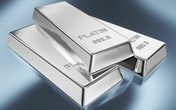 Silver Prices Experience Bull Run, Gold-Silver Ratio Corrects
Recently, silver prices have embarked on an upward trend, attracting market attention.
Jun 13, 2025 09:54- US dollar declines, domestic market base metals generally rise, alumina leads the decline, silicon metal, lithium carbonate, and iron ore fall by over 2% [SMM Midday Review]
SMM May 26 News: Metal Market: As of the midday close, domestic base metals generally rose, with SHFE tin down 0.31%, SHFE zinc down 0.58%, SHFE aluminum up 0.15%, and SHFE nickel slightly up. SHFE lead rose 0.36%, and SHFE copper rose 0.53%. In addition, alumina fell 4.18%, lithium carbonate fell 2.05%, silicon metal fell 2.53%, and polysilicon rose 0.52%. Most ferrous metals series fell, with iron ore down 2.28% and HRC down 1.94%. Stainless steel rose slightly, while rebar fell 1.57%. In the coking coal and coke sector: coking coal fell 1.47%, and coke fell 1.61%. In the overseas metal market, the LME metal market was closed for the day due to the Spring Bank Holiday. In the precious metals sector, as of 11:47 a.m., COMEX gold fell 0.6%, and COMEX silver rose slightly. Domestically, SHFE gold rose 0.55%, and SHFE silver rose 0.38%. As of the midday close, the most-traded contract for the European container shipping index fell 4.26%, closing at 2,119.3 points. As of 11:47 a.m. on May 26, the midday futures market movements for some contracts were as follows: 》SMM Metal Spot Prices on May 26 Spot and Fundamentals Copper: Today, the spot #1 copper cathode in Guangdong was quoted at a premium of 180-260 yuan/mt against the front-month contract, with an average premium of 220 yuan/mt, unchanged from the previous trading day. SX-EW copper was quoted at a premium of 120-140 yuan/mt, with an average premium of 130 yuan/mt, also unchanged from the previous trading day. The average price of #1 copper cathode in Guangdong was 78,585 yuan/mt, up 525 yuan/mt from the previous trading day, while the average price of SX-EW copper was 78,495 yuan/mt, up 525 yuan/mt from the previous trading day. Spot Market: After the weekend, Guangdong's inventory only rose slightly. The market expects inventory to continue to decline in the future, so suppliers did not respond to the rise in copper prices... 》Click for details Macro Front Domestic: [Eight Departments: Cultivate Around 100 National Leading Enterprises in Digital and Intelligent Supply Chains by 2030] Eight departments, including the Ministry of Commerce, the National Development and Reform Commission (NDRC), the Ministry of Education, the Ministry of Industry and Information Technology, the Ministry of Transport, the Ministry of Agriculture and Rural Affairs, the State Taxation Administration, and the National Data Administration, recently jointly issued the "Special Action Plan for Accelerating the Development of Digital and Intelligent Supply Chains." The "Action Plan" makes forward-looking, comprehensive, and systematic arrangements for the development of digital and intelligent supply chains. It proposes the use of new technologies such as artificial intelligence, the Internet of Things, and blockchain to promote the digital, intelligent, and visual transformation of supply chains on a "chain-by-chain" basis. By 2030, a replicable and promotable model for the construction and development of digital and intelligent supply chains will be formed. A deeply embedded, smart, efficient, and independently controllable digital and intelligent supply chain system will be basically established in important industries and key areas. Around 100 national leading enterprises in digital and intelligent supply chains will be cultivated, further enhancing the resilience and security level of China's industrial and supply chains. [The central bank's net injection via open market operations was 247 billion yuan] The central bank conducted 382 billion yuan in 7-day reverse repo operations today, with an operating interest rate of 1.40%, unchanged from the previous rate. As 135 billion yuan in 7-day reverse repos matured today, a net injection of 247 billion yuan was achieved. ► On May 26, the central parity rate of the RMB against the US dollar in the interbank foreign exchange market was 7.1833 yuan per US dollar. US dollar: The US dollar index fell to a nearly one-month low. As of 11:47, the US dollar index was down 0.31%, at 98.79. According to CCTV News, on the 25th (local time), US President Trump stated that the EU had requested an extension of the tariff negotiation deadline to July 9, and he had agreed to this request. Trump described the talks with the EU on tariffs as "very pleasant." He said that European Commission President Ursula von der Leyen had stated during the call that day, "We will engage quickly to see if an agreement can be reached." In response, Trump said, "I agreed to her request for an extension." On the 23rd, Trump posted on social media that he proposed imposing a 50% tariff on goods from the EU starting from June 1. He stated that the main purpose of the EU's establishment was to "take advantage of the US in trade," and that negotiations between the US and the EU had "made no progress." Therefore, he proposed imposing a 50% tariff on goods from the EU starting from June 1, 2025. If the goods are manufactured or produced in the US, no tariff will be imposed. Macro: Today, the revised reading for the change in Japan's leading indicators for March and Spain's year-on-year PPI for April will be released. In addition, it is worth noting that Fed Chairman Powell will deliver a commencement address at Princeton University's graduation ceremony, and ECB President Lagarde will speak at the Hertie School in Berlin. On May 26 (Monday), due to Memorial Day holiday in the US and the Spring Bank Holiday in the UK, trading hours in financial markets will be adjusted. The holiday schedule for overseas exchanges is as follows (all times are Beijing time): 》Public holidays in the US and UK today, holiday schedule for overseas exchanges Crude oil: As of 11:47, crude oil futures dropped slightly, with US crude up 0.31% and Brent crude up 0.26%. Earlier, US President Trump extended the deadline for trade negotiations with the EU, alleviating market concerns that US tariffs on the EU could harm the global economy and fuel demand. OPEC is expected to decide at its meeting next week to increase production by another 411,000 barrels per day in July, a forecast that has limited the rise in oil prices. In its closely watched report released last Friday, US energy services company Baker Hughes stated that the number of oil and natural gas rigs operated by US energy firms fell for the fourth consecutive week this week, reaching the lowest level since November 2021. Data showed that, for the week ending May 23, the total number of US oil and natural gas rigs, a leading indicator of future production, decreased by 10 to 566, marking the largest weekly decline since September 2023. It was also the first time since September 2024 that the number of active US oil and natural gas rigs had declined for four consecutive weeks. Data released by the US Commodity Futures Trading Commission (CFTC) last Friday showed that, for the week ending May 20, fund managers reduced their net long positions in US crude oil futures and options by 12,816 contracts to 81,336 contracts. (Webstock Inc.) Spot Market Overview: ► Inventory changes were relatively small over the weekend, and spot premiums remained flat compared to last Friday. [SMM South China Spot Copper] ► Copper prices rose, but demand remained weak, with low market trading activity. [SMM North China Spot Copper] ► Shanghai Zinc: Spot transactions were poor, and premiums remained stable. [SMM Midday Review] ► Ningbo Zinc: Premiums remained high, with attention on subsequent zinc ingot arrivals. [SMM Midday Review] Midday reviews of other metal spot markets will be updated later. Please refresh to view.
May 26, 2025 12:05 - Analysis of Silver and Gold Price Trends from a Trader's Perspective [SMM Silver Conference]
On May 16, the 2025 SMM (6th) Silver Industry Chain Innovation Conference, hosted by SMM Information & Technology Co., Ltd. (SMM), co-organized by Ningbo Haoshun Precious Metals Co., Ltd. and Quanda New Materials (Ningbo) Co., Ltd., and supported by sponsors including Fujian Zijin Precious Metals Materials Co., Ltd., Huizhou Yian Precious Metals Co., Ltd., Jiangsu Jiangshan Pharmaceutical Co., Ltd., Zhengzhou Jinquan Mining and Metallurgical Equipment Co., Ltd., Hunan Shengyin New Materials Co., Ltd., Zhejiang Weida Precious Metals Powder Materials Co., Ltd., Guangxi Zhongma Zhonglianjin Cross-border E-commerce Co., Ltd., Suzhou Xinghan New Materials Technology Co., Ltd., Yongxing Zhongsheng Environmental Protection Technology Co., Ltd., IKOI S.p.A, Hunan Zhengming Environmental Protection Co., Ltd., Kunshan Hongfutai Environmental Protection Technology Co., Ltd., and Shandong Humon Smelting Co., Ltd., featured a presentation by Liang Yonghui, Deputy General Manager of Shandong Zhaojin Gold and Silver Refining Co., Ltd., on the topic "Analysis of Gold and Silver Price Trends: A Trader's Perspective." Logic of Gold and Silver Price Analysis The logical hierarchy of gold price drivers differs from that of commodities due to gold's financial attributes. Silver prices are increasingly influenced by copper prices. Long-term: The macro trend of gold prices opposes paper currency credit. Medium-term: Guided by expectations of real interest rates, with capital flows dominated by technical factors, speculation, and risk aversion. Short-term: Market sentiment Gold price = Real interest rate + Risk aversion + Market sentiment, etc. Logic from 1997 to present: From 1997-2015, real interest rates and inflation; from 2016-2018, technical factors; from 2019 to present, real interest rates, risk aversion, and market sentiment. Gold and Silver Price Analysis Framework (Mind Map) Macro fundamentals: From the perspective of military cycles, the current period is a high-incidence era of revolutions over the past century, indicating a more severe situation than in the 1930s and 1970s. From the Kondratieff wave (long-wave cycle) perspective, the current situation in the US resembles that of the 1970s, both experiencing high inflation during the Kondratieff depression phase. Sunspots: A century-long solar storm tide provides long-term support for gold and silver prices. The rise in global average temperatures will significantly increase the number of hungry people, raising uncertainty risks. Abnormal weather patterns, economic turmoil, and population growth will provide long-term bullish factors for gold and silver (carbon neutrality). From the perspective of the US dollar index, it has fallen below 100 but is expected to remain volatile, with a bullish impact on gold and silver prices. The purchasing power of major currencies and commodities has significantly declined relative to gold. Historically, major currencies were pegged to gold. Following the final collapse of the US Bretton Woods system in 1971, gold was delinked from the US dollar. Since then, with a few exceptions, gold has significantly outperformed all major currencies and commodities as a medium of exchange. A key factor behind this robust performance is the slow growth in gold supply, with gold mine production increasing gradually over time—by approximately 1.7% annually over the past two decades. In contrast, fiat currencies can be printed in unlimited quantities to support monetary policies, such as the quantitative easing (QE) policies implemented after the 2008 global financial crisis and during the COVID-19 pandemic in 2020. These crises have prompted investors to turn to gold as a hedge against currency depreciation risks and to protect the purchasing power of their assets. Currently, the US Fed's interest rate cut cycle has entered a pause phase. A series of uncertainties are affecting the outlook for US Fed interest rate cuts. The minutes of the US Fed's monetary policy meetings indicate that policies such as the Trump administration's tariffs have led to increased economic uncertainty and upside risks to inflation. Therefore, the US Fed will continue to pause interest rate cuts and wait for clearer inflation and economic outlooks before taking further action. According to statistics, the term "tariffs" was mentioned 107 times in the US Fed's Beige Book report, while terms related to "uncertainty" appeared 89 times, reflecting the US Fed's concerns about the uncertain consequences arising from tariff policies. Currently, market expectations are for an interest rate cut as early as June, with up to four cuts possible throughout the year. According to the US Fed's interest rate forecast dot plot, a report based on individual members' predictions of future target interest rates released by the Federal Open Market Committee (FOMC): Looking ahead to the US Fed's future interest rate cut path, the prerequisites for future US Fed interest rate cuts are sustained declines in inflation or significant weakness in the labour market. Trump has repeatedly pressured Powell to cut interest rates, but Fed Chairman Powell has clearly stated that the current stance is to remain on the sidelines. Currently, influenced by the continued weakening of the labour market, market expectations for US Fed interest rate cuts this year have risen to 100 basis points, with a total of four cuts expected. The ongoing global de-dollarization is causing cracks in the US dollar system, reshaping the world order. With no alternative to gold emerging yet, this supports gold prices. The macroeconomic cycle influences medium and long-term fluctuations in gold prices. US economic recession cycles often correspond with rising gold prices and falling silver prices. The risk of economic recession has significantly increased, which is bullish for gold and bearish for silver. From the perspective of real interest rates, the current static gold price is $1,850. ►Silver Supply and Demand The latest report released by the Silver Institute predicts that the global silver deficit will narrow to 117.6 million ounces in 2025, a decrease of 21%. This change stems from the combined effects of a 1% decline in demand and a 2% increase in total supply. Silver, as a crucial material for jewelry, electronics, EVs, and solar panels, and with investment value, has experienced a structural market shortage for five consecutive years. It is expected to remain stable in 2025, while demand for jewelry and silverware is anticipated to decline. The report specifically mentions that adjustments to the US tariff policy pose a major risk factor for silver demand this year, and changes in this policy may profoundly impact the supply-demand balance in the global silver market. Both the total global silver supply and silver mine production have slowed down. Total demand has weakened somewhat, while industrial silver demand continues to grow, and PV demand growth is limited. It also elaborates on the narrowing of the silver supply-demand gap; the low level of domestic and overseas silver inventories; the historically high levels of silver CFTC open interest, bulls, and net long positions; the rise in silver investment demand; and the increase in silver ETF holdings. ►Gold-silver price ratio: The ratio of silver to gold is an important indicator for measuring their relative value. Due to the impact of safe-haven and investment demand, gold surged significantly in April, while silver, lacking safe-haven attributes, saw limited gains, leading to a rapid widening of the gold-silver ratio to 107. After the release of the overheated sentiment in the gold market, gold bulls reduced their positions in stages and exited the market. Meanwhile, silver remained unusually resilient, and the gold-silver ratio once fell below 100. The long-term upward logic for gold remains unchanged, while silver currently lacks the conditions for a long-term rally. Despite the already high gold-silver ratio, as the correction in gold concludes, bullish capital is expected to return to the market, and the gold-silver ratio may continue to rise in the future. From the perspective of the Kondratieff depression phase, considering excess premium or a macro bull market, gold has risen, and the excess premium has been realized. Will there be a macro bull market? Bearish in the medium term. From the perspective of the gold-to-metal and gold-to-agricultural product ratios during the depression, gold is at a high level with excess premium, which is bearish. From the perspective of central banks' gold buying and selling, central banks' purchases have been on an upward trend in recent years, which is bearish in peaceful times and bullish during war cycles. From the perspective of capital flow—open interest, a unilateral trend can be maintained. Exchange rates will reduce volatility: From the perspective of the silver bull-bear cycle, with eight operational phases, it is bearish. However, silver's application in PV at 3,000 mt per year is bullish in the long term (due to major industrial technological breakthroughs). ►Key factors Some thoughts: 1. Gold's correction is similar to that in December 2009. Most non-ferrous metals have seen their prices halved, while gold has continuously hit new highs, and silver's performance resembles that of copper in the 1980s. 3. Prices tend to rise during interest rate hike cycles, and there is a high probability of rising during interest rate cut cycles as well. 4. The global macro cycle suggests a chaotic world in the future. Under this macro cycle, gold prices may exceed expectations. Could silver reach $49? 5. Opportunities arise from the scarcity of gold, silver, platinum, tin, gallium, germanium, and major industrial technological breakthroughs. 6. Digital currencies represent the greatest uncertainty in weakening the financial attributes of gold and silver. Gold has the foundation for a major bull market, and silver's long-term target is close to its previous high. ►Forecast: Its long-term attributes resemble those of copper, with a new cycle trend emerging after March 2024. In the near term, prices are expected to range from $27 to $38, with an overall fluctuating upward trend based on weekly adjustments. Gold: Is there a foundation for a long-term bull market at $5,000? Risk warnings: (In the VUCA era) 1. Uncertainty of war and conflicts. 2. Uncertainty of technological revolutions. 3. Uncertainty between the East and the West. 4. Uncertainty of exchange rates. 》Click to view the special report on the 2025 SMM (6th) Silver Industry Chain Innovation Conference
May 16, 2025 13:27 - Metals Rise Across the Board, with SHFE Nickel Up Nearly 2%; Stainless Steel, SHFE Lead, and SHFE Aluminum Lead Gains; Iron Ore Up Over 2% [SMM Midday Review]
SMM May 12 News: Metal Market: As of the midday close, domestic base metals rose across the board, with SHFE aluminum up 1.02%. SHFE lead rose 1.19%, SHFE copper rose 0.52%, and SHFE tin and SHFE zinc both rose less than 0.5%. SHFE nickel rose 1.84%. In addition, alumina fell 0.99%. Lithium carbonate fell 0.13%, silicon metal was flat at 8,300 yuan/mt, and polysilicon rose 0.95%. The ferrous metals series mostly rose, with iron ore up 2.15% and stainless steel up 1.26%. Rebar and HRC rose nearly 1%. In the coking coal and coke sector: coking coal fell 0.51%, and coke rose 0.17%. In the overseas metal market, as of 11:47 a.m., LME base metals rose nearly across the board. LME tin rose 0.33%, LME zinc rose 0.38%, LME lead rose 0.73%, LME copper rose 0.42%, and LME aluminum rose 0.56. LME nickel fell slightly. In the precious metals sector, as of 11:47 a.m., COMEX gold fell 1.7%, and COMEX silver rose 0.17%. Domestically, SHFE gold fell 1.73%, and SHFE silver rose 0.28%. As of the midday close, the most-traded contract for the European Containerized Freight Index rose 6.16% to 1,341.9 points. As of 11:47 a.m. on May 12, midday futures market movements for some contracts: 》SMM Metal Spot Prices on May 12 Spot and Fundamentals Copper: Today, spot #1 copper cathode in Guangdong was quoted at a premium of 20 yuan/mt to a premium of 150 yuan/mt against the front-month contract, with an average premium of 85 yuan/mt, down 70 yuan/mt from the previous trading day. SX-EW copper was quoted at a discount of 40 yuan/mt to a discount of 20 yuan/mt, with an average premium of 30 yuan/mt, down 70 yuan/mt from the previous trading day. The average price of #1 copper cathode in Guangdong was 78,340 yuan/mt, up 25 yuan/mt from the previous trading day, and the average price of SX-EW copper was 78,225 yuan/mt, up 25 yuan/mt from the previous trading day. Spot Market: Guangdong inventory ended a three-day decline and rose again, mainly due to weaker downstream consumption... 》Click for details Macro Front Domestic: [PBOC Net Injection of 43 Billion Yuan via Open Market Operations] The People's Bank of China (PBOC) conducted 43 billion yuan in 7-day reverse repo operations today, with an operating interest rate of 1.40%, unchanged from the previous rate. As there were no reverse repos maturing today, a net injection of 43 billion yuan was achieved. [Multiple Regions Release Housing Development Plans Focusing on "High-Quality Housing" Construction] Recently, the "2025 Annual Plan for Housing Development in Beijing" released by the Beijing Municipal Commission of Housing and Urban-Rural Development mentioned that 240 to 300 hectares of land for commercial housing will be supplied in 2025, 50,000 sets of affordable rental housing will be constructed and collected, and 80,000 sets of various types of affordable housing will be completed, accelerating the pace of "high-quality housing" construction.Prior to this, cities such as Guangzhou and Chengdu had also released their 2025 housing development plans. Many localities have expressed their intention to accelerate the construction of "high-quality housing." Industry insiders have stated that it is expected that detailed indicators for the construction of "high-quality housing" across various regions will be expedited in their release and implementation. ► On May 12, the central parity rate of the RMB exchange rate in the interbank foreign exchange market was set at 7.2066 yuan per US dollar. US dollar: As of 11:47 a.m., the US dollar index rose by 0.17%, closing at 100.58. Substantial progress was made in the high-level economic and trade talks between China and the US, which has alleviated market anxiety. Beth Hammack, President of the Federal Reserve Bank of Cleveland, stated on Friday that the US Fed needs more time to observe how the economy responds to President Trump's tariffs and other policies before it can identify the correct response measures. According to the CME "FedWatch": The probability of the Fed maintaining interest rates unchanged in June is 82.7%, while the probability of a 25-basis-point interest rate cut is 17.3%. The probability of the Fed maintaining interest rates unchanged in July is 40.8%, the cumulative probability of a 25-basis-point interest rate cut is 50.7%, and the cumulative probability of a 50-basis-point interest rate cut is 8.7%. The US Consumer Price Index (CPI) for April, to be released on Tuesday, will provide new clues regarding the path of the Fed's monetary policy, a matter of great concern to traders. Macro side: [He Lifeng: China firmly supports multilateralism and free trade, and supports the World Trade Organization in playing a greater role in global economic governance] Vice Premier of the State Council He Lifeng met with World Trade Organization (WTO) Director-General Ngozi Okonjo-Iweala in Geneva on the evening of the 11th. He Lifeng stated that the multilateral trading system centered around the WTO is the cornerstone of international trade and plays a vital role in global economic governance. All parties should resolve differences and disputes through equal dialogue within the framework of the WTO, jointly uphold multilateralism and free trade, and promote the stability and smooth operation of global industrial and supply chains. China will continue to participate comprehensively and deeply in the reform of the WTO, support the WTO in playing the role of a "stabilizer" for global trade, safeguard the legitimate rights and interests of developing members, and make greater contributions to addressing global common challenges. He Lifeng also provided information on the high-level economic and trade talks between China and the US in response to inquiries. Ngozi Okonjo-Iweala stated that the current global economic and trade growth is facing severe challenges, and WTO members should jointly defend an open and rules-based multilateral trading system, strengthen dialogue and cooperation on international trade issues, and promote the WTO in playing a greater role in facilitating trade liberalization and achieving global sustainable development. ► He Lifeng: China and the US Reach Important Consensus, Talks Make Substantial Progress Today, data including China's M2 money supply YoY for April, China's total social financing (TSF) for the year to date (YTD) in April, China's new RMB loans for the YTD in April, changes in Canada's employment for April, and Canada's unemployment rate for April will be released. Additionally, attention should be paid to the following: Vice Premier of the State Council He Lifeng visited Switzerland from May 12 to 12 (Note: This appears to be a typo, likely intended to be a different date range) and held talks with Swiss leaders and relevant parties. During his visit, as the Chinese lead negotiator for China-US economic and trade issues, Vice Premier He Lifeng will hold talks with the US lead negotiator, US Treasury Secretary Bessent. Furthermore, Federal Reserve Governor Cooker delivered a speech; the National Energy Administration's monthly release of total electricity consumption data around the 15th of each month is also worth noting. Crude Oil: As of 11:47, crude oil futures rose, with US crude up 0.59% and Brent crude up 0.52%. The easing of global trade tensions boosted market sentiment and supported oil prices. However, a potential nuclear deal between the US and Iran could alleviate concerns about a reduction in global oil supply, which would also put pressure on oil prices and limit their gains. In other news, US energy services company Baker Hughes stated in its closely watched report that the number of oil and natural gas rigs operated by US energy companies fell to its lowest level since January this week. Data showed that as of the week ending May 9, the total number of US oil and natural gas rigs, a leading indicator of future production, declined by 6 to 578. This brought the total number of active rigs down by 25, or 4%, YoY. During the week, the number of active US oil rigs fell by 5 to 474, while the number of natural gas rigs remained steady at 101. Data released by the US Commodity Futures Trading Commission (CFTC) showed that as of the week ending May 6, fund managers reduced their net long positions in US crude oil futures and options. The data indicated that speculators cut their net long positions in WTI crude oil futures and options in both New York and London by 23,002 lots to 93,596 lots. (Webstock Inc.) Spot Market Overview: ► Large Monthly Spread, Lower Contango, Overall Trading Activity Average [SMM South China Copper Spot] ► Weak Downstream Demand, Poor Purchase Willingness, Sluggish Spot Trading Activity [SMM North China Copper Spot] ► [SMM Iron Ore Shipping Data] Global Shipments Continue to Decline Slightly, Port Arrivals Increase Slightly ► [SMM Steel Shipping] China's Total Steel Exports Fell 18% WoW Last Week ► [SMM Coking Coal Shipping] SMM Total Coal Port Arrivals Reached 7.101 Million mt Updates on other metal spot noon reviews will be available later. Please refresh to view~
May 12, 2025 11:58