

4682results found for 'Aluminum'
Sort by : |
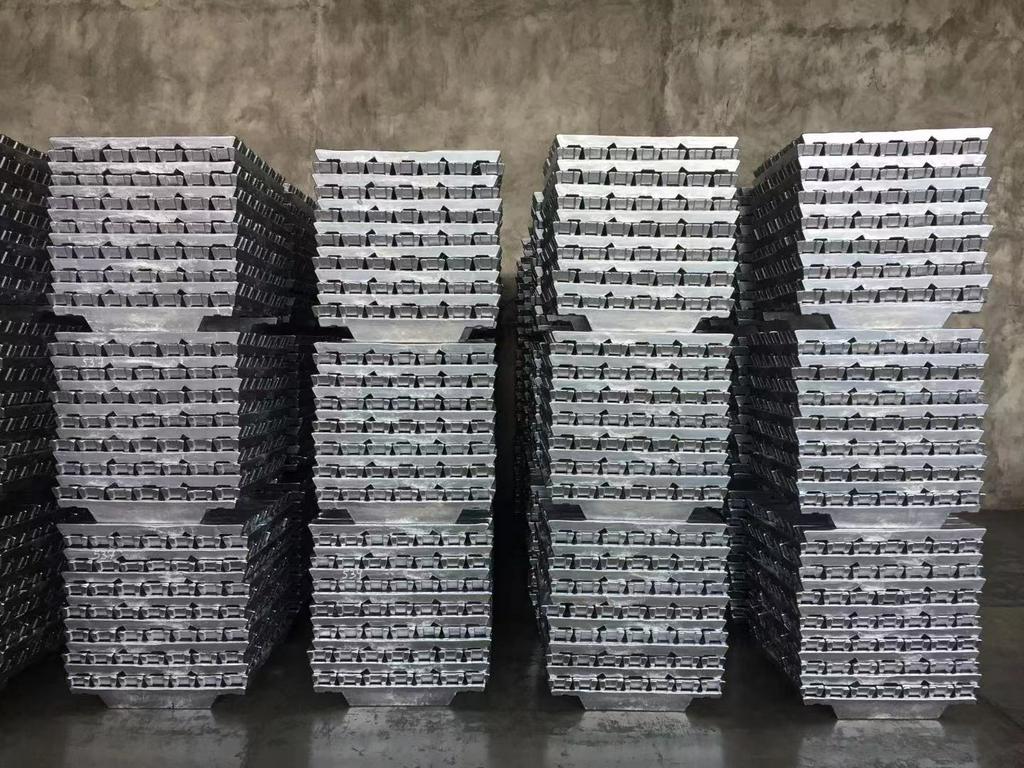 Warehouse Withdrawals Pull Back While Destocking Accelerates, the Logic of China’s Aluminum Ingot Destocking Changing?
As of July 30, China’s aluminum ingot inventory in major consumption areas stood at 953,000 mt. Cumulative destocking from the YTD high of 1.465 million mt in early May has reached 512,000 mt (-35%), with an additional accelerated destocking of 53,000 mt this week, breaking below the 1 million mt threshold as expected. However, the directional divergence between warehouse withdrawals and inventory has raised concerns...
Jul 31, 2026 23:53- Warehouse withdrawals pull back, but destocking accelerates — Is China's aluminum ingot destocking logic changing? [SMM Analysis]
As of July 30, China's major consumption regions reported aluminum ingot inventory of 953,000 mt, having cumulatively destocked 512,000 mt (-35%) from the year's high of 1.465 million mt in early May. Within the week, destocking accelerated further by 53,000 mt, as expected falling below the 1 million mt mark. However, the directional divergence between warehouse withdrawals and inventory drew attention: weekly warehouse withdrawals pulled back to 127,700 mt, losing the advantage of being at a high for the same period in the past four years. The core driving force of this destocking round has shifted from "demand and warehouse withdrawal boost" in June to "supply contraction + slowdown in shipment pace": the proportion of liquid aluminum rose to 78.3% in July, with casting ingot volume down 15.1% YoY; a sharp drop in arrivals in South China pushed Foshan's premium wider by 50 yuan/mt in a single week to 115 yuan/mt; SMM believes...
Jul 31, 2026 23:30 - Overseas Alumina Supply Rebounds in July; Middle East Restart and Indonesia Policy Uncertainty Loom
SMM 7.31 News: According to SMM statistics, overseas metallurgical-grade alumina production in July 2026 fell approximately 1.0% year-on-year but rose 25.0% month-on-month. Overseas alumina supply showed significant recovery in July, as capacity previously constrained by Middle East tensions, hurricanes, and unplanned outages improved to varying degrees. Middle Eastern producers gradually resumed operations, Atlantic-region capacity affected by disruptions also recovered, and an Indian producer continued its slow ramp-up. By company and region: Jamaica is emerging from its 2025 trough. The government expects bauxite and alumina export revenues to rise 24% year-on-year to $760 million in 2026, driven by post-hurricane Melissa reconstruction efforts, though still below the $803.4 million recorded in 2024. In Q1 2026, Jamaica's alumina production fell 30.3% year-on-year to 267,060 mt, with bauxite output down 26.4% to 415,143 mt, while exports also contracted. The low-base rebound in July provided some modest support to overseas supply. In Southeast Asia, the Indonesian President's Office recently called for enhanced regulatory oversight, as exports of certain alumina products containing rare earth elements have faced obstacles. Indonesia has yet to issue regulations specifying permissible rare earth content in export products, and this policy uncertainty could pose disruptions to subsequent outbound shipments. In the Middle East, Emirates Global Aluminium (EGA) restarted its Al Taweelah alumina refinery on July 10, with production expected to reach 50% of capacity within days, and the company aims to achieve full technical capability by year-end. The refinery produced 2.4 million mt of alumina in 2025. However, the restart timeline for Aluminium Bahrain (Alba) remains unclear, while Qatalum continues to operate at only 60% of capacity. Geopolitical risks in the region persist. Additionally, South32's FY2026 production report showed Brazilian alumina output rose 5.3% year-on-year to 1.4 million mt. The company reiterated its binding agreement to sell its aluminum business to Alcoa for approximately $5.6 billion, with the transaction expected to close in the second half of 2027. Looking ahead to August, overseas metallurgical-grade alumina supply is expected to continue its recovery, with overall availability trending looser. The Middle East restart, improved Indonesian raw material access, and capacity restoration in India and the Atlantic region will contribute incremental supply. However, the Middle East conflict remains unresolved, while Indonesia's rare earth regulatory policies and quota issues, along with European sanctions uncertainty, could still disrupt the supply recovery. Supply-side uncertainties persist.
Jul 31, 2026 20:23 - July Ex-China Alumina Supply Rebounds Significantly, Middle East Restart and Indonesian Policy Changes Draw Attention [SMM Analysis]
SMM, July 31: According to SMM statistics, total overseas production of metallurgical-grade alumina outside China fell approximately 1.0% YoY in July 2026, while rising about 25.0% MoM. July saw a notable recovery-driven increase in alumina supply outside China, as capacity previously constrained by the Middle East situation, hurricanes, and unplanned production cuts was restored to varying degrees. Enterprises in the Middle East gradually resumed production, disrupted capacity in the Atlantic region also recovered step by step, and an Indian enterprise slowly ramped up production. By enterprise and region: Jamaica is emerging from its 2025 trough. The government expects that as post-Hurricane Melissa reconstruction advances, bauxite and alumina export revenue will grow 24% YoY to $760 million in 2026, though this remains below the $803.4 million recorded in 2024. In Q1 2026, Jamaica’s alumina production fell 30.3% YoY to 267,060 mt, bauxite production dropped 26.4% YoY to 415,143 mt, and exports contracted in tandem; against a low base, the recovery in July provided a certain supplement to supply outside China. In Southeast Asia, the Indonesian presidential office recently called for stronger oversight. Exports have been hindered because some alumina contains rare earth elements, yet Indonesia has not introduced regulations on rare earth content. This policy uncertainty could cause disruptions to subsequent exports. In the Middle East, EGA restarted the alumina refinery at its Al Taweelah site on July 10 and expects to restore 50% capacity within a few days, aiming for full technical capability by year-end. The refinery produced 2.4 million mt of alumina in 2025. However, the production resumption at the Bahrain aluminum smelter remains unclear and the Qatar aluminum smelter is still running at 60% capacity, with geopolitical risks yet to recede. Elsewhere, South32’s FY2026 report showed that its Brazilian alumina production grew 5.3% YoY to 1.4 million mt, and the company reaffirmed its plan to sell its aluminum business to Alcoa for about $5.6 billion, with the transaction expected to close in H2 2027. Looking ahead to August, the supply of metallurgical-grade alumina outside China is expected to continue recovering, trending broadly looser. Production resumptions in the Middle East, improving raw material conditions in Indonesia, and capacity restoration in India and the Atlantic region will contribute growth. However, the Middle East conflict is still ongoing, and uncertainties linked to Indonesia’s rare earth regulatory policy and quota issues, along with European sanctions, could still cause disruptions, leaving some supply-side uncertainty in place. (The above information is derived from market data collection and a comprehensive assessment by the SMM research team. The information provided herein is for reference only. This article does not constitute direct investment, research, or decision-making advice. Clients should make decisions prudently and not rely on this article as a substitute for their own independent judgment. Any decision made by a client shall have no connection to Shanghai Metals Market.) Data source: SMM
Jul 31, 2026 20:19 - Groundbreaking Ceremony for 300,000 mt Prebaked Anode Project in Liupanshui Marks Strategic Cooperation
[SMM Aluminum Flash] Recently, the groundbreaking ceremony for the annual 300,000 mt prebaked anode project was held at the Shuicheng Economic Development Zone in Liupanshui City. The project is jointly constructed by Sunstone Development Co., Ltd. and Guizhou Aluminum Group Co., Ltd., marking the entry of the strategic cooperation between the two parties into the construction phase and serving as a key measure for Sunstone Development to optimize its capacity layout in Southwest China.
Jul 31, 2026 19:50 - Mercedes-Benz to Use 75% Recycled Aluminum in Next-Gen Large EVs
Mercedes-Benz will become the first automaker in Europe to use Hydro Circal recycled aluminum in series-production models, which will be its next-generation large EVs. The new material contains at least 75% post-consumer recycled aluminum, while the aluminum semis currently supplied by Hydro have a recycled content of around 25%.
Jul 31, 2026 19:41 - Aluminum Fluoride Market Prices Expected to Hold Strong in August Amid Divergent Raw Material Trends
[SMM Aluminum Flash] Upstream raw materials for aluminum fluoride are showing divergent trends. Fluorite prices are firm and strengthening, further solidifying the cost floor, while aluminum hydroxide and sulphuric acid prices have pulled back slightly, only offsetting some of the cost pressure. Overall production costs in the industry remain high. Producers’ profitability is hard to restore, and their willingness to start production remains sluggish. Supported by the rigid cost floor, the industry’s low supply, and the boost to industry chain sentiment from a sharp raise in August hydrofluoric acid long-term contract prices, aluminum fluoride market prices are expected to hold up well overall in August.
Jul 31, 2026 19:28 - 【SMM analysis】 Lithium Battery Recycling Gains Momentum: Major Projects Accelerate Nationwide
With the booming development of the new energy vehicle industry, China's first wave of power batteries has entered a large-scale retirement phase. Recently, lithium battery recycling projects have been intensively launched across multiple regions nationwide, covering every link of the industrial chain — from dismantling and crushing to hydrometallurgy, from cascade utilization to material regeneration.
Jul 31, 2026 19:16 - [SMM Analysis] Power Battery Recycling Continues to Heat Up, July Construction and Approval Projects Announced
With the vigorous development of the NEV industry, China's first batch of power batteries entered a large-scale "retirement period." Recently, lithium battery recycling projects were intensively launched nationwide, from dismantling and crushing to hydrometallurgy, from second-life application to material regeneration, comprehensively accelerating the layout of all links in the industry chain.
Jul 31, 2026 19:14 - Ji'an Approves EIA for 15,000-Ton Spent LFP Battery Recycling Project
Recently, the ecological environment authority of Ji'an, Jiangxi, released the proposed approval for the EIA report of the annual 15,000-ton spent LFP battery expansion project. The project involves a total investment of RMB 30 million, located in Chengnan Industrial Park, Xiajiang Industrial Park, Ji'an. Using spent LFP battery cells as raw material, it adopts processes including cutting, primary crushing, drying pyrolysis, cooling, and screening to produce battery powder, copper, and aluminum. Upon completion, it will achieve an annual processing capacity of 15,000 tons of spent LFP battery cells, yielding 8,878.39 tons of LFP battery powder, 1,499.72 tons of copper foil, and 1,143.17 tons of aluminum foil.
Jul 31, 2026 19:09