

246results found for 'summit'
Sort by : |
- SVOLT Energy Technology: Bringing 10C Ultra-Fast Charging into the Thousand-Yuan Level, First Solid-Liquid Battery Mass Production Timetable Announced
On July 16, SVOLT Energy Technology held its 2026 Global Partner Summit in Changzhou, Jiangsu Province, where it unveiled four major "killer moves": the fully upgraded SVOLT Short Blade 3, the hybrid solid-liquid battery ready for launch, a dual push into energy storage and emerging markets, and the within-year mass production of Fly Stacking 4 — cementing its role as a trailblazer from the "stacking era".
Jul 20, 2026 17:30 - [During the 2026 AI for Good Global Summit, the China Academy of Information and Communications Technology (CAICT) held a seminar on "Brain-Computer Interface: Technology for Good and Standards Cooperation".]
On the afternoon of July 8, 2026 (local time), the China Academy of Information and Communications Technology (CAICT) held a seminar titled “Brain-Computer Interface: Technology for Good and Standards Cooperation” during the “2026 AI for Good” Global Summit in Geneva. At this seminar, CAICT, together with several international organizations and enterprises, established the Pre-Research Group for Brain-Computer Interface Technology Standardization. The pre-research group will continue to recruit global enterprises, universities, and research institutions to plan pre-research on brain-computer interface standards and deepen industrial cooperation.
Jul 20, 2026 16:36 - 2026 SMM ASEAN Ferrous Metals Summit to Kick Off in Kuala Lumpur this November: Navigating Challenges & Opportunities
Shanghai Metals Market (SMM) is thrilled to announce that we will hold the 2026 SMM ASEAN Ferrous Metals Summit from November 26-27, 2026 in Kuala Lumpur, Malaysia. This event is the premium platform in the ASEAN ferrous metals market that converge 400+ decision-makers from mines, mills, trading houses, processors, equipment and technology providers, and logistics operators at the same table — precisely when the regional order is being rewritten. Conference Background The ASEAN steel industry is undergoing profound transformation , driven by strong demand growth, capacity expansion, shifting trade flows, and increasingly complex trade policies. Steel apparent consumption across the six major ASEAN economies exceeded 81 million tonnes in 2024 and is projected to reach 87.9 million tonnes in 2026, up 2.6% from 2025 and 8.2% from 2024. Vietnam was the region’s fastestgrowing market in 2024 , expanding by over 21%, while Vietnam, Indonesia, and the Philippines are expected to lead incremental demand in 2026 . Demand continues to expand. In 2024, apparent steel consumption in the six major ASEAN economies exceeded 81 million mt, and is expected to reach 87.9 million mt by 2026. Vietnam posted over 21% growth in 2024 and will lead regional growth. Capacity is expanding rapidly. In 2025, ASEAN crude steel production surpassed 60 million mt and is forecast to reach 90.6 million mt by 2030, making it the fastest-growing region globally. However, the import penetration rate remains above 60%, and steel imports rose by 5 million mt in 2025. The capacity structure is undergoing profound transformation: the BF-BOF share rose from 6% in 2011 to 30% in 2020, Indonesia and Vietnam jointly control 74% of crude steel production, and Chinese steelmakers’ overseas investments are mainly concentrated in these two countries. Trade flows are being reshaped. In 2024, China exported 28.219 million mt of steel to ASEAN, up 29.3% YoY; in H1 2025, steel billet exports surged to 5.89 million mt, up 300.3% YoY. In March 2026, Vietnam suspended slab exports, and the ASEAN supply gap is estimated at 2.3 million mt. Price stratification has emerged: Vietnam became the regional low-price zone ($482/mt), Japan and South Korea dominate the high-end market, Malaysia recorded a cumulative 78.9% increase over three years, absorbing spillover demand, while Indonesia’s average price bucked the trend, rising to $522/mt, with imports clearly focusing on high-end products. Expanded supply and demand, capacity iteration, trade restructuring, and price spread divergence—multiple variables are intertwining. The industry urgently needs a high-level dialogue platform to identify pain points and uncover business opportunities. Conference Highlights 1. ASEAN Steel Market Outlook An in-depth analysis of regional steel demand, with consumption expected to reach 87.9 million mt in 2026, driven primarily by Vietnam, Indonesia, and the Philippines. 2. China—ASEAN Trade and Supply Chain Restructuring Exploring shifting flows of HRC, billet, slab, and other steel products amid changing supply patterns, trade remedies, and regional market dynamics. 3. Capacity Expansion and Production Transition Examining ASEAN’s evolving steelmaking landscape, including BF-BOF capacity growth, EAF development, overseas investment, and new regional production hubs. 4. Trade Policies and Market Access Assessing anti-dumping measures, tariffs, RCEP-related opportunities, and regulatory changes reshaping steel trade across ASEAN. 5. High-Growth Demand and Product Opportunities Identifying opportunities from infrastructure, construction, automotive, and advanced steel applications, with a focus on Indonesia, Vietnam, and other emerging markets. 6. Executive Networking and Regional Cooperation Connecting leading producers, traders, buyers, investors, associations, policymakers, and industry experts across ASEAN, China, and global markets. Scenes from Past Conferences Conference Agenda Companies to Be Invited The companies we will invite for this conference cover various segments of the ferrous metals value chain, indluding Steel Mills/Smelters (42) Trader / Steel Processing & Trading(12) Metallurgical Equipment / Engineering Technology(5) Refractory Materials / Auxiliary Materials(2) Electrodes / Carbon Products(3) Associations / Institutions(9) International(1) Technology / Digitalization(6) Digital Platform / Green Steel(1) Carbon Trading / Green Finance(1) Consulting(1) Investment / Finance(1) Downstream Steel Application(3) Engineering Construction(1) Composition Structure Ticket Prices Contact: Horin Dong WhatsApp: +8618721310824 Email: horindong@smm.cn Scan the QR code for conference details and more discount information
Jul 13, 2026 14:09 - Tianli Equipment Invites You to the 2026 SMM Recycled Metal Industry Summit and Casting & Melting Technology Session
Zhejiang Tianli Equipment Technology Co., Ltd. is building a leading brand in environmental protection and solid waste recycling in China. What our clients need is what we have been striving and advancing for. Technology first, sincere cooperation, moving towards the future. Tianli Co., Ltd. welcomes your visit and field trip.
Jul 13, 2026 13:49 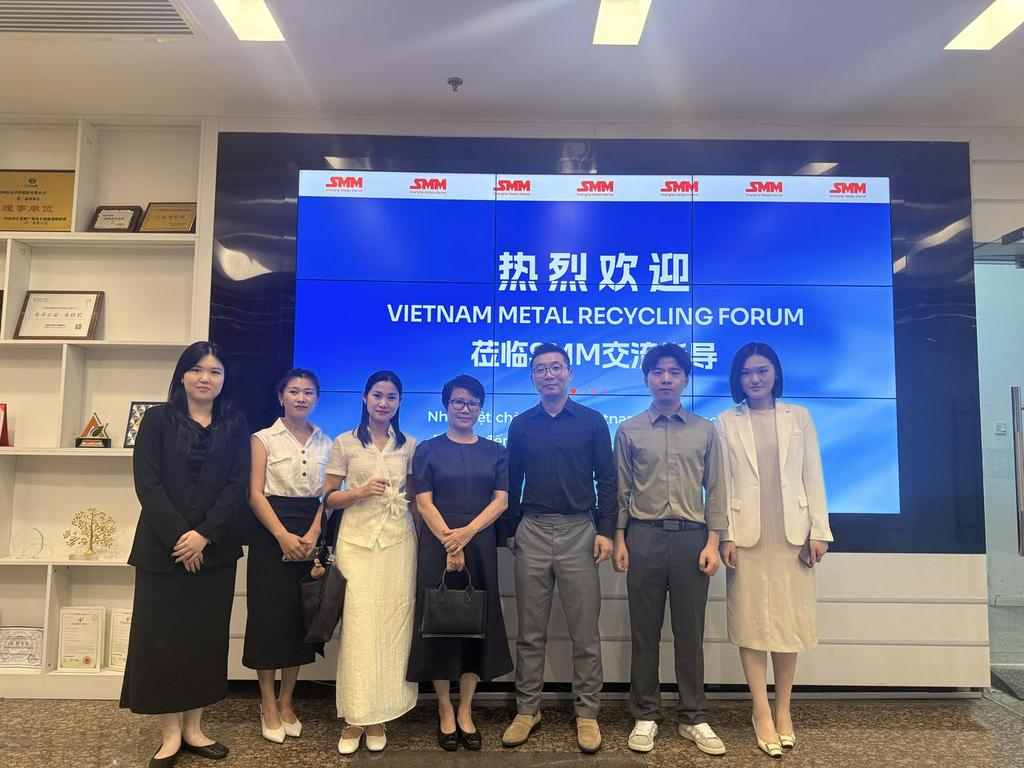 VMRF’s Return Visit to SMM: A Milestone for Vietnam’s Recycled Metals Industry Cooperation
On July 10, a delegation from the Vietnam Metal Recycling Forum (VMRF) — including Anh, Tran Thi Van, Phuong and Hoang Minh — visited the headquarters of Shanghai Metals Market (SMM) in Shanghai. SMM CEO Logan Lu welcomed the guests, alongside Horin Dong (Senior Overseas Marketing Manager), Cindy Zhang (Global Recycled Metals Project Manager), Date Song (Global BD Manager, Base Metals Conferences & Events Team), and Catherine Zhan (Overseas Marketing Manager). The two sides engaged in in-depth discussions covering Southeast Asia’s recycled metals industrial chain services, overseas market expansion, and joint industry summit cooperation. During the visit, SMM shared its latest global strategic layout. Against the backdrop of robust demand in Southeast Asia, Africa, and South Asia, SMM has set up new offices in Vietnam, South Korea, India and Zambia, forming a multi-regional overseas hub network. Through these local touchpoints, SMM will move closer to the upstream and downstream of local industry chains, providing more efficient one-stop market services to partners in Vietnam, ASEAN, and beyond for the recycled metals, aluminum, lead-acid battery, and ferrous metals sectors. In addition, SMM also introduced three major industry events it will hold in ASEAN in H2: 2026 SMM Global Lead-Acid Battery Supply Chain Industry Conference (Nov 19-20) in Ho Chi Minh City; SMM AICE 2026 Southeast Asia (Vietnam) Aluminium Conference (Nov 23-24) in Ho Chi Minh City; -SMM ASEAN Ferrous Metals Summit 2026 (Nov 26-27) in Malaysia Notably, in 2025, SMM Chairman Adam Fan led Catherine Zhan, SMM's Overseas Marketing Manager, on a trip to Vietnam to meet the VMRF team, where SMM introduced its comprehensive core businesses and service capabilities, including multi-commodity information, price data, industry surveys, and conferences and exhibitions, building a solid bridge for future cooperation. Now, a year later, this return visit by VMRF is of great significance to SMM and marks a further deepening of bilateral cooperation. Group Photo of VMRF at the 2025 SMM APAC Lead-Acid Battery Industry Conference in Vietnam Group Photo of the 2025 SMM Visit to VMRF VMRF was established to connect enterprises, recycling plants, traders, and partners within Vietnam's metal recycling industry. As a platform for sharing information, reports, market trends, and technology, VMRF is committed to helping its members achieve sustainable development and elevate industry standards. Since forging ties with VMRF at last year's offline event in Vietnam, SMM has placed great importance on the friendly cooperation with VMRF. In the future, SMM is looking forward to establishing a long-term, stable, and normalized deep collaboration mechanism with VMRF, continuously carrying out joint efforts in industry exchanges, market information sharing, and summit co-promotion. Leveraging SMM's multiple Southeast Asian industry conferences, both sides will strive to build a supply-demand matching platform and jointly support the standardized and international development of Vietnam's recycled metal industry chain.
Jul 13, 2026 11:21- [SMM Conference] AASC 2026: Navigating ASEAN EV Transformation at a Strategic Crossroads
On June 17, 2026, the 2026 SMM (3rd) ASEAN Automotive Supply Chain Conference , organized by Shanghai Metals Market (SMM), successfully wrapped up at the Hyatt Regency Bangkok Suvarnabhumi Airport in Bangkok, Thailand! This conference serves as an annual gathering of Southeast Asia's auto industry, bringing together 400+ delegates, 40+ speakers, 15+ partners and 15+ exhibitors from 15+ countries. Conference Background The Southeast Asian EV industry is at a strategic crossroads. Thailand's "30/30" policy is driving adoption, with EV penetration projected to near 15% by 2025. Indonesia is building a full battery chain using its nickel resources, while Vietnam's market potential grows. Amidst supply chain restructuring and technological competition, strategic action is key. The 3rd SMM Asean Automotive Supply Chain Summit 2026 is designed to empower businesses by focusing on: Unlocking NEV Potential: Analyzing ASEAN's role as a production/export hub and examining OEM technology roadmaps. Bridging the Supply Chain: Leveraging SMM's platform to integrate resources and facilitate deals. Establishing a Price Benchmark: Promoting the use of SMM Southeast Asia metals price assessments in procurement. We believe in turning consensus into action. Join us in Bangkok in 2026 to transform strategic blueprints into tangible advantages. 》Click to Watch the Conference Live Video 》Click to View the Conference Photo Live Stream June 16 Main Forum Opening Address Speaker: Adam Fan, Chairman of SMM Opening Keynote: Thailand EV Outlook 2026 Guest Speaker: Dr. Yossapong Laoonual, Head of Mobility & Vehicle Technology Research Center (MOVE), King Mongkut’s University of Technology Thonburi (KMUTT) Dr. Yossapong Laoonual noted that the ownership of battery electric vehicle (BEV) models is expected to surpass that of hybrid models in the medium and long term. Thailand’s BEV penetration rate will also rise steadily, supported by well-developed charging infrastructure. Data shows that the number of DC charging piles in Thailand has continued to grow, with installations already exceeding the government’s planned phased targets. The country’s 2030 charging pile target is 12,000 units, and multiple supporting regulations for motor vehicles have already been implemented locally. Local planning stipulates that each pile should serve 10-15 BEVs. Compared with markets outside China, where each pile in Europe serves fewer than 15 BEVs on average and in China fewer than 10, Thailand currently faces an imbalanced vehicle-to-pile ratio and still requires the large-scale addition of new charging piles. Thailand’s charging piles are primarily located at gas stations, with shopping malls and office buildings as secondary deployment sites. Local gas stations feature diverse commercial formats, offering excellent conditions for setting up charging stations. However, range anxiety remains widespread among consumers, and charging facilities along highways need to be further improved to alleviate concerns about recharging on the road. Opening Keynote: Southeast Asia’s New Automotive Ambition:Can Industry Players Successfully Navigate Transformation Amid Challenges? Guest Speaker: Krzysztof Tokarz, Chairman of the Automotive Working Group at TEBA, Founder of Auteneo He stated that there were four core strategic challenges in the electrification transformation of Southeast Asian automakers: First, a shortage of professional talent, with undersupply of high-quality talent in the EV and software fields, fierce competition for industry talent, and enterprises needing to plan for talent cultivation and retention; Second, cross-cultural coordination difficulties: significant differences in working models among Chinese, Japanese, Korean, European, American, and local enterprises, which easily led to issues such as lack of trust and poor cooperation; Third, complex and changing regional regulations: fragmented regulatory systems across Southeast Asian countries, with a fast pace of policy updates over the past year or more, placing high demands on enterprises' policy adaptation capabilities; Fourth, profitability pressure, as electrification reshaped the pricing system, with many automakers experiencing simultaneous contraction in revenue and profit margins, necessitating the exploration of long-term profitable models. Overall, he believed that while he currently maintained a cautiously optimistic attitude towards the development of industry technology and products, the aforementioned challenges still urgently needed to be addressed. Panel Discussion: Leadership Dialogue: East Asian Titans' "Southeast Asian Chessboard" Moderator: David Huang, The Head of Strategy, Marketing and Business Development, Forvia China Panelists: Dr. Yossapong Laoonual, Honorary Chairman and Advisors, Electric Vehicle Association of Thailand (EVAT) Suphot Sukphisarn, Honorary Chairman, Auto Parts Industry Club (APIC), The Federation of Thai Industries (FTI), Deputy Secretary General, Thai Auto-Parts Manufacturers Association (TAPMA) Krzysztof Tokarz, Chairman of the Automotive Working Group at TEBA, Founder of Auteneo Dr. Viroj Patcharawatanakul, Chief Marketing Officer (CMO), AAPICO Hitech PCL. The panelists noted that ASEAN countries have distinct industrial advantages: Malaysia has ample electronic factory resources, Indonesia possesses mineral resources needed for battery production, and Vietnam offers comprehensive labor incentive policies. To fully leverage each country's locational appeal, overall integrated planning is required. The ASEAN NEV market is expanding rapidly overall, with the regional EV penetration rate more than doubling. Thailand and Vietnam have seen impressive growth in XEV production and sales. Local vehicle production capacity remains stable, and Chinese new energy brands such as BYD, MG, and Great Wall have established a presence in Thailand, driving up demand for new energy parts supply. Thailand has a well-established multi-tier parts supply system: 27 vehicle manufacturers, 500 Tier 1 suppliers, and 1,800 Tier 2 and Tier 3 parts producers. Traditional mechanical processing industries like stamping, injection molding, rubber processing, machining, casting and forging, and assembly have a solid foundation, with huge annual parts capacity, providing the manufacturing capability to support new energy parts production. Keynote Speech: Navigating Automotive Disruption in Southeast Asia Guest Speaker: Timothy Wong, Principal, Roland Berger Roland Berger noted that AI-driven automation continues to advance and autonomous driving is developing steadily. It is expected that by 2040, autonomous driving will still struggle to become mainstream. However, AI technology has already disrupted the automotive industry, becoming a core driving force for enterprises to build differentiated advantages, enhance competitiveness, and innovate business models. The automotive industry is currently undergoing comprehensive disruptive changes, mainly in five dimensions: First, the automotive supply chain value chain is undergoing fundamental transformation, with vehicles and core parts upgrading toward electrification and electronics. Industry enterprises urgently need to adjust their product structures and proactively position themselves in emerging tracks; passively responding to market changes will entail significant risks. Second, the nature of automotive products is being reshaped by technology, shifting from traditional mechanical vehicles to software-defined vehicles. Sole mechanical manufacturing capabilities can no longer meet development needs; enterprises must build diversified cooperation ecosystems involving semiconductors, software, and sensors to cultivate new industrial capabilities. Third, the consumer market is undergoing significant iteration, with consumer car purchase preferences gradually tilting toward emerging brands, and industry competition continuing to intensify. Fourth, the pace of market iteration has greatly accelerated. Compared with the model update pace of once every few years by traditional automakers, Chinese brands iterate at a much faster pace, forcing the supply chain toward agile transformation and adaptation to rapidly changing vehicle specifications. Fifth, the aftersales distribution model is being disrupted, with traditional parts revenue being impacted by the growth of EVs. New direct-to-consumer models are emerging, requiring enterprises to restructure their distribution networks and expand aftersales services related to power batteries and electrification. Overall, all industry participants must proactively face transformation risks, actively transform and strategically restructure supply chains, vigorously explore new clients and deploy new businesses, abandon passive thinking that clings to existing models, and proactively plan future business development directions, so as to continuously maintain market competitiveness. Keynote Speech: Moving Beyond Negotiation: Fostering a New Framework for Southeast Asian Supply Chain Collaboration Based on the SMM Price Index Guest Speaker: Sing Yao, Director of Steel Business Unit, SMM Information & Technology Co., Ltd. She noted that Southeast Asia as a whole exhibits low per capita automobile ownership, limited NEV penetration, and a large young population, which holds enormous incremental market potential. This vast blue ocean is attracting leading Chinese NEV manufacturers to accelerate their footprint in the region. At the same time, however, Southeast Asian auto parts are highly dependent on imports, and the industry chain has long faced two major pain points: procurement difficulties and disorderly pricing. The launch of the SMM Southeast Asia Price Index may open up a new path for collaborative development of the local automotive supply chain. Low Per Capita Automobile Ownership, Limited NEV Penetration, and Large Young Population Create Vast Market Opportunities for Automakers According to SMM, in recent years, Southeast Asia’s automotive industry chain has shown remarkable resilience, with regional automobile production growing by 24.1% from 2020 to 2022. Although 2024 saw a cyclical decline for the first time due to global economic sluggishness, the decline in production and sales in Thailand and the broader Southeast Asian market has narrowed in 2025, underscoring the self-repair capability of the regional supply chain. As the region’s core hub, Thailand continues to dominate Southeast Asia’s automotive industry landscape with a capacity share of over 40%. In the short term, Thailand will maintain its position as a regional production center and export base, but its long-term competitive advantages are facing structural challenges: the sustained contraction of local capacity and the upgrading of neighboring countries’ industry chains are compelling it to accelerate technological transformation and supply chain restructuring. Driven by the immense allure of this industry “blue ocean,” leading Chinese NEV manufacturers are accelerating their expansion into the Southeast Asian automotive market. Keynote Speech:Baowu JFE Southeast Asia Strategy Sharing Guest Speaker: Liang Chen, Vice General Manager, Baowu Jiefuyi Special Steel Co., Ltd. He that overall steel production in Southeast Asia is declining, but the penetration rate of new energy electric vehicles (EVs) is surging: Thailand’s EV-related demand is up 80% YoY, while Indonesia’s demand has experienced a multiple-fold rise, with subsequent growth potential continuing to be released. Local NEV manufacturers previously purchased Japanese steel, but are gradually switching suppliers now, driven by industry competition and cost pressure. This also represents a core opportunity for the company to promote its supporting supply services. Leadership Panel: The Steel vs. Aluminum Debate and Cost Challenges Moderator: Michelle Leung, Head of Asia Metals and Mining, sustainability, Bloomberg LP Panelists: Thanakorn Thangwanichkapong, Director of Asia Operations, Maxion Wheels Martin Dilly, Southeast Asia Area Sales Director, Bureau Veritas The panelists noted that multiple disruptions, including the situation in the Strait of Hormuz and national tariff adjustments, have moved beyond short-term impact and are driving the restructuring of the entire steel and aluminum industry chain, with the structural transformation of the aluminum industry being particularly pronounced. Global supply chain vulnerability continues to intensify, and upward cost pressure on the industry has increased. Tariff barriers are reshaping the global trade landscape, and market competition is becoming increasingly fierce. The implementation of industrial localization has accelerated, but the pace of progress in Southeast Asia has seen a slowdown. Overall, only enterprises that possess both flexible logistics and procurement capabilities and a robust compliance management system can gain an advantage amid the industry transformation. Keynote Speech: Analysis of Southeast Asia's Secondary Aluminum Market and Price Trends Guest Speaker: Wong Yan Ling, Senior Aluminum Analyst, SMM Information & Technology Co., Ltd. She noted that Southeast Asia has become one of the fastest-growing secondary aluminum markets globally, and the worldwide competition for scrap resources is continuously reshaping the regional supply landscape. As resource protection policies are progressively implemented across various countries and regional manufacturing demand steadily expands, ASEAN countries are expected to further consolidate their core position in the global secondary aluminum industry chain. Regarding secondary aluminum price trends in H2 2026, SMM analysis suggests that weak seasonal demand in Southeast Asia may suppress the upside room for secondary aluminum prices, while the geopolitical situation in the Middle East remains a key variable affecting market trends. If shipping through the Strait of Hormuz returns to normal, cost pressures from logistics could ease. However, persistently tight scrap supply coupled with potential logistics disruptions may still drive up regional secondary aluminum prices. Specialized Seminar: Co-building a Resilient Automotive Materials Supply Chain for Southeast Asia Moderator: Sing Yao, Director of Steel Business Unit, SMM Information & Technology Co., Ltd. Panelists: Zongyan Fu, Purchasing Manager, Changan Auto Southeast Asia Co., Ltd. Weijiang Xue, Chief Engineer of Product R&D, Jiangsu Yonggang Group Co.,Ltd. Hui Yuan, General Manager, Tianjin Dewy Metal Surface Treatment Co., Ltd. Yi Huang, Deputy General Manager, Guangdong Superband Precision Industry Co.,Ltd. Thanakorn Thangwanichkapong, Director of Asia Operations, Maxion Wheels Hongwei Liu, General Manager, BYH NEW TECHNOLOGY CO., LTD. Saurabh Sharma, Sr General Manager & Executive Director, Hero Motors Thai Ltd. Jun Zou, Overseas Region Head, Marketing, Management Office, Baowu Jiefuyi Special Steel Co., Ltd. HaiBin Jia, Deputy Marketing Director, Beijing Jianlong Heavy Industry Group Co., Ltd. The panelists engaged in in-depth exchanges, drawing from their own business practices, focusing on the core topic of deep development in the Southeast Asian automotive industry. They focused on enterprises' current business layouts, operating status, and development trends in the Southeast Asian automotive market, and deeply analyzed core pain points and challenges such as supply chain adaptation, stable supply, and logistics support in the process of going global. At the same time, they shared detailed experiences regarding common challenges faced by enterprises going global, including localization certification, compliance system adaptation in and outside China, and alignment of policy standards. They also discussed core paths for enterprises to anticipate market changes, precisely allocate industrial resources, and quickly adapt to regional market rules and industry demands, focusing on industry trends. Furthermore, focusing on supply-demand coordinated development, they elaborated on their expectations for future cooperation models, collaboration mechanisms, and partnership needs with Chinese material suppliers. As buyers, they also clarified the types and directions of high-quality Southeast Asian clients they plan to prioritize for connection and cooperation, providing practical ideas and references for precise supply-demand matching and deep cultivation of the Southeast Asian automotive market for Chinese enterprises going global. Day 2: June 17 Keynote Speech: Analysis and Outlook of the Supply Chain in the Southeast Asian New Energy Market Speaker: Jena Wang, New Energy Consulting Project Manager, SMM Information & Technology Co., Ltd. She stated that driven by the rapid growth of the Southeast Asian NEV market, several automakers are accelerating their localization strategies. Battery demand in each country will also increase rapidly, with the region's total battery demand expected to grow by about ten times from 2025 to 2030, reaching approximately 201 GWh. However, it is worth noting that currently, Southeast Asia faces issues with low localization rates, significant structural gaps, and heavy import dependence for cathode materials and motor components. In Southeast Asia, the supply of local cathode materials and key motor components cannot meet demand, and the low localization rate and large capacity gaps have become key bottlenecks restricting the development of the NEV industry chain in the region. Data indicates that China's global production share of key new energy raw materials—such as batteries, cathode materials, lithium chemicals, and rare earth permanent magnets—generally exceeds 70%, with its capacity ranking first worldwide, demonstrating a significant advantage. In addition, she introduced the capacity distribution and industrialisation progress of key materials in the new energy markets of core Southeast Asian countries. Vietnam: Local automaker VinFast is boosting rapid development of the entire vehicle and upstream/downstream supporting industry chain. Thailand: As a core hub for automotive manufacturing and export in Southeast Asia, it boasts a relatively complete supporting system for motor and electric drive-related industries. Malaysia: It possesses a mature automotive industry foundation, but its local supporting capability for the three electric systems is insufficient; local policies focus on supporting vehicle assembly and regional distribution operations. Indonesia: With abundant nickel resources, it holds a pronounced competitive edge in the battery raw material industry. Overall, SMM believes that the capacity for core new energy components in Southeast Asia is relatively small. National policies are promoting localisation and industrial upgrading, leaving significant room for supply chain development. Leadership Panel: Supply Chain Security and Opportunities in Southeast Asia Moderator: Peter Klöpfer, Senior Manager Automotive Business Unit, RUTRONIK Electronics Worldwide Panelists: Akshay Prasad, Principal, Arthur D. Little SEA Alex Zhan, Head, ZF LIFETEC Thailand Asst.Prof.Uthane Supatti Ph.D., Head of the Power Electronics Applications and Energy Management (PEEM) Research Unit, Faculty of Engineering at Sriracha, Kasetsart University, Thailand, Vice President, Electric Vehicle Association of Thailand (EVAT) The panelists discussed about core themes of the Southeast Asian automotive supply chain. First, they addressed the delivery timeline crisis caused by sudden supply shortages, the crisis of lacking transparency in the industry chain, the crisis of industry-wide collaboration barriers, and the crisis of trust failure between upstream and downstream players. They jointly explored systematic resolution strategies and elaborated on their respective countermeasures. Building on this, the on-site guests further discussed the Japanese industry chain and China’s domestic supply chain, analyzing the development opportunities, long-term prospects, and practical implementation logic of two-way opening, healthy competition and cooperation, and deep integration between the two. Leadership Panel: Capacity Coopetition and Customer Breakthrough: Winning the Southeast Asian Supply Chain Battle Moderator: Wacharapisuth Thannapong, Researcher, BCG (Bio-Circular-Green Economy Policy) Research Team, Thailand Development Research Institute (TDRI) Panelists: MARK BRIAN PIRIE, Senior Vice President Purchasing & Supplier Management Asia Pacific, Executive Board Member, Schaeffler Frank Yu, General Manager of the Automotive Rubber & Metal Components Business Unit and Thailand Branch, Shanghai Baolong Automotive Corporation The panelists assessed the overheating of three-electric system (battery, motor, electronic control) capacity in Southeast Asia. They noted that overcapacity in three-electric systems is a global trend. The capacity now deployed in Southeast Asia and Thailand already exceeds confirmed demand, intensifying market uncertainty and heightening investment concerns. Risks are structurally differentiated: Tier-1 suppliers are more conservative and risk-averse compared to China’s domestic vehicle makers that are rapidly going global. There is localized overcapacity in basic e-drive parts and low-difficulty electronic components, while supply bottlenecks persist for key items such as high-performance automotive-grade semiconductors, advanced materials, and electrical steel. This is also a core motivation for Chinese suppliers setting up in Southeast Asia. Moreover, Southeast Asia’s geographical advantages are prominent, and mine development in Australia is progressing rapidly. Many mines are set to commence production by Q3 next year. The core contradiction in the industry is not simply overall surplus, but a mismatch between the regional allocation of capacity, the technologies adopted, and actual market demand. Additionally, the guests noted that the core challenges in Southeast Asia and Thailand revolve around three major issues: regional adaptation, supply chain gaps, and industrial competition and collaboration. Enterprises must independently weigh risks and expansion scales based on their own supply chain conditions to find a development balance suited to their needs. Meanwhile, to adapt to the unique environment of Southeast Asia—characterized by high temperatures, high humidity, floods, complex road conditions, and underdeveloped charging infrastructure—the EV technologies originally designed for the Chinese and European markets must undergo localized R&D and verification. This process ensures the reliability of batteries, electronic controls, and lubrication systems, as well as overall vehicle durability. It is recommended that Tier 1 suppliers and upstream partners proactively collaborate in depth with OEM design teams. Even for domestically mature production car models going global in Southeast Asia, it is essential to iterate and optimize products by leveraging local expansion opportunities while drawing on the cost, process, and quality control expertise gained from large-scale domestic production. Leadership Panel: Techno-Economic Analysis and Strategic Pathways for Battery Material Localization in Southeast Asias Moderator: Jay Yu, Senior director, SMM Information & Technology Co., Ltd. Panelists: Brian, Sales Director for the Electrolyte Division in Japan, South Korea, and Southeast Asia, TINCI Materials Max Miao, Director, SEVB Thailand Feng Hao, Southeast Asia Marketing Director, Hefei Guoxuan High-Tech Power Energy Co., Ltd. The panelists noted that amid the restructuring of global manufacturing, Southeast Asia’s lithium battery industry faces both challenges and opportunities. Enterprises are following downstream OEM clients in going global, establishing nearby supply systems centered on customer needs. Three key operational aspects require consideration. First, at the policy level, Southeast Asia’s lithium battery industry must supply both the local market and target exports to Europe and the U.S. Regional policy changes have far-reaching impacts, requiring enterprises to conduct ongoing in-depth analysis and implement corresponding response strategies. Second, in terms of human and cultural factors, local traditions and family values are distinct, necessitating flexible management that fully respects local customs, cares for local employees, and stabilizes production teams. Third, regarding the industry chain, the region’s upstream lithium battery materials are notably underdeveloped. Key raw materials such as high-purity solvents, lithium chemicals, and functional additives currently rely heavily on imports from China, Japan, and South Korea. The establishment and improvement of local upstream and downstream supply capabilities urgently need to be addressed, making this a key focus for future enterprise deployment. In addition, they also mentioned that in H2 this year, NEV-related subsidies in Southeast Asia may be gradually phased out, and Thailand's EV 4.0 policy and the year-end tax rebate policy will also undergo adjustments. Drawing on China's NEV development experience, local automakers will gradually break free from reliance on policy subsidies and instead compete in the market by leveraging product strength and market-based pricing. This year, Thailand's NEV sales are conservatively estimated to reach 120,000 units, with a potential to hit 160,000 units. Compared with Japanese car models, Chinese NEV models have ample room for price adjustment, offering a clear advantage. Currently, battery enterprises are actively assisting automakers in expanding markets and securing more orders, while also suggesting that automakers moderately raise vehicle selling prices. The industry generally believes that automakers will most likely offset the operational pressure from subsidy reductions through price adjustments in the future. Procurement Matchmaking Meeting >Click to view more highlights from the event Check-in & Networking This is the end of the 2026 SMM (3rd) ASEAN Automotive Supply Chain Conference . Thank you for the support of all industry peers. See you next year!
Jul 10, 2026 16:13 - South Korea to Import Mongolian Rare Earths Tariff-Free Under CEPA Agreement
South Korean President Lee Jae-myung held a summit with Mongolian President Khurelsukh at the government complex in Ulaanbaatar and announced the conclusion in principle of a Comprehensive Economic Partnership Agreement (CEPA) through a joint declaration. As a result, South Korea will immediately eliminate the 2–5% import tariffs previously imposed on Mongolian copper, molybdenum and rare earths.
Jul 10, 2026 13:20 - Crude Oil Surges, Base Metals Broadly Decline, LME Tin, SHFE Tin, LME Zinc, Stainless Steel Lead Losses, NY Silver Drops Over 4% [Overnight Market]
SMM July 9: Metal markets: Overnight, base metals on the domestic market mostly fell. SHFE copper fell 0.84%, SHFE aluminum fell 0.22%, SHFE lead fell 0.09%, SHFE zinc fell 0.65%, SHFE tin fell 1.43%. SHFE nickel rose 0.51%. In addition, alumina most-traded futures rose 0.22%, while the main aluminum alloy contract fell 0.63%. Overnight, ferrous metals were mostly higher. Stainless steel fell 1.03%, iron ore rose 0.54%, rebar rose 0.16%, hot-rolled coil rose 0.09%. For coking coal and coke: the most-traded coking coal contract rose 0.23%, the most-traded coke contract rose 0.26%. Overnight on the overseas market, LME base metals mostly fell. LME copper fell 0.6%, LME aluminum fell 0.02%, LME lead rose 0.19%. LME zinc fell 1.2%. LME tin fell 1.54%. LME nickel rose 0.89%. Overnight precious metals : COMEX gold fell 1.7%, COMEX silver fell 4.3%. Overnight, the most-traded SHFE gold contract fell 1.47%, and the most-traded SHFE silver contract fell 3.88%. As of 7:12 a.m. July 9, overnight closing prices: Macro front China: [Xi Jinping attends National Science and Technology Awards Conference, Assembly of Academicians of the Two Academies, and 11th National Congress of China Association for Science and Technology, delivering important speech] Xi Jinping attended the National Science and Technology Awards Conference, the Assembly of Academicians of the Two Academies, and the 11th National Congress of the China Association for Science and Technology, and delivered an important speech. Xi stressed the need to deeply integrate technological innovation and industrial innovation, remove hurdles to accelerate the transformation of science and technology into real productivity. Scientific and technological innovation should be application-oriented, while industrial innovation should raise scientific questions. Strengthen the construction of a national technology transfer system, create diversified application scenarios and high-level industrial clusters, and promote the application and iterative upgrading of self-developed technologies and products. Improve the intellectual property protection system. Establish a sci-tech financial system compatible with sci-tech innovation. (CCTV News) [PBOC Q2 Monetary Policy Committee meeting: Strengthen financial support for key areas such as expanding domestic demand, sci-tech innovation, and micro, small and medium-sized enterprises] The Monetary Policy Committee of the People's Bank of China held its Q2 2026 regular meeting. The meeting analyzed domestic and international economic and financial situations, noting that the current external environment is more complex and volatile, global economic growth momentum is weak, geopolitical conflicts and trade frictions are frequent, major economies' performances are diverging, and inflation trends and monetary policy adjustments remain uncertain. China's economy has been generally stable, improving in quality, and making new progress in high-quality development, but still faces problems and challenges such as stronger supply than demand, structural divergence, and external shocks. The meeting called for continuing to implement a moderately accommodative monetary policy, strengthening counter-cyclical and cross-cyclical adjustments, better leveraging the total and structural functions of monetary policy tools, enhancing coordination between monetary and fiscal policies, and promoting stable economic growth and a reasonable recovery in prices. The meeting pointed out the need to guide large banks to play the main role of financial services for the real economy, push small and medium-sized banks to focus on their main responsibilities and businesses, and enhance banks' capital strength. Make good use of various structural monetary policy tools, optimize tool management, effectively write the "five major articles" of finance, and strengthen financial support for key areas such as expanding domestic demand, sci-tech innovation, and micro, small and medium-sized enterprises. Continue to provide sound financial services to support the development and growth of the private economy. Maintain stable operation of financial markets. Effectively promote high-level two-way opening-up of the financial sector, and improve economic and financial management capabilities and risk prevention capabilities under open conditions. [CPCA: June passenger vehicle exports reached 877,000 units, up 82.3% YoY] According to CPCA data, June passenger vehicle exports (including complete vehicles and CKD) reached 877,000 units, up 82.3% YoY, and up 11.5% MoM, accounting for 37% of total passenger vehicle manufacturer sales (36% last month, 19% in the same period of 2025). New energy vehicles accounted for 56.9% of total exports, up 16 percentage points YoY. In June, exports of Chinese domestic brands reached 763,000 units, up 86% YoY; exports of joint venture and luxury brands reached 114,000 units, up 61% YoY. (From Wall Street See APP) US dollar: Overnight, the US dollar index fell 0.02% to 101.07. The Fed's June meeting minutes showed officials' growing concerns about high inflation. Although officials worried that rising prices were spreading and might require interest rate hikes, they followed the footsteps of Fed Chairman Warsh in issuing a more streamlined policy statement. At the June 16-17 meeting, a few participants saw a case for an immediate rate hike. But the broader discussion appeared evenly split: "most participants" saw scenarios where inflation could ease back to the Fed's 2% target on its own, while also seeing scenarios where inflation would persist. "Almost all" of those espousing the latter view thought rate hikes would be necessary in that case. The minutes said: "Participants generally agreed that information received over the intermeeting period suggested that upside risks to price stability remained high, while downside risks to achieving maximum employment had eased." In the end, "all participants" supported keeping rates unchanged. Policymakers also considered Fed Chairman Warsh's proposal to end "forward guidance" and reduce comments on future rate decisions in the statement. "Most participants noted they saw advantages to shortening the statement," the minutes said, while "most participants" supported removing language implying the Fed's next policy move was likely to be a rate cut. The alternative approved by the Fed in June stripped out any interest rate guidance altogether, consistent with Warsh's general desire to avoid committing to rate moves. At the June meeting, the Fed kept its benchmark rate unchanged in the range of 3.50%-3.75%, but the latest projections showed a general belief that rate hikes could come this year, with 9 of 18 officials expecting a modest rise in rates by end-2026. (Jin10 Data APP) According to CME "FedWatch": The probability of the Fed keeping rates unchanged in July is 69.0%, and a cumulative 25-basis-point hike is 31.0%. The probability of the Fed keeping rates unchanged through September is 31.1%, a cumulative 25-basis-point hike is 51.9%, and a cumulative 50-basis-point hike is 17.0%. (Jin10 Data APP) Macro front: Data to be released today include China's June CPI YoY, China's June PPI YoY, Germany's May seasonally adjusted trade balance, US initial jobless claims for the week ending July 4, and US existing home sales annualized for June. Also watch for: Fed release of monetary policy meeting minutes; ECB release of June monetary policy meeting minutes; and remarks from FOMC permanent voter, New York Fed President Williams. Crude oil: Overnight, both crude oil futures continued their gains from the previous session and surged further, with WTI crude up 6.13% and Brent crude up 7.17%. US President Trump said the temporary ceasefire with Iran had ended, geopolitical risk premium returned to oil prices, market fears of crude supply disruption quickly intensified, and international oil prices jumped. (Wall Street See) According to Xinhua, US President Trump said on July 8 during the NATO summit in Turkey that US forces "are likely to hit Iran hard again tonight." Xinhua also reported that on July 8, Trump said at the NATO summit he believed the US-Iran memorandum of understanding "has ended." Wall Street See noted that shortly afterward, Trump said the escalation would calm down quickly, seemingly adding fuel to the geopolitical fire before trying to put it out. Earlier, the US had announced the revocation of waivers for Iranian oil sales and launched a new round of military strikes against Iran. However, an unexpected rise in US crude oil inventories somewhat eased geopolitical risk premiums. Jorge Leon, head of geopolitical analysis at Rystad Energy, said: "Tanker traffic through the Strait of Hormuz has essentially come to a halt, which speaks louder than any statement from Washington or Tehran about the current risk perception." (Wall Street See) US President Trump said we'll see if we can keep oil prices low, we should keep oil prices low. We're now facing an oil oversupply. This situation will soon end, and oil prices will fall. We will make the oil situation safer. (Jin10 Data APP) US Energy Information Administration (EIA): Last week, US EIA crude oil inventories rose by 3 million barrels, compared to Bloomberg user estimate of a 1 million barrel decline and analyst expectations of a 1.8678 million barrel decline, after a 3.775 million barrel decline the prior week. US commercial crude oil inventories increased for the first time since April, ending a streak of consecutive monthly declines, though they remain at their lowest level in about four years. (Wall Street See) In addition, the Russian government announced that the ban on diesel exports will remain in effect until July 31.
Jul 9, 2026 08:31 - [SMM Steel Market Morning News] China's Warehouse Index Returned to Expansion Territory in June
★ Macro ★ 01 ★★ [June China Warehousing Index Returns to Expansion Territory] The China Federation of Logistics and Purchasing released the June China Warehousing Index. With the concentrated commencement of major infrastructure projects nationwide and the simultaneous recovery of supply and demand in manufacturing, warehousing business demand improved noticeably, and the index returned to expansion territory. The June China Warehousing Index stood at 50.2%, up 0.6 percentage points MoM. 02 ★★ [ PBOC Net Withdrawal of 59.5 Billion Yuan via Open Market Operations ] The People's Bank of China (PBOC): Today, it conducted a 10 billion yuan 7-day reverse repo operation, with a bid amount of 10 billion yuan, an awarded amount of 10 billion yuan, and an operation rate of 1.40%, unchanged from the previous level. As 69.5 billion yuan of 7-day reverse repos matured today, a net withdrawal of 59.5 billion yuan was recorded on the day. 03 ★★ [ PBOC Governor Pan Gongsheng: Supports HKMA in Raising RMB Business Funding Arrangement from 200 Billion Yuan to 500 Billion Yuan ] Pan Gongsheng, Governor of the People's Bank of China, stated on July 7 at the "Hong Kong Fixed Income and Currency Summit cum Bond Connect Forum" that Hong Kong is the world's largest offshore RMB business center. To further develop the RMB offshore market, liquidity supply is a fundamental arrangement. In recent years, the People's Bank of China has coordinated the role of RMB clearing banks and currency swap arrangements to provide stable RMB liquidity support for the Hong Kong offshore market. Previously, the People's Bank of China signed an 800 billion yuan standing swap arrangement with the HKMA, and also upgraded and established an RMB business funding arrangement totaling 200 billion yuan, providing a stable and relatively low-cost source of medium and long-term RMB funds for commercial banks in Hong Kong. Pan Gongsheng stated that on this basis, he supports the HKMA in increasing the size of the RMB business funding arrangement from the current 200 billion yuan to 500 billion yuan, and extending the usage period to no more than three years. 04 ★★ [ SAFE Releases Foreign Exchange Reserve Data for End-June 2026 ] Data from the State Administration of Foreign Exchange (SAFE) showed that as of the end of June 2026, China's foreign exchange reserves stood at $3,416.3 billion, down $26 billion from the end of May, a decline of 0.75%. In June 2026, influenced by macroeconomic data from major economies, the monetary policies and expectations of major central banks, and other factors, the US dollar index rose, while major global financial asset prices showed mixed performance. The combined effects of exchange rate translation and changes in asset prices led to a decline in foreign exchange reserves for the month. China's economy is generally stable and developing with innovation and quality, which is conducive to the basically stable scale of foreign exchange reserves. ★ Industry and Downstream ★ 01 ★★ [June Sales of Various Excavators Total 25,445 Units] According to data released by the China Construction Machinery Association on Tuesday, 25,445 units of various excavators were sold in June, up 35.3% YoY. Of which: domestic sales were 10,898 units (including 65 electric excavators), up 33.9% YoY; exports were 14,547 units (including 34 electric excavators), up 36.4% YoY. 02 ★★ [Global New Ship Order Tracking (June 29–July 5)] According to tracking by International Ship Network: from June 29 to July 5, 2026, global shipyards received a total of 68+4 new ship orders. Of which, Chinese shipyards received 57+4 new ship orders; Japanese shipyards received 3; South Korean shipyards received 4; and Philippine shipyards also received relevant new ship orders. 03 ★★ [ Da-Qin Railway: June Cargo Transport Volume of Da-Qin Line at 36.89 Million mt ] Da-Qin Railway announced that in June 2026, the company's core operating asset, the Da-Qin Line, completed a cargo transport volume of 36.89 million mt, up 13.79% YoY; the daily average volume was 1.2297 million mt. The daily average number of heavy-haul trains operated on the Da-Qin Line was 86.9, of which the daily average number of 20,000-tonne trains was 61.1. In January-June 2026, the cumulative cargo transport volume on the Da-Qin Line reached 204 million mt, up 7.96% YoY. 04 ★★ [Xuanwei Laibin Guangming Coal and Power No.1 Mine Ordered to Suspend Production for Rectification] Recently, the Yunnan Bureau of the National Mine Safety Supervision Administration issued an official notice, stating that due to multiple major accident hazards at the No.1 Mine of Yunnan Xuanwei Laibin Guangming Coal and Power Co., Ltd., and the illegal organization of production with existing problems, the regulatory authorities ordered the mine to suspend production for rectification in accordance with the law. It is understood that from June 11 to 13, 2026, the Yunnan Bureau of the National Mine Safety Supervision Administration conducted an on-site inspection of the No.1 Mine of Yunnan Xuanwei Laibin Guangming Coal and Power Co., Ltd. and found that the mine was still organizing production despite major accident hazards such as "falsifying drawings, concealing mining faces, and continuing production; and failure to install safety monitoring and personnel position monitoring systems in the coal mine." 05 ★★ [One Residential Plot in Hangzhou Sold at 26.68% Premium] On July 7, a residential plot in the Xiaoshan Century City core unit, Hangzhou, was transferred, with a land area of 34,167.00 m², planned building area of 95,667.60 m², plot ratio of 2.8, starting price of 3.635 billion yuan, and starting floor price of 38,000 yuan/m². After 98 rounds of bidding, Poly Development finally won the plot for a total price of 4.605 billion yuan, with a transaction floor price of 48,139 yuan/sq m and a premium rate of 26.68%. ★ Other Hot Topics ★ ⭕ [HBIS Releases Full-Scene Solution for High-End Green Metal Decoration Materials] The opening of the exhibition hall and the release of the solution represent HBIS’s practical commitment to deepening its green and low-carbon transformation, implementing the national “2024-2025 Energy Conservation and Carbon Reduction Action Plan,” the “Implementation Plan for High-Quality Development of the Green Building Materials Industry,” and the deployment for high-quality development of the new materials industry in Hebei province. It is another landmark practical achievement for HBIS in the transformation and upgrading process from “steel to materials” and “manufacturing to service,” leveraging its advantages across the entire industry chain to precisely address core client needs, actively overcome industry development bottlenecks, and lead the industry’s high-end upgrade. ⭕[Guizhou Province Coal Mine Enterprise Safety Production Permit Application Status] According to relevant regulations, following the decision made at the Party Leadership Group meeting of the Guizhou Provincial Energy Administration on June 30, 2026, approval was granted for the extension/renewal or issuance of safety production permits for the following: Guizhou Bangda Energy Development Co., Ltd., Shuicheng District Shaomi Laodigou Coal Mine; Guizhou Pannan Coal Development Co., Ltd., Xiangshui Mine Jiuwuji Well Area; and Zunyi Bozhou District Sheng’an Coal Industry Co., Ltd., Zunyi County Panshui Town Xing’an Coal Mine. ⭕[Jilin Province Coal Mine Capacity Status for H1 2026] In accordance with the requirements of the “Notice of the General Office of the National Energy Administration on Improving the Coal Mine Capacity Registration and Announcement System for Carrying Out Construction Coal Mine Capacity Announcements” (Guonengfa Coal [2017] No. 17), the capacity status of legal construction coal mines with reported construction commencement information and complete mining licenses and business licenses, as well as legal production coal mines with complete mining licenses, safety production permits, and business licenses, as of June 30, 2026, is hereby announced. *This report is an original work and/or compilation created by SMM Information & Technology Co., Ltd. (hereinafter referred to as “SMM”), and SMM legally holds the copyright, which is protected by the Copyright Law of the People’s Republic of China and other applicable international treaties. Without written permission, no part may be reproduced, modified, sold, transferred, displayed, translated, compiled, disseminated, or otherwise disclosed to any third party or licensed for use by any third party. If any violation is discovered, SMM will pursue legal liability for infringement, including but not limited to requiring the assumption of contractual breach liability, restitution of unjust enrichment, and compensation for direct and indirect economic losses. All content contained in this report, including but not limited to any or all information such as news, articles, data, charts, pictures, sounds, videos, logos, advertisements, trademarks, trade names, domain names, and layout designs, is protected by the Copyright Law of the People’s Republic of China, the Trademark Law of the People’s Republic of China, the Anti-Unfair Competition Law of the People’s Republic of China, and other applicable laws and international treaties concerning rights such as copyright, trademark rights, domain name rights, commercial data information property rights, and other rights, and is owned or held by SMM and its relevant rights holders. Without written permission, no organization or individual may reproduce, modify, use, sell, transfer, display, translate, compile, disseminate, or otherwise disclose the above content to any third party or permit third-party use. Upon discovery of such violations, SMM will pursue legal remedies for infringement, including but not limited to demanding contractual liability for breach of contract, restitution of unjust enrichment, and compensation for direct and indirect economic losses. The views expressed in this report are based on market-collected information and a comprehensive assessment by the SMM research team. The information provided in this report is for reference only and at your own risk. This report does not constitute direct investment research advice. Clients should make decisions prudently and not use this as a substitute for their independent judgment. Any decision made by the client is unrelated to SMM. Furthermore, SMM is not responsible for any losses or liabilities arising from unauthorized or illegal use of the views in this report. SMM reserves the right to modify and ultimately interpret the terms of this statement.
Jul 8, 2026 07:40 - Metals Broadly Fell; Lithium Carbonate and SHFE Silver Dropped over 2%, SHFE Zinc and Stainless Steel Rose over 1%, and European Container Shipping Futures Fell for a Second Straight Day [SMM Midday Review]
SMM News, July 7: Metals market: As of the midday close, base metals in the domestic market mostly fell, with SHFE copper down 0.12% and SHFE aluminum up 0.48%. SHFE lead fell 0.41%. SHFE zinc rose 1.06%. SHFE tin fell 0.26%. SHFE nickel fell 0.02%. In addition, the most-traded casting aluminum futures contract rose 0.42%, while the most-traded alumina contract fell 0.44%. The most-traded lithium carbonate contract fell 2.22%. The most-traded silicon metal contract fell 0.24%. The most-traded polysilicon futures contract edged down. Ferrous metals were mostly in the red. Iron ore rose 0.27%, rebar was flat at 3,074 yuan/mt, and hot-rolled coil edged down. Stainless steel rose 1.83%. For coking coal and coke: the most-traded coking coal contract fell 0.93%, and the most-traded coke contract fell 0.38%. Overseas base metals: as of 11:42, LME metals mostly fell. LME copper fell 0.32%, LME aluminum rose 0.22%, and LME lead fell 0.19%. LME zinc rose 0.25%, LME tin fell 0.92%, and LME nickel fell 0.79%. Precious metals: as of 11:42, COMEX gold fell 0.57% and COMEX silver fell 1.48%. Domestic precious metals: SHFE gold fell 0.83%, and the most-traded SHFE silver contract fell 2.3%. In addition, as of the midday close, the most-traded platinum futures contract fell 1.72%, and the most-traded palladium futures contract fell 0.98%. As of the midday close, the most-traded European shipping container futures contract extended the previous trading day’s decline, falling a further 5.03% to 2,446.5 points. As of 11:42 on July 7, midday moves in some futures: Spot and Fundamentals Aluminum: Today, futures continued to rise, while spot in South China was under pressure and weaker. Yesterday, the spot-futures price spread briefly strengthened sharply, coupled with the absolute price rising for four consecutive sessions to a higher level. With both elevated, most suppliers actively sold to cash in, and price cuts became increasingly common; some chose to hold prices firm but with little effect. Mainstream quotations were at a discount of -10 to 0 yuan/mt, and circulation loosened... Macro Front China: [World Bank Keeps Its 2026 China GDP Growth Forecast Unchanged] On July 7, the World Bank released the latest China Economic Update in Beijing. The report said that despite facing strong supply, weak demand, and shocks to global energy supplies, China’s economic growth overall maintained resilience, and China’s economic growth in 2026 is expected to be 4.4%. Compared with the previous update released in December last year, the growth forecast remained unchanged. (Xinhua News Agency) [PBOC Reverse Repo Operations Resulted in a Net Drain of 59.5 billion yuan on the Day] Today, the PBOC conducted 10 billion yuan of 7-day reverse repo operations. As 69.5 billion yuan of 7-day reverse repos matured today, it resulted in a net drain of 59.5 billion yuan on the day. (Jinshi Data APP) [John Lee: Hong Kong’s Gold Central Clearing System Begins Trial Operation Today; New RMB-Denominated Gold Futures Contracts Under Consideration] On July 7, John Lee announced that Hong Kong’s Gold Central Clearing System began trial operation today and that the development of new RMB-denominated gold futures contracts is under consideration. Hong Kong Exchanges and Clearing Limited will sign a memorandum of understanding with the PBOC on cross-border RMB payment and clearing. The Hong Kong gold market saw a critical upgrade at the infrastructure level, with the gold clearing and settlement system officially launched on July 7. To support the new system and simultaneously invigorate the local gold futures market, HKEX announced a one-year fee waiver for gold futures, effective from July 7. (Wall Street CN) 》Click for details On the US dollar front: As of 11:42, the US dollar index rose 0.03% to 100.89. Fed Governor Waller stated that the US Fed would not deliberately maintain low interest rates to help the US government finance its fiscal deficit. Waller noted that the US labor market had stabilized, while inflation had re-accelerated, meaning the risk from inflation now exceeds the risk to employment—a complete reversal from policy considerations a year ago. He pointed out that while he supported an interest rate cut last year due to labor market weakness, the policy focus should now shift back toward curbing inflation. The market’s attention has turned to the June CPI, due on July 14, the last critical inflation data before the Fed’s July 28-29 meeting. Although international oil prices have pulled back to around $70/barrel, Fed officials still expect inflation to be significantly above the 2% target at year-end. According to the CME "FedWatch" tool: The probability of the US Fed maintaining the current interest rate in July is 74.3%, while the probability of a cumulative 25-basis-point rate hike is 25.7%. For September, the probability of the rate remaining unchanged is 42.9%, the probability of a cumulative 25-basis-point hike is 46.2%, and the probability of a cumulative 50-basis-point hike is 10.8%. (Jinshi Data APP) The US ISM Services PMI report showed that economic activity in the services sector continued to expand in June. The Services PMI registered 54, marking the 24th consecutive month in expansion territory. Miller, Chair of the ISM Services Business Survey Committee, stated that the June Services PMI of 54 was down 0.5 from May’s 54.5. The Business Activity Index remained in expansion territory, falling 2.3 from May’s 57.7 to 55.4. The Prices Index dropped to 67.7 in June, a decrease of 3.6 from May’s 71.3, falling below 70 for the first time since February. The index has been above 60 for 19 consecutive months, with a 12-month average of 68. Diesel, gasoline, oil and related commodities were again cited as the items with the largest price increases in June, but some respondents also reported price declines. This may stem from differences in contract terms for these commodities across companies. Some respondents noted declines in payments for gasoline and diesel, but this was not a widespread phenomenon. We expect this situation to persist for several months as rising oil prices feed through supply chains, but assuming the recent progress in oil shipments through the Strait of Hormuz continues, there should be some relief by autumn. (Jin10 Data APP) Other Currencies: Japan’s Minister of State for Economic and Fiscal Policy, Shironai Minoru, said media reports suggesting Prime Minister Takaichi Sanae’s government was trying to steer interest rates lower were completely inaccurate. Speaking at a regular press conference in Tokyo on Tuesday, Shironai said, “Reports that the government would encourage low interest rates as part of its fiscal expansion policies are groundless. If our intentions are not being accurately conveyed, we will work harder to foster understanding.” His remarks came as financial markets closely watch how Takaichi Sanae will implement her economic strategy through massive investment without adding to the already heavy debt burden. Shironai attended a Bank of Japan board meeting last month as a government representative, where policymakers raised the benchmark interest rate to 1%, the highest in 31 years. (Jin10 Data APP) Data: Today will see the release of Germany’s seasonally adjusted industrial output MoM for May, the UK Halifax seasonally adjusted house price index MoM for June, France’s trade balance for May, the weekly change in US ADP employment for the week ending June 20, the US trade balance for May, and China’s foreign exchange reserves for June, among others. Additionally, attention should be paid to: Turkey hosts the NATO summit through July 8; the US Trade Representative’s office holds public hearings on a proposal to impose additional tariffs on 60 global economies; Samsung Electronics will release its Q2 earnings guidance. Crude Oil: As of 11:42, both benchmark crude prices rose, with WTI up 0.54% and Brent up 0.61%. The brief window of US-Iran easing once again faces rupture, pushing oil prices higher. Markets are watching geopolitical developments and supply-demand outlook changes. The number of vessels transiting the Strait of Hormuz continues to rebound. According to reports, a total of 160 vessels passed through the strait from Monday to Saturday last week, though the overall level remains far below pre-war norms. (Wall Street CN) As a surge in global supply intensifies competition for buyers, Saudi Arabia cut the official selling prices of its main crude grades for Asian customers for August by the most in at least 26 years. According to a price list, Saudi Aramco slashed the price of Arab Light crude for Asia for August by $11 per barrel, to a discount of $1.50 per barrel against the regional benchmark. The cut was larger than the $8 per barrel expected in a survey of institutions. Crude oil prices in the Middle East have recently declined. After resuming exports from the Ras Tanura port in the Persian Gulf, Saudi Aramco temporarily raised crude oil shipments to approximately 90% of pre-war levels. Before the war, Ras Tanura was the main loading port for Saudi crude oil exports. As the war blocked the Strait of Hormuz, Saudi Aramco diverted most of its crude oil flows to the Yanbu port on the Red Sea. Previously, the OPEC+ producer group agreed to continue with a small production increase in August. Now, with shipping resuming in the Strait of Hormuz, Gulf oil producers such as Saudi Arabia, Iraq and Kuwait will be able to utilize their higher quotas. (Jinshi Data APP) Spot Market Overview: ► ► ► ► ► ► ► ► ► ► ►
Jul 7, 2026 14:17