

754results found for 'shipping'
Sort by : |
- Crude oil fell for two consecutive weeks, overseas market metals broadly declined, LME zinc dropped over 2%, LME lead and LME nickel led the decline, and NY silver posted a six-week losing streak [Overnight Market]
SMM June 20 news: Metals markets: Overnight, the domestic base metals market was closed for the Dragon Boat Festival holiday. Looking back at the performance of domestic base metals on June 18: Domestic base metals showed mixed performance, with SHFE zinc up 0.39%, SHFE aluminum up 0.38%, and SHFE nickel edging up. SHFE tin fell 2.03%, SHFE copper fell 0.48%, and SHFE lead fell 0.15%. Overnight, the ferrous metals market was closed for the Dragon Boat Festival holiday. Looking back at the performance of ferrous metals on June 18: Stainless steel rose 0.07%, iron ore fell 1.13%, rebar fell 0.95%. HRC fell 0.77%. The most-traded coking coal contract fell 5.78%, and the most-traded coke contract fell 3%. Overnight in overseas metals, LME base metals mostly fell. LME copper fell 0.5%. LME aluminum rose 0.12%, LME lead fell 1.32%. LME zinc fell 2.05%. LME tin rose 0.19%. LME nickel fell 1.41%. Overnight in precious metals : COMEX gold fell 1.72%, posting its third straight weekly decline and down 1.55% for the week; COMEX silver fell 2.12%, marking six consecutive weekly declines and down 4.51% for the week. Overnight, the most-traded SHFE gold contract was closed; SHFE gold rose on the week, up 4.11% for the week. The most-traded SHFE silver contract was closed; SHFE silver rose on the week, up 5.25% for the week. With no longer expecting the Fed to cut interest rates in 2026, Goldman Sachs lowered its year-end gold price forecast by $500. Analysts Lina Thomas and Daan Struyven said in a note: "We are revising down our 12-month gold price target to $4,900/oz (from $5,400), implying that gold prices are still expected to rise in H2, but less than previously anticipated. Our view on gold prices remains structurally constructive but tactically cautious, with near-term downside risks and medium-term upside risks." The analysts said the downward revision was due to Goldman Sachs economists pushing back their US rate cut expectations to June and December next year, from the previous forecast of December 2026 and March 2027, as well as lower projected gold ETF inflows. They added that, given the "unexpectedly hawkish" first Fed meeting under Chairman Warsh, concerns about central bank independence may be limited. (Jin10 Data) As of 7:47 am on June 20, overnight closing prices: Macro front Domestic front: [NFRA: Advance the construction of AI application infrastructure in the financial industry] The National Financial Regulatory Administration (NFRA) issued guidelines on the safe development and application of artificial intelligence in banking and insurance. It proposes to promote the construction of an AI application ecosystem in the financial sector. Advance the development of AI application infrastructure in the financial industry and promote the sharing and reuse of AI application outcomes across the sector. Encourage large financial institutions to play an exemplary role and export AI technologies and management experience to small and medium-sized financial institutions. Support small and medium-sized financial institutions in strengthening collaboration to jointly drive the implementation of application scenarios. Encourage closer synergy with the AI industry, using financial applications to foster industrial innovation and development, and leveraging industrial achievements to improve the quality and efficiency of financial applications. [Box office on the first day of the 2026 Dragon Boat Festival holiday surpasses 100 million yuan, number of new releases hits a near-decade high for the same period] According to data from online platforms, as of now, the box office (including pre-sales) on the first day of the 2026 Dragon Boat Festival holiday has exceeded 100 million yuan. The film offerings during the 2026 Dragon Boat Festival are diverse and rich in genre. Over the short three-day holiday, nearly 20 films were released in concentrated fashion, setting a new high for the same period in nearly a decade. The film genres cover sci-fi, youth, animation, and more, addressing the viewing needs of audiences across almost all age groups. (CCTV News) [Guangdong: Accelerate the construction of the national integrated computing power network hub in the Guangdong-Hong Kong-Macao Greater Bay Area and make forward-looking plans for 6G technology and satellite internet] The General Office of the People's Government of Guangdong Province issued a notice on the Implementation Plan for Promoting the Expansion and Quality Improvement of the Service Sector in Guangdong Province. It mentions that the deployment of 5G-A networks and pilot projects for 10G optical networks will be advanced in an orderly manner. 50G-PON ports will be deployed on a large scale in key scenarios such as factories and industrial parks. The upgrading and renovation of aging communication facilities will be further promoted, with FTTR whole-home optical network coverage to be achieved simultaneously in both new and older residential communities. Mobile network coverage along major transportation routes and hubs will be improved, and initiatives to increase broadband speeds and benefit the public will be implemented, driving an overall leap in broadband user download rates. The construction of the national integrated computing power network hub in the Guangdong-Hong Kong-Macao Greater Bay Area will be accelerated, the spatial layout of data centers optimized, edge computing vigorously developed, and a “cloud-edge-device” collaborative computing power service system created. Forward-looking plans will be made for 6G technology and satellite internet, a Guangdong 6G Industry Innovation and Development Alliance will be established, and ministerial-provincial 6G collaborative pilot projects will be promoted, with a focus on creating application benchmarks for distinctive scenarios such as embodied AI, intelligent connected vehicles, the low-altitude economy, and the marine economy. [Guangdong: Support the Guangzhou Futures Exchange in enriching its futures product system and improving the full futures industry chain] The General Office of the People's Government of Guangdong Province issued a notice on the Implementation Plan for Promoting the Expansion and Quality Improvement of the Service Sector in Guangdong Province. It mentions that efforts will be made to cultivate and strengthen high-quality investment banks and investment institutions, encourage leading securities firms and fund management companies to enhance their service capabilities, compliance management capabilities, and market leadership, attract well-known domestic and international asset management institutions to establish corporate headquarters or regional headquarters in Guangdong, and encourage the development of the investment advisory business. Leverage the comprehensive service functions of the capital market, guide and support local cities in improving the databases of enterprises in the listing pipeline and M&A projects, work with stock exchanges, securities firms and other institutions to deliver thorough and detailed full-cycle advisory services for enterprises planning to go public, streamline approval processes involving the transfer of land use rights, real estate, and equity stakes in the M&A and restructuring of publicly listed firms, and encourage enterprises to expand the issuance scale of technology bonds, green bonds, and asset-backed securities. (from Wall Street CN APP) [Weifang: Expanding the 2026 Consumer Goods Trade-in Category Subsidy Campaign] The Weifang Municipal Bureau of Commerce released an announcement regarding the expansion of the 2026 consumer goods trade-in category subsidy campaign in Weifang City. It will provide subsidies in accordance with unified provincial categories and standards to individual consumers purchasing range hoods, household gas stoves (including integrated stoves), water purifiers, dishwashers, hearing aids, robot vacuum cleaners (including floor scrubbers), mobility-assisting exoskeleton robots, smart toilets, and other products. Individual consumers purchasing the above subsidized category products in Weifang City will receive a subsidy equal to 15% of the final selling price after all applicable discounts. Each person is limited to one subsidized item per category, with a maximum subsidy of 1,500 yuan per item, and the delivery address of the subsidized product must be within the administrative area of Weifang City. (Weifang Release) [INE Releases Notice on the Launch of Market Orders and Related Trading Order Sizes] According to the Shanghai International Energy Exchange (INE), market orders will be launched effective July 6, 2026 (i.e., starting from the night trading session on July 3, 2026). Market orders will apply to all listed futures and options contracts. For limit orders, the minimum order quantity is 1 lot per order; the maximum order quantity is 500 lots for futures contracts and 100 lots for options contracts. For market orders, the minimum order quantity is 1 lot per order; the maximum order quantity is 60 lots for futures contracts and 30 lots for options contracts. For settlement price trading orders, the minimum order quantity is 1 lot per order, and the maximum order quantity is 500 lots. On the US dollar front: Overnight, the US dollar index fell 0.06% to 100.76, after hitting an intraday high of 101.13 and a low of 100.69. On the weekly chart, the US dollar index rose for the week, gaining 0.97%. Market pricing indicated that bets on Fed rate hikes rose, fully pricing in a 25-basis-point rate hike in September. Data showed that foreign exchange traders, including hedge funds, were heavily buying options, betting that the dollar would strengthen further after the Fed sent hawkish signals this week and reinforced expectations of US rate hikes. According to traders, leveraged funds began buying dollar call options on Wednesday. This demand extended into Thursday as investors digested the anti-inflation rhetoric from the new Fed Chairman Warsh. Tobias Jungmann, Head of Americas FX Options at Bank of America, said, "We are seeing large-scale buying of USD call options, mainly concentrated in G-10 currencies. Given that current implied volatility is at low levels, establishing USD long positions via options looks very attractive." James Swindell, Senior FX Options Trader at Barclays in London, said, "We are seeing significant and broad-based demand for USD call options, particularly in EUR/USD and GBP/USD." (Jin10 Data APP) According to the CME "Fed Watch": The probability of the Fed keeping rates unchanged in July is 60.4%, and the probability of a cumulative 25-basis-point hike is 39.6%. For September, the probability of the Fed keeping rates unchanged is 31.2%, the probability of a cumulative 25-basis-point hike is 49.6%, and the probability of a cumulative 50-basis-point hike is 19.1%. (Jin10 Data APP) In other currencies: European Central Bank Chief Economist Lane said on Thursday that eurozone inflation will remain elevated despite the recent pullback in energy prices. To address the surge in energy costs since the outbreak of the Middle East conflict in late February, the ECB raised interest rates last week for the first time in nearly three years. However, following the announcement of a peace deal between Iran and the US, oil and natural gas prices subsequently fell sharply. Lane said the ECB has no doubt about the correctness of the rate hike decision and still expects inflation to stay above the 2% target for an extended period. He said, "We think food prices will rise, as will the prices of goods and services. Even in a milder scenario where oil prices pull back, the rate hike was justified." Additionally, ECB Governing Council member Wunsch said: If we see services inflation pick up, we might consider another 25-basis-point hike as insurance. If the data is unclear, I don't think there is any need to rush. (Jin10 Data) [Bank of England keeps rate unchanged in a 7-2 vote, says it will closely monitor Middle East situation] The Bank of England kept its rate at 3.75%, saying the recent drop in oil prices is "encouraging," although two policymakers voted for an immediate 25-basis-point hike over concerns about persistent inflation. External member Megan Greene joined the camp of Huw Pill, the lone dissenter in April and chief economist, voting to raise the rate to 4% immediately, citing an unstable price outlook despite the recent ceasefire agreement between the US and Iran. (from Wall Street News APP) On the macro front: Next week, the following data will be released: China's one-year loan prime rate as of June 22, Canada's May CPI m/m, Eurozone June consumer confidence index preliminary, France's June manufacturing PMI preliminary, Germany's June manufacturing PMI preliminary, Eurozone June manufacturing PMI preliminary, UK June manufacturing PMI preliminary, UK June services PMI preliminary, UK June CBI industrial orders balance, US ADP employment change for the week ending June 6 weekly, US June S&P Global manufacturing PMI preliminary, US June S&P Global services PMI preliminary, US June Richmond Fed manufacturing index, Australia's May unadjusted CPI y/y, Germany's June IFO business climate index, Switzerland's June ZEW investor confidence index, US Q1 current account, US May new home sales annualized, Australia's May seasonally adjusted unemployment rate, Germany's July GfK consumer confidence index, US initial jobless claims for the week ending June 20, US May core PCE price index y/y, US May personal spending m/m, US Q1 real GDP annualized q/q final, US Q1 real personal consumption expenditures q/q preliminary, US Q1 real personal consumption expenditures q/q final, US Q1 core PCE price index annualized q/q final, US May core PCE price index m/m, US May durable goods orders m/m, US June final University of Michigan consumer sentiment, US June final 1-year inflation expectations, and other data. Also next week, attention should be paid to: ECB President Christine Lagarde addressing the EU Parliament; Bank of Canada Governor Tiff Macklem delivering remarks; the 17th Summer Davos Forum held in Dalian from June 23 to 25; the Bank of Japan releasing a summary of opinions from its June monetary policy meeting board members; Nvidia holding its annual general meeting; the Bank of Canada releasing its monetary policy meeting minutes; the US Fed releasing its annual bank stress test results; Bank of Japan Governor Ueda Kazuo attending a central bank lecture event hosted by the International Monetary Fund (IMF); today saw the maturity of 300 billion yuan of one-year medium-term lending facilities (MLF) and 248 billion yuan of seven-day reverse repos; FOMC permanent voting member and New York Fed President John Williams speaking; 2027 FOMC voting member and Chicago Fed President Austan Goolsbee speaking; and 2026 FOMC voting member and Minneapolis Fed President Neel Kashkari speaking. Crude oil: Overnight, both oil futures gained: WTI crude rose 0.91%, while Brent crude rose 0.47%. On a weekly basis, WTI crude futures posted a second straight weekly decline, falling 9.83% for the week; Brent crude futures also fell for a second consecutive week, down 8.53%. International crude oil futures opened lower on Friday, struggled to rebound intraday, and turned lower several times. They hit a fresh daily low after reports of a ceasefire between Israel and Hezbollah, but as reports emerged that both sides continued to exchange fire after the ceasefire, they turned positive again late in the European session. Brent crude struggled around the $80 mark throughout the day. (Wall Street CN) Iran's Foreign Ministry stated that negotiations on a permanent agreement with the US will only begin after a permanent end to the war in Lebanon, the full lifting of the US blockade, US issuance of waivers for Iranian oil, and the release of Iran's frozen assets. (Jin10 Data APP) Iran is shipping a large amount of oil that was previously stranded due to the US blockade, potentially a positive development for Tehran after it signed a tentative peace deal with Washington on Wednesday. Shipping data compiled by Bloomberg showed that 11 tankers carrying a total of 20 million barrels of crude oil departed from Iran's Chabahar port on the Gulf of Oman this week. Previously, the US military had prevented these tankers from entering the Indian Ocean, a move aimed at restricting Tehran's access to petrodollars. (Jin10 Data APP) Separately, data from the Intercontinental Exchange (ICE) showed that during the week ended June 16, speculative net long positions in Brent crude futures fell by 94,763 contracts to 114,128 contracts. (Jin10 Data APP) In addition, due to contract rollover, the NYMEX July crude oil futures will see their final floor trading at 2:30 AM on June 23 and final electronic trading at 5:00 AM that day. Please pay attention to the exchange's expiration and rollover notices to manage risk. In addition, the expiration dates of US oil contracts on some trading platforms are usually one day earlier than the official NYMEX expiration. Please pay extra attention.
Jun 21, 2026 18:43 - [SMM Hot Topic] Middle East Steel Export Flows Shift: Finished Products Stall and Steel Billet Counterattacks
[SMM Hot Topic] Middle East Steel Export Flows Shift: Finished Products Stall and Steel Billet Counterattacks Looking back at 2025, the Middle East market was undoubtedly the most dazzling "emerging dynamic market" in China's overseas steel landscape. In 2025, China's total steel exports to the Middle East reached 15.81 million mt, with monthly shipments basically stable in the high range of 1.2–1.3 million mt. Against the backdrop of total annual steel exports of 134 million mt, up 14% YoY, the Middle East market accounted for 11%–12% of China's total overseas steel export share. This means that in a single geo-economic region, its share and strategic reliance were second only to Southeast Asia, serving as the "second largest core pillar" for China's steel going global. In terms of product mix, high-added-value HRC (29% share), steel pipes essential for oil and gas projects (18% share), and medium-thickness plates (14% share) formed the three dominant players, reflecting the region's strong diversified industrial and infrastructure throughput capacity. However, it was precisely due to such a massive trade base in 2025 and high reliance on conventional Persian Gulf shipping lanes that when geopolitical storms suddenly struck and straits were dramatically blocked, the resulting "broad market stall" and supply chain disruption were so severe. Below, we will analyze in order: the specific situation of China's steel exports to the Middle East, how cargo pressure was shifted through port replacements during the strait blockade, and how the export landscape will be reshaped after the latest US-Israel negotiations? The "Stall" and Structural Anomaly of China's Steel Exports to the Middle East Data Source: SMM, China's General Administration of Customs First, let's look at total export performance. According to SMM historical data and the latest customs export trends, China's total steel exports to the Middle East in the first four months of 2026 plummeted from 5.47 million mt in the same period of 2025 to 3.57 million mt, with April exports directly halving. Specifically, among China's 5.47 million mt of steel exports to the Middle East from January to April 2025, a highly advanced finished-product-oriented export characteristic was evident. HRC (29%), steel pipe (18%), coated steel (15%), and medium-thickness plates (14%) constituted the four mainstays of China’s steel trade. In terms of destination countries, Saudi Arabia’s rigid demand for offshore/oil & gas pipe (986,000 mt) and the UAE’s strong processing throughput of general HRC (1.607 million mt) and medium-thickness plates (779,000 mt) jointly established the traditional “dual-core consumption hinterland” within the Persian Gulf. Data source: SMM, General Administration of Customs of China Supply Shock and Physical Scissors Gap: The “Billet Export Bonanza” Under a Double Squeeze Since the start of 2026, the blockade of the Persian Gulf Strait caused by geopolitical conflicts significantly weakened overall shipments, while a dramatic “underlying mutation” simultaneously unfolded in the product mix. Steel billet, a minor product that previously accounted for only an 8% share (431,000 mt), registered a strong countertrend increase of 24% in the first four months of 2026. According to the SMM survey, the underlying driver of this anomaly originated from a localized supply shock induced by geopolitical shifts in Iran. If the closure of the Persian Gulf Strait severed the “aorta” of Middle Eastern steel imports, the sudden destruction of Iran’s two largest steel giants—Mobarakeh Steel Company (MSC) in Isfahan and Khuzestan Steel Company (KSC)—on March 27, 2026, completely ignited a “raw material upheaval” within the region. Iran is the world’s tenth-largest and the Middle East’s largest crude steel producer (accounting for over 50% of the region’s total crude steel output), with annual steel exports exceeding 10 million mt, among which semi-finished steel billets are the absolute mainstay. Mobarakeh (MSC) has an annual capacity of 11.8 million mt (20% of Iran’s total capacity), making it the undisputed “King of Flat Products/Sheets & Plates” in the Middle East; Khuzestan (KSC) is Iran’s second-largest steel producer and its most critical production base for slabs and billets. Data source: SMM, General Administration of Customs of China Under normal conditions, Iran was the primary supplier of low-priced steel billets to local rolling mills in the Middle East. With the sharp contraction in Iran's external supply, rolling mills in the Middle East, particularly in Oman and parts of the UAE outside the Gulf that were not directly affected by the blockade, faced severe raw material supply disruption risks. To maintain production, local buyers quickly released a large number of urgent inquiries to the international market. According to SMM survey, the huge demand gap for steel billets created by Iran's exit was filled and shared by supplies from China, India, and Russia. Because the local shortage was mainly crude steel raw material for rolling sheets and plates, and the equipment destruction from explosions meant that rolling lines were the first to restart, the main incremental product in these counter-trend orders was steel slab. This situation shares similarities with the article at https://mp.weixin.qq.com/s/bsrZaRRSRDHC_FmGLulJOQ (Middle East turmoil triggers "mismatch", China accelerates filling a supply vacuum of about 2.3 million mt in Southeast Asia), which mentioned that China would accelerate taking over steel billet supply gaps. That is, despite the decline in steel exports this year, billet exports also achieved counter-trend growth. Stock Game: The "X-Shaped Crossover" of Inside-Gulf Shutdowns and Outside-Gulf Safe Havens Verified by SMM through freight forwarders, steel trade (especially medium-thickness plates, pipes, and steel billets) relies heavily on bulk or breakbulk vessels. When container liners encounter blockades, they can easily reroute by amending bookings via computer systems, but the diversion of bulk carriers faces rigid constraints from destination port drafts, specialized handling equipment (such as large quay cranes), and inland truck connections. Therefore, over the past two months, the supply chain staged a dramatic "port drift" inside and outside the Persian Gulf. The following uses SMM's panoramic shipping data to explain in detail the changes in cargo flow between ports. Under normal conditions, over 70% of China's steel shipments to the Middle East converged densely on Jebel Ali Port inside the Persian Gulf and Dammam Port on the eastern coast of Saudi Arabia. But after the strait blockade, steel port arrivals at these two traditional hubs showed a historic "physical shock" in SMM's high-frequency shipping data (falling to zero from April to May). Meanwhile, the diverted cargo, fighting to survive, surged wildly toward alternative ports outside the strait, tearing open a "lifeline of safety" spatially: ① "Overload Surge" at Oman's Port of Sohar: As the most critical cross-border multimodal transshipment hub outside the Gulf, its port arrivals in April surged nearly fivefold MoM. Large batches of Chinese HRC and steel billet originally destined for the inner Gulf were forced ashore here, causing massive congestion at the port in May as cross-border heavy truck capacity collapsed. ② "Western Route Counterflow" at Saudi Arabia's Jeddah Port: Saudi Arabia abandoned its eastern sea route (Dammam Port) nationwide, forcibly redirecting all Chinese orders to Jeddah on the Red Sea side, causing its throughput to surge to a peak of 361,000 mt in April. Source: SMM, Google Maps However, it should be noted that while cargo can be transferred via other ports in the short term, port arrivals in May have already shown a weakening trend again. The reason is that alternative ports outside the Gulf simply cannot handle such massive and concentrated cargo volumes, leading to extremely severe congestion. According to SMM's survey, because navigation within the Gulf is no longer possible, some shipping lines originally bound for Jebel Ali had to divert to Fujairah, but are still queuing for berths. Jeddah Port faces similar issues. With tight capacity, prices keep surging, and transportation faces severe obstacles. Source: SMM Outlook for Change: With the US-Iran blockade-lifting deal, what impact will the shipping supply chain face? After 108 days of the "dual blockade" (Iran's blockade of the strait and the US's counter-blockade of Iranian ports) that gripped the lifeline of global energy and commodities, the US and Iran officially issued successive high-profile statements announcing a ceasefire memorandum of understanding. The relevant timeline is summarized below. Data source: Compiled by SMM from public channels The news, once released, triggered a strong market reaction. On one hand, there are expectations for export increments from shipping recovery; on the other hand, there are certain demand expectations for post-disaster reconstruction. According to the latest SMM survey, most exporters have not responded enthusiastically to the lifting of the blockade and remain skeptical about its actual implementation. Therefore, from the perspective of actual order-taking, shipments to the Middle East still need 3 to 4 weeks to be verified. If a full lifting is confirmed, the "demand backlog" caused by the earlier shipping disruptions will see a concentrated release. Based on past customs data and the local supply-demand balance table, SMM roughly predicts that finished steel products will experience strong growth expectations, potentially filling a disaster-induced gap of approximately 1.7-2.1 million mt. Among them, HRC accounts for the highest proportion (29%) of China's finished steel exports to the Middle East. Although the Middle East's largest flat steel giant, Iran's Mobarakeh Steel Company (MSC), has reported production resumptions for its blast furnace previously damaged by war, its capacity is in a post-disaster repair phase and is not expected to fill the local gap in the short term. However, recent market rumors suggest that Indian resources are seizing the Middle Eastern market at lower prices, which will also pose some impact on China's export order-taking. However, for semi-finished products, the reason Chinese steel billets have been "hot" in recent months is the supply gap caused by the strait blockade and the bombing of Iranian steel mills. Once Iran's logistics fully recover, Chinese steel billets will lose their advantage in absolute price, logistics distance, and surrounding multilateral competition, and the demand gap in Southeast Asia previously filled by substituting Iranian sources may also be reclaimed. Recently, according to SMM surveys, billet resources are already circulating in the Middle Eastern market. Through the following comparison of comprehensive landed costs (CFR) for billets in the Middle East, it can be clearly seen that Chinese resources are under comprehensive pressure: Therefore, steel billet exports to the Middle East are expected to be somewhat limited, with competition only possible at lower prices. Preliminary forecasts indicate a pressure reduction of 50,000–250,000 mt. However, we need to broaden our perspective to the global multilateral trade context, and we must not fall into excessive pessimism due to localized marginal reductions. Although the billets exported to the Middle East are under pressure, the incremental steel billet volumes that previously replaced Iranian exports to Southeast Asia may not necessarily be wiped out. Given the uncertainty of the Middle East situation and based on considerations of a more stable supply chain, Southeast Asian buyers may continue to source from Chinese suppliers. Therefore, against the backdrop of an overall steel recovery and resilience in steel billet prices, SMM maintains its earlier view, holding a moderately optimistic stance on annual steel exports, with expectations of "steady incremental growth." Finally, it needs to be added that, currently, due to severe port congestion, even if the strait is confirmed passable, it will still take a long time for actual cargo to arrive and cannot immediately be reflected in the data. At the same time, ocean freight rates will also maintain high-level fluctuations in the short term due to unfavorable port cargo pick-up. SMM will continue to track subsequent developments... Copyright and Intellectual Property Statement: This report is independently created or compiled by SMM Information & Technology Co., Ltd. (hereinafter referred to as "SMM"), and SMM legally enjoys complete copyright and related intellectual property rights. The copyright, trademark rights, domain name rights, commercial data information property rights, and other related intellectual property rights of all content contained in this report (including but not limited to information, articles, data, charts, pictures, audio, video, logos, advertisements, trademarks, trade names, domain names, layout designs, etc.) are owned or held by SMM or its related right holders. The above rights are strictly protected by relevant laws and regulations of the People's Republic of China, such as the Copyright Law of the People's Republic of China, the Trademark Law of the People's Republic of China, and the Anti-Unfair Competition Law of the People's Republic of China, as well as applicable international treaties. Without prior written authorization from SMM, no institution or individual may: 1. Use all or part of this report in any form (including but not limited to reprinting, modifying, selling, transferring, displaying, translating, compiling, disseminating); 2. Disclose the content of this report to any third party; 3. License or authorize any third party to use the content of this report; 4. For any unauthorized use, SMM will legally pursue the legal responsibilities of the infringer, demanding that they bear legal responsibilities including but not limited to contractual breach liability, returning unjust enrichment, and compensating for direct and indirect economic losses. Data Source Statement: (Except for publicly available information, other data in this report are derived from publicly available information (including but not limited to industry news, seminars, exhibitions, corporate financial reports, brokerage reports, data from the National Bureau of Statistics, customs import and export data, various data published by major associations and institutions, etc.), market exchanges, and comprehensive analysis and reasonable inferences made by the research team based on SMM's internal database models. This information is for reference only and does not constitute decision-making advice. SMM reserves the final interpretation right of the terms in this statement and the right to adjust and modify the content of the statement according to actual circumstances.
Jun 18, 2026 16:49 - [SMM Analysis] Lithium Carbonate Prices Under Pressure, Downstream Dip-Buying Active
Today, SMM’s battery-grade lithium carbonate spot price fluctuated downward compared to the previous trading day. In the futures market, the lithium carbonate 2609 contract opened higher at 172,000 yuan/mt, quickly surged to 172,500 yuan/mt after opening, and then fluctuated downward, falling below the 165,700 yuan/mt average price line in early trading. Around midday, it accelerated its decline to an intraday low of 160,100 yuan/mt (a drop of over 6.5%). In the afternoon, it hovered at lows, struggling to rebound, weakened again near the close, and ultimately settled down 6.58% at 160,500 yuan/mt, with open interest decreasing by 4,883 lots. In the spot market, as lithium carbonate prices fluctuated downward, downstream material plants showed strong dip-buying interest, leading to active market inquiries and actual transactions. Upstream lithium chemical plants still held their offer prices relatively firm, with some enterprises shipping via post-pricing models. Lithium carbonate production increased slightly this week, mainly due to the gradual production resumptions of spodumene-side maintenance lines, while the recycling side and salt lake side maintained stable production. Lepidolite-side output saw minor fluctuations due to raw material supply issues. Looking at actual transactions and inventory situations, as prices continued to fluctuate downward, upstream lithium chemical plants were reluctant to sell spot orders. Only some enterprises that had previously hedged at high prices managed to secure small spot transactions with downstream firms or traders; most lithium chemical plants primarily held prices firm and held back from selling. However, with the concentrated delivery of early-month long-term contracts, along with some resumed production lines not yet reaching full capacity, lithium chemical plant inventories saw modest destocking this week. Downstream material plants, with early-month long-term contracts and customer supplies gradually arriving, combined with dip-buying of spot orders, led to an inventory buildup state this week. Traders, purchasing as needed along with downstream demand, showed a destocking pattern.
Jun 18, 2026 15:38 - [SMM Weekly Review] Cobalt Market Remains Weak, Prices Continue to Decline Steadily
Refined Cobalt: Refined cobalt spot prices fell sharply this week. On the supply side, mainstream smelters lowered their ex-works quotations to 402,000 yuan/mt. After the rapid decline, most traders suspended their offers. The persistently weakening demand-side market suppressed the downstream procurement pace. Alloy and magnetic material producers, affected by the sentiment of rushing to buy amid continuous price rise and holding back amid price downturn, mostly postponed stockpiling and stayed on the sidelines. This round of price decline was not driven by significant fundamental bearish catalysts; the market generally judged that the correction was mainly led by capital trading activities. In the short term, the futures market remains under pressure and fluctuates. For refined cobalt to stabilize, two conditions are needed: first, an easing of corporate cash flow pressure and a reduction in market selling volumes; second, a stabilization of the cobalt salt and related product markets to form a price floor. Cobalt Intermediate Products: Cobalt intermediate product prices maintained a fluctuating trend this week. On the supply side, mainstream miners and traders maintained offers at $25.5/lb, but the cobalt salt market remained persistently weak. Downstream smelters adopted a conservative purchasing stance, with intended purchase prices generally below $25/lb. Currently, cobalt intermediate products carry a high premium compared to other cobalt raw materials. Some smelters plan to sell their intermediate products at $24.8-24.9/lb and instead purchase low-priced recycled black mass to reduce costs. On the logistics front, there have been no reports of leading miners booking shipping space collectively. Large volumes of cargo are expected to arrive at the port around August. In the short term, end-use demand support is insufficient, and prices are likely to stay flat. For the market to strengthen, a recovery in downstream operating rates combined with a restoration of cobalt salt prices is needed to form a joint support. Cobalt Sulphate: The cobalt sulphate market saw sluggish trading this week, with intensified bargaining between upstream and downstream, and prices continued to decline slowly. On the supply side, quotations from primary smelters remained firm, with mainstream quotation ranges at 87,000-90,000 yuan/mt. Some recycling smelters and traders, under cash flow pressure, released low-priced cargo, with offers falling to 82,000-84,000 yuan/mt. On the demand side, the persistent gradual decline suppressed downstream stockpiling enthusiasm, with downstream enterprises' psychological purchase prices at only 81,000-82,000 yuan/mt. The price spread between buyers and sellers was significant, making actual transactions difficult to complete. In the short term, the weak pattern of cobalt sulphate prices is difficult to change. A stabilization and rebound will require substantial fulfillment of downstream concentrated restocking demand. SMM New Energy Research Team Wang Cong 021-51666838 Ma Rui 021-51595780 Feng Disheng 021-51666714 Lü Yanlin 021-20707875 Xiao Wenhao 021-51666872 Zhang Haohan 021-51666752 Wang Zihan 021-51666914 Wang Jie 021-51595902 Xu Yang 021-51666760 Yang Lianting 021-51595835 Wang Zhaoyu 021-51666827
Jun 18, 2026 14:53 - [SMM Analysis] Market transactions were sluggish, with MHP and nickel matte payables fluctuating at highs this week.
This week, the MHP market was tight overall, with nickel and cobalt coefficients fluctuating at highs. On the supply side, sulfur supply shortages caused some producers to cut production, MHP supply declined, and transaction coefficients edged up slightly. On the demand side, downstream nickel salt prices weakened, the risk of losses persisted, and nickel salt smelters were relatively less accepting of high-priced MHP. However, with some recovery in downstream ternary demand, some producers had rigid purchase needs, supporting the strength of MHP nickel coefficients. Driven by tight supply-demand expectations, the market is expected to hold up well in the short term. The high-grade nickel matte market was also in a pattern of weak supply and demand. Currently, high-grade nickel matte has a clear economic advantage over MHP. However, on the supply side, mainstream suppliers have completed long-term order signing, leaving limited available spot supply. On the demand side, actual consumption capacity was insufficient due to limitations in downstream production line compatibility. Overall, purchase sentiment was weak, trading activity was low, and coefficients remained stable. The international sulfur market saw a shift in supply landscape, with geopolitical premiums gradually being cleared. The US and Iran signed and enacted a ceasefire memorandum on June 17, the Strait of Hormuz is expected to be gradually unblocked, the US has started lifting the sea blockade, and Iran will complete mine clearance within 30 days. However, many shipping enterprises have temporarily suspended the resumption of routes, making navigation recovery a gradual process. Coupled with Turkey's export ban extended to end-September and Russia's ban extended to June 30, short-term supply disruptions persist. As the strait unblocking progresses, sulfur prices are expected to gradually come under pressure and swing wildly at highs in the short term. Going forward, attention should be paid to mine clearance progress, the pace of shipping recovery, and the direction of the final agreement within 60 days. On the nickel price front, as the US-Iran reconciliation gradually progressed this week, market rate hike expectations faded, and non-ferrous metals generally rebounded. Against the backdrop of stable MHP payables and high-grade nickel matte coefficients, the absolute prices of MHP and high-grade nickel matte rebounded as nickel prices rose. Additionally, MHP cobalt prices and refined cobalt prices also rebounded. Overall, the intermediate product market is expected to hold up well in the short term. Cost side, the MHP raw material market remained tight. Under the combined influence of production cuts of intermediates caused by sulfur shortage and just-in-time procurement of ternary materials downstream, MHP payables fluctuated at highs this week. Nickel prices, the US-Iran situation released signals of reconciliation, market rate-hike expectations subsided somewhat, and the previously oversold nickel prices rebounded this week. Overall for the week, nickel prices rebounded, MHP payables held steady, and the spot cost of nickel salt production rose slightly WoW.
Jun 18, 2026 14:15 - US Dollar Pulls Back, Metals Broadly Decline, Lithium Carbonate Falls Nearly 5%, LME and SHFE Tin, Platinum, COMEX Silver, and Coking Coal and Coke Lead the Decline [SMM Midday Comment]
SMM, June 18: Metals markets: As of midday close, base metals on the domestic market were nearly all down. SHFE copper fell 0.66%, SHFE aluminum fell 0.13%. SHFE lead fell 0.27%. SHFE zinc rose 0.14%. SHFE tin fell 2.46%. SHFE nickel fell 0.38%. In addition, the most-traded cast aluminum futures edged lower, the most-traded alumina futures fell 0.28%. The most-traded lithium carbonate futures fell 4.88%. The most-traded silicon metal futures fell 0.98%. The most-traded polysilicon futures fell 0.24%. Ferrous metals all fell. Iron ore fell 1.26%, rebar fell 1.04%, HRC fell 0.89%, and stainless steel fell 0.66%. Coking coal and coke: the most-traded coking coal futures contract fell 6.26%, and the most-traded coke futures contract fell 4.21%. On the overseas base metals front, as of 11:45, LME metals fell across the board. LME copper fell 1.06%, LME aluminum and LME lead fell nearly 1%. LME zinc fell 1.12%, LME tin fell 2.7%. LME nickel fell 1.08%. Precious metals: as of 11:45, COMEX gold fell 0.94%, and COMEX silver fell 2.17%. Domestic precious metals: the most-traded SHFE gold futures fell 0.36%, and the most-traded SHFE silver futures fell 1.85%. In addition, as of midday close, the most-traded platinum futures fell 2.63%, and the most-traded palladium futures fell 1.88%. As of the midday close, the most-traded container shipping freight futures (European route) rose 1.13% to 3,742.5 points. As of June 18, 11:45, selected futures midday quotes: Spot and fundamentals Zinc: The mainstream brand 0# zinc traded around 24,680-24,790 yuan/mt in the Ningbo market. Ningbo regular brands were quoted at a discount of 20 yuan/mt against the 2607 contract, and at a premium of 30 yuan/mt against Shanghai spot cargoes. The mainstream in Ningbo was quoted against the 2607 contract... Macro front Domestic side: [Five Departments: Launch of 2026 NEV Promotion Campaign in Rural Areas] The General Offices (Comprehensive Departments) of the Ministry of Industry and Information Technology, the Ministry of Commerce and three other departments are launching the 2026 NEV promotion campaign in rural areas, deepening the auto trade-in program in villages. Within the NEV rural promotion campaign, a trade-in special section will be set up to publicize and promote subsidy policies, and provide "one-stop" services such as old vehicle inspection, evaluation and recycling, and assistance with subsidy applications, to further increase policy awareness and coverage and facilitate rural consumers' participation and access to subsidies. Rural consumers who trade in old cars for NEVs can apply for auto trade-in subsidies according to policy requirements, without any limit on the number of subsidy qualifications. [NDRC: to Strengthen Coordinated Planning of Computing Power Network, New-Type Power Grid, and New-Generation Communication Network During 15th Five-Year Plan Period] Li Chao, Deputy Director of the Policy Research Office and Spokesperson of the National Development and Reform Commission (NDRC), said at a press conference that during the 15th Five-Year Plan period, greater emphasis will be placed on supply-demand matching and coordinated planning and construction of the computing power network, new-type power grid, and new-generation communication network. On the "hard investment" front, more effective computing-electricity synergy models will be explored to strengthen computing with electricity and promote electricity with computing; computing-network integration innovation will be enhanced, and direct connection lines between national hubs will be appropriately expanded to further reduce network transmission latency. On the "soft development" front, the monitoring and market-based scheduling of computing resources will be strengthened, and the construction of a nationwide integrated computing power network that is interconnected, universally accessible and easy to use, green, and secure will be accelerated. (from Wallstreetcn APP) [Shanghai Clearing House and CFETS to Launch Optimized Foreign Currency Repo Service from June 22] The Interbank Market Clearing House Co., Ltd. (Shanghai Clearing House) and the China Foreign Exchange Trade System (CFETS) issued a notice stating that to further optimize foreign currency repo trading and clearing services and meet market participants' needs for collateral management and diversified settlement methods, Shanghai Clearing House and CFETS will launch an optimized foreign currency repo service on June 22, 2026. During the term of a foreign currency pledged repo transaction, both parties may initiate substitution of pledged bonds for trades not yet due for settlement through the Shanghai Clearing House integrated business system or the CFETS foreign exchange trading system, subject to counterparty confirmation. Prior to the settlement date, both parties may initiate cash settlement through the Shanghai Clearing House integrated business system, and Shanghai Clearing House will complete the buyout repo maturity settlement based on the cash settlement instruction. The specific launch arrangements by CFETS will be announced separately. (from Wallstreetcn APP) [PBOC Reverse Repos Net Inject 59.5 Billion Yuan Today] The PBOC conducted 248 billion yuan seven-day reverse repo operations in the open market at an interest rate of 1.40%, unchanged from the previous day. Today, 188.5 billion yuan of reverse repos matured. US dollar: As of 11:45, the US dollar index fell 0.15% to 100.24. US Fed officials hinted on Wednesday that they may need to raise interest rates soon rather than cut them, a sharp shift in thinking amid rapidly climbing inflation. Evercore ISI analyst Krishna Guha stated that the pullback in energy prices may offer some relief in the coming months. However, he cautioned that the interest rate outlook has already decoupled from oil prices, which indicates deeper uncertainty over whether underlying inflation will cool enough to spare the US Fed from having to hike rates eventually. Beyond energy, Guha noted, two pressures remain: the ongoing pass-through from tariffs and cost spillovers from the investment boom in AI infrastructure. Claudia Sahm, chief economist at New Century Advisors and former Fed economist, said conditions that would normally prompt the Fed to respond to supply-driven inflation—namely an overheated labour market or unanchored inflation expectations—have yet to be seen. But she acknowledged that the case for action is building. “I can understand the view that the Fed should be ready to step in and hike if things worsen,” she said, adding that the Fed could move more swiftly than during the pandemic-era inflation surge because “they are already having that debate now.” According to CME FedWatch, the probability of the US Fed holding rates steady through July stands at 64.0% (versus 91.0% before the decision), with a 35.1% chance of a cumulative 25bp hike (versus 8.9%) and a 1% chance of a cumulative 50bp hike (versus 0%). For the year-end, the probability of unchanged rates is 14.2% (versus 38.2%), while the odds of cumulative hikes stand at 25bp (36.4%, versus 43.0%), 50bp (33.8%, versus 16.2%), 75bp (13.5%, versus 2.4%), and 100bp (2.1%, versus 0.1%). Citi expects the Fed to deliver 25bp rate cuts in October 2026, December 2026, and January 2027, shifting from its previous forecast of cuts in September, October, and December this year. Goldman Sachs Vice Chairman and former Dallas Fed President Kaplan said the Fed may need to raise rates as early as September if inflation remains persistently elevated. “If the inflation data do not cool between now and September, it would be wise for the Fed to act in September or in the autumn. That would be the more prudent course,” Kaplan said. Markets turned hawkish after Fed Chairman Walsh signalled that the central bank remains focused on fighting inflation. Traders dumped short-term Treasuries, pushing some yields higher. Walsh’s remarks were reinforced by the personal projections of Fed members, half of whom pencilled in rate hikes by the end of 2026. Kaplan stated that if inflation remains stubborn, it indicates that monetary policy is still too loose. He also pointed out, “Fed policy actions are rarely one-offs; rate hikes often come in series of two or three. So I think if you’re going to act in September, you need to be prepared. There may be one or two more.” (Jin10 Data APP) Data Releases: Today will see the release of US initial jobless claims for the week ending June 13, the US June Philadelphia Fed manufacturing index, the US May Conference Board leading index month-on-month change, Switzerland’s May trade balance, the Swiss National Bank policy rate as of June 18, the UK ILO unemployment rate for the three months to April, the UK May unemployment rate, the UK May claimant count change, the UK Bank of England rate decision as of June 18, and the eurozone April seasonally adjusted current account, among other data. Additionally, attention should be paid to: China’s refined oil products will open a new round of price adjustment window. The Fed’s FOMC will release its interest rate decision and summary of economic projections, Fed Chairman Warsh will hold a monetary policy press conference, the Swiss National Bank will announce its rate decision, and the Bank of England will release its rate decision and meeting minutes. It is worth noting that on June 18, China’s SGE, SHFE, ZCE, and DCE will have no night session trading due to the eve of the Dragon Boat Festival. On June 19, the NYSE will be closed for Juneteenth. CME Group’s precious metals, energy, forex, equity indexes, and US Treasury futures contracts trading will close early at 01:00 Beijing time on June 20 for the Juneteenth holiday, while ICE’s Brent crude oil futures contract trading will close early at 01:30 Beijing time on June 20 for the Juneteenth holiday. Crude Oil: As of 11:45, oil prices in both markets fell, with WTI down 1.82% and Brent down 1.48%. Trump signed a memorandum of understanding with Iran at the Palace of Versailles in France on Wednesday, declaring an end to the war and the reopening of the Strait of Hormuz. A US official stated that the agreement had officially taken effect, but it remained unclear whether Iran had immediately taken steps to fully reopen the strait. "Trump's signing of the MOU after the G7 meeting is another important step in the process of reopening the Strait of Hormuz," said Rajeev De Mello, Global Macro Portfolio Manager at Gama Asset Management, "This will further compress energy risk premiums, ease inflation concerns, and provide support for bond and equity markets after the Fed's initial reaction." (Wall Street CN) An Iranian Foreign Ministry spokesperson stated: Iran must be able to sell its oil smoothly, with no obstacles in transportation and insurance, and must receive the proceeds from oil sales. Jinshi Data APP) According to the latest data from the U.S. Energy Information Administration (EIA), U.S. EIA crude oil inventories fell by 8.26 million barrels last week, compared with estimates of a 5.2 million barrel decline by Bloomberg users and a 3.6918 million barrel draw by analysts, following a 7.227 million barrel drop the prior week. Inventories at the Cushing hub in Oklahoma have declined for eight consecutive weeks to around 20 million barrels, a level that most traders consider the operational minimum. The Strategic Petroleum Reserve also fell this week to about 340 million barrels, the lowest since 1983. (Wallstreetcn) Spot market overview: ► ► ► ► ► ► ► ► ► ►
Jun 18, 2026 12:35 - End-use demand was sluggish, suppliers cut prices to sell, and overall trading sentiment weakened [SMM South China Spot Copper]
SMM June 18: Today, Guangdong #1 copper cathode spot against the front-month contract: High-quality copper was reported at 200 yuan/mt, down 10 yuan/mt from the previous trading day; standard-quality copper was reported at a premium of 140 yuan/mt, down 10 yuan/mt from the previous trading day; SX-EW copper was reported at a premium of 80 yuan/mt, down 10 yuan/mt from the previous trading day. The average price of Guangdong #1 copper cathode was 105,165 yuan/mt, down 335 yuan/mt from the previous trading day, and the average price of SX-EW copper was 105,005 yuan/mt, down 405 yuan/mt from the previous trading day. Spot market: Today, Guangdong inventory edged up slightly, with weak consumption as the main reason. Since some downstream enterprises had production cuts during the Dragon Boat Festival, pre-holiday restocking was limited, and suppliers had to lower prices to sell, causing premiums today to drop from yesterday. Today, Guangdong's copper cathode purchasing sentiment was 2.19, down 0.02 from the previous trading day, and shipping sentiment was 2.63, up 0.08 from the previous trading day (historical data can be accessed by logging into the database). Overall, end-use demand was weak, suppliers lowered prices to sell, and overall trading weakened.
Jun 18, 2026 11:59 - Rising Fuel Costs and Shipping Congestion Drive Up International Magnesium Freight Rates
[SMM Magnesium Express]Recently, due to a combination of factors including rising fuel costs driven by geopolitical conflicts and reduced turnover efficiency caused by congestion in major European ports, shipping companies have tightened capacity and raised freight rates, leading to a significant surge in international shipping costs. According to SMM research, since late June, the freight cost for magnesium ingots shipped from Tianjin Port to Rotterdam, Netherlands, has reached approximately $130 per ton, up $20 from the beginning of the month, while the average freight cost for the India route has reached $110 per ton, up $10. SMM will continue to closely monitor freight trends and make timely adjustments.
Jun 18, 2026 11:52 - [SMM Analysis] Sulfur Price Outlook: The Game Between Geopolitical Premium Fade and Supply Recovery Lag
[SMM Analysis] Sulfur Price Outlook: The Game Between Geopolitical Premium Fade and Supply Recovery Lag
Jun 18, 2026 11:34 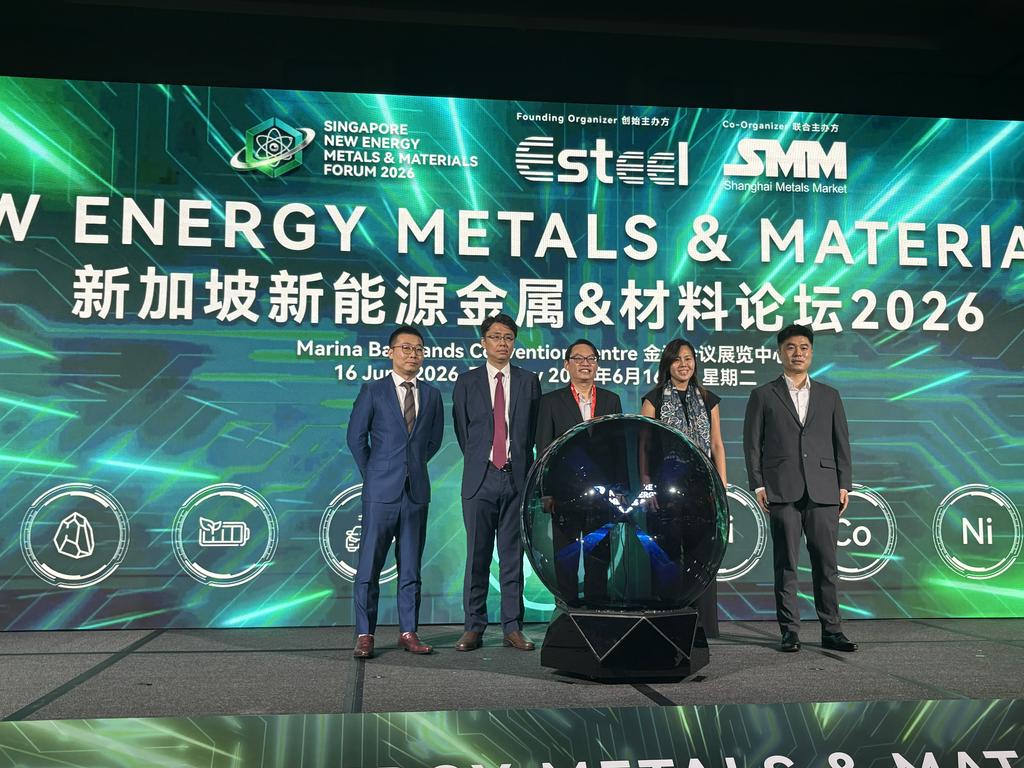 SMM CEO Attends Opening Ceremony of Singapore International Ferrous Week 2026
The Singapore International Ferrous Week (SIFW) 2026 officially kicked off on June 16, 2026. Logan Lu, CEO of Shanghai Metals Market (SMM), attended the opening ceremony as a distinguished guest. Co-hosted by SGX and Green Esteel with support from Enterprise Singapore, the event runs from June 15 to June 19. Its core summit, Singapore Iron & Steel Conference, attracted over 350+ participants including miners and steel mills from Australia, Southeast Asia, Japan and South Korea, serving as Southeast Asia’s flagship ferrous industry exchange platform. SGX CEO Loh Boon Chye delivered a keynote, highlighting trends in iron ore pricing mechanisms and financialization. He noted that physical trade evolution calls for diversified, differentiated pricing benchmarks to streamline risk management. Iron ore has grown into a mainstream investable commodity, included in major global indices; SGX has partnered with SummerHaven to launch tradable iron ore products. Leveraging strengths in physical trade, shipping, financing and risk hedging, Singapore acts as a neutral global commodity hub, the core rationale behind SIFW. Singapore’s Minister of Trade and Industry Alvin Tan likened geopolitical and economic headwinds to kryptonite weighing on the sector, yet underscored steel’s strong resilience. He outlined four growth pillars: tapping robust Asian steel demand led by Southeast Asia and India; utilizing Singapore’s full industrial and financial ecosystem for supply chain and price risk management; advancing AI and digitalization to boost operational efficiency; and accelerating low-carbon steel and maritime decarbonization amid tightening global carbon regulations. The Singapore New Energy Metals & Materials Forum , co-organized by Green Esteel and SMM , was launched alongside this event with the goal to advance low-carbon metal collaboration. Satvinder Singh, Deputy Secretary General of the ASEAN Economic Community, delivered the opening remarks for the forum, focusing on the industry resilience of the global ferrous metals sector amid multiple challenges and echoing the four development strategy recommendations mentioned above: deepening engagement in Asia, basing in Singapore, technology enablement, and green transformation. He also highlighted Singapore’s positioning as a commodities trading hub, as well as local supporting measures for industrial digitalization and the low-carbon transition. On the same day, Logan Lu arranged two important opening events. At 10:30 a.m., he also attended the opening of the inaugural Singapore New Energy Metals & Materials Forum, co-hosted by Green Esteel and SMM, and engaged in in-depth exchanges with enterprises across the industry chain in and outside China on core topics such as ferrous metals, the global supply chain layout for new energy metals, and the industry’s green and low-carbon transformation. The Singapore New Energy Metals & Materials Forum represents a strategic extension into the fast-growing track of new energy metals and new materials. The forum adopts an integrated “Forum + Exhibition” model, bringing together global industry leaders, policy researchers, investment institutions, traders, and technology R&D and manufacturing producers to jointly assess the industry’s future development direction. As the global energy transition continues to accelerate, new energy metals and high-end new materials are a critical foundation for the low-carbon economy and the development of renewable energy. Coupled with multiple variables such as changes in the geopolitical environment, the restructuring of critical minerals supply chains, and adjustments to the global trade system, the industry is facing new opportunities and challenges. Centered on six major themes—global macro economy, supply and demand for critical metals, industry chain integration, supply chain resilience, industry investment, and breakthroughs in new materials technologies—the forum promotes global resource matching and strategic cooperation across the new energy metals industry chain through keynote speeches, panel discussions, business matchmaking, and industry exhibitions, thereby driving the industry’s sustainable development.
Jun 18, 2026 10:29