

1708results found for 'recycling'
Sort by : |
- [SMM Analysis] Nickel Sulphate: Volume Up, Price Weak — August Review & Outlook
Entering Q3, the battery-grade nickel sulphate spot market appears to be "losing vitality," with reduced transaction frequency and relatively weak price trends. SMM believes this is primarily driven by a combination of three factors: weakening cost support, a gradually loosening supply-demand pattern, and a shift in market structure. This article will discuss these three factors in detail. I. Cost Side: Weakening Nickel Prices and Raw Materials Together In terms of nickel prices, August marks the period for the release of additional quotas in Indonesia, which has tempered market expectations of a significant shortage of Indonesian nickel ore. Coupled with the ongoing "shadow" of macroeconomic interest rate hikes, nickel prices have weakened. On the MHP payables front, following the concentrated arrival of sulphur in Indonesia, the supply of Indonesian intermediate products is expected to continue rising. According to SMM data, Indonesia's MHP supply-demand balance turned positive in July for the first time in a month. Meanwhile, downstream nickel and cobalt salt prices (especially cobalt salts) remain relatively weak, and downstream players are under pressure from losses, showing lower acceptance of high payables. Consequently, MHP payables remain under pressure overall. The market availability of high-grade nickel matte remains tight, and its payables are expected to hold steady. With both nickel prices and raw material payables declining, the spot production cost of nickel sulphate in August is expected to weaken overall from a spot cost perspective. II. Supply Side: High Raw Material Flexibility, Production Schedules Expected to Rise Since Q2, although MHP production schedules fell sharply at one point, nickel sulphate supply levels remained relatively stable, and no prolonged undersupply emerged. In Q3, as intermediate product production schedules gradually recover, this trend is expected to become more pronounced. According to SMM data, while battery-grade nickel sulphate production in July dipped 2% MoM due to production cuts or maintenance at some salt plants, August output is expected to rise over 8% MoM, returning supply to high levels. Total battery-grade nickel sulphate production from January to August 2026 grew 33% YoY. Behind this steady output lies strong supply flexibility in nickel salt raw materials. In addition to the adjustments using refined nickel raw materials and the substitution between high-grade nickel matte and MHP discussed in previous articles, recycled materials have also contributed a significant supply scale for nickel sulphate this year. On the one hand, after China opened up imports of lithium battery black mass last year, recycled raw materials have been able to be imported steadily, providing incremental raw material for recycled nickel sulphate. On the other hand, as the scale of ternary battery decommissioning gradually expands, and with some companies launching new recycling projects this year, the overall supply scale of black mass in the industry has risen. According to SMM data, the output from pulverising scrap ternary batteries in July doubled compared to the same period last year, providing significant flexibility for nickel sulphate supply. III. Demand Side: NMC Demand Supports Overall Consumption Volume but Fails to Directly Drive External Spot Purchases NMC demand exceeded expectations this year, serving as a key reason nickel sulphate maintained a relatively high premium. Consumption of nickel sulphate by downstream enterprises is expected to remain elevated in Q3. On one hand, with the September-October peak season for auto sales approaching, top-tier downstream players hold favorable demand expectations for mid-to-high nickel materials, driving higher production schedules at associated precursor plants. On the other hand, overseas high-nickel orders secured by leading firms have also stayed at high levels, supported by robust demand in Europe and other regions and by installation rush strategies triggered by adjustments to battery cell export tax rebate policies. According to SMM data, demand for battery-grade nickel sulphate in the new energy sector rose 1.55% MoM in July and is expected to grow a further 0.9% in August. However, the top-tier precursor enterprises with relatively strong orders are highly integrated, with several possessing refined nickel production capacity and ample flexibility to adjust in-house nickel sulphate output. As a result, the downstream demand increase provides limited direct stimulus to spot nickel sulphate procurement. According to SMM data, the combined production schedule of the five leading integrated and semi-integrated enterprises rose 11% MoM in August, and in-house output can meet over 80% of their raw material needs, meaning the incremental demand for externally purchased nickel sulphate was not significant. IV. Market Structure: Expanding Long-Term Contract Scale Squeezes Spot Order Space A notable structural shift in the Q3 nickel sulphate market is the expansion in the scale of long-term contracts. SMM estimates show that monthly spot orders for nickel sulphate stood at roughly 3,500-4,500 mt in metal content in 2025 and Q1 this year. Against the backdrop of rising NMC demand, this scale has shrunk to around 2,000 mt in metal content in Q3. At the start of the quarter, spot orders were expected to gradually retreat from monthly just-in-time procurement to a supplementary role for long-term contracts in corporate purchasing strategies, with additional purchases made only when clear downstream demand increments or raw material supply disruptions occur. This has suppressed market activity in August and early September. Moreover, with no significant decline in nickel sulphate supply, downstream acceptance of spot prices remains generally low. The expansion of long-term contracts stems from two factors. First, the high volatility in nickel prices and raw materials this year has intensified decision-making pressure on enterprises for spot orders, prompting a tendency to lock in demand through long-term contracts. Second, after persistent overcapacity, few new entrants have emerged, and industry supply chains have stabilized, with upstream and downstream enterprises gradually forming steady cooperative relationships. In the long term, the overall scale of long-term contracts is still expected to trend upward. V. Market Outlook As mentioned above, the supply and demand of nickel sulphate spot orders has shifted from relative tightness in Q2 to a slight surplus. From August to early September, prices are expected to be generally in the doldrums; after the downstream demand for the 'September-October peak season' becomes clear in September, the spot order market activity may recover to some extent, driving a rebound in nickel sulphate prices.
Aug 12, 2026 15:55 - [Flash News] EGA Targets Pre-incident Output Levels in Q1 2027
In its half-year results announcement, UAE-based EGA unveiled the production resumption timeline for the Al Taweelah smelter, which was forced to shut down following an attack on 28 March. 18% of the plant’s total 1,262 reduction cells have been restarted. Output is projected to return to pre-incident levels in Q1 2027. Capital expenditure for the recovery is estimated at USD 400 million; most spending will be incurred in 2026, with the remainder falling into 2027. The newly built recycling plant is currently operating at 10% capacity, targeting full production by end-Q4 2026. Output at the alumina refinery fell sharply year-on-year in H1 2026. Its capacity recovered to 50% of pre-incident levels in early July.
Aug 12, 2026 14:09 - 【Flash News】EGA Targets Pre-incident Output Levels in Q1 2027
In its half-year results announcement, UAE-based EGA unveiled the production resumption timeline for the Al Taweelah smelter, which was forced to shut down following an attack on 28 March. 18% of the plant’s total 1,262 reduction cells have been restarted. Output is projected to return to pre-incident levels in Q1 2027. Capital expenditure for the recovery is estimated at USD 400 million; most spending will be incurred in 2026, with the remainder falling into 2027. The newly built recycling plant is currently operating at 10% capacity, targeting full production by end-Q4 2026. Output at the alumina refinery fell sharply year-on-year in H1 2026. Its capacity recovered to 50% of pre-incident levels in early July.
Aug 12, 2026 14:09 - August 12 Scrap Battery Market Transaction Summary [SMM Daily Review]
SMM March 17 News: Today, the waste lead-acid battery market was stable with supplementary gains. Some recycling traders raised their battery price quotes by 50–100 yuan/mt from the previous day, mainly a supplementary increase following smelters' price adjustments yesterday afternoon; smelters, having just completed price adjustments yesterday, kept their purchase price quotes largely flat from the previous day, with no consecutive price chasing seen for now. A survey showed that some recyclers believed prices still had upside room, with a low willingness to sell, mainly holding back from selling and staying on the sidelines. In the short term, scrap battery prices have been generally stable recently, and with smelters having just completed a round of adjustments, the momentum for widespread consecutive hikes is temporarily limited; however, if recyclers continue to hold back from selling and market supply remains tight, price quotes may still edge up in some areas. Scrap battery prices are expected to be mostly stable with localized strength on the following day, with focus on actual smelter arrivals, purchasing enthusiasm, and recyclers' shipment pace.
Aug 12, 2026 13:36 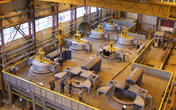 Lead Price Rebound Ignites Local Production Resumptions, Loss Shackles Still Suppress August Secondary Lead Supply
August production schedules were further under pressure, with the MoM impact on refined lead reaching -22,300 mt. Most enterprises had held a pessimistic view on the market outlook earlier, making maintenance and low-load operations the norm. Many smelters postponed their originally planned production resumptions for August to September.
Aug 12, 2026 10:18- [SMM Rare Earth Morning Meeting Minutes] Pr-Nd series quotations remain firm with weak transactions, medium-heavy rare earth prices stay stable, and magnetic materials see a slight recovery.
[Pr-Nd series: firm quotes, weak transactions; medium-heavy rare earths steady; magnetic materials slightly recover] Yesterday, influenced by the relatively firm price of Pr-Nd oxide, quotes from metal enterprises saw no significant adjustments. However, downstream purchasing attitudes remained cautious, leading to lackluster market transactions and a sluggish trading atmosphere. In the medium-heavy rare earth market, although inquiry activity remained limited, suppliers' quotes were relatively firm, and the overall market operated stably.
Aug 12, 2026 10:05 ![[SMM Analysis] LME Aluminum Hits Seven-Week High as Low Inventories and Supply Concerns Fuel Rally](https://imgqn.smm.cn/production/admin/votes/imageslvDRc20240314085754.png) [SMM Analysis] LME Aluminum Hits Seven-Week High as Low Inventories and Supply Concerns Fuel Rally
[SMM Analysis] LME Aluminum Hits Seven-Week High as Low Inventories and Supply Concerns Fuel RallyLME aluminium prices have extended their upward momentum in recent sessions. On August 10, LME cash aluminium settled at $3,327.5/mt, while the three-month contract stood at $3,320.5/mt. LME aluminium stocks fell further to 254,900 mt, continuing the sharp decline seen over recent months. Compared with 262,650 mt on August 3, LME aluminium inventories declined by 7,750 mt within a week. More notably, inventories have fallen substantially from 416,775 mt at the end of March, leaving the market with a much thinner visible inventory buffer. The latest rally has been supported by a combination of falling exchange inventories, concerns over short-term supply availability, stronger sentiment across the base metals complex and lingering geopolitical uncertainty. However, downstream demand has yet to strengthen at the same pace, suggesting that the latest rally remains more supply- and sentiment-driven than demand-led. Low LME Inventories Amplify Market Sensitivity The continued decline in exchange inventories has been one of the most direct drivers behind the recent strength in aluminium prices. LME aluminium stocks have fallen to around 255,000 mt, while inventories in China have also shown signs of destocking despite the traditional off-season. With visible stocks remaining low, the market has become increasingly sensitive to marginal changes in physical supply and demand expectations. When inventories are abundant, temporary supply disruptions can be absorbed relatively easily. However, when visible inventories fall to low levels, the market has less of a buffer against unexpected production losses, logistics disruptions or stronger-than-expected physical demand. As a result, even relatively small changes in supply expectations can generate a much larger price response. However, falling LME stocks should not automatically be interpreted as evidence of a sharp improvement in end-user consumption. Some metal may be withdrawn from LME warehouses and transferred to off-warrant storage or directly to consumers. Therefore, movements in cancelled warrants, off-warrant stocks and the LME cash-to-three-month structure remain important indicators when assessing the actual tightness of the physical market. Short-Term Supply Elasticity Remains Limited Earlier expectations were that global aluminium supply would gradually improve as disrupted Middle Eastern capacity recovered and new smelting capacity in Indonesia ramped up. While additional supply is still expected to enter the market, the pace of recovery remains an important uncertainty. Indonesia is emerging as an increasingly important source of new primary aluminium supply, while several Middle Eastern smelters are gradually restoring production. However, newly commissioned capacity requires time to reach stable operating rates, meaning additional tonnes may not immediately offset short-term supply disruptions elsewhere. China's supply response has also become less flexible than in previous cycles. Chinese primary aluminium operating capacity is already running at a high level, while the country's capacity ceiling and energy constraints limit the scope for another large wave of domestic expansion. Historically, higher aluminium prices could encourage rapid capacity additions in China, eventually bringing additional supply into the market and capping prices. The current structure is increasingly different: Higher prices → Chinese operating capacity already near high levels → incremental supply increasingly depends on overseas projects → slower short-term supply response. This structural change means that global aluminium prices may become more sensitive to supply disruptions, particularly when exchange inventories are already low. Broader Base Metals Strength Adds Momentum Aluminium's own fundamentals are not the only factor behind the recent rally. Strength in copper and other base metals has improved broader investor sentiment towards industrial metals, encouraging additional capital flows into aluminium. This has amplified the price response already created by low inventories and supply concerns. The current rally can therefore be characterised as a combination of: Low inventories + supply risk premium + stronger base metals sentiment + momentum-driven buying. This also helps explain why LME aluminium prices have risen faster than the improvement seen in some downstream physical markets. Geopolitical Risks Continue to Add a Supply Premium Geopolitical uncertainty remains another important variable for the international aluminium market. The Middle East remains a major production and export hub for primary aluminium. As a result, uncertainty surrounding regional energy infrastructure, shipping routes and the Strait of Hormuz continues to influence market expectations. Even without another major production disruption, persistent risks surrounding transportation and energy supply can keep a geopolitical premium embedded in aluminium prices. Nevertheless, this should be distinguished from an actual decline in physical production. If geopolitical tensions ease and regional logistics normalise, part of this risk premium could unwind relatively quickly. The Rally Remains More Supply-Driven Than Demand-Led Despite the sharp increase in LME aluminium prices, global aluminium consumption has yet to show a corresponding acceleration. Parts of Asia remain in the traditional seasonal slowdown, while downstream consumers continue to purchase largely on a hand-to-mouth basis. Higher aluminium prices may also discourage aggressive restocking among fabricators and end users. Therefore, SMM believes the latest rally is better characterised by: Low inventories + supply concerns + improving macro and market sentiment rather than a typical: Strong demand-led rally. This distinction will be critical in determining whether aluminium can sustain its recent gains. If physical demand begins to improve while exchange inventories remain low, prices could receive further support. However, if downstream demand remains subdued while Indonesian production ramps up and Middle Eastern supply gradually recovers, the current upward momentum may begin to weaken. Higher LME Prices Provide Support to Aluminium Scrap The rise in primary aluminium prices is also beginning to feed through to the global aluminium scrap market. Several internationally traded scrap grades, including UBC and clean 6063 extrusion scrap, are commonly priced as a percentage of LME aluminium or against an LME-based premium or discount. As a result, higher LME prices can directly lift the nominal purchase price of aluminium scrap even if the underlying percentage remains unchanged. There is also a substitution effect. As primary aluminium becomes more expensive, the economic value of using recycled aluminium increases. Producers may seek to optimise their raw-material mix by increasing scrap consumption where technically possible, providing additional support to scrap demand. This effect may be particularly significant for high-quality scrap with stable chemical composition, low attachments and limited contamination. However, aluminium scrap prices may not rise at the same pace as LME aluminium. Demand for secondary aluminium alloys remains relatively cautious in parts of Southeast Asia. ADC12 buyers in Malaysia and Thailand continue to purchase mainly according to immediate requirements. If LME and scrap prices continue rising while ADC12 prices fail to move higher at the same pace, secondary aluminium producers could face further margin compression. This, in turn, would limit smelters' willingness to accept higher scrap prices. Therefore, while higher LME aluminium prices are expected to provide both cost and substitution support to aluminium scrap, the extent of the increase will continue to depend on downstream secondary aluminium demand. Scrap Is Becoming an Increasingly Strategic Raw Material The relationship between primary aluminium and scrap is also undergoing a longer-term structural change. Growth in recycled aluminium production is expected to outpace primary aluminium over the coming decades as producers seek to reduce energy consumption and carbon emissions while increasing recycled content. Historically, much of the aluminium industry's recycling activity was concentrated on pre-consumer scrap generated during manufacturing. This material already has relatively high recovery rates. The next major source of growth, however, is expected to come from post-consumer scrap. As larger volumes of aluminium used in vehicles, buildings, packaging, machinery, solar equipment and other applications reach the end of their useful lives, the global pool of recoverable aluminium will continue to expand. This means aluminium scrap is gradually shifting from being viewed primarily as a supplementary raw material towards becoming a more strategic feedstock for the aluminium industry. As recycling capacity expands globally, competition for high-quality, traceable and easily recyclable post-consumer scrap could intensify, potentially strengthening the relationship between primary aluminium prices and premium scrap values. Outlook: Can Aluminium Hold Above $3,300/mt? Looking ahead, three factors will be particularly important. First, the market will continue to monitor whether LME and Chinese inventories decline further. Continued destocking would reinforce concerns over limited visible supply and provide further support to prices. Second, the pace of supply recovery will remain critical. Faster-than-expected production recovery in the Middle East or stronger output growth from newly commissioned Indonesian capacity could gradually ease current supply concerns. Third, and most importantly, the market will need confirmation from physical demand. If downstream orders and restocking activity strengthen, low inventories could amplify the impact of improving consumption and provide further upside support. Conversely, if end-user demand remains weak, elevated aluminium prices themselves may begin to suppress purchasing activity. SMM believes the recent LME aluminium rally has been primarily driven by falling exchange inventories, limited short-term supply elasticity, geopolitical uncertainty and stronger sentiment across the base metals complex. Low visible inventories are likely to continue providing support in the near term, but downstream demand has yet to fully confirm the strength of the rally. As overseas production gradually recovers and new capacity comes online, the sustainability of aluminium prices above $3,300/mt will increasingly depend on whether physical demand can catch up with the recent move in futures prices.
Aug 12, 2026 09:03- Platinum Futures Near Two-Month High
[SMM Express] Platinum futures climbed to around USD 1,780/oz, approaching an eight-week high as the precious metals complex strengthened. The move was supported by improving investment demand, with increased bullion holdings among Chinese institutional investors providing additional momentum as market volatility heightened. Meanwhile, AI and data-centre expansion could become a new source of PGM demand. Valterra Platinum estimates current AI-related PGM demand at around 200,000–400,000 oz annually and expects it could increase fivefold by 2030, supported by PGMs’ electrical and thermal properties. The longer-term outlook remains supported by a structural platinum market deficit and constrained mine supply, particularly from South Africa. However, sustained higher prices could encourage greater recycling and eventually place pressure on some areas of demand, leaving supply constraints and emerging technology demand as key factors to watch.
Aug 11, 2026 20:24 - [Auto Association] Delta Metal (Holdings) Limited invites you to attend SMM ASCC2026 (8th) Automotive Supply Chain Conference
The global automotive industry is accelerating its low-carbon and intelligent transformation, while China's automotive industry is shifting from scale advantages to dual leadership in technology and supply chains. In 2025, China's new energy vehicle penetration rate exceeded 50%, driving upgrades in vehicle materials such as aluminum, steel, and magnesium, and fueling a surge in demand for new lightweight materials. The impending implementation of the EU carbon tariff underscores the urgent need for low-carbon upgrades across the industry chain. Coinciding with the launch of the 15th Five-Year Plan and the deepening of dual carbon goals, the industry urgently requires professional platforms to solve material technology challenges. Against this backdrop, will be held September 10-11, 2026 in Shanghai, where SMM together with Delta Metal (Holdings) Limited cordially invites industry colleagues to participate, driving the automotive supply chain towards deeper evolution in green, lightweight, intelligent, and global directions. Click to attend. We look forward to meeting you at the conference. Delta Metal (Holdings) Limited was founded in 2006 and is headquartered in Hong Kong, China, known as the "Pearl of the Orient," with five manufacturing plants and four trading companies worldwide. Adhering to the philosophy of "Integrity, Harmony in Diversity, Unity of Knowledge and Action, and the Spirit of Craftsmanship," Delta Metal focuses on developing the green circular economy industry. With "Recycling for Symbiosis" as its mission, it aligns with global demands for sustainable development in the circular economy, advocating for and promoting the cyclic utilization of recycled metal resources to create a better future where humanity and nature coexist harmoniously through resource recycling. Currently, Delta Metal operates business models including domestic trade, import-export trade, and processing and manufacturing, gradually establishing and refining a domestic recycling system. Its domestic operations span multiple provinces, while overseas operations, primarily exporting to Japan and Southeast Asia, have expanded to Europe, the Americas, and other Asia-Pacific regions. In product applications, Delta Metal has forged long-term friendly partnerships with numerous large, well-known domestic and international automotive OEMs, automotive parts manufacturers, and producers of home appliances, furniture, and electronic products. Delta Metal possesses a full suite of production technologies and management experience accumulated over 70 years from Japan's Daiki Aluminium Industry Co., Ltd., and is dedicated to producing high-quality aluminum alloys. All its manufacturing plants operate with advanced, energy-saving, and environmentally friendly equipment, standardized production systems, and scientific management practices. Currently, the total annual capacity for secondary aluminum alloy across Delta Metal's enterprises exceeds 800,000 mt, encompassing over 1,000 product grades, with the capability for direct aluminum liquid supply, enabling it to offer clients higher-quality environmentally friendly products and technical services. Delta Metal boasts strong technical capabilities, having long collaborated with universities and research institutions on technical R&D. Its subsidiary, Zhaoqing Delta Aluminum Co., Ltd., has been recognized as a national high-tech enterprise and holds qualifications for provincial- and municipal-level engineering technology research centers. After over a decade of development, Delta Metal has become a holding company that integrates new technology R&D and manufacturing capabilities, exerting benchmark influence within the industry. The end is the origin! Delta Metal will focus on demonstrating its positive energy in green innovative development within the global supply chain's Industry 4.0 process, propelling the company to new levels of green, intelligent, low-carbon, and sustainable development. Delta Metal is dedicated to the R&D and production of high-grade secondary aluminum alloy (ingot/liquid), with over 1,000 existing secondary die-cast aluminum alloy product grades. While providing clients with high-quality products and reducing production costs, we also deliver excellent services to assist clients with process issues encountered during production. The GEST® aluminum alloy ingot enjoys strong brand awareness and reputation in both Chinese and overseas markets. Delta Metal (Holdings) Limited Address: No. 6, Huiyuan Fourth Road, Longfu Town, Sihui City, Guangdong Province, China Name: Lin Mingqiao Harry Lin Mobile: 18026123575 15007585205 Tel: +86-758-3810168 Email: linmingqiao@delta-alu.com Website: http://www.delta-alu.com SMM Conference Contact Ding Weiquan 180 2934 4837 dingweiquan@smm.cn
Aug 11, 2026 17:41 - [SMM Steel] Alang Ship Recycling Weekly Update
[India] India’s Alang ship recycling market saw improved buying sentiment last week with buyers becoming more active after several vessels were recently diverted to Chattogram and Gadani. Despite subdued domestic steel demand, Alang plate prices rose from 401USD/tonne (38,300 INR/tonne) to 411USD/tonne (39,200 INR/tonne) on Friday, supported by a stronger rupee. Indicative recycling prices remained steady at 442-447 USD/LDT for tankers and 452-457 USD/LDT for containers. Market participants expect the stronger bidding interest reflects improving confidence in Alang, although overall market fundamentals remain soft.
Aug 11, 2026 16:34