

6results found for 'precious metal recovery'
Sort by : |
- Jinfeng Precious Metal Materials (Jiangsu) Co., Ltd. Supports SMM in Creating the "2027 Global Copper Foil Industry Chain Distribution Map"
Under the global trend of vehicle electrification, China's and the European and American NEV markets have maintained high growth, driving the expansion of battery enterprises; wind power and PV installations continue to grow, and the demand for energy storage and filtering shows considerable growth prospects. Downstream automotive electronics and server sectors in the electronic circuit copper foil industry have maintained good growth with state support; with the advent of the 5G era, a new wave of development in the consumer electronics industry has driven production growth of high-performance flexible copper clad laminates. However, as copper foil enterprises continuously release new capacity in and outside China, fierce competition has brought severe profit challenges. Capacity integration, cost reduction and efficiency improvement, and enhancing product competitiveness have become the core of industry development. SMM , in response to the demands of industry users, as an independent third-party platform, with the aim of promoting the development of the global copper foil industry, has organized and sorted out copper foil industry resources in and outside China for market reference and study. Here, we join hands with Jinfeng Precious Metals Materials (Jiangsu) Co., Ltd. to sincerely invite outstanding enterprises and industry experts to assist in the production of , and to provide your valuable suggestions, jointly making positive contributions to the development of the copper foil industry. We strive to present a more objective industry landscape, and will invite all sectors of the industry chain to participate in production and supervision, helping to promote the distribution and dissemination of the global copper foil industry map throughout the process! (Click the link to get it for free: ) Jinfeng Precious Metals Materials (Jiangsu) Co., Ltd. is based in Jiangsu, serving the entire country. It is a comprehensive full-industry-chain service provider integrating precious metal scrap recycling, coating removal processing, high-purity precious metal powders, precious metal compounds, and catalytic material production and sales. It has deeply cultivated the fields of copper foil, chlor-alkali chemical industry, and water treatment electrolytic electrode recycling and regeneration, with complete recycling qualifications and guaranteed compliant operations. The company's core business focuses on waste electrode recycling and substrate regeneration. It specializes in the recycling and disposal of waste iridium-coated anode plates from copper foil plants, as well as ruthenium-iridium coated anode meshes and ruthenium-platinum coated cathode meshes from chlor-alkali and water treatment industries, supported by a mature back-pull anode coating removal process. This process completely strips the precious metal coating and returns the titanium substrate intact, significantly reducing clients' raw material loss costs and achieving dual recycling of both titanium and precious metals. With in-house standardized production and purification workshops, we mass-produce high-purity precious metal raw materials. Our main products include 99.95 high-purity iridium powder, 99.95 high-purity ruthenium powder, as well as precious metal salts such as chloroiridic acid, ammonium chloroiridate, iridium trichloride, and ruthenium trichloride, and we also supply various precious metal catalysts. All products strictly comply with national industry standards, ensuring stable purity and controllable quality, suitable for multiple industrial scenarios such as electrolysis, electroplating, and chemical catalysis. Our business covers all categories of precious metals including platinum, palladium, rhodium, iridium, ruthenium, gold, and silver, integrating the entire process from scrap recycling, hydrometallurgical refining, powder synthesis, compound preparation, to finished product sales. The company adheres to the concept of green recycling development, relying on mature hydrometallurgical purification technology, achieving high precious metal recovery rates, transparent pricing, and efficient settlement. We have long served upstream and downstream enterprises in the new energy copper foil, chlor-alkali, environmental water treatment, and fine chemical industries, providing industrial clients with one-stop precious metal recycling solutions through compliant qualifications, stable supply, and comprehensive after-sales service. Jinfeng Precious Metals Materials (Jiangsu) Co., Ltd. Contact: Director Du Tel: 138 6166 6239 Address: No. 1079 Binjiang West Road, Jiangyin, Jiangsu SMM Contact Bao Jinyong 13159338158 baojinyong@smm.cn
Jun 23, 2026 16:01 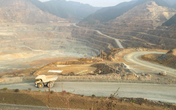 Copper Concentrate TCs Break Through Negative Triple Digits: What Challenges Do Smelters Face?
I. Market Status: Negative TCs Enter Triple Digits, Structural Tightening in Copper Concentrate Supply-Demand As global smelter capacity continues to climb, China, as the world's largest copper smelting country, faces a continuously declining self-sufficiency rate in copper concentrates and rising external dependency. Compounded by geopolitical crises, production cuts by ex-China miners, declining mine grades, and frequent production accidents, the copper industry has undergone a dramatic shift from "tight balance" to "structural deficit." Currently, the global copper concentrate market has fallen into a state of persistently tight supply. On May 15, the SMM Imported Copper Concentrate Index (weekly) reported -$102.84/dmt, breaking through the -$100/dmt threshold for the first time in history, setting a record negative depth. The payable indicator for 20%-grade domestic trade ore was 97.5%-98.5%, up 0.5 percentage points MoM. Supply-side factors driving TCs persistently lower continue to accumulate. 1) Full production resumptions at Freeport's Grasberg mine have fallen short of expectations. According to Freeport's Q1 earnings call, the company plans to achieve full production resumptions by the end of 2027; 2) The Peruvian government signed Emergency Decree No. 003-2026 on May 11, triggering widespread market concerns over the country's energy supply and copper mine output; 3) Geopolitical disruptions—the continued blockade of the Strait of Hormuz has driven sulfur prices persistently higher, pushing smelting acid prices to rise continuously. With smelting profits climbing, smelters' purchase willingness has increased, driving copper concentrate TCs persistently lower. Customs data showed that China's copper ore and concentrate imports in April 2026 were 2.352 million mt in physical content, down 19.57% YoY; cumulative imports from January to April were 9.915 million mt in physical content, down 0.8% compared to the same period last year. Since December 2020, China's copper concentrate cumulative imports had maintained positive YoY growth; this marks the first decline in over five years. II. Smelter Operating Rates Stay High Contrary to the intuition of "industry-wide losses" implied by deeply negative TCs, operating rates at China's copper smelters have not experienced a cliff-like decline. From a pure smelting perspective, operating willingness and actual profitability across different types of enterprises show significant divergence. Under the extreme environment of deeply negative TCs, the core reason China's copper smelters can maintain relatively resilient operations is that by-product revenues are becoming the key variable determining break-even. Meanwhile, China's copper cathode production declined MoM due to the maintenance peak. SMM data showed that China's copper cathode production in April fell 2.26% MoM. Cumulative copper cathode production from January to April 2026 reached 4.7067 million mt. However, according to SMM, some smelters postponed their maintenance plans or completed crude smelting maintenance ahead of schedule to capture revenue from the by-product sulphuric acid. III. Breakdown of Smelter Profit Sources (i) Sulphuric Acid: The Strongest Profit Contributor at the Current Stage Sulphuric acid is currently the most important by-product profit source for smelters. In pyrometallurgy-based copper cathode production, approximately 3-4 mt of sulphuric acid is produced as a by-product for every 1 mt of copper cathode. As of May 15, the SMM China Copper Smelting Acid Index stood at 1,665 yuan/mt, up 83.7% from the beginning of the year. Sulphuric acid prices currently stay high, meaning sulphuric acid revenue can offset a considerable portion of the revenue loss caused by negative TCs. However, this "sulphuric acid moat" is facing policy challenges. China suspended exports of ordinary industrial sulphuric acid and smelting by-product sulphuric acid starting in May for a period of 8 months. The export ban is not intended to suppress domestic sulphuric acid prices, but rather to prioritize domestic supply for agricultural phosphate fertiliser production and strategic industries such as new energy. Demand side, overall sulphuric acid demand remains tight. Although downstream sectors including phosphate fertiliser, titanium dioxide, and new energy materials saw declining operating rates due to high-priced raw materials, just-in-time procurement still exists. Meanwhile, the supply side is also constrained by concentrated smelter maintenance and high sulphur-based acid production costs, with industry-wide capacity utilization rates at low levels. Cost side, firm sulphur prices provide bottom support for sulphuric acid; supply side, concentrated maintenance limits downside room; demand side, although weak, has not yet formed a substantial enough impact to break down high prices. This means sulphuric acid continues to serve as a profit pillar for smelters. (ii) Precious Metal Recovery: "Incremental Game" Under High Copper Prices In addition, copper concentrates typically contain associated precious metals such as gold and silver, which can be recovered through anode slime processing during smelting. Copper prices are currently at historically high levels, and gold prices also fluctuate at highs, greatly enhancing the economics of precious metal recovery. According to SMM market sources, when gold and silver prices are at high levels, raw materials with impurities rich in gold and silver are assigned extremely high added value. The profit contribution of precious metal recovery to smelters is reflected in: smelters can achieve recovery utilization rates exceeding the gold and silver payable indicators through refined processing, profiting from spot smelting revenue. This portion of revenue is often a significant component of smelters' comprehensive profit structure. However, as gold and silver prices continue to rise, suppliers in the copper concentrates spot trade are simultaneously raising gold and silver payable indicators. The continuously rising precious metal payable indicators and payable benchmark pose an increasingly severe challenge to smelter profitability. IV. Future Trends: Coexistence of Industry Landscape Evolution and Technology Upgrade Requirements However, industry chain profits are irreversibly shifting toward the upstream ore side. Under the medium and long-term landscape of persistently tightening copper concentrates supply and demand, the scarcity value of the resource side is being reassessed by the market. As the copper concentrates supply-demand gap persists over the medium and long-term horizon, and smelters' bargaining power will remain under pressure over the long term. The market is widely concerned about whether TC can quickly pull back in tandem once the continuously rising sulphuric acid prices reach a turning point. Facing the long-term trend of profit squeeze at the mine end and losses in the smelting segment, the future landscape of the copper smelting industry will evolve in the following directions: Direction 1: Integrated consolidation extending upstream. Enterprises with upstream mine assets will have a significant advantage in profitability. Direction 2: Technological upgrades to achieve differentiated competition. Against the backdrop of narrowing profit margins from non-payable metals, the technological barriers of smelters will become increasingly important. Those who can more efficiently extract valuable metals from low-grade ore or complex ore will seize the initiative in the industry reshuffle. Under the extreme environment of persistently negative TCs, sulphuric acid by-product revenue and precious metal recovery are the core profit pillars currently sustaining smelter operations. The supply-demand pattern dictates that the pricing power and profit margins at the mine end will continue to outperform those at the smelting end. The copper smelting industry is transitioning from the traditional model of "earning TCs" to a new competitive landscape of "resource control + technological barriers + integrated operations."
May 19, 2026 15:48- January 2026: Silver Production Up 0.6% MoM, 9.91% YoY; Smelters Resume Post-Maintenance [SMM Analysis]
In January 2026, silver production increased by about 0.6% MoM and 9.91% YoY compared to January 2025.
Feb 2, 2026 22:18 - Indonesia Grants Copper Concentrate Export Permit Again – Can It Quench Immediate Thirst? [SMM Analysis]
[SMM Analysis:Indonesia Grants Copper Concentrate Export Permit Again – Can It Quench Immediate Thirst?] October 28, 2025 – A spokesperson from Indonesia's Ministry of Energy stated that Indonesia has agreed to issue a copper concentrate export permit to Amman Mineral International. This export quota is set at 480,000 metric tons of ore, valid for six months. Indonesia's copper concentrate primarily flows to China, Japan, and South Korea, with China having the largest demand. This resumption of exports from Indonesia has become a market focus, coinciding with the timing of long-term contract negotiations between smelters in China and Japan and Antofagasta. Can Indonesia's copper concentrate export permit reshape the flow of copper concentrate in Asia? Can it improve the supply and demand balance for copper concentrate in China? Can it support buyers, represented by Chinese smelters, in enhancing their bargaining power in the long-term contract negotiations?
Nov 16, 2025 22:40 - Weekly Review of the Lead Concentrate Market (September 22, 2025 - September 26, 2025) [SMM Lead Concentrate Weekly Review]
The extreme quotations for TCs in the imported concentrate market have not yet eased. Recently, the profitability of lead concentrate imports has improved slightly, and some smelters have expectations for the absolute price of imported crude lead or lead concentrates. Due to the continuous rise in silver prices, reaching new historical highs, the strong performance of the precious metals market has led to a downward trend in TCs for silver-bearing lead concentrates. In the domestic ore trade market, winter stockpiling has started early in north China, with some smelters maintaining TCs at around 500 yuan/mt in metal content after increasing raw material inventory; in contrast, some smelters in southern regions such as Yunnan and Hunan have provided extreme quotations ranging from nearly 0 to 200 yuan/mt in metal content to secure supply. Lately, due to differences in geographical location and resource access channels, there is a significant disparity in TC quotations among smelters. Currently, supported by strong metal content and sulphuric acid prices, smelting enterprises maintain high production enthusiasm. Although lead raw material grade and production may decrease due to undersupply, overall economic benefits remain favorable considering returns from precious metal recovery and other metal-rich comprehensive revenues. Medium and long-term, the tight supply-demand situation for lead concentrates is expected to be difficult to effectively resolve.
Sep 26, 2025 12:17 - Process for Recycling PV Modules in the National Catalogue of Advanced and Applicable Process Technologies and Equipment for Comprehensive Utilization of Industrial Resources (2025 Edition)
On September 11, to accelerate the reduction of industrial solid waste at the source and promote its large-scale utilization, enhance the comprehensive utilization of renewable resources, and develop high-end intelligent remanufacturing, the Ministry of Industry and Information Technology (MIIT), the National Development and Reform Commission (NDRC), and the Ministry of Ecology and Environment issued the *National Directory of Advanced Applicable Process Technologies and Equipment for Comprehensive Utilization of Industrial Resources (2025 Edition)* (hereinafter referred to as the *Directory*). According to the *Directory*, the process technologies and equipment selected for 2025 primarily target four areas: source reduction of industrial solid waste, comprehensive utilization of industrial solid waste, comprehensive utilization of renewable resources, and remanufacturing of mechanical and electrical products. Among these, the technologies related to PV modules mainly include the following: equipment for the comprehensive utilization of silicon sludge from diamond-wire slicing of PV industrial solid waste; technology and complete equipment for efficient disassembly and clean recycling of decommissioned crystalline silicon PV modules; complete equipment for the resource utilization of fluorine-containing wastewater in the PV industry through mineral phase reconstruction; and intelligent, precise disassembly technology for decommissioned PV modules.
Sep 12, 2025 15:51
Loaded to the end