

1439results found for 'ferrous metals'
Sort by : |
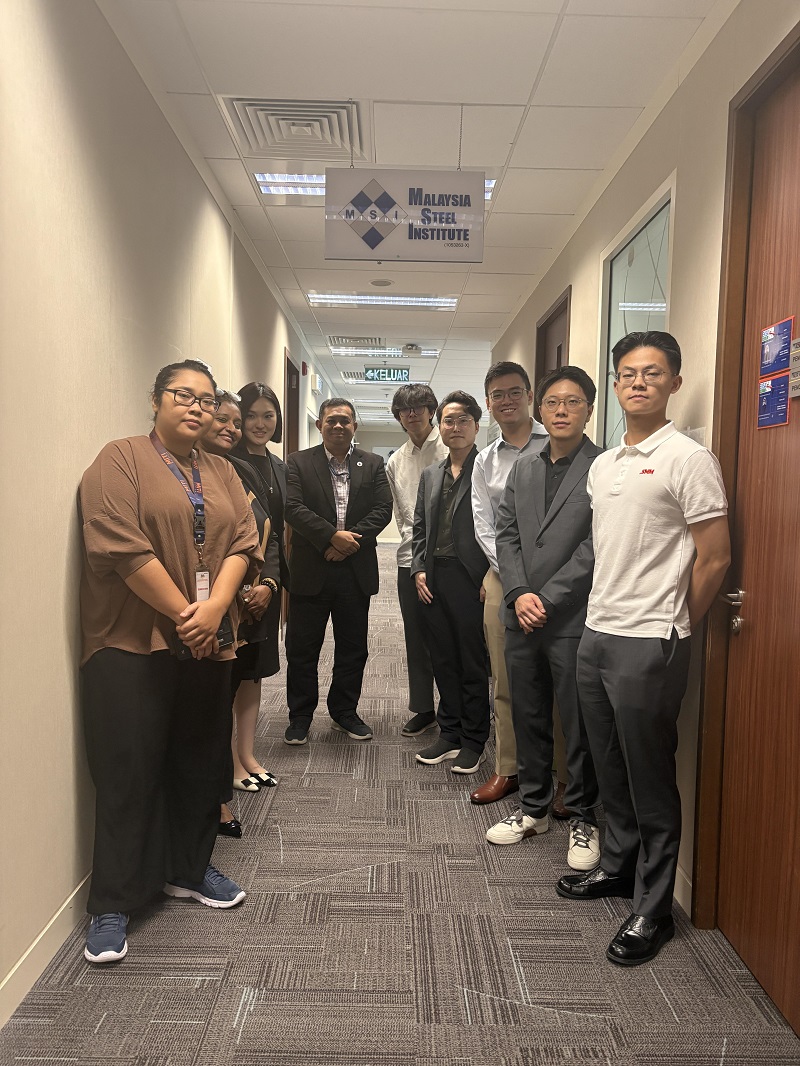 SMM Visits Malaysian Steel Institute (MSI) to Deepen Cooperation on the Southeast Asian Ferrous Metal Industry Chain
Kuala Lumpur, Aug 5 – At a time when the global ferrous metals sector is undergoing constant restructuring, ASEAN has emerged as a pivotal growth hub for the steel industry, fuelled by robust end-market demand, fast-expanding production capacity and shifting cross-border trade dynamics. Regional infrastructure upgrades, local capacity iteration, and trade policy adjustments are collectively driving ongoing changes in the supply-demand structure, pricing system, and supply chain of the ASEAN steel market. The industry urgently needs a specialized, international dialogue platform to address development pain points and unlock global business opportunities. Against this industry background, a delegation from Shanghai Metals Market (SMM) paid a special visit to the Malaysia Steel Institute (MSI) on August 4, and was warmly welcomed by MSI's team including CEO Ts. Dr. Nurl Muiz, Industry Relations and Liaison Shalini and Data Analyst Shamimi, etc. Both sides introduced their respective development overviews, and engaged in in-depth exchanges on cooperation directions, industry data services, exhibition synergy, and other topics, sorted out areas of cooperation alignment, seeking a long-term and mutually beneficial industry cooperation model. MSI presented its institutional positioning and core functions to SMM. As an industrial service organization under the jurisdiction of Malaysia's Ministry of International Trade and Industry (MITI), MSI serves as a key communication bridge between the Malaysian government and the steel industry. Built on a government-enterprise collaboration model, it has been deeply involved in the domestic steel industry for many years, responsible for public services such as industry standard setting, technology R&D, talent cultivation, and detection and testing, undertaking the function of coordinating the steady development of Malaysia's steel industry. Leveraging long-term industry surveys, MSI conducts in-depth market intelligence research on the Southeast Asian steel market, helping member enterprises enhance market competitiveness through data analysis services. The local government is actively advancing the green steel industry development agenda and increasing the green transformation of the steel sector, but enterprise awareness and industry supporting systems on the market side are lagging behind the policy promotion pace. In response, MSI hopes to connect with professional industry platforms to address the industry's development shortcomings, and hopes to rely on SMM's entire industry chain service capabilities to obtain targeted industry development solutions and implementation suggestions, thereby helping the local green steel industry and the entire ferrous metals industry chain achieve steady upgrades. MSI understands and affirms SMM's data service capabilities in the global steel industry, and intends to leverage SMM's industry chain data to improve regular monitoring of steel capacity, production, supply and demand, etc. in Southeast Asia. MSI has long maintained cooperation with multiple international industry organizations. This engagement with SMM aims to jointly enhance the research standards of Malaysia's steel industry and promote high-quality development of the industry. Exhibition-conference synergy is one of the key cooperation directions in this visit. In order to further penetrate the ASEAN metals market, deliver bilateral cooperation outcomes, and build a higher-standard cross-border industry exchange and cooperation bridge, SMM will host the 2026 SMM ASEAN Ferrous Metals Summit from November 26-27, 2026 in Kuala Lumpur, Malaysia. The summit focuses on the development trends of the entire ferrous metals industry chain in ASEAN, covering core categories such as steel, iron ore, and coke. It will delve deeply into key industry topics such as steel demand transformation driven by regional infrastructure upgrades, mineral resource development and utilization, cross-border trade and circulation, industrial green transformation, and market price trend forecasts. The summit will bring together mines, steel enterprises, traders, logistics institutions, financial platforms, and industry research experts globally, leveraging SMM's mature industrial data system and market analysis capabilities to provide authoritative market interpretations and efficient upstream-downstream matchmaking channels for participants. MSI expressed that it will provide promotional support for SMM's relevant industry summits, including official channel promotion, invitation of local quality enterprises, and industry resource matchmaking. Both sides reached a preliminary cooperation consensus in terms of exhibition collaboration, brand synergy, and resource sharing. The in-depth engagement with MSI and the cooperation consensus reached will also lay a solid foundation for the successful implementation of this summit, deepening regional industry penetration in the ASEAN region, and releasing regional industrial cooperation value. About the 2026 SMM ASEAN Ferrous Metals Summit This event is the premium platform in the ASEAN ferrous metals market that converge 400+ decision-makers from mines, mills, trading houses, processors, equipment and technology providers, and logistics operators at the same table — precisely when the regional order is being rewritten. Conference Highlights 1. ASEAN Steel Market Outlook An in-depth analysis of regional steel demand, with consumption expected to reach 87.9 million mt in 2026, driven primarily by Vietnam, Indonesia, and the Philippines. 2. China—ASEAN Trade and Supply Chain Restructuring Exploring shifting flows of HRC, billet, slab, and other steel products amid changing supply patterns, trade remedies, and regional market dynamics. 3. Capacity Expansion and Production Transition Examining ASEAN’s evolving steelmaking landscape, including BF-BOF capacity growth, EAF development, overseas investment, and new regional production hubs. 4. Trade Policies and Market Access Assessing anti-dumping measures, tariffs, RCEP-related opportunities, and regulatory changes reshaping steel trade across ASEAN. 5. High-Growth Demand and Product Opportunities Identifying opportunities from infrastructure, construction, automotive, and advanced steel applications, with a focus on Indonesia, Vietnam, and other emerging markets. 6. Executive Networking and Regional Cooperation Connecting leading producers, traders, buyers, investors, associations, policymakers, and industry experts across ASEAN, China, and global markets. Senior Speakers 2026 Scenes from Past Conferences Conference Agenda Contact: Horin Dong WhatsApp: +8618721310824 Email: horindong@smm.cn Scan the QR code for conference details and more discount information About SMM SMM has long been deeply engaged in global commodity industry services, continuously deepening cooperative ties with government and enterprise institutions and industry associations across various countries, and steadily expanding its global industrial service network. Leveraging a mature collaborative model with Indonesian government, enterprises, and associations, SMM has established a comprehensive closed-loop ecosystem for sharing overseas exhibition and conference information, continuously iterating and upgrading its industrial big data system to achieve efficient global market information exchange and joint resource building and sharing. SMM organizes 50+ professional events each year, including industry summits, industry forums, and field trips. Of these, 40 are deeply rooted in the Chinese market, nearly 10 are precisely positioned in core Southeast Asian markets, and a small number cover Europe and Africa. Overseas events have earned global industry recognition thanks to authoritative industry guest lineups, solid industry survey data, and precise supply-demand matchmaking services. SMM has organized a series of high-end summits in Indonesia in cooperation with local authorities such as the Ministry of Foreign Affairs and the Indonesia Nickel Miners Association (APNI), gathering 300+ industry elites, and were complemented by professional field trip activities along the overseas industry chain, comprehensively empowering regional industry exchanges and trade matchmaking.
Aug 5, 2026 17:04- Data: SHFE, DCE market movement (Aug 05)
The following table shows the ferrous and nonferrous metals movement on the SHFE and DCE on 05 Aug , 2026
Aug 5, 2026 16:18 - [SMM Stainless Steel Daily Review] SS futures price retreated after a rapid rise, stainless steel spot trades cooled.
[SMM Stainless Steel Daily Review] SS Futures Retreat after Rapid Rise; Spot Stainless Steel Trades Cool Down According to SMM on August 5, SS futures generally pulled back, ending yesterday's shot up, and followed SHFE nickel to slump sharply. As of close, the most-traded SS contract settled at 14,475 yuan/mt. In the spot market, dragged by the renewed decline in SS futures, trading sentiment weakened notably, and traders lowered their quotes. Under the sentiment of rushing to buy amid continuous price rise and holding back amid price downturn, transactions turned visibly quiet. The most-traded SS futures contract: at 10:15 am, SS2609 was at 14,480 yuan/mt, down 390 yuan/mt from the previous trading day. Spot premiums for 304/2B in Wuxi were in the range of 490-890 yuan/mt. In the spot market, the average price for cold-rolled 201/2B coil in Wuxi held steady; for cold-rolled 304/2B coil with raw edges, the average price in Wuxi fell by 75 yuan/mt, and in Foshan also fell by 75 yuan/mt; the price for cold-rolled 316L/2B coil in Wuxi was flat; for hot-rolled 316L/NO.1 coil, quotes in Wuxi were unchanged; and cold-rolled 430/2B coil in both Wuxi and Foshan remained flat. This week, macro sentiment turned bearish, dominating metals market trends, and stainless steel futures consolidated on a subdued note under overall pressure. The US Fed's interest rate meeting this week kept rates unchanged as expected, but the overall stance was hawkish, weighing on commodity valuations broadly, and the nonferrous metals sector weakened collectively. Affected by the transmission of macro headwinds, SS futures consolidated on a subdued note in tandem, with the center of futures moving lower and overall market trading sentiment cautious. Spot and inventory side, futures...
Aug 5, 2026 15:38 - Crude Oil Falls for Third Day; Metals Rise Broadly, SHFE Lead Up Over 2%, SHFE Zinc and Lithium Carbonate Lead Gains; Platinum, Palladium, and SHFE Silver Soar [SMM Midday Commentary]
SMM August 5: On the metals markets: As of the midday close, base metals on the domestic market almost all rose. SHFE copper rose 0.79%, SHFE aluminum rose 0.15%, SHFE lead rose 2.61%, SHFE zinc rose 1.38%, SHFE tin rose 0.5%, and SHFE nickel fell 0.78%. In addition, the most-traded cast aluminum futures were flat at 23,365 yuan/mt. The most-traded alumina futures rose 0.99%, the most-traded lithium carbonate futures rose 1.45%, the most-traded silicon metal futures rose 0.72%, and the most-traded polysilicon futures rose 1.83%. Most ferrous metals rose. Iron ore rose 0.93%, rebar rose 0.34%, hot-rolled coil rose 0.5%, and stainless steel fell 2.09%. Coking coal and coke: the most-traded coking coal contract rose 3.27%, and the most-traded coke contract rose 2.13%. On the overseas base metals market, as of 11:45, LME metals broadly rose. LME copper was flat at $14,043/mt, LME aluminum rose 0.22%, LME lead rose 0.71%, LME zinc rose 0.59%, LME tin rose 0.13%, and LME nickel fell 0.2%. On the precious metals front, as of 11:45, COMEX gold rose 0.8% and COMEX silver rose 1.33%. On the domestic precious metals front, SHFE gold rose 1.92%, and the most-traded SHFE silver contract rose 5.35%. In addition, as of the midday close, the most-traded platinum futures rose 7.04%, and the most-traded palladium futures rose 6.01%. As of the midday close, the most-traded European container freight futures fell 8.96% to 1,635 points. As of 11:45 on August 5, the following are some futures’ midday quotes: > Click to view the SMM data dashboard Spot and fundamentals Copper: Today, in Guangdong, #1 copper cathode spot against the front-month contract: high-quality copper was quoted at a premium of 110 yuan/mt, up 10 yuan/mt from the previous trading day; standard-quality copper was at a premium of 30 yuan/mt, up 30 yuan/mt; and SX-EW copper was at a discount of 30 yuan/mt, up 30 yuan/mt. The average price of Guangdong #1 copper cathode was 106,990 yuan/mt, up 450 yuan/mt from the previous trading day, while the average price of SX-EW copper was 106,890 yuan/mt, up 460 yuan/mt. Spot market: Guangdong inventories ended a two-day increase and declined again, mainly due to reduced arrivals... > Click for details Macro front Domestic: [The PBOC’s open market operations net drained 201.5 billion yuan today] The PBOC conducted 5 billion yuan of 7-day reverse repo operations, with an operation rate of 1.40%, unchanged from the previous operation. Today, 206.5 billion yuan of reverse repos matured. > On August 5, the central parity rate of the yuan in the interbank foreign exchange market was 6.7889 yuan per US dollar US dollar side: As of 11:45, the US dollar index fell 0.05% to 99.82. Oil prices fell further, with markets betting that the tight energy supply situation will ease, potentially reducing inflationary pressures, and cooling expectations for US Fed interest rate hikes. (Wall Street CN) According to the CME "FedWatch," the probability that the US Fed will keep rates unchanged in September is 41.6%, while there is a 58.4% probability of a cumulative 25bp rate hike. For October, the probability of rates staying unchanged is 30.5%, with a 53.9% probability of a cumulative 25bp hike and a 15.5% probability of a cumulative 50bp hike. (Jin10 Data APP) "Fed mouthpiece" Nick Timiraos wrote that US Treasury Secretary Bessent’s policy reaction function has shifted to a less dovish stance. His remarks this year suggest that the Fed should continue to hold rates steady. Earlier this year, Bessent cited models showing that the Fed’s policy rate could be anywhere from more than 25bp to over 100bp above the neutral rate. Today (August 4), he put forward two points. He first defended Warsh’s decision last week not to articulate any policy reaction function: "I believe every meeting should be open, and market participants should judge for themselves... I think Warsh wants to keep his options open to achieve the best outcome." Secondly, he did propose a policy reaction function that could be seen as dovish, arguing that near-term shocks should be ignored: "What exactly will be the impact of rising short-term rates? We’ll have to wait and see." He raised this question, but then responded by noting that underlying inflation is "very mild... very steady." "In core inflation, after stripping out the more volatile components influenced by energy, the rest has been very steady. I expect this to continue." (Jin10 Data APP) On the economic data front, US job openings declined somewhat in June, but hiring rebounded slightly, indicating that labour market demand remained relatively stable. eToro’s Bret Kenwell noted that this Friday’s non-farm payrolls report will be the next key period: "If the data is strong, especially amid still-elevated inflation, it will reinforce expectations for a September rate hike; but if the data is weak, combined with last week’s lower-than-expected GDP growth, it could provide more justification for the Fed to stay on hold." (Wall Street CN) Data: Today will see the release of France’s June industrial production m/m, final July services PMIs for France, Germany, the Eurozone, and the UK, Eurozone June PPI m/m, US July ADP employment change, final US July S&P Global services PMI, and US July ISM non-manufacturing PMI, among other data. Watch for: 2028 FOMC voter, Kansas City Fed President Schmid delivered a speech on the US Fed, monetary policy, and agricultural economic outlook. Crude oil: As of 11:45, oil prices on both benchmarks extended their declines from the previous two trading days, with WTI down 1.36% and Brent down 1.06%. Qatar said both the US and Iran are optimistic about an agreement to reopen the Strait of Hormuz, and the relevant proposal has been drafted. US Treasury Secretary Bessent publicly stated that the agreement could be reached on Tuesday or Wednesday. As a result, crude oil futures continued their decline. The Strait of Hormuz is a critical passage for global energy supply; if reopened, it is expected to normalize global oil supply. According to Xinhua News Agency, Iranian Foreign Ministry spokesperson Baghaei said on the 4th that Iran is still negotiating with Oman on the Strait of Hormuz, and the negotiations have made "positive progress" at both technical and political levels. US Treasury Secretary Bessent indicated that an agreement could be reached as early as Tuesday or Wednesday this week. According to a report by Axios on the 4th, regional sources and US officials said that the US, Iran, and Oman are "close to reaching" a temporary agreement to reopen the Strait of Hormuz, and the US side hopes to announce the agreement on the 5th. (From Wallstreetcn APP) Spot Market Overview: ► ► ► ► ► ► ► ► ► ► ►
Aug 5, 2026 14:46 - Domestic and overseas aluminum diverge and consolidate to repair, Middle East tensions ease disrupting aluminum price risk premium [SMM Aluminum Morning Meeting Minutes]
[Aluminum Divergence Consolidation Recovery Inside and Outside China; Middle East Tensions Ease, Disturbing Aluminum Price Risk Premium] Overall, recent improvement on the macro front, interest rate hike expectations remaining on hold and easing the marginal constraints on the nonferrous metals sector, along with the continued rise in the proportion of liquid aluminum in China, have supported aluminum prices. However, the continued rollout of long-term aluminum capacity outside China, weak traditional end-use demand in China during the traditional off-season, and disturbances from Middle East geopolitical uncertainties are expected to result in aluminum prices consolidating on a strong note.
Aug 5, 2026 09:32 - Crude oil continued to slump heavily, metals broadly rose, LME copper, LME and SHFE lead, and coking coal rose more than 1%, and COMEX and SHFE silver surged over 3% [Overnight Market]
SMM August 5: Metals market: Overnight, base metals on the domestic market broadly rose. SHFE copper rose 0.68%. SHFE aluminum rose 0.08%. SHFE lead rose 1.79%, SHFE zinc rose 0.84%, and SHFE tin rose 0.63%. SHFE nickel fell 0.75%. Additionally, the most-traded alumina futures contract rose 0.19%, and the most-traded cast aluminum contract rose 0.09%. Overnight, ferrous metals showed mixed performance. Stainless steel fell 1.25%, iron ore was flat at 699.5 yuan/mt, rebar fell 0.07%, and hot-rolled coil edged up. Coking coal and coke: the most-traded coking coal contract rose 1.01%, and the most-traded coke contract rose 0.63%. Overnight, on the overseas market, LME base metals broadly rose. LME copper rose 1.41%. LME aluminum fell 0.29%. LME lead rose 1.23%. LME zinc rose 0.74%. LME tin rose 0.84%. LME nickel fell 0.35%. Overnight, precious metals : COMEX gold rose 1.07%, and COMEX silver rose 3.27%. Overnight, the most-traded SHFE gold contract rose 0.87%, and the most-traded SHFE silver contract rose 3.45%. CITIC Securities said in a research note that gold prices shot up and then fell rapidly this year, but they believe gold is still in a major bull market, citing accelerating expansion of the US fiscal deficit, difficult-to-heal geopolitical rifts under deglobalization, and continued support from global central bank gold purchases. They therefore view the current pullback as only a temporary correction within the bull market. The current drawdown has approached historical extremes, and the $4,000/oz area is likely the bottom zone of this round. Looking ahead, the situation in the Strait of Hormuz is expected to shift from a drag to a boost for gold prices, the Fed’s monetary policy may be more optimistic than market expectations, and the surge in US military spending is pushing up the deficit; gold prices are expected to return to an upward trajectory within the year. (Jin10 Data App) As of 7:11 on August 5, closing prices for overnight trading were: Macro front China: [MIIT: Strengthen the screening and testing/verification of risks and hidden dangers in "aggressive" innovative designs of road motor vehicle products, and strengthen the safety evaluation of combined driver assistance and autonomous driving functions] On August 4, the Equipment Industry Department I of the Ministry of Industry and Information Technology (MIIT) organized a discussion with road motor vehicle inspection and testing institutions to analyze the current product safety and inspection work situation and to arrange efforts to regulate the competitive order and improve the quality of inspection and testing in the road motor vehicle sector. The meeting called for inspection and testing institutions to thoroughly implement the decisions and plans of the Party Central Committee and the State Council, firmly resist irrational competition, and strictly control product testing. First, conduct in-depth self-checks to systematically identify problems in the inspection and testing of road motor vehicle products and earnestly carry out rectifications. Second, strengthen industry self-discipline, focus on main responsibilities, reinforce responsibility, enhance integrity and self-discipline, and jointly safeguard the credibility of the entire industry. Third, hold the bottom line of product safety by implementing quality control measures for sample vehicle management, personnel management, and process management, strengthen the screening and testing/verification of risks and hidden dangers in "aggressive" innovative designs, and enhance the safety evaluation of combined driver assistance and autonomous driving functions. Fourth, improve capabilities by actively participating in the formulation and revision of standards and regulations, accelerate the establishment of a testing and evaluation system for intelligent connected vehicles, strengthen the capacity for road motor vehicle inspection and testing, and provide objective, fair information and professional opinions to the industry. Going forward, the MIIT will work with relevant departments to in-depth carry out actions on production consistency and quality improvement for road motor vehicle products, intensify work inspections, urge and guide inspection and testing institutions to fulfill their role as "gatekeepers" of product safety, improve the quality of inspection and testing work, impose joint penalties on institutions with problems, and resolutely hold the bottom line of product safety. (From the Wallstreetcn App) [PBOC: Net injection of 50 billion yuan via open market government bond transactions in July] The PBOC released its liquidity injection data for various tools in July 2026. In terms of central bank lending, the standing lending facility (SLF) recorded a net withdrawal of 1 billion yuan; the medium-term lending facility (MLF) recorded a net injection of 100 billion yuan; and the pledged supplementary lending (PSL) recorded a net withdrawal of 116.1 billion yuan. In terms of open market operations, 7-day reverse repos recorded a net injection of 249.5 billion yuan, open market government bond transactions recorded a net injection of 50 billion yuan, and central treasury cash management recorded a net injection of 30 billion yuan. Dollar front: Overnight, the US dollar index fell 0.11% to 99.86. According to CME "Fed Watch," the probability that the Fed keeps interest rates unchanged in September was 41.6%, while the probability of a cumulative 25-basis-point rate hike was 58.4%. The probability that the Fed leaves rates unchanged through October was 30.5%, the probability of a cumulative 25-bp hike was 53.9%, and the probability of a cumulative 50-bp hike was 15.5%. US Treasury Secretary Bessent, in an interview with CNBC, said Fed Chairman Warsh wants to preserve flexibility to achieve the best outcome. When discussing the strategy of the Fed and Warsh, he called it a "detox" for the Fed. He said every meeting should be live (full of possibilities) and participants should exercise their own judgment. He believed the Fed will balance its growth and inflation objectives, and he trusted that Warsh will help the Fed strike a balance between the two. On the economy and inflation, he noted that after stripping out sectors affected by energy prices, core inflation performance has been very steady, and underlying inflation data has been very mild, a trend he expects to continue. He also noted that core inflation is slowing. "Fed whisperer" Nick Timiraos wrote that US Treasury Secretary Bessent's policy reaction function has shifted to become less dovish. His comments this year suggested that the Fed should continue to hold rates steady. Earlier this year, Bessent cited models indicating the Fed's policy rate could be as little as more than 25 bp or as much as more than 100 bp above the neutral rate. Today (August 4), he made two points. First, he defended Warsh's decision last week not to articulate any policy reaction function: "I think every meeting should be open, and market participants should make their own judgments... I think Warsh wants to keep his options open to achieve the best results." Second, he did lay out what could be seen as a dovish reaction function, advocating that near-term shocks should be ignored: "What exactly will the rise in short-term interest rates bring? We will wait and see." He raised that question but then responded by pointing out that underlying inflation is "very mild... very steady." "Within core inflation, after stripping out the volatile components significantly influenced by energy, the rest has been very steady. I think that will continue." (Jin10 Data App) Macro front: Data to be released today include China's July RatingDog Services PMI, France's June industrial output m/m, the final France July Services PMI, the final Germany July Services PMI, the final Eurozone July Services PMI, the final UK July Services PMI, the Eurozone June PPI m/m, the US July ADP employment change, the final US July S&P Global Services PMI, and the US July ISM non-manufacturing PMI. Also on the radar: a speech by Kansas City Fed President Schmid, a 2028 FOMC voter, on the Fed, monetary policy, and the agricultural economic outlook. Crude oil front: Overnight, both crude oil futures extended their declines from the previous trading day, with WTI falling 6.47% and Brent dropping 6.08%. Wallstreetcn noted that on Tuesday, August 4 (US Eastern Time), Reuters, citing informed sources, reported that Iran has abandoned its earlier demand for full control over two-way shipping in the Strait of Hormuz and instead proposed that Iran manage all vessel navigation entering the Strait while retaining supervisory rights and the right to intervene when necessary over vessels departing the Strait. Xinhua News Agency, citing US media, reported that US Treasury Secretary Bessent said on Tuesday that an agreement on the Strait of Hormuz could be reached on August 4 or 5. Also according to Xinhua, US Secretary of State Rubio said on the same day that negotiations with Iran on reopening the Strait had "made progress" but a deal had not yet been finalized. The sharp drop in oil prices meant cooling inflation expectations for the market. Tony Miano of Wells Fargo Investment Institute noted: "The market is reacting to the prospect that a reopening of Hormuz could help normalize global oil supplies and ease recent energy price pressures, and lower oil prices could ease inflation concerns." However, he cautioned that inflation is unlikely to normalize overnight, and even after energy pressures ease, overall prices could remain sticky in the near term. (Wallstreetcn)
Aug 5, 2026 08:33 - Lead Futures Both Close Higher Overnight, Boosted by Broad Gains in Nonferrous Metals [SMM Lead Morning Brief]
SMM August 5 News: Overnight, LME lead opened at a low of $1,869/mt, then rose along with a broad rally in nonferrous metals, touched a high of $1,898/mt in the European session, and finally closed at $1,890/mt, up 1.23%. Overnight, the most-traded SHFE lead 2609 contract opened higher with a gap at yuan 15,520/mt, dipped slightly to a low of yuan 15,490/mt in early trading, then drifted higher, with bears reducing positions, the contract touched a high of yuan 15,630/mt in late trading, and finally closed at yuan 15,605/mt, up 1.04%. Currently, risks from geopolitical conflicts outside China persist, there are no expectations for a recovery in lead consumption in the Middle East, while lead consumption in Southeast Asia is steadily picking up, with spot premiums rising, which will support the upward shift of the lead price center to some extent. In China's spot market, downstream enterprises' inquiry sentiment improved, and spot order trading volume increased; combined with maintenance and production cut expectations at some smelters, bullish sentiment strengthened, and the lead price briefly stopped falling.
Aug 5, 2026 08:06 - Lead Prices Briefly Stop Falling; Focus on Support from Improving Consumption for Rebound [SMM Lead Morning Meeting Minutes]
Futures: Overnight, LME lead opened at a low of $1,869/mt and then rose along with a broad rally in nonferrous metals, reaching a high of $1,898/mt in the European session before finally closing at $1,890/mt, a gain of 1.23%. Overnight, the most-traded SHFE lead 2609 contract opened higher with a gap at 15,520 yuan/mt, briefly touched a low of 15,490 yuan/mt after the open, drifted higher, and with bears reducing positions, rose to a high of 15,630 yuan/mt late in the session, finally closing at 15,605 yuan/mt, a gain of 1.04%. Macro: The US government solicited comments in the Federal Register on expanding the scope of metal tariff products, proposing tariffs on items such as welding machines and cranes. US Treasury Secretary Bessent: (On writing “buy yen” in a notepad) the aim was to ensure that reporters saw it. Bessent: It is possible to reach an agreement with Iran tomorrow (Wednesday, US Eastern Time) to open the Strait of Hormuz. China News Service reported that foreign media said the US plans to ban imports of Chinese optical modules. The central bank: It will conduct a 500-billion-yuan outright reverse repo operation on August 5, with a term of 3 months. The State Administration for Market Regulation held a meeting to advance a special campaign to thoroughly implement the fair competition review system. The central bank released data on liquidity provision through various tools in July 2026, with a net injection of 249.5 billion yuan via 7-day reverse repos and a net injection of 50 billion yuan through open market purchases of government bonds. Spot Fundamentals: SHFE lead rebounded after hitting a low, with suppliers selling along with the market and holding prices firm. Quotations from mainstream production areas were at premiums of 0-50 yuan/mt against the SMM #1 lead average price for ex-works delivery. In secondary lead, smelters were more frequently reducing or halting production, and some enterprises held prices firm to sell. Secondary refined lead quotations were at parity against the SMM #1 lead average price for ex-works delivery, with a few at a premium of 200 yuan/mt. Downstream enterprises were intending to buy the dip, with improving inquiry activity, among which EXW cargoes from smelters saw better transaction. Inventory: On August 4, LME lead inventory decreased by 3,575 mt to 434,875 mt. As of August 3, total social inventory of SMM lead ingots in five regions reached 72,100 mt, up 3,700 mt from July 27 and up 3,600 mt from July 30. Today's Lead Price Forecast: Currently, risks from overseas geopolitical conflicts persist, with no expectations for lead consumption recovery in the Middle East. However, lead consumption in Southeast Asia is steady with a slight uptick, and spot premiums are widening, which will support the center of lead prices to shift upward to some extent. In the domestic spot market, downstream enterprise inquiry activity improved, and spot order trading volume increased. Combined with expectations for maintenance and production cuts at some smelters, bullish sentiment emerged, and lead prices briefly stopped falling.
Aug 5, 2026 08:04 - Data: SHFE, DCE market movement (Aug 04)
The following table shows the ferrous and nonferrous metals movement on the SHFE and DCE on 04 Aug , 2026
Aug 4, 2026 16:01 - [SMM Stainless Steel Daily Review] SS futures center moved up, spot stainless steel market sentiment recovered
[SMM Stainless Steel Daily Review] SS Futures Center Moves Up, Spot Stainless Steel Market Sentiment Recovers According to SMM news on August 4, SS futures shot up and probed higher overall. Near the close of the night session, driven by fund operations, SHFE nickel and SS futures shot up quickly. Although SS pulled back briefly at the morning open, it had risen significantly overall. At the close, the most-traded SS contract settled at 14,470 yuan/mt. Spot market, buoyed by the rally in SS futures, traders for stainless steel agents raised their quotes even as steel mill spot guidance prices held steady. Market activity picked up and inquiry and transaction performance was moderate. The most-traded SS futures contract: at 10:15 AM, SS2609 was at 14,870 yuan/mt, up 345 yuan/mt from the previous trading day. Spot premiums for 304/2B in Wuxi were in the 200–550 yuan/mt range. In the spot market, average prices: Wuxi cold-rolled 201/2B coil stable; cold-rolled raw edge 304/2B coil (Wuxi up 50 yuan/mt, Foshan up 75 yuan/mt); Wuxi cold-rolled 316L/2B coil flat; hot-rolled 316L/NO.1 coil quote flat in Wuxi; cold-rolled 430/2B coil flat in both Wuxi and Foshan. This week, macro sentiment turned bearish and dominated metals market trends, and stainless steel futures consolidated on a subdued note under overall pressure. The US Fed left interest rates unchanged at its meeting this week as expected, but its overall tone was hawkish. Commodity valuations came under broad pressure, and the nonferrous metals sector weakened across the board. Dragged down by the contagion of macro headwinds, SS futures...
Aug 4, 2026 15:50