

20results found for 'copper concentrate production'
Sort by : |
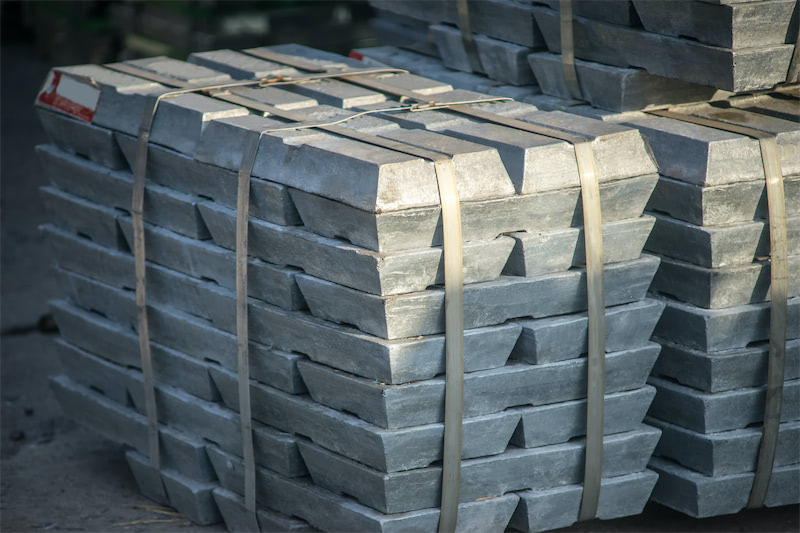 China Zinc/Lead Market Weekly Updates - 2025/6/13
The SMM Imported Zinc Concentrate Index for this week is $53/dmt, with a 5.26% WoW increase. The SMM Imported Lead Concentrate average spot TC for this week is $-45/dmt.
Jun 13, 2025 19:39- Resumption of Underground Mining in the Western Section of the Kakula Mine
According to Ivanhoe Mines: Robert Friedland, Executive Co-Chairman of Ivanhoe Mines (TSX: IVN; OTCQX: IVPAF), Weibao Hao, Co-Chairman, and Marna Cloete, President and Chief Executive Officer, announced today the latest operational updates for the Kamoa-Kakula copper mine project, as well as the preliminary findings of the geotechnical investigation following the seismic event at the Kakula mine announced on May 20, 2025. Mining operations in the western section of the Kakula mine were safely and prudently restarted on June 7, 2025, with equipment and mining crews returning underground to resume production. The short-term mining plan for the western section of the Kakula mine has been updated to incorporate the recommendations summarized in the preliminary investigation report. It is expected that mining operations in the far eastern section of the Kakula mine will also resume as soon as possible, with a focus on development work to open up access to new mining areas east of the existing mining zones. The development work in the new mining areas of the far eastern section of the Kakula mine will be carried out in a spatially isolated manner from the pumping work areas and is expected to be completed in the second quarter of 2026. On June 2, 2025, the company announced that additional pumping equipment had been installed at the Kakula mine to maintain stable water levels. Since the initial announcement on May 18, 2025, the frequency of seismic events has also decreased. Pumping operations are expected to commence in the eastern section of the Kakula mine in August 2025 and be completed in the fourth quarter. The recommendations made by world-class geotechnical experts based on the preliminary investigation findings have been incorporated into the short-term mining plan for the Kakula mine to ensure the safe restart of mining operations. Meanwhile, the management and technical advisors of Kamoa-Kakula are developing and reviewing the medium- and long-term mining plans for the mine. The Phase 1 and Phase 2 beneficiation plants continue to operate at approximately 50% of their combined capacity, processing ore from surface stockpiles. With the resumption of mining operations in the western section of the Kakula mine, ore supply to the beneficiation plants will increase, and the Phase 1 and Phase 2 beneficiation plants will gradually ramp up production over the remainder of 2025, with ore supply supplemented by ore mined from the western section of Kakula. Mining activities at the Kamoa underground mine and the adjacent Phase 3 beneficiation plant continue to operate normally without any disruptions. It is expected that the smelter located on the mine site will commence operations in September 2025 and produce its first copper anodes in October, once copper concentrate production and inventory levels meet the required conditions. Robert Friedland, Executive Co-Chairman of Ivanhoe Mines, commented, "We are grateful and deeply appreciate the swift response of the on-site team in stabilizing the groundwater levels at the Kakula mine and resuming mining operations in the western section. Critical dewatering equipment required to ensure the safety of the entire mine was rapidly deployed, while preparations were actively underway to advance as quickly as possible into the Kakula Far East zone to open up new high-grade mining areas." "Although it is still too early to outline detailed plans for 2026 and 2027, the prospects for the Kamoa-Kakula copper mine and the adjacent Western Foreland exploration project remain bright. Kamoa-Kakula is, and will continue to be, a world-class mine, maintaining its leading position among the world's copper producers for decades to come." President and CEO, Mark Cutifani, commented: "We are working tirelessly to safely and methodically restore full operations at the Kakula mine, with safety as our top priority! We would like to express our sincere gratitude to the mining team, engineering team, and our many long-standing contractors for their outstanding contributions in restoring dewatering capacity and restarting mining operations, all without any lost-time incidents." "The resilience and operational strength demonstrated by our team underscore the extraordinary nature of this world-class copper district – and the bright future it will create for generations to come." Note: Existing underground development as of May 2025. The above figure, based on the 2023 Kamoa-Kakula Integrated Development Plan, shows the average grade estimates (calculated using a cut-off grade of total copper >3%) for vertical blocks in different zones, with a minimum thickness of 3 meters. The groundwater level at the Kakula mine has stabilized; underground mining operations have resumed in the western section of the Kakula mine. Following the seismic event, although the inflow of water into the Kakula mine's underground workings gradually increased, it has now stabilized at approximately 4,000 liters per second. Due to the impact of the seismic event on existing underground dewatering facilities, additional underground dewatering capacity totaling approximately 4,400 liters per second has been installed, helping to stabilize the groundwater level. The new pumping stations are connected to the existing central dewatering infrastructure and then discharge water to the surface through four locations near the bottom of the northern and southern twin declines, as shown in Figure 2. With the stabilization of the water level, mining operations have resumed on the western side of the Kakula mine. Mobile equipment and mining crews, which were evacuated from underground on May 18, 2025, have now returned to the underground workings and conducted their first blast on June 7, 2025. The short-term mining plan has been updated to incorporate recommendations from the preliminary geotechnical investigation report. Based on underground conditions, Kamoa-Kakula's mining crews plan to increase mining volumes on the western side of the Kakula mine to approximately 300,000 mt per month (or 3.6 million mt per year on an annualized basis) in H2 2025. In Q3, mining operations will ramp up the mining capacity in the Kakula West Zone to 3.6 million mt/year, with further adjustments to be made based on underground conditions. In H2 2025, the underground mining team will focus on implementing three major projects: ramping up the mining capacity in the Kakula West Zone, constructing a new mining area in the Far East Zone of the Kakula Mine, and ramping up the mining capacity in the Kamoa Mining Area. Additional operational personnel have been deployed to the Kamoa Mine, located approximately 10 kilometers north of the Kakula Mine, to assist the existing mining team in underground excavation works, as well as in the construction of newly designed box-cut and ramp development at the Kansoko Mine. The new ramp will help increase the mining capacity at Kansoko and further supplement the ore supply required by the Phase 1 and Phase 2 beneficiation plants. Construction of the new mining area in the Far East Zone of the Kakula Mine will be concentrated, with development works set to commence soon, spatially separated from the pumping work area. The Far East Zone of the Kakula Mine will adopt a new mining plan, focusing on development works further east of the existing mining area. The new mining area and the existing mining area will be separated by a safety pillar to prevent the rock mechanics instability in the existing mining area from propagating to the new mining area. The mining team is expected to soon commence construction of two new main access tunnels. The two main tunnels will be constructed simultaneously, advancing eastward from the existing underground infrastructure (see Figure 2). The construction of the new mining area will involve the extraction of ore and waste rock, and is expected to be completed by Q2 2026. The new access tunnels will be isolated from the mining faces currently being dewatered, and dewatering operations will also be conducted separately and independently. Upon completion of dewatering in the East Zone of the Kakula Mine, in-situ geotechnical observations will be conducted in the existing mining area, followed by a comprehensive evaluation by geotechnical experts. The evaluation results will determine the future scope of production resumptions in the existing mining area. Underground water inflow is mainly concentrated in the deepest part of the East Zone of the mine (see Figure 2). The Kamoa-Kakula engineering team has developed a phased plan for dewatering the Kakula Mine. Phase 1 : Install temporary pumping facilities underground to maintain the existing water level stable. Phase 1 was completed on June 2, 2025. Phase 2 : Install large-power pumps and a permanent pumping system that can be operated from the surface to conduct comprehensive dewatering operations throughout the Kakula Mine. Kamoa Copper has ordered five large-power pumping units, each with a dewatering capacity of 650 liters per second. The long-term plan also includes the procurement of additional pumping units, which will be deployed in pairs in the existing shafts to the bottom of the Kakula Mine (see Figure 2). Dewatering is expected to commence in August 2025. As water levels gradually decline, the engineering team will begin repairing the underground pumping, ventilation, and other systems, and complete the geotechnical engineering assessment. It is expected that the dewatering work in the eastern section of the Kakula Mine will be completed in Q4. Preliminary findings from the recent geotechnical investigation into the mine seismicity Following the first mine seismic event on May 18, 2025, the company promptly engaged two renowned and independent geotechnical consulting firms, Beck Engineering from Australia and Open House Management Solutions (hereinafter referred to as "Open House") from South Africa, to conduct an investigation at the Kamoa-Kakula Mine. With the support of Ivanhoe Mines, the two consulting firms worked closely with the Kamoa-Kakula engineering team. The preliminary investigation results indicate that the mine seismicity originated from areas in the eastern section of the Kakula Mine with high ore extraction rates. It is currently believed that the secondary stope, originally planned for Step-2 mining, experienced subsidence-induced yielding deformation, leading to stress redistribution and transmission to the pillars in the area. This, in turn, caused the pillars to yield and deform due to excessive bearing stress. Although backfilling of the mined-out areas could not prevent stress redistribution to the regional pillars, it may have mitigated the effects in some cases. Meanwhile, it cannot be ruled out that adverse geological factors within the area exacerbated the yielding deformation of the pillars. Pillars are unmined ore or rock left in place to support the roof of underground voids; mined-out areas refer to spaces underground where mining has been completed. Backfilling is the operation of filling mined-out areas with a mixture of tailings and cement, which, after consolidation, can achieve the target strength. The geotechnical evaluation has not yet been completed and will be further detailed in the eastern section of the Kakula Mine after the dewatering operations are finished. The preliminary investigation results recommend changes to the short-term mining plan to increase the width of the pillars, thereby providing stronger structural support. The results also suggest adjusting the mining sequence to improve stress distribution and overall stability. Additionally, an enhanced rock mechanics monitoring system will be installed throughout the mine. The management of Kamoa-Kakula, along with Beck Engineering, Open House, and other technical consultants, are making revisions to the short-term, medium-term, and long-term mining plans based on the geotechnical investigation findings. Prior to the mine seismicity, the company was in the process of updating the comprehensive mine life-of-mine development plan, which has now been suspended until Ivanhoe Mines' engineering team and its panel of technical experts complete their review and agree to the relevant changes. After the update work resumes, Ivanhoe Mines will provide updates on the progress of the revised comprehensive development plan. The Phase I and II beneficiation plants are operating at reduced capacities, and production ramp-up will be advanced following the resumption of mining operations in the western section of the Kakula Mine; the Phase III beneficiation plant continues to perform exceptionally well. On June 7, 2025, mining operations in the western section of Kakula were safely and prudently resumed. It is planned to increase the underground mining capacity to 3.6 million mt per year in Q3. Combined with ore from surface stockpiles and supplementary ore from the northern Kamoa Mine, this will be sufficient to support over 80% of the combined designed capacity (9.2 million mt per year) of the Phase I and II beneficiation plants. It is expected that in the second half of the year (H2), the copper grade of raw ore in the Kakula West section will range between 3.0% and 4.0%. Since the suspension of underground operations on May 18, 2025, the Phase I and Phase II beneficiation plants have been operating at approximately 50% of their combined capacity, processing ore from surface stockpiles. The Phase III beneficiation plant adjacent to the Kamoa mine (see Figure 3) has maintained excellent operational performance since the beginning of this year. The plant's current average ore processing capacity is equivalent to an annualized capacity of 6 million mt, which is 30% higher than the designed capacity of 5 million mt per year. As of 2025, the average copper grade of ore processed by the Phase III beneficiation plant has been 2.84%. The mining output from the Kamoa and Kansoko mines has increased over the past two months, exceeding an annualized production of 6.8 million mt. The short-term mining plans for the Kamoa and Kansoko mines have been updated to incorporate recommendations from preliminary geotechnical investigations. The long-term mining plans will be reviewed in conjunction with the overall review of the Kakula mine. 2025 Production Guidance Revision The updated 2025 production guidance for Kamoa-Kakula is based on assumptions and estimates as of June 10, 2025, and involves estimates of known and unknown risks, uncertainties, and other factors that may differ significantly from actual results. The revision of the 2025 production guidance has taken into account the potential impacts of recent seismic events and the resulting disruptions to mining operations at the Kakula mine. Although mining operations have resumed in the Kakula West section, it is currently impossible to accurately predict potential further seismic events, the resulting disruptions, the integrity of underground infrastructure, the ability to ramp up production in underground operations, the ability to complete dewatering work, and the timing of the commissioning of new mining areas in the Far East section. The updated 2025 production guidance is based on the aforementioned factors, and the company's management believes these considerations and assumptions are reasonable given all currently available information. Figure 4 provides detailed information on the revision of the production guidance. All figures are stated on a 100% project equity basis. The reported metal content in concentrate does not account for losses or deductions under smelting agreements. Upon further review, the 2026 copper production target of approximately 600,000 mt has been withdrawn. Ivanhoe Mines will provide further updates on the 2026 production target as more information becomes available. Ivanhoe Mines will provide an update on the 2025 C1 cash cost guidance in its Q2 2025 financial report. The one-step copper smelter at the mine site will commence operations in Q3 Senior management at Kamoa-Kakula has confirmed that the one-step copper smelter at the mine site will begin operations in early September 2025, with the first copper anodes expected to be produced in October. Smelters can operate at a minimum of 50% capacity, which is equivalent to an annualized copper production of approximately 250,000 mt. As of May 31, 2025, there were 33,000 mt of copper in copper concentrates onsite at the mine that had not been sold. It is expected that the first batch of concentrates will be fed into the process approximately four to six weeks after production starts, and it is estimated that there will be a total of approximately 35,000 mt of copper in concentrates in inventory pending sale at that time. In addition, the senior management of Kamoa-Kakula expects that the Inga II hydropower station's Unit 5 turbine (with a designed power of 178 MW) will be commissioned in October 2025, further increasing the hydropower capacity available to the Kamoa-Kakula copper mine through the domestic power grid.
Jun 12, 2025 13:16 - Supply support is evident, copper prices fluctuate at highs
Recently, the copper market has shown stability, with copper prices continuing to fluctuate rangebound near the 5-day moving average.
May 19, 2025 13:56 - The impact of US tariff policies gradually emerged, with insufficient rebound momentum for SHFE copper prices
Since April, the most-traded SHFE copper contract prices have shown a trend of initial decline followed by a rebound, with copper prices gradually recovering after hitting a low of 71,000 yuan/mt. Meanwhile, arbitrage trading in the LME copper and COMEX copper markets has weakened, while domestic copper smelters have increased maintenance activities, leading to a rapid drawdown in social copper inventory and providing support for copper prices. Supply side remains tight. In December 2024, China's copper concentrate production reached 151,800 mt, up 6.89% YoY and 9.51% MoM. In March 2025, China imported 2.3939 million mt of copper concentrates and ore, up 9.69% MoM and 2.73% YoY. This year, China's copper concentrate production has been at a relatively low level, while imports have remained relatively stable, resulting in an overall decline in copper concentrate supply. In late April, Peru's Antamina mine halted operations entirely due to a sudden accident. The mine produced 426,900 mt of copper ore in 2024, accounting for 1.86% of global copper ore production, which will have a certain impact on global copper ore supply. In terms of inventory, as of April 18, the copper concentrate inventory at major domestic ports stood at 706,900 mt, at a moderate level, while the processing fee for imported ore continued to decline, falling to -$34.71/mt, a record low. According to data from relevant institutions, from 2021 to 2025, the global copper concentrate capacity additions have accelerated, but in the next three years, the growth rate of global copper concentrate capacity additions will decline rapidly, potentially exacerbating the global copper concentrate supply tightness in the later period. As of February this year, China's copper scrap production reached 115,800 mt in metal content, up 4.99% MoM and 60.83% YoY. According to March data, China's imports of copper scrap and shredded copper scrap reached 189,700 mt, down 3,631 mt MoM and 13.07% YoY. Among them, imports from the US were 22,500 mt, down 8,900 mt MoM. With the intensifying impact of the "trade war," China's copper scrap imports may decline in the later period, leading to a tight supply-demand structure for copper scrap. In February, China's blister copper production was 911,500 mt, down 2.96% MoM and up 10.74% YoY. Among them, mine-produced blister copper decreased by 26,500 mt from January to 738,700 mt, while scrap-produced blister copper decreased by 1,300 mt to 172,800 mt. In March, China imported 50,200 mt of copper anode, down 11.05% MoM and 47.8% YoY. In March, China's copper cathode production was 1.1221 million mt, up 6.04% MoM and 12.27% YoY. Entering April, due to the tight supply of copper concentrates, some smelters began to reduce the feedstock of copper concentrates, but by increasing the feedstock of copper scrap and anode plates, they maintained stable copper cathode production.Additionally, new smelters have commenced operations in east China, while the capacity utilization rate of smelters in south-west China has increased, leading to a slight decline in the total production of copper cathode. Due to significant losses in the industry, the operating rate of domestic smelters remains relatively low, and import losses have also suppressed the supply of imported copper. Overall, despite an increase in copper cathode production, the overall supply pressure remains relatively small. In terms of subsequent capacity increments, it is projected that China will add 1.17 million mt of new copper refining capacity in 2025, with overseas capacity additions reaching approximately 870,000 mt. Among these, the Kamoa mining area, jointly held by Ivanhoe and Zijin Mining, will contribute the largest overseas capacity increment. Operating rates in downstream sectors rebound In 2025, China's fiscal policy will become more proactive. Specifically, the scale of ultra-long-term special treasury bonds is expected to increase from 1 trillion yuan to 2 trillion yuan, while the scale of new special local government bonds is anticipated to rise from 3.9 trillion yuan to 4.5 trillion to 5 trillion yuan. With the continuous strengthening of fiscal policy, it is expected that infrastructure investment in 2025 will continue to fluctuate at highs in recent years, with investment growth rates projected to stabilize at 5% to 10%. Infrastructure investment will remain one of the main driving forces for industrial product demand in 2025. In December 2024, China's copper semis production reached 2.27 million mt, up 6.2% MoM and 16.53% YoY. The operating rate of enterprises in the copper semis industry stood at 69.02%. Affected by the Chinese New Year holiday, the operating rate of the copper semis industry was low in January and February but gradually rebounded to 67% in March. With the recovery of downstream consumption, the operating rate of downstream processing enterprises in the copper industry continued to rebound. Entering April, copper prices fell sharply, stimulating an increase in downstream orders. It is expected that the operating rate of enterprises in the copper semis industry will continue to rise, but attention should be paid to the impact of US tariff policies on China's copper consumption. Additionally, the YoY data for overall power grid and NEV production both showed slight increases, providing further bullish support for copper cathode demand. Bulls take the initiative in forward contracts In April, the growth rate of COMEX copper inventories accelerated, approaching 130,000 short tons as of April 23. Domestically, as of April 24, social copper inventories stood at 181,700 mt, achieving eight consecutive weeks of weekly destocking, down 195,300 mt from the year's high and 223,000 mt lower than the 404,700 mt recorded in the same period last year. In April, the decline in LME copper inventories slowed down, hovering around 210,000 mt, with the ratio of cancelled warrants dropping from a high of 50% to 37%. As of April 18, both non-commercial long and short positions in COMEX Grade 1 copper decreased from the previous week, with net long positions falling by 4,764 lots to 19,477 lots. Meanwhile, both long and short positions in LME copper investment funds increased, with net long positions rising by 1,479 lots to 29,842 lots.The domestic futures market exhibits a contango structure, with bulls taking the initiative in the deferred contracts, indicating that major funds are optimistic about future prices. From the perspective of the supply-demand balance table, with the arrival of the peak consumption season, downstream demand is rebounding while upstream supply is pulling back. The supply-demand structure is gradually improving, and the probability of a supply-demand gap emerging in Q2 is rising. Against this backdrop, market optimism is heating up, providing certain bullish support for prices. From a macro perspective, based on the economic data released by the US in March, indicators such as the ISM Manufacturing PMI, CPI, and PPI have shown robust performance. The impact of US tariff policies is expected to be reflected in April's data, and subsequent attention should be paid to the progress of negotiations between the US and other countries. On the supply side, the tight supply situation of copper raw materials has intensified, with processing fees for imported copper concentrates continuing to decline, and tariff policies affecting the imports of copper scrap. Currently, the extent of production cuts in copper smelting is relatively small, with April mainly focusing on maintenance. By-products such as sulphuric acid and gold can offset some of the losses incurred by smelters. On the consumption side, as downstream consumption gradually recovers, the operating rates of downstream copper processing enterprises have significantly increased. The shortage of secondary copper raw materials has also stimulated market consumption of copper cathode. However, the impact of US tariff policies is gradually becoming apparent, making it difficult to be optimistic about the subsequent consumption of copper. Overall, the fundamental support for copper is moderate, but US tariff policies still plague the market, which will limit the subsequent rebound height of copper prices. It is expected that SHFE copper prices in May may struggle to break new highs, and caution should be exercised against the risk of prices jumping initially and then pulling back. (Author's affiliation: Huawen Futures)
May 12, 2025 14:58 - Q1 Production of Top 15 Miners Released, Copper Concentrates Supply Not Looking Optimistic [SMM Analysis]
[SMM Analysis: Q1 Production of Top 15 Miners Released, Copper Concentrates Supply Not Looking Optimistic] The copper production of the top 15 miners in Q1 2025 has been released. According to SMM statistics, the Q1 copper production of the top 15 miners was 2,967 kt (metal content), down 0.8% YoY and 12.8% QoQ. However, based on the Q1 production data, the raw material supply this year does not seem optimistic.
May 8, 2025 20:40 - SHFE copper lacks rebound momentum
Impact of US Tariff Policies Gradually Emerges As downstream consumption gradually recovers, the operating rates of copper downstream processing enterprises have significantly increased. However, the impact of US tariff policies is gradually emerging, making it difficult to be optimistic about the subsequent copper consumption. Since April, the most-traded SHFE copper contract has formed a trend of first declining and then rising, with prices gradually rebounding after hitting a low of 71,000 yuan/mt. Meanwhile, arbitrage trading in the LME and COMEX copper markets has weakened, while domestic copper smelter maintenance has increased, and social inventory of copper has rapidly decreased, providing support for copper prices. How much room is there for copper prices to rebound subsequently? Supply Side Remains Tight In December 2024, China's copper concentrate production was 151,800 mt, up 6.89% YoY and 9.51% MoM. In March 2025, China imported 2.3939 million mt of copper concentrates and ore in physical terms, up 9.69% MoM and 2.73% YoY. This year, China's copper concentrate production has been at a relatively low level, while imports have remained relatively stable, resulting in a decrease in the overall supply of copper concentrates. In late April, Peru's Antamina mine fully suspended operations due to a sudden accident. In 2024, the mine's copper production was 426,900 mt, accounting for 1.86% of the global total copper mine production, which will have a certain impact on the global copper ore supply. In terms of inventory, as of April 18, the copper concentrate inventory at domestic mainstream ports was 706,900 mt, at a medium level. Meanwhile, the processing fee for imported ore continued to decline, falling to -$34.71/mt, hitting a record low. In addition, according to data from relevant institutions, the global new copper concentrate capacity additions accelerated from 2021 to 2025. However, in the three years after 2026, the growth rate of global new copper concentrate capacity will rapidly decline, potentially exacerbating the tight supply of global copper concentrates in the later period. As of February this year, China's copper scrap production was 115,800 mt in metal content, up 4.99% MoM and 60.83% YoY. According to March data, China's imports of copper scrap and shredded copper scrap were 189,700 mt in physical terms, down 3,631 mt (-1.88%) MoM and 13.07% YoY. Among them, imports from the US were 22,500 mt in physical terms, down 8,900 mt MoM. With the intensifying impact of Sino-US trade frictions, the volume of imported copper scrap may decline in the later period, leading to a tight supply-demand structure for copper scrap. In February, China's blister copper production was 911,500 mt, down 2.96% MoM and up 10.74% YoY. Among them, mineral-derived blister copper decreased by 26,500 mt from January to 738,700 mt, while scrap-derived blister copper decreased by 1,300 mt to 172,800 mt. In March, China imported 50,200 mt of copper anode, down 11.05% MoM and 47.8% YoY. In March, China's copper cathode production reached 1.1221 million mt, up 6.04% MoM and 12.27% YoY. Entering April, the supply of copper concentrates tightened, prompting some smelters to reduce their feedstock intake of copper concentrates. However, by increasing the intake of copper scrap and anode plates, they managed to maintain stable copper cathode production. Additionally, a new smelter in east China commenced operations, and the capacity utilization rate of smelters in southwest China increased, leading to a slight decline in the total copper cathode production. Due to significant losses in the industry, the operating rate of domestic smelters remained relatively low, while import losses also suppressed the supply of imported copper. Overall, despite the increase in copper cathode production, the overall supply pressure remained relatively small. Looking ahead at capacity increments, it is expected that China will add 1.17 million mt of new copper refining capacity in 2025, with overseas capacity additions reaching around 870,000 mt. Among these, the Kamoa mining area, jointly held by Ivanhoe and Zijin Mining, will contribute the largest increase in overseas capacity. Rebound in downstream operating rates In 2025, China's fiscal policy will become more proactive. Specifically, the scale of ultra-long special treasury bonds is expected to increase from 1 trillion yuan to 2 trillion yuan, while the scale of new special local government bonds is expected to rise from 3.9 trillion yuan to 4.5 trillion-5 trillion yuan. With the continuous strengthening of fiscal policy, it is anticipated that infrastructure investment in 2025 will continue to fluctuate at highs in recent years, with investment growth expected to stabilize at 5%-10%. Infrastructure investment will remain one of the main driving forces for industrial product demand in 2025. In December 2024, China's copper semis production reached 2.27 million mt, up 6.2% MoM and 16.53% YoY. The operating rate of China's copper semis industry in December 2024 was 69.02%. Affected by the Chinese New Year holiday, the operating rate of the copper semis industry was relatively low in January-February 2025 but gradually recovered to 67% in March. With the recovery of downstream consumption, the operating rates of downstream copper processing enterprises continued to rebound. Entering April, copper prices fell sharply, stimulating an increase in downstream orders. It is expected that the operating rate of the copper semis industry may continue to rise, but attention should be paid to the impact of US tariff policies on China's copper consumption. Additionally, the YoY data for overall power grid and NEV production both showed slight increases, providing further bullish support for copper cathode demand. Bulls take the initiative in forward contracts In April, the growth rate of COMEX copper inventories accelerated, approaching 130,000 short tons as of April 23. Domestically, as of April 24, China's social copper inventory stood at 181,700 mt, achieving eight consecutive weeks of weekly destocking. It fell by 195,300 mt from the year's high and was 223,000 mt lower than the 404,700 mt recorded in the same period last year. In April, the decline in LME copper inventories slowed, hovering around 210,000 mt, while the ratio of cancelled warrants dropped from a high of 50% to 37%. As of April 18, both non-commercial long and short positions of COMEX No. 1 copper decreased compared to the previous week, with net long positions dropping by 4,764 lots to 19,477 lots. Meanwhile, LME copper investment fund long and short positions both increased, with net long positions rising by 1,479 lots to 29,842 lots. The domestic futures market exhibited a contango structure, with long positions in far-month contracts dominating, indicating bullish sentiment among major funds regarding future prices. From the supply-demand balance table, as the peak consumption season approaches, downstream demand is rebounding while upstream supply is pulling back, leading to a gradual improvement in the supply-demand structure. The probability of a supply-demand gap in Q2 is increasing. Against this backdrop, market optimism is rising, providing some bullish support for prices. From a macro perspective, the US economic data for March, including ISM Manufacturing PMI, CPI, and PPI, showed steady performance. The impact of US tariff policies is expected to be reflected in April's data, and subsequent attention should be paid to the progress of negotiations between the US and other countries. On the supply side, the tight supply of copper raw materials has intensified, with import concentrate TC continuing to decline, and tariff policies affecting copper scrap imports. However, the current production cuts in copper smelting are relatively small, with April mainly focused on maintenance. By-products such as sulphuric acid and gold can partially offset smelter losses. On the consumption side, as downstream consumption gradually recovers, the operating rate of downstream processing enterprises has significantly increased. The shortage of secondary copper raw materials has also stimulated market consumption of copper cathode. However, the impact of US tariff policies is gradually becoming apparent, making it difficult to be optimistic about future copper consumption. Overall, the fundamentals of copper provide moderate support, but US tariff policies continue to trouble the market, limiting the rebound potential of copper prices. It is expected that SHFE copper prices may struggle to break new highs in May, with caution advised against the risk of jumping initially and then pulling back. (Source: Futures Daily)
May 7, 2025 08:49 - Risk Control Comes First: Reduce Positions in Non-Ferrous Metals Before the Holiday [[Institution Commentary]]
[Copper] On Tuesday, SHFE copper fluctuated above the MA250 daily moving average. Today, spot copper returned to 78,035 yuan, with Shanghai copper premiums expanding to 205 yuan and Guangdong premiums at 210 yuan. Pre-holiday stockpiling was relatively active. An overnight widespread power outage in the Iberian Peninsula heightened market concerns about European power grid security, with no confirmed cause yet identified. Some speculate it may be related to the large-scale integration of renewable energy into the grid. Additionally, the ICSG adjusted the 2025 refined copper balance sheet, reducing the expected increase in copper concentrate production from October last year, maintaining the view of a supply surplus for the year. The market is mainly concerned about consumption performance after mid-May, and with a 90-day exemption from reciprocal tariffs for ASEAN, there are significant concerns about demand in H2. Hold short positions above 78,000 for the 2507 contract. [Aluminum and Alumina] Today, SHFE aluminum fluctuated rangebound. Spot aluminum in east China was on par with futures, while discounts in south China widened by 15 yuan to 75 yuan. Over the past week, social inventories of aluminum ingots and aluminum billets continued to decline rapidly, dropping by 30,000 mt and 34,000 mt respectively, with total inventories at their lowest level for the same period in recent years. Short-term macroeconomic pessimism has eased, and strong fundamentals have supported aluminum prices returning to around 20,000 yuan. However, further expansion of industry profits exceeding 3,000 yuan requires stronger expectations of a supply deficit. Amid the shadow of a trade war, demand prospects during the off-season are difficult to be optimistic about. It is expected that SHFE aluminum will face strong resistance in the previous deficit range of 20,000-20,300 yuan. Recently, alumina maintenance has increased, leading to a temporary reduction in production and a decline in industry inventories. However, once ore prices continue to fall or alumina prices rebound continuously, capacity will still resume on a large scale. The long-term surplus outlook and high warrant inventory limit the height of price rebounds. Today, the futures market fell significantly, trading at a discount to spot prices. There may still be support near the previous lows, and it is not advisable to chase short positions. Overall, under a fluctuating trend, the strategy is to sell on rallies. [Zinc] As the May Day holiday approaches, macroeconomic uncertainties are high, and funds are relatively cautious, with SHFE zinc fluctuating rangebound. Downstream stockpiling at lower levels was relatively sufficient, with low acceptance of high zinc prices. On Monday, SMM zinc social inventories halted their decline, recording 85,900 mt. SMM May domestic and imported TC for ZN50 increased by 50 yuan and $5 MoM to 3,500 yuan/mt (metal content) and $45/dmt respectively. With zinc prices running low, mines continue to make minor concessions, indirectly confirming weak end-use consumption. The "Golden March, Silver April" period is coming to an end, with high-frequency data showing weakening demand. Affected by cumulative tariffs, downstream orders to the US face the risk of being returned or canceled. May consumption expectations are under pressure, and SHFE zinc continues the strategy of selling on rallies. [Lead] Secondary lead smelters have reduced production beyond expectations, with a price difference of 25 yuan/mt between primary lead and scrap. In some regions, the price of primary lead is lower than that of scrap, leading downstream buyers to prefer primary lead. SMM lead social inventories decreased by 10,100 mt MoM to 44,500 mt. Due to expanding losses, secondary lead smelters intend to drive down raw material purchasing prices. At the end of last week, scrap battery suppliers, fearing price declines, sold off their holdings, improving raw material arrivals at some smelters. Battery end-use demand remains weak, with battery companies generally taking 2-3 days more off during the May Day holiday compared to the same period last year. With both supply and demand weak, SHFE lead is expected to fluctuate rangebound between 16,300-17,000 yuan/mt. Continuously monitor smelter dynamics and the SHFE/LME price ratio. [Nickel and Stainless Steel] SHFE nickel corrected, with market trading activity remaining mediocre. The anticipated pre-holiday stockpiling demand did not materialize as expected, with downstream buyers adopting a cautious wait-and-see attitude, resulting in an overall sluggish trading atmosphere. Jinchuan premiums fell to 2,250 yuan, imported nickel premiums were at 150 yuan, and electrodeposited nickel premiums were at 100 yuan. High-grade nickel pig iron was quoted at 971 yuan per mtu, having fallen nearly 5% over the past month. In terms of inventories, nickel pig iron inventories increased by 3,700 mt to 24,000 mt, refined nickel inventories rose by 700 mt to 44,700 mt, and stainless steel inventories decreased by 14,000 mt to 986,000 mt. SHFE nickel is at the tail end of another rebound, with bears observing new opportunities to build positions. [Tin] SHFE tin fluctuated with a positive daily candlestick, with the trading center remaining above 260,000 yuan. Today, spot tin was at 262,200 yuan, with a real-time premium of 370 yuan against the delivery month futures price. SHFE tin saw a reduction in open interest and low participation. In the next two months, Wa State will advance production resumptions, and Alphamin in the Congo will resume production. Despite tight domestic tin ore resources, market attention is increasingly focused on demand. SHFE tin is expected to sell on rallies, with short positions held against the 265,000-270,000 yuan range. (Source: SDIC Futures)
Apr 29, 2025 17:26 - Copper, upward correction
Copper prices have recently experienced significant fluctuations, showing a trend of initial decline followed by a rebound. In early April, affected by the US's imposition of "reciprocal tariffs," the entire market was filled with anxiety, which significantly dragged down copper prices. Copper prices plummeted after the Qingming Festival, dropping to a low of 71,320 yuan/mt. After the market collectively vented its pessimism, it gradually returned to calm. Additionally, signs of easing emerged in the tariff war initiated by the US, causing copper prices to refocus on fundamental factors and gradually recover. Weakening Financial Attributes In April, global financial markets closely monitored the US tariff policy, experiencing two phases: a concentrated release of panic sentiment followed by its easing. In early April, affected by the US's "reciprocal tariff" policy, global stock markets suffered heavy losses. Risk-averse sentiment drove US Treasuries and the Japanese yen higher, while the non-ferrous metals sector weakened across the board. After the rapid release of market panic, on April 9, the US announced a temporary suspension of imposing high "reciprocal tariffs" on some trading partners. This led to significant gains in European and US stock markets, with the non-ferrous metals sector staging a broad-based rebound. By this point, most of the impact from the trade conflict had been absorbed by the market, and global markets gradually returned to calm. The US Fed will hold its interest rate-setting meeting in early May. The negative impact of the US tariff policy on the market has already weakened, but its influence on inflation and economic growth will continue to be reflected in US macroeconomic data. The macroeconomic environment in May is expected to remain stable overall, with its impact on copper prices likely to diminish. Tight Supply Recently, overseas mine operations have remained generally stable, with only sporadic disruptions. According to SMM, protesters in the Cusco region of Peru have blocked the entrance to Glencore's Antapaccay copper mine since March 30. Additionally, in mid-April, a worker at KGHM's Sierra Gorda copper mine in Chile died, halting mine production. Sierra Gorda's copper production in 2024 was 146,000 mt, with little actual impact on global copper concentrate production. Since March, there have been signs of easing in the copper concentrate supply environment. In mid-March, the Panamanian government indicated it would allow First Quantum to export 120,000 mt of copper concentrate and permit the restart of the power plant serving the mine. Freeport, which had not exported any copper concentrate this year, obtained an export quota of approximately 1.27 million mt of copper concentrate. Additionally, there is room for some production release from projects like Teck Resources' Quebrada Blanca Phase II and Oyu Tolgoi Phase II. For the week ending April 18, the processing fee for imported copper concentrates was reported at -$34.71/mt, down $3.82/mt WoW. The current level of processing fees for imported copper concentrates has remained negative for three consecutive months and continues to weaken. According to SMM's survey, some domestic smelters still have maintenance plans in May. Considering the potential impact of the downward shift in the copper price center on smelters' production enthusiasm, the tight supply situation for ore is expected to ease in May. Affected by the downward shift in the copper futures price center and suppliers of copper scrap raw materials holding back cargoes, the price spread between copper cathode and copper scrap narrowed significantly in April, even dropping to 450 yuan/mt in mid-April, the lowest level since late October 2023. The sharp decline in copper prices significantly reduced the sales volume of copper scrap suppliers. Copper anode production only saw slight increases from some secondary copper rod enterprises switching production. Copper anode production from ore is constrained by factors such as tight supply in the copper concentrate market and continuously falling spot TCs, making it difficult to significantly increase production. Currently, the impact of the foreign trade environment on copper scrap imports is gradually being reflected, with imported copper scrap volumes unlikely to rebound in April. Additionally, suppliers of copper scrap raw materials are holding back cargoes, waiting for copper prices to rise, which will exacerbate the tight supply of copper scrap in April. Although the processing fee for imported copper concentrates has remained negative, it has not significantly impacted smelter production. Although Tongling Nonferrous Metals announced maintenance in March, the operating rate of domestic copper smelters, as surveyed by SMM, has continued to rise, reaching 87.68% by the end of March. This is mainly due to factors such as high copper prices, as well as high prices for by-products like sulphuric acid and gold. The number of smelters planning maintenance in China in Q2 has significantly increased, with multiple smelters having maintenance plans from April to June. We estimate that the impact of maintenance on copper cathode production will be concentrated in April and May. Stable Consumption Boost The operating levels of copper cathode rod enterprises have been better than in the previous two years this year, mainly due to insufficient production of secondary copper rods rather than driven by growth in end-use demand. The rebound in terminal wire and cable consumption will be offset by high inventory levels in the copper rod industry, making it difficult for the consumption rebound to effectively form new and significant demand. The production and sales of the air conditioning industry exhibit distinct seasonal characteristics. May will mark the beginning of the downward cycle in air conditioning production, with air conditioning inventory likely to accumulate again at high levels. Therefore, copper demand from the air conditioning sector will experience a seasonal decline in May. May is a seasonally recovering period for the automotive industry. As trade-in subsidies for the automotive industry have been in place for several years, some demand has already been fulfilled in advance, and the actual boosting effect of consumption on production is expected to be relatively limited. Overall, driven by supply factors, copper prices are expected to continue their upward recovery in May. (Source: Futures Daily)
Apr 29, 2025 09:40 - SHFE Copper Filled the Gap, Why Is the Fundamental So Strong? [Institutional Consultation]
After a panic-driven plunge in early April, SHFE copper quickly rebounded, reclaiming the 75,000-point level from an 8-month low in just one trading session, and continued to rise thereafter, filling the significant gap above. Recently, domestic spot copper concentrate TCs have continued to decline, and news of copper mine suspensions in Peru has emerged. Will the tight ore supply further support copper prices? Over the past two weeks, the destocking of domestic refined copper social inventories has accelerated. What are the main factors driving this? How long will the destocking trend last? Considering the current macro and supply-demand dynamics, can the rebound in copper futures be sustained? Webstock Inc.'s [Institutional Diagnosis] section invites SHFE copper futures experts to provide in-depth analysis. [Institutional Diagnosis]: Recently, domestic spot copper concentrate TCs have continued to decline, and news of copper mine suspensions in Peru has emerged. Will the tight ore supply further support copper prices? Wang Yunfei, Head of Investment Consulting Department at Shanjin Futures: Ore supply has recently experienced another phase of tightness. Currently, we believe the main impact remains at the sentiment level, as the effect of specific mine production cuts on the full year still requires further comprehensive observation of supply conditions. From our perspective, against the backdrop of high smelting output, we remain cautious about the supply disruptions caused by the mine level. Overall, we consider the reliability of this support to be unstable. Xiao Jing, Senior Researcher at SDIC Futures Research Institute: In Q1 and throughout April, the supply side has felt the impact of the mine-smelting game, with copper concentrate TCs deepening in negative territory to -$30, continuously providing bullish trading themes for the market. Since March, there have been numerous unexpected incidents at both the mine and smelter levels. In addition to the recent suspension of operations at Peru's Antamina copper mine due to an accident, overseas smelters such as Glencore's Chilean smelter and Southern Mexico Group's smelter have also reported production cuts or suspensions. The low TCs reality, along with themes such as early maintenance or sudden interruptions at smelters like Tongling Nonferrous, has been consistently reflected in the high average copper prices in Q1. However, the extremely low TCs have not led to effective production cuts at smelters. Domestically, for example, against the backdrop of sulfuric acid, by-products, and recycled copper scrap supplementation, SMM's domestic refined copper production in Q1 increased by 9.4%, adding over 270,000 mt, nearing 3.2 million mt. Meanwhile, statistical agencies generally revised down the MoM decline in domestic copper production in April. From a smelter production perspective, the impact of extremely low TCs on production in the first four months has been quite limited. Currently, it is expected that in May and June, as the peak season ends, consumption cools, and average prices decline, if TCs still show no signs of bottoming out, and imported copper scrap raw materials remain tight, smelters may take more proactive measures in maintenance and production cuts. This year, the cumulative growth rate of domestic smelter supply output will likely follow a similar trend to last year, gradually converging. We believe the price support from mine or smelting themes will weaken. Firstly, the impact of the suspension of Peru's major mine on actual production is relatively limited, as the ore processing system may continue to operate. Secondly, as we enter mid-year, the outline of the full-year copper concentrate supply will become more certain after dynamic adjustments. Currently, major copper-producing countries such as Chile, Peru, Congo, and Zambia have clear incremental targets for 2025. As domestic peak season consumption comes to an end, and the global economic growth outlook is significantly disrupted by US tariffs, the market will shift more pricing components to demand in May and June. Liu Chao, Senior Nonferrous Metals Researcher at BOC International Futures Research and Consulting Department: Peru's Antamina mine produced 435,400 mt of copper in 2023. The mine is jointly owned by Glencore, BHP, Teck Resources, and Mitsubishi Group, with a copper grade of 1.23% and a zinc grade of 1.03%. Due to the mine's significant global share of metal production, the sudden accident has caused some disruption to copper and zinc supply, driving copper prices higher again. The duration of the mine's suspension has not yet been finalized, and the short-term impact continues. In the long term, copper concentrate TCs continue to decline, and mine supply tightness is intensifying. Current copper concentrate TCs are significantly lower than the full-year long-term contract TCs, and the suspension of copper mines further strengthens the expectation of tight supply, supporting copper prices. Zhong Yuan, Investment Consulting Department at Anliang Futures: If we view TCs as an asset price, similar to stock prices that accelerate sharply before ending, the continuous decline of TCs in negative territory in 2025 is the final stage of the bullwhip effect transmission in the industry chain. At this stage, positive news for copper mines may reinforce the downward trend of TCs. Conversely, if positive news emerges and TCs do not fall, it may signal a bottoming out. [Institutional Diagnosis]: Over the past two weeks, the destocking of domestic refined copper social inventories has accelerated. What are the main factors driving this? How long will the destocking trend last? Wang Yunfei, Head of Investment Consulting Department at Shanjin Futures: We believe the recent continuous decline in refined copper inventories is mainly due to two reasons: First, the transfer of inventories under the tariff backdrop. From the inventory distribution, the proportion of domestic inventories in the global total has been declining recently, while US copper inventories have risen significantly. The transfer of inventories has undoubtedly accelerated the decline in domestic inventories. Second, the front-loading effect of domestic power copper consumption. Although the planned growth rate of power investment in 2025 appears to slow compared to 2024, data up to Q1 shows that the actual growth rate is significantly better than the same period in 2024, thus providing a significant boost to copper demand. The current destocking trend may slow down in the latter part of Q2. On one hand, the rush export effect brought by tariffs will fade, and overseas inventories will gradually face demand tests. On the other hand, the actual demand growth in China, especially in the power sector, may gradually slow down, and the off-season effect is expected to cool overall demand. Xiao Jing, Senior Researcher at SDIC Futures Research Institute: The reciprocal tariff turmoil had a significant systemic impact on LME copper during the Qingming Festival holiday, with substantial losses for overseas long-positioned funds. In contrast, the early-month copper price slide provided a favorable opportunity for domestic mid- and downstream players to restock. After SHFE copper quickly stabilized near 71,000, the price rebound was mainly supported by peak season consumption. During this period, spot price adjustments led the gains, and the Shanghai-Guangdong premium widened. By late April, SMM's domestic social inventories had also accelerated their decline to below 200,000 mt, close to the destocking levels of 2022 and 2023. Strong domestic consumption is mainly due to: 1) In response to Trump policy risks, the output inertia of various manufacturing sectors has been strong since Q4 last year, and most key tracked industrial products maintained high output and export growth rates in Q1; 2) This year's power grid investment has been strong, with the sector's investment growth rate reaching 24% in Q1, significantly boosting copper wire and cable demand; 3) Under the expectation of US tariffs on the copper industry, US copper prices hit highs, and the US-LME price spread widened, continuously attracting cross-border transfers of copper spot logistics, including from China. Under multiple factors, this year's peak season copper consumption has been strong. Looking ahead, the relatively resilient domestic sector remains the power grid, while other electromechanical products, as the largest export area to the US, face higher uncertainty. In March, the convergence of home appliance product growth rates was already observed, which will negatively impact copper consumption. We initially believe destocking may continue until mid-May, around the 150,000 mt level. Liu Chao, Senior Nonferrous Metals Researcher at BOC International Futures Research and Consulting Department: The decline in copper concentrate inventories is closely related to supply in South America. During the domestic summer, which is winter in South America, copper concentrate production declines, and domestic imported ore port arrivals decrease, leading to a drop in domestic ore inventories. It is expected that domestic ore shortages will persist until late August, when rising temperatures in South America will increase copper mine operating rates, boosting domestic ore supply. Zhong Yuan, Investment Consulting Department at Anliang Futures: Currently in the traditional peak season, periodic destocking is normal, but the statistics I have seen do not show a significant or accelerated destocking trend. Based on experience, destocking will likely continue at least until the end of the 2505 contract. [Institutional Diagnosis]: Currently, copper prices are still in a corrective rebound phase. Considering the current macro and supply-demand dynamics, can the rebound in copper futures be sustained? Wang Yunfei, Head of Investment Consulting Department at Shanjin Futures: From a macro perspective, there are no positive factors on the demand side. The slow progress of US tariff negotiations and the impact of rate hikes on demand will gradually manifest. Domestically, although policies are in place, their implementation remains highly restrained, and we believe this approach will not change in the short term, so a surge in demand is unlikely. On the supply side, although ore supply is tight, smelting output remains high. As long as there is no significant downward adjustment in annual mine output expectations, the full-year refined copper supply-demand balance is unlikely to show a deficit. Therefore, we conclude that copper prices have largely entered a phase of considerable fluctuation, with current prices at the upper end of the range, making further rebound unlikely. Xiao Jing, Senior Researcher at SDIC Futures Research Institute: SHFE copper extended its gains this week, but the most-traded contract has not yet effectively filled the Qingming Festival gap, indicating significant pressure at the gap level. The SHFE copper rebound is largely complete, and the market will likely return to fluctuation, while remaining vigilant against sudden statements from the US government. The impact of systemic shocks has shifted from short-term bursts to medium-term pressure, suggesting a need for greater imagination regarding overseas uncertainties. Copper remains an industrial metal, and with a shift in consumption expectations, it is more likely to be configured as a risk asset. Liu Chao, Senior Nonferrous Metals Researcher at BOC International Futures Research and Consulting Department: Current macro tariff wars and trade barriers have led to a downward revision of global economic growth, reducing overall demand. The pullback in the US dollar and China's policy front-loading have strengthened demand expectations, amplifying market uncertainty. On the fundamental side, US-China tariff increases have significantly impacted imported copper scrap, reducing domestic copper scrap supply. Supply shortages and insufficient demand have made the strong fluctuation characteristics of copper prices evident, and this structure is expected to continue. Zhong Yuan, Investment Consulting Department at Anliang Futures: For the full year of 2025, copper prices are likely to fluctuate considerably, with anything above 80,000 defined as a bubble! Therefore, after copper prices rebound to key levels, the momentum may be hindered!
Apr 24, 2025 08:44 - Domestic TCs remained stable, but import offers increased [SMM Zinc Concentrate Weekly Review]
Domestic TCs remained stable, but import offers increased. Weekly zinc concentrate TCs held steady, with the SMM Zn50 domestic weekly TC average unchanged at 3,450 yuan/mt (metal content) WoW, and the SMM Zn50 import weekly TC average unchanged at $35/dmt WoW.
Apr 18, 2025 14:44